These California Plants Handle Brutal West Facing Yards Without Struggling
West-facing yards ask a lot of plants. They catch the hottest sun of the day, often right when temperatures peak in the late afternoon.
Heat bouncing off walls, fences, and driveways adds even more stress. Petunias crisp, hostas scorch, and thirsty shrubs struggle to keep up.
Yet some plants stay green and calm in those same harsh strips. The right picks save money, water, and plenty of frustration over the long run.
California offers a surprising number of tough options built for these conditions. Many come from dry hillsides, deserts, and chaparral, and they actually seem to enjoy the heat.
1. Rosemary Thrives On Relentless Afternoon Sun
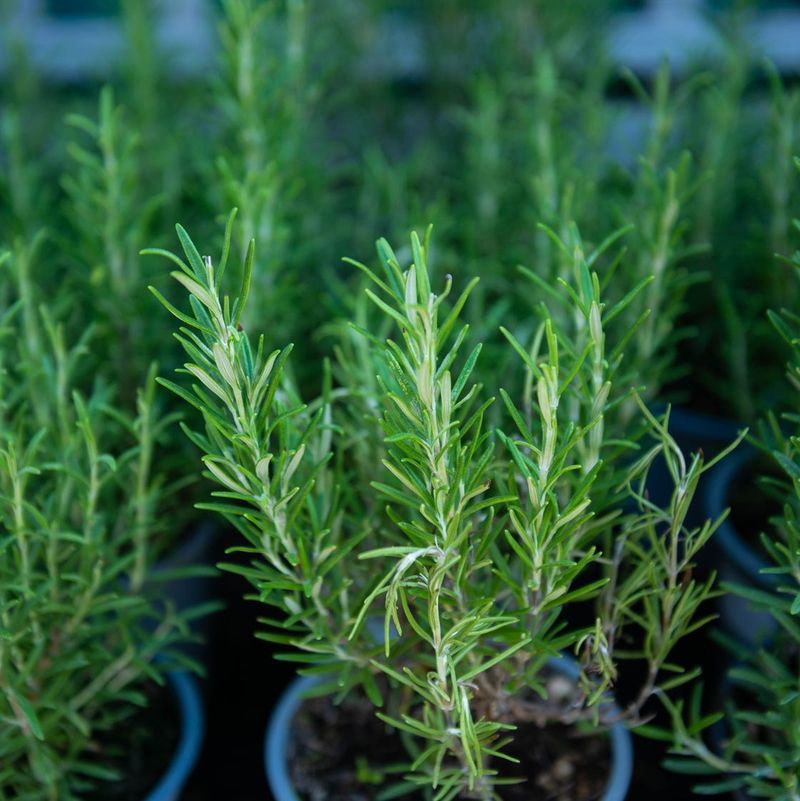
Mediterranean hillsides bake in sun all day with barely a drop of summer rain, and that’s exactly the home rosemary evolved for. A blazing west wall barely fazes it.
Its narrow, needle-like leaves carry a waxy surface and curl slightly under. That shape helps cut down on water loss during the hottest hours.
UC ANR garden guides list rosemary as a dependable choice for hot, dry, full-sun spots. It actually performs better in harsh light than in shade, where it tends to grow leggy and weak.
The fragrant oils in its leaves help keep many chewing pests and deer away. That’s a welcome bonus in yards with hungry visitors.
Drainage matters more than almost anything else. Rosemary dislikes soggy roots, so loose, gritty soil or a small mound works best over heavy clay.
Rich compost and fertilizer aren’t needed, since lean soil keeps plants tougher and more fragrant.
Trailing types like ‘Huntington Carpet’ spill nicely over walls, while upright kinds such as ‘Tuscan Blue’ can form a low hedge.
Light pruning after bloom keeps plants full instead of woody. Cutting deep into old, bare stems is best avoided, because they rarely sprout again.
Bees love the small blue flowers, which often appear in late winter and spring when little else is blooming. The plant also offers a year-round supply of fresh herbs for roasted potatoes.
2. Agave Stores Water For The Harshest Hours
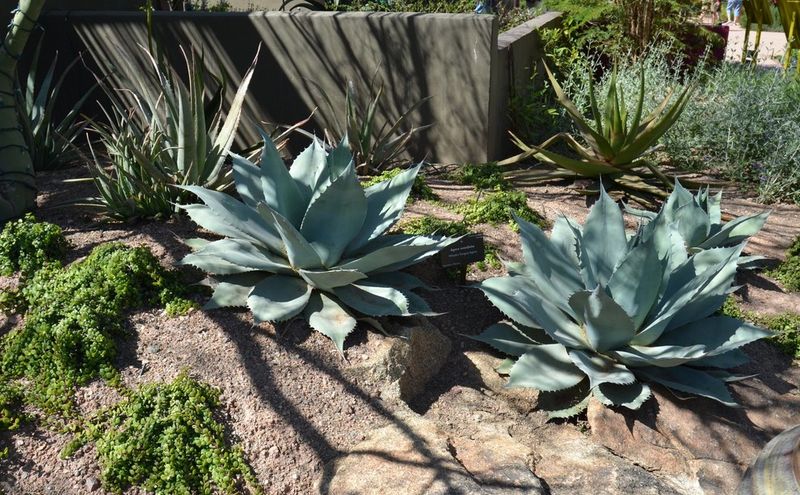
A living canteen is a fair way to describe an agave. Each thick, fleshy leaf is packed with water-storing tissue, so the plant can draw on its own supply while afternoon sun hammers the yard.
That built-in reservoir is the main reason agaves shrug off heat that would wilt a lawn in an hour. The leaves also wear a waxy coat that slows evaporation.
On top of that, agaves use a special process called CAM photosynthesis. They open tiny leaf pores at night, when air is cooler, and keep them mostly closed during the hottest part of the day.
Many agaves come from the deserts of Mexico and the American Southwest. California even has native kinds like Agave deserti and Agave shawii.
UC ANR resources often point to succulents like these for low-water landscapes. Choosing a species sized for the space matters, because some grow surprisingly huge.
Fast drainage is essential, since soggy soil can rot the base. Planting slightly high in gritty soil, with plenty of breathing room, keeps them healthy.
Your California Garden Changes Every Week. Your Plan Should Too.
Gardening in California changes quickly throughout the season. Every Friday you’ll receive a simple weekly plan showing exactly what to plant, prune, fertilize, harvest, and protect so you never miss the right timing.
Spiny types belong away from walkways, kids, and pets. Those leaf tips are sharp as needles.
Many agaves bloom only once, sending up a towering flower stalk after years of growth. The main plant then completes its life cycle, but most leave behind small offsets, called pups, that carry on the show.
3. California Fuchsia Blooms Despite The Heat
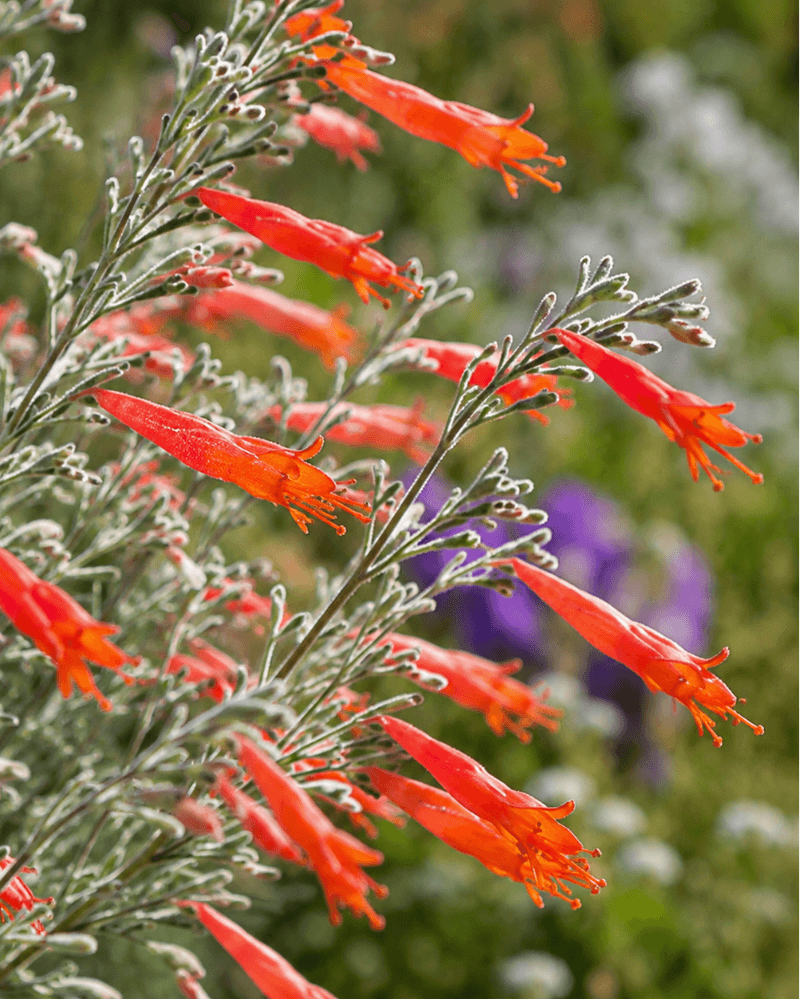
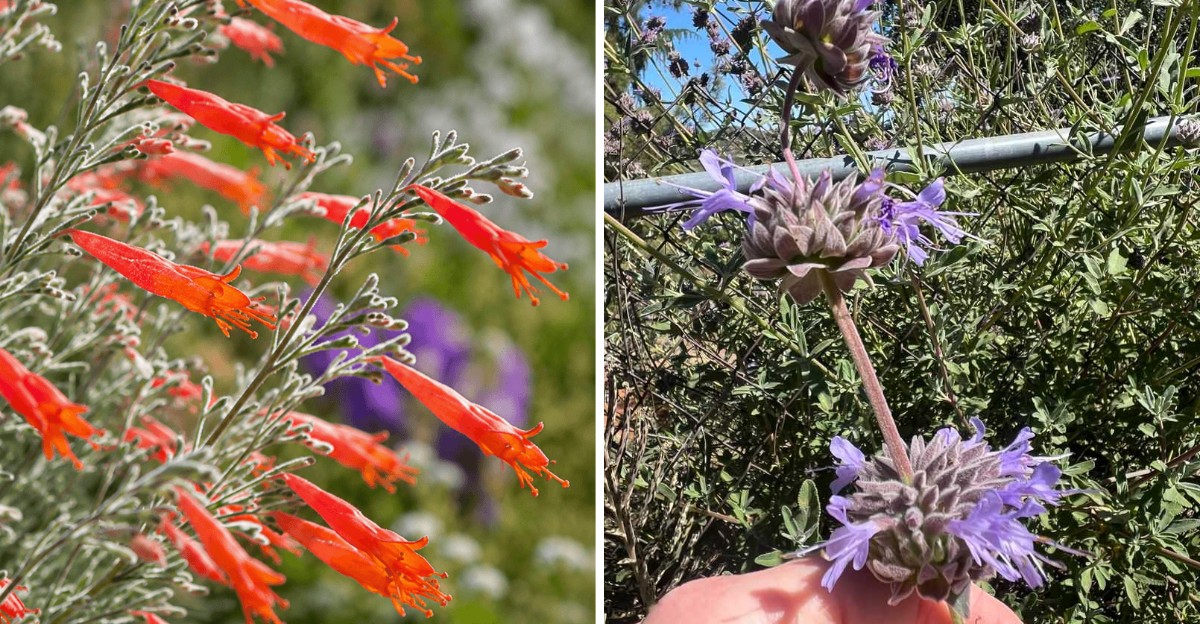
Late summer is usually when gardens look tired, crunchy, and completely done. California fuchsia waits for exactly that moment to put on its best outfit.
From about August into fall, it bursts with bright scarlet, tube-shaped flowers while everything around it fades. Few plants time their show so well, or so generously.
Known to botanists as Epilobium canum, this native grows wild on dry slopes and rocky spots across much of the state. UC ANR and native plant groups recommend it for sunny, low-water gardens.
Its fuzzy gray-green leaves help reflect light and slow water loss. That combination suits a scorching west bed nicely, even against hot stucco.
Hummingbirds adore it. Some gardeners even call it hummingbird flower, since those long red tubes fit a hummingbird beak perfectly. One planted near a window can bring a daily hummingbird air show.
Care is refreshingly simple. Full sun, well-drained soil, and occasional deep water once settled are all it needs. Too much summer water or rich soil can make it floppy and short-lived.
Once blooming ends, plants often look scraggly and brown. That’s completely normal, and a hard cutback in late fall or winter brings fresh growth in spring, ready for another season.
It does like to spread underground. A little extra room, or a yearly pull of wandering shoots, keeps it tidy and well behaved.
4. Lavender Handles Reflected Heat Well
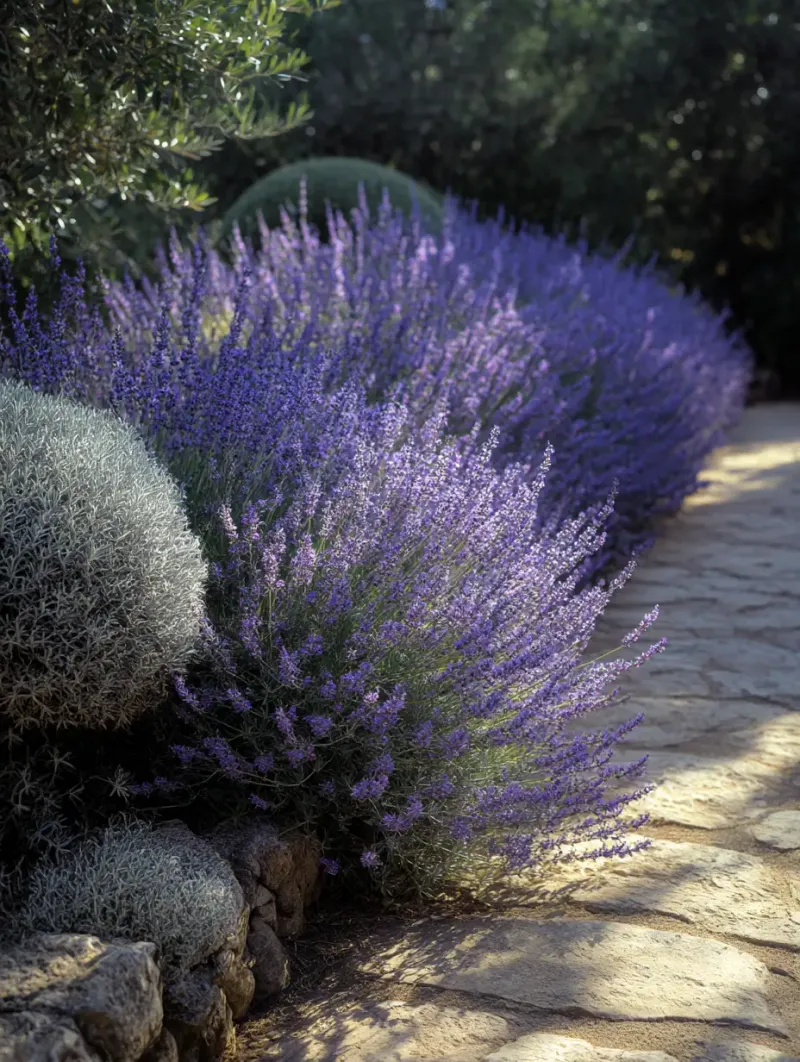
Heat rising off a concrete patio at 5 p.m. in July can feel like an open oven. That bounced-back warmth is what makes many west-facing beds so brutal, yet lavender seems to enjoy it.
Native to dry, rocky areas around the Mediterranean, lavender is built for strong sun and warm, lean soil. UC ANR garden advice regularly lists it among plants for hot, sunny, low-water spots.
Its silvery leaves and fine hairs reflect some light and help hold moisture in. Those features give it a real edge in tough exposures.
Spots beside driveways, stucco walls, and stone paths can actually help lavender. The warm, dry air around hardscape reduces the dampness that can cause root and crown rot, so overwatering poses a bigger risk than heat.
Gritty soil with excellent drainage makes a strong start. Gravel mulch works better than thick bark right around the base, and deep but infrequent watering suits it after the first season.
Choosing the right type helps, too. Spanish lavender and lavandin hybrids like ‘Grosso’ tend to handle California heat well, while English lavender may prefer cooler areas.
Results can vary by region, so a local nursery can offer helpful guidance. Trimming after flowering keeps plants rounded and full.
Lavender can turn woody after several years, so occasional replacement is part of the plan. In the meantime, the bees and the wonderful scent make every summer evening a little sweeter.
5. Toyon Tolerates Full Western Exposure
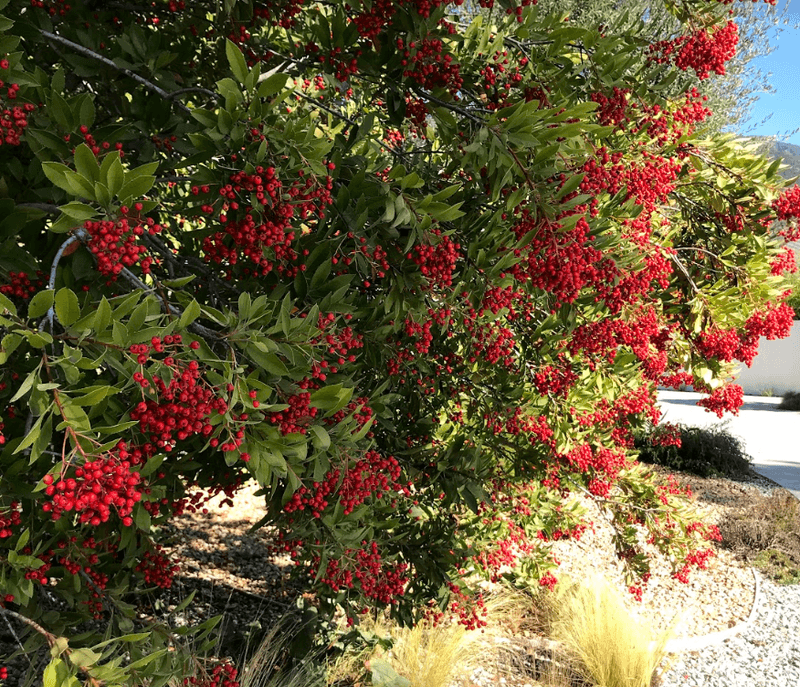
Hollywood got its name from this shrub, at least according to a popular local story. Toyon, sometimes called California holly, once covered the hills around Los Angeles.
Its bright red winter berries reminded early settlers of holly, and the nickname stuck. Historians still debate the details, but the plant’s local roots run deep.
For west-facing yards that need something bigger than a groundcover, toyon is a strong pick. It can grow into a large shrub or small tree, often 6 to 15 feet tall.
That size makes it great for blocking harsh afternoon sun from a wall or window. A well-placed toyon can noticeably cool the hottest side of a house.
This native comes from chaparral and woodland edges, where summers are long and dry. UC ANR and California native plant sources describe it as drought tolerant once established and happy in full sun.
Tough, leathery leaves hold up well against heat. Wildlife loves it, too, with robins and cedar waxwings feasting on the winter berries and bees visiting the small white summer flowers.
Toyon handles many soil types, though good drainage still helps. Plenty of space and light pruning keep it looking tidy, while regular summer watering after establishment can invite disease.
Growth tends to be slow to moderate at first. A little patience brings a sturdy screen that shades the hottest side of the yard for decades.
6. Manzanita Adapts To Intense Afternoon Light
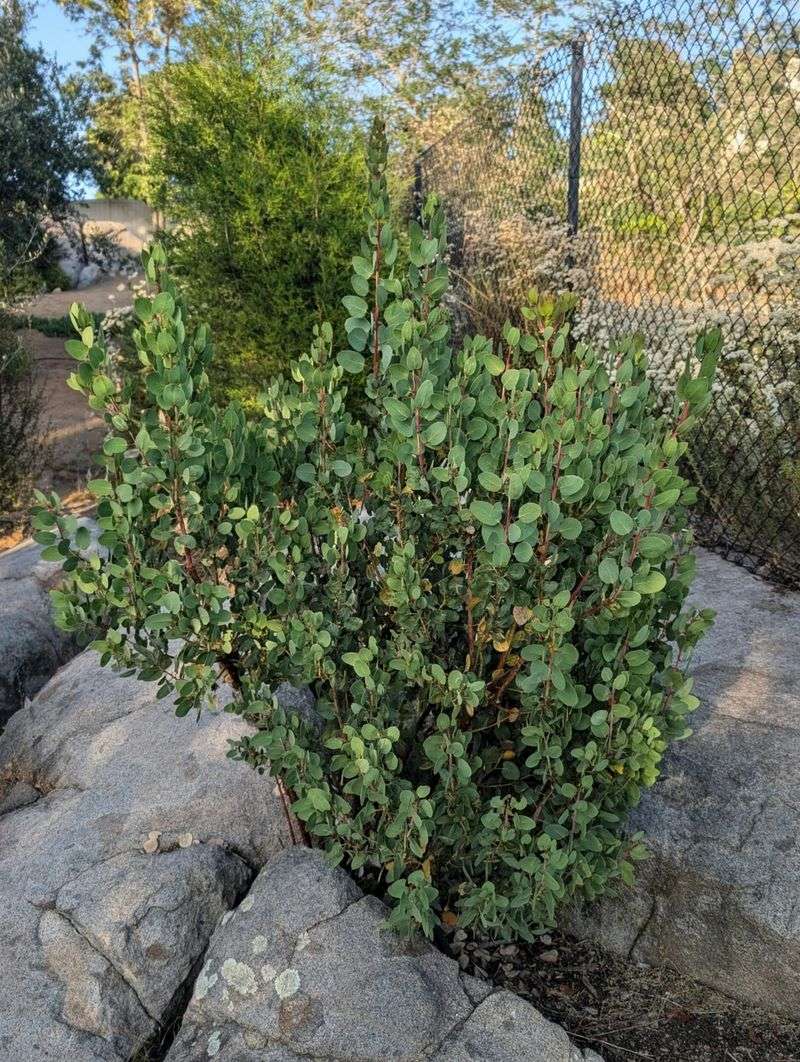
Smooth, twisting, reddish bark feels almost like polished wood under the fingertips. On a manzanita, that bark glows in late afternoon light, which makes a west-facing yard the perfect place to show it off.
Few plants look this good under such punishing sun. Manzanitas are true California natives, with dozens of species growing from coastal bluffs to mountain slopes.
Many of their small leaves are held edge-up, almost vertically. Experts believe this angle helps reduce how much direct sun hits the leaf surface during the hottest hours.
Leathery, often grayish leaves also carry a waxy coating that limits water loss. UC ANR and native plant resources point to manzanita as a top choice for dry, sunny landscapes.
Hummingbirds and native bees visit the tiny bell-shaped flowers in late winter. That early bloom offers food when little else is flowering.
Picking the right kind matters a lot. Cultivars like ‘Howard McMinn’ or ‘Sunset’ are known for being more forgiving in gardens.
Others are fussier, so a native plant nursery can help match one to the area.
Summer water causes the most trouble once plants are established, since warm, wet soil invites root diseases. Fall planting, regular water through the first year or two, and then only rare summer drinks work best.
Fertilizer isn’t needed, and gravel or a thin mulch suits it well. A little tough love goes a long way with this beauty.
7. Cleveland Sage Brings Fragrance To Scorching Beds
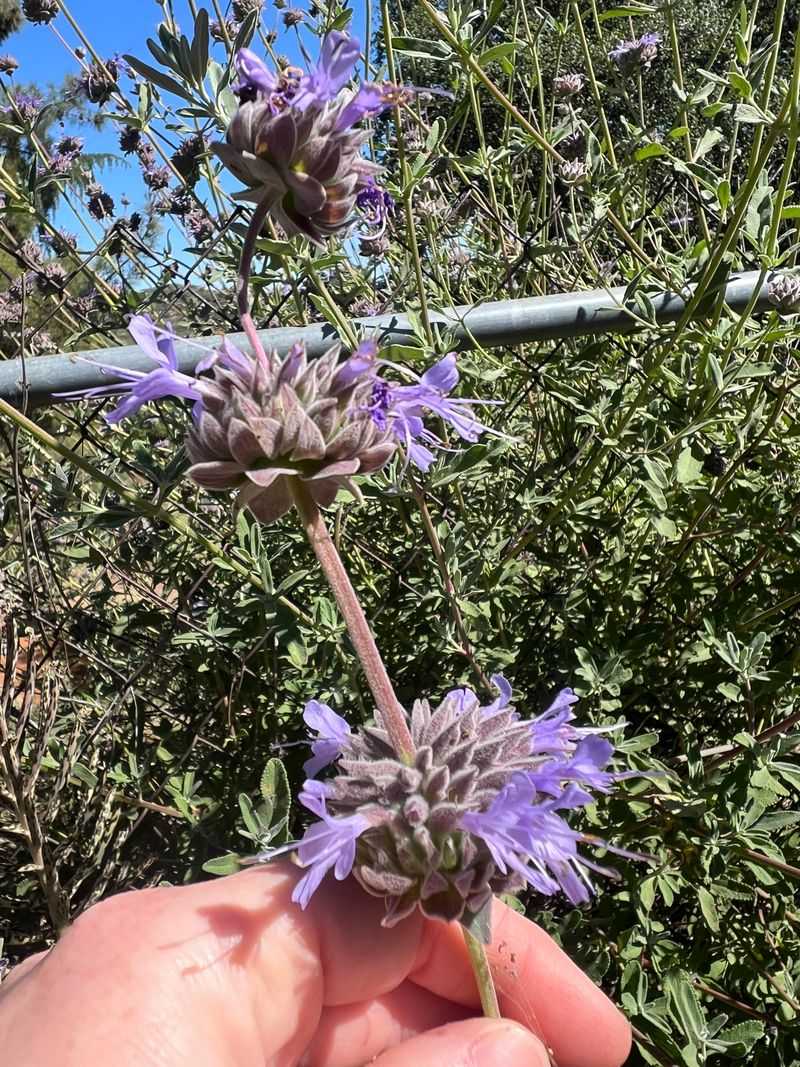
Few scents capture a California summer quite like crushed sage leaves on a hot afternoon. Cleveland sage delivers that fragrance in abundance, especially when the sun is at its strongest.
This native grows wild in the chaparral and coastal sage scrub of Southern California and northern Baja California. Long, dry summers are simply part of its normal routine.
Its gray-green leaves are covered in fine hairs and fragrant oils. Those features reflect some light, slow water loss, and help discourage deer and many chewing pests.
Plants usually reach about 3 to 5 feet tall and wide. From late spring into summer, whorls of lavender-blue flowers stack up along tall stems like little pom-poms.
Hummingbirds and native bees visit those blooms constantly. A single plant near a west window can turn into a busy pollinator stop.
Full sun and fast drainage keep Cleveland sage happiest. Once established, it needs only occasional summer water, and too much can weaken it or invite root problems.
Popular selections like ‘Winnifred Gilman’ and ‘Allen Chickering’ tend to be a bit more forgiving in gardens. A native plant nursery can help with choosing one suited to the area.
Light pruning in fall or winter keeps plants tidy. Cuts into old, leafless wood are best avoided, since those stems rarely regrow.
Gentle care brings years of fragrance right beside the hottest wall.
8. Deer Grass Holds Up Against Reflected Heat
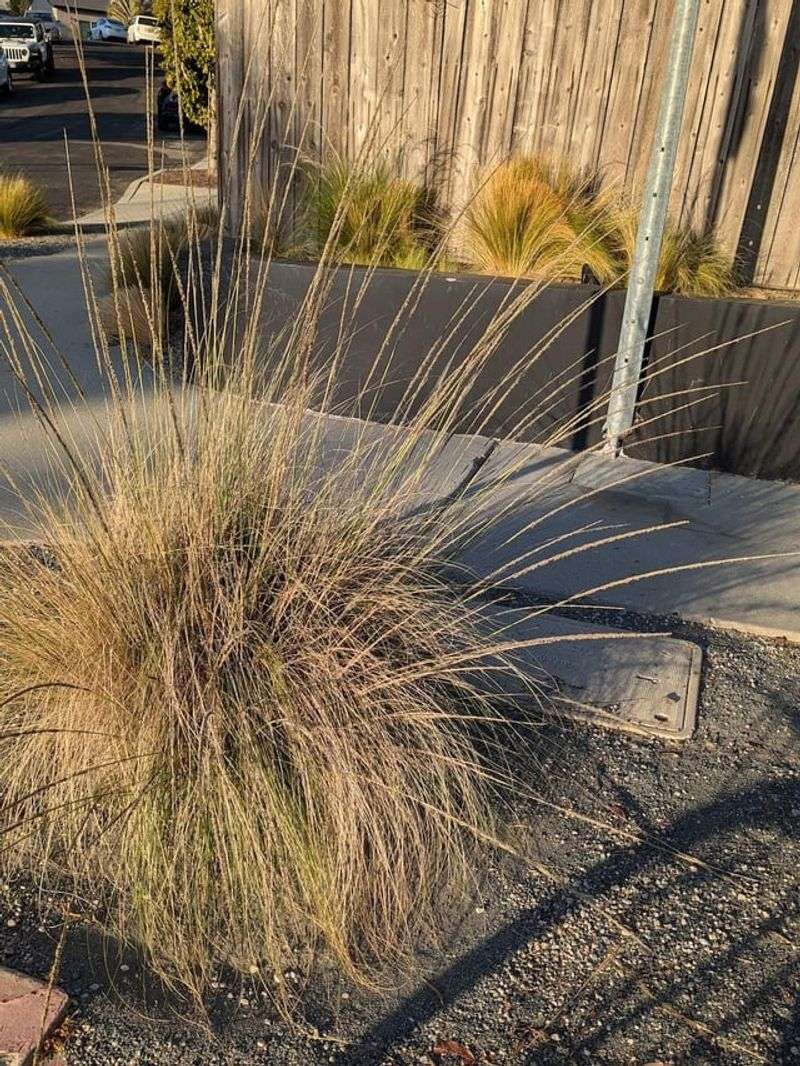
Fine-textured grass can soften a harsh, sunbaked bed in a way few shrubs manage. Deer grass, a California native bunchgrass, forms a tidy fountain of narrow green leaves that sways in every afternoon breeze.
Mature clumps typically reach 3 to 4 feet tall and wide. In summer and fall, slender flower spikes rise above the foliage and catch the low western light beautifully.
This grass grows naturally across much of the state, from dry slopes to valley grasslands. UC ANR and native plant resources recommend it for low-water landscapes.
It handles heat, wind, and even heavier soils with surprising ease. Reflected warmth from fences, walls, and driveways rarely troubles it, and established clumps need only occasional deep water in summer.
Its size and texture make it useful in several ways. A row along a hot property line creates a soft screen, while a single clump adds a strong focal point among rosemary or manzanita.
Many California Native American communities have long used the flower stalks in basket weaving. That history adds a meaningful layer to an already hardworking plant.
Care is minimal. Combing out old, dry blades by hand each year keeps clumps looking fresh, and a harder cutback every few years in late winter renews growth.
Fertilizer isn’t needed, and lean soil keeps the clumps compact. For a west-facing bed that needs movement and calm, this grass delivers both without asking for much in return.