8 Best Native California Hedges That Stay Full Through Winter
A privacy hedge proves its worth in winter. Deciduous shrubs that looked lush in July can turn into a row of bare sticks by January, leaving the yard open to the street.
Native evergreen shrubs tell a different story. Many stay thick, green, and private right through the cold months.
California offers several excellent choices for this job. Most also feed birds and pollinators, and once established, they need far less water than typical hedge plants.
Size, sun, and water needs vary quite a bit from one shrub to the next. Matching the right plant to the right spot makes all the difference.
Six reliable native options stand out, plus one popular favorite better suited as an accent.
1. Toyon Holds Its Leaves And Berries
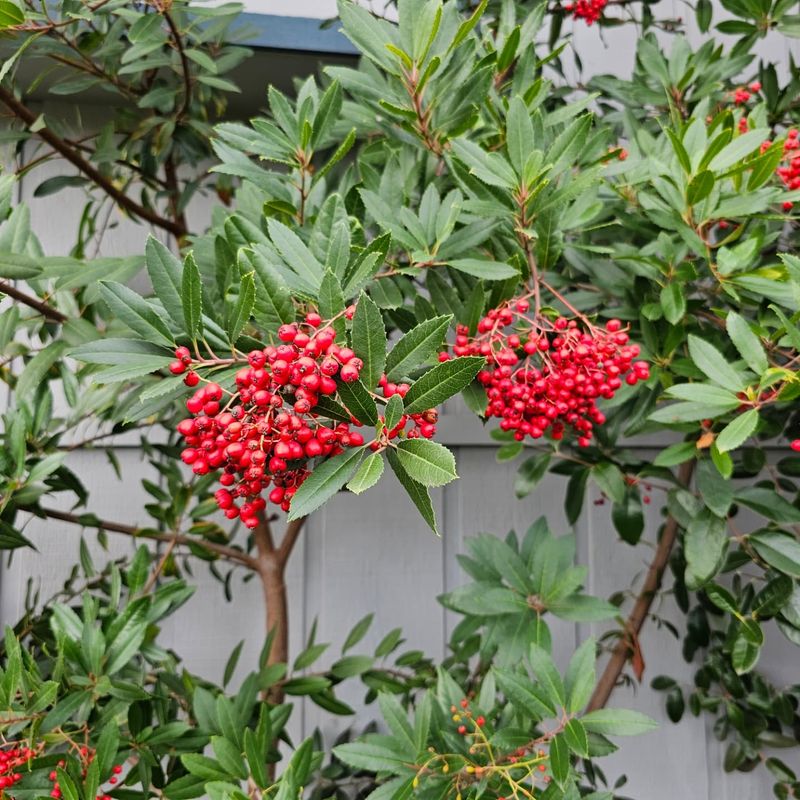
Long before anyone strung up holiday lights, toyon was decorating California hillsides with bright red berries every winter. A popular story says Hollywood got its name from this shrub, once called California holly.
That story is still debated, but the plant’s winter charm isn’t. Toyon (Heteromeles arbutifolia) is fully evergreen, so its leathery, toothed leaves stay put all year.
In late fall, berry clusters ripen from green to red and often hang on into winter. Robins, cedar waxwings, and mockingbirds love them, so the hedge doubles as a bird feeder.
Left alone, toyon can grow 6 to 15 feet tall and nearly as wide. Shrubs spaced about 5 to 6 feet apart usually knit together into a hedge within a few years.
Light pruning in late winter or early spring keeps the shape tidy. Heavy shearing, however, means fewer flowers and berries.
Once roots settle, usually after two or three summers, toyon handles dry weather very well. Deep but infrequent watering works best during establishment, followed by a gradual cutback.
It grows in sun or part shade and tolerates many soil types, as long as water drains away. Small white flowers in early summer pull in bees and butterflies.
That adds up to flowers in summer, berries in winter, and green leaves the whole way through. Few hedges work that hard while asking for so little in return.
2. Pacific Wax Myrtle Stays Dense Year Round
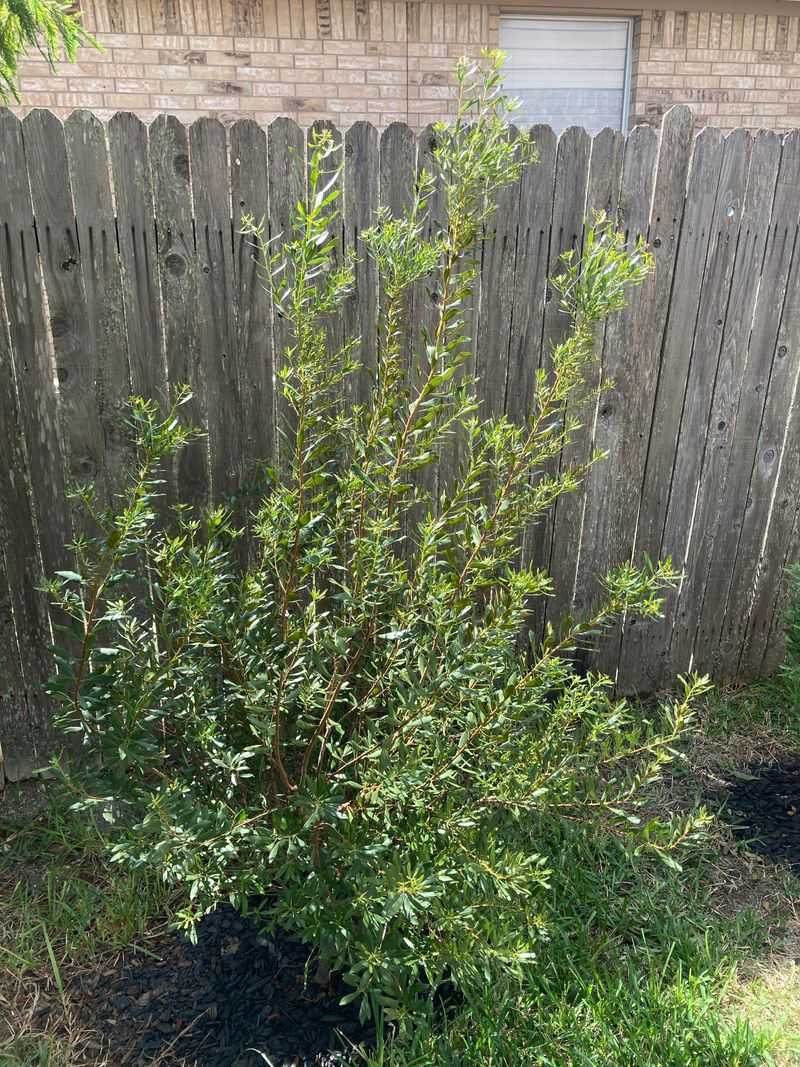
Some shrubs are the dependable type that always shows up. Rain, fog, or a chilly January morning, Pacific wax myrtle looks the same: thick, green, and ready to block the view.
Coastal gardeners have trusted it for privacy for generations. Its scientific name is Morella californica, and it grows naturally from Southern California up into Washington.
The narrow, glossy leaves are evergreen and packed closely along the branches. That tight growth is exactly why it makes such a solid, reliable screen.
Wax myrtle also handles regular shearing better than most native shrubs. It can be kept as a formal hedge around 6 to 10 feet tall, while unpruned plants may reach 20 feet or more and behave like small trees.
Spacing of about 4 to 6 feet creates a quick, even wall of green within a few seasons. Near the coast, fog and cool air keep it especially happy.
Your California Garden Changes Every Week. Your Plan Should Too.
Gardening in California changes quickly throughout the season. Every Friday you’ll receive a simple weekly plan showing exactly what to plant, prune, fertilize, harvest, and protect so you never miss the right timing.
Inland gardens can grow it too. Hot areas call for more water and some afternoon shade to keep leaves looking fresh.
Small purple berries with a waxy coating appear on female plants in fall and winter. Birds such as yellow-rumped warblers eat them eagerly.
Early settlers reportedly used wax from related plants to make candles, a fun bit of history to share with visitors.
Plain and steady, this shrub is a smart pick when privacy matters most.
3. Coffeeberry Offers Reliable Evergreen Structure
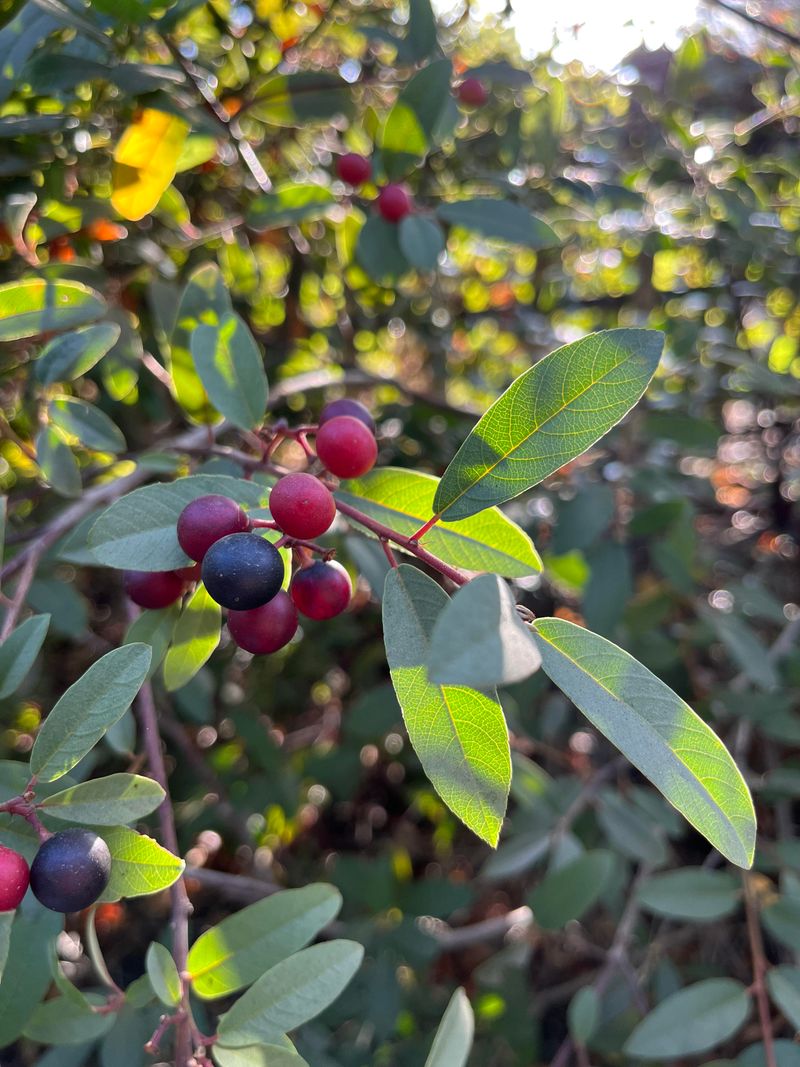
Coffee lovers may be disappointed, since this plant won’t brew a morning cup. Coffeeberry got its name because its ripe berries resemble coffee beans, turning from green to red to almost black.
The real treat is how well it holds its shape all year. Coffeeberry (Frangula californica, once called Rhamnus californica) keeps its dark green, oval leaves through winter.
The shrub grows in a naturally full, rounded form, so it rarely looks gappy. Wild plants range from 4 to 15 feet, depending on where they grow.
Named varieties make home hedges easier. ‘Eve Case’ stays around 4 to 8 feet tall with a neat, compact shape. ‘Mound San Bruno’ is a bit smaller and works well along paths or under windows.
Shrubs spaced roughly 4 to 5 feet apart do well in sun or partial shade. Coffeeberry is quite drought tolerant once established and handles clay soil better than many natives.
Occasional deep summer watering can keep it looking fresher in hot inland valleys. Bees visit its tiny greenish flowers, and birds snatch up the berries in late summer and fall.
Pale swallowtail butterflies may also use it as a host plant. That makes each shrub a small wildlife hub.
Pruning is simple. A light trim in late winter keeps edges tidy, and avoiding hard, boxy cuts preserves the calm, natural look that never takes a winter break.
4. Catalina Cherry Suits A Larger Hedge
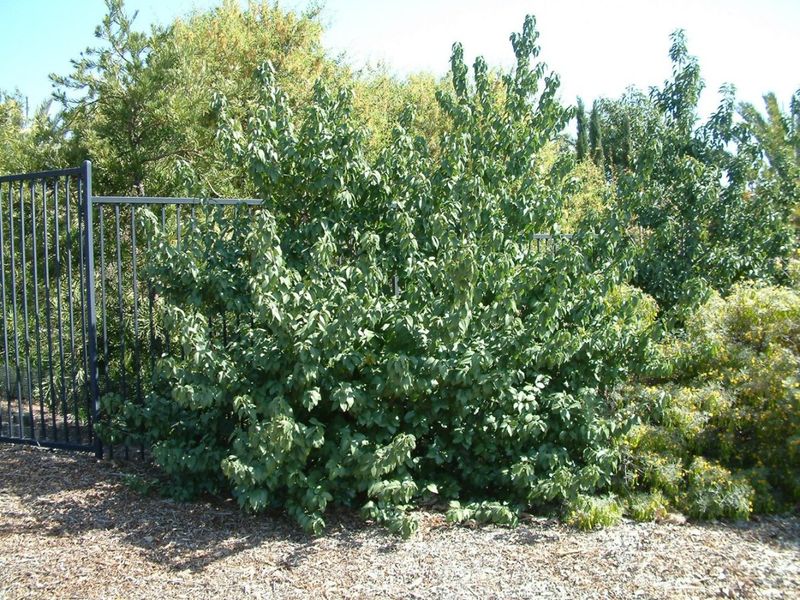
Big yards next to two-story houses call for a big solution. Catalina cherry grows into a sturdy small tree on Santa Catalina and the other Channel Islands, and it brings that same size to the mainland.
Known as Prunus ilicifolia ssp. lyonii, this cherry keeps its glossy, bright green leaves all year. They resemble holly leaves but usually have smoother edges.
Planted in a row, the shrubs form a tall, leafy wall that stays thick in winter. Size is the main thing to plan for here.
Catalina cherry often reaches 15 to 30 feet tall and 10 to 20 feet wide. That makes it great for screening a tall building, but a poor fit for a narrow side yard.
Plants spaced around 8 to 10 feet apart create a large, even screen. Full sun is best, though it accepts some shade.
Once established, it handles dry summers well, especially in coastal and Southern California gardens. In spring, white flower clusters attract bees in impressive numbers.
Dark purple cherries form later in the season. People can eat the thin fruit, but it’s mostly pit, so birds tend to be far more excited about them than humans.
Dropped fruit can be messy on patios or driveways. Planting where cherries land on mulch or soil solves that problem and leaves a tall, handsome privacy screen for many years.
5. California Lilac Varieties Stay Full In Mild Winters
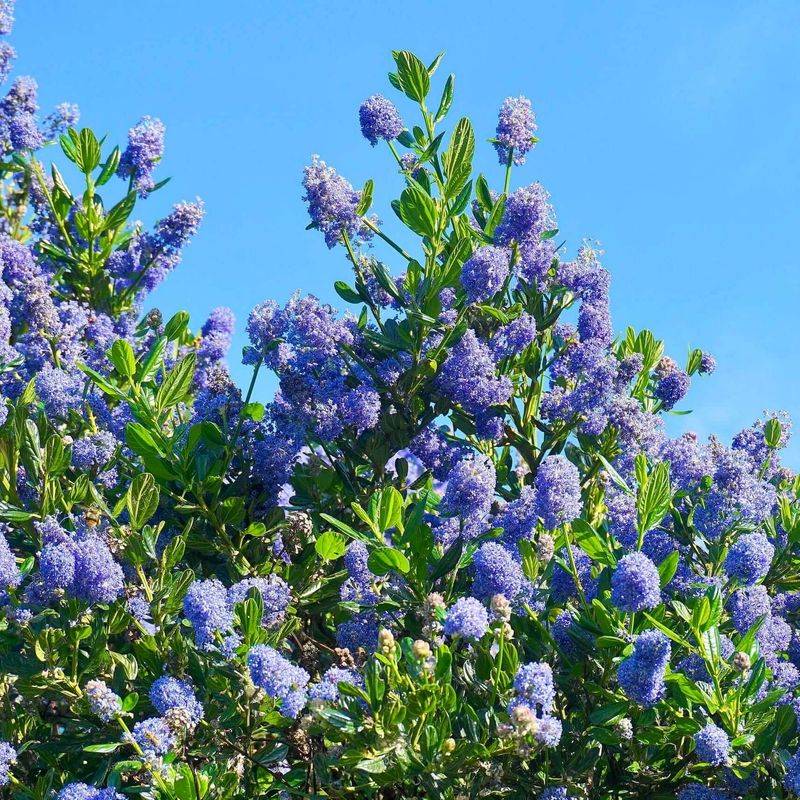
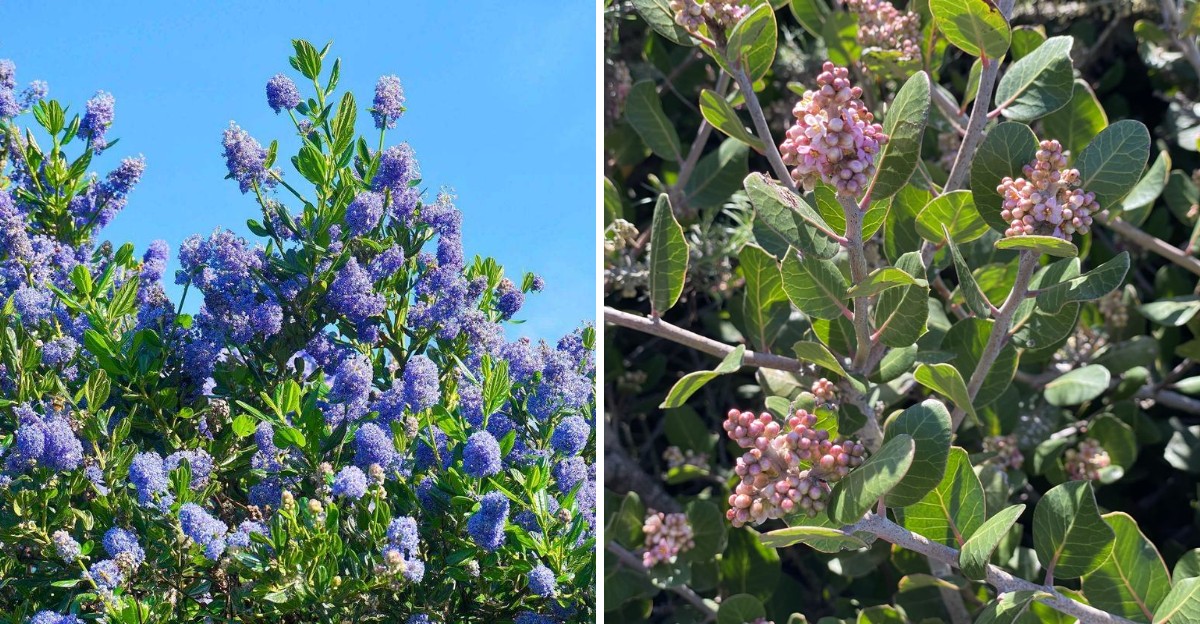
A hedge that turns bright blue just as winter ends sounds almost too good to be true. Ceanothus, often called California lilac, delivers exactly that, even though it isn’t related to true lilacs.
Bees seem to find the bloom before most people even notice it. Many ceanothus types are evergreen, with small, shiny leaves that stay on through the cold months.
Some species are deciduous, though, so labels deserve a careful read. For hedges, gardeners often choose larger evergreen varieties like ‘Ray Hartman’, ‘Julia Phelps’, or ‘Concha’.
‘Ray Hartman’ can grow 10 to 20 feet tall and works as a tall screen. ‘Julia Phelps’ and ‘Concha’ stay closer to 6 to 9 feet, which suits medium hedges.
Each one puts on clouds of blue flowers in late winter or spring. Mild-winter areas with full sun and fast-draining soil suit them best.
Summer water is the biggest concern, since too much can cause root rot once plants are established. Spots away from lawns and sprinklers work far better.
There’s one honest catch. Many ceanothus are fairly short-lived, often lasting around 5 to 15 years depending on variety and conditions. Occasional replacement, or a mix with longer-lived shrubs like toyon, makes sense.
Light pruning right after flowering keeps plants full. Cuts into old, bare wood are best avoided, since it rarely resprouts.
Gentle care brings years of color and fullness.
6. Carpenteria Adds Evergreen Texture
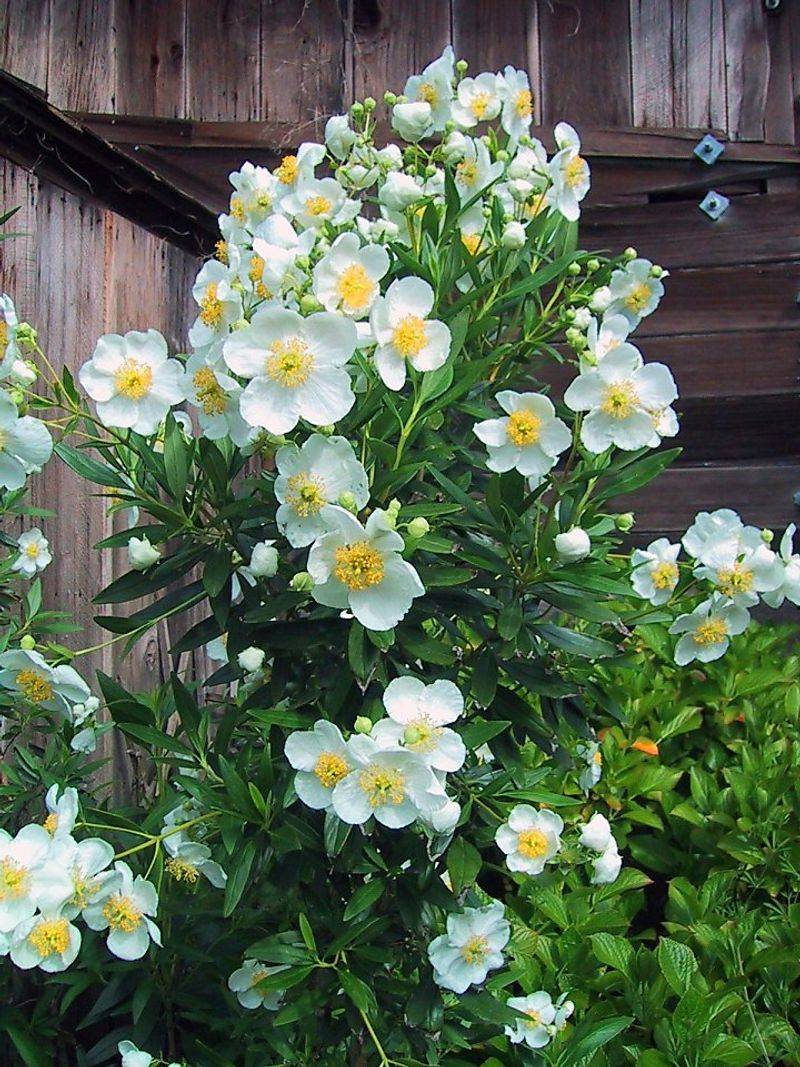
Few California plants have a story as rare as Carpenteria. In the wild, it grows only in a small area of the Sierra Nevada foothills in Fresno and Madera counties. Nurseries, however, have made it easy to find.
Carpenteria californica, also called bush anemone, is evergreen with long, narrow leaves. They’re glossy green on top and paler underneath, giving the shrub a soft, layered texture.
When wind moves the branches, flashes of both colors appear. In late spring and early summer, large white flowers with bright yellow centers open across the plant.
They look a lot like anemones, which explains the common name. Against the dark leaves, they almost glow.
Plants usually reach about 4 to 8 feet tall and wide. That size works nicely for a low to medium hedge along a patio or under a window, with shrubs spaced around 4 feet apart.
Part shade suits it best in hot inland gardens, though it takes more sun near the coast. Unlike many natives, it appreciates some summer water, while good drainage still matters.
Older stems can turn leggy over time. Removing a few of the oldest stems near the base after bloom helps new growth fill in.
Some gardeners report leaf curling or browning during very cold snaps. A sheltered spot helps in areas where winters dip low, keeping the hedge looking its best.
7. Western Redbud Works Better As An Accent Than A Hedge
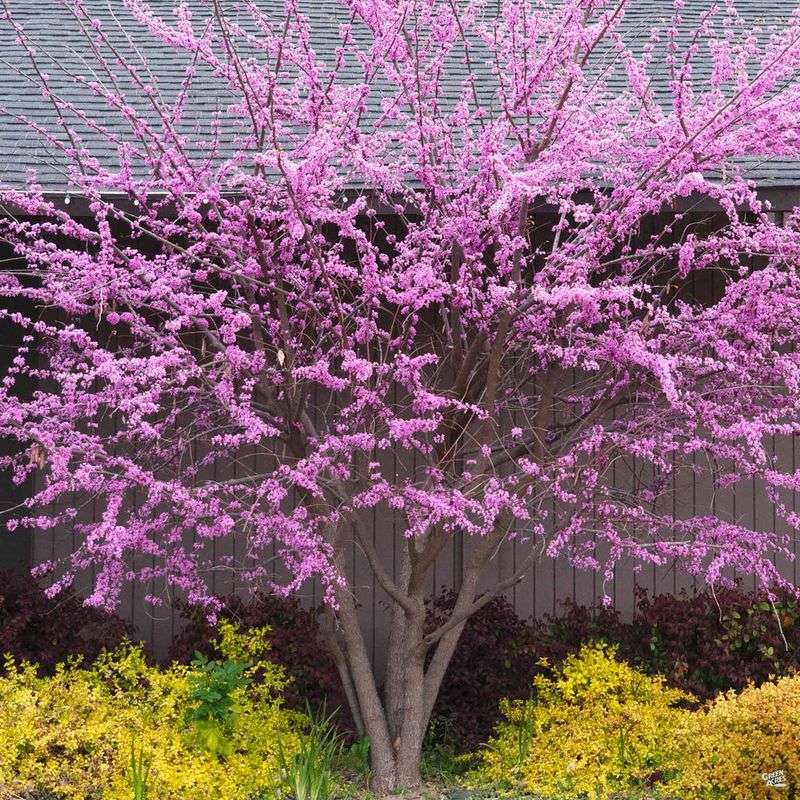
One beloved native deserves an honest note on this list. Western redbud is deciduous, which means it drops its leaves in fall and doesn’t stay full through winter.
From late fall into winter, Cercis occidentalis is mostly bare branches. A row planted for privacy would leave several months of open gaps, exactly the problem a winter hedge is meant to solve.
Redbud still earns a mention, simply as a stunning accent plant. In early spring, its bare branches burst with magenta-pink flowers before the leaves even appear.
Rounded, heart-shaped leaves fill in after the bloom, followed by flat seed pods that dangle well into summer. Some areas also see yellow or reddish fall color.
Many people grow it as a small, multi-trunk tree, usually 10 to 20 feet tall. It’s drought tolerant once established and prefers good drainage. Its graceful branching looks lovely even when bare.
Hot inland summers don’t faze it, and it actually blooms best where winters bring a bit of chill. Bees visit the early flowers eagerly.
The smart move is placing redbud as a focal point in front of an evergreen hedge. Bright pink blossoms against a dark green wall of toyon or coffeeberry make a memorable spring scene.
That combination delivers the color so many gardeners love. It also keeps winter privacy fully intact, with no bare gaps facing the street.
8. Lemonade Berry Forms A Tough Coastal Screen
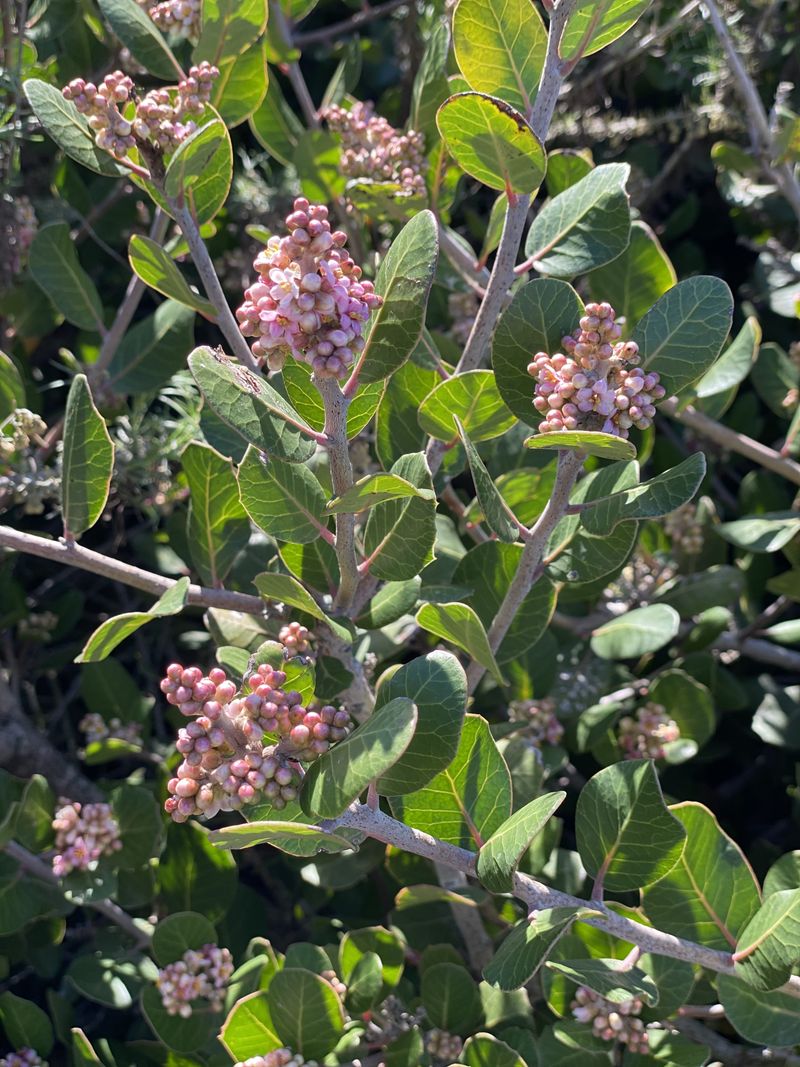
A tangy surprise hides in plain sight along Southern California’s coastal bluffs. Lemonade berry (Rhus integrifolia) earned its name from the sticky, reddish fruits that early residents soaked in water for a tart, lemony drink.
That fun history comes with a seriously useful shrub. Its thick, leathery leaves stay green all year, forming a dense screen that holds up through winter.
Wild plants often grow 3 to 10 feet tall, though older specimens in sheltered spots can reach much larger sizes. Regular pruning keeps it neat as a hedge in the 6 to 8 foot range.
Few natives handle coastal conditions quite this well. Salty breezes, sandy soil, and steady wind rarely trouble it, which makes it a strong pick for beach-area yards.
Inland gardens can grow it too, though very hot valleys may call for a little afternoon shade. Good drainage matters everywhere, and established plants need only occasional summer water.
Clusters of small pink and white flowers appear in late winter and early spring. Bees visit them eagerly, and birds later pick at the fuzzy fruits.
Shrubs spaced about 5 to 6 feet apart usually fill in within a few seasons. A light trim in late spring or summer keeps the shape tidy.
Lemonade berry belongs to the sumac family, but it isn’t known for the itchy reaction poison oak causes. Paired with toyon or coffeeberry, it creates a sturdy, salt-tolerant hedge that stays full while much of the garden rests.