The Texas Birds That Arrive In October And Stay All Winter
Every October, as northern states start bracing for ice and snow, millions of birds pack up and fly south.
For many of them, Texas is the final stop. Mild temperatures, open fields, and plenty of seeds, berries, and insects make the state a perfect winter home.
That means your backyard could soon look and sound a lot different. New faces show up at feeders. Unfamiliar calls drift through the trees in the morning.
Some visitors are tiny and quick, flitting between branches. Others are large and graceful, gathering in noisy flocks across fields and wetlands.
The best part is that they don’t just pass through. They settle in and stick around until spring.
Learning who these seasonal neighbors are makes every chilly morning walk or quiet coffee by the window a lot more fun.
1. Yellow-Rumped Warbler
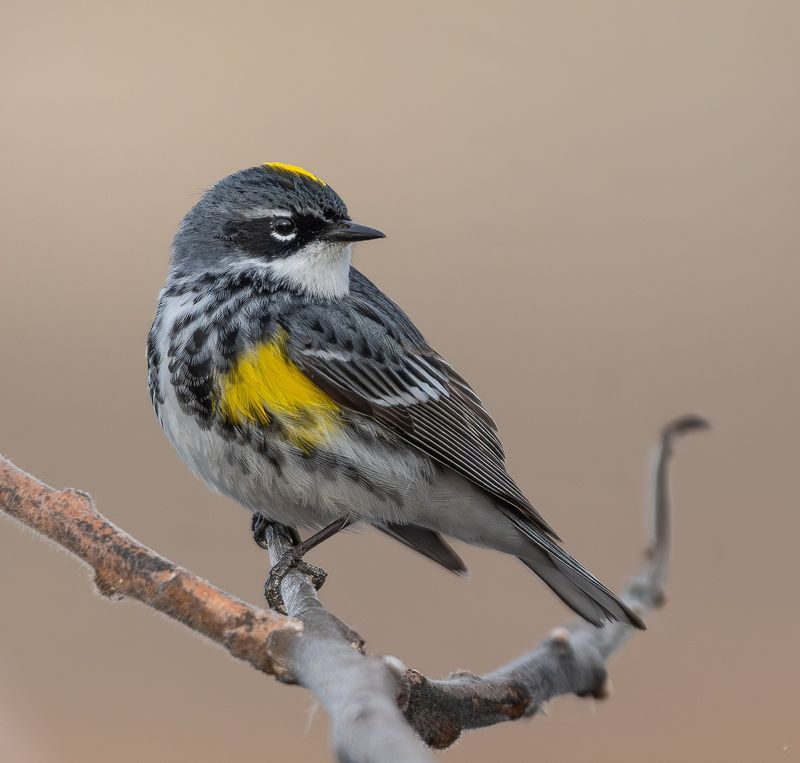
Birders in Texas have a funny nickname for this little bird. They call it the butter butt, thanks to the bright yellow patch on its lower back. Once you learn that spot, you will start seeing it everywhere.
The yellow-rumped warbler is the most common winter warbler in the state. Flocks show up in October and hang around until spring. You can find them in city parks, school yards, creek bottoms, and even busy parking lots with a few trees.
In winter, these birds look a bit plain. Their feathers are mostly brownish gray with soft streaks. Still, they keep small yellow patches on their sides and that famous yellow rump.
When one flies away from you, the yellow flashes like a tiny headlight.
Most warblers eat only insects, which is why many leave for the tropics. Yellow-rumps are different. They can digest the waxy coating on berries, so they survive cold snaps just fine.
Wax myrtle is their favorite treat, and a bush full of berries can draw a dozen of them at once.
Want them in your yard? Plant a wax myrtle or a yaupon holly. Both are native to Texas and easy to grow.
A suet feeder and a shallow birdbath also help a lot, especially during dry spells.
Listen for a sharp little chek note coming from the trees. That sound is often the first clue that a warbler is nearby. Follow it slowly, and look for quick movement among the leaves.
Here is a fun fact. Scientists once split this bird into two species, then joined them back together. Bird names can change, but the butter butt stays easy to love.
2. Ruby-Crowned Kinglet
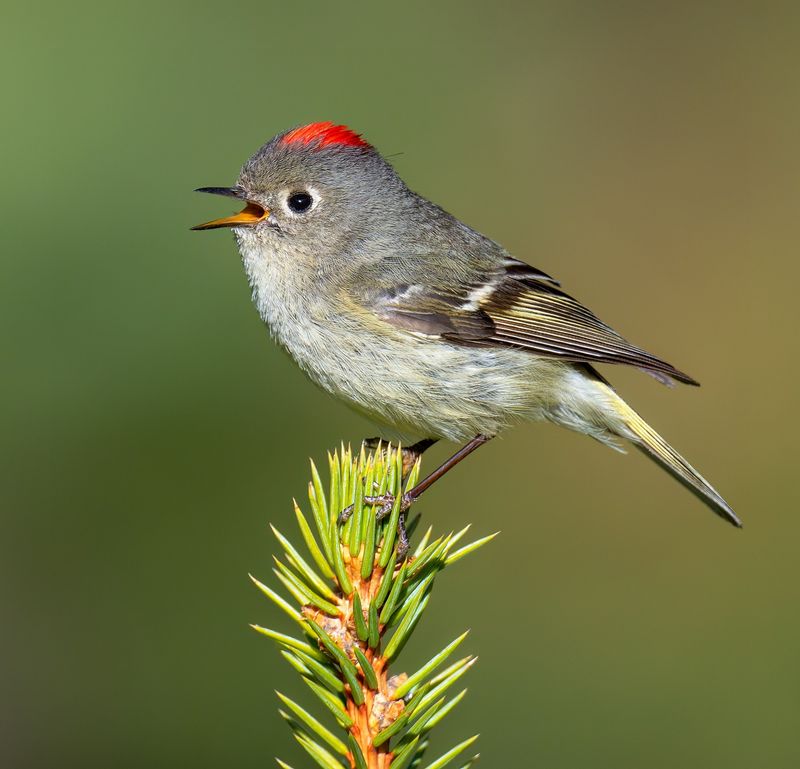
Ever tried to take a photo of a bird that will not sit still for even one second? Meet the ruby-crowned kinglet, the champion of fidgeting. It weighs about as much as two pennies, yet it has more energy than a classroom right before recess.
Kinglets arrive in Texas around October and stay until early spring. They are olive gray with a bold white ring around each eye.
That eye ring makes them look surprised all the time, which matches their busy style perfectly.
Your Texas Garden Changes Every Week. Your Plan Should Too.
Gardening in Texas changes quickly throughout the season. Every Friday you’ll receive a simple weekly plan showing exactly what to plant, prune, fertilize, harvest, and protect so you never miss the right timing.
Watch closely and you will see a special habit. Kinglets flick their wings over and over as they move through branches. Birders use this nervous wing flick as a quick way to tell them apart from other small birds.
Now for the secret. Males have a bright red patch on top of the head. Most of the time it stays hidden under gray feathers.
When a male gets excited or upset, he raises it like a tiny flag, and it glows ruby red.
These little birds eat insects, spider eggs, and other small critters hiding in bark and leaves. They also sip sap from holes drilled by sapsuckers. In very cold weather, they may visit suet feeders for extra fuel.
Spotting one takes patience. Stand still near oak trees or shrubs and listen for a scratchy, two-part call that sounds like ji-dit. Then scan for constant motion low in the branches.
Here is a cool fact to share. Kinglets are among the smallest songbirds in North America. Even so, males can belt out a song loud enough to hear from far away.
3. White-Throated Sparrow
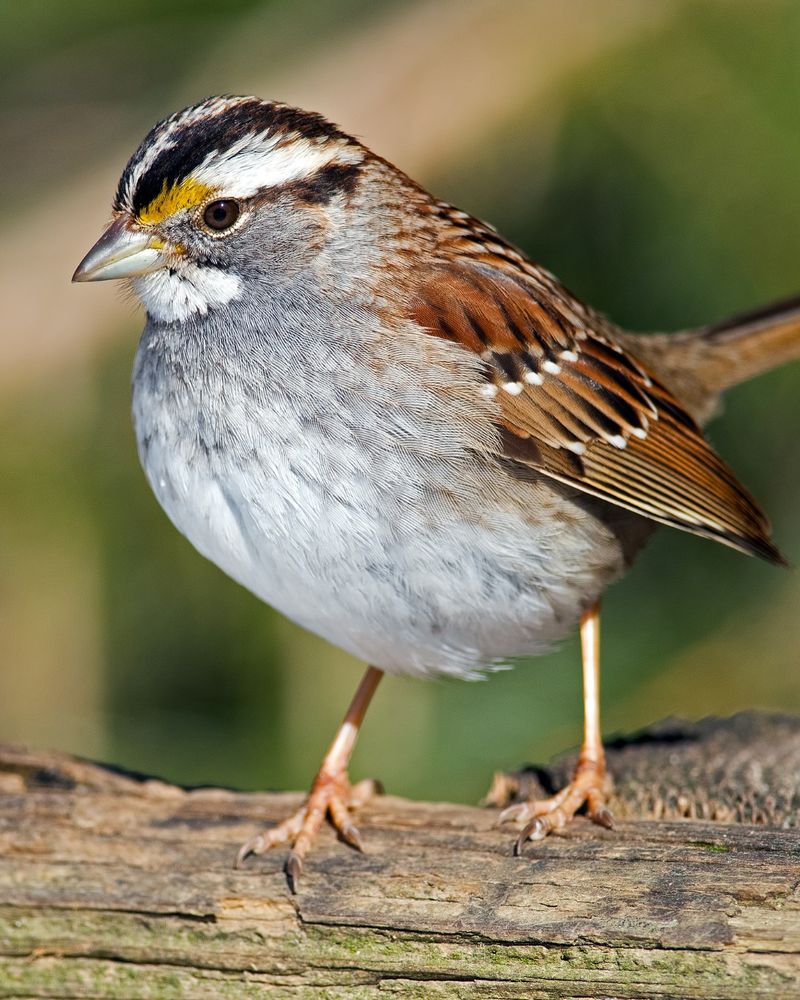
Oh, sweet Canada, Canada, Canada. That is one way people describe the whistled song of the white-throated sparrow.
Others hear it as Old Sam Peabody, Peabody, Peabody. Either way, it is one of the sweetest winter sounds in Texas.
These sparrows spend the colder months mostly in East and Central Texas. They show up in October and stay until about April. Unlike many birds, they often sing in winter, so your ears may find them before your eyes do.
Look for a crisp white throat that looks like a little bib. They also have bold head stripes and small yellow spots between the eyes and bill.
Some have white stripes on the head, while others have tan ones. Both types are the same species.
White-throated sparrows love thick cover. They scratch in fallen leaves under shrubs and brush piles, kicking backward with both feet at once. It looks a bit like a dance move. They rarely wander far from a safe hiding spot.
You can easily invite them over. Scatter millet or cracked corn on the ground near bushes. Leave some leaves in garden beds instead of raking everything. A small brush pile in a corner of the yard makes them feel right at home.
Early morning is the best time to find them. Sit quietly near a hedge and listen for rustling. Soon you may see a neat little sparrow pop out to grab a seed.
Here is a fun bit of trivia. The white-striped and tan-striped birds almost always pair with the opposite type when they nest up north.
4. Dark-Eyed Junco
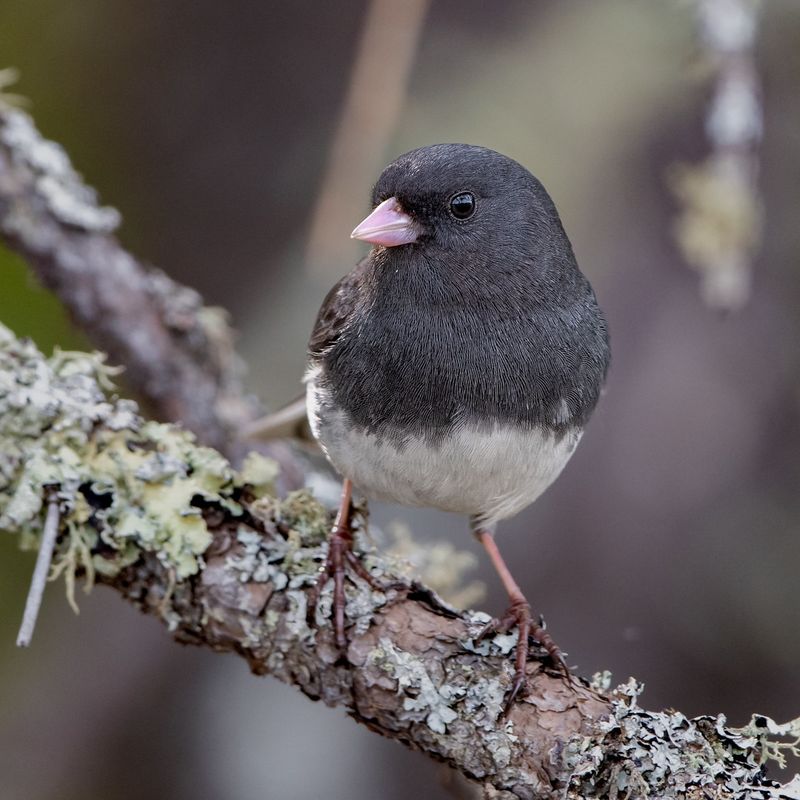
Grandparents in many parts of the country called them snowbirds. When juncos showed up, it meant cold weather was on the way. In Texas, they arrive as fall temperatures drop and stick around until spring warms things up again.
Dark-eyed juncos are especially common in North, Central, and West Texas. They prefer open woods, park edges, and backyards with feeders.
You will rarely spot them high in the trees. Instead, they spend most of their time hopping on the ground.
Their look is simple but sharp. Most have slate-gray backs and heads with a clean white belly. Their bills are pale pink, almost like a tiny candy corn. When they fly, they flash bright white outer tail feathers.
That white tail flash is a smart trick. It may help confuse a hawk or warn other juncos about danger. Watch a flock take off, and you will see white edges flicker everywhere at once.
Juncos love small seeds. Try scattering white millet or a seed mix right on the ground or on a low platform feeder. They often clean up spilled seed under hanging feeders, so keep that area open and tidy.
A ticking call and a soft trill are good signs that a flock is close. Juncos usually travel in small groups, so where you see one, others are nearby. Count them and keep track through the season.
Here is something fun. Juncos come in several color forms across the country. In West Texas, you might even spot ones with pinkish sides or reddish backs, making every flock worth a second look.
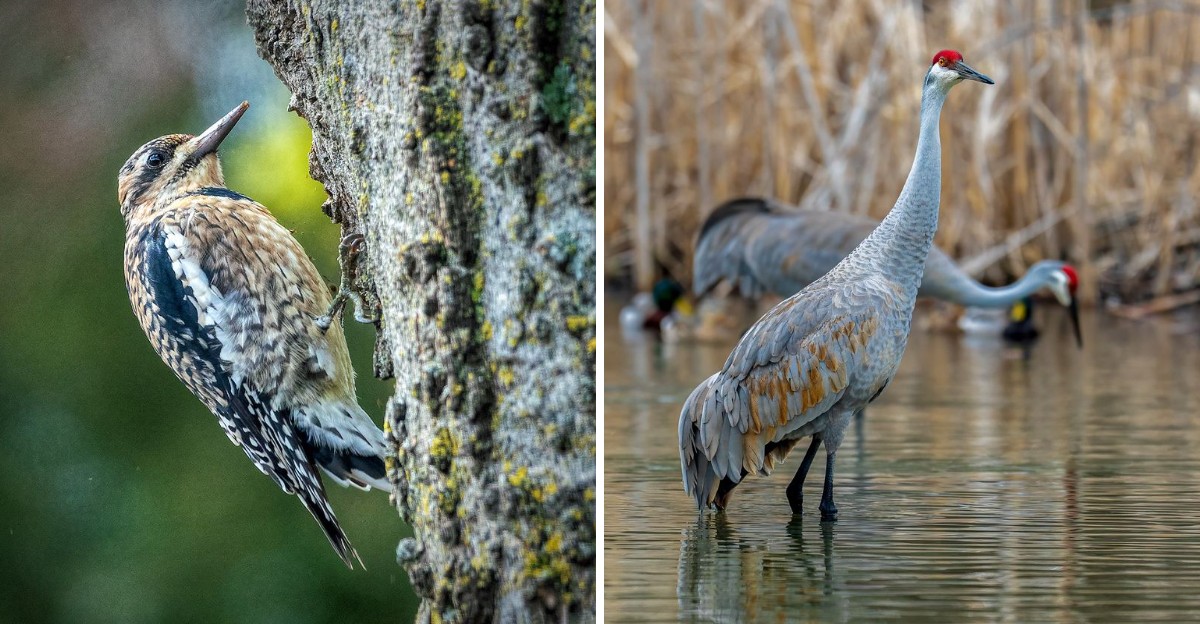
5. Yellow-Bellied Sapsucker
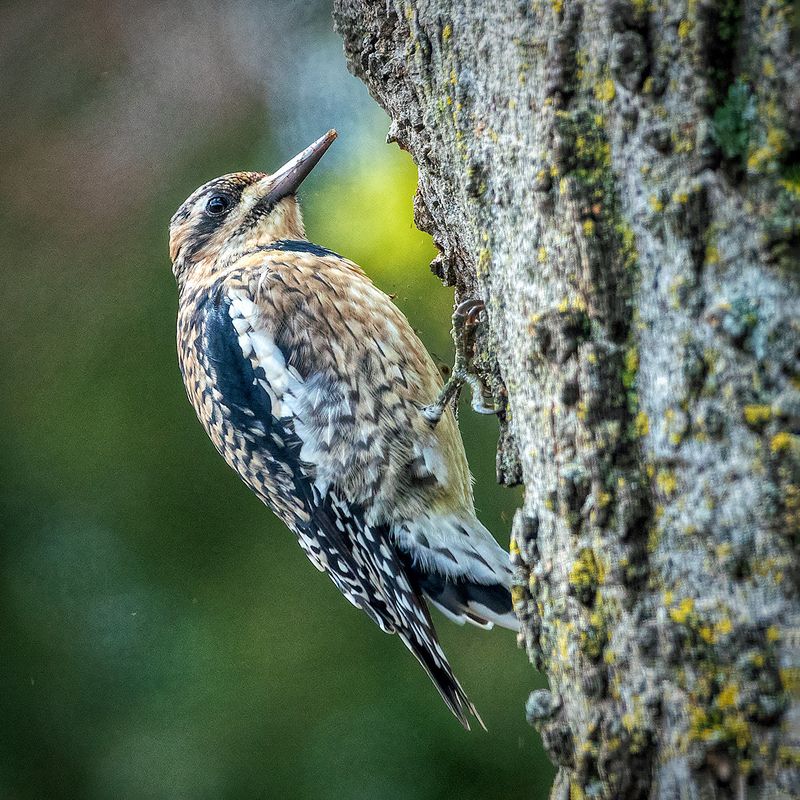
Have you ever noticed neat rows of tiny holes on a tree trunk, lined up like buttons? That is not damage from bugs. It is the handiwork of a clever woodpecker called the yellow-bellied sapsucker.
Yes, the name sounds silly. Kids love saying it, and adults secretly do too. But this bird is a real Texas winter visitor. It flies in during October and stays until spring before heading back north to nest.
Sapsuckers have a black and white pattern on the face and back. Adults wear a red patch on the forehead, and males have a red throat as well. The belly has a pale yellow wash, though it can be hard to see.
Here is how they eat. They drill small holes, called sap wells, into the bark of trees like pecan, elm, and oak. Then they come back to lick up the sugary sap that flows out. They also snack on insects stuck in the sticky liquid.
These sap wells become a neighborhood snack bar. Kinglets, warblers, and even hummingbirds visit them for a quick drink. So one sapsucker helps feed many other birds during the cold months.
Worried about your trees? Most healthy trees handle sapsucker holes just fine. If a favorite young tree gets too many, you can wrap that section loosely with burlap for the winter.
To find one, look for fresh rows of holes and listen for a soft, mewing call like a cat. Then check the trunk carefully. Sapsuckers often sit very still and blend right in with the bark.
6. Sandhill Crane
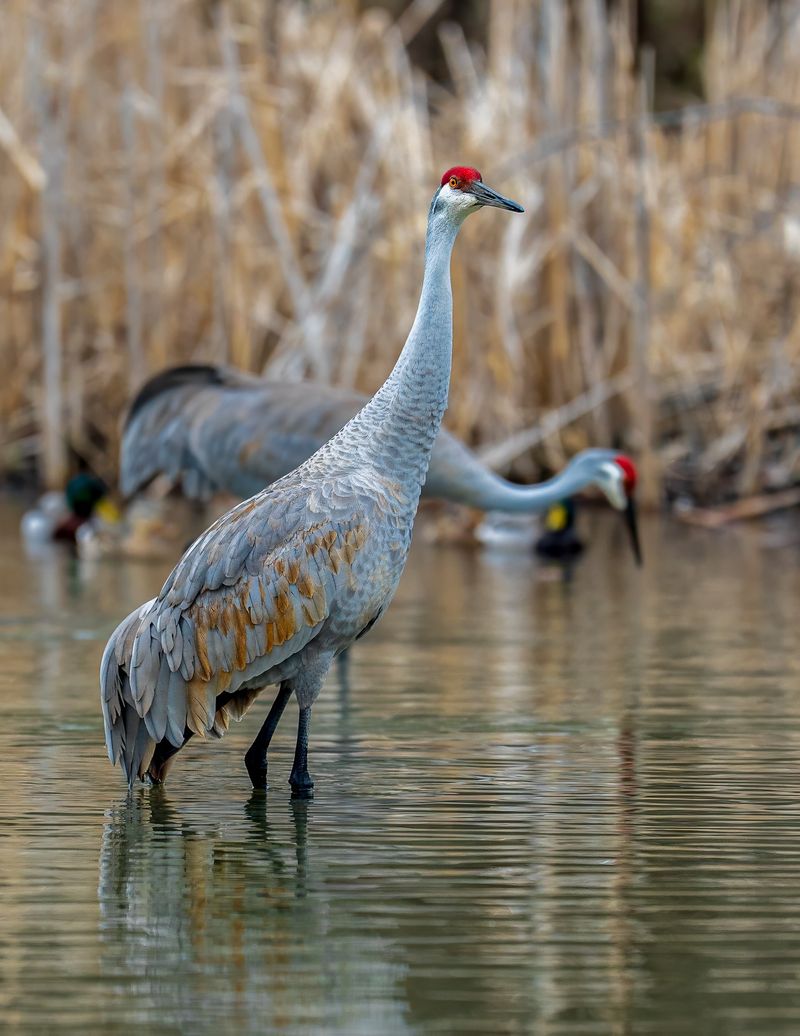
You usually hear them long before you see them. A loud, rolling garoo-a-a-a echoes across the sky, sounding almost ancient. Look up, and there they are, hundreds of sandhill cranes flying high in long, wavy lines.
Sandhill cranes are some of the oldest bird species still around today. Fossils show their relatives lived millions of years ago.
Every fall, they travel to Texas to spend the winter in the Panhandle, along the Gulf Coast, and in other parts of the state.
These are big birds. They stand around four feet tall with long legs and a long neck. Their bodies are mostly gray, and adults have a bright red patch on the forehead. Some look rusty brown because they stain their feathers with mud.
During the day, cranes gather in farm fields to eat leftover grain, seeds, roots, and insects. At night, they roost in shallow lakes and wetlands for safety. Seeing thousands return at sunset is a sight you will never forget.
Want to watch them? Head to places like Muleshoe National Wildlife Refuge in West Texas.
Go early in the morning or late in the afternoon when flocks are moving. Stay in your car or at a distance so you do not startle them.
Bring binoculars and listen closely. Cranes call to keep families together while they fly. Young cranes stay with their parents all winter, learning where to find food and safe places to rest.
Fun fact time. Sandhill cranes dance! They leap, bow, and flap their wings, sometimes even tossing sticks into the air.
7. Whooping Crane
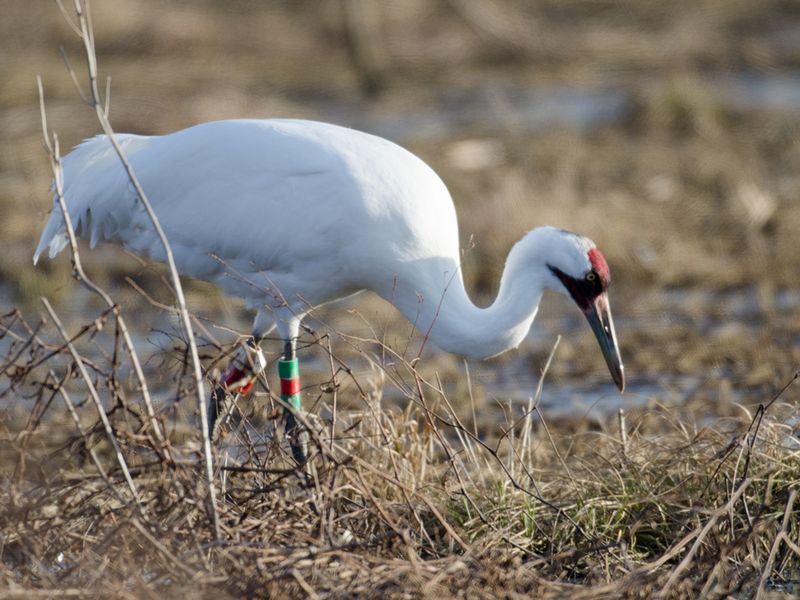
Back in the 1940s, only about 15 whooping cranes were left in the wild. People feared these birds would vanish forever. Today, thanks to years of hard work, hundreds now return to Texas every winter, and each one feels like a small miracle.
Whooping cranes are the tallest birds in North America. They stand close to five feet tall, about the height of many adults. Their feathers are bright white with black wingtips, and they have a red patch on the head.
These cranes fly about 2,500 miles from Canada to reach the Texas coast. They start arriving in late fall at Aransas National Wildlife Refuge and nearby marshes. They stay until spring, then make the long trip north again.
The Texas group is special. It is the only natural wild flock that still migrates on its own. That makes our coast one of the most important places on Earth for this endangered bird.
In winter, whooping cranes feed on blue crabs, clams, and wolfberries in salt marshes. Families defend their own patch of marsh. Their name comes from a loud whooping call that can carry for miles.
Seeing them takes a little planning. Visit the observation tower at Aransas refuge, or book a boat tour from Rockport or Port Aransas. Boats get you close without bothering the birds.
Remember to give them space and respect. Every crane matters for the future of the species. Watching one stride through the marsh is a moment you will remember, and it reminds us that caring for nature truly works.