The First Sandhill Cranes Are Arriving In Northern Indiana, With Thousands More On The Way
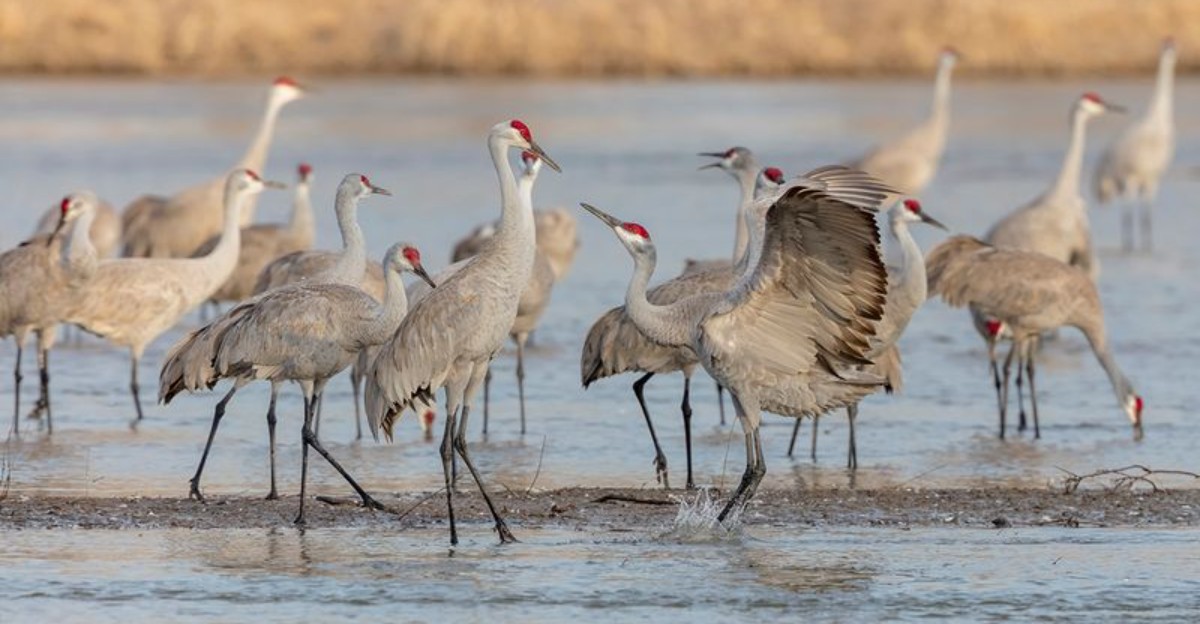
Stand near a northern Indiana marsh at sunrise, and you may hear a squeaky wooden gate. Then the sound multiplies across the frosty grass until the whole sky seems to chatter loudly.
Those noisy callers are tall gray travelers with long legs, red caps, and big appetites for corn. They are flying south from Canada and the Great Lakes, and the first groups are landing.
A few hundred birds show up early, like guests arriving before the party snacks are ready. Within a couple of months, their numbers can swell into the tens of thousands over quiet harvested farm fields.
Indiana hosts one of the biggest fall gatherings of these birds east of the Mississippi River. Families drive for hours to watch them glide in at dusk with wings like gray umbrellas.
Some visitors bring cameras, some bring binoculars, and most bring cocoa to beat the chilly breeze. Young visitors sometimes squawk back at the flock, and the birds rarely seem impressed.
Early Arrivals Touch Down At Jasper-Pulaski
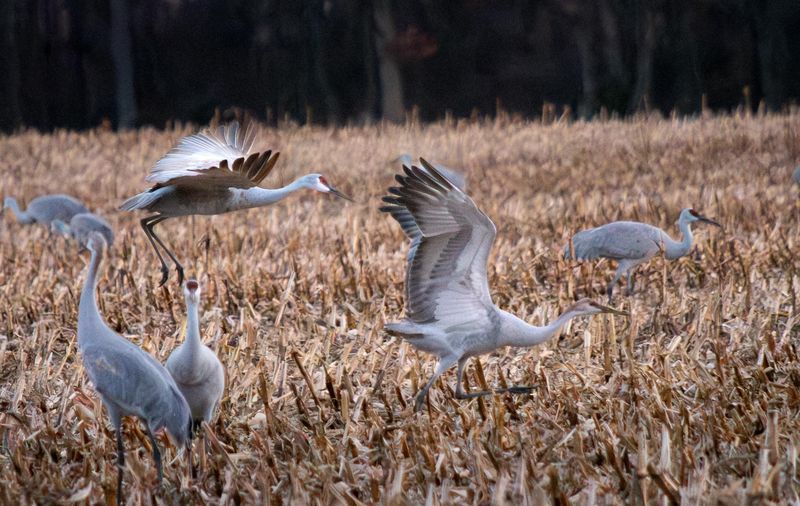
Picture a cool October morning at the Jasper-Pulaski Fish and Wildlife Area near Medaryville, with mist hanging low. Suddenly a ragged line of gray birds drops from the clouds, legs dangling, calling loudly as they land.
Those first sandhill cranes usually reach northern Indiana in late September or early October each fall season. Early counts are often modest, with a few hundred to a couple thousand birds resting in the marshes.
Those small numbers are the opening act, like the first few kids arriving at a school bus stop. More flocks follow every week as colder air pushes south from Michigan, Wisconsin, Ontario, and other northern places.
Jasper-Pulaski is a favorite stopover because it offers shallow wetlands for sleeping and nearby fields for feeding. Standing in shallow water at night helps the cranes stay safer from coyotes and other hungry visitors.
The state wildlife staff at the property begin weekly crane counts in the fall, usually starting around October. Those numbers get posted online, so you can check progress before planning a trip with your family.
A fun detail to remember is that sandhill cranes are among the oldest bird species still living today. Fossils suggest their family has been around for millions of years, long before anyone built a highway.
So if you spot a few early birds this week, consider it a preview of something much larger. The real crowd is still packing its bags up north, and it seems ready to make plenty of noise.
The Great Lakes Flyway Route
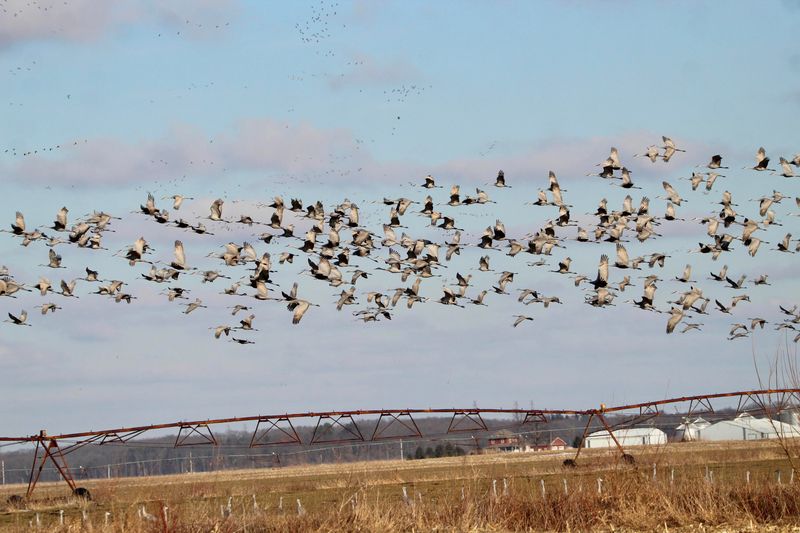
Many young cranes flying over Indiana this month are following a path their parents showed them. The youngsters stay with their families for about ten months, learning stopover spots by flying right alongside them.
Scientists call this group the Eastern Population of greater sandhill cranes, and it nests across the upper Great Lakes. Many birds spent the summer in Michigan, Wisconsin, Minnesota, and Ontario, raising one or two fuzzy chicks.
As days shorten and frost touches the north, the families gather into bigger flocks and start heading south. Northern Indiana sits right in the middle of their route, making it a perfect rest stop.
Your Indiana Garden Changes Every Week. Your Plan Should Too.
Gardening in Indiana changes quickly throughout the season. Every Friday you’ll receive a simple weekly plan showing exactly what to plant, prune, fertilize, harvest, and protect so you never miss the right timing.
Think of Jasper-Pulaski as a giant highway gas station, but with marsh mud instead of snacks. The cranes refuel on waste corn, insects, snails, and roots before continuing toward Tennessee, Georgia, or Florida.
Some birds stay in Indiana for weeks, while others rest briefly and move on when a strong north wind blows. Cranes love riding those tailwinds because it saves energy, much like coasting downhill on a bicycle.
They also use rising pockets of warm air called thermals, circling higher and higher without flapping much. Watch for spiraling flocks on sunny afternoons, since they often look like slowly turning gray ribbons in the sky.
Weather plays a big role, so a warm fall can delay arrivals while an early cold snap speeds things up. Checking forecasts for north winds can help you guess when the next big wave might appear overhead.
Peak Numbers Arrive In Late Fall
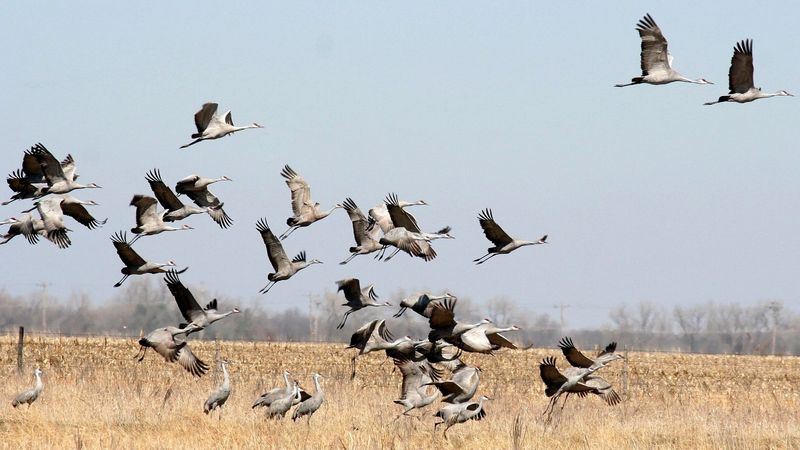
Over 30,000 sandhill cranes have been counted at Jasper-Pulaski at once during strong migration years. That number can be hard to imagine, so picture a packed football stadium where every fan has wings.
Early October brings the warm-up crowd, but the true peak usually lands in late November or early December. Some years the birds linger into December, especially when snow stays away and fields remain open.
Weekly counts from the Indiana Department of Natural Resources help birders track the rising totals as fall goes on. Those reports work like a scoreboard, showing whether the flock is still growing or starting to thin out.
Timing your visit matters more than most people expect, since the birds keep a fairly strict daily schedule. At sunrise they lift off from the marsh and scatter into nearby farm fields to feed for hours.
The best show comes about an hour before sunset, when flock after flock returns to the open meadow. Midday visits can feel quiet and a little disappointing, so plan your arrival for late afternoon instead.
If you go in early October, you will likely see smaller groups with more space to watch each bird. Fewer crowds mean easier parking, quieter viewing, and a better chance to notice young cranes with brownish heads.
Plenty of families make two trips, one now for a calm preview and another in late fall for the noise. Comparing both visits turns into a fun science lesson about how migration slowly builds across the season.
Common Viewing Mistakes At The Marsh
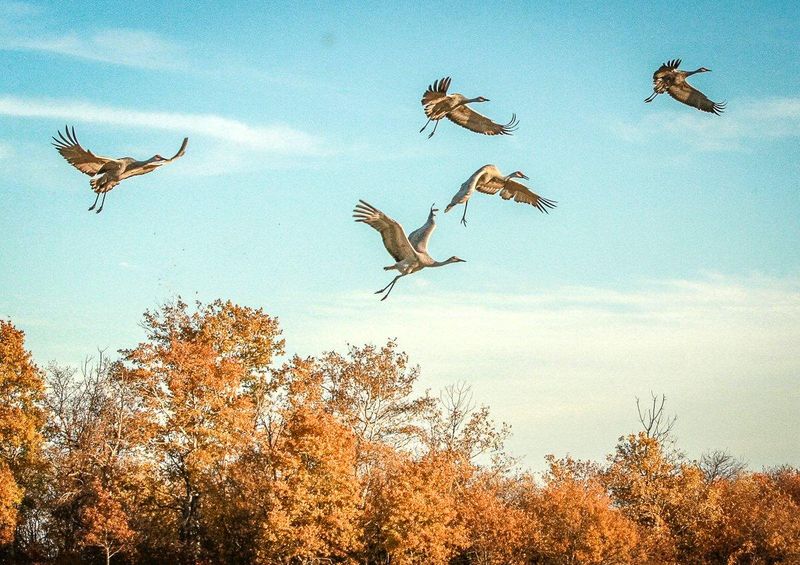
Somebody in every crowd tries to sneak closer for a better photo, and the whole flock lifts off in protest. Cranes are wary birds, and walking toward them wastes the energy they need for their long trip.
Another common slip is arriving too early in the day and leaving before the evening flights begin. People see an empty field at noon, shrug, and drive home just before thousands of birds return.
Dressing too lightly ranks high on the list, since October evenings in northern Indiana can turn chilly fast. The wind sweeps across open fields with nothing to slow it down, so pack gloves, hats, and layers.
Some visitors forget binoculars, then squint at tiny gray dots far across the Goose Pasture meadow. Even an inexpensive pair helps you see the bright red forehead patch and those striking orange eyes.
Feeding the cranes might seem friendly, yet tossing bread or corn teaches them to approach people and roads. Birds that lose their natural caution often get into trouble with cars, dogs, and grumpy landowners.
Pulling over on busy county roads to watch feeding flocks is another risky habit worth breaking quickly. Farm trucks and school buses use those roads, so find a safe pullout or stick to the official viewing area.
Loud voices and slamming car doors can also startle the flock, especially during the calm moments before sunset. Let the cranes do the talking, because honestly, their rattling bugle calls are much more entertaining anyway.
Best Visits From The Goose Pasture Observation Platform
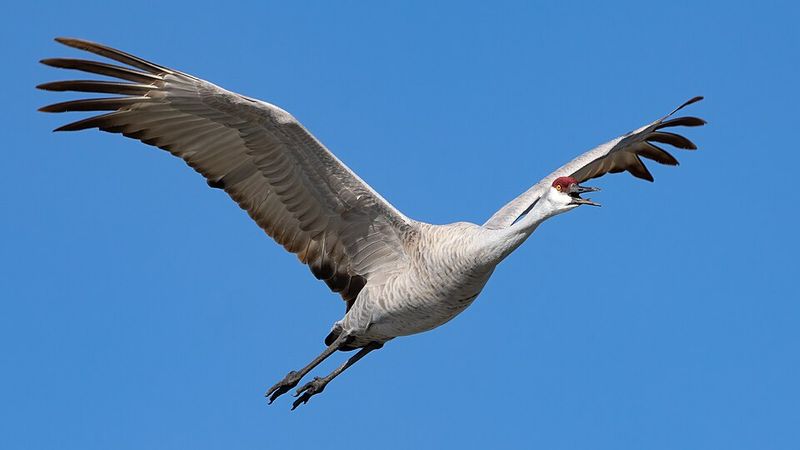
A thermos of cocoa, a frosty railing, and a sky slowly filling with wings make for a classic crane evening. That railing belongs to the observation platform overlooking Goose Pasture, the main viewing spot at Jasper-Pulaski.
The property sits along State Road 143, just west of U.S. 421, about two and a half hours northwest of Indianapolis. Chicago families can usually make the drive in about an hour and a half, depending on traffic near the state line.
The observation platform is open to visitors throughout the fall migration season, and the DNR posts any alerts online. Plan to arrive at least an hour before sunset so you can grab a good spot along the rail.
Bring binoculars, a camera with zoom, and something warm to drink while you wait for the evening flights. A small folding stool helps younger kids see over the railing without getting tired or cranky.
Listen closely as the light fades, because you will often hear incoming flocks long before you can see them. Their calls can travel well over a mile, thanks to an extra-long windpipe coiled inside their chest.
Keep an eye out for pairs leaping and flapping together, a dance that cranes perform even outside nesting season. Younger birds seem to dance just for fun, which makes the whole meadow feel like a lively playground.
Before leaving, check the restrooms and parking rules posted near the entrance, since weekends can get busy. A calm, patient visit usually rewards you with a sunset sky full of echoing calls and sweeping wings.
A Comeback Story Worth Protecting
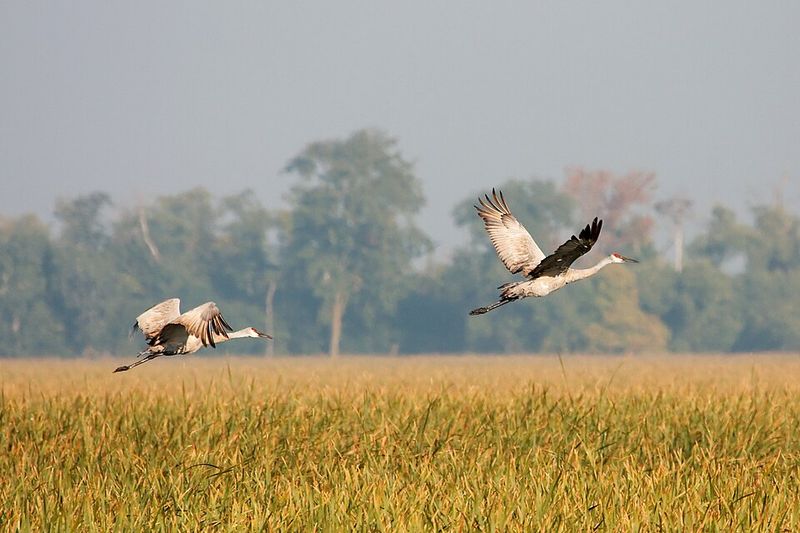
Back in the 1930s, people in Indiana could rarely spot a sandhill crane, because so few were left anywhere nearby. Overharvest and the draining of wetlands for farmland had pushed the eastern population down to a small remnant.
Protection laws, restored marshes, and places like Jasper-Pulaski gave the birds room to recover over many decades. Today the eastern population is estimated at more than 100,000 birds, a remarkable turnaround for any species.
Some cranes now even nest in northern Indiana marshes, a sight that would have amazed birders long ago. That success still depends on healthy wetlands, which continue to face pressure from building projects and pollution.
You can help in simple ways, starting with respectful viewing habits whenever you visit a crane gathering spot. Stay on marked paths, keep dogs leashed, and give feeding flocks plenty of space in farm fields.
Joining a local bird count is another fun option, since scientists rely on volunteers to track population changes. Apps like eBird let you log your crane sightings from a phone in just a few minutes.
Supporting wetland groups or buying a state park pass also helps fund habitat work across Indiana each year. Even a small donation can help restore marshes where cranes, ducks, frogs, and turtles find shelter together.
Every October, the first cranes gliding into northern Indiana carry a quiet message about patience and second chances. Keep their wetlands healthy, and the noisy show overhead should continue for many more falls to come.