This Invasive Beetle Is Spreading Through Texas Faster Than Anyone Expected
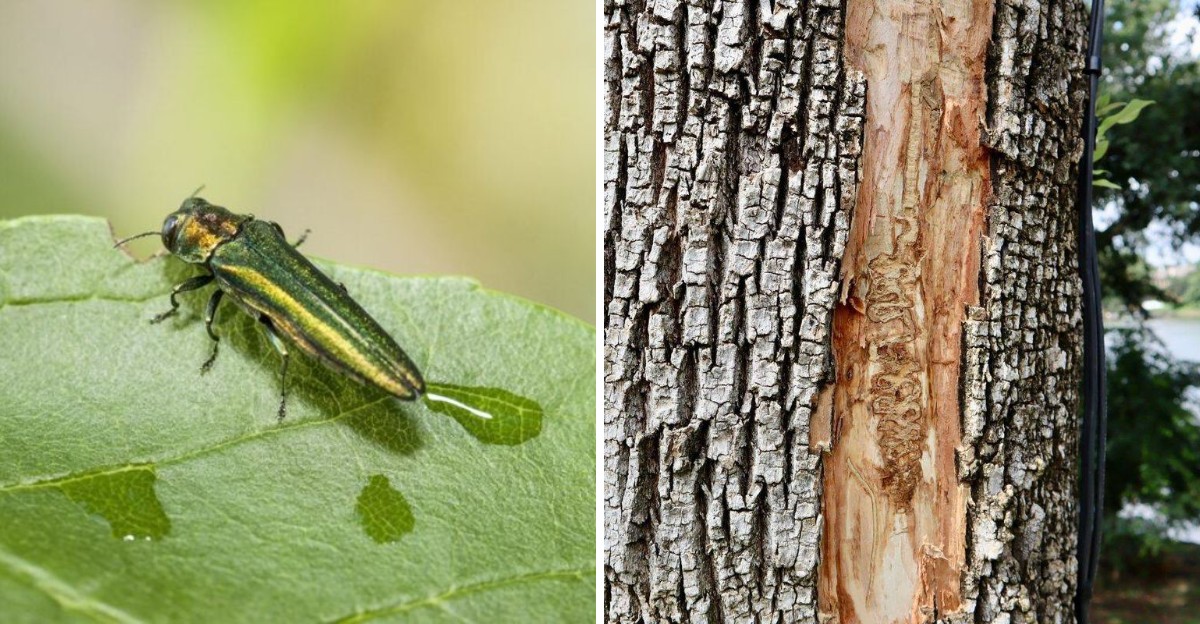
It’s smaller than a penny, but it has already wiped out hundreds of millions of trees across North America.
This invasive beetle first showed up in Michigan in the early 2000s, likely hitching a ride from Asia in wooden shipping material.
From there, it spread state after state, leaving bare, broken canopies in its path. For years, Texas seemed safely out of reach.
Not anymore. Since it was first spotted in East Texas, it has been turning up in more and more counties, including busy areas around Dallas and Fort Worth. The trees it targets are common in yards, parks, and along city streets, so the stakes are high.
The tricky part is that the damage begins out of sight, under the bark. By the time most homeowners notice, the tree may already be in serious trouble. Knowing the warning signs could help protect the shade trees you love.
The Invasive Tree Destroyer
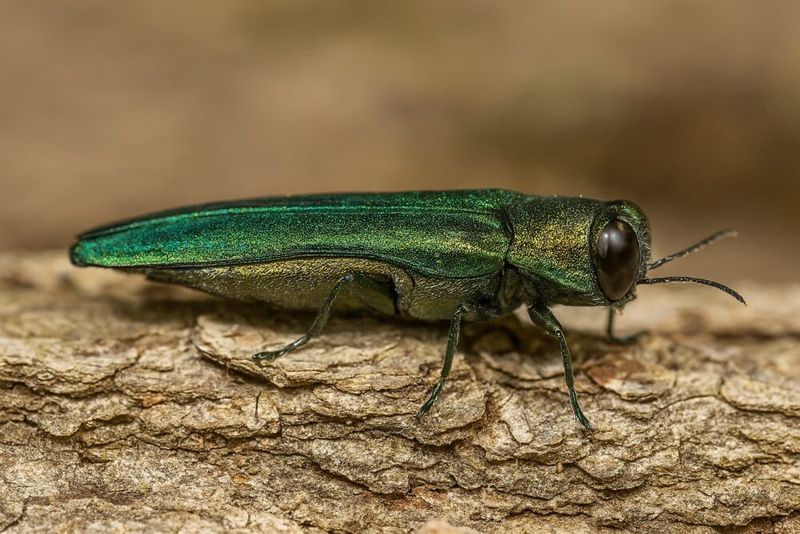
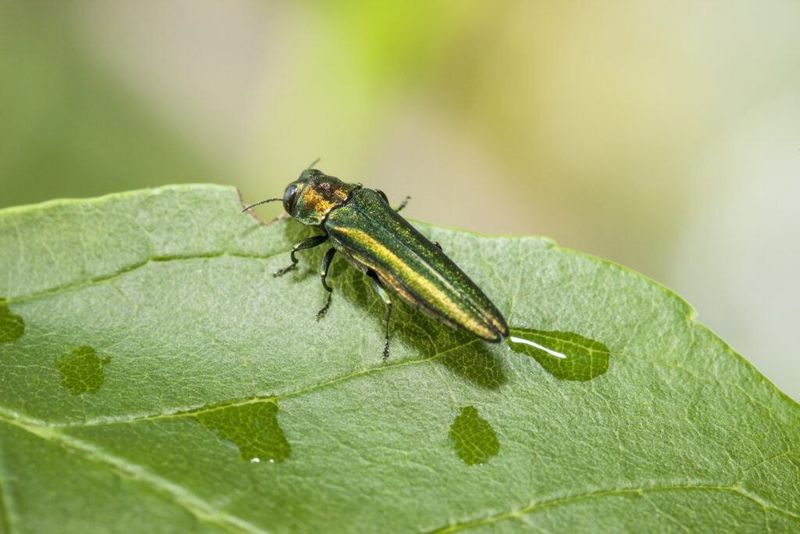
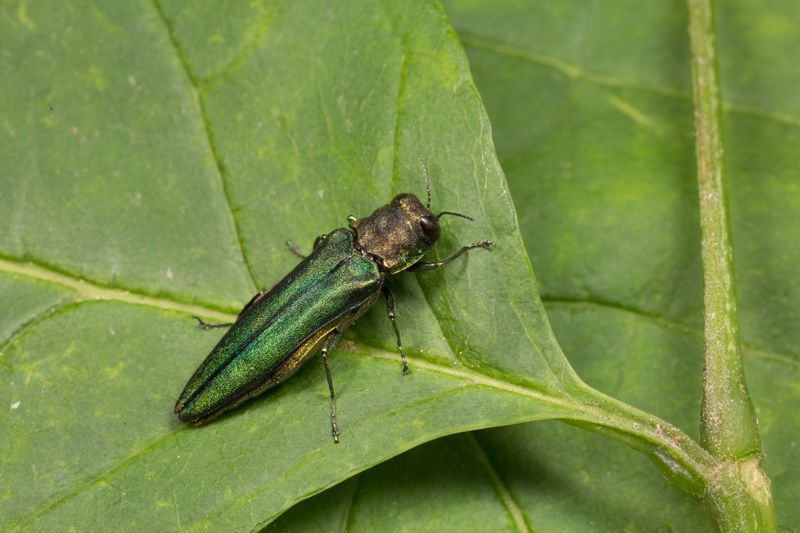
Shiny and green like a tiny jewel, the emerald ash borer looks almost pretty. Do not let its good looks fool you. It is one of the most harmful tree pests in American history.
The beetle is native to eastern Asia. In places like China and Korea, local trees and predators keep it in check.
Scientists think it reached North America by hiding in wooden shipping crates. It was first found near Detroit, Michigan, in 2002.
Since then, it has spread to more than 35 states. Along the way, it has wiped out hundreds of millions of ash trees. That is a staggering number of lost shade trees, park trees, and forest trees.
Adult beetles are only about half an inch long. You could line up three of them across a quarter.
Their bodies are narrow and bullet shaped, with a bright metallic green color. When they lift their wings, you can see a coppery red back underneath.
Fun fact: the beetle only attacks ash trees and a few close relatives, like the white fringetree. Oaks, maples, and pecans are safe from it. That picky diet makes it easier to know which trees need watching.
Ash trees are very common in Texas cities and along creeks. Builders planted many of them because they grow fast and handle tough weather. Sadly, that popularity means lots of trees are now at risk.
Here is a helpful tip. Learn how to spot an ash tree in your yard. Look for leaves made of five to nine small leaflets, with branches growing directly across from each other. Knowing your trees is the very first step in protecting them.
A Big Year Of Spread In Texas
Eight new counties in a single year. For tree experts, that number felt like a loud alarm bell. The emerald ash borer has never moved this fast in Texas before.
Let’s rewind a bit. The beetle was first spotted in Texas back in 2016, in Harrison County near the Louisiana border.
For a few years, it spread slowly, showing up in a handful of northeast counties. Many people hoped it would stay put.
Your Texas Garden Changes Every Week. Your Plan Should Too.
Gardening in Texas changes quickly throughout the season. Every Friday you’ll receive a simple weekly plan showing exactly what to plant, prune, fertilize, harvest, and protect so you never miss the right timing.
Then came this year. In June, officials confirmed the beetle in Young, Montague, and Clay counties. These are in North Texas, close to the Oklahoma line. It was a sign the pest was pushing west.
August brought even more news. The beetle turned up in Delta, Erath, Hardin, Walker, and Wood counties. That brought the yearly total to eight new spots on the map. Some of these places are hundreds of miles apart.
So how do scientists find it? They hang special purple or green traps in trees. The colors and scents attract the beetles. Workers then check the traps and send suspicious bugs to labs for testing.
The quick jump in new counties tells experts something important. The beetle may have been hiding in some areas for years before anyone noticed. Infested trees often look healthy at first, so the problem stays secret.
Want to stay informed? Check the Texas A&M Forest Service website for updated county maps.
If you live in or near one of these counties, start paying closer attention to your ash trees now. Early awareness gives you more choices and more time to act.
Why Experts Are Surprised
Nobody expected to find it this far south. When the beetle showed up in Hardin County, it set a new record.
Hardin County, in Southeast Texas near Beaumont, is now the southernmost known location for the emerald ash borer in the whole United States.
Why is that such a shock? For years, many people believed the beetle liked cooler climates. Its early spread happened in places like Michigan, Ohio, and Pennsylvania. Hot, humid Southeast Texas seemed like a poor fit.
Well, the beetle had other ideas. A Texas A&M Forest Service coordinator explained it simply. Wherever ash trees extend south, this pest has been able to follow.
That idea changes everything. The beetle does not seem to care much about heat. It mostly cares about food. If ash trees grow there, the beetle can probably live there too.
Southeast Texas has plenty of green ash and Carolina ash. These trees grow along rivers, bayous, and swamps. They help hold soil in place and provide homes for birds and other wildlife.
Here is something to think about. If the beetle can thrive near Beaumont, then cities like Houston and Austin may also be at risk. Both have large numbers of ash trees in yards and parks.
The lesson is clear for anyone in the southern half of the state. Do not assume your area is too warm to be safe.
Keep an eye on your trees and share what you learn with neighbors. A little shared knowledge can help a whole street catch problems early.
How It Destroys Ash Trees
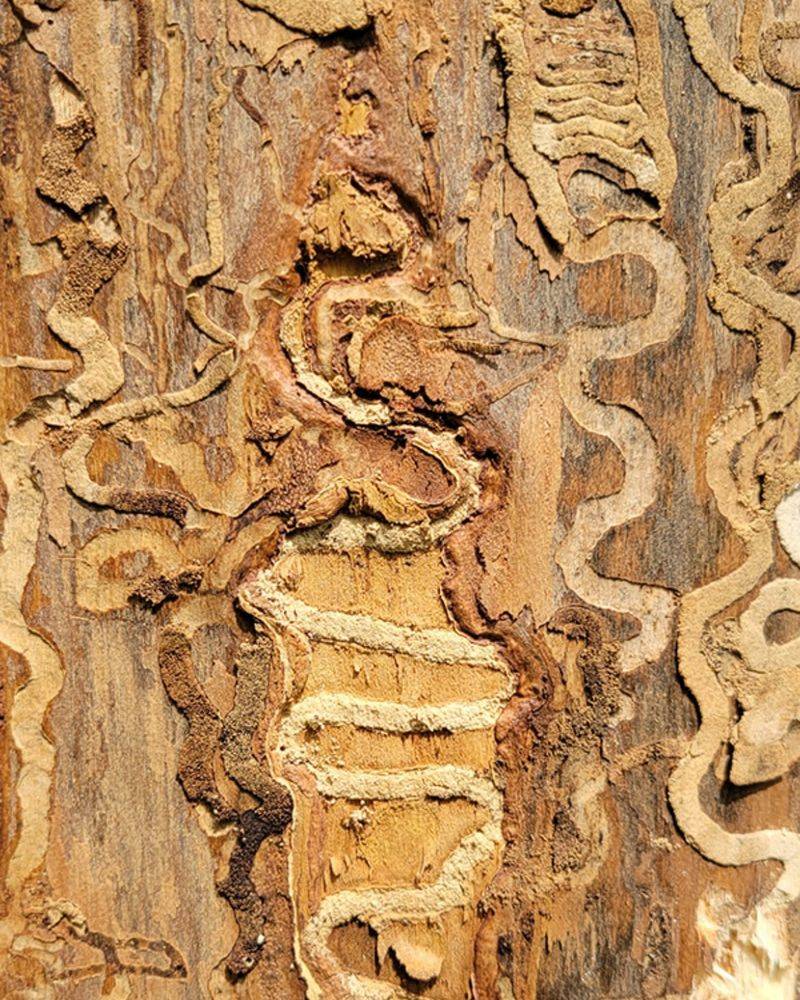
Think of a tree trunk like a giant straw. Just under the bark, thin layers of tissue carry water up from the roots.
Other layers carry food made in the leaves back down. When those pathways get blocked, the tree is in serious trouble.
That is exactly what the emerald ash borer does. Adult females lay eggs in cracks in the bark. When the eggs hatch, tiny creamy white larvae chew their way inside.
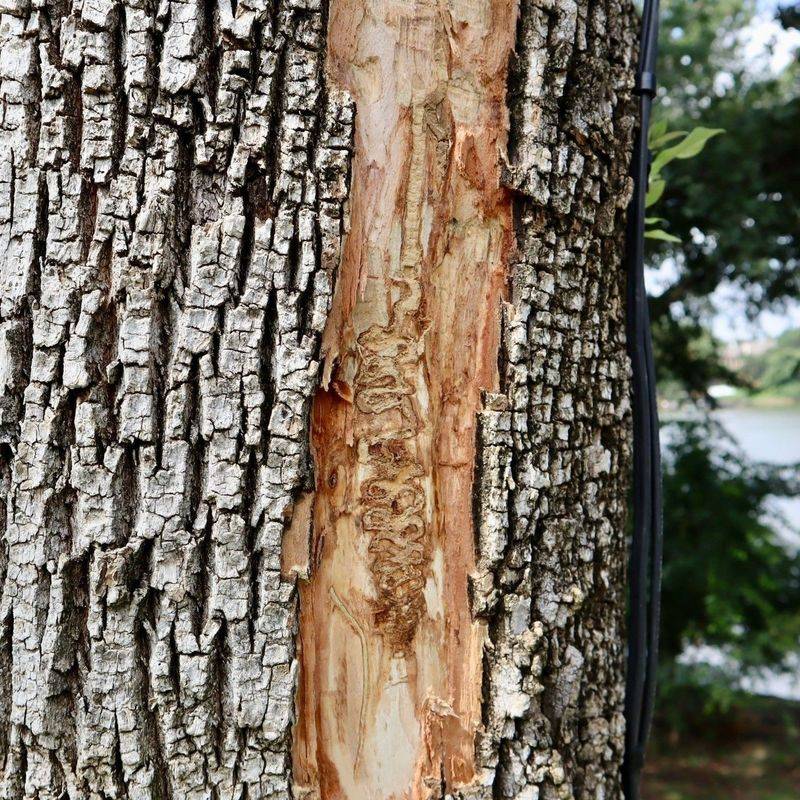
The larvae are the real villains of the story. They feed on the soft layers beneath the bark for one or two years. As they eat, they carve winding, S-shaped tunnels.
Those tunnels cut right through the tree’s water and nutrient highways. Slowly, the tree starves. It cannot feed its leaves or send energy to its roots.
At first, you might not see anything wrong. Then the top of the tree starts to look thin. Leaves become smaller and sparser. Branches near the top begin to dry out and lose their leaves, which experts call dieback.
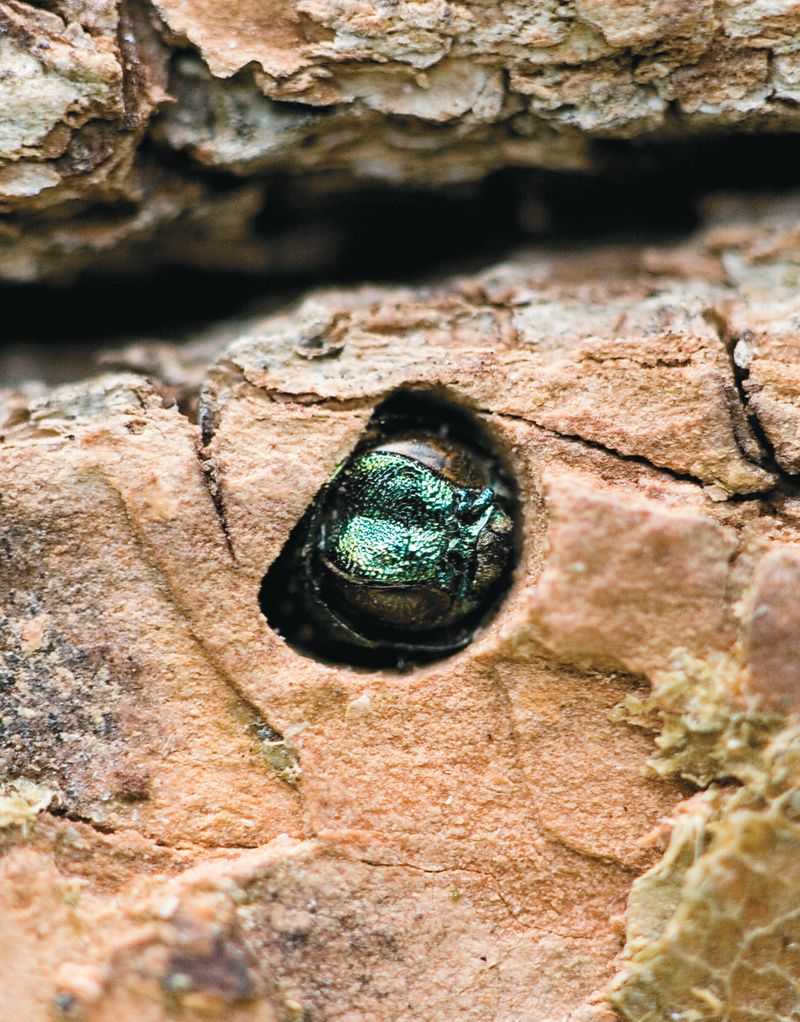
Other clues pop up too. Look for small D-shaped holes in the bark, about the size of a pencil eraser. That is where adult beetles chewed their way out. You may also spot bark splitting or woodpeckers pecking a lot at the trunk.
Woodpeckers love eating the larvae, so heavy pecking is a big hint. Within a few years, an untreated tree usually cannot recover.
Once it reaches that point, it also becomes brittle and can drop limbs, which is a safety concern near homes.
How People Help It Spread
Here is a surprising truth. The emerald ash borer is not a strong long-distance traveler on its own. Adults usually fly less than half a mile from where they hatch, though some can go a few miles.
So how did it jump across Texas so quickly? Unfortunately, people often give it a free ride. Nobody means to, of course. But it happens more than you might guess.
The biggest culprit is firewood. Larvae can hide under the bark of cut logs for months. Someone loads that wood into a truck, drives to a campsite or a lake house, and the beetles hatch in a brand new place.
Logs, wood chips, and other ash wood products can carry hidden beetles too. Nursery trees moved without checks have also spread the pest in other states. One trip can move the beetle farther than it could fly in years.
That is why Texas officials share a simple saying. Buy it where you burn it. Pick up firewood near your campsite instead of hauling it from home.
Here are a few easy habits to follow. Use local firewood whenever you go camping or hunting.
Look for certified heat-treated firewood, which has been heated to destroy any hidden pests. Burn all the wood you buy so none gets left behind.
Also, never bring ash logs from an infested county into a new area. If you are unsure where wood came from, just leave it.
These small choices may feel minor, but they add up. Every camper who follows the rule helps protect forests for the next family.
What Texas Homeowners Should Do
Good news first: you are not helpless. If you own ash trees, there are clear and practical steps you can take today. A little attention now can save you money and worry later.
Start by checking your trees a few times each year. Stand back and look at the canopy, which is the leafy top of the tree.
Is it thinner than it used to be? Are the top branches bare while lower ones still have leaves? Those are warning signs.
If you notice thinning or dieback, reach out to the Texas A&M Forest Service. Their experts can help you figure out what is going on. They can also explain your management options in plain terms.
Some healthy, valuable trees can be protected with insecticide treatments. These usually need to be repeated every year or two. A certified arborist can tell you if treatment makes sense for your tree.
Other trees may be too far gone. In that case, safe removal by a professional is often the best choice. Damaged ash trees become brittle and can fall unexpectedly.
You should also know about quarantines. In counties where the beetle is confirmed, the Texas Department of Agriculture sets rules that limit moving potentially infested wood.
That includes firewood, logs, and some nursery stock. Following these rules keeps the pest from hopping to new areas.
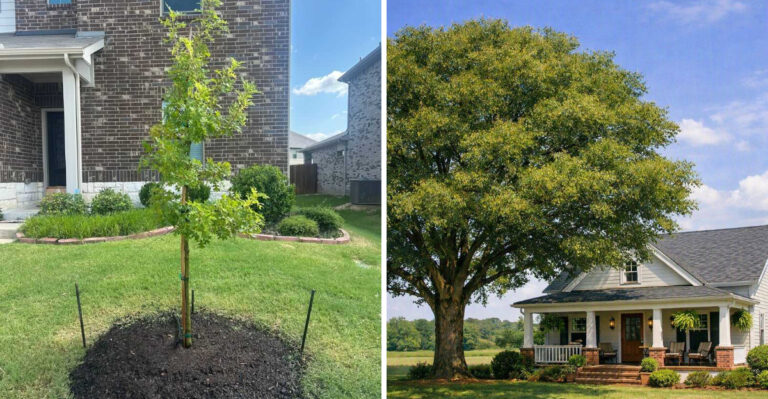
Planning to plant a new tree? Choose a variety of species instead of just one kind. Native oaks, cedar elms, and bald cypress are great picks in many parts of Texas.
A mix of trees makes your yard and neighborhood much tougher against future pests.