The Colorful Little Bird Florida Yards Only Get For Half The Year
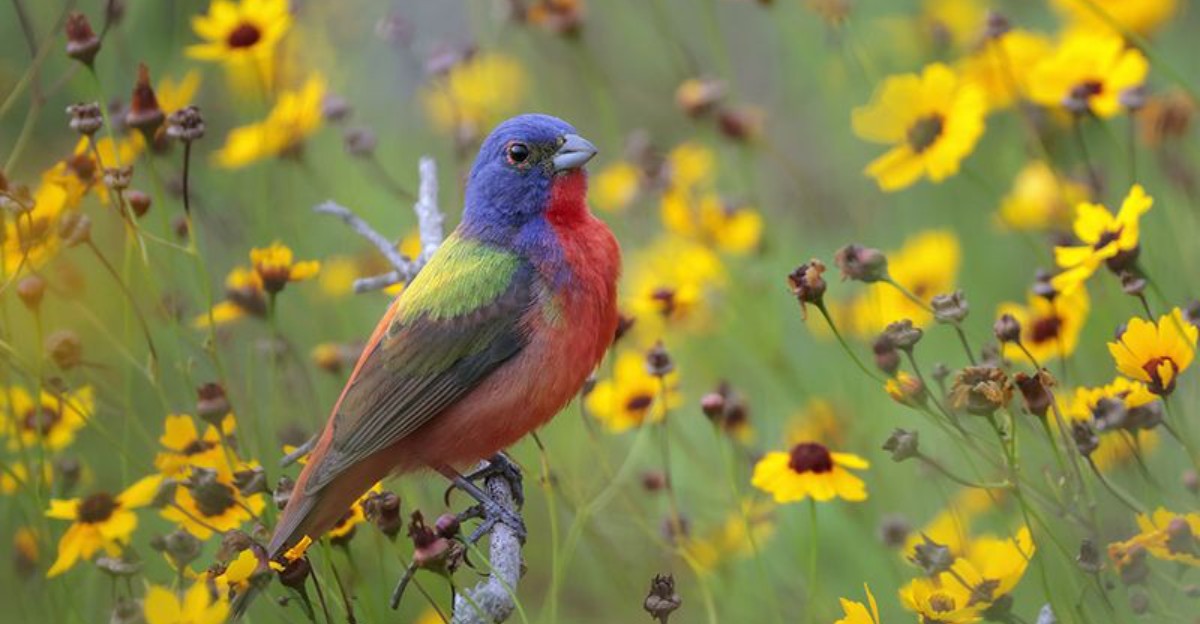
Blink in April and it’s gone. Blink in October and it’s back, wearing colors that look like a kid got hold of the whole crayon box.
This little traveler treats your Florida yard like a seasonal rental. It shows up, settles in for the cooler months, then packs its bags and heads north without a goodbye.
Plenty of homeowners never spot it at all. It’s shy, it ducks into cover, and it rarely poses on a feeder like a show-off.
The ones who do catch a glimpse usually stop mid-chore and stare.
A few small touches in your yard decide whether this visitor books a stay or flies right past your fence.
Learn what it looks for before the season is over.
1. Meet The Painted Bunting
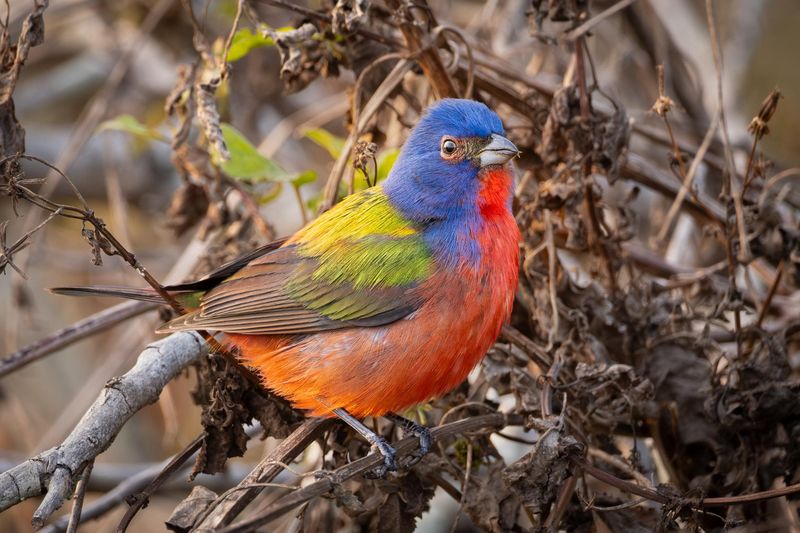
French settlers had a perfect nickname for this bird. They called it nonpareil, which means without equal.
One look at a Painted Bunting and you will see why. Its scientific name is Passerina ciris, and many birders rank it among the most colorful songbirds in North America.
For all that flash, the bird is tiny. It measures about 4.7 to 5.5 inches long, roughly the length of a crayon box.
It also weighs only half an ounce or so. That is about the same as a few sheets of paper, which makes its bold colors even more surprising.
Look closely and you will spot a short, thick bill. That stubby beak is built for cracking seeds, a bit like a tiny nutcracker.
A pale ring around each eye is another clue. It gives the bird a wide-eyed, curious look that is fun to notice.
Spotting one can feel like winning a small prize. These birds tend to hide in thick bushes, so a clear view is a treat.
Listen for the male in spring and summer. His song is a high, bouncy warble that changes from note to note.
Once you hear it a few times, your ears will start picking it out. That sound often gives the bird away before your eyes do.
2. Males Wear Blue, Green And Red
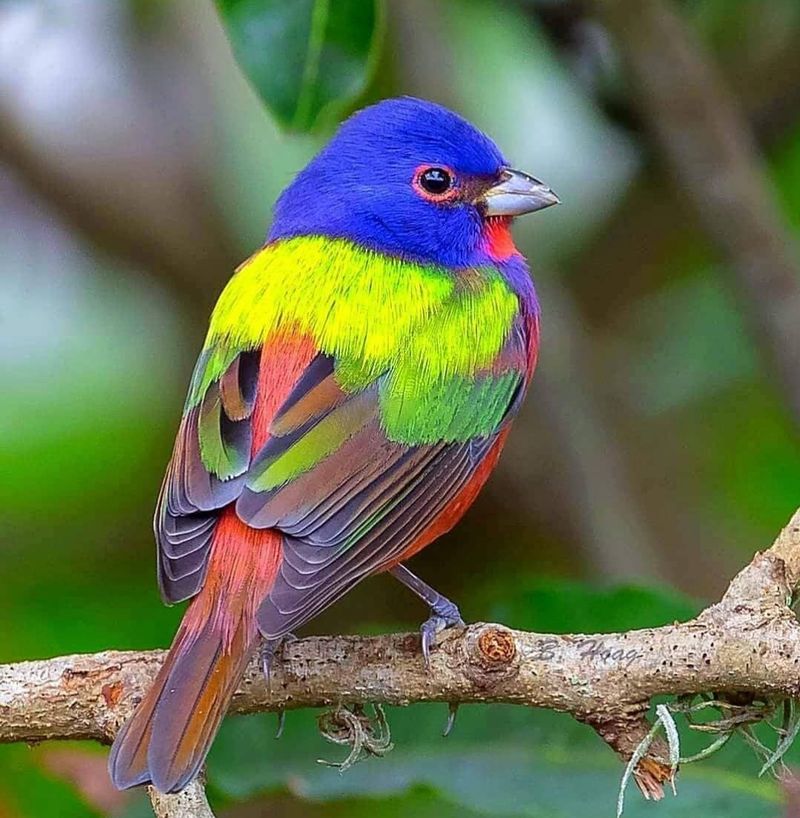
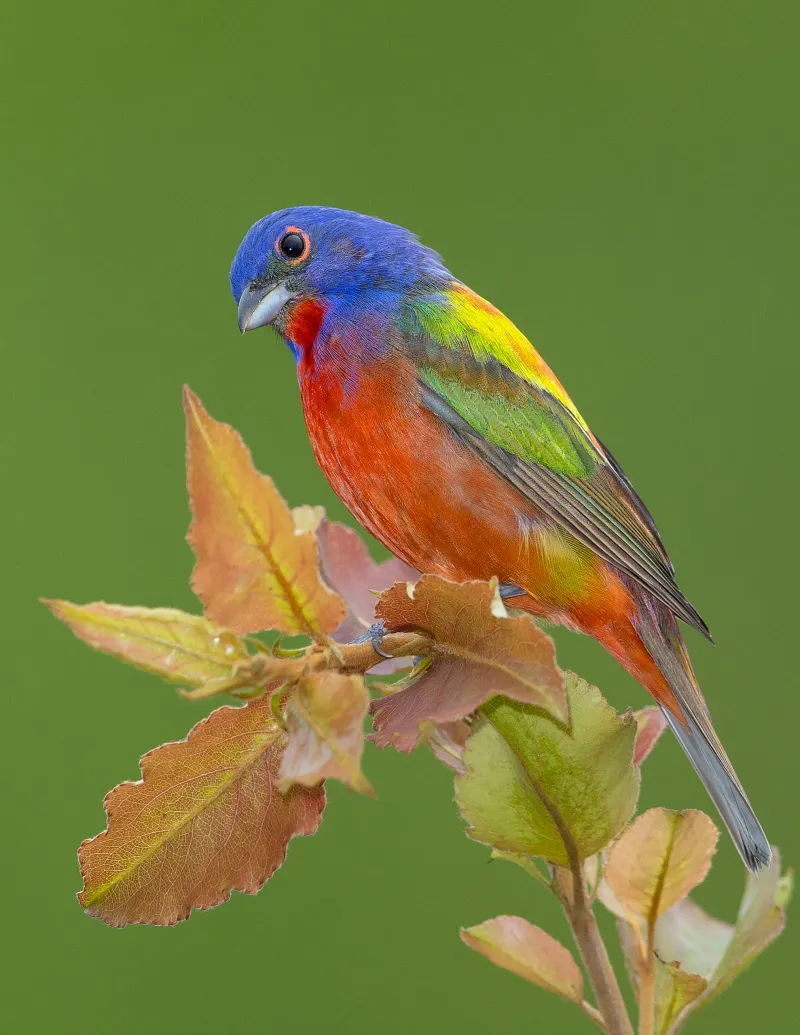
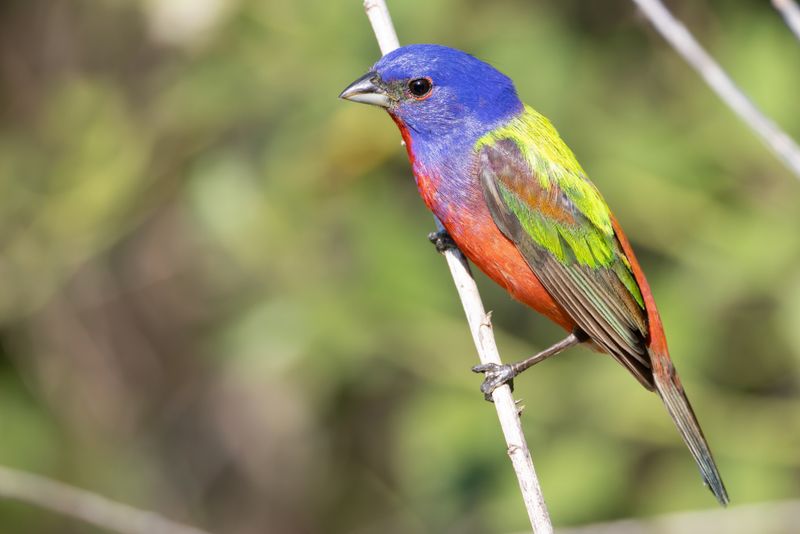
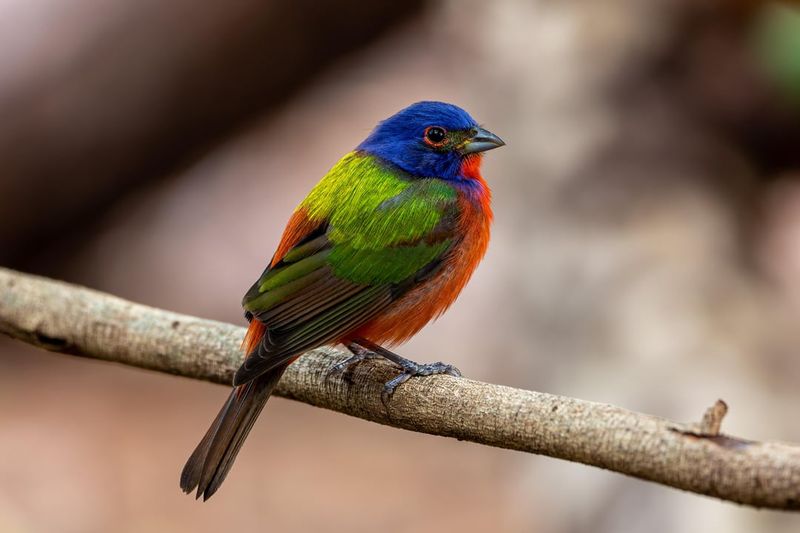
Imagine a kid let loose with three paint pots and no rules. That is pretty much what an adult male Painted Bunting looks like.
His head is a rich, bright blue. His back shines a vivid green, almost like a fresh lime.
Then comes the red. His throat, chest, belly, and rump glow a strong cherry color that pops against any green leaf.
Put all those colors together and you get a bird that seems unreal. People seeing one for the first time often think it escaped from a pet store.
Here is a fun twist, though. Young males do not get this outfit right away.
A male needs about two years to grow his full colors. During his first year, he looks mostly green, much like the females.
So if you see a green bunting with a few odd specks of blue or red, you may be watching a teen male. He is still working on his fancy look.
Your Florida Garden Changes Every Week. Your Plan Should Too.
Gardening in Florida changes quickly throughout the season. Every Friday you’ll receive a simple weekly plan showing exactly what to plant, prune, fertilize, harvest, and protect so you never miss the right timing.
Keep a notebook if you have a regular visitor. Some backyard watchers track the same young male as his feathers change over time.
Watching that glow-up happen is a lot of fun. It turns simple bird feeding into a real nature story you can follow.
3. Females Shine In Bright Green
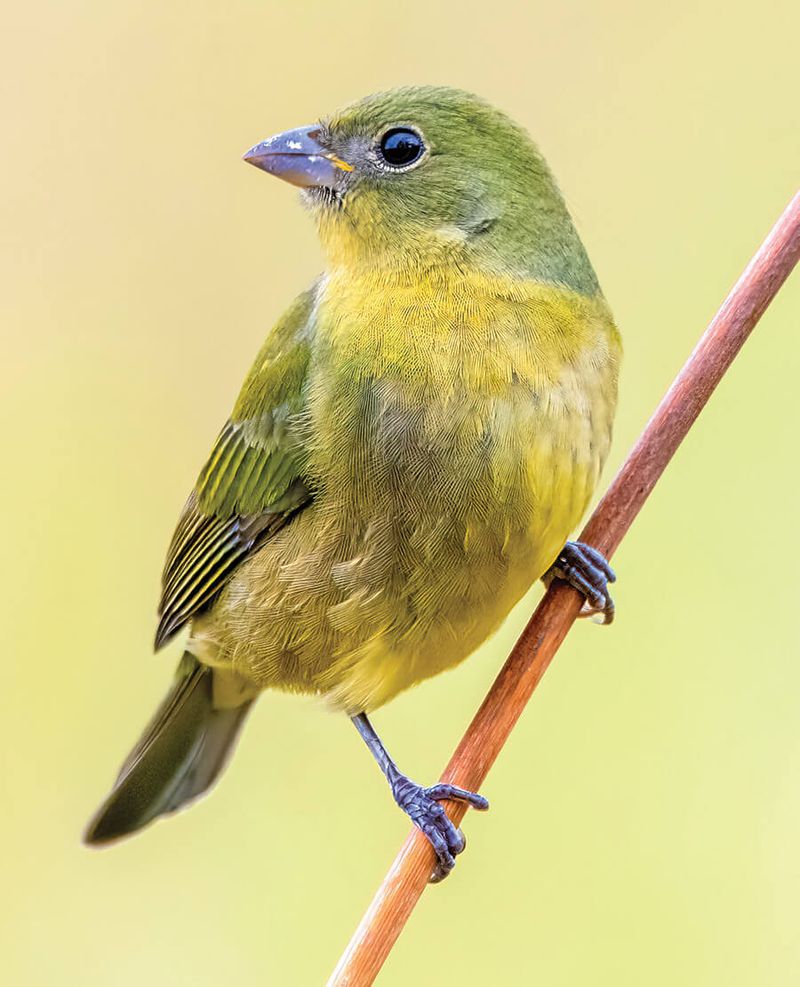
Plenty of folks overlook the female Painted Bunting at first. That is a mistake, because she has a style all her own.
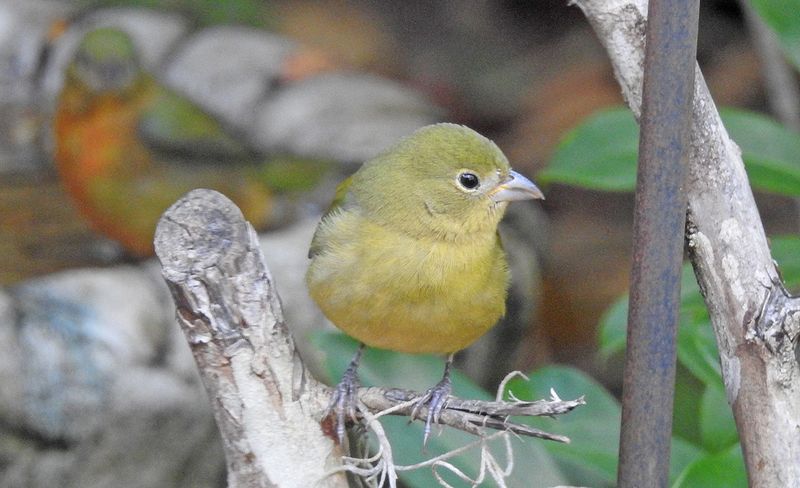
Her feathers are an even, bright yellow-green from head to tail. Many birders call it lime green, and the color is cheerful and clean.
Plenty of small birds are a dull olive or brownish green. Hers is greener and truer, which helps set her apart from look-alikes.
She also has the same pale eye-ring as the male. That light circle gives her face a soft, alert look.
Her color is not just for looks. A green bird blends right into leafy bushes, which helps keep her hidden while she feeds or tends a nest.
Here is where things get tricky for beginners. Young males share this green coat, so a green bunting is not always a female.
Check for small flecks of blue or red. If you spot them, you are likely looking at a young male instead.
A good tip is to watch for a few minutes. Green buntings often show up with the bright males, so one sighting can lead to another.
Once you learn to spot her, you will notice her more often. Many birders end up loving that lime green just as much as the male’s rainbow.
4. They Arrive In Fall And Stay Into Spring
Mark your calendar for October. That is when the fun usually starts for bird lovers.
Eastern Painted Buntings begin heading south between early October and mid-November. As they arrive, yards across much of the state get a fresh splash of color.
Once here, they settle in for a long stay. Most can be seen from October through about the first half of April.
That is roughly six months of bright visitors. It is why this bird is known as a half-year guest in many yards.
Then spring stirs things up. The trip north begins in March, and some birds reach Gulf Coast states, including the Florida Panhandle, by early to mid-April.
Here is a quirky detail. Males may leave about a week before the females on the way back north.
So if your bright males seem to vanish first, do not worry. The green birds may stick around a little longer before they go too.
A smart move is to set up feeders by late September. That way, the first travelers find food waiting when they drop in.
Keep feeders full until mid-April as well. Late birds will thank you, and you get a few extra weeks of color before the yard goes quiet.
5. South Florida Hosts Them For The Winter
Retirees are not the only snowbirds who love South Florida. Painted Buntings pick the same warm spot when cold weather rolls in up north.
The eastern group spends most of its winter in South and Central region. Many also head down into the Keys.
Some take the trip even farther. A few winter in Cuba, Jamaica, and the Bahamas.
Why choose this area? Mild weather means plenty of seeds and fewer freezing nights, which makes life much easier for a small bird.
For people in places like Miami, Naples, or Palm Beach, that is great news. Winter is the best time to see these birds right in the backyard.
Central Florida yards near Orlando or Tampa can get visitors too. Gardens with thick shrubs and a steady food source have the best luck.
Patience pays off here. Some buntings take a while to find a new feeder, so give it a few weeks before giving up.
Once they find a good spot, they often come back day after day. Some yards even host returning birds year after year.
Think of it as a friendly winter tradition. You provide food and cover, and they bring a burst of color to the cool months.
6. Northeast Florida’s Coast Has Its Own Breeding Population
Not every bunting leaves Florida in spring. Along the northeast coast, a special group stays to raise a family.
Their breeding range runs from the Georgia state line south to Cape Canaveral. It also stretches inland along the St. Johns River.
Nesting season here usually runs from May through mid-July. That is when you may hear males singing hard to claim their turf.
These birds like coastal scrub and the edges of oak hammocks. They also use roadside thickets, overgrown fields, old citrus groves, and even some city neighborhoods.
Nests are built in shrubs or small trees. Most sit within about six feet of the ground, tucked deep in the leaves.
That low height matters for anyone with a yard in this area. Trimming thick shrubs in early summer could disturb a hidden nest.
A good habit is to do heavy pruning in late fall or winter instead. Your bushes will still look neat, and nesting birds can stay in peace.
Folks in Jacksonville, Amelia Island, or St. Augustine have a real chance to help. Leaving wild, scrubby corners gives these birds a safe place to nest.
Watching parents carry food to their young is a rare joy. With a little care, your yard could be part of that story.
7. Florida Is The Only State With Both
Here is a fact to share at your next family dinner. Florida is the only state that hosts both nesting and wintering Painted Buntings.
Other states get one or the other. Texas, for example, has plenty of breeding birds, but it does not host this kind of winter crowd.
The northeast coast handles the summer nesting. Meanwhile, the south and central parts of the state serve as the winter hangout.
That double role makes Florida a very important place for this bird. What happens here affects the whole eastern group.
Wildlife experts keep a close eye on these buntings. Loss of coastal scrub and shrubby land has made their numbers a concern.
Some birds are also caught illegally for the pet trade. Their bright colors make them a target, which is sad and against the law.
Everyday people can make a real difference. Planting native shrubs, skipping harsh bug sprays, and keeping cats indoors all help.
You can also report sightings to bird groups or online tools like eBird. These reports help scientists learn where the birds go and how they are doing.
Think of yourself as a local helper. With Florida being so special to this bird, every backyard counts.
8. Fill A Feeder With White Millet
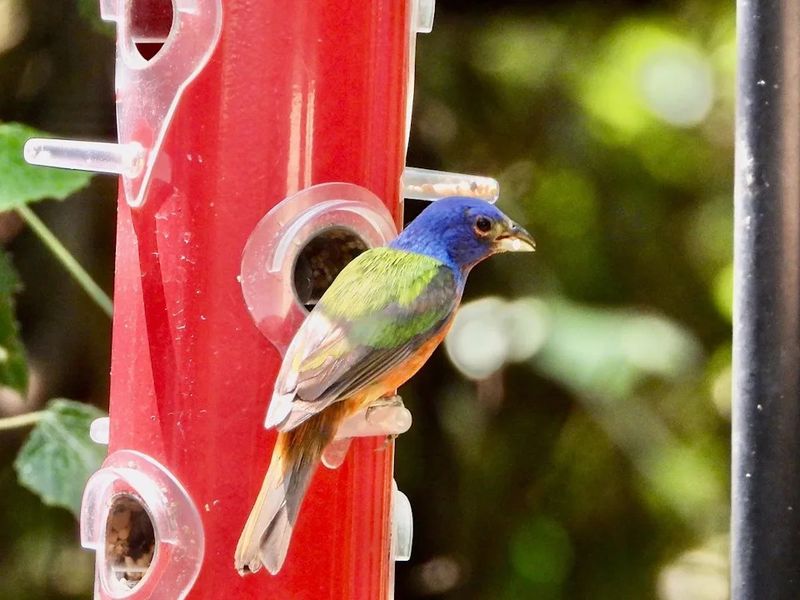
Want the fastest way to a bunting’s heart? Try a scoop of white proso millet.
These birds eat mostly seeds for much of the year. At feeders, white millet is their clear favorite.
They will also nibble black oil sunflower seeds. Shelled sunflower chips work well too, since that thick little bill handles them easily.
Out in the wild, they have a neat trick. A bunting lands on a grass stem, bends it down, holds it with its feet, and plucks off the seeds.
In nesting season, their menu changes a bit. They add bugs like grasshoppers, beetles, spiders, caterpillars, and even small snails for extra protein.
Feeder choice matters as well. Small tube feeders or caged feeders can keep bigger birds and squirrels from hogging the seed.
Many people find buntings visit low feeders or platform trays more often. Hanging a feeder about four to five feet high is a good starting point.
Keep the seed fresh and dry. Humidity can make millet clump or mold, so clean the feeder every week or two.
Once the birds learn your feeder is reliable, they may visit several times a day. That steady snack bar can turn your patio into a front-row seat.
9. Keep Shrubs Close For Cover
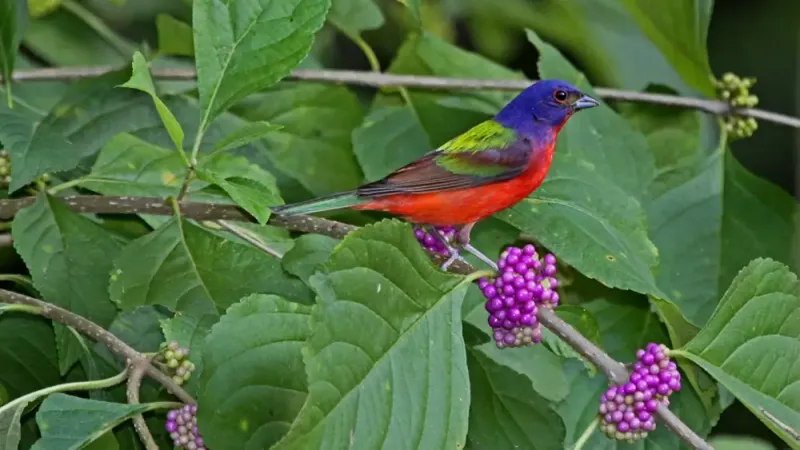
Think of Painted Buntings as the shy kids at a party. They want snacks, but they like to stay near a safe corner.
These birds feel best in thick, low cover. They live in places with thickets, hedgerows, brushy fields, and the edges of woods.
In winter, they favor shrubby or grassy spots. They also like the lower layer of plants under open forests.
So where should your feeder go? Place it close to shrubs, bushes, or small trees, ideally within about ten feet.
That way, a bird can grab a seed and dart back to safety in a flash. Hawks and cats are less of a worry when cover is nearby.
Native plants make great choices. Firebush, beautyberry, wild coffee, and Simpson’s stopper all grow thick and offer food or shelter.
Native grasses help too. Letting a patch go to seed gives buntings a natural snack spot between feeder visits.
Try not to clear every messy corner. A bit of tangle may look untidy to people, but birds see it as a cozy home.
With food on one side and shrubs on the other, your yard becomes a bunting hotspot. Each fall, you may find that flash of color showing up right on time.