The Ohio Owl That Migrates Through Backyards In October And Almost No One Notices
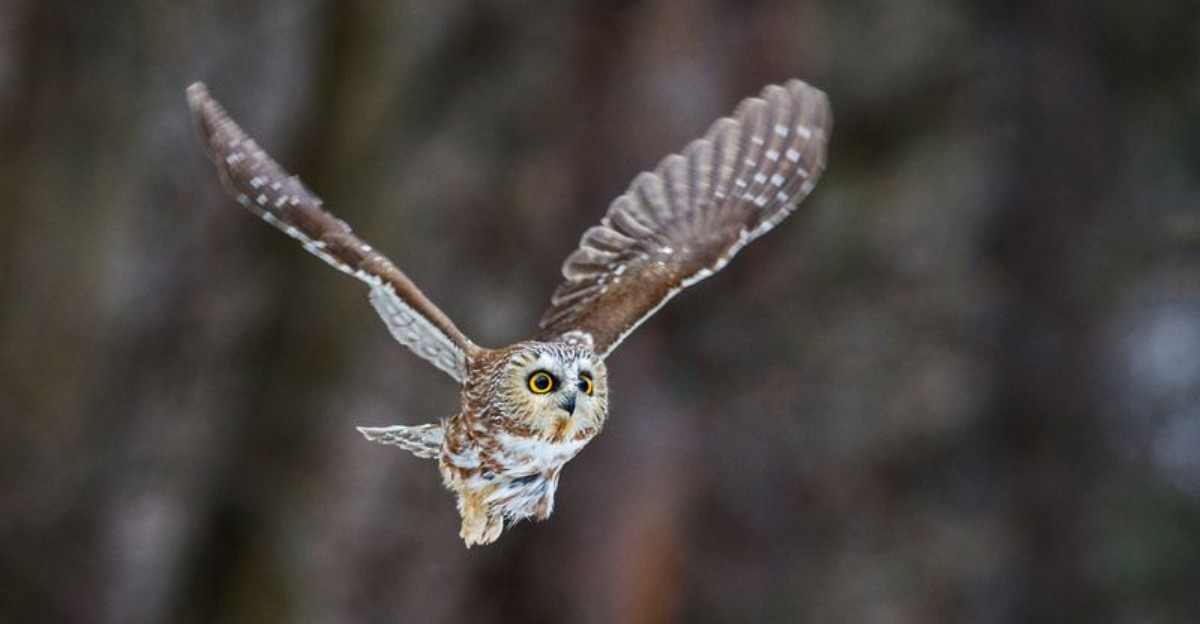
Somewhere past midnight, a pint-sized stranger drops into an Ohio backyard, rests for a spell, and slips away before sunrise. Most households never know it came.
This one is no hooter. Its voice is more like a soft toot repeated over and over, and its body is small enough to hide in a coat pocket.
Birders have a nickname for how it moves through, and it fits like a glove.
October is the month for it. Cool nights nudge it south, and any yard with the right kind of cover gets a quiet visit.
Pick a still evening this week, step outside, and tune your ears. You might hear the most polite guest of the year.
1. Meet The Northern Saw-Whet Owl, Ohio’s Smallest Owl
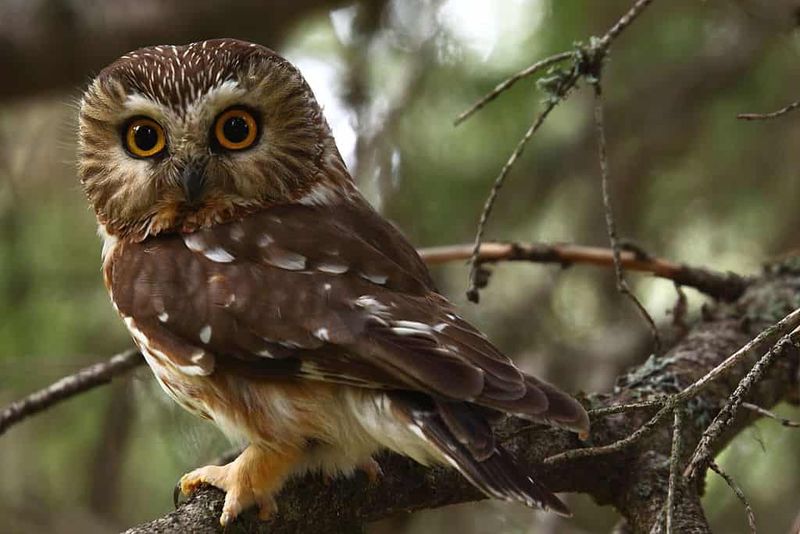
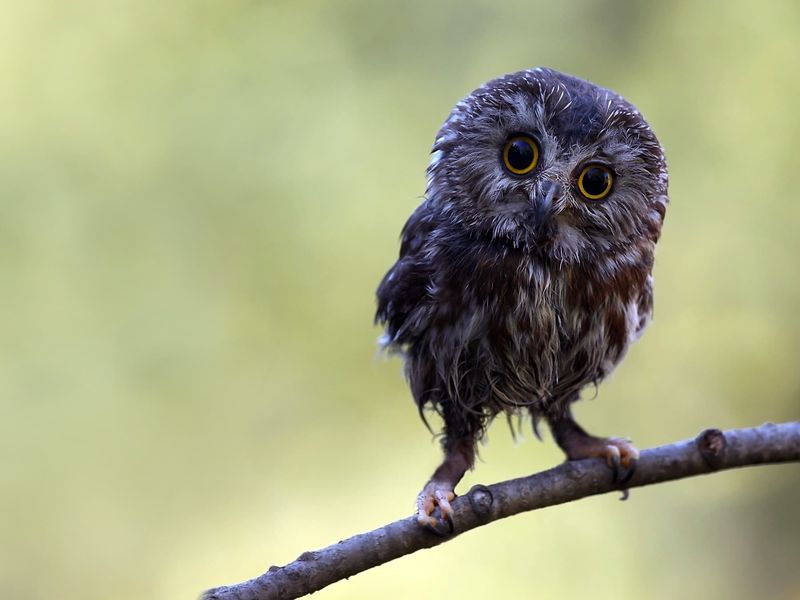
Imagine an owl about the size of a robin staring at you with huge golden eyes. That is the Northern Saw-whet Owl, the smallest owl found in the state.
Adults measure roughly 6.7 to 8.7 inches long. They weigh only 2.3 to 5.3 ounces, which is about the same as a deck of cards or two.
Females usually weigh a bit more than males, a common pattern among owls.
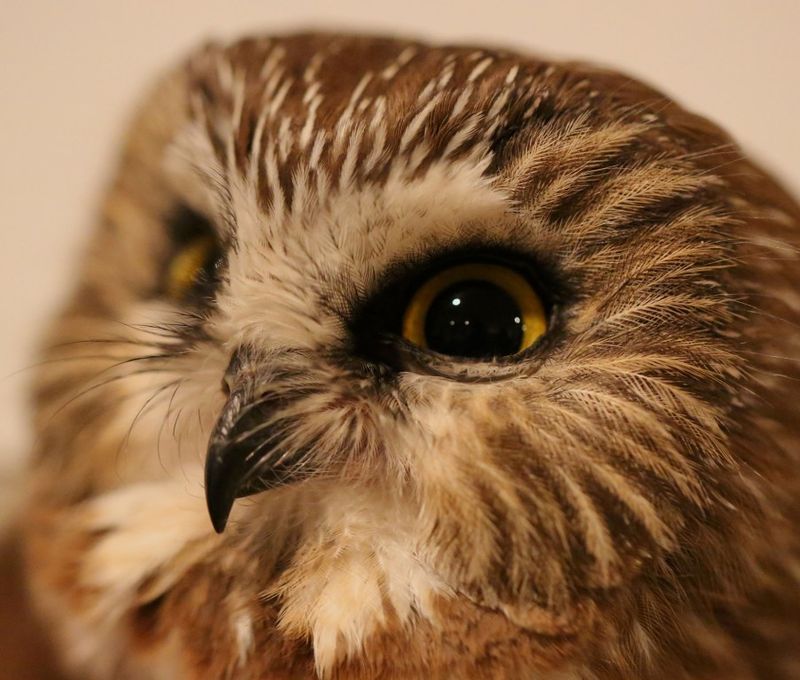
Their feathers are a soft, mottled brown that blends into tree bark. A whitish face disk circles those bright yellow eyes.
Look closely and you will spot tiny white speckles across the top of the head.
Unlike the famous Great Horned Owl, this bird has no ear tufts. Its head is big and round, almost like a fuzzy ball with a dark beak tucked in the middle.
Many people say it looks more like a stuffed toy than a real hunter.
Here is a fun fact about the name. Early settlers thought its call sounded like a saw being sharpened on a whetstone.
The real song is a repeated, high toot that can go on for minutes.
If you ever hear steady little toots in the dark, stop and listen. You might be closer to this pint-sized owl than you think.
2. It’s Also Ohio’s Most Migratory Owl
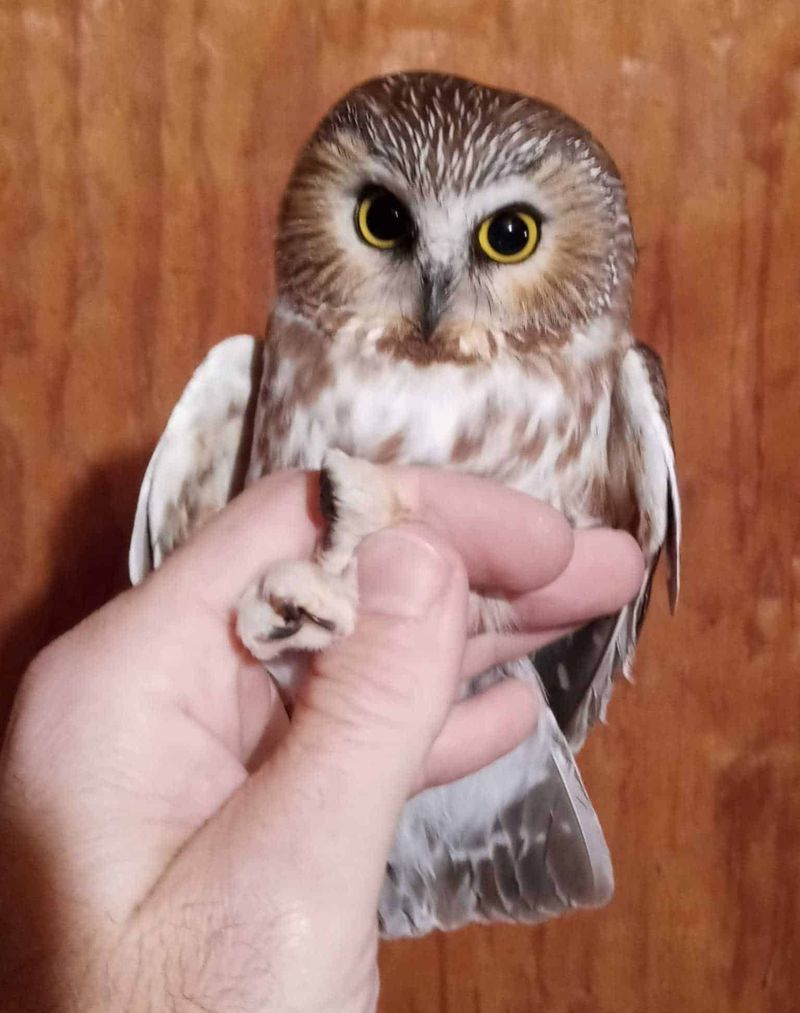
Most owls in the state stay close to home all year. Barred Owls and Screech Owls tend to pick a patch of woods and stick with it.
The saw-whet owl plays by different rules. Many of these birds pack up each fall and head south for the winter.
That makes it the most migratory owl you will find in the Buckeye State.
Not every saw-whet joins the trip, though. Some stay in their northern homes all year long, braving snow and cold.
Scientists think food supply plays a big part in who stays and who goes.
For Ohio, the travelers are the main event. People mostly find these owls during fall migration and through the winter months.
Then, as spring warms up, they slip back north again.
So why does almost no one notice? These owls are quiet, small, and active at night.
They also hide in thick trees during the day, so even skilled birders can miss them.
Your Ohio Garden Changes Every Week. Your Plan Should Too.
Gardening in Ohio changes quickly throughout the season. Every Friday you’ll receive a simple weekly plan showing exactly what to plant, prune, fertilize, harvest, and protect so you never miss the right timing.
Think of them as nighttime commuters. While you sleep, they glide over neighborhoods, parks, and farm fields, stopping to rest when dawn arrives.
By the time you head out for school or work, they are tucked away and snoozing in the branches. Pretty sneaky for such a little bird.
3. Fall Migration Runs From October Into December
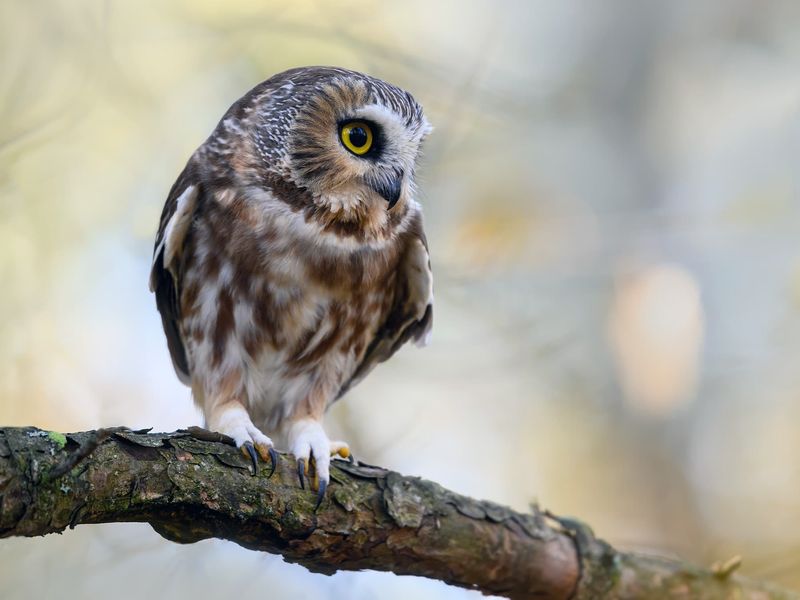
Mark your calendar for late October. That is when big numbers of saw-whet owls start pouring through the state.
The movement stays strong through November. In some years, owls keep trickling south well into December.
So if you love fall evenings, you share your favorite season with these tiny flyers.
Nearly all of their travel happens after dark. Flying at night may help them avoid hawks and other birds that would chase them in daylight.
It also lets them rest and hunt during the quiet hours.
Every so often, something unusual happens. About once every four years, saw-whets go on what experts call an irruption.
During those seasons, much larger crowds of owls than usual head south.
Why does this matter to you? It means your chances of an owl in the yard are best during these weeks.
Keep an ear open on calm, clear nights when migration is busy.
A simple tip is to turn off extra outdoor lights. Darker yards are friendlier for night travelers of all kinds.
You could also step outside for a few quiet minutes and just listen.
Bring a warm jacket and some patience. Fall nights in Ohio can be chilly, but the reward might be a rare owl moment.
4. Most Breed Far North Of The State
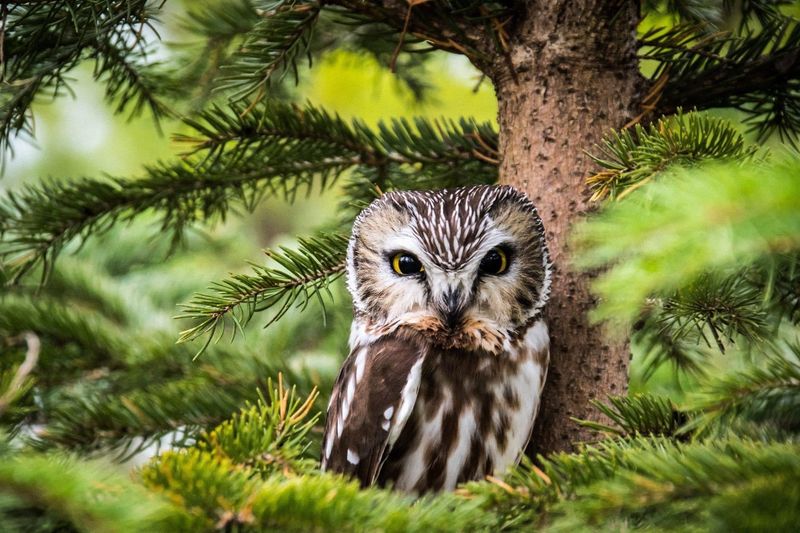
Ask a saw-whet where it grew up, and the answer is probably somewhere far away. These owls raise their young across wide forests of North America.
Their breeding range covers southern Alaska and southern Canada. It also includes parts of the United States and even high mountain spots in central Mexico.
That is a huge stretch of territory for a bird you could hold in one hand.
Ohio is mostly a highway rather than a home. Nesting records in the state are very rare.
Most of the ones that exist date back to before 1940.
So what kind of place do they like for raising a family? They prefer large, mature forests with open space underneath the tall trees.
Both evergreen and leafy woods can work, as long as the area is big and wild.
Saw-whets usually nest in old tree holes made by woodpeckers. The female lays her eggs inside and stays snug while the male brings food.
It is a team effort in the north woods.
When you spot one here, remember its long story. That little owl may have hatched in a Canadian forest just months earlier.
Now it is passing through your town on a journey few people ever get to see.
5. It Stands About 7 Inches Tall
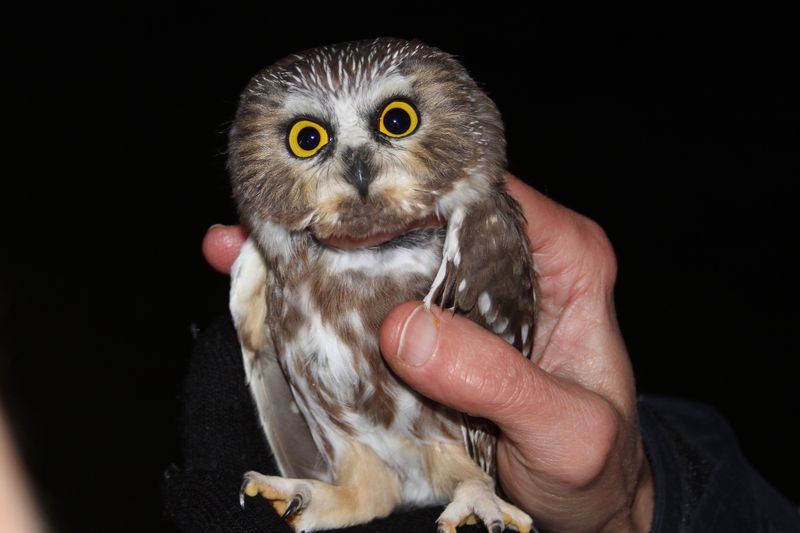
Grab a ruler and look at the 7-inch mark. That is roughly how tall a saw-whet owl stands when perched on a branch.
Most adults measure about 6.7 to 8.7 inches long. Many experts describe them as standing around 7 to 8 inches tall.
For comparison, that is shorter than a typical water bottle.
Small size is a big reason they go unnoticed. A bird this little can sit on a low branch and look like a pine cone or a knot in the wood.
Your eyes slide right over it without a second glance.
Being tiny has some perks for the owl, too. It can squeeze into thick tangles of branches where larger birds cannot reach.
It also needs less food than bigger owls to stay healthy.
Of course, small also means it has to be careful. Larger owls, like Barred and Great Horned Owls, are a real threat.
Hiding well is part of its survival plan.
Here is a playful challenge for your next walk. Picture an owl the height of your hand from wrist to fingertip, and scan the lower branches of evergreens.
You might be surprised how easy it is to miss something so small, and how exciting it is to finally find one.
6. Dense Conifers Make Its Favorite Hiding Spots
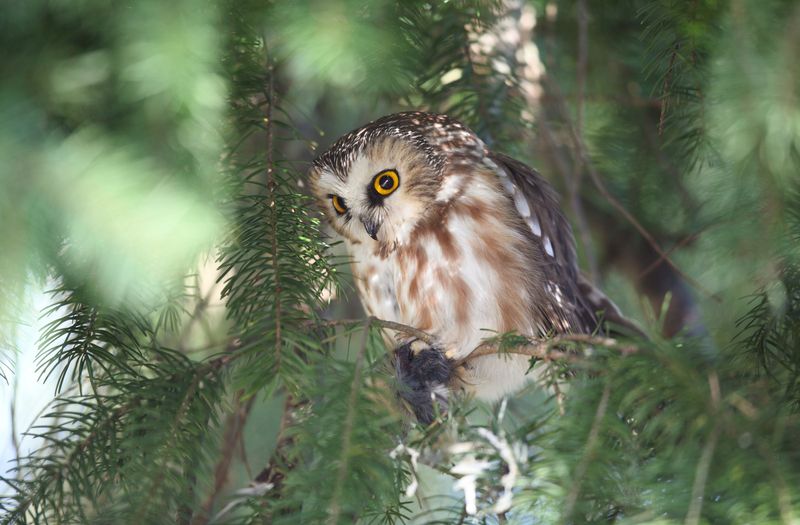
Picture a thick spruce tree in your neighbor’s yard. Deep inside those needles, a sleepy owl could be resting right now.
During the day, saw-whets roost quietly in dense cover. Evergreens and other trees with heavy leaves are top choices.
The thick branches hide them from predators and from noisy songbirds that like to pester owls.
In winter, they show a strong love for groves of conifers. Pines, spruces, cedars, and hemlocks all fit the bill.
Some owls even pick spots at eye level, while others sit up to 20 feet high.
Large cemeteries are a surprising favorite. Many have rows of planted evergreens that make perfect hideouts.
Parks and older neighborhoods with mature pines can work as well.
Want to help them in your own yard? Planting native evergreens like eastern red cedar or white pine creates winter shelter.
Leaving some thick shrubs untrimmed helps too.
If you do find a roosting owl, give it plenty of space. Look for a short time, keep your voice low, and then move along.
Avoid shining flashlights or using camera flashes. A calm owl will stay rested for its night of hunting, and you will have a wonderful memory to share.
7. It Hunts Mostly Small Rodents At Night
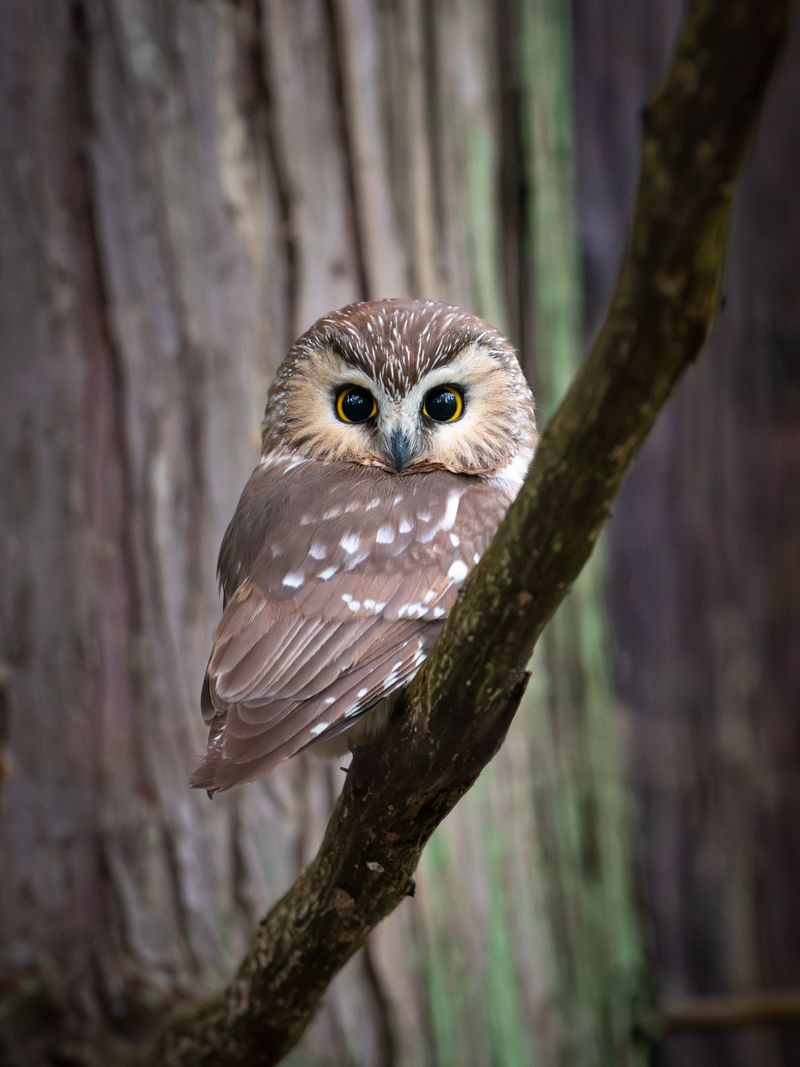
When the sun goes down, the cute little fluffball becomes a skilled hunter. Saw-whets are almost entirely nocturnal and are most active at dusk and just before dawn.
Their favorite meals are small rodents. Deer mice top the menu, along with voles and shrews.
Think of them as free, natural pest control for barns and gardens.
They will eat other things when the chance comes. Chipmunks, young squirrels, and small bats are on the list.
During migration, they sometimes catch small birds or large insects as well.
Their hunting style is simple but smart. An owl sits on a low perch, waits, and listens.
When it hears a mouse rustle, it swoops down and grabs it.
Hearing is their secret weapon. Owl ears are placed at slightly different heights on the head, which helps them pinpoint sounds in total darkness.
They can find prey hidden under leaves or even snow.
Did you know they sometimes save food for later? A saw-whet may stash an extra mouse in a branch and return when it is hungry again.
Want to support these hunters? Skip rodent poisons in your yard.
Poisoned mice can harm the owls that eat them.
8. Banders Have Tracked Ohio Owls From As Far As Quebec
For years, nobody knew much about where these owls traveled. Then researchers started putting tiny metal bands on their legs, and the mystery began to unravel.
A big network called Project Owlnet helped lead the way. Banding stations across North America catch owls in soft mist nets, measure them, and fit each one with a numbered band.
Then the owls are released unharmed.
When a banded owl gets caught again somewhere else, scientists learn about its route. Owls banded in Chillicothe, Ohio, have been recaptured at faraway spots across eastern North America.
It is like a giant game of connect-the-dots.
Nearby states have added more clues. Owls banded in Pennsylvania and Michigan have been traced to breeding grounds in Quebec.
Some trips cover more than 600 miles.
That is a long way for a bird weighing a few ounces. Imagine walking from Ohio to Canada on legs the size of toothpicks!
Some banding stations welcome visitors during fall nights. If you get the chance, go see one in action.
Watching a researcher gently hold a tiny owl is something many people remember for years. You may even learn how scientists tell males from females by their weight and wing size.
9. It May Be The State’s Most Common Winter Owl
Here is the twist in the story. For a long time, experts thought saw-whet owls were rare or uncommon in the state.
Banding studies changed that idea fast. Researchers began catching far more owls than anyone expected.
Today, saw-whets are recognized as a common winter resident in the state.
So why did people miss them for so long? These owls are spread thinly across a huge range.
Add in their tiny size, quiet nature, and nighttime habits, and they are easy to overlook.
Experts now believe there are many more saw-whets than casual sightings suggest. Some think they could be the most common owl spending winter in Ohio.
That is quite a promotion for a bird once labeled rare.
This lesson goes beyond owls. Just because we do not see something does not mean it is not there.
Careful science can reveal hidden worlds right in our own backyards.
Ready to join the search? Report any sightings to apps like eBird, which help researchers track bird numbers.
Keep your evergreens healthy and your yard a little wild. Next October, when the leaves start to fall, step outside after dark and listen closely.
One of Ohio’s best-kept secrets might be perched just a few feet away.