The Simple Trick To Stop Gravel Weeds From Returning In Texas Yards
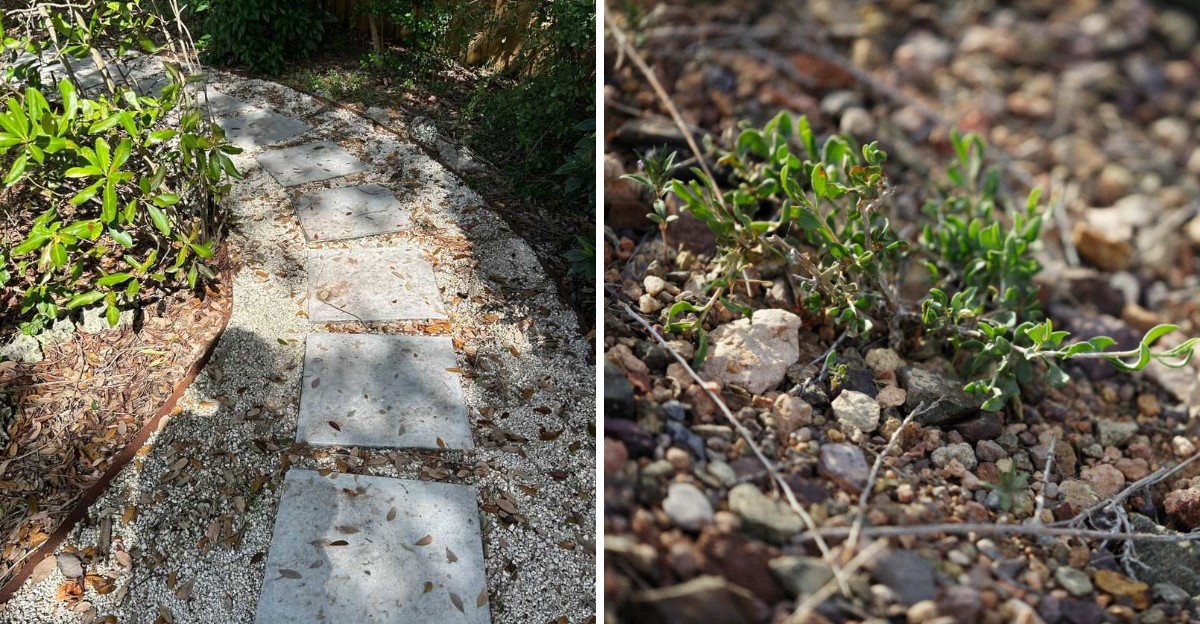
Gravel was supposed to be the low-maintenance choice. No mowing, no watering, no weeds. At least, that was the plan.
Then the first sprouts show up between the stones. A few weeks later, there’s a patch of grass here, a clump of clover there, and a stubborn weed poking through the edge of the path.
You pull them, spray them, and lay down more fabric. Somehow, they keep coming back. Most Texas homeowners assume the problem is coming from below. In many cases, it’s actually starting from above.
Weeds don’t need deep soil to grow. They just need the right conditions, and gravel beds can quietly create those conditions over time.
The fix is surprisingly simple, costs almost nothing, and works far better than reaching for another bottle of spray. A few minutes here and there can keep your gravel looking fresh all year.
Keep The Gravel Free Of Debris
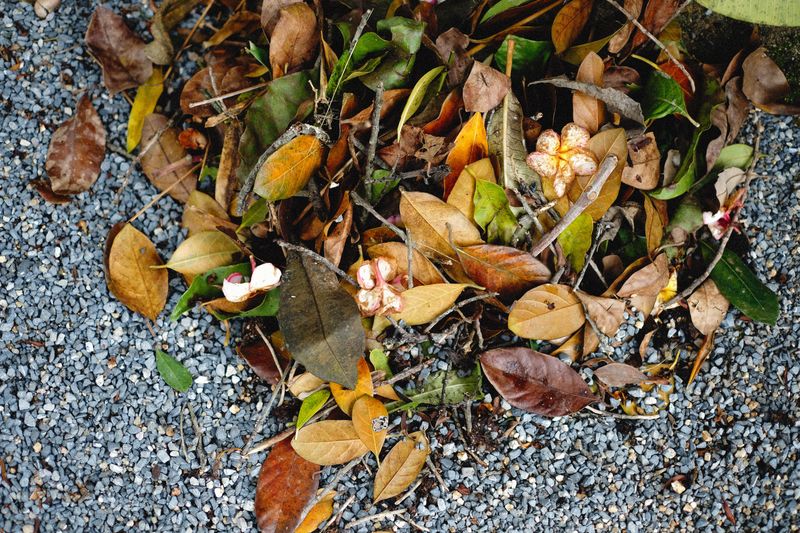
Here is the secret most people miss. Weeds in gravel usually start on top of the rocks, not under them. Clear away the junk that lands there, and you take away their bed.
Leaves, grass clippings, and dust all pile up over time. You may not even notice it at first. A few dry leaves here, a puff of dust there, and soon the gaps between the stones start to fill.
A leaf blower is the fastest tool for the job. Set it on a low or medium speed so you do not send rocks flying. Work in one direction and push the mess toward a lawn or bed where you can bag it.
No blower? A plastic leaf rake works too. Use light strokes and keep the rake held up a bit so you only grab the debris. Metal rakes can dig in and pull rocks out of place.
How often should you clean? Once a week is great during busy times like fall. In slower months, every two or three weeks is usually enough. After a big storm, take a quick look, since Texas winds love to dump leaves and dirt everywhere.
Mowing your lawn can add to the problem. When you cut grass near gravel, aim the mower chute away from the rocks. Or use a bagger so clippings never land on the stones in the first place.
Overhanging trees and shrubs also drop a lot of litter. Trim branches that hang right over your gravel. Less stuff falling means less cleanup for you.
Think of it like sweeping your kitchen floor. A few minutes now saves a much bigger mess later. Keep the rocks clean, and weeds have nowhere to grow.
Why Weeds Keep Growing In Gravel
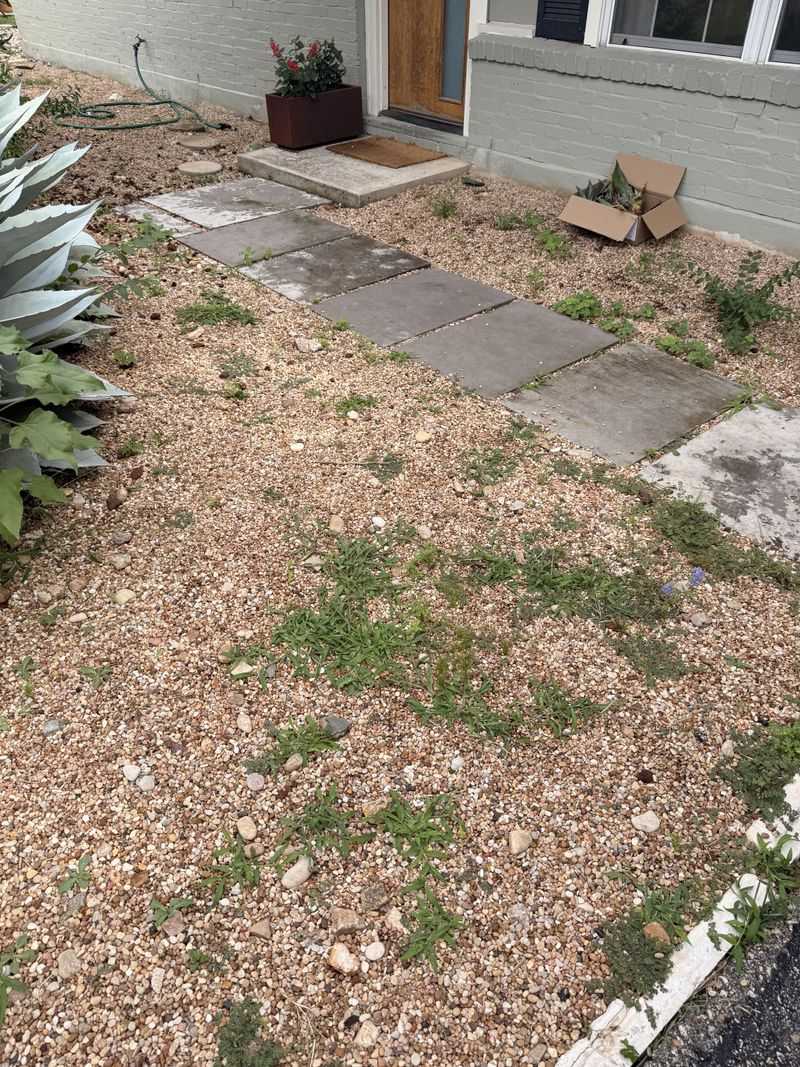
Ever pulled every weed from your gravel, only to see new ones a month later? You are not alone. Plenty of Texans feel like they are fighting a battle that never ends.
The real reason is sneaky. When leaves and dust land on gravel, they slowly break down. Rain, sun, and tiny bugs turn that mess into soft, dark material, much like compost.
Your Texas Garden Changes Every Week. Your Plan Should Too.
Gardening in Texas changes quickly throughout the season. Every Friday you’ll receive a simple weekly plan showing exactly what to plant, prune, fertilize, harvest, and protect so you never miss the right timing.
Over months, that material sinks into the spaces between the stones. It forms a thin layer of soil right on top of your rock bed. It may only be a quarter inch deep, but that is plenty for a weed.
Next come the seeds. Wind carries them from nearby fields, empty lots, and your neighbor’s yard. Birds drop them too, after snacking on seeds somewhere else. Some weeds, like dandelions, have fluffy parachutes that help them travel far.
Once a seed lands in that fresh soil layer, it only needs a little water. Texas rain showers give it just what it needs. Within days, roots start reaching down between the rocks.
Many people think landscape fabric will stop all of this. Fabric does help block weeds growing up from the ground below.
But it cannot stop seeds that sprout on top of it. In fact, roots can grow right into the fabric and make weeds harder to pull.
Fun fact: a single pigweed plant can make over 100,000 seeds in one season. That shows why even one missed weed can turn into a big headache.
Once you understand this, the fix makes sense. Stop the soil layer from forming, and those seeds have no place to settle.
Why Fall Cleanup Matters Most
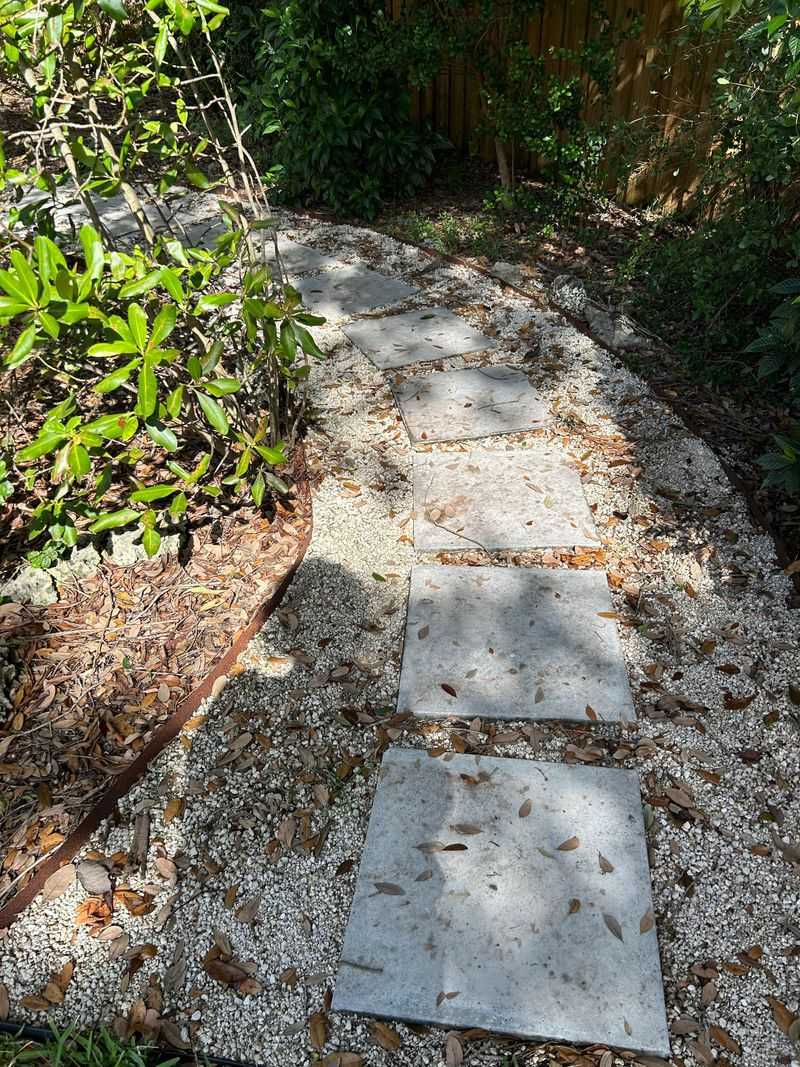
Autumn in Texas is a sneaky season for gravel. The air finally cools, the trees start dropping leaves, and weeds quietly get to work. Fall is the time to pay the most attention.
Most of our trees shed in fall. Oaks, pecans, and maples can cover a gravel path in just a few days. Those leaves are the raw stuff that turns into weed-friendly soil.
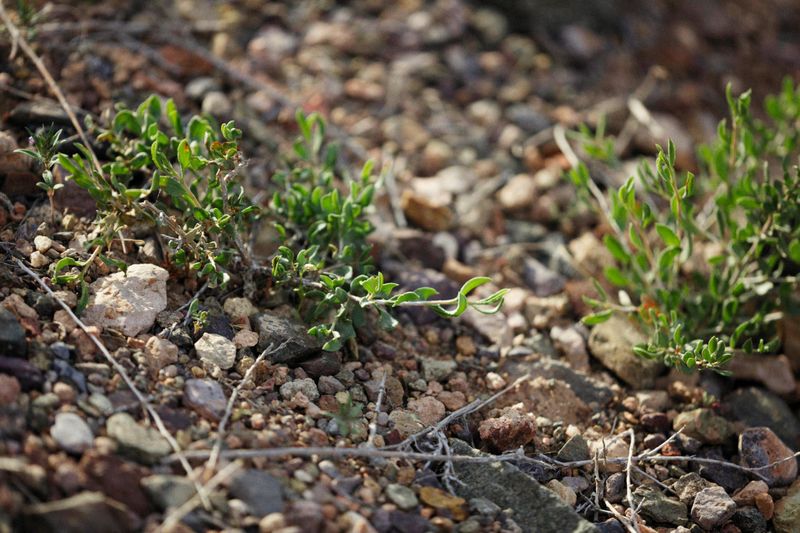
At the same time, winter weeds wake up. Henbit, annual bluegrass, and chickweed sprout when soil temperatures drop into the 50s and 60s. In much of Texas, that happens from October through November.
These weeds are clever. They grow slowly through winter, staying low and hard to spot. Then, in early spring, they burst into flower and drop tons of seeds before you know it.
A good fall cleanup hits two targets at once. You clear away the leaves before they rot, and you pull or rake out baby weeds before they get comfortable. It is like closing the door before uninvited guests walk in.
Try to clean your gravel at least once a week while leaves are falling. Then do one deep cleanup near Thanksgiving, after most trees are bare. Look closely for tiny round leaves or thin grassy shoots between the rocks.
Henbit is easy to spot later because of its little purple flowers. But by the time you see those blooms, seeds are already on the way. Catching it in fall is much easier.
Put on a jacket, grab a warm drink, and enjoy the cool weather while you work. Your spring self will thank you for every leaf you remove now.
Keep The Gravel Deep Enough
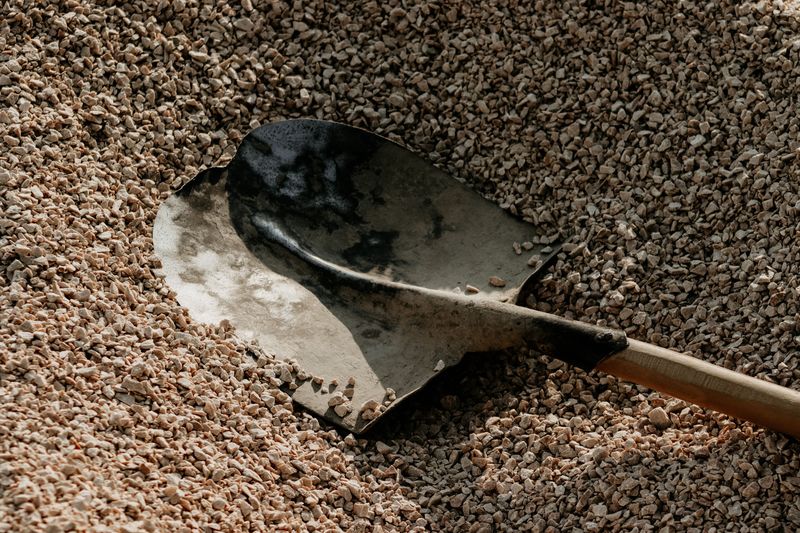
Depth matters more than most people think. A thin sprinkle of rock might look fine on day one. But it gives weeds an easy shortcut to the dirt underneath.
Experts suggest keeping gravel about 3 to 4 inches deep. At that depth, seeds that land on top have a hard time reaching real soil. Weeds trying to push up from below also struggle to break through.
Over time, gravel naturally gets thinner. Cars, feet, and pets press it down. Heavy Texas rains wash some of it away. Stones also slowly sink into the ground, especially in clay soil.
Check your gravel once or twice a year. Push a ruler or a long screwdriver down until you hit dirt or fabric. If you measure less than 2 inches, it is time to top things off.
Adding new gravel is not hard. Buy rock that matches what you already have, so it blends in. Local landscape yards often sell it by the scoop, which is cheaper than bags for big areas.
Before spreading new rock, clean out any old leaves and weeds. Rake the old gravel smooth. Then spread the fresh stones evenly and rake again to level the surface.
Size matters too. Very small gravel, like pea gravel, can trap dust more easily. Larger, angled stones lock together and leave fewer cozy spots for seeds.
Plan on topping off every two to four years, depending on traffic. Driveways need it more often than quiet garden paths. A little fresh rock now and then keeps your yard looking sharp and keeps weeds guessing.
Use A Pre-Emergent At The Right Times
Want a little backup for your cleanup routine? A pre-emergent herbicide can be a helpful partner. It works like an invisible shield for your gravel.
Here is how it works. A pre-emergent forms a thin barrier near the surface. When weed seeds try to sprout, the barrier stops their tiny roots from growing. The seed simply never becomes a plant.
Timing is everything. In Texas, apply it twice a year. The first round goes down in late winter, usually mid-February to early March. That stops summer weeds like crabgrass and spurge.
The second round goes down in early fall, around mid-September to early October. That one targets winter weeds such as henbit and annual bluegrass. North Texas can go a bit later in spring and earlier in fall than South Texas.
One big warning: pre-emergents do nothing to weeds that are already up and growing. They only stop new seeds. So always pull or remove any existing weeds before you spread the product.
Granular types are easy to use on gravel. Shake them out with a hand spreader, then lightly water so the product settles in. Liquid types work too, but follow the label closely.
Read every label carefully. Some products are not safe near vegetable gardens, trees, or ponds. Keep kids and pets off the area until it is dry or watered in.
Think of a pre-emergent as a helper, not a magic fix. It works best on gravel that is already clean. Pair it with regular raking and blowing, and you will see far fewer weeds pop up.
Pull Weeds While They’re Small
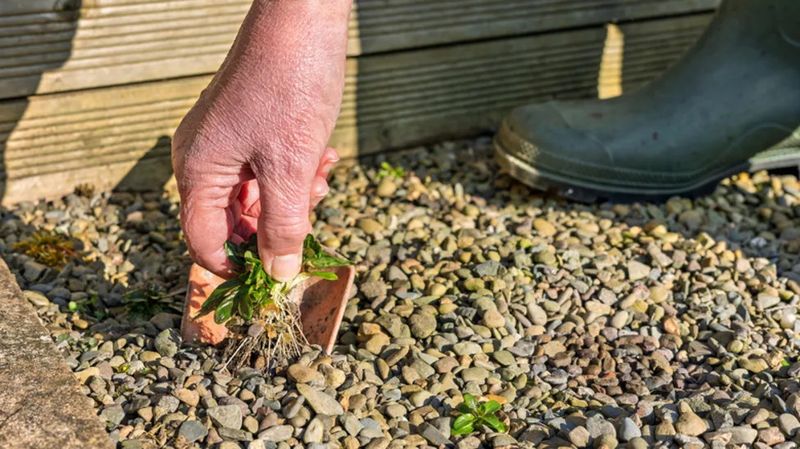
My grandpa had a saying: pull it young, and you only pull it once. He spent many Texas mornings walking his gravel drive with a small bucket. His rocks always looked spotless.
Young weeds have short, weak roots. They slide right out of gravel with a gentle tug. Wait a few weeks, and those same roots can grab onto fabric or dig deep into the soil.
The best time to weed is right after a rain. Wet ground is soft and loose. Roots let go easily, and you are more likely to get the whole plant instead of snapping off the top.
No rain lately? Give the area a quick spray with the hose and wait about 30 minutes. You will be surprised how much easier pulling becomes.
Grab each weed low, near the base. Pull slowly and steadily rather than yanking. For stubborn ones, a small hand tool like a dandelion fork can help pop them out.
Timing also matters for the future. Weeds that flower will soon drop seeds. Remove them before you see blooms, and you stop next year’s crop before it starts.
Toss pulled weeds in a bag or trash can, not on the gravel. Some weeds can still drop seeds even after you pull them.
Make it a fun habit. Walk your gravel once a week with a cup of coffee or a family member. Ten minutes of easy weeding beats hours of hard work later. Small steps like these keep your yard neat and your weekends free.