How To Protect Young North Carolina Trees From Deer Rubbing This Fall
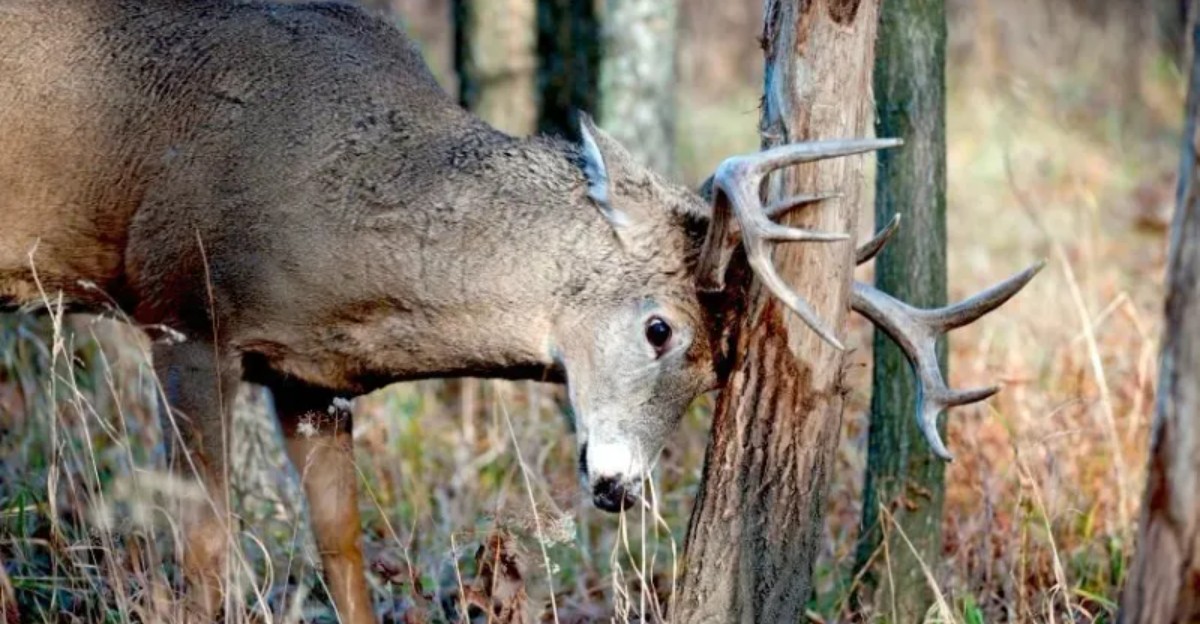
Each fall, male deer start scraping their antlers against small trees. They do it to strip velvet, mark territory, and show off. A young tree with a thin trunk makes an easy target.
One rub can peel off a strip of bark, and a deeper scrape can cut the tree’s supply of water and nutrients. Newly planted trees are the most vulnerable. Many homeowners notice the damage only after it is done.
The good news is that protection is simple, cheap, and effective when it goes up before the season begins. Several options work, and each fits a different situation. Learning what to use and how to set it up keeps your young trees safe through the rut.
1. Know Why Deer Rub Young Trees
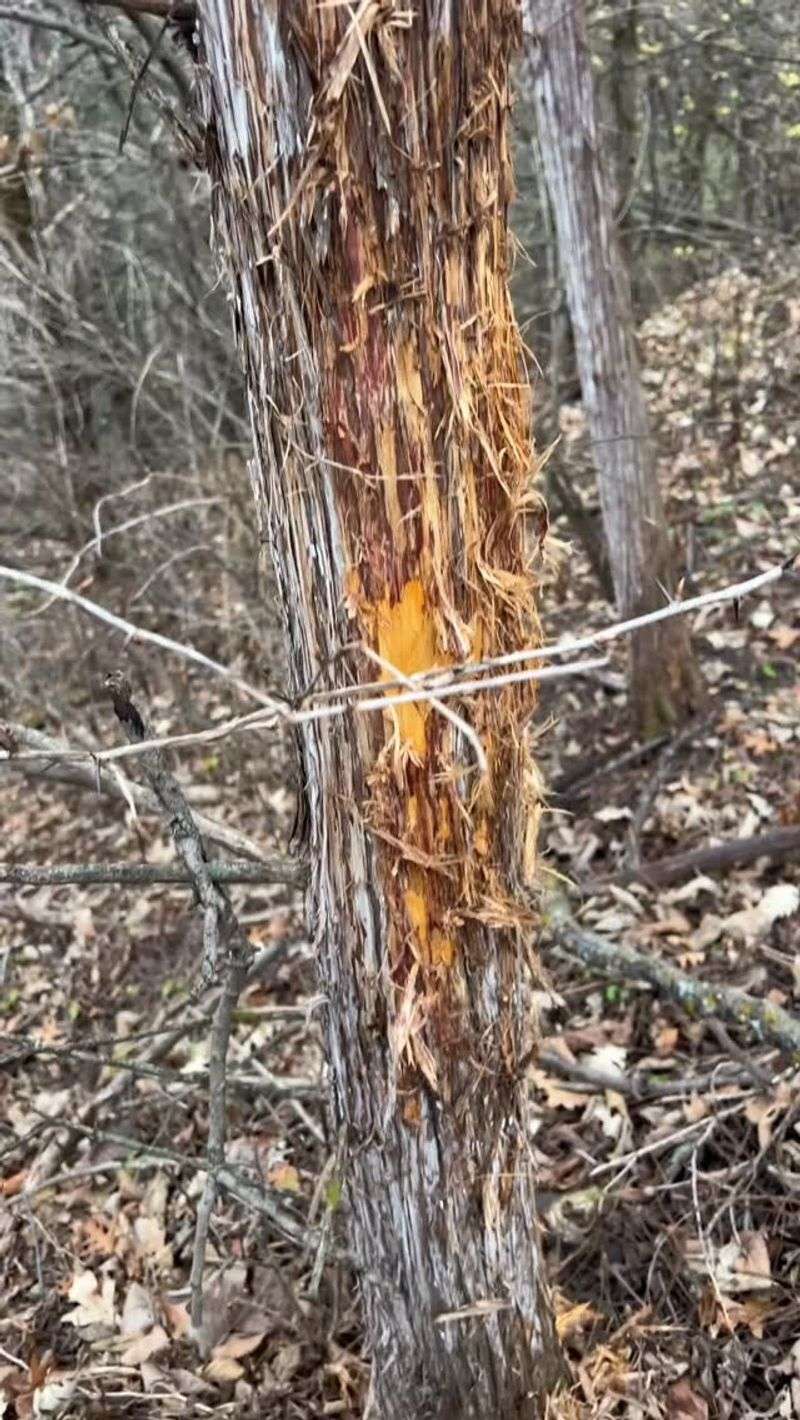
Walk outside on a crisp October morning, and you might find a young tree with its bark hanging in strips.
That damage usually comes from a buck, which is a male white-tailed deer. Bucks rub their antlers on trunks in late summer and fall, and young trees take the worst of it.
So why do they do it? Early on, bucks rub to scrape off the velvet, a soft, fuzzy skin that covers their antlers while they grow. Later, rubbing becomes a way to mark territory during the breeding season, often called the rut.
Glands on a buck’s forehead leave scent on the bark, almost like a signpost that tells other deer he is around.
Bucks are picky about where they leave those signs. They favor young trees with smooth bark and trunks about 1 to 4 inches thick. Those trunks bend a little but still push back, which seems to suit a buck just fine.
Spotting a rub is easier once you know the clues. Look for shredded or peeled bark, often on just one side of the trunk. You may also see broken lower branches and scraped spots about 1 to 4 feet above the ground.
Here in North Carolina, white-tailed deer live in nearly every county, from mountain valleys to coastal towns.
They roam suburban neighborhoods just as easily as farm fields and forests. That means almost any homeowner with a young tree could see rubbing damage this fall.
Learning the signs gives you a head start. Once you recognize a rub, you can protect the rest of your trees before more harm is done.
2. Time Protection Before The Rut Peaks
Timing can make or break your tree protection plan. A guard set up one week too late may only protect a scarred trunk. Getting ahead of the bucks is the whole game.
Rubbing picks up as the rut draws closer, and it can happen fast. A single night of heavy rubbing can strip enough bark to badly damage a young tree. If the bark gets torn away all the way around the trunk, the tree becomes girdled.
Girdling cuts off the flow of water and nutrients, which a young tree simply cannot handle for long.
For that reason, aim to install protection by late summer or early fall. Think of late August and September as your setup window. Bucks begin shedding velvet around then, and heavier rubbing soon follows.
Your North Carolina Garden Changes Every Week. Your Plan Should Too.
Gardening in North Carolina changes quickly throughout the season. Every Friday you’ll receive a simple weekly plan showing exactly what to plant, prune, fertilize, harvest, and protect so you never miss the right timing.
Leaving guards up long enough matters just as much. Keep everything in place through late fall and into early winter. Rut timing shifts from place to place, so a buck down the road may still be busy after yours has calmed down.
Across much of North Carolina, rubbing often peaks from October into November. Some areas see activity start earlier or stretch later, depending on local deer herds. Mountain, Piedmont, and coastal regions can all run on slightly different schedules.
A simple trick helps you stay on track. Set a phone reminder for late August each year that says to check tree guards.
When the reminder pops up, gather your cages, stakes, and wraps, and get them in the ground while the evenings are still warm. Your future self, and your trees, will thank you.
3. Surround Trees With Sturdy Wire Cages
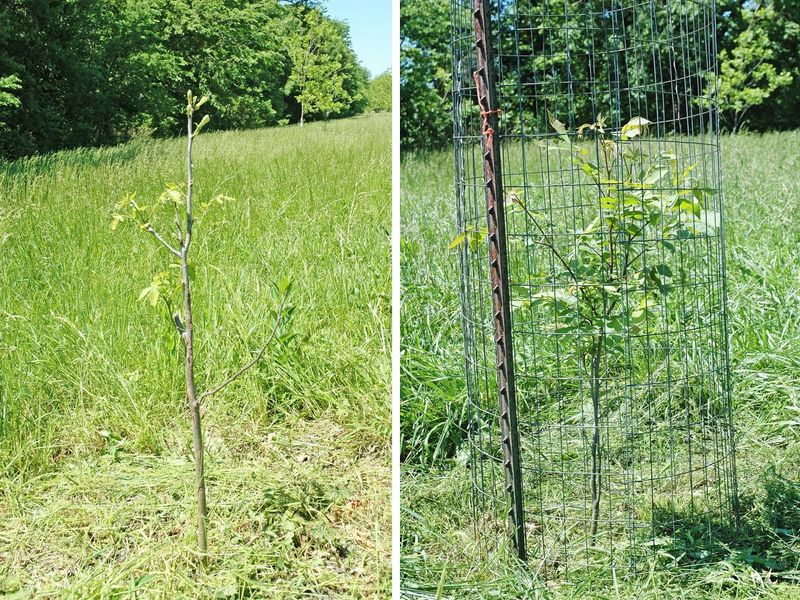
Few things frustrate a buck more than a tree he cannot reach. A wire cage does exactly that, and it ranks among the most reliable ways to stop rubbing. Gardeners have trusted this method for years because it simply works.
The idea is easy to grasp. A cage keeps antlers away from the trunk, yet air and sunlight still pour through the openings. Your tree keeps growing normally while the deer stays on the outside looking in.
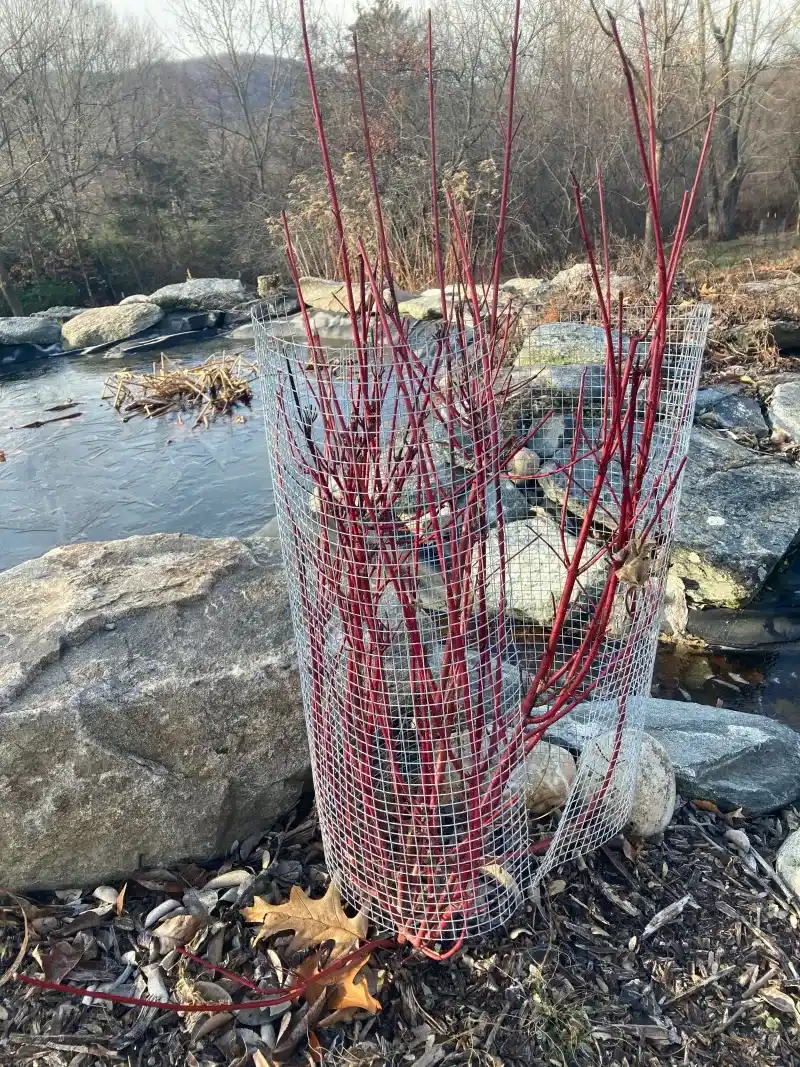
Building one takes about half an hour. Start with welded wire fencing or heavy-gauge hardware cloth, and roll it into a cylinder about 4 to 5 feet tall.
Make the circle wide enough to leave at least a foot of space between the wire and the trunk on every side. That gap matters, since a buck can still push a tight cage into the bark.
Next, secure the cage with two or three sturdy stakes. Metal T-posts or thick wooden stakes work well. Tie the wire to them with zip ties or wire twists so a pushy deer cannot shove it over.
Wear gloves while you work, because cut wire ends can be sharp. Bending those ends inward or folding them over keeps your hands and your pets safe.
North Carolina homeowners plant plenty of new trees in wide, open yards. Those fresh plantings stand out like a bullseye to roaming bucks. A cage turns that easy target into an impenetrable barrier for antlers, even during peak rubbing season.
Best of all, cages can be reused year after year. Store them flat in winter and pull them out again next fall.
4. Use Stakes As A Simple Barrier
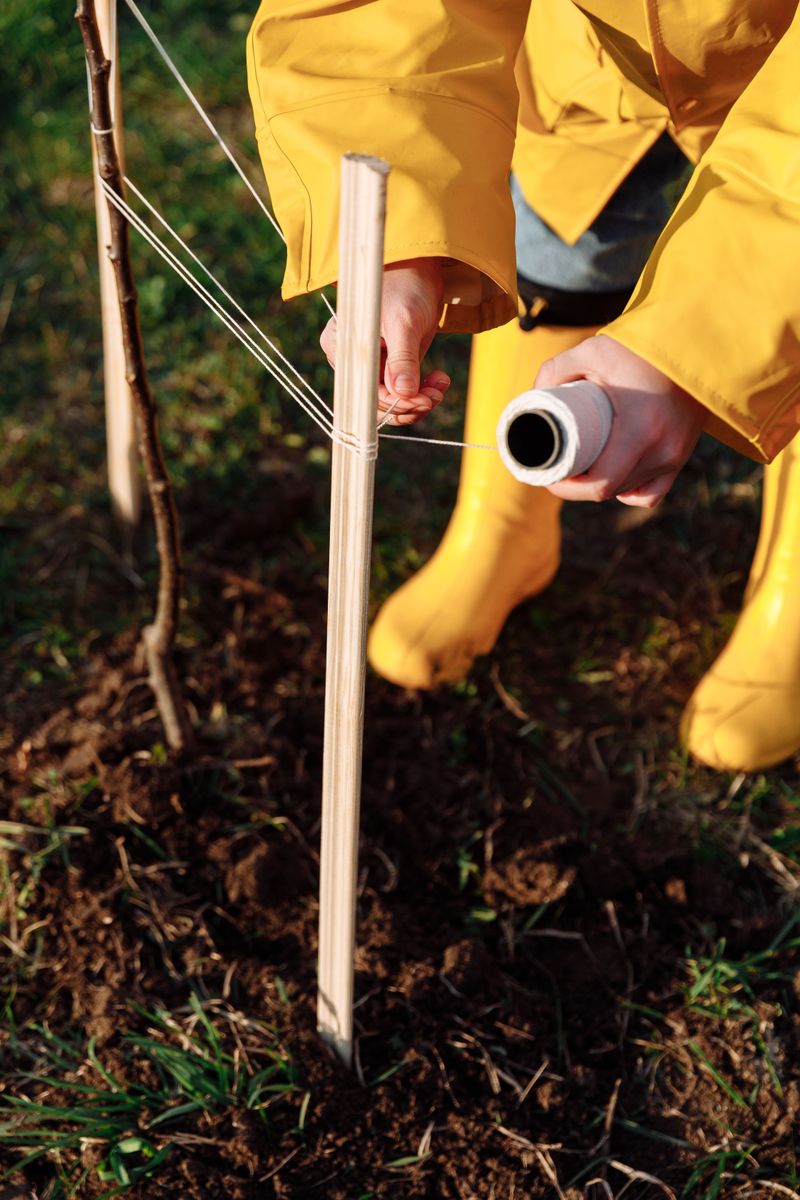
Sometimes the easiest fix costs only a few dollars. Driving stakes around a young tree is a quick, budget-friendly way to keep bucks from rubbing. You probably have a few spare stakes in the garage right now.
Here is why it works so well. A buck needs room to swing his head and grind his antlers against a trunk. When several stakes crowd the space around the tree, those antlers bump into wood or metal instead of bark.
Most bucks give up and move on to an easier spot. Setting up a stake barrier is simple. Drive three or four sturdy wooden or metal stakes into the ground around the tree, about a foot from the trunk. Space them evenly, almost like the corners of a box.
Height counts too. Make sure each stake stands taller than the zone where deer usually rub, so aim for at least 4 to 5 feet above the ground. Short stakes leave the upper trunk open to trouble.
After that, a little upkeep goes a long way. Check the stakes every week or two to make sure they stay firm and upright. Rain can soften the soil, and a determined buck may test them once or twice.
Plenty of North Carolina homeowners care for several young trees at once, especially on larger lots. Buying cages for every single one can add up quickly.
Stakes offer a fast, affordable option that lets you protect a whole row of saplings in one afternoon.
For extra safety, tie bright flagging tape to the tops. It helps you spot them while mowing and adds one more odd thing for deer to avoid.
5. Add Trunk Guards For Extra Protection
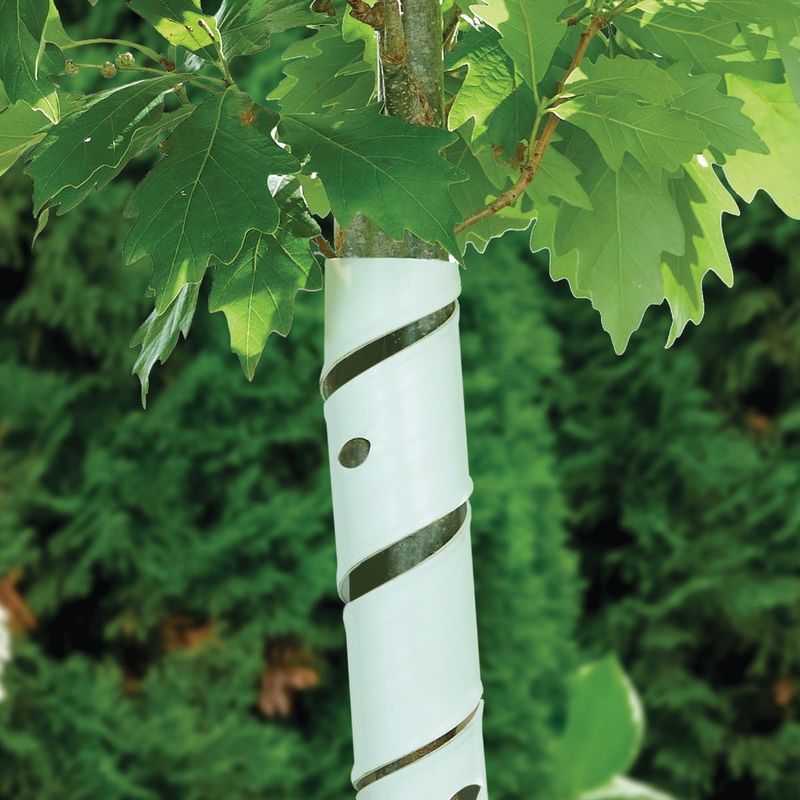
Think of trunk guards as a jacket for your tree’s bark. They cover the exact zone where bucks love to rub. Paired with other barriers, they add a helpful second layer of defense.
Guards come in a few styles, including plastic tubes, mesh sleeves, and spiral wraps. Each one shields the bark from scraping antlers. Still, solid guards have a downside worth knowing about.
A closed tube can trap moisture and heat against the trunk. That damp, warm space can soften bark and invite insects to move in. Left on too long, a solid guard may cause more trouble than it prevents.
Choosing the right type solves most of these problems. Look for ventilated mesh or spiral guards with plenty of holes or gaps. Pick ones that reach at least 4 feet up the trunk, since bucks rub well above knee height.
Install the guards in early fall, right before rubbing ramps up. Then take them off in spring so the bark can breathe and the trunk can grow without anything pressing on it. A quick check under the guard every few weeks also helps you catch pests early.
Guards work best as a team player rather than a solo act. A strong buck can still bend or shove a guard aside. Combine them with cages or stakes, and you get a setup that is tough to beat.
Humidity is a big deal in North Carolina, especially in the Piedmont and along the coast. Muggy air makes airflow important for anything wrapped around a trunk. Ventilated guards let your trees stay dry and healthy while still blocking those antlers.
6. Protect The Trees Deer Like Most
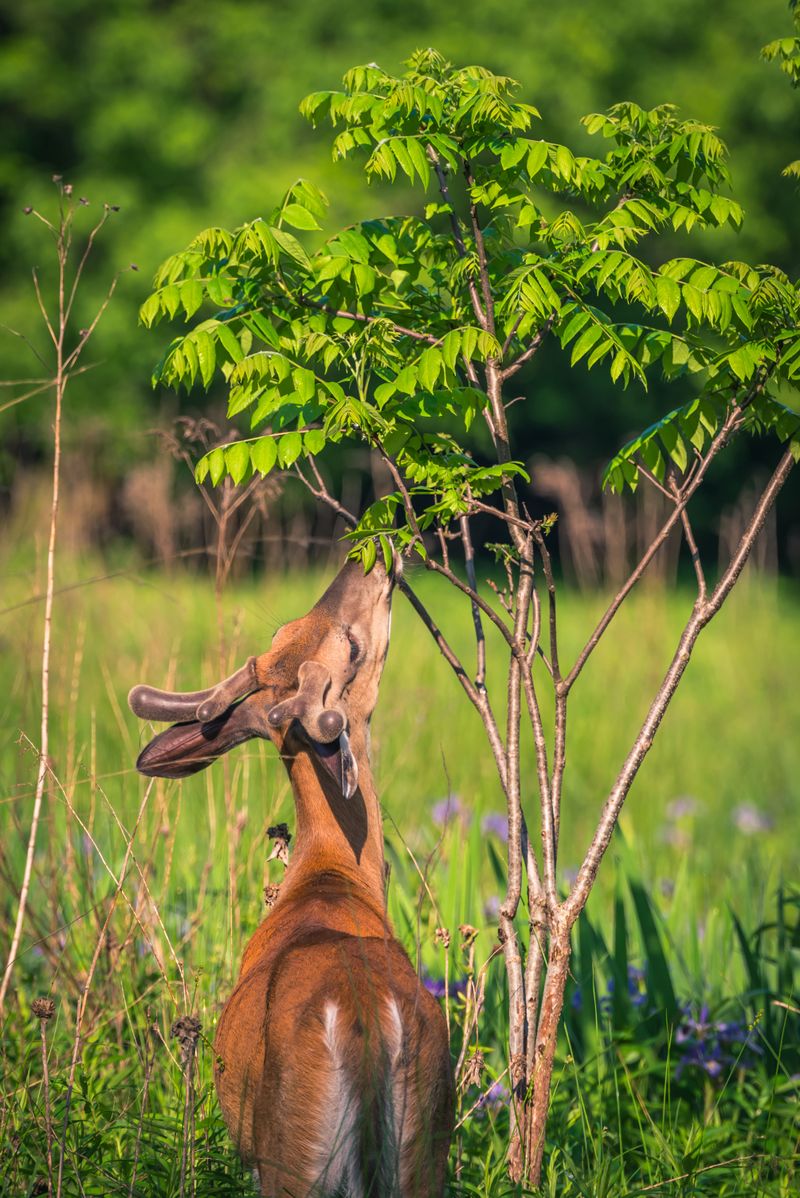
Bucks have favorites, just like people do. Some young trees get rubbed again and again, while others nearby barely get touched. Knowing which ones top the list helps you focus your efforts.
Smooth, thin bark and flexible trunks seem to attract the most attention. Maples, cherries, dogwoods, and redbuds often end up with rubs. Fruit trees such as apples, peaches, and pears are also common targets.
Many of these are popular picks for North Carolina landscapes, which makes them extra vulnerable.
Location plays a role as well. Trees along wooded edges or near paths where deer travel see far more rubbing. A buck walking his regular route will happily mark any handy sapling along the way.
Planning ahead pays off here. Give extra protection to newly planted trees from these groups, especially those near woods, fields, or natural deer trails. Faint paths through the grass or hoof prints in soft soil can show you where deer like to roam.
Protection should stay in place for several seasons, not just one. Keep cages, stakes, or guards around these trees until their trunks reach about 4 to 6 inches across. By then, the bark grows thicker and tougher, and bucks usually lose interest.
Lots of North Carolina yards back right up to woodlands, creeks, or open fields. Those spots often serve as deer travel corridors, linking feeding and resting areas.
If your property sits near one, your young maples and fruit trees deserve your strongest defenses. When choosing new trees, keep these patterns in mind. A little foresight at planting time can save you a lot of worry later.
7. Check For Damage And Help Trees Recover
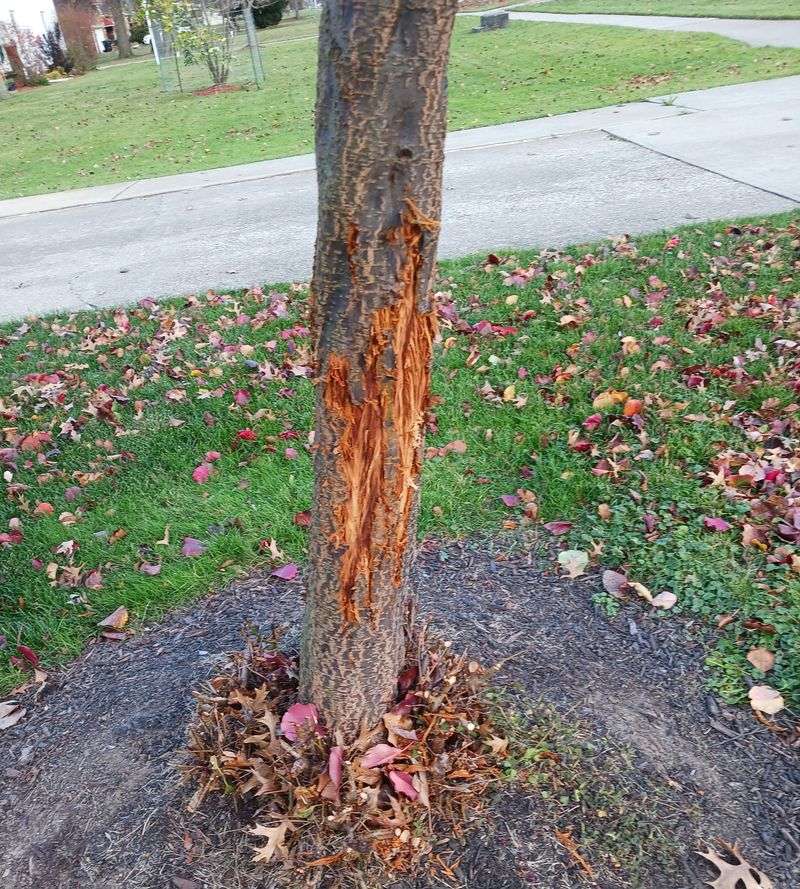
Finding a rubbed tree can feel like a punch to the gut. Don’t lose hope too quickly, though. Many young trees bounce back with a little care.
Recovery depends mostly on how much bark is gone. Trees with damage on only one side can often heal over time. When bark is stripped all the way around the trunk, however, the tree usually cannot survive.
That is why quick action makes such a big difference. Start by walking your yard regularly through the fall. A weekly stroll lets you catch fresh rubs before they get worse. Early mornings are a great time, since new damage looks bright and raw.
If you find a rub, grab a clean, sharp knife. Carefully trim away ragged, loose bark so the wound has smooth edges. Clean edges help the tree seal the area more easily.
Skip the paint, tar, or wound sealer. Experts now agree these products can trap moisture and slow natural healing. Trees do a better job on their own when the wound stays open to the air.
Water also helps a stressed tree regain strength. Give damaged trees a deep soak during dry spells, which North Carolina sometimes sees in early fall. Steady moisture supports new growth around the injured spot.
Finally, add protection right away, even if the season feels half over. Bucks often come back to rub the same trees again and again. A cage or a ring of stakes stops that repeat visit and gives your tree a real chance to heal and thrive for many years.