The Old Ohio Farm Trees That Still Mark Where Houses Once Stood
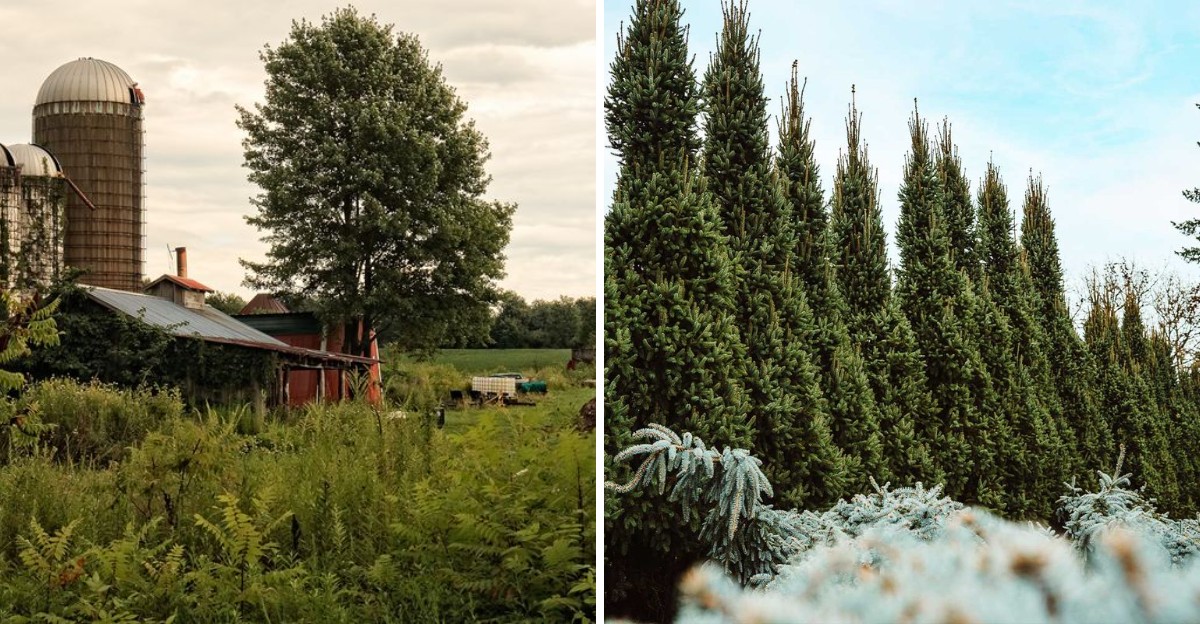
Drive past a lone cluster of trees in the middle of an Ohio field and you’re looking at a headstone nobody carved.
Farmhouses vanish. Barns collapse, siding rots, and the foundation sinks into the grass.
A few trees outlast the whole place, standing in a neat little group long after the family moved on. They didn’t sprout there by accident.
Settlers planted certain species near the home for reasons that made perfect sense at the time. Shade, food, medicine, even a bit of superstition.
Those choices left a fingerprint on the land that’s still readable today.
Once you know what to look for, an ordinary country drive becomes a treasure hunt through history. Every empty field starts to ask a question.
Next time you pass a stand of old trees with nothing around it, slow down and take a closer look. Somebody lived there once.
1. Norway Spruce Windbreaks Often Sheltered Ohio Farmhouses
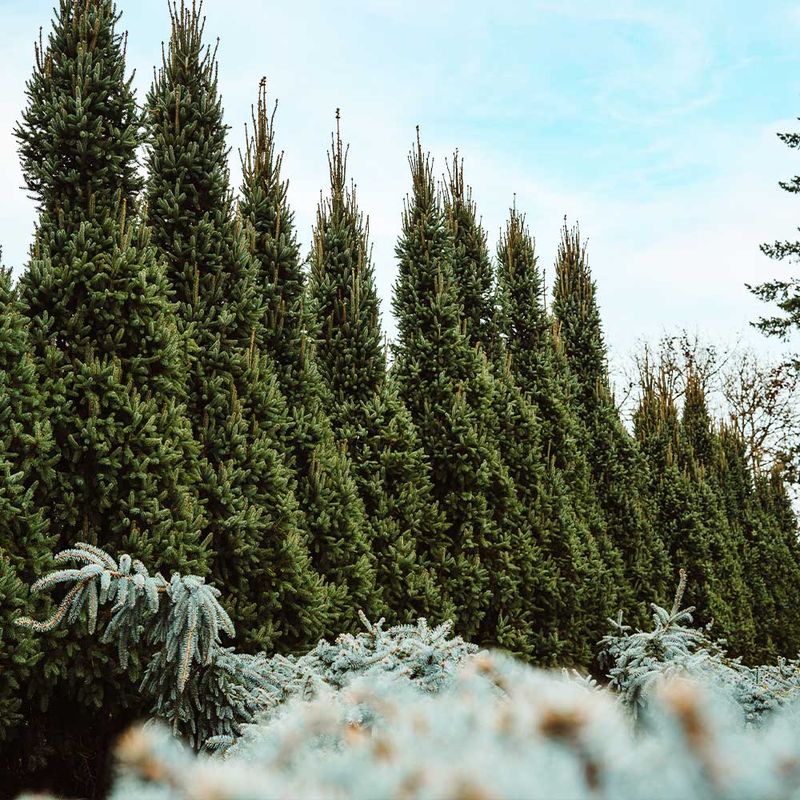
Imagine a January wind howling across flat Ohio farmland with nothing to stop it. Early farm families knew that feeling well, so they planted a living wall of evergreens.
Norway spruce became one of the favorite choices for the job. It is not native to North America, but it handled soil and dry spells with ease.
Today it ranks among the most common spruces in the state.
Farmers usually set these trees on the north and west sides of the house. That spot blocked cold winter winds and drifting snow.
The result was a warmer home and a calmer barnyard.
Norway spruce grows fast and big. It can reach about 80 feet tall and 40 feet wide.
Look for drooping branches that hang like curtains and long cones dangling near the top.
Here is the clue to watch for. When you spot a tight row or L-shape of tall spruces standing alone in a field, ask what they were guarding.
Often the answer is a farmhouse that has since disappeared.
Walk to the sheltered side of the row. The flat, open area there may be where the family once cooked supper, hung laundry, and watched storms roll past from a cozy kitchen window.
2. Some Of Those Spruce Plantings Date Back To The 1800s
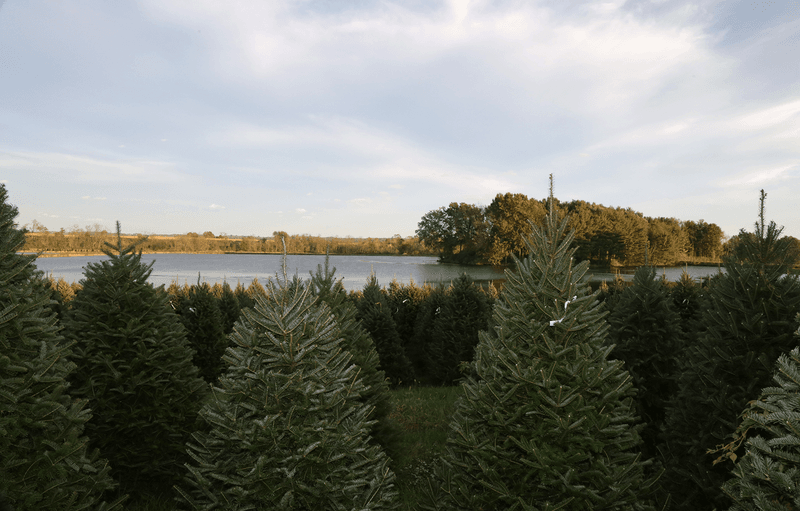
Some trees are like old storytellers, and a few Ohio spruces have been around longer than your great-grandparents. Their history stretches back over a century.
Norway spruce first arrived in North America in the mid to late 1800s. Farm families liked the idea of a fast-growing evergreen from Europe.
Soon seedlings were showing up beside homesteads across the Midwest.
Another big wave came in the 1930s. Under President Franklin D.
Roosevelt, the Civilian Conservation Corps planted millions of Norway spruces. The goal was to hold soil in place and stop erosion.
Some spruce windbreaks near family farms are thought to date to around 1905. That means a tree you walk past might have sheltered a horse-drawn wagon.
Pretty amazing for something you can lean against.
How can you guess a tree’s age without cutting it? Measure around the trunk about chest high with a tape measure.
Your Ohio Garden Changes Every Week. Your Plan Should Too.
Gardening in Ohio changes quickly throughout the season. Every Friday you’ll receive a simple weekly plan showing exactly what to plant, prune, fertilize, harvest, and protect so you never miss the right timing.
Bigger trunks usually mean older trees, though growing conditions make a difference.
Old county maps and plat books can help too. Many libraries and historical societies keep copies.
If a map from 1900 shows a house right where your giant spruces stand, you have solved a small mystery with nothing more than patience and a little detective work.
3. Old Apple And Pear Trees Hint At A Former Home Site
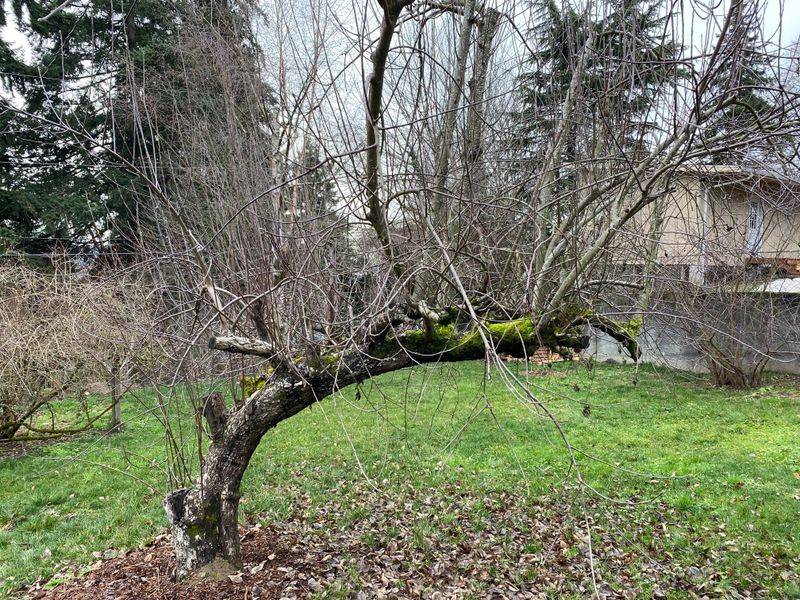
Johnny Appleseed would probably grin at the twisted old fruit trees still scattered across the state. Many of them trace back to the days when settlers planted orchards as part of building a life.
When pioneers moved into the Northwest Territory, they often carried fruit trees or grafts from home. John Chapman, better known as Johnny Appleseed, sold apple and pear trees to many of them.
Some land deals even asked settlers to plant 50 apple trees plus 20 peach, cherry, or pear trees.
A few of those early trees have living ties today. Rambo apple trees at the Fletcher Coffman Homestead in Dublin are linked to Johnny Appleseed.
Folks still hunt abandoned homesteads for old fruit trees, and some turn out to be over 100 years old.
So what should you look for? Fruit trees in a wild woods or meadow seem out of place, and that is the point.
Wild forests rarely grow neat groups of apples or pears.
Check for crooked trunks, mossy bark, and small knobby fruit in late summer. Spring is easier, since white and pink blossoms stand out against plain green.
A cluster of old fruit trees often sat just a short walk from a kitchen door.
4. Big Black Walnuts Often Stand Near Old Homesteads
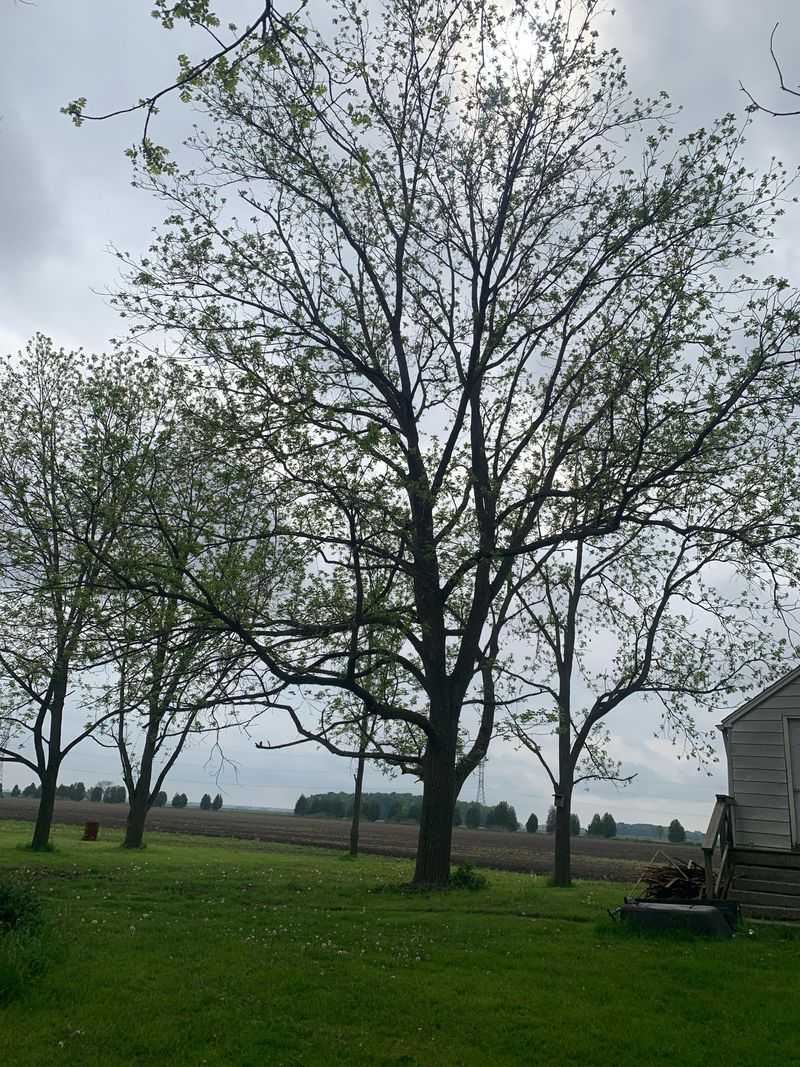
Ever stepped on a hard green ball that smelled a bit like lemon and stained your fingers brown? You probably met a black walnut, one of the homestead’s most useful neighbors.
Black walnut is native to the state and loves deep, rich soil with plenty of sun. Families valued it for tasty nuts, strong wood, and a dye made from the husks.
Planting one near the house was a smart move.
Mature trees usually grow 50 to 75 feet tall. Some trunks are more than three feet across.
Out in the open, a walnut can spread nearly as wide as it is tall.
In Clermont County, some historic homes over 200 years old still have big walnuts growing behind them. That pattern shows up across the state.
A lone giant walnut in a field may mark a backyard that is no longer there.
One fun twist keeps things tricky. Squirrels bury walnuts and forget some, so new trees pop up all over.
A young walnut by itself tells you less than an old giant does.
For the best clue, pair a large walnut with other signs nearby. Old fruit trees, spring flowers, or loose stones make the story much stronger.
5. Osage Orange Rows Once Lined Ohio Farm Fields
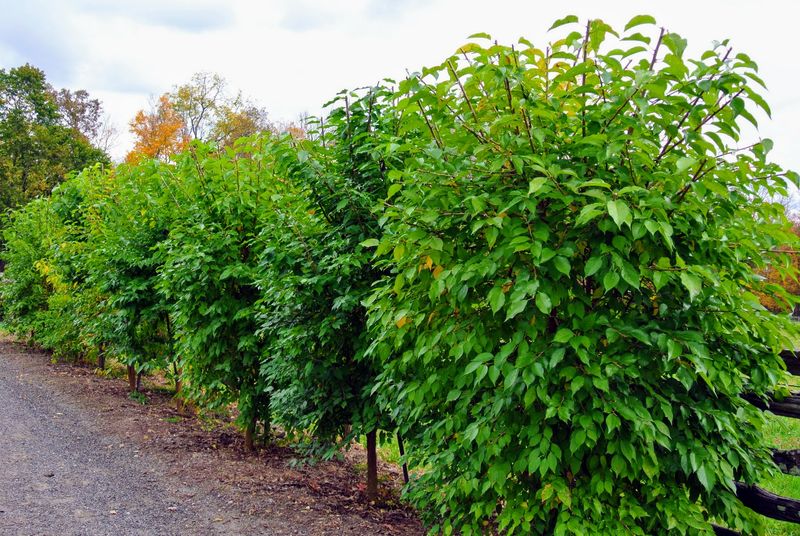
Pig tight, horse high, and bull strong. That was the catchy promise made back in 1847 about a thorny tree that farmers soon planted by the mile.
The tree is Osage orange, and it came to the state in the 1800s. Before barbed wire existed, fencing a whole farm was tough and costly.
A dense, prickly hedge solved the problem with nothing but roots and patience.
By the 1850s, these living fences made it possible to enclose entire farms. Thousands of miles of hedges spread across the Midwest, East, and South.
That reached far beyond the tree’s home range out west.
You can spot Osage orange by its famous fruit. People call them hedge apples, and they look like bumpy, lime-green brains about the size of a softball.
Kids love finding them in fall.
The trees grow fast and usually reach 30 to 40 feet tall. Look for orange-tinted bark, sharp thorns, and twisty branches.
Wear gloves if you plan to poke around.
A long row of these trees often marks an old field edge or lane. Follow the line, and you may find it bending toward a spot where a farmhouse once stood.
6. Big Trees In A Straight Line Can Trace An Old Boundary
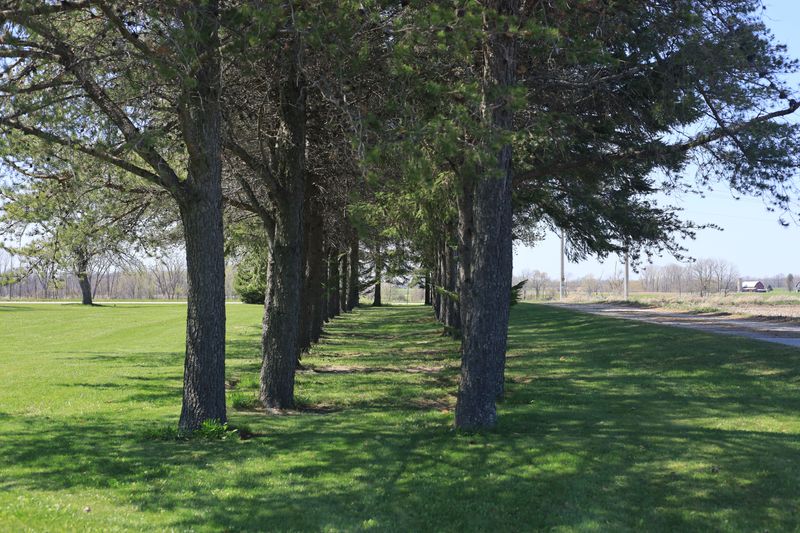
Nature rarely uses a ruler. When you notice big trees marching across a field in a perfectly straight line, people probably had a hand in it.
Trees have marked property lines for a long time. Early surveyors sometimes used blazed trees, which had chunks of bark cut away, as boundary signs.
The state also used a grid of townships and ranges to divide land.
Fence lines tell a similar story. Birds sat on old fences and dropped seeds, and those seeds grew into tall trees.
Some trunks still swallow rusty wire from fences built generations ago.
Boundary trees still matter today. Ohio’s Forest Tax Law Program asks owners to mark property lines, often with paint on trees or fenceposts.
Those marks usually sit about 4.5 feet off the ground.
State law even covers missing markers. Ohio Revised Code 315.28 lets county engineers resurvey land when old corner, witness, or line trees have fallen or decayed.
That shows how important these trees once were.
Here is a handy tip for explorers. Follow the tree line to where it meets another row at a corner.
Homes often sat near those corners, close to a road or lane, so that is a great place to search for more clues.
7. Look For Daffodils, Daylilies And Yucca Underneath
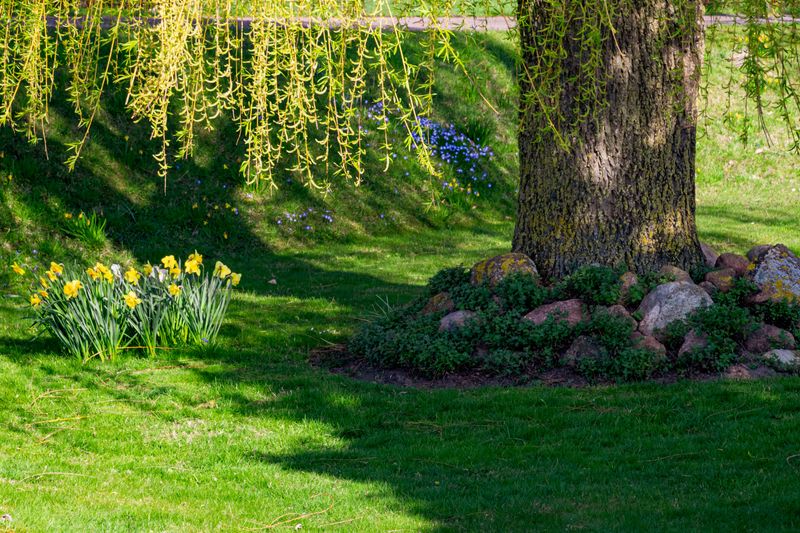
Flowers can be the loudest gossip in a quiet field. Each spring and summer, they burst into color right where someone once planted them by a front step.
Bright orange daylilies are a classic sign. Settlers in the 1700s and 1800s planted them near cabins and gardens.
They liked the pretty blooms, and some even ate parts of the plant.
Daylilies are tough. They spread over time and shrug off drought and neglect, so a single clump can turn into a whole patch.
Some kinds spread quickly enough to fill an old fence row.
Daffodils often keep them company. Their yellow trumpets pop up in early spring, before most plants wake up.
Spotting a ring of daffodils in the woods is a strong hint that a yard was nearby.
Yucca is another surprise. Its stiff, spiky leaves look like they belong in a desert, not an Ohio meadow.
Families planted it as a decoration, and it hangs on for decades.
Try visiting in April for daffodils and July for daylilies. Snap photos and note where the flowers grow.
Draw a quick map, and you may see the outline of a lost garden, path, or doorway appear.
8. Search For Stone Foundations And Old Cisterns Nearby
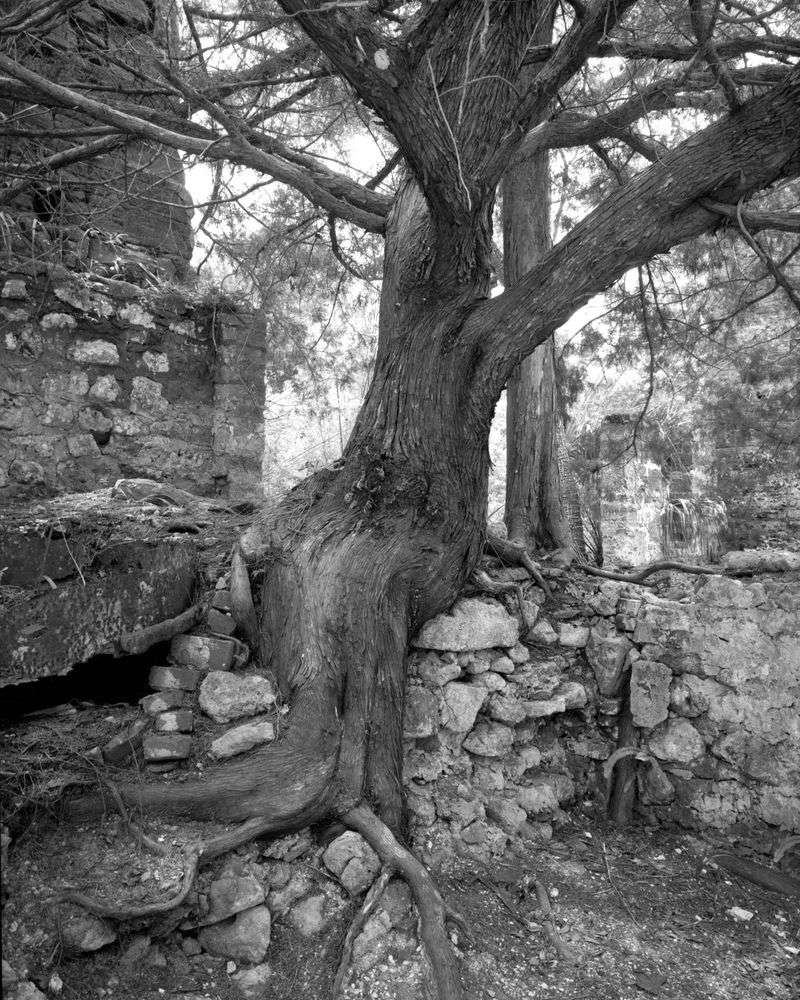
Stone is stubborn stuff. Long after wooden walls rot or burn, the rocks that held up an old house often stay right where they were placed.
Historic farms may still hold foundation stones from houses, barns, summer kitchens, coal houses, and tool sheds. Some outlines are easy to see.
Others hide under grass, leaves, and vines.
Watch for a rectangle of flat rocks or a low, lumpy ridge in the ground. A dip in the soil can point to an old cellar.
Bits of brick, broken glass, or rusty nails add to the evidence.
Cisterns are another clue. Before city water, many families collected rainwater in underground tanks.
They were usually built against the house foundation, sometimes beneath a porch.
Safety comes first here. Old cisterns and cellars can have weak covers or hidden openings.
Stay off loose boards, keep kids and pets close, and do not climb down into any hole.
Also remember that land belongs to somebody. Get permission before exploring private property, and leave stones and objects where you find them.
Taking photos and notes keeps the site whole for the next curious visitor, and it helps local historians piece together the story too.
9. Same-Sized Young Trees Can Signal A Former Field
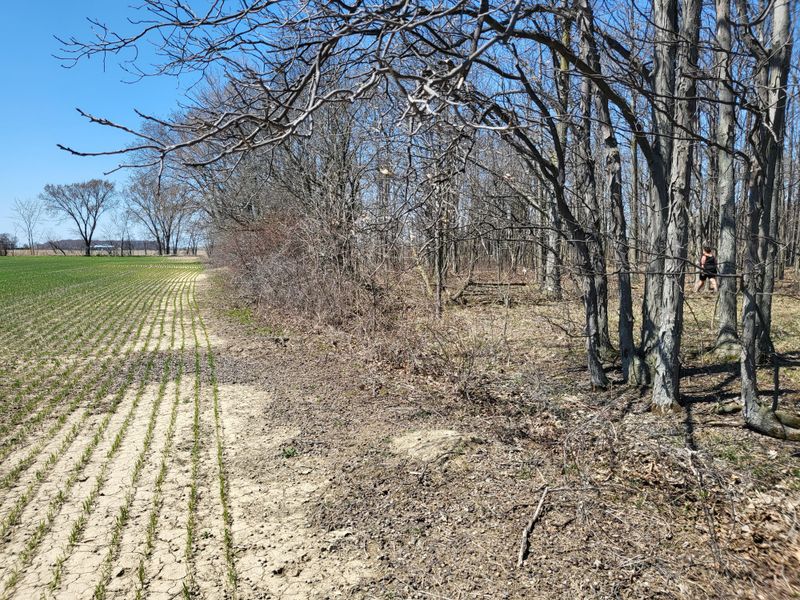
Think of a classroom where every kid is the same height. That is a bit like walking into a patch of woods where most trees look the same size.
When farmers stopped plowing or grazing a field, nature got busy. Sun-loving trees moved in all at once.
Black walnut is one of these quick pioneers that jumps into open ground.
Because they started together, the trees grew up together. The result is a stand of similar trunks with few true giants.
Scientists call this an even-aged stand.
History helped this happen in Ohio. As many farms were abandoned during the 1900s, sun-loving trees like black cherry, tuliptree, and eastern red cedar filled the old fields.
Osage orange also sprouts readily in bright, bare soil, so it can form groups of similar age.
Here is how to read the clue. Look for a few big old trees on the edges, with a sea of younger ones in the middle.
The big ones may mark the old fence line, while the young ones fill the former field.
Keep an eye out for straight furrows or small rock piles too. Farmers tossed stones aside while plowing.
Put those clues together, and the old farm map starts to reveal itself.