How to Remove Weeds From Gravel and Rock Landscaping in Arizona
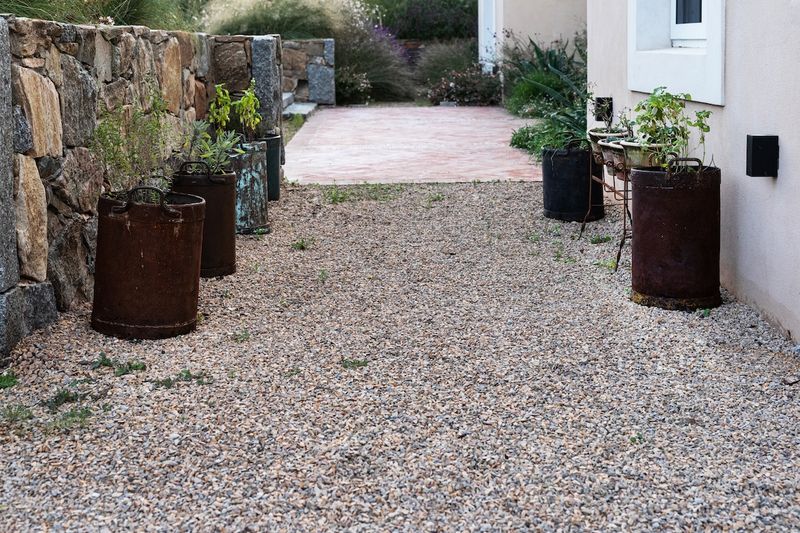
You put down rock to avoid weeding, and then green sprouts show up between the stones anyway. It happens in nearly every Arizona gravel yard, and it does not mean you did anything wrong.
Weeds in rock beds follow patterns you can learn to read. Once you know where they come from, you can clear them out and cut down the next round with far less effort.
Why weeds show up in gravel
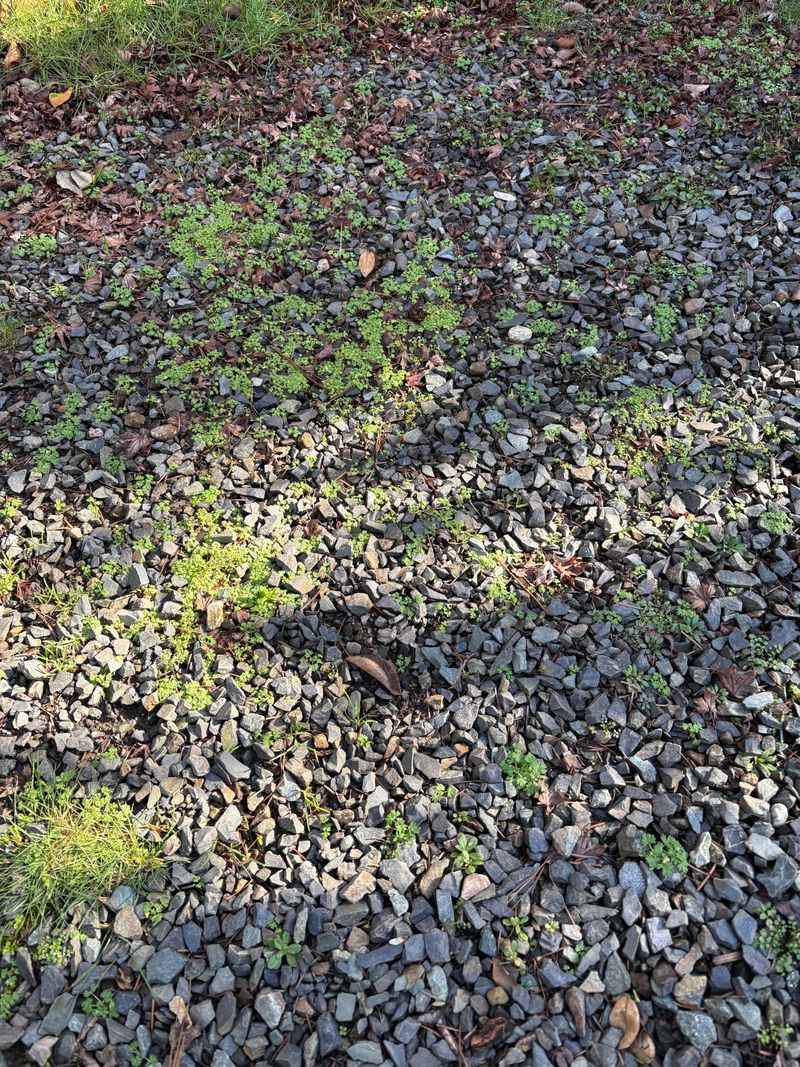
A thick layer of stone does a lot of good work in a desert yard. It shades the soil, slows moisture loss, and can reduce how many weeds come up.
Still, it does not seal the bed against seeds.
Arizona wind carries seeds everywhere, and they land on top of the rock just as easily as on bare ground. Over time, dust, crushed leaves, and bits of mesquite or palo verde litter settle between the stones.
That fine layer of soil and debris gives seeds a place to sprout, even when landscape fabric sits underneath.
Fabric can help limit weeds early on, but it is not a permanent fix. Seeds that root in the material above it simply grow there instead.
A bed can look clean for months and then fill in after a monsoon storm or a cool winter rain.
A realistic goal is fewer weeds, not zero weeds. Expect to pull, treat, and check the bed through the year.
The work stays manageable when you catch plants while they are small.
Remove growing weeds before they set seed
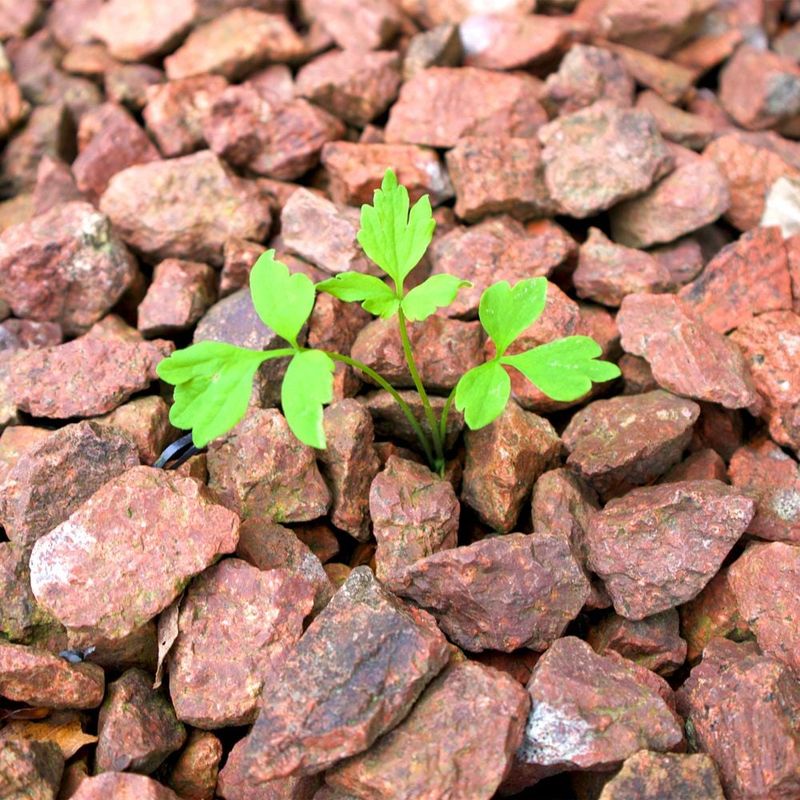
Small patches of weeds are a good fit for hand removal. Pull them when the soil is slightly damp, such as a day after irrigating nearby plants, so the roots slide out more easily.
A narrow weeder or hori hori knife helps loosen the root, and bagging the weeds keeps seeds from scattering back into the rock.
Timing matters most. Weeds that have flowered or formed seed heads can drop plenty of seeds as you lift them, so remove plants before they set seed.
A quick walk through the bed every week or two during the growing season beats a big cleanup after everything has gone to seed.
Know what you are pulling. Annual weeds complete their life in one season and usually come out with the roots.
Perennials, such as Bermuda grass or bindweed, can regrow from roots or rhizomes left in the ground. Those may return again and again, so expect repeated digging or a different management approach.
Use pre-emergent before the target weeds appear
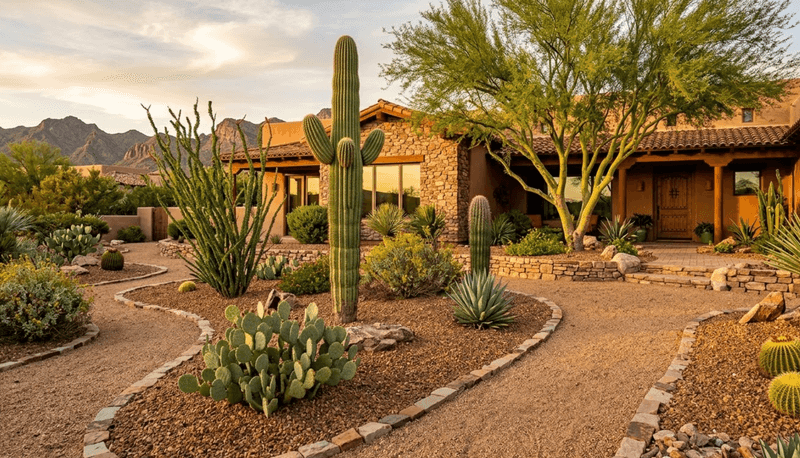
Seeds that have not sprouted yet are a different target than weeds you can see. Pre-emergent products work by stopping germinating seeds, so they will not remove a weed that is already growing.
Pull or treat what is up now, then use a pre-emergent to cut down the next wave.
Timing follows the weed calendar. Arizona guidance points to fall applications for cool-season weeds and spring applications for warm-season weeds.
In the low desert, that means planning ahead of winter weeds in the cooler months and again before summer weeds wake up.
Your Arizona Garden Changes Every Week. Your Plan Should Too.
Gardening in Arizona changes quickly throughout the season. Every Friday you’ll receive a simple weekly plan showing exactly what to plant, prune, fertilize, harvest, and protect so you never miss the right timing.
Before buying anything, identify the weeds that keep returning in your bed. Then read the label of the specific product for the target weeds, the right timing, and whether it is approved for gravel or rock landscapes.
Labels also explain watering in, rates, and how close it can go to trees and shrubs. A pre-emergent may help reduce annual weeds, but it will not stop every seed, and it does little against perennials already rooted in place.
Choose a labeled treatment for weeds already growing
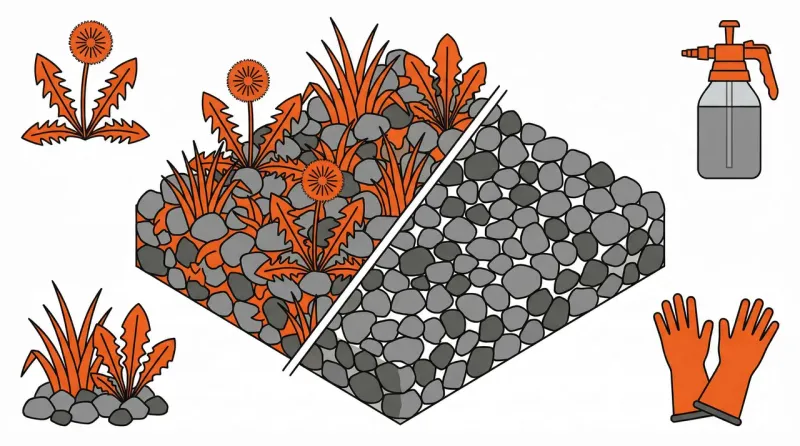
Established weeds that are too many or too tough to pull may call for a spot treatment. The match matters more than the brand.
Choose a product labeled for the intended site, such as gravel or rock areas, and for the weeds you actually have. No single herbicide fits every bed or every weed.
The label is the rulebook. It lists target weeds, mixing, weather limits, and safety gear, and it explains how to protect nearby plants.
EPA guidance on reading labels makes the same point: label directions are part of using any pesticide legally and safely. Windy days and hot afternoons are poor times to spray near desert shrubs.
Homemade vinegar mixtures are not a harmless shortcut. Concentrated acetic acid products can seriously injure eyes and skin, and they mostly burn back leaves rather than reliably dealing with roots.
If you choose a herbicide, pick a registered product instead of a kitchen mix.
Do not reach for a pre-emergent to handle visible growth, since it is meant for future seeds. Soil sterilants are also a poor idea for home beds, because they can move with water and injure nearby trees and ornamentals.
Renovate the bed with realistic expectations
Sometimes a bed is so overgrown that a rebuild makes sense. Be clear about the goal: renovation is a fresh start, not a quick fix for weeds already growing through the rock.
Before removing rock or digging, check Arizona 811 requirements so buried lines are marked first.
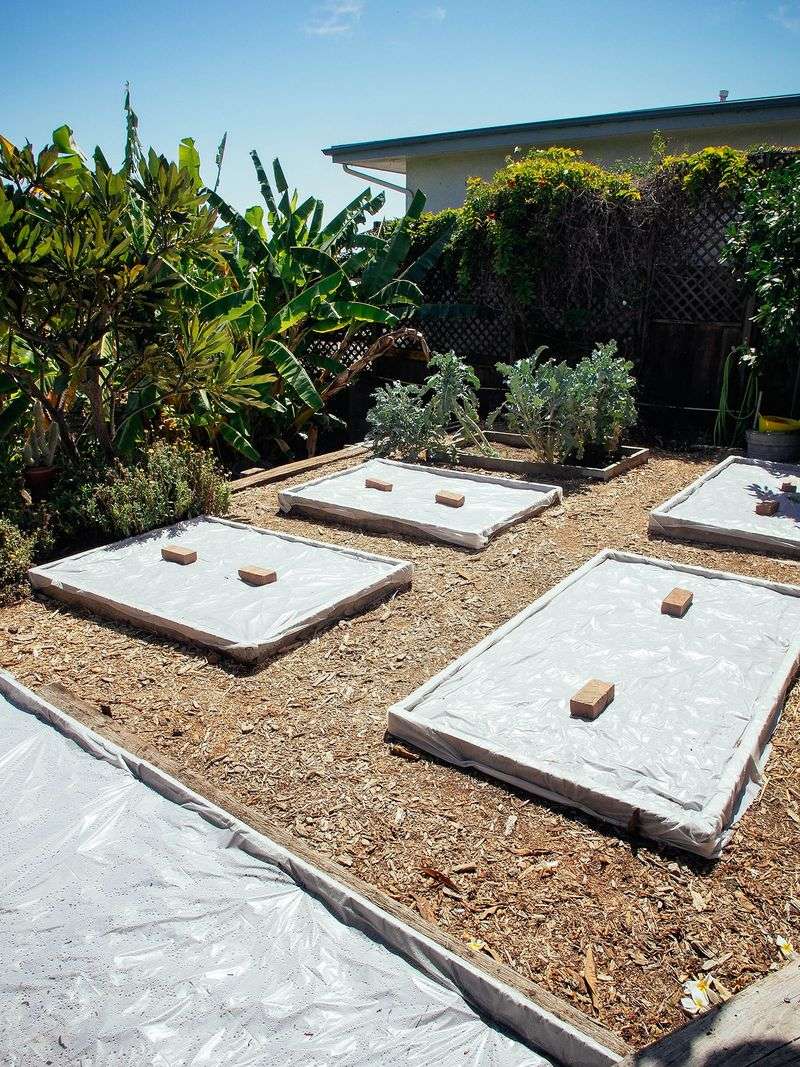
Soil solarization is one option once the stone is cleared and before new gravel goes down. Moisten the soil, cover it with clear plastic, seal the edges, and leave it in place for at least six weeks in summer.
The sun heats the top layer and may reduce many weed seeds, although some can survive.
Landscape fabric is another choice, but it has limits. It may slow annual weeds at first, yet dust and plant debris can build up on top and give seeds a place to root.
No rock depth or fabric installation guarantees weed control, so plan on checking the bed afterward. A layer of roughly one-half to two inches of stone is a common range for inorganic mulch, but your site may need more or less.
Keep checking for new growth
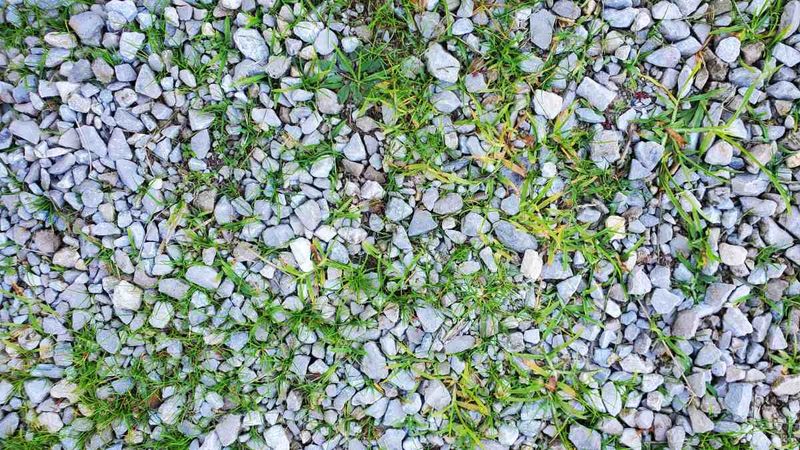
Walk the bed regularly, especially after rain or a windy spell, because new seeds can arrive at any time. Pull small seedlings early, before they flower and set seed, and rake or blow out leaf litter that gives them a foothold.
Use prevention only when it fits the weed stage and season, such as a labeled pre-emergent before the target weeds sprout. No single treatment keeps gravel weed-free for good.
A ten-minute check beats a weekend of cleanup.