Could Your Heater Be Behind Brown Houseplant Tips in Low-Desert Arizona?
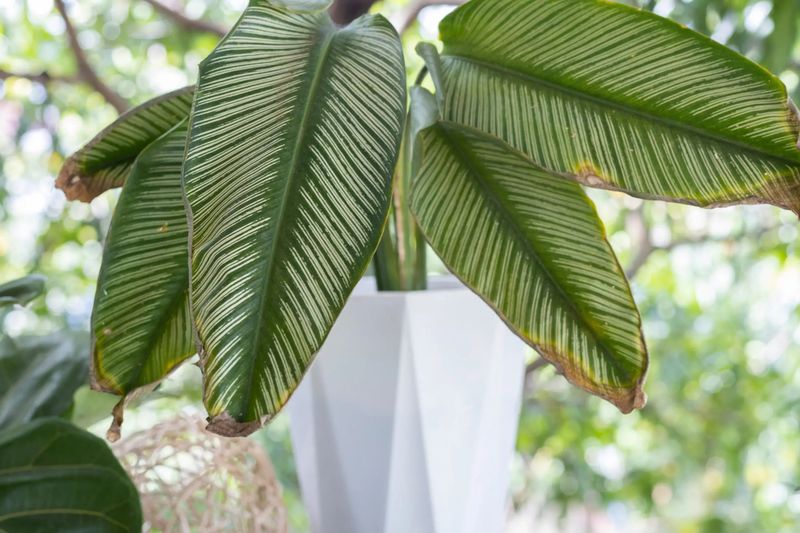
The first chilly evening arrives, you switch on the heater, and a few weeks later your favorite plant has crispy brown tips. It is tempting to blame the heater right away.
Sometimes it plays a part, but brown tips can come from several different problems. Here is how to sort out what is going on in your own home.
Heating season is a clue, not a diagnosis
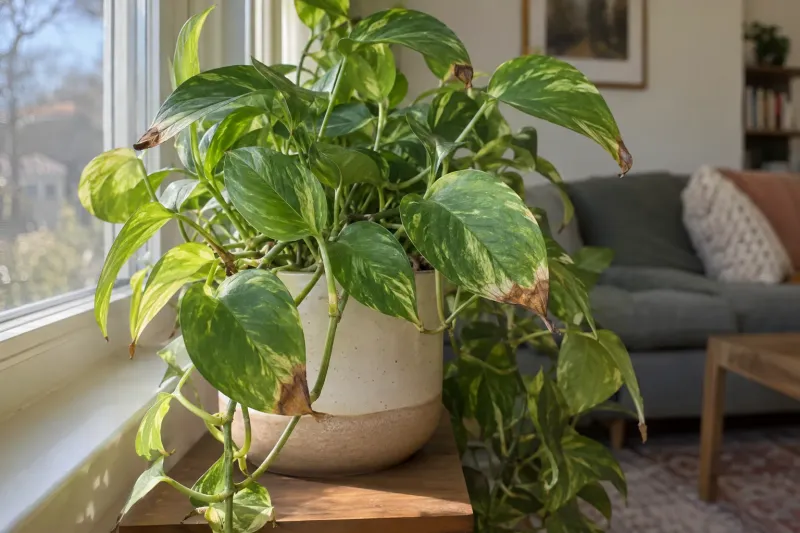
Many plant owners spot brown tips a few weeks after the heater starts running. That timing is worth noting, but it cannot name the cause by itself.
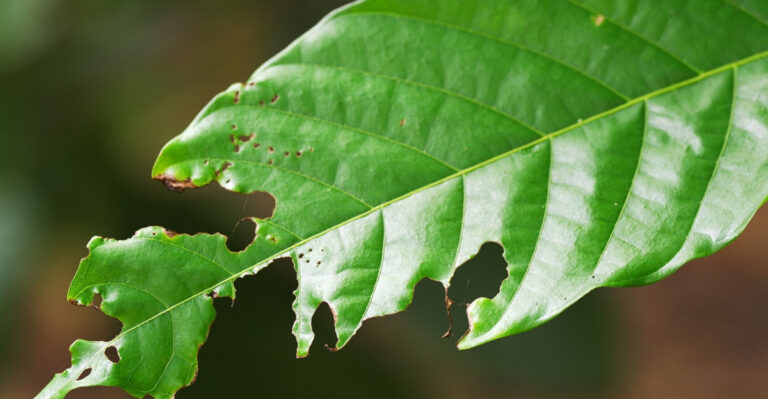
Brown tips are a general symptom that many different problems can produce.
According to UC IPM houseplant guidance, low humidity is only one item on a list that also includes excess fertilizer or salts, soil that is too dry or too wet, sun or heat coming through a window, and drafty spots.
More than one of these can be happening at once. Think of this article as a series of checks, not a single fix.
You will look at where the plant sits, how the room feels, what the soil is doing, and what else changed recently, then make one measured adjustment at a time.
Warm air can lower relative humidity
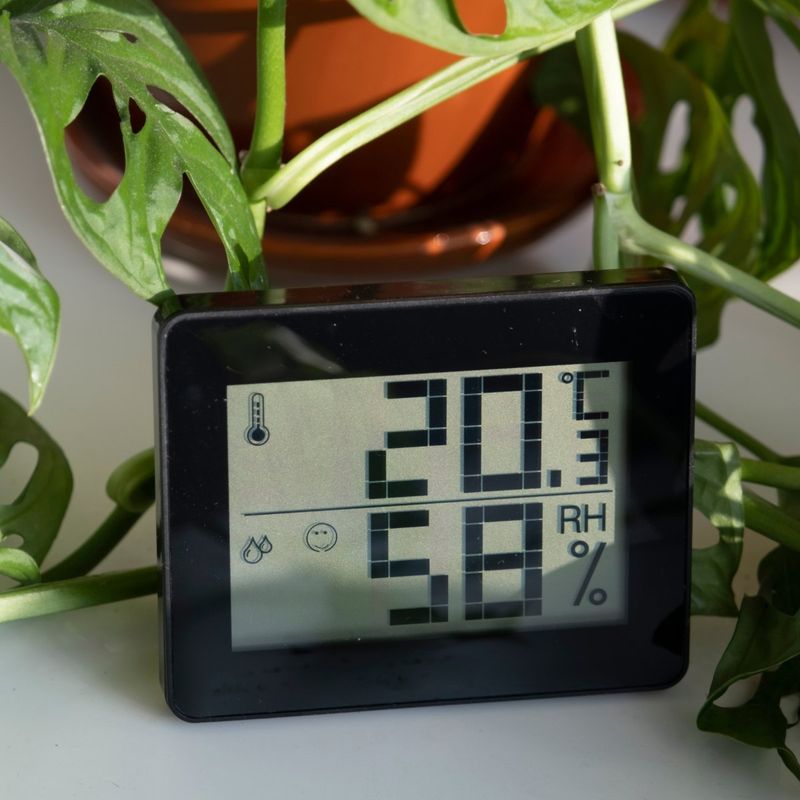
Relative humidity compares the water vapor in the air with the most the air could hold at its current temperature. Warm air can hold more, so when air heats up without gaining any moisture, its relative humidity drops.
The heater is not necessarily removing water vapor, it is changing the ratio, as NOAA’s explanation of humidity and temperature describes.
Direct airflow is a separate matter. A plant sitting in the stream from a register can dry out and suffer from sudden temperature swings, no matter what the room reading says.
Arizona guidance on indoor plant care points to this kind of stress.
Rooms and plants do not all react the same way. A fern may complain while a snake plant shrugs it off.
Where the plant sits matters
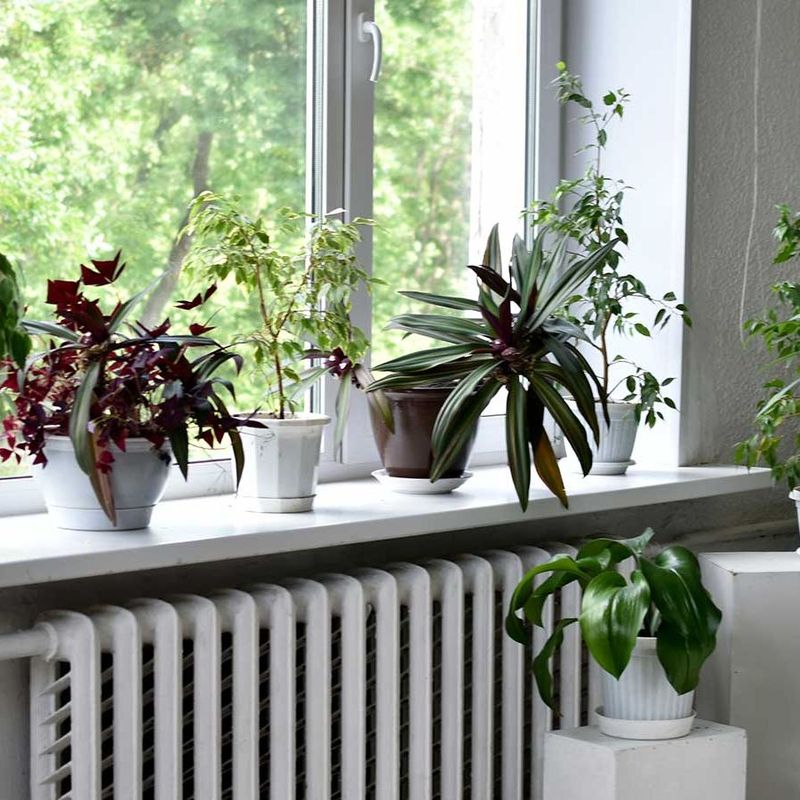
Start with a quick timeline. When did the browning first show up, and did it follow the first days of heater use?
Then look at the plant’s spot. Is it in the path of warm air from a register, next to a fireplace, or beside a drafty door or window?
Conditions can differ a lot from room to room, so avoid assuming your whole home is dry. A small hygrometer costs little and lets you compare readings in the living room, bedroom, and kitchen.
Checking humidity in several indoor locations is a habit Arizona extension guidance encourages.
If the plant sits in direct hot airflow, moving it is a sensible first step. Shift it a few feet to the side, away from heat sources and drafts, and keep the light it needs.
Check the soil before changing your watering
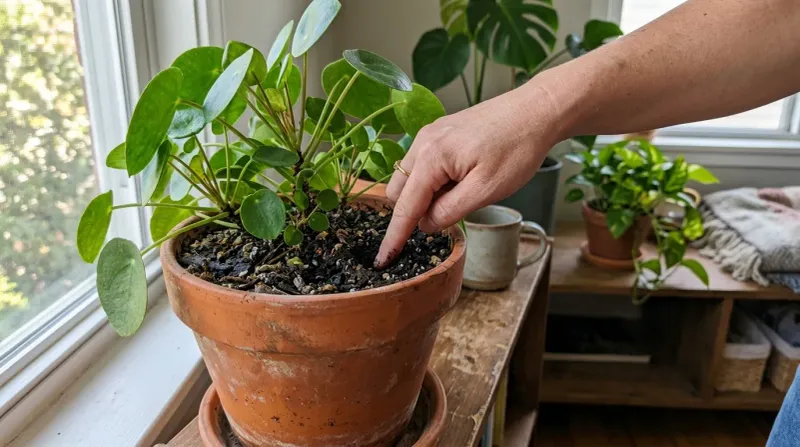
Before you reach for the watering can, poke a finger a couple of inches below the soil surface. The top can look dry while the root zone stays damp, or the reverse.
Your Arizona Garden Changes Every Week. Your Plan Should Too.
Gardening in Arizona changes quickly throughout the season. Every Friday you’ll receive a simple weekly plan showing exactly what to plant, prune, fertilize, harvest, and protect so you never miss the right timing.
What you feel down there is more useful than the leaf tips.
When the plant does need a drink, water thoroughly, let the extra drain out the bottom, and empty the saucer. Arizona extension advice on watering indoor plants says not to leave the pot sitting in drainage water.
Brown tips do not automatically mean thirst. Soil that stays too wet can harm roots and cause tip browning too, so adding more water could make things worse.
Other causes can look much the same
A white crust on the soil or pot rim can hint at a buildup of fertilizer or salts. Think back: did you feed the plant more often lately?
A strong afternoon sun beaming through glass can also scorch tips, and so can a cold draft from a leaky window.
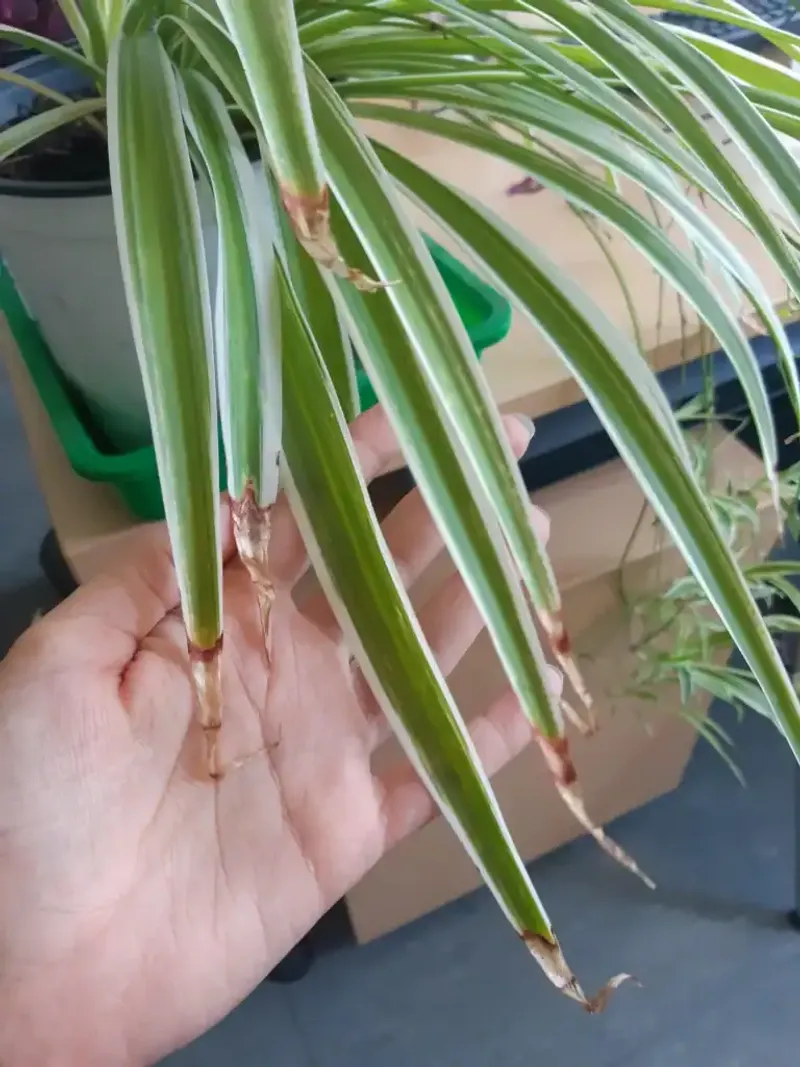
Some plants are touchier about what is in their water. UC IPM notes that species such as dracaena and spider plants are more prone to tip browning from water contaminants.
That is plant-specific, so it does not mean everyone needs a different water source.
These causes can stack on top of heating-season stress. Compare the plant’s known needs with any recent changes in light, feeding, or location before changing anything big.
Adjust humidity without overcorrecting
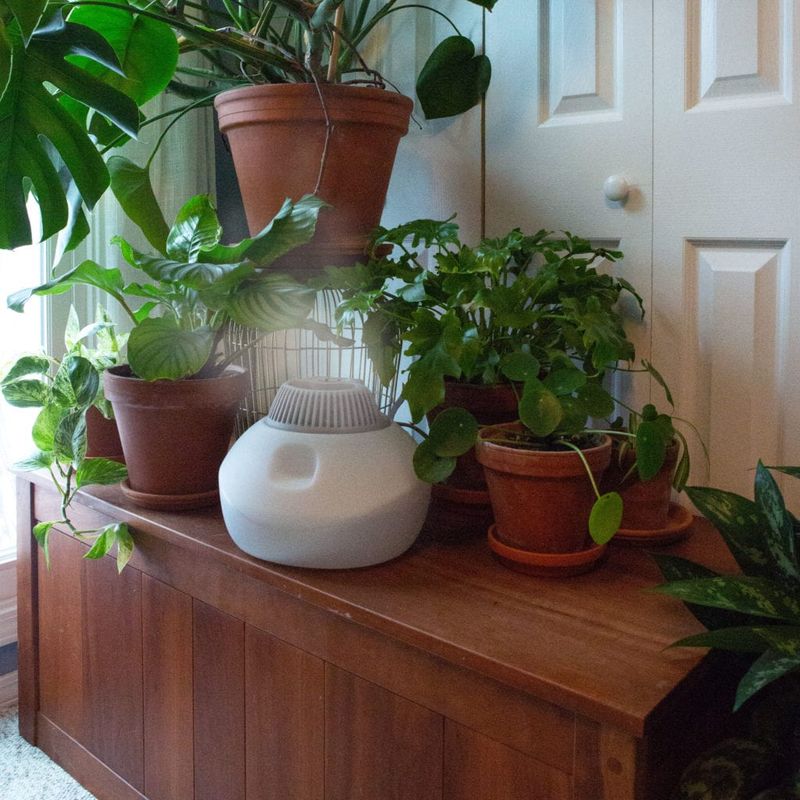
Some moisture-loving plants may appreciate more humidity, and needs vary by species. Arizona guidance gives roughly 20 to 40 percent as a range where many foliage and flowering plants can grow, while cacti and succulents tolerate much lower humidity.
Grouping plants or running a room humidifier may help the sensitive ones.
Skip daily misting as your plan. Its effect lasts only minutes.
Pebble trays are also doubtful for changing the humidity of a whole room, so treat them as a small extra at best and keep the pot above the water line.
If you use a humidifier, keep room humidity at or below 50 percent, clean the unit as directed, and turn the output down if nearby surfaces get damp. Watch the hygrometer instead of guessing.
Trim the brown tips, then watch for new growth
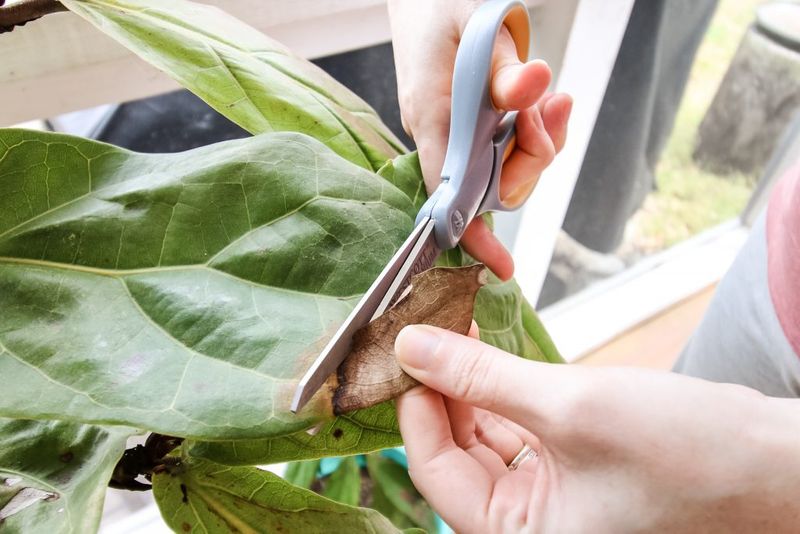
Go ahead and snip off brown tips if they bother you. Trimming along the leaf’s natural shape improves looks, but damaged tissue will not turn green again.
Make one measured change, then watch new leaves over the next few weeks. Clean new growth is your best sign you are on the right track.