Missouri Trees Left Standing After Fall Storms Can Hide Damage You Won’t Spot Right Away
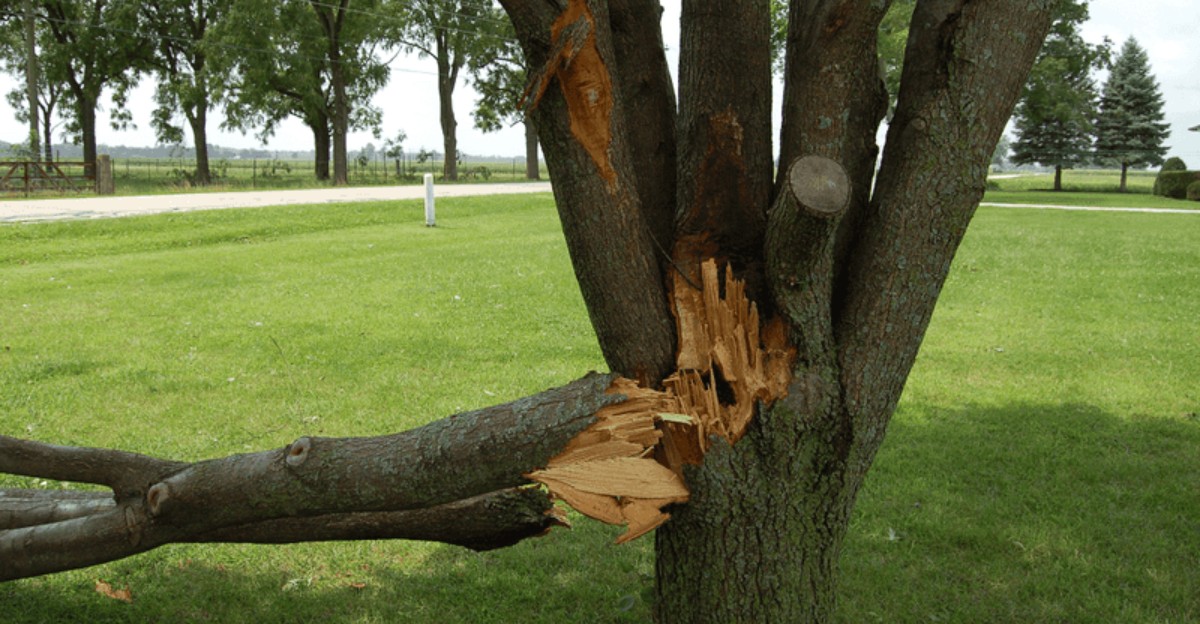
A strong gust can split wood deep inside a trunk while the bark outside stays smooth and calm looking. I found that fact a little surprising, especially since strong winds and storms can sweep through Missouri this time of year.
After a strong storm, you may walk outside the next morning, see your shade giant still upright, and sigh with real relief. I get it, because a standing trunk feels like a win after hours of thunder and sideways rain.
Still, a tree is a living thing, and it can hide strain the same way we hide a sore muscle. Some problems show up slowly, like a quiet crack or an odd lean that appears weeks later.
Missouri homeowners have a real chance this October to catch trouble early, before winter ice adds extra weight. So what might your favorite backyard giant be quietly hiding under all those bright turning leaves?
Your Tree Can Bend Back Up But Still Carry Hidden Cracks
Think about bending a green twig back and forth until tiny fibers start to fray inside the bark. Strong wind does something similar to big trunks, even when the whole tree swings back upright afterward.
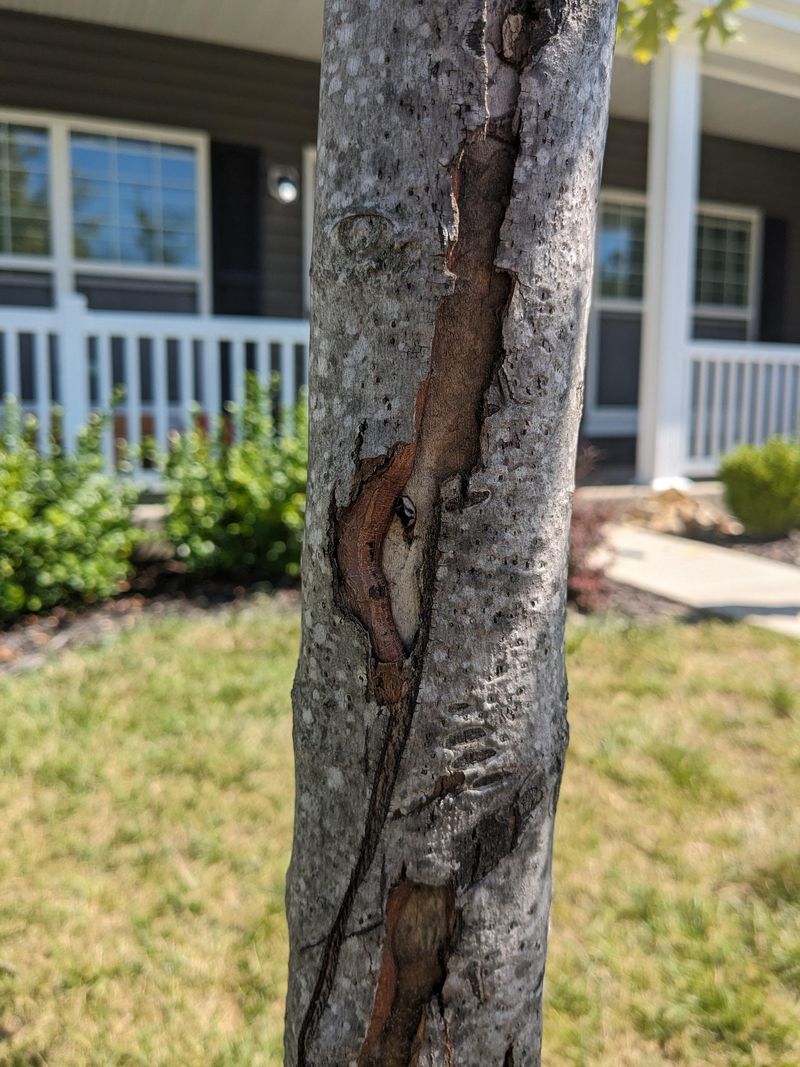
Arborists call some of these hidden splits cracks or seams, and they often run along the grain. University extension experts note that a cracked trunk can still leaf out normally for a season or two.
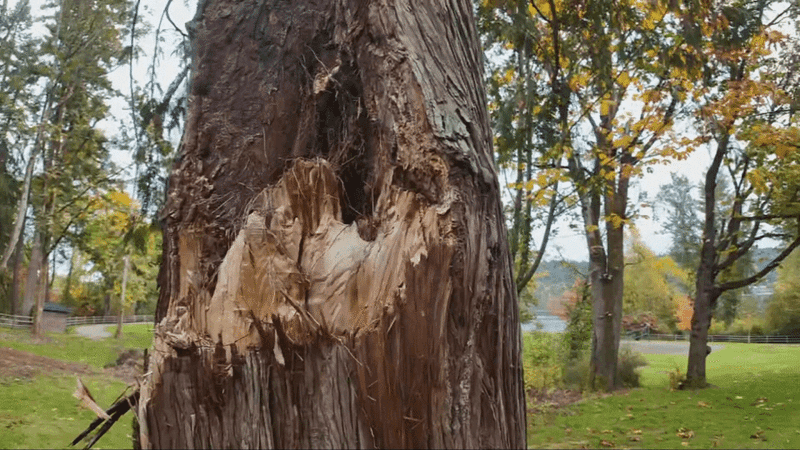
Look closely for long vertical lines in the bark that were not there before the last storm. Fresh splits often look lighter in color, and you may notice sap or moist wood showing through.
Branch unions deserve a careful look too, especially where two big stems grow up in a tight V shape. Those narrow forks can trap bark inside the joint, which makes the connection weaker during heavy wind.
Trees like Bradford pear and silver maple are known for weak wood and splitting at these forks. If you have one of those trees, give it extra attention as you stroll through the yard this fall.
A slight new lean is another quiet clue, especially if the soil on one side looks raised or cracked. Compare your tree to old photos on your phone, since small shifts are easy to miss in person.
Try not to panic over every crack, because some trees seal minor wounds well over time. Still, long or deep splits deserve a professional opinion before winter storms add fresh stress to the wood.
Trouble Often Hides Up High Or Down Under The Soil
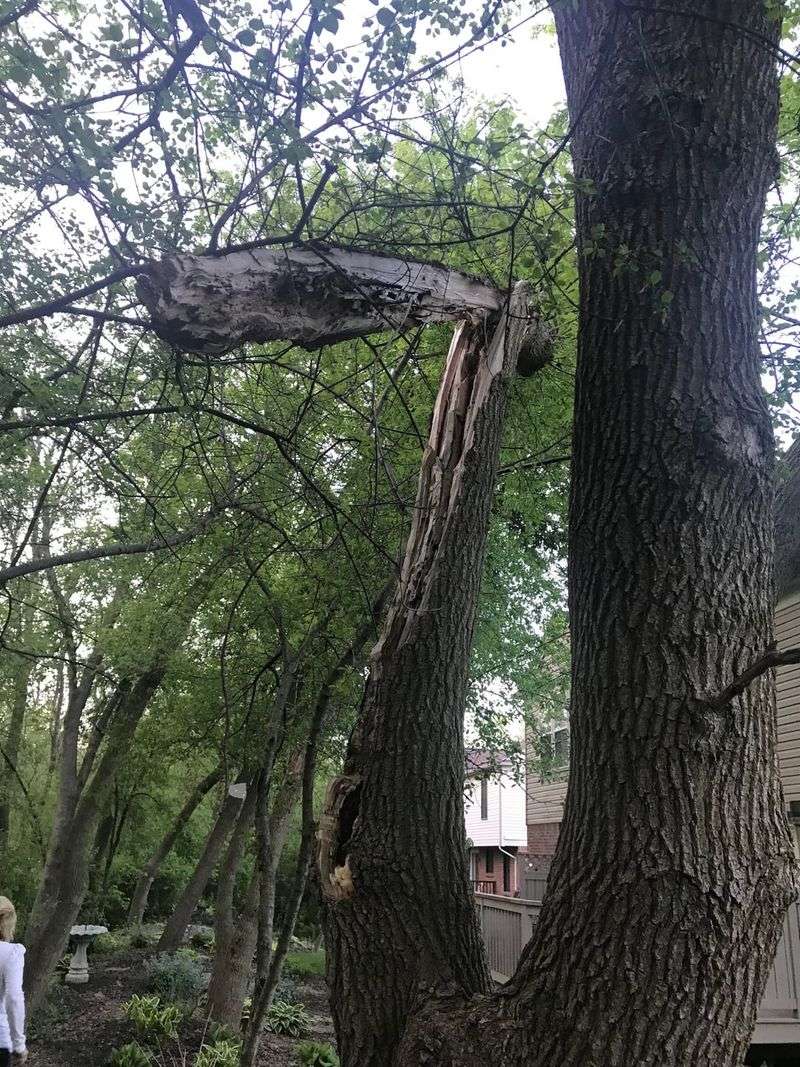
Sometimes the sneakiest storm damage sits right over your head, tucked among branches you rarely bother to study. Other times the trouble hides underground, where roots quietly tore loose while the trunk stayed put.
A pair of binoculars works wonders here, letting you scan the upper canopy without climbing anything risky or tall. Watch for broken limbs still caught in other branches, since arborists call these hangers for good reason.
Hangers can drop with little warning, especially on a breezy October afternoon when leaves start falling fast. Keep kids and pets away from any spot that sits directly beneath a dangling or cracked limb.
Your Missouri Garden Changes Every Week. Your Plan Should Too.
Gardening in Missouri changes quickly throughout the season. Every Friday you’ll receive a simple weekly plan showing exactly what to plant, prune, fertilize, harvest, and protect so you never miss the right timing.
Fall color can make this check tricky, because changing leaves hide brown patches from snapped twigs. Look for clusters of leaves that turned brown early while the rest of the canopy still looks bright.
Down at ground level, roots can snap or pull loose when soaked soil gets pushed by strong wind. Clay soils found in many parts of Missouri hold plenty of water after heavy rain, which can loosen their grip on roots.
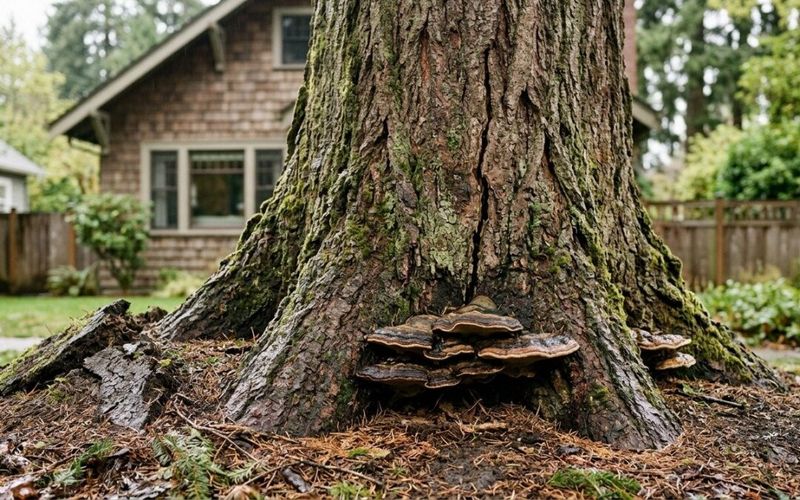
Check the base for cracked soil, raised mounds, or fresh gaps where the trunk meets the ground. Mushrooms popping up near the roots this fall can also hint at decay worth having checked by a pro.
A tree with lifted roots on one side deserves prompt professional attention, even if it looks sturdy. Root damage weakens anchoring, and a weak anchor can fail during the next round of heavy wind.
Some Damage Waits Weeks Before It Shows Itself To You
Storm damage can act like a slow leak in a roof, staying quiet until stains finally spread across the ceiling. Trees work much the same way, and some symptoms appear weeks or even months after the wind fades.
Broken bark and torn branches open doors for decay fungi, which slowly soften wood from the inside. According to the USDA Forest Service, wounds are a common entry point for rot in many hardwood trees.
Root injuries are especially sneaky, since a tree may look healthy this fall but struggle next growing season. Watch for thin canopies, smaller leaves, or branch tips that fail to leaf out after winter ends.
Stressed trees also attract boring insects, which often target weakened wood rather than strong healthy trunks. Small holes, sawdust near the base, or oozing sap can point to these unwanted visitors moving in.
Missouri winters bring ice and snow that can break a limb already cracked by fall storms. Extra weight on a weakened branch often leads to breaks that seem sudden but started much earlier.
A simple habit helps a lot here, so snap a few photos of each tree this October. Take new pictures every month or two, then compare them side by side to spot gradual changes.
Patience matters, because many trees recover nicely once they have time to grow fresh wood around wounds. Keeping notes now gives you a clear record to share if you later call in a professional.
You Can Do A Safe Walk-Around Check From The Yard
My favorite tree check starts with a warm mug of coffee and a slow loop around the yard. Distance is your friend here, so stay back at least as far as the tree is tall.
Before stepping closer, look up for hanging limbs and look down for any downed wires nearby. Utility companies warn people to treat every fallen line as live, so keep well away and call them.
Start at the top and work downward, scanning the crown for snapped branches or odd gaps in the leaves. A missing chunk of canopy often means a broken limb is hiding somewhere among the remaining branches.
Next, follow the trunk with your eyes, looking for cracks, peeled bark, or a fresh new lean. Walk all the way around, since damage on the far side is easy to overlook from the porch.
Finish at the base by checking for heaved soil, exposed roots, or mushrooms clustered near the trunk. Avoid climbing ladders or using chainsaws on storm damage, since tension in bent wood can snap without warning.
University of Missouri Extension suggests leaving risky cleanup to trained professionals with proper safety gear and training. Small twigs on the lawn are fine to rake up, but leave large hanging limbs for the experts.
Jot down what you notice, along with the date and a few clear photos from different angles. Repeat the loop after any windy fall day, because new problems sometimes show up after a second gust.
Trees Near Your House Or Power Lines Deserve Extra Care
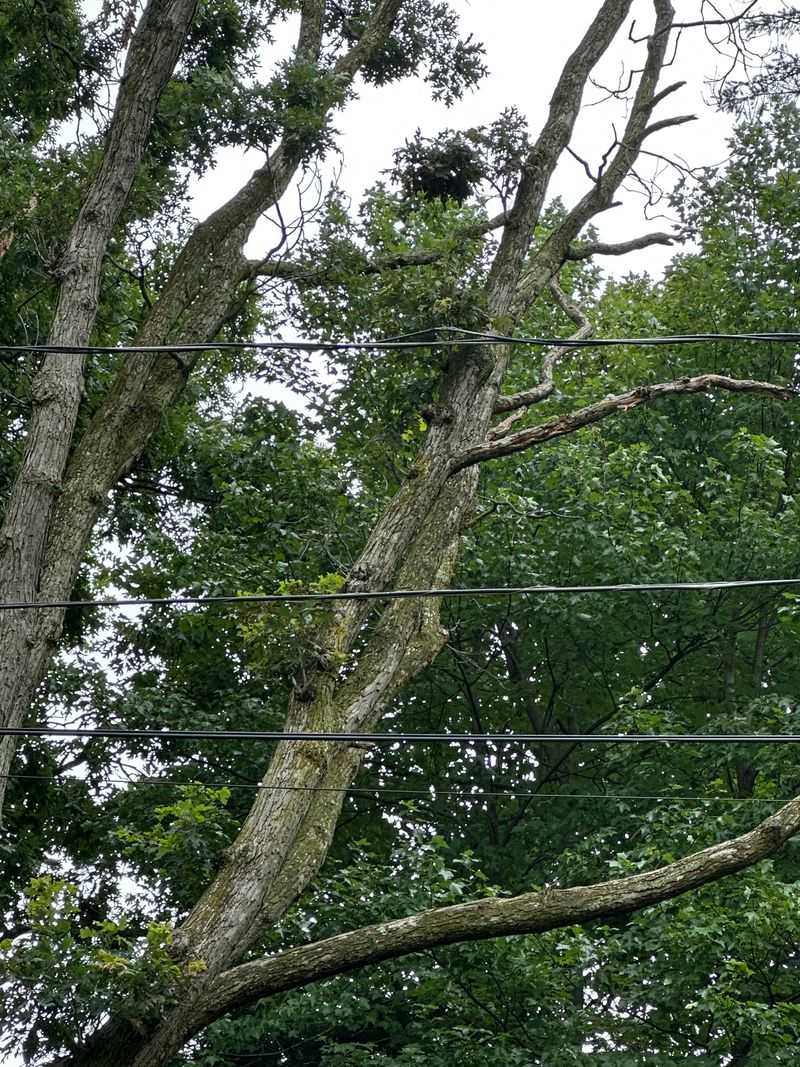
A tall oak leaning toward your bedroom window deserves more worry than one leaning over an empty field. Arborists call this the target, meaning anything that could be hit if a tree or limb fails.
Homes, driveways, play areas, and sidewalks all count as targets, so trees near them need closer checks. Branches hanging over your roof can scrape shingles or crash down during the next strong storm.
Power lines bring a whole different level of risk, and homeowners should stay well clear of them. Electricity can travel through branches and wet wood, so touching a tree near lines is very dangerous.
If a limb rests on a wire, call your electric company right away instead of trying a fix yourself. Many Missouri utilities have crews trained for line clearance work, and they handle these jobs safely.
For trees near your house, watch for cracks facing the building or roots lifted on the opposite side. A lean that grows worse over a few days is a warning sign that needs fast action.
October is a smart time to deal with these trees, since leaves are thinning and branches are easier to see. A professional can also remove weak or hazardous limbs to reduce weight before ice storms load up the branches.
Your insurance company may also want photos and notes about any tree that threatens your home. Keeping good records now can make claims and repair decisions much smoother if trouble arrives later this winter.
A Certified Arborist Can Be Your Best Storm Recovery Partner
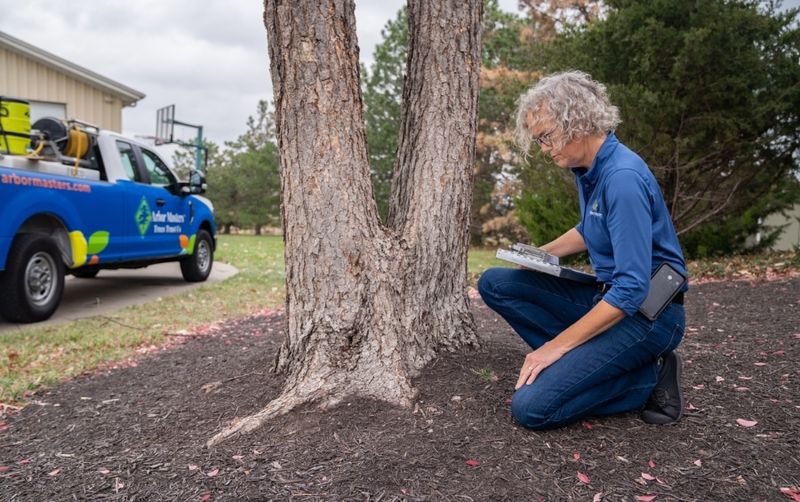
Calling a tree pro might feel like a big step, but it can save money and stress later on. A certified arborist has training to spot problems that most of us would walk right past.
The International Society of Arboriculture runs the certification, and candidates must pass a detailed exam to earn it. Certified arborists also keep learning through continuing education, which helps them stay current on tree care.
You can search the ISA website by zip code to find certified pros working near your Missouri home. Ask for proof of insurance too, since storm work can be risky for workers and your property.
After big storms, door-knocking crews sometimes show up within days offering cheap quick deals on removal or trimming. The Missouri Attorney General’s office has warned about storm repair scams, so take time to check credentials.
A good arborist will examine the tree closely and may use tools to measure hidden decay inside the trunk. They can tell you whether pruning, cabling, or removal makes the most sense for your situation.
Topping, which means chopping off the whole upper crown, is a practice most experts strongly advise against. Any company that suggests topping your storm-damaged tree probably lacks proper training in modern tree care.
Booking an inspection this October gives you time to fix problems before winter weather rolls in. Your trees gave you shade all summer, and a little expert care helps them stand strong for years ahead.