Why Your Peace Lily Is Drooping In A Texas Fall
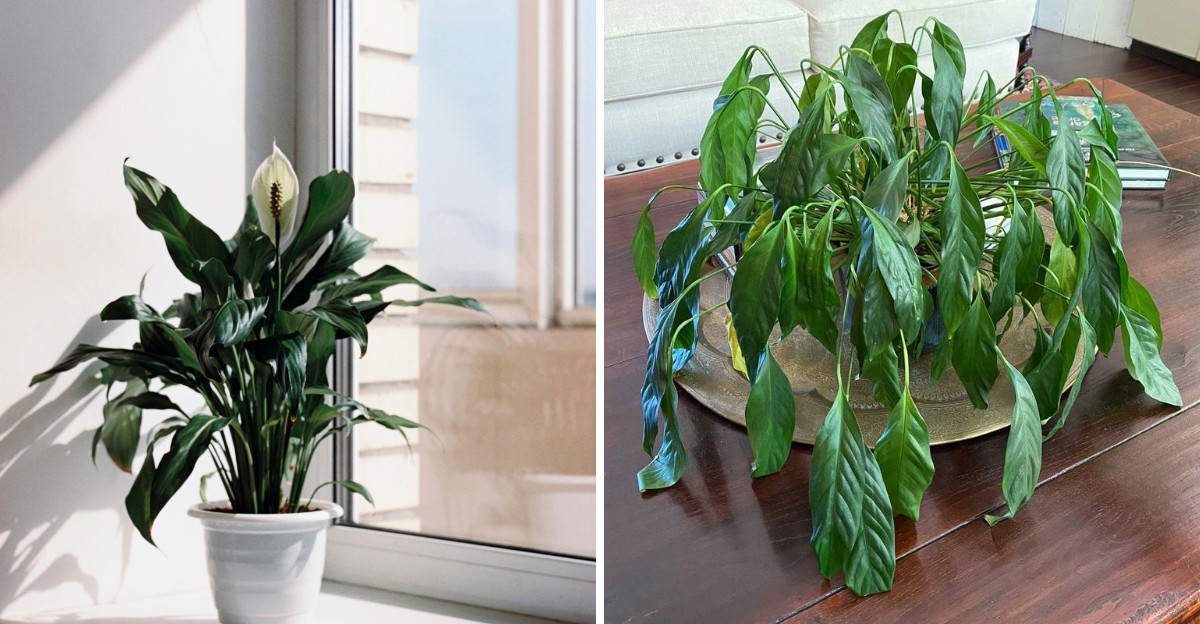
Peace lilies are famous for their theatrical streak. Let the soil get a little too dry, and the whole plant flops over as if it’s given up for good.
Give it a drink, and within hours, it’s standing tall again as if nothing happened. That flair for drama can be helpful. It’s also a little misleading.
In a Texas fall, a drooping peace lily isn’t always asking for water. Indoor conditions shift a lot this time of year. One week, the air conditioner is still running. The next, a cold front blows through and the heater kicks on.
Those swings can stress the plant. Plants moved inside from the patio may struggle to adjust, too. Overwatering, cold drafts, and crowded roots can all cause the same sad, wilted look.
Figuring out the real reason behind the droop is the key to getting your peace lily back on its feet.
1. It Is Simply Thirsty
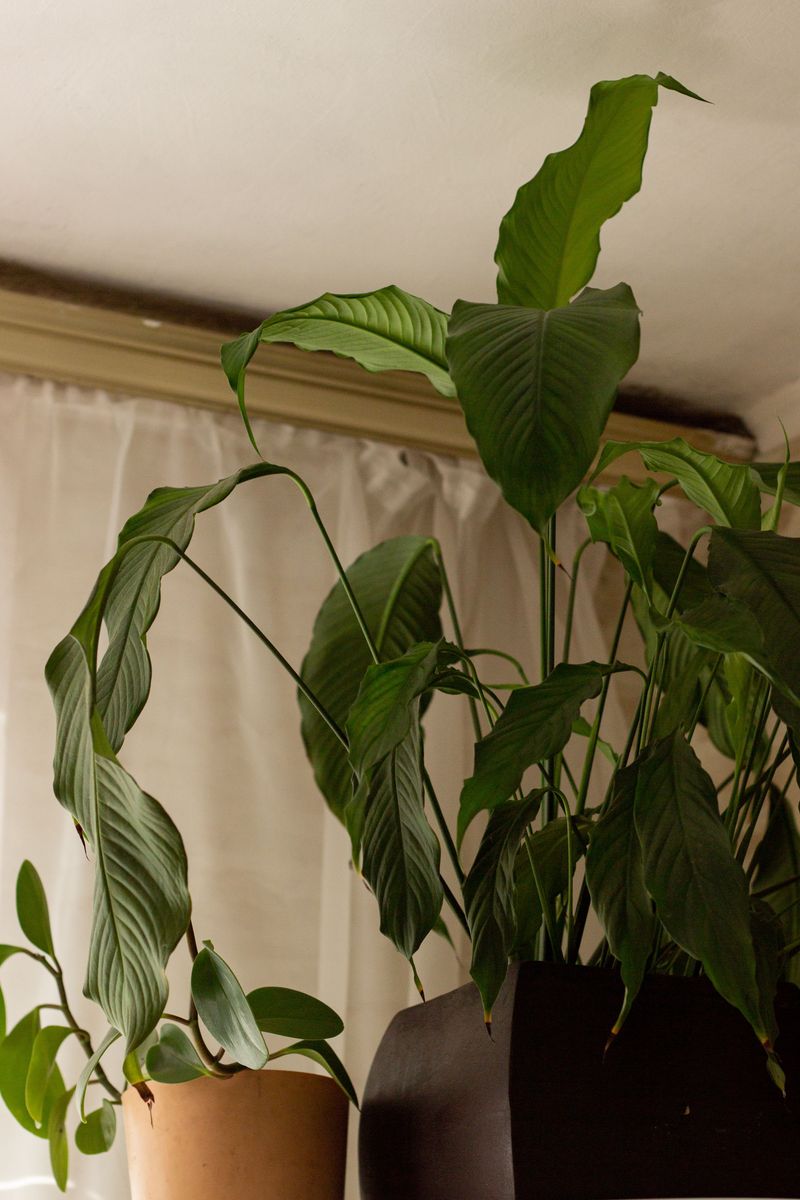
Peace lilies are the drama queens of the plant world. When their soil dries out, they flop over as if they have given up completely. Don’t panic, though, because thirst is the most common reason for drooping.
Fall in Texas can trick you. Some days still feel like summer, with warm afternoons and dry winds. Your plant may drink water faster than you think, even when the calendar says October.
So how do you know if thirst is the problem? Stick your finger into the soil about one inch deep. If it feels dry, your plant is begging for a drink.
Water it slowly and deeply. Keep pouring until water runs out of the drainage holes at the bottom of the pot. Let the extra water drain away so the plant does not sit in a puddle.
Here is the fun part. A thirsty peace lily often perks up within a few hours. Some people even call it the plant that talks, because it shows you so clearly what it needs.
Still, you don’t want your plant to faint every week. Repeated wilting can stress it and cause brown leaf tips over time. A simple routine helps a lot.
Try checking the soil every few days instead of watering on a strict schedule. Weather changes quickly in a Texas fall, so your plant’s needs will change too. A cheap moisture meter can also take the guesswork out of it.
Another tip is to use room temperature water. Cold tap water can shock the roots a little. Let a jug sit out overnight, and your peace lily will thank you with tall, happy leaves.
2. Soggy Roots Are Holding It Back
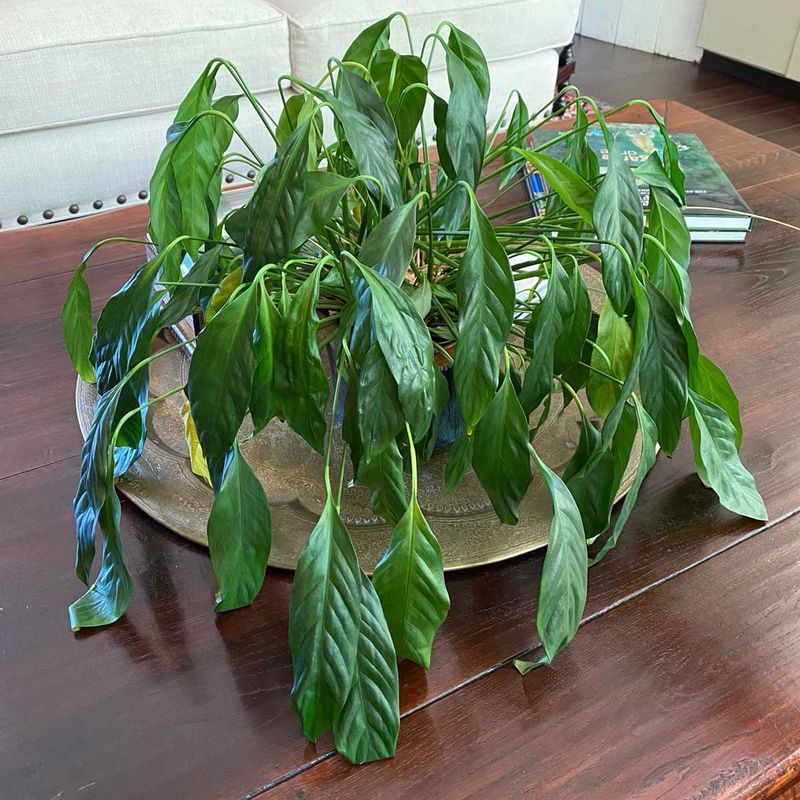
Here is a twist that surprises many plant owners. Too much water can make a peace lily droop just like too little water does. It sounds backward, but the reason makes sense once you understand roots.
Roots need air as well as water. When soil stays soggy for days, the tiny air pockets fill up. The roots can’t breathe, and they start to rot.
Your Texas Garden Changes Every Week. Your Plan Should Too.
Gardening in Texas changes quickly throughout the season. Every Friday you’ll receive a simple weekly plan showing exactly what to plant, prune, fertilize, harvest, and protect so you never miss the right timing.
Rotting roots turn brown and mushy. Once that happens, they can’t pull water up into the leaves. So the plant wilts even though its pot is full of water.
Fall makes this problem more likely in Texas. Cooler days mean the soil dries more slowly. If you keep watering the same way you did in July, the pot may stay wet far too long.
First, feel the soil. If it is damp and the plant still droops, stop watering right away. Let the top inch or two dry out before you water again.
Next, take a peek at the roots if the drooping continues. Gently slide the plant out of its pot. Healthy roots look white or light tan and feel firm.
Snip away any dark, slimy roots with clean scissors. Then repot the plant in fresh, well-draining potting mix. Make sure the pot has drainage holes, because a pot without holes is a trap for extra water.
Also, empty the saucer under the pot after watering. Standing water there can wick right back into the soil. With a little restraint and good drainage, your peace lily can recover and push out fresh new leaves.
3. Cool Fronts Are Chilling It Outdoors
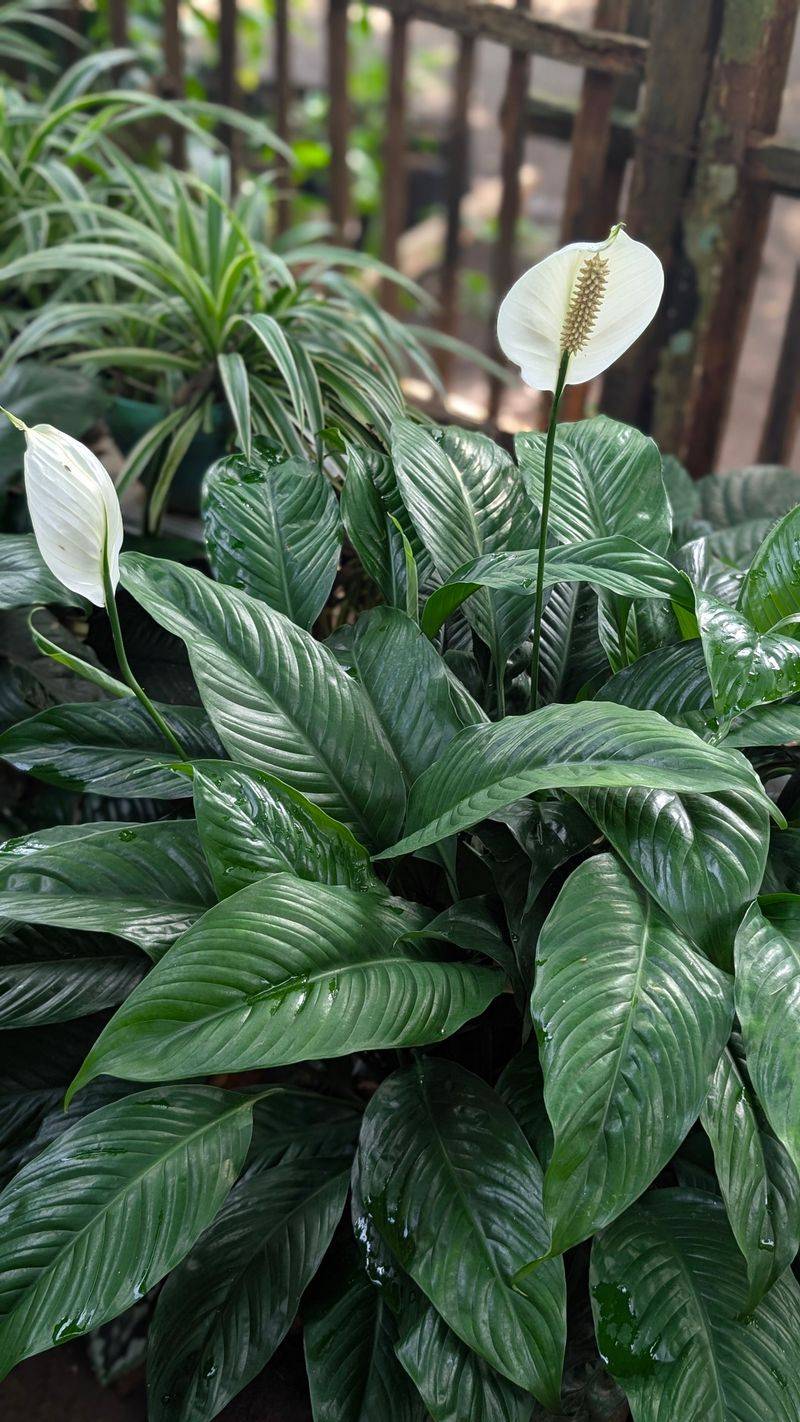
Every Texan knows the feeling. One evening the wind shifts, the sky turns gray, and suddenly you need a jacket. Your peace lily feels that cool front too, and it does not like it one bit.
Many people move their peace lilies to a shady porch or patio for the summer. That works great when nights stay warm. But peace lilies come from tropical rainforests in Central and South America, where it never gets truly cold.
When the first fall fronts push nighttime temperatures into the 50s or 40s, the plant gets stressed. Its leaves may droop, curl, or even develop dark patches. Cold air slows down the roots, so they take up less water.
The fix is simple. Bring your plant inside before temperatures fall much below 55 degrees. Keep an eye on the weather app, because Texas fronts can arrive with very little warning.
A good habit is to check the ten-day forecast every week starting in late September. If you see a chilly night coming, move the plant in that afternoon. It is much easier than trying to help a cold-damaged plant later.
Already caught off guard? Don’t worry too much. Bring the plant indoors to a warm spot, and avoid watering it heavily right away. Cold, wet soil makes stress worse.
Trim off any leaves that turn black or mushy. Healthy leaves usually lift back up within a few days. With some warmth and patience, your tropical friend will feel at home again, even while Texas weather keeps playing its usual tricks.
4. Blasting Vents Are Drying It Out
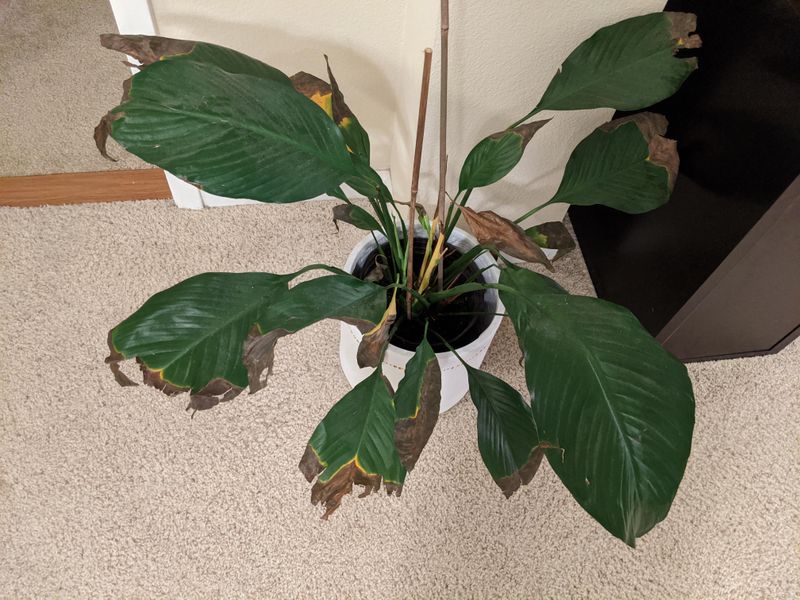
Did you know your heater could be your plant’s worst enemy? It is true. In a Texas fall, the air conditioner might run at noon, and the heater might click on that same night.
All that moving air is rough on a peace lily. Air from vents is often very dry. It pulls moisture out of the leaves and the soil much faster than normal.
When that happens, the leaves may droop, curl, or get crispy brown edges. The soil may also dry out in just a day or two. You might water more and still see a sad, sagging plant.
Take a quick look around your plant’s spot. Is it sitting right under a ceiling vent or next to a floor register? Is it near a door that opens and lets in gusts of air?
If so, move it a few feet away. A spot with steady, calm air is best. Even a short move can make a big difference.
Peace lilies also love humidity. Try grouping a few houseplants together, since they release moisture that helps each other. You can also set the pot on a tray of pebbles with a little water in it, keeping the pot above the waterline.
A small room humidifier is another great option, especially once the heater runs often. Your skin will probably thank you too.
Finally, check the soil more often during weeks when the heat or air runs a lot. Dry indoor air can sneak up on you. A little extra attention keeps those glossy leaves standing tall all season.
5. Too Much Sunshine Is Stressing It
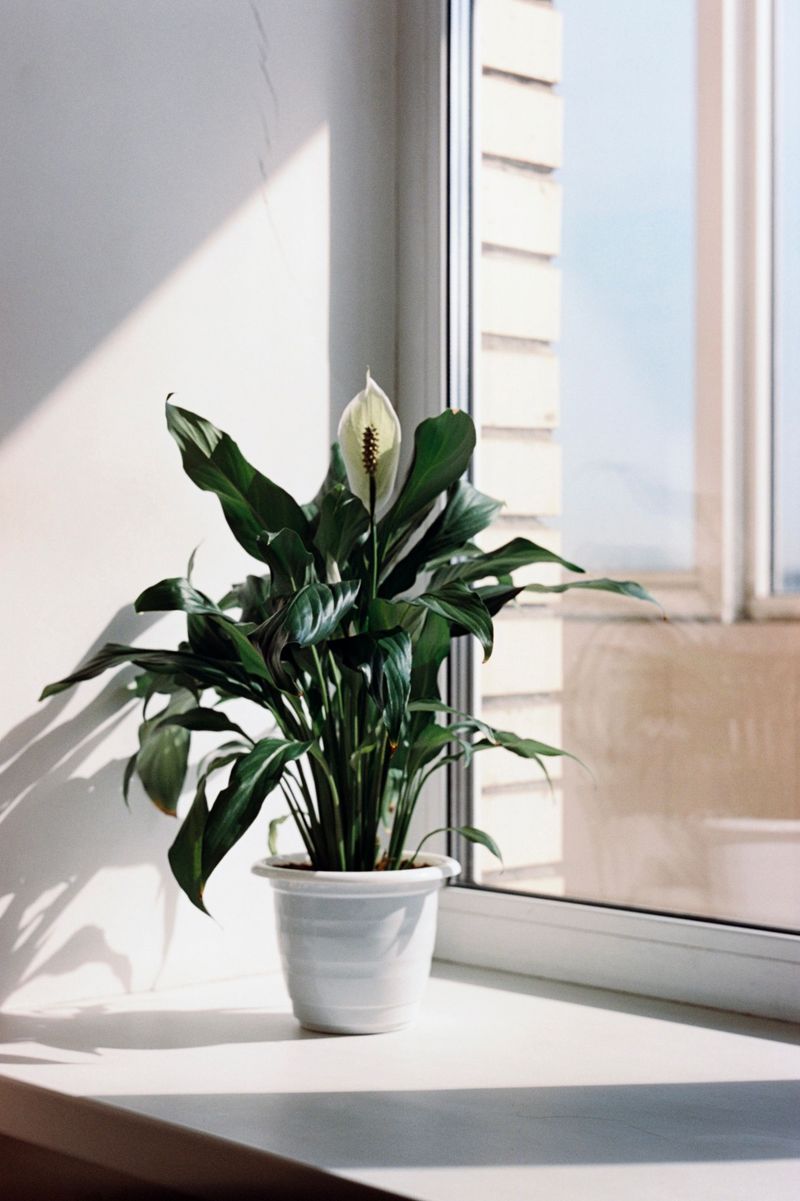
Sunshine sounds like a good thing, right? For most plants, sure. But peace lilies grow on shady rainforest floors under tall trees, so strong sun can be too much for them.
Texas sun stays bright even in fall. A window that faces south or west can heat up fast in the afternoon. If your peace lily sits right in that light, its leaves may wilt, fade, or burn.
Watch for clues. Scorched leaves often show pale yellow or bleached spots. Brown, crispy patches may appear where the sun hits hardest.
The plant may also droop during the hottest part of the day. Strong light makes it lose water quickly through its leaves. It simply can’t keep up.
Luckily, the answer is easy. Move your plant a few feet back from the window. You want bright light, but not direct rays landing on the leaves.
A sheer curtain works wonders too. It softens harsh light the same way tree branches would in the wild. East-facing windows, with their gentle morning light, are often perfect spots.
One fun fact is that peace lilies can even handle low light pretty well. That is one reason they are so popular in offices. However, very dark corners may stop them from blooming.
So aim for the middle ground. If you can comfortably read a book in the spot without a lamp during the day, the light is probably just right. Trim off badly burned leaves, and new growth should come in healthy and green.
6. It Has Outgrown Its Pot
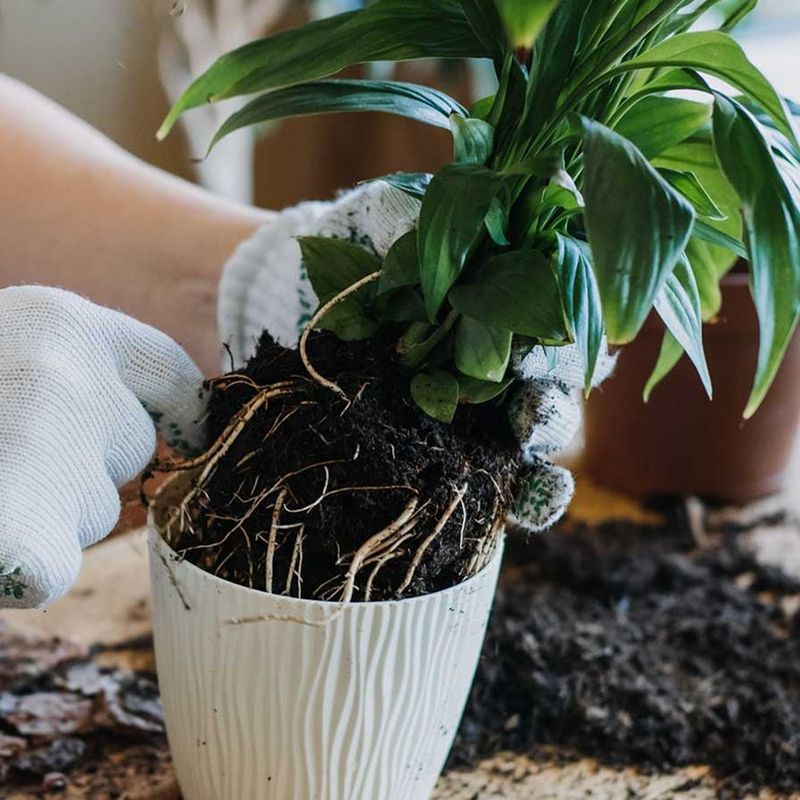
Think about wearing shoes two sizes too small. You would feel cramped and cranky. A root-bound peace lily feels much the same way.
Peace lilies grow steadily, and their roots keep spreading. After a year or two, they can fill the entire pot. At that point, there is very little soil left to hold water.
The result is a plant that dries out super fast. You might water it on Monday and find it drooping again by Wednesday. That pattern is a big hint that the pot is too small.
Check for other signs too. Roots may poke out of the drainage holes. You might see them circling the top of the soil, or the pot may tip over because the plant is top-heavy.
Repotting is the fix, and fall is a fine time to do it in Texas since the extreme heat has passed. Choose a new pot just one size larger, about two inches wider. A pot that is too big holds extra water and can lead to rot.
Gently loosen the roots with your fingers before placing the plant in its new home. Fill in around it with fresh, well-draining potting mix. Water it well and let it drain.
Expect a little sulking after the move. A bit of drooping for a few days is normal while the roots settle in.
Here is a bonus tip. Large peace lilies can be divided into two or three smaller plants. That way you get more plants for free, and they make lovely gifts for friends and family.
7. Settling Into A New Spot Takes Time
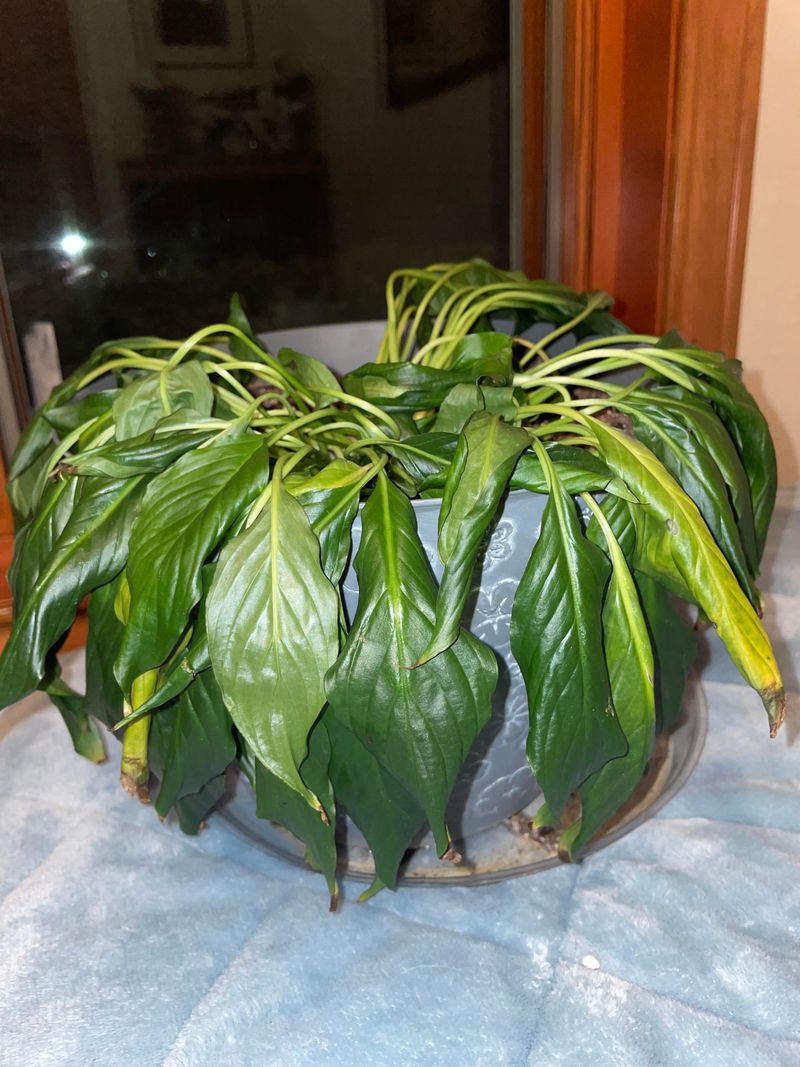
Moving to a new house is stressful for people, and plants feel it too. If you just brought your peace lily indoors for fall, a little drooping is totally normal. It is simply getting used to its new surroundings.
Outside, the plant had fresh air, natural humidity, and shifting light. Inside, the air is drier and the light is different. Even moving it from the kitchen to the bedroom can throw it off for a bit.
Plant lovers call this transplant shock or acclimation stress. The leaves may sag, and a few older ones might yellow. Don’t worry, because the plant is adjusting, not giving up.
The best thing you can do is keep things steady. Pick a good spot with bright, indirect light and stick with it. Moving the plant around again and again will only confuse it more.
Water only when the top inch of soil feels dry. Skip the fertilizer for now, since it can stress tender roots. Wait until you see fresh new leaves before feeding it.
Before bringing an outdoor plant inside, give it a quick check for bugs. Look under the leaves for tiny pests like spider mites or mealybugs. A gentle rinse with water can send hitchhikers packing.
Most peace lilies bounce back within one or two weeks. You will notice the leaves lifting and looking glossy again.
Sometimes they even reward you with a bright white bloom. A little patience goes a long way, and soon your plant will feel right at home for the cozy months ahead.