The Lawn Insect Thriving In Texas Heat While Your Grass Turns Brown
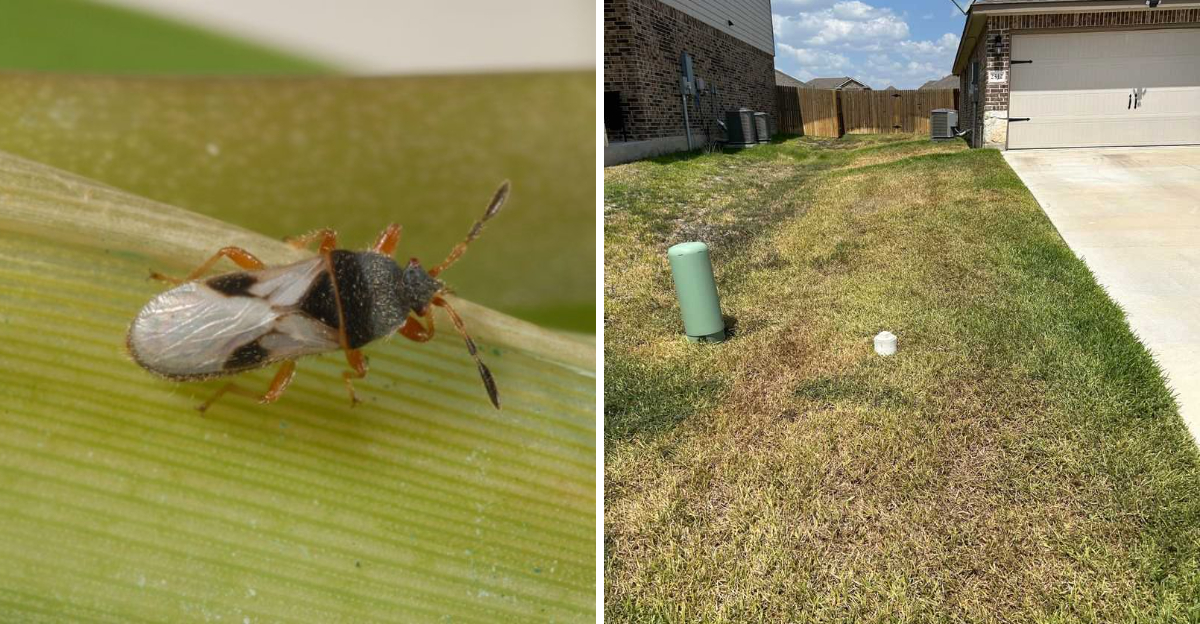
A Texas lawn can look thirsty even when water is not the real problem.
The grass along a driveway starts fading first. A sunny strip near the sidewalk turns dry-looking and dull. The shaded patch under a tree stays green, so the whole thing seems easy to blame on heat.
Then the hose does nothing.
The brown area spreads, the edges turn yellow, and the turf refuses to bounce back after irrigation. That is the point when summer stress stops being the only suspect.
Something tiny may be feeding in the hottest part of the lawn, right where the grass is already under pressure.
This pest loves warm weather.
It hides low in the thatch, feeds where green grass meets fading grass, and causes damage that can look almost exactly like drought from a distance.
So which lawn insect thrives in Texas heat while your grass turns brown?
Start by checking for the tiny sap-feeding pest that targets warm, sunny St. Augustinegrass and makes watering alone look useless.
Southern Chinch Bugs Are The Insect
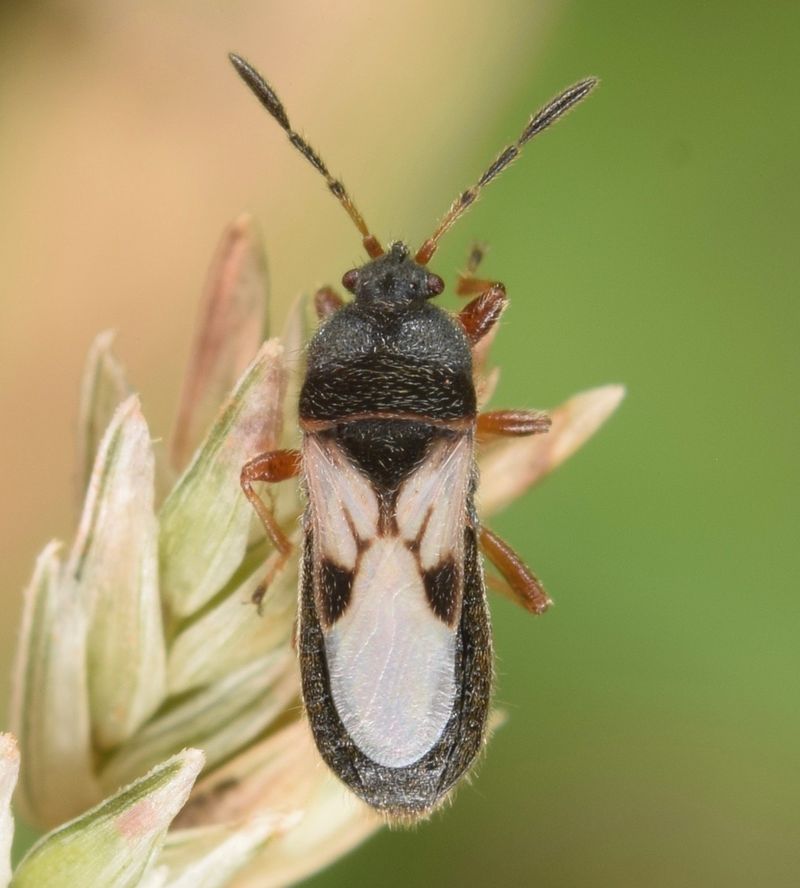
Southern chinch bugs are the tiny insects behind many Texas summer lawn mysteries.
Their scientific name is Blissus insularis, and they can cause serious damage in warm-season turf, especially St. Augustinegrass. They are small enough to miss easily, but the damage they cause can spread across a lawn fast.
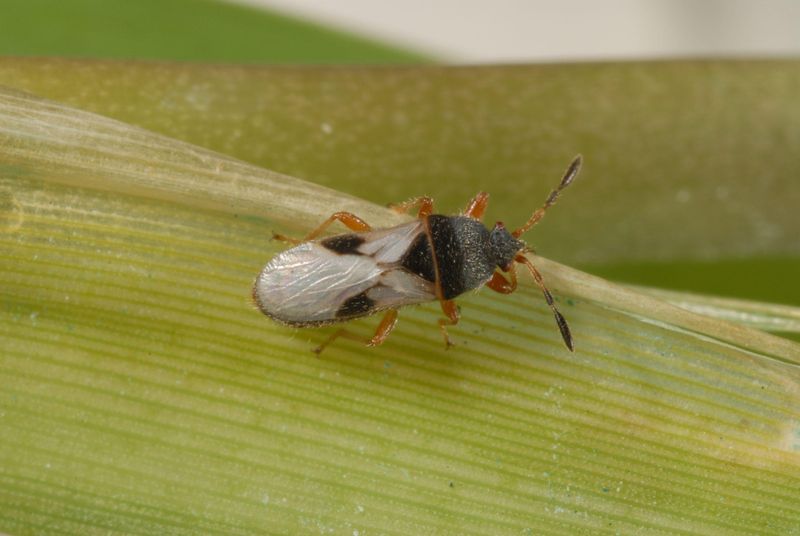
Adults are dark with pale wings. Up close, the folded wings can give them a black-and-white, almost checkered look.
The young nymphs look different. They often begin reddish or orange with a light band across the body, then darken as they mature.
Both stages feed on grass. They use piercing mouthparts to draw juices from blades and stems.
That feeding does more than remove sap. Chinch bugs inject saliva that interferes with the grass’s ability to move water through its tissues.
That is why irrigation alone may not help. The grass can be watered and still look stressed because the feeding damage has already disrupted normal function.
Heat favors activity. Texas summer conditions can help populations build quickly, especially in sunny, dry sections of turf.
Multiple generations may occur in one season. That means a small problem can become much more noticeable during prolonged hot weather.
Identification matters before treatment. Brown grass has several possible causes, and guessing can waste money.
Southern chinch bugs are small, but they are not harmless.
Once they settle into the hot zone of the lawn, they can make healthy grass look drought-stricken even with water nearby.
St. Augustine Takes The Hardest Hit
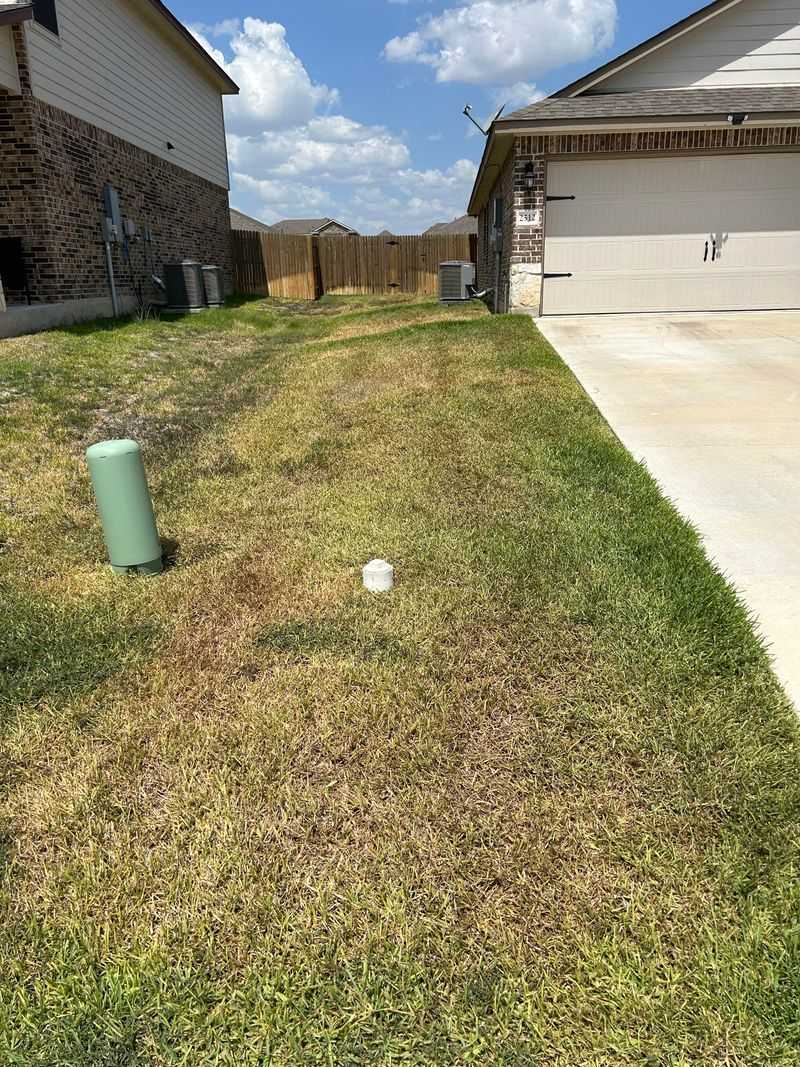
St. Augustinegrass is the favorite target.
That matters because many Texas lawns, especially along the Gulf Coast and in warm urban neighborhoods, rely heavily on St. Augustine.
Its thick, lush growth looks beautiful when healthy, but it can also create the kind of protected thatch layer chinch bugs use.
The grass has broad, soft blades. It grows in a dense mat that gives insects room to hide close to the soil.
Sunny St. Augustine is especially vulnerable. Hot edges near concrete, pavement, and reflective walls often show symptoms first.
Your Texas Garden Changes Every Week. Your Plan Should Too.
Gardening in Texas changes quickly throughout the season. Every Friday you’ll receive a simple weekly plan showing exactly what to plant, prune, fertilize, harvest, and protect so you never miss the right timing.
Other grasses may have fewer problems. Bermudagrass, zoysiagrass, and centipedegrass can face insect issues too, but southern chinch bugs are most strongly associated with St. Augustine damage.
Mixed lawns can confuse the diagnosis. A yard may include patches of St. Augustine, bermudagrass, weeds, and old repair areas all growing together.
Know the grass before blaming the pest. A brown patch in St. Augustine during hot weather deserves a closer look, but the same symptom in another grass may point somewhere else.
Cultivar names can mislead homeowners. Past resistance in certain St. Augustine types does not guarantee protection from present-day pest pressure.
Do not assume new sod is safe. Chinch bugs can move into attractive turf once conditions suit them.
Check the healthiest-looking grass near the damaged edge. Active feeding often happens there rather than in the fully browned center.
St. Augustine can recover from mild stress.
But once chinch bugs damage enough stems, the lawn needs more than another watering cycle.
Sunny Lawn Edges Brown First
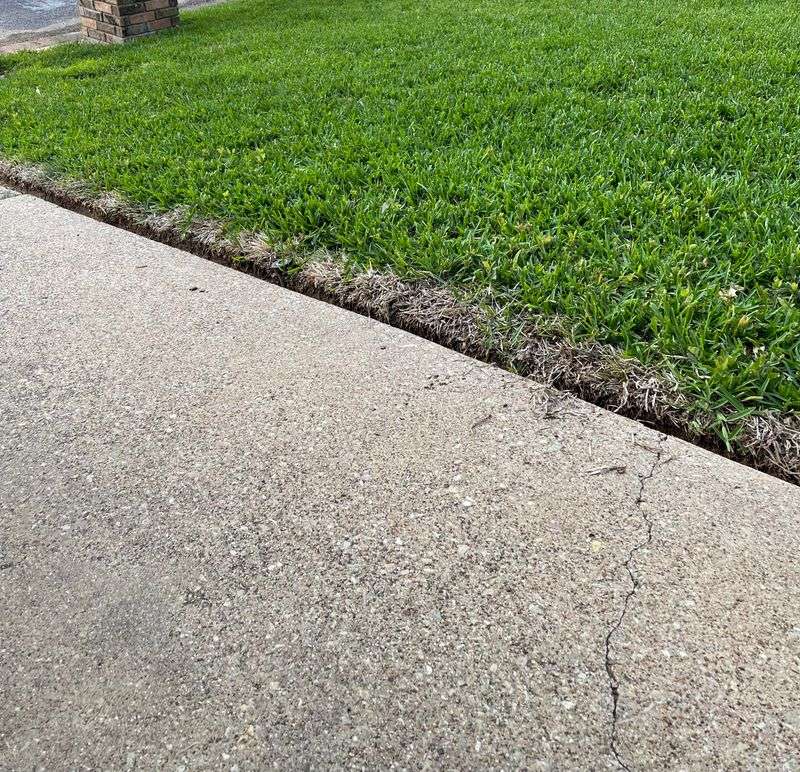
The first brown patch often appears where the lawn is hottest.
Driveways, sidewalks, curbs, patios, and south-facing fence lines all radiate heat back onto nearby turf. Those areas dry faster, warm earlier, and create ideal conditions for southern chinch bugs.
Pavement changes the microclimate. Grass next to concrete may experience much hotter surface conditions than grass only a few feet away.
Dry thatch attracts trouble. Chinch bugs hide and move through the thatch layer, especially in hot, sunny zones.
The pattern often starts along edges. A narrow strip near the driveway may fade before the middle of the yard changes color.
Shaded turf may stay green longer. That contrast can make the problem look like simple drought or sprinkler coverage trouble.
Check irrigation first. A blocked sprinkler head or uneven spray pattern can create real dry edges.
Then test the turf. Grass that does not improve after adequate water deserves inspection for insects.
Look where brown meets green. The active pests often move outward into still-living grass at the edge of the damaged patch.
Do not focus only on the center. Fully browned turf may no longer have many insects present because they have moved to fresher grass.
Heat makes the damage more obvious. The lawn is already stressed, and feeding pushes it past recovery in the affected areas.
The edge of the lawn tells the story.
When the hottest border turns brown first and watering fails to fix it, chinch bugs belong high on the suspect list.
Yellow Halos Mark Active Feeding
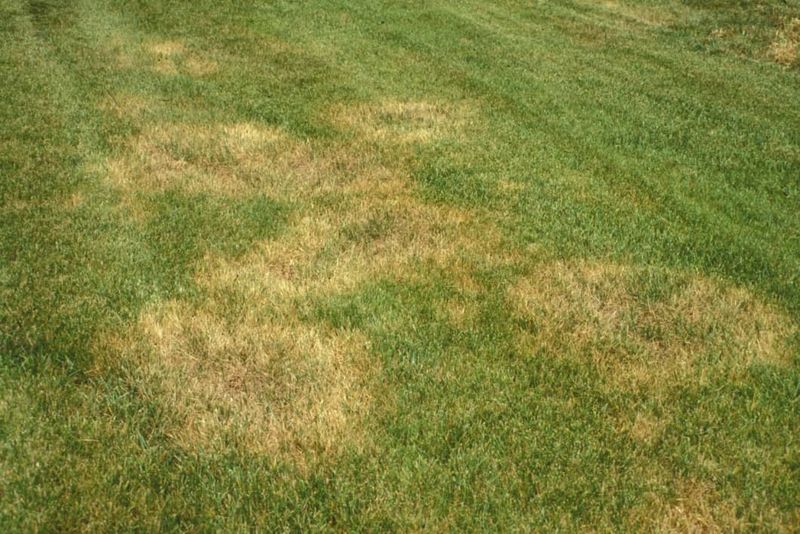
The yellow edge is where the action usually is.
A damaged patch often has a brown center surrounded by a yellow or yellow-green border. That fading ring is important because it may mark the area where chinch bugs are feeding right now.
The center is older damage. Grass there may already be too far weakened to host many active insects.
The yellow zone is fresher. Blades are still alive, but feeding stress is beginning to show.
That is where you should inspect. Part the grass at the border between healthy green turf and yellowing turf.
Look low in the thatch. Chinch bugs usually stay close to the soil surface rather than sitting on top of the blades.
Irregular shapes are common. Chinch bug patches rarely form perfect circles.
The damage can spread outward. As insects move into nearby healthy turf, the yellow halo shifts with them.
Other problems can look similar. Drought stress, fertilizer burn, herbicide injury, and certain lawn diseases may also create brown patches.
Timing helps narrow the cause. Chinch bug trouble is most suspicious during hot, dry summer conditions.
Water response helps too. Drought-stressed turf often improves with steady moisture, while chinch bug damage usually does not respond well to watering alone.
The yellow halo is your inspection target.
It is the moving front of the problem, and it gives you the best chance to catch active insects before more turf declines.
Test The Thatch Before Treating
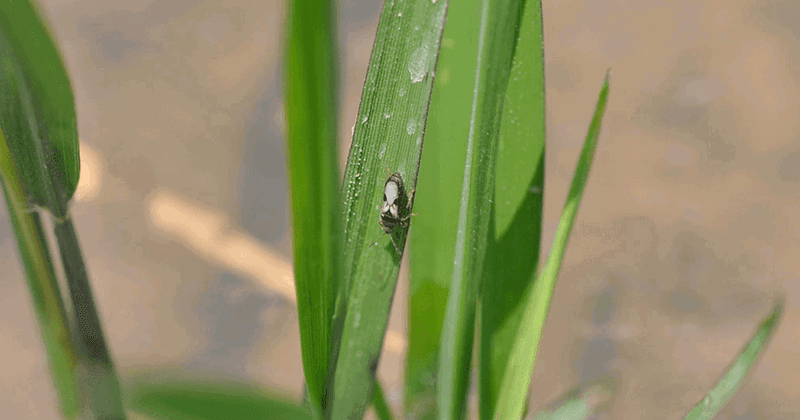
Do not treat until you find the insect.
A hands-on inspection takes only a few minutes, and it can prevent an unnecessary pesticide application. Chinch bugs are small, but they can be seen when you know where to look.
Start at the yellow edge. That is where active feeding is most likely.
Part the grass with both hands. Press blades down and sideways so the thatch layer becomes visible.
Look for movement. Adults may appear as tiny dark insects with pale wings, while nymphs may look reddish or orange.
Check several spots. One clean inspection point does not prove the whole patch is pest-free.
Use the flotation test for confirmation. Press a large can with both ends removed into the soil at the damaged edge and fill it with water.
Keep the water level up for a few minutes. Chinch bugs may float to the surface where they are easier to count.
Watch for look-alikes. Big-eyed bugs can live in the same area and are beneficial predators, not pests.
Look closely at the eyes. Big-eyed bugs have noticeably wide, bulging eyes and a broader shape.
Do not punish the helpers. Treating a lawn after misidentifying beneficial insects can make pest pressure worse later.
Record what you find. Notes on location and numbers help you decide where action is actually needed.
Testing turns worry into evidence.
The lawn does not need guesses during a Texas summer. It needs a confirmed diagnosis.
Reduce Excess Nitrogen
A very lush lawn can become part of the problem.
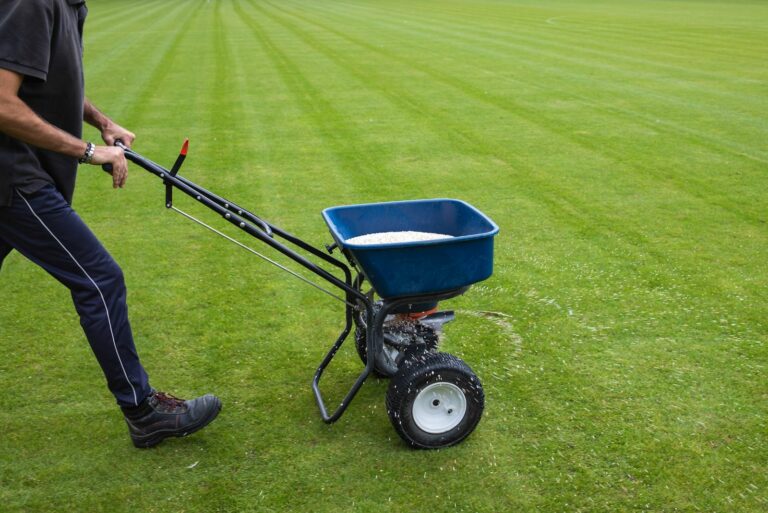
Heavy nitrogen feeding pushes fast, soft growth and can increase thatch buildup. That combination gives southern chinch bugs more of the sheltered, tender environment they prefer.
Dark green is not always stronger. Overfed St. Augustine may look impressive for a while but become more vulnerable to stress.
Thatch can build quickly. Dense layers near the soil surface give chinch bugs places to hide from heat and predators.
Soft growth is easier to feed on. Rapid growth fueled by too much nitrogen can attract more pest pressure.
Skip panic fertilizing. Brown turf from chinch bug feeding will not be fixed by dumping fertilizer on damaged grass.
Test the soil first. A soil test gives better guidance than a routine bagged schedule.
Use slow-release nitrogen when feeding is needed. Steadier growth is better than a sudden flush.
Avoid feeding during peak stress. Hot, dry conditions are not the best time to push new lawn growth.
Follow local timing. Texas regions vary, and county guidance can help match fertilizer use to climate and grass growth.
Reduce nitrogen during active infestations. The goal is to stabilize the turf, not produce more tender growth for insects.
Healthy lawn care is balanced.
A moderate feeding plan helps the grass without creating perfect conditions for the pest hiding in the thatch.