Virginia Creeper Or Poison Ivy? Fall Is One Of The Easiest Times To Tell Them Apart In Ohio
Bright red vines climbing a fence post can look like the prettiest sight in a fall yard. Grab the wrong one bare-handed, though, and you could spend a week scratching.
Virginia creeper and poison ivy often grow side by side, and both turn red as nights cool. Plenty of homeowners mix them up, especially when the vines tangle on the same trunk.
Fall color actually helps, since the leaves stand out clearly against bark and fading greenery.
Count the leaflets on a single stem before touching anything, and that check removes much of the guesswork.
Berries and the way each vine clings to trees offer more clues along Ohio fence lines.
Even a bare vine can cause a rash in winter, so getting the identification right now pays off later.
1. Both Vines Can Turn Brilliant Red In Fall
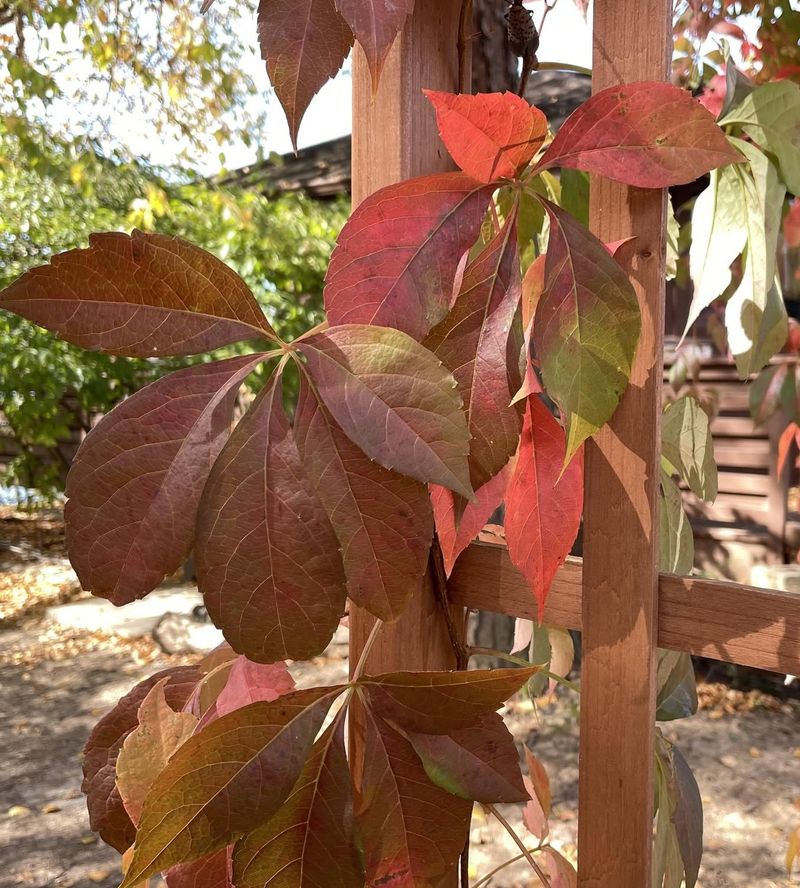
Red leaves are beautiful, but they do not tell you which vine you are looking at. Virginia creeper and poison ivy can both blaze scarlet by early fall.
Virginia creeper often turns a deep red or burgundy, sometimes with a purple tint.
Poison ivy can turn red too, though it may also show orange or yellow tones. Some plants mix all three colors on the same vine, which adds to the confusion.
Timing can shift from place to place across Ohio. Vines in northern counties near Lake Erie may change color on a different schedule than vines down south.
Sun exposure plays a role as well, so a vine on a sunny fence may color up sooner than one in shade.
Weather, soil moisture, and the health of each plant can change how bright the leaves get. One dry summer can make the show duller, while a cool, sunny fall may make it richer.
Because color overlaps so much, treat it as a signal to look closer rather than a final answer.
Once you notice a red vine, slow down and check its leaves, berries, and stems. Those details will tell you far more than the color ever can, and the next sections walk you through each one.
2. Counting Leaflets Is The Quickest Way To Tell Them Apart
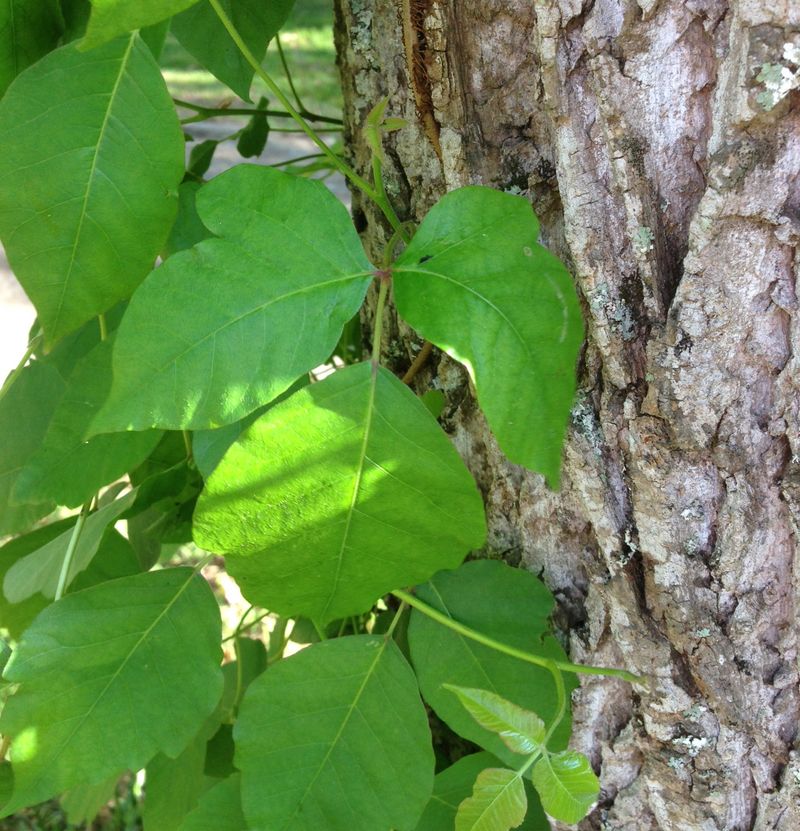
Start with a simple count. Most of the time, that one step settles the question in a few seconds.
Each leaf on these vines is made of smaller parts called leaflets, and they join at a single point on the stem.
Find one full leaf and follow it back to where its stalk attaches to the vine. Then count how many leaflets come off the end of that stalk.
Five usually points to Virginia creeper, while three usually points to poison ivy.
Look at several leaves, not just one. A single leaf might be torn, chewed by insects, or still growing, which can throw off your count.
Young Virginia creeper leaves sometimes show only three leaflets, so checking more than one spot on the vine is smart.
Ohio gardeners often hear the saying “leaves of three, let it be,” and it works as a handy safety rule. Treat any three-leaflet vine with care until you are sure.
Your Ohio Garden Changes Every Week. Your Plan Should Too.
Gardening in Ohio changes quickly throughout the season. Every Friday you’ll receive a simple weekly plan showing exactly what to plant, prune, fertilize, harvest, and protect so you never miss the right timing.
Keep your hands off while you count. Use a stick or simply look closely from a short distance.
Fall makes counting easier because thinning foliage lets you see each leaf more clearly against the branches.
3. Virginia Creeper Usually Has Five Leaflets On Each Leaf
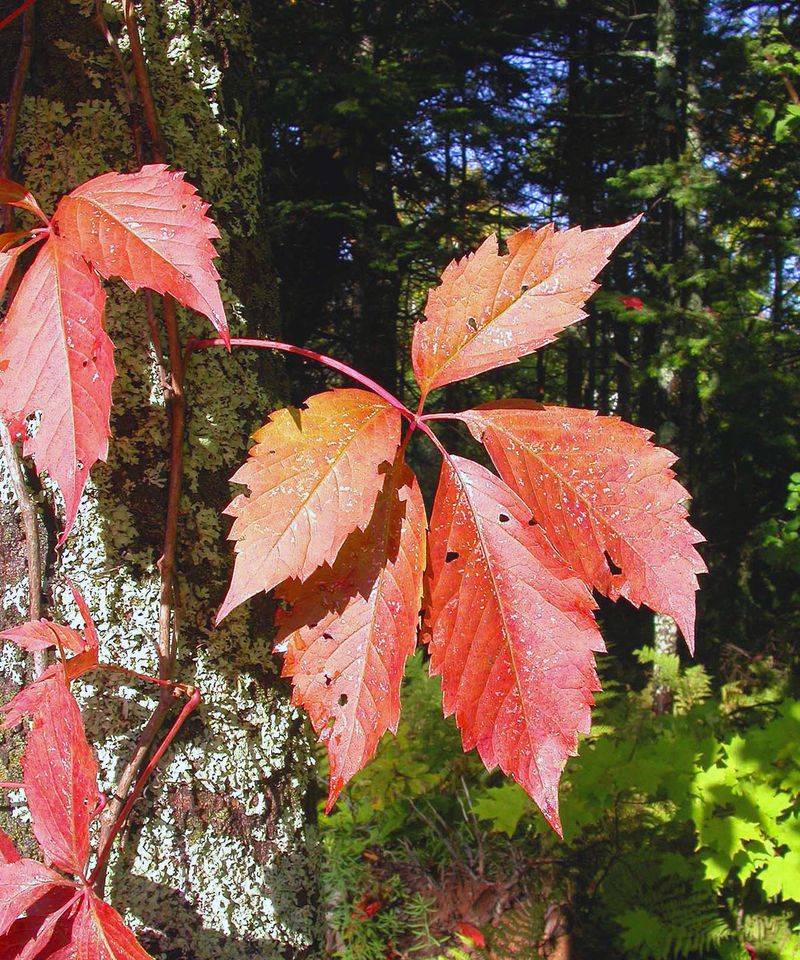
Picture an open hand with fingers spread wide. Virginia creeper leaves often look a lot like that.
Five leaflets usually fan out from one central point at the end of the leaf stalk.
Each leaflet has toothed edges and a pointed tip. Their sizes tend to be fairly even, which gives the leaf a balanced, star-like shape.
You will find this native vine all over Ohio, from city alleys to wooded parks.
Some leaves may show three, four, or even seven leaflets, especially on young growth. That is why checking several leaves gives you a better read.
Instead of hairy rootlets, Virginia creeper climbs with branched tendrils tipped with small sticky pads. Those pads help it grip brick, bark, and wood.
Here is a caution worth knowing. Virginia creeper does not cause the poison ivy rash, but its sap contains crystals that can irritate skin in some sensitive people.
Wearing gloves while pruning is a good idea anyway.
Many homeowners choose to keep this vine because birds eat its berries and its fall color is striking. If it is not damaging gutters or siding, leaving it in place can be a reasonable choice.
4. Clusters Of Three Leaflets Are A Key Poison Ivy Clue
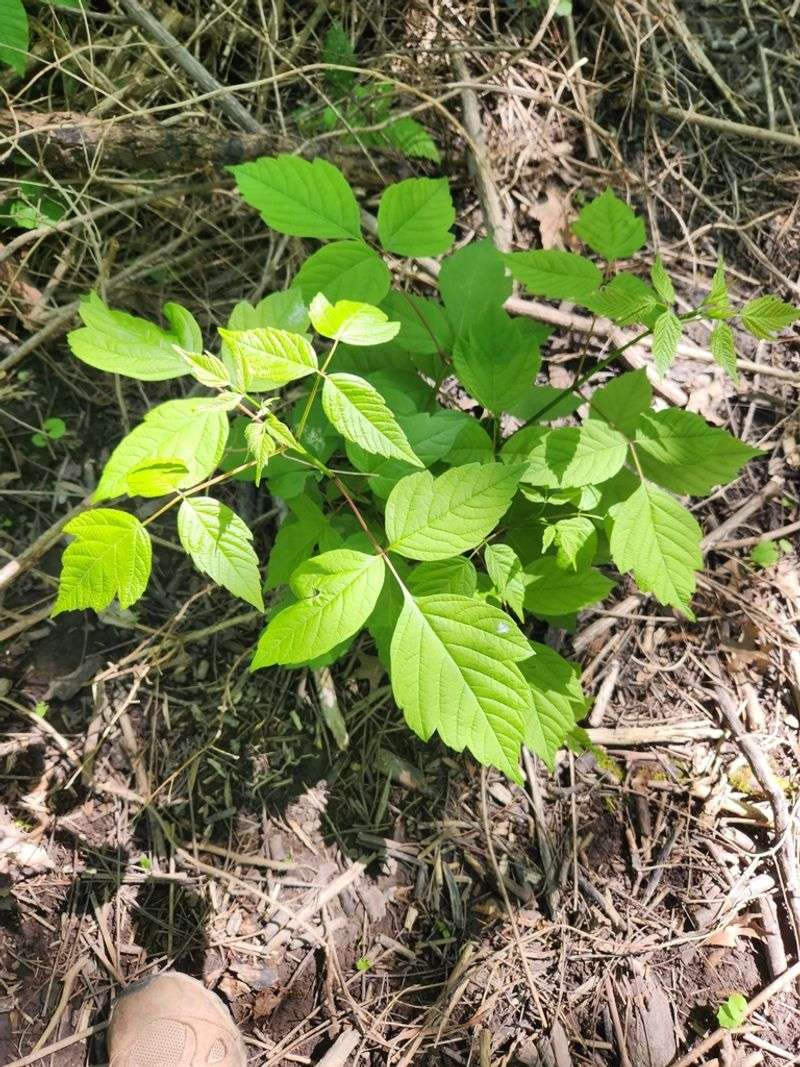
Three leaflets, one longer stalk in the middle. That pattern is the signature of poison ivy.
Look closely and you will often see the center leaflet sitting on a longer stem than the two side leaflets.
Edges vary a lot. Some leaflets are smooth, some have a few large teeth, and some look slightly lobed like a mitten.
Surfaces can be shiny or dull, so do not rely on gloss alone.
Poison ivy can grow as a ground cover, a small shrub, or a thick climbing vine. Across Ohio it shows up along trails, fence rows, woodland edges, and even neglected flower beds.
Every part of the plant contains urushiol, an oily substance that causes an itchy rash in most people. Leaves, stems, roots, and berries all carry it.
Not every three-leaflet plant is poison ivy. Raspberries, blackberries, and box elder seedlings can look similar at a glance.
Raspberries and blackberries usually have thorny stems, which poison ivy lacks. Box elder leaflets grow in opposite pairs along the stem, unlike the alternating pattern of poison ivy.
When in doubt, keep your distance and use other clues like berries and stems to confirm.
5. Berry Color Offers Another Clear Clue In Autumn
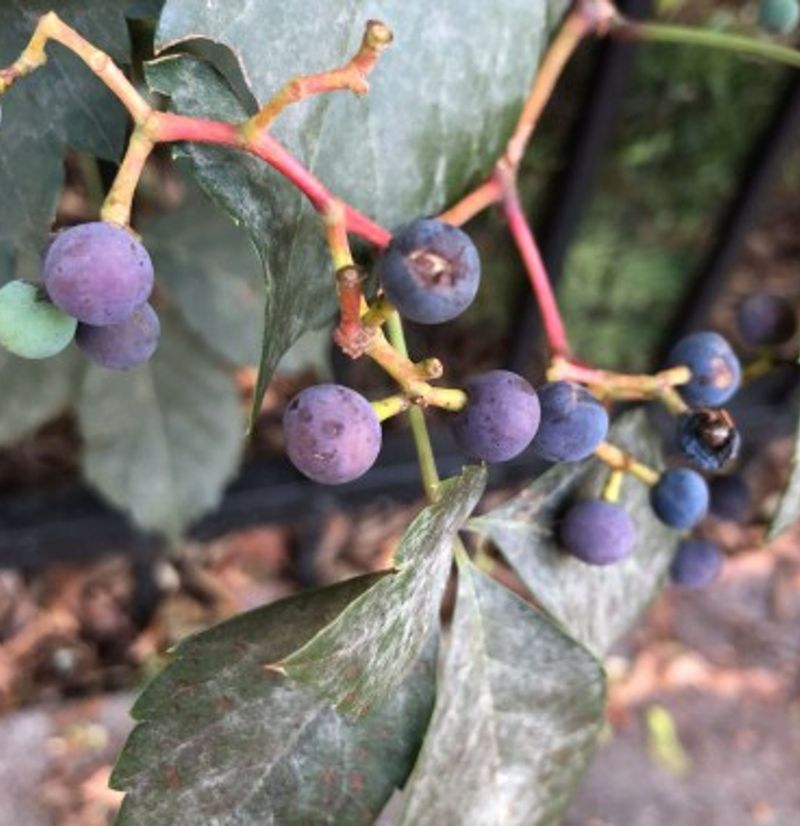
Fruit can break the tie when leaves are hard to read. By fall, both vines often carry small berries that look quite different.
Virginia creeper berries are dark blue to almost black and roughly pea-sized.
They hang on bright red or pinkish stalks, which makes them stand out once leaves start dropping. Birds often strip them off fairly quickly.
Poison ivy berries are pale, usually grayish white to creamy tan.
Those small, waxy berries grow in loose clusters close to the stem. They can hang on well into winter, giving you a useful clue long after leaves fall.
Not every vine will have berries. Poison ivy plants can be male or female, and only female plants produce fruit.
Young or heavily shaded vines may also flower less, so a missing berry crop does not rule anything out.
In Ohio, songbirds feed on both kinds of berries without harm. That is one reason poison ivy pops up under bird feeders, fence lines, and trees where birds perch.
Avoid touching or crushing any berries you suspect are poison ivy. They contain urushiol, just like the rest of the plant.
6. Hairy Rootlets On A Climbing Vine Suggest Poison Ivy
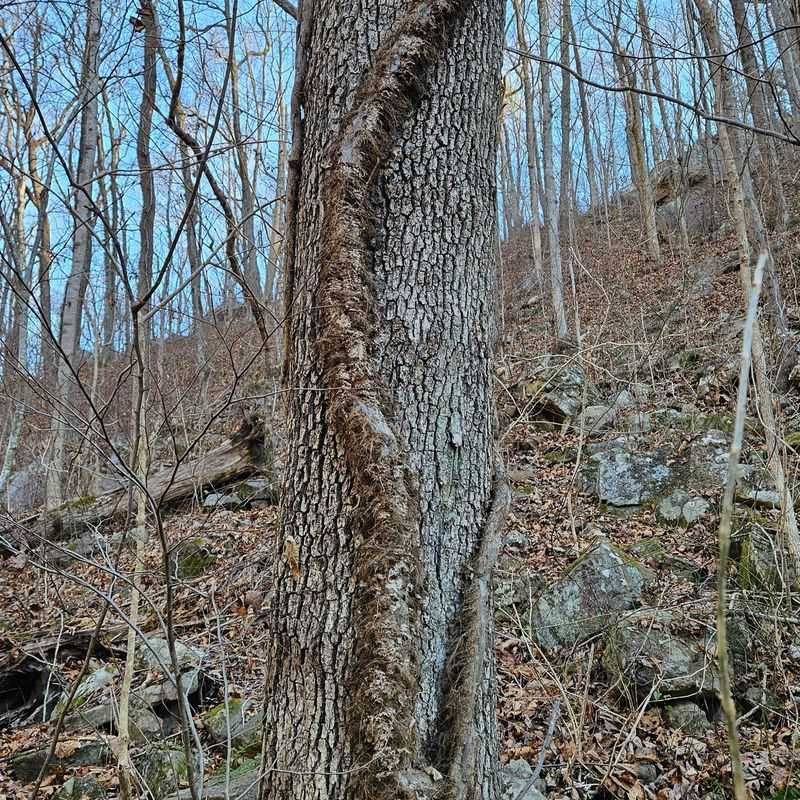
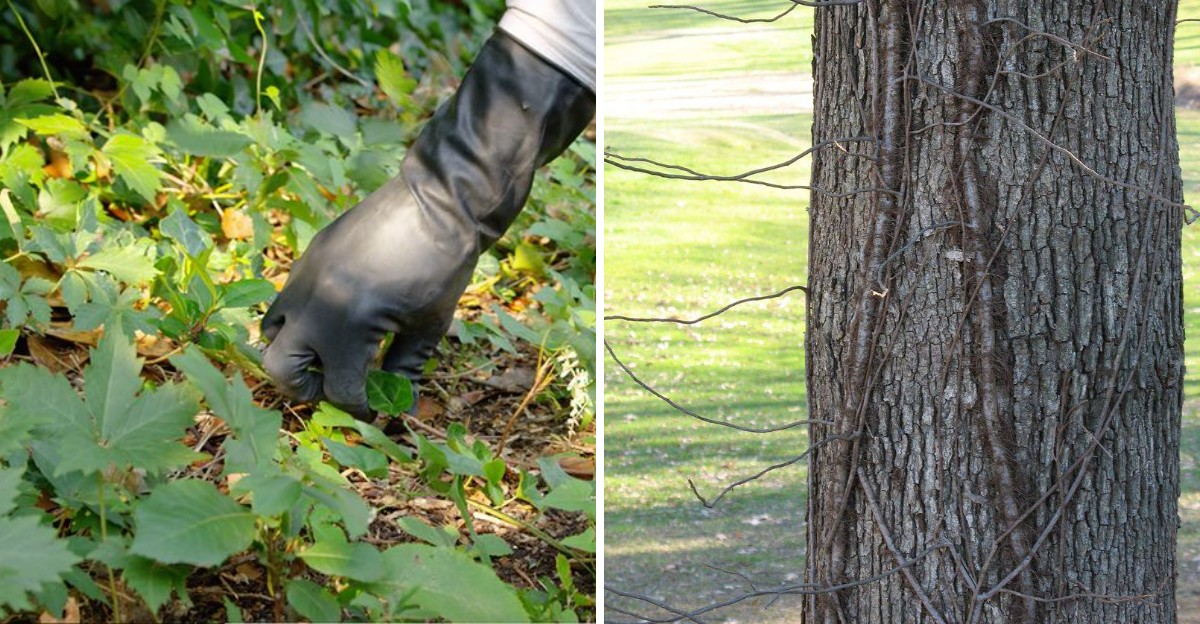
Ever seen a vine on a tree that looks fuzzy, like a rope covered in brown hair? Odds are good that it is poison ivy.
Older poison ivy vines grow lots of small aerial rootlets that grip the bark tightly.
Over time, those rootlets can give thick vines a shaggy, hairy look. Some old vines on Ohio trees grow as wide as a person’s wrist or larger.
Virginia creeper climbs in a different way.
It uses thin tendrils ending in tiny adhesive pads, and its stems look fairly smooth by comparison. Young poison ivy vines can look smooth too, so this clue works best on mature growth.
Side branches also matter. Poison ivy sometimes sends out long horizontal arms that stick out from the trunk, while Virginia creeper usually stays flat against it.
Fall and winter are good times to notice these vines because fewer leaves block the view.
Look, but do not touch. Those hairy stems still carry urushiol, and brushing past them while carrying firewood or climbing a tree can lead to a rash.
Gloves and long sleeves are wise if you work near trees covered in older vines.
7. Leafless Poison Ivy Vines Can Still Cause A Rash In Winter
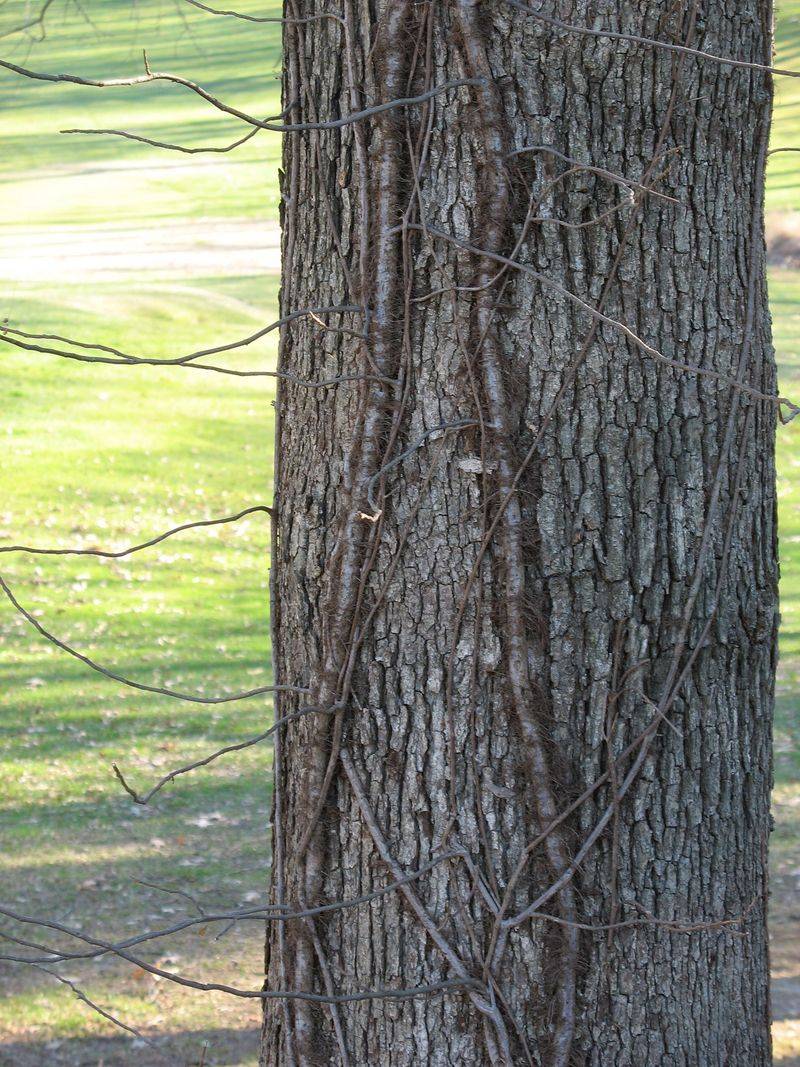
Bare stems fool a lot of people. Once the leaves fall, poison ivy looks harmless, but it is not.
Urushiol stays in the stems, roots, and berries all year long.
Winter chores can bring you right into contact with it. Pulling vines off a fence, hauling brush, or splitting firewood with vines attached can all cause trouble.
Pets that roam through brush can carry the oil on their fur and pass it to you.
Gloves, tools, and clothing can hold urushiol too. Wash anything that touched the plant with soap and water, and clean tools before storing them.
Burning is a serious risk. Smoke from burning poison ivy can carry urushiol into the air, and breathing it can harm your lungs, so experts strongly advise against it.
Many Ohio homeowners heat with wood or hold backyard fires during colder months. Check logs and brush piles carefully for clinging vines before tossing anything into a fire pit or stove.
If you do get exposed, rinse skin soon with soap and cool water.
Rashes may take a day or two to appear. Call a doctor for severe reactions or rashes near the eyes or face.
8. How To Safely Remove Poison Ivy From Your Yard
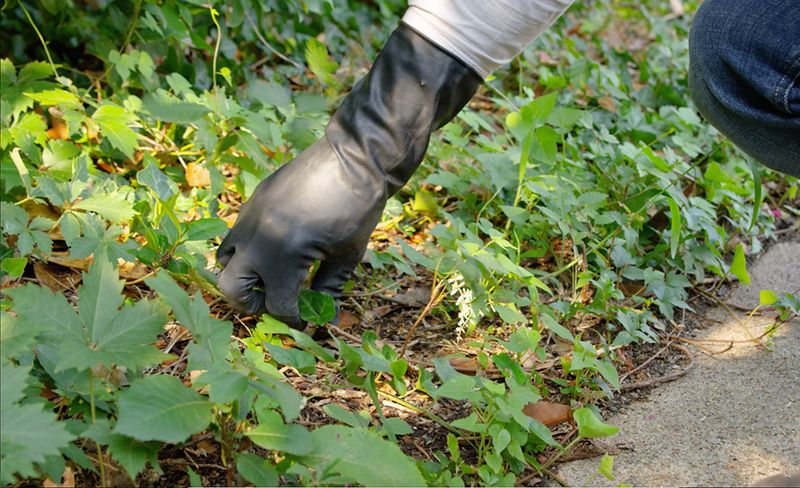
Protection comes first, before you touch a single vine. Long sleeves, long pants, boots, and heavy waterproof gloves make a big difference.
Disposable gloves worn under work gloves add another layer of safety.
On trees, cut the vine near the ground with loppers or pruners. Leave the upper part in place, since it will slowly dry out and pulling it down can spread oil.
Small plants can be pulled by hand when the soil is moist, which helps roots come out.
Roots that stay in the ground often resprout. Expect to repeat the job a few times over one or more seasons.
Herbicides labeled for poison ivy are another option. Read and follow every label direction, and avoid spraying near plants you want to keep.
Bag pulled plants in heavy trash bags and check your local Ohio waste rules for disposal. Do not compost or burn them.
Afterward, wash clothes separately in hot water and clean tools with soap or rubbing solution made for urushiol.
Very sensitive people may want to hire a landscaper instead. Large vines climbing tall trees are also a good job for professionals with the right gear and experience.