That Shelf Mushroom On Your Florida Palm Trunk Means Ganoderma, And There’s No Cure
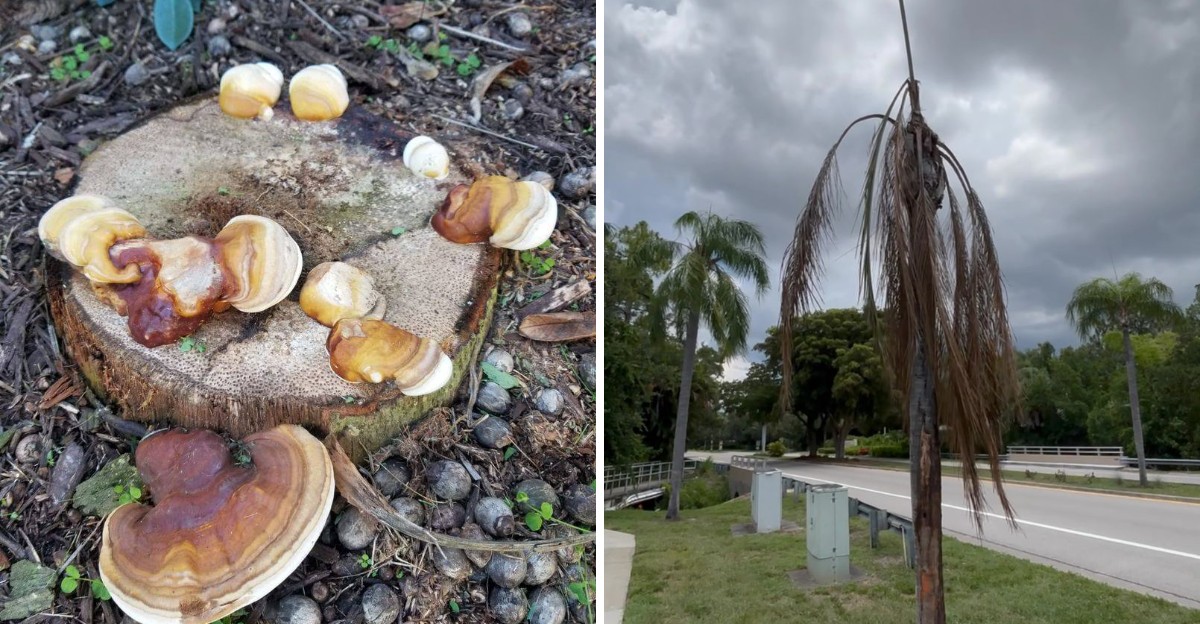
A tan, hoof-shaped bracket pops out of your palm trunk one morning, and it looks almost decorative.
Plenty of Florida homeowners shrug it off. Mushrooms grow on wood, after all, and wood is what a trunk is made of.
Some even snap a photo for the neighbors. The palm keeps its fronds, stays green, and gives no hint that anything is wrong.
That calm is the trick. What sits on the outside is a late signal, and the real story started inside the trunk long before the shelf ever appeared.
Your options shrink fast from here. The steps you take next matter for the rest of your yard too, not only for that one tree.
Look at the base of your palms this weekend. Learn what you’re seeing before the crew shows up.
1. The Conk Grows In The Lower 4 To 5 Feet Of The Trunk
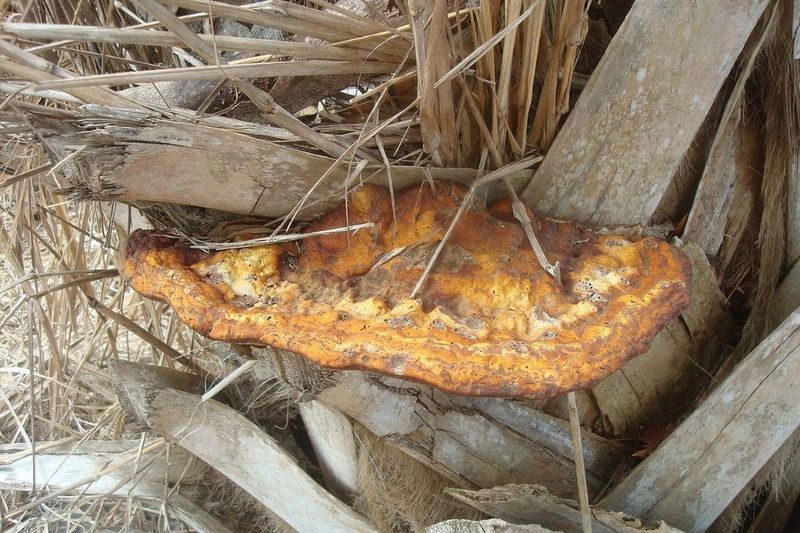
Grab a tape measure and walk out to your palm. The sneaky fungus behind this problem, Ganoderma zonatum, does nearly all its work in the bottom 4 to 5 feet of the trunk.
That is roughly waist to head height on an average adult. So you do not need a ladder or binoculars to check.
A slow walk around the base is usually enough to spot trouble.
The fungus breaks down the tough inner fibers of the trunk in this lower zone. Think of it like termites chewing the legs of a table while the top looks fine.
The crown may stay green for a while, which fools a lot of homeowners.
The shelf-shaped growth, called a conk, usually pops out right on this lower section. Sometimes it sits just a few inches above the soil.
Other times it shows up closer to your shoulder.
Make palm checks part of your routine, maybe once a month when you mow. Look at all sides of the trunk, including the side facing the fence or wall.
Pull back mulch, vines, or tall grass hiding the base.
Snap a photo if you see anything odd. Comparing pictures over a few weeks helps you notice growth.
Catching it early will not reverse the damage, but it gives you time to plan safely.
2. It Starts As A Small, White, Button-Like Growth
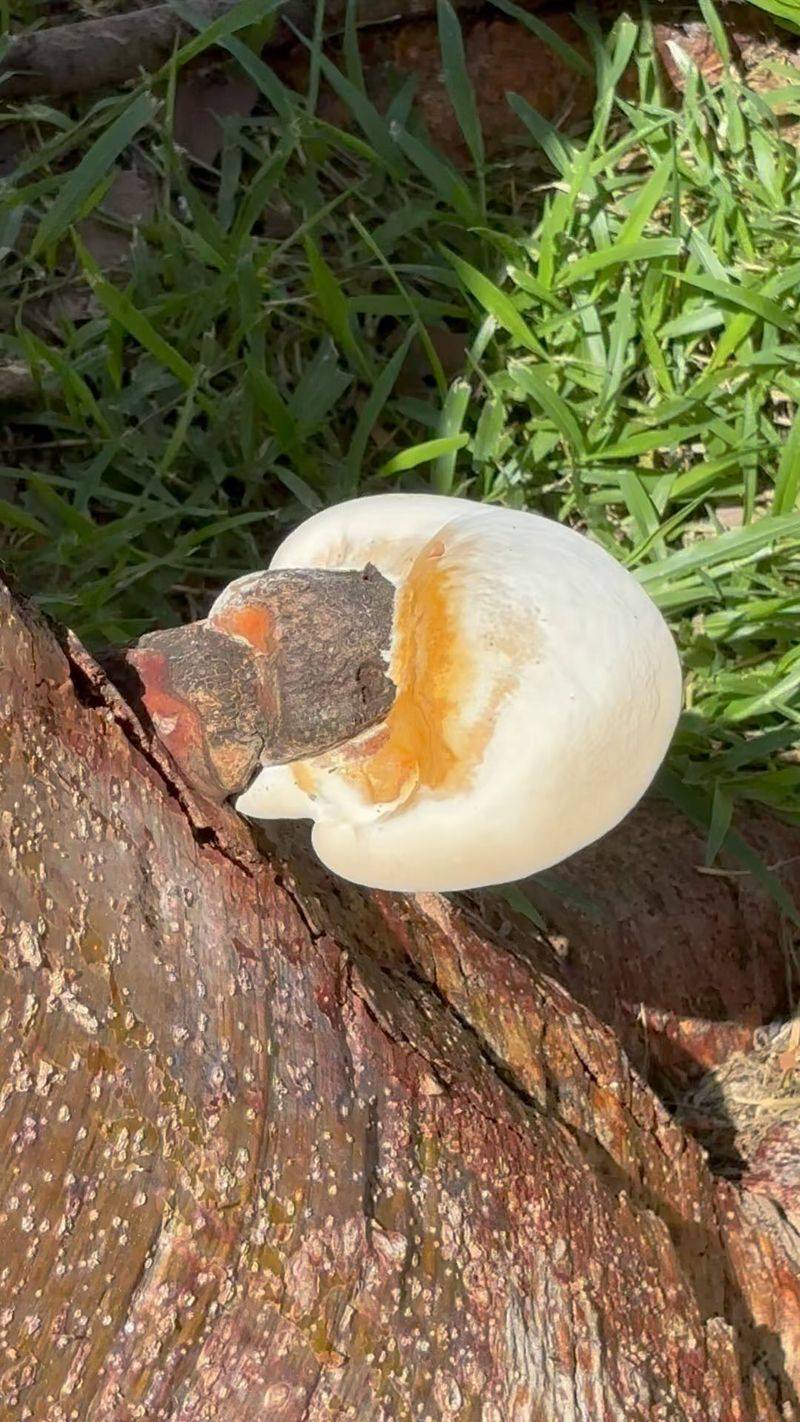
Picture a marshmallow stuck to the side of your palm. That is about how the first stage often looks, a small white blob that seems almost cute.
At first the growth is soft to the touch and fairly flat. Kids might think it is bird droppings or a dab of paint.
Plenty of adults think the same thing and walk right past it.
Give it some weeks, though, and the little button changes its look. It hardens up and spreads outward into a shelf, kind of like a half-moon sticking off the trunk.
A mature conk has a glossy, reddish-brown top that looks almost varnished. Flip your view underneath and you will see a white surface covered in tiny pores.
Those pores are where the spores come from, which matters a lot later.
Your Florida Garden Changes Every Week. Your Plan Should Too.
Gardening in Florida changes quickly throughout the season. Every Friday you’ll receive a simple weekly plan showing exactly what to plant, prune, fertilize, harvest, and protect so you never miss the right timing.
Here is a handy trick for curious homeowners. If the growth is soft and white, take a clear photo and note the date.
Check again in a week or two to see if it is firming up or turning brown.
Not every white spot on a palm is this fungus, so a second opinion helps. Your local county extension office or a certified arborist can confirm what you have.
Many will look at photos for free, which beats guessing.
3. By The Time It Appears, The Damage Is Done
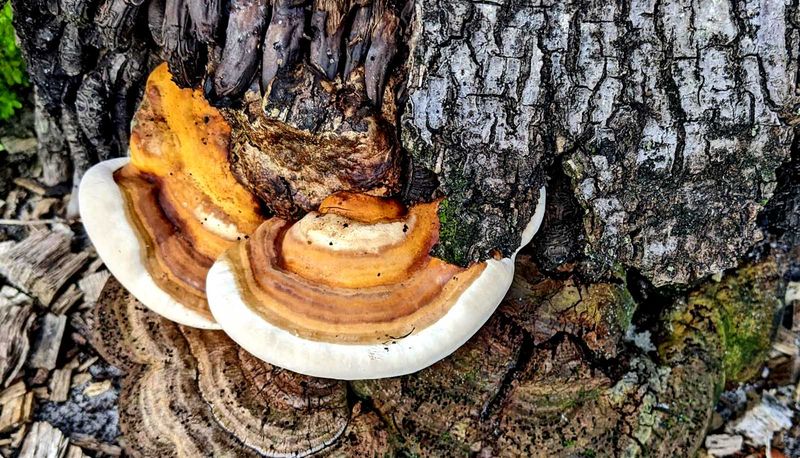
Nobody wants to hear this part, but honesty helps here. When a conk finally shows up, the decay inside the trunk is usually widespread and cannot be undone.
The fungus has been quietly munching on lignin and cellulose for a long time. Those are the materials that keep a palm upright and sturdy.
Once they weaken, the trunk loses strength from the inside out.
Think about an iceberg. The conk is the tiny tip you can see, while the real problem hides below the surface.
That hidden part is what makes this disease so frustrating.
There is no test that tells you a palm is infected before a conk forms. The only other clue is dark staining inside the trunk, and you usually see that after the palm is cut down.
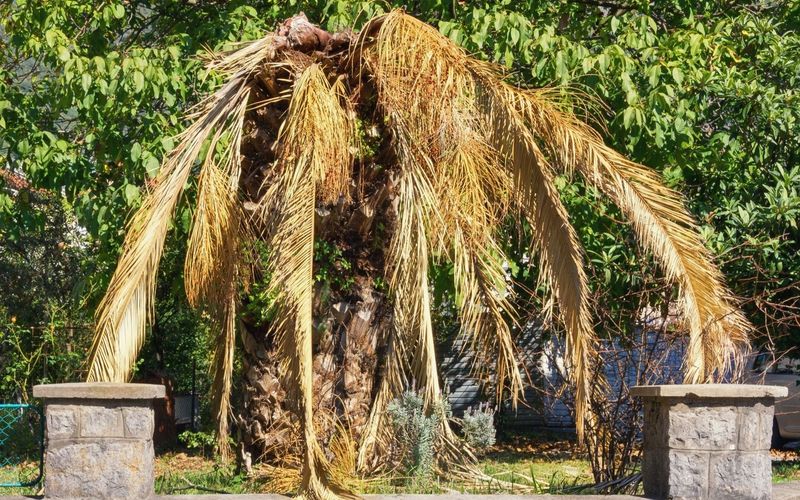
Some infected palms skip the conk stage entirely. They might simply show a tired, droopy canopy with wilting older fronds.
That makes regular checks of the whole tree important, not just the trunk.
So what should you do with this news? Treat a visible conk as a clear signal to act, not wait.
Call an arborist, talk about safety, and start planning removal before strong winds test that weakened trunk.
4. Ganoderma Only Attacks Palms
Good news time, finally. Your live oak, your hibiscus, and your mango tree can breathe a little easier, because Ganoderma zonatum goes after palms.
Scientists do not consider this species a main troublemaker for other plant families. It is a picky eater with a strong taste for palm trunks.
That focus is part of what makes it such a big deal in Florida.
Now, the Ganoderma family has other members, and some of them do bother broadleaf trees. Those cousins usually act like opportunists.
They tend to move in on trees that are already stressed, wounded, or struggling.
So if you see a shelf mushroom on an oak, it is a different story with different rules. An arborist can help sort out which species you are dealing with and what it means.
Fun fact: the Ganoderma group includes reishi, a fungus long used in traditional Asian practices. Please do not go harvesting the one on your palm for tea, though.
It is a whole different situation.
For palm owners, the takeaway is simple. Your other landscape plants are generally safe from this specific fungus.
That gives you lots of planting options later, which we will cover near the end of this list.
5. At Least 65 Palm Species Can Get It
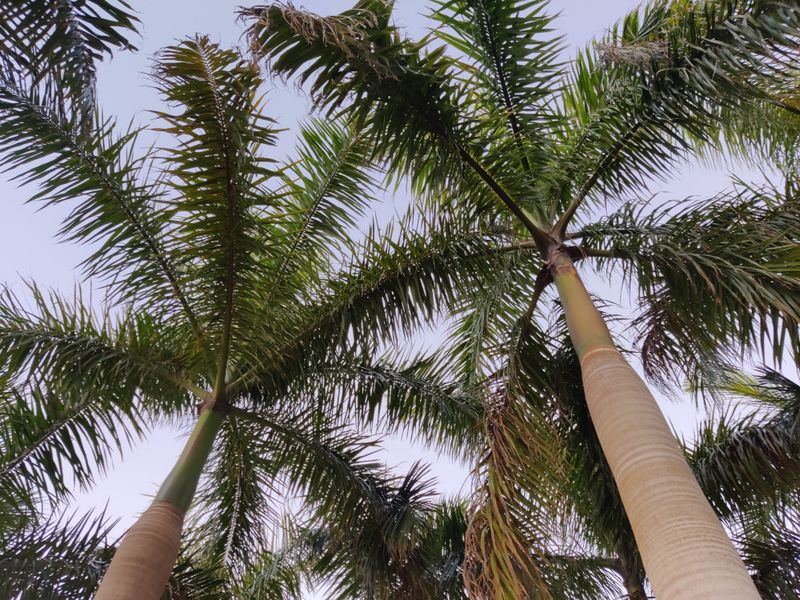
Sixty-five. That is how many palm species researchers have confirmed as hosts for Ganoderma butt rot, and the count is just the ones studied so far.
Queen palms, cabbage palms, Canary Island date palms, Washingtonia palms, and many more are on the list. Experts generally treat every palm species as a possible host.
In other words, no palm gets a free pass.
You might assume only weak or hurt palms get infected. Surprisingly, the fungus has been found in palms that looked healthy and strong.
It also shows up in stressed and wounded trees, so it does not play favorites.
That said, smart care still matters for your palms overall. Avoid whacking trunks with mowers and string trimmers.
Those little wounds stress the tree and invite other problems.
Skip over-pruning too, since stripping green fronds weakens a palm. Feed with a palm fertilizer that has the right nutrients for Florida soil.
Water during dry spells, especially for newer plantings.
If you are shopping for new palms, ask the nursery where the trees were grown. Look over the trunk base closely before buying.
A little caution at the start beats a big headache down the road, especially when no variety is truly immune.
6. One Conk Can Release About 3 Cups Of Spores
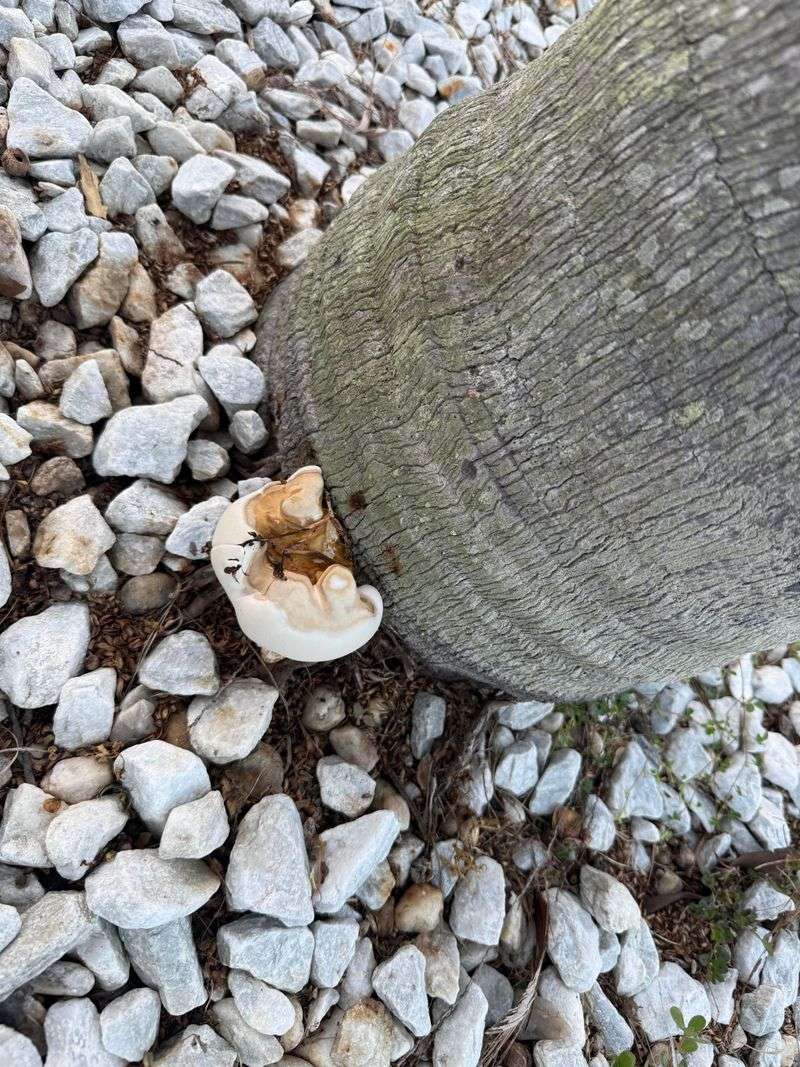
Grab a measuring cup from your kitchen and fill it three times. Now imagine all that as fine brown dust floating out of one fungus.
Wild, right?
Experts estimate a single conk can release about 3 cups of spores. That works out to billions of tiny particles in one growing season.
Each one is far too small to see by itself.
Those spores are the main way the fungus travels. Wind picks them up and carries them across yards, parking lots, and whole neighborhoods.
Your palm problem can quickly become your neighbor’s palm problem.
Sometimes you will notice a rusty brown powder coating the trunk or ground near a conk. That dusting is a pile of spores.
It is a pretty clear sign the conk is active and busy.
Here is why this matters for you. Leaving a conk in place gives the fungus months to spread its seeds of trouble.
Quick action helps protect nearby palms, including ones you love in your own yard.
Be kind to the neighbors too. If you share a property line with palms, give them a heads-up when you spot a conk.
A quick chat over the fence can help everyone keep a closer eye on their trees.
7. Bag The Conk Before Removing The Palm
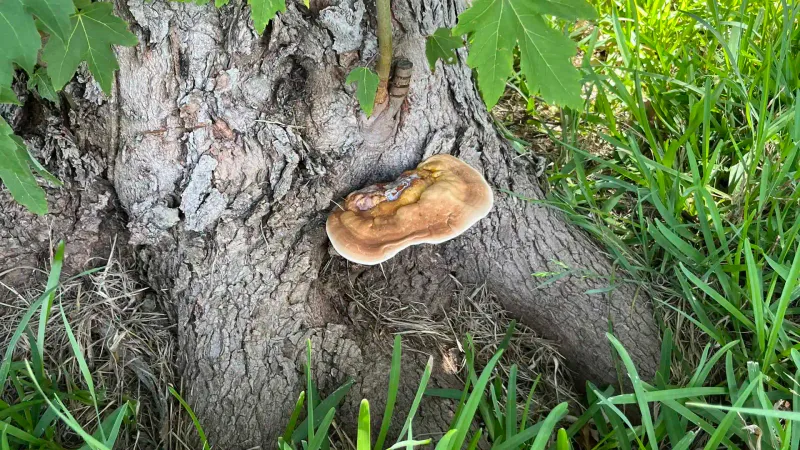
Think of the conk like a dusty vacuum bag you do not want to spill. Before any saw comes out, gently cover it and seal it up.
Wear gloves and maybe a dust mask. Slip a heavy plastic bag over the conk, then carefully pry or cut it free inside the bag.
Tie the bag tight so nothing escapes.
The goal is to catch as many spores as possible. Bumping, kicking, or hitting the conk with a mower can puff spores into the breeze.
Slow, careful moves make a real difference here.
Experts suggest destroying conks, ideally by burning, where local rules allow it. If burning is not an option in your area, ask your trash service or county about proper disposal.
Do not toss conks in your compost pile.
Removing the conk is not a fix, just damage control. If the fungus is still inside the palm or stump, a fresh conk can appear in the same spot in five to ten weeks.
So bagging buys time while you schedule removal.
Wash your gloves and tools afterward. Change clothes if you got dusty.
These small steps keep you from carrying spores to other palms around your yard.
8. Remove The Palm, Stump And As Many Roots As Possible
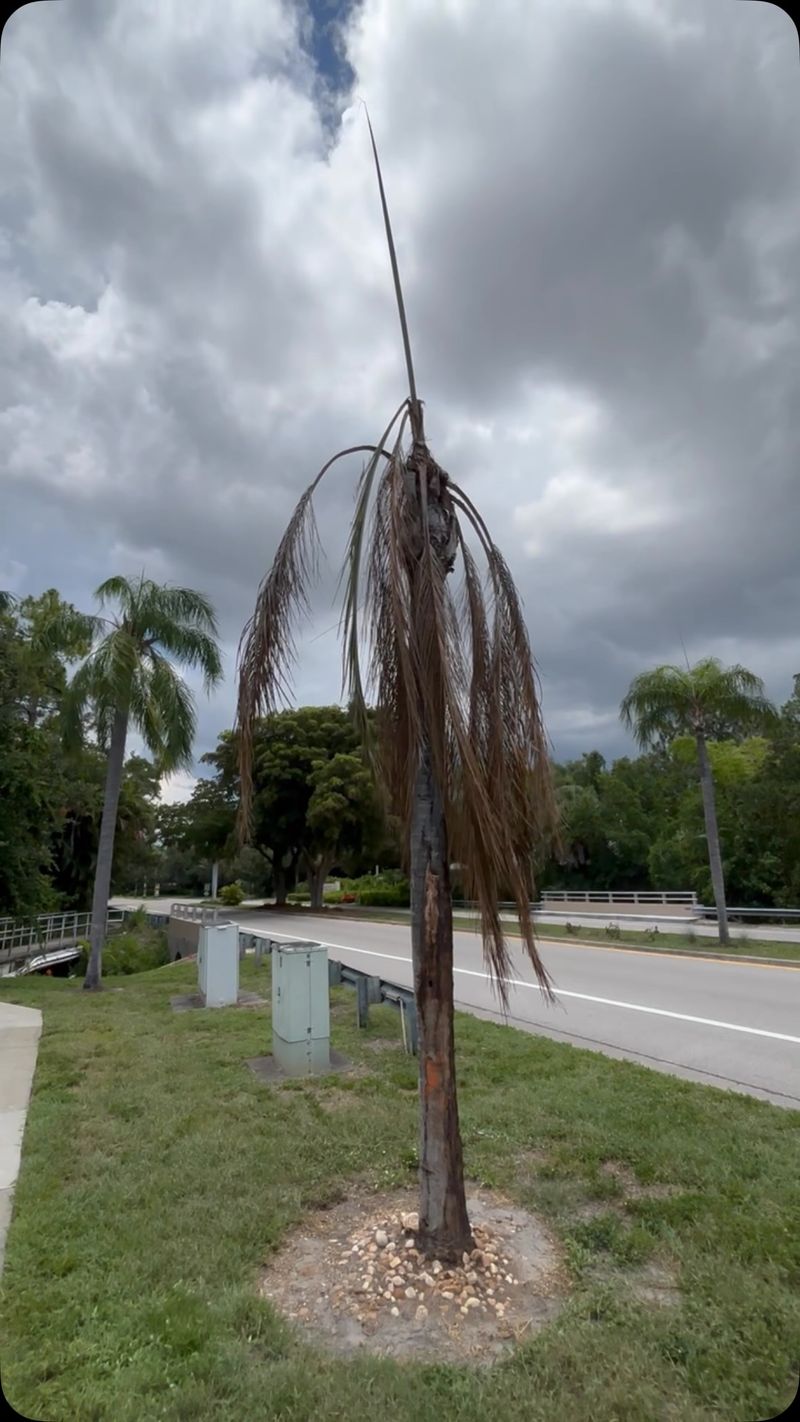
A palm with a hollowed-out base is a bit like a tall pole balanced on a soggy pencil. In hurricane country, that is a risk nobody should ignore.
Experts recommend removing infected palms promptly. The big concern is structural failure, meaning the trunk could snap or tip over.
Cars, roofs, fences, and people can all end up in the way.
Hire a licensed, insured tree service for the job. Tall palms with weakened trunks can behave unpredictably during cutting.
This is not a weekend project for a chainsaw beginner.
Do not stop at the trunk, either. The fungus enters through the roots and moves up into the woody tissue.
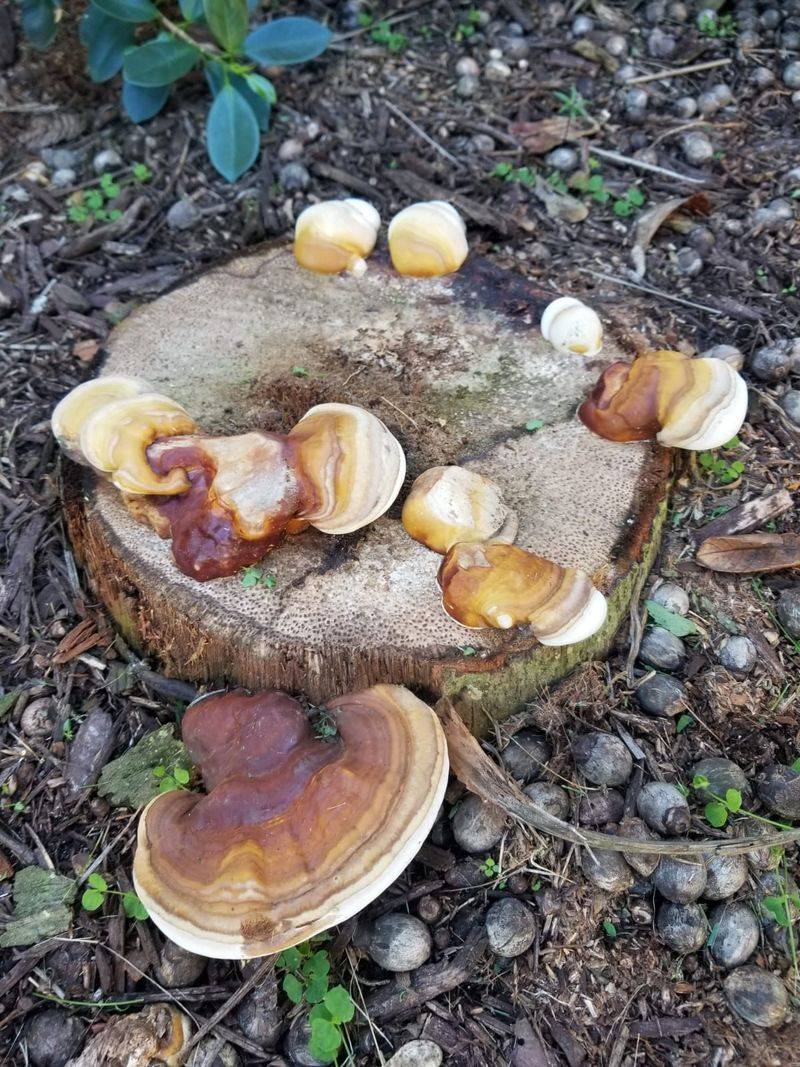
Leftover stumps can keep pushing out conks for several years, acting like a spore factory.
Ask your crew to pull out as much of the stump and root system as possible. If full removal is not practical, a deep, thorough stump grinding is the next best move.
Bag and haul away the grindings instead of spreading them as mulch.
Get a written quote that spells out stump and root work. Some companies charge extra for grinding, so clear details up front prevent surprises.
A tidy, complete job protects your yard for the long haul.
9. Plant Something Other Than A Palm In That Spot
Every ending makes room for a fresh start, and your yard is no different. That empty patch is a chance to try something new and beautiful.
Ganoderma zonatum can hang around in the soil for a very long time, possibly indefinitely. Planting another palm in the same spot invites the same problem.
Most experts advise against it without serious precautions.
Those precautions are a big lift. They can involve digging out soil 6 to 9 feet around the old trunk and replacing it with clean fill.
For most homeowners, that is costly and messy.
The easier path is choosing a different plant entirely. Since this fungus targets palms, other trees and shrubs are a safe bet.
Your options are wide open.
Consider a crape myrtle for summer color, or a Simpson’s stopper for a tidy native hedge. Firebush draws hummingbirds and butterflies.
Southern magnolia or a small citrus tree could also work if you have room.
Check sunlight, soil, and mature size before buying. A local nursery or extension office can suggest Florida-friendly choices for your area.
With the right pick, that spot can become a favorite corner of your yard, buzzing with color and life again.