14 Easy Feeding Tips That Keep Potted Geraniums Blooming Through An Arizona Winter
While most of the country packs away its flower pots in December, Arizona gardeners get to enjoy their best blooming season. Potted geraniums love our mild, sunny winters, but they need the right food at the right time to keep flowering.
Feed them too much and you get floppy leaves, while feeding too little leaves you with tired, pale plants. These 14 simple tips will help you keep your geraniums bright and busy from fall all the way to spring.
1. Start With a Fast-Draining Potting Mix
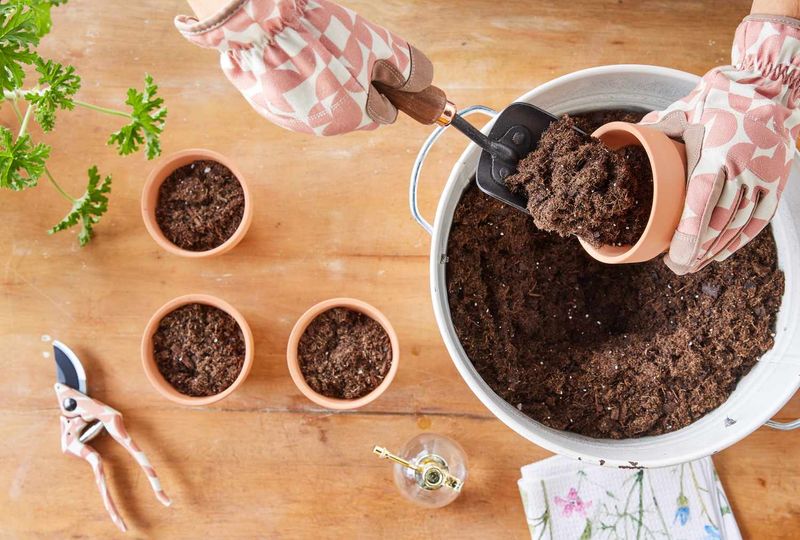
Good feeding begins long before you open a bag of fertilizer. Every nutrient you give a geranium travels through the soil, so the mix in that pot decides how well your plant can actually use its food.
Geraniums hate wet feet. A heavy, soggy mix holds water around the roots, and roots that sit in water stop taking up nutrients properly.
Pick a quality bagged potting mix, never dirt scooped from your yard. Arizona garden soil tends to be alkaline and often packed with caliche, which locks up iron and other minerals your plant needs.
For extra help, blend in about one part compost to four parts potting mix. Compost adds a gentle supply of nutrients and helps the soil hold just enough moisture without turning muddy.
A handful of perlite or pumice can loosen things up even more.
Here is a quick test: water the pot and watch. If water drains out the bottom within a few seconds, you are in good shape.
If it pools on top, the mix is too dense. Fixing the soil now means every feeding you do later actually reaches the roots instead of sitting uselessly in the pot.
2. Give Roots a Roomy Container
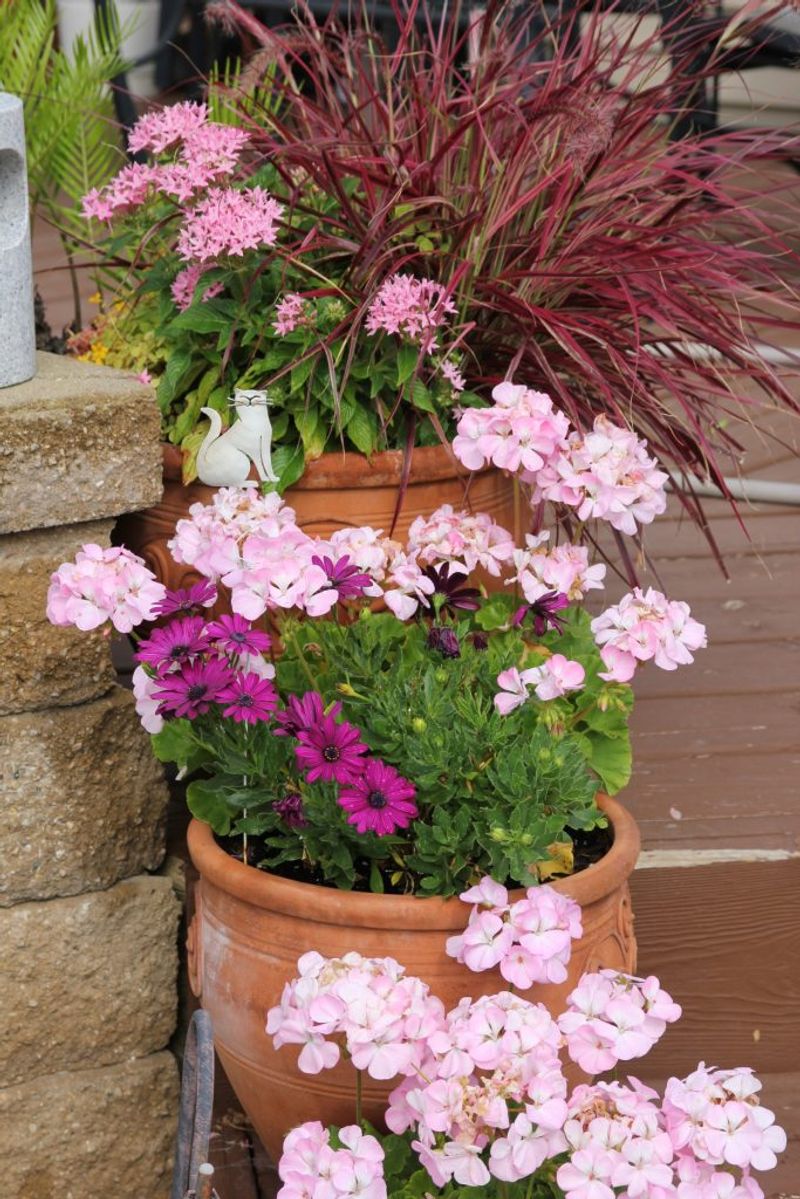
Think of a pot as a pantry. The bigger it is, the more food and water it can store for your geranium between visits from you.
Small pots dry out fast in our low humidity, even in winter. When soil dries completely, fertilizer salts can build up and stress the roots.
Aim for a container at least 16 inches across. If you have the space, a 24 to 36 inch pot is even better, especially when you want to group several plants together.
Surprisingly, geraniums do not mind a little company. Planting three or four in one large container often leads to more flowers, because the plants grow together into a full, lush mound.
Just make sure the pot has at least one good drainage hole.
Material matters, too. Terracotta breathes and dries quickly, which suits geraniums but means more frequent watering.
Glazed ceramic and thick plastic hold moisture longer, which can stretch your feeding and watering schedule a bit. Light-colored pots also stay cooler on warm afternoon patios.
A roomy home gives roots space to spread out and grab every bit of nutrition you provide, and that translates straight into more color for you.
3. Mix Slow-Release Fertilizer In at Planting
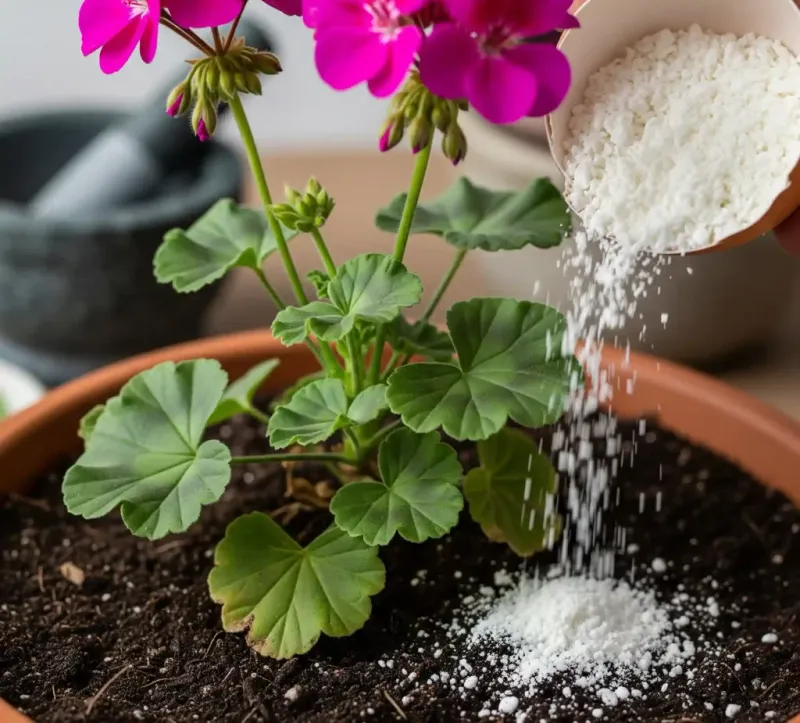
October is planting season in the low desert, and it is also the perfect moment to set up a steady food supply. A slow-release granular fertilizer works like a timed snack dispenser for your geraniums.
Your Arizona Garden Changes Every Week. Your Plan Should Too.
Gardening in Arizona changes quickly throughout the season. Every Friday you’ll receive a simple weekly plan showing exactly what to plant, prune, fertilize, harvest, and protect so you never miss the right timing.
When you pot or repot your plants in fall, stir a balanced slow-release fertilizer right into the mix. Look for one labeled with even numbers, such as 10-10-10, and with added micronutrients.
Those tiny extras, especially iron, manganese, and zinc, matter a lot in Arizona because our water and soil tend to be alkaline.
Every time you water, the coated granules release a small amount of nutrition. Your plants get a gentle, constant trickle instead of a feast followed by a famine.
That steady supply builds strong roots during the first few weeks, which sets the stage for heavy blooming once the weather cools.
Follow the package directions for how much to add per gallon of soil, and resist the urge to throw in extra. Most products last around three to four months, which carries your geraniums nicely through the heart of winter.
You can then switch to liquid feeding for a mid-season boost when the granules start running low.
4. Dilute Liquid Fertilizer to Half Strength
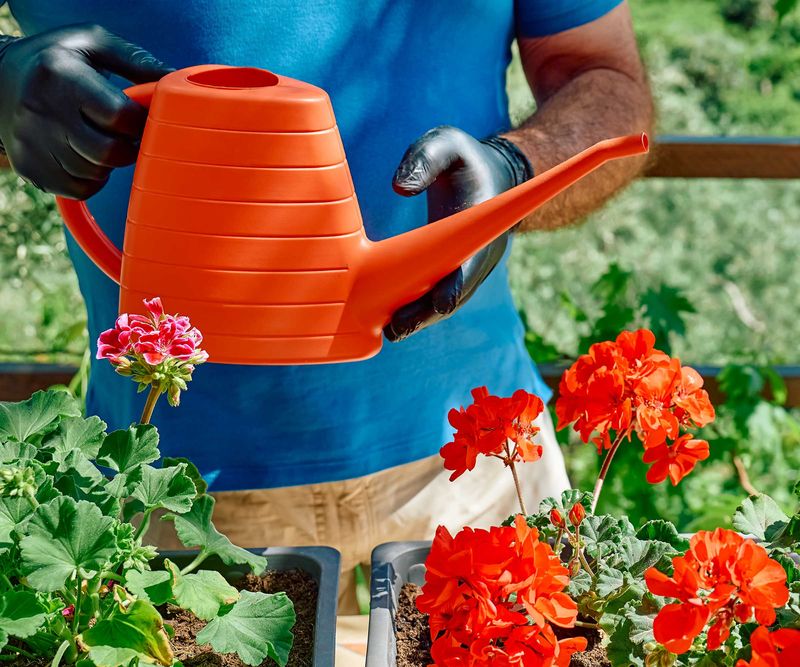
Ever notice how you eat less on lazy days? Geraniums work the same way.
Winter brings shorter days and cooler nights, so your plants grow more slowly and simply cannot use a full dose of plant food.
That is why half strength is the magic number. Take your favorite balanced liquid fertilizer, something like 20-20-20, and mix it with twice the water the label suggests.
During the coldest stretch in late December and January, you can even drop to quarter strength.
Diluting does more than save money. Extra fertilizer that the plant cannot absorb turns into salt buildup in the soil.
Arizona tap water already carries plenty of dissolved minerals, so those salts pile up quickly. Over time, they can burn root tips and cause crispy brown leaf edges.
A weaker mix gives your geraniums exactly what they can handle and nothing more. You will see deeper green leaves and steady flower clusters without the stress.
Always water the soil lightly first if it is bone dry, then follow with the fertilizer solution. Feeding a parched plant can shock the roots, while slightly moist soil helps nutrients spread evenly through the pot.
5. Stick to an Every-Two-Weeks Schedule
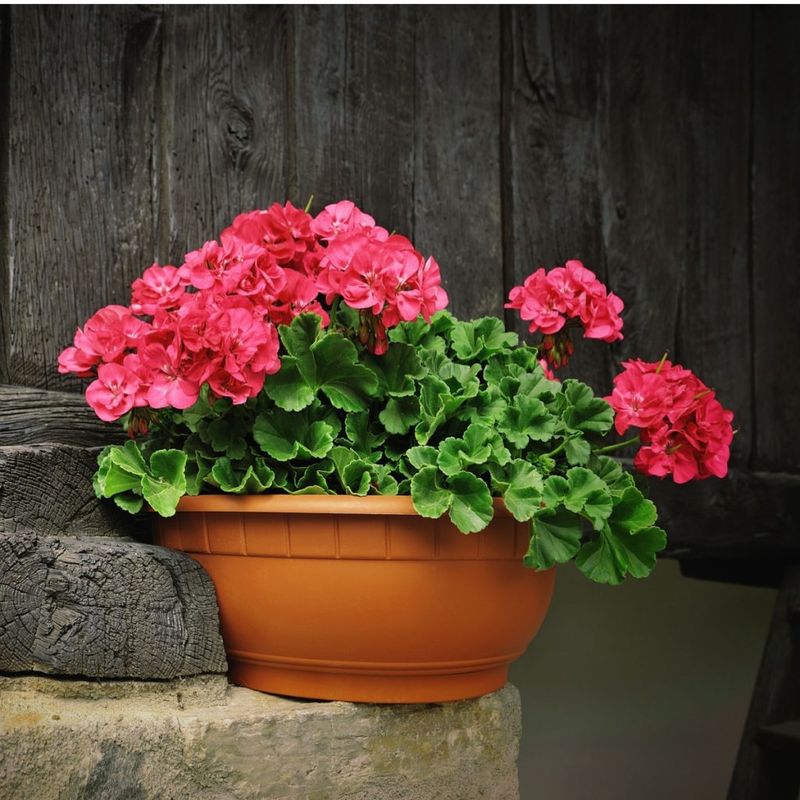
Consistency beats intensity every single time. A geranium fed lightly every two weeks will almost always outbloom one that gets a heavy dose whenever you remember.
For actively flowering plants in pots, plan a diluted feeding roughly twice a month. Some gardeners pick the first and fifteenth of each month so it is easy to track.
Others tie it to a weekly habit, like feeding every other Sunday morning while the coffee brews.
Why not more often? Overfeeding pushes fast, weak growth.
Stems stretch out, become thin and spindly, and flop over under the weight of their own flower heads. That leggy look is a common sign of too much love from the fertilizer jug.
Why not less often? Potted plants lose nutrients every time water drains out the bottom.
Without regular top-ups, leaves can fade to yellow and bloom clusters shrink in size.
A simple trick is to set a reminder on your phone. Pair it with a quick check of the soil and leaves so you catch any issues early.
If a plant looks pale, keep the schedule but stay at half strength. If growth looks floppy, stretch the gap to three weeks for a while.
6. Skip High-Nitrogen Plant Foods
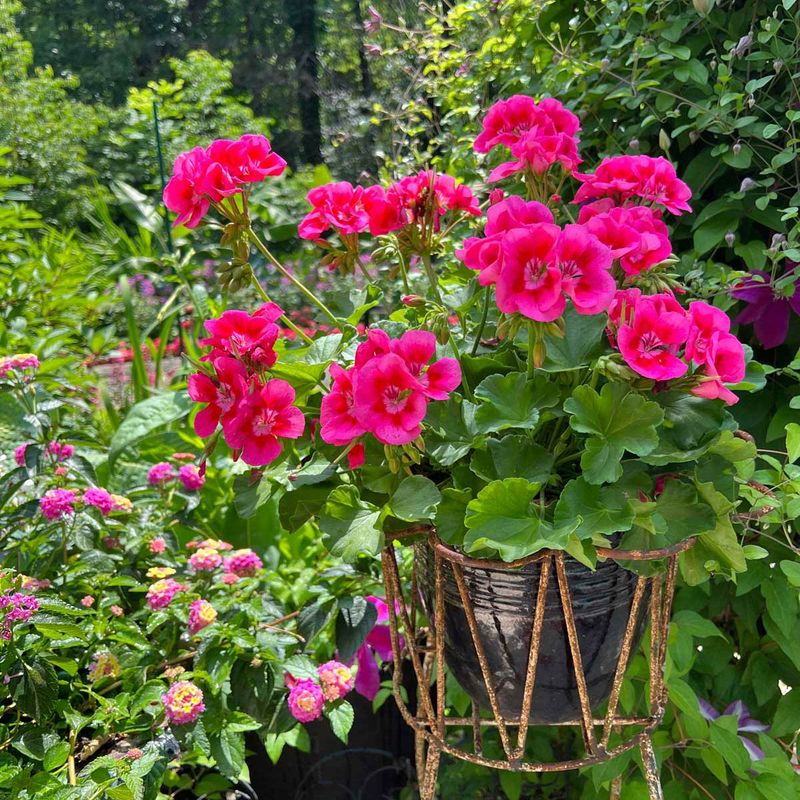
Lawn fertilizer and geraniums are a bad match. Grass foods are packed with nitrogen, the nutrient that drives leafy growth, and geraniums soaked in it often produce a jungle of leaves with barely a flower in sight.
Look at the three numbers on any fertilizer label. The first is nitrogen, the second is phosphorus, and the third is potassium.
For blooming geraniums, you want that first number equal to or lower than the other two. A balanced formula works well, and a bloom booster with slightly more potassium can push even more flowers.
Potassium helps plants build strong cell walls and supports flower production. It also helps geraniums handle stress, like a sudden chilly night or a dry, windy afternoon, both of which Arizona winters love to deliver.
Here is a fun fact: geraniums originally come from South Africa, where many grow in rocky, lean soils. They evolved to bloom well without rich, nitrogen-heavy conditions.
That heritage explains why a lighter hand with nitrogen pays off. If your plants already look lush but shy on blooms, switch to a lower-nitrogen feed for a month and watch the buds start forming.
7. Water Before You Feed, and Water Wisely
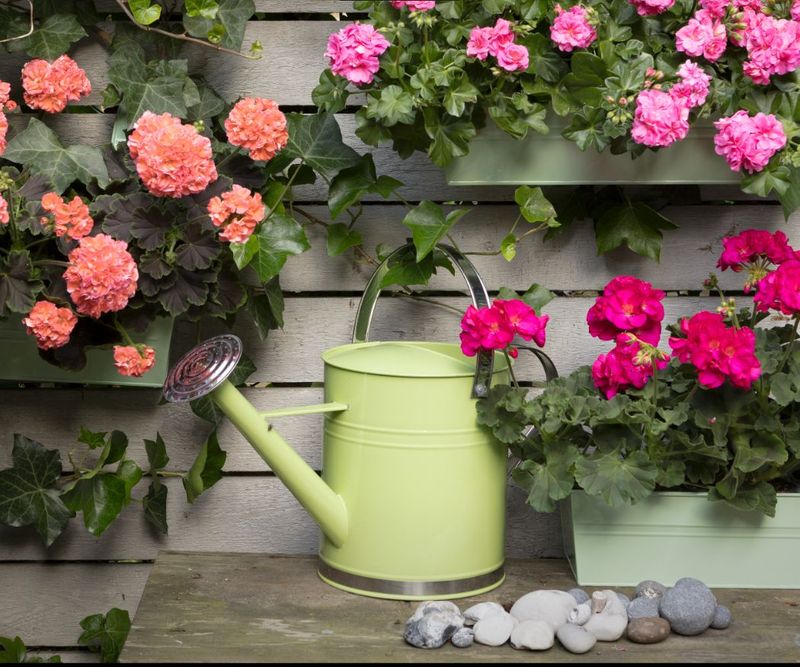
Picture this: you mix up a perfect batch of fertilizer, pour it on, and most of it washes right out of the pot or sits in soggy soil going nowhere. Watering habits make or break your feeding routine.
Geraniums like their soil to dry slightly between drinks. Push a finger about an inch into the mix.
If it feels dry, water slowly and deeply until it runs from the drainage hole. If it still feels damp, wait another day or two.
Never let pots sit in a saucer full of water. Standing water keeps roots soaked, and soaked roots can rot and stop absorbing nutrients altogether.
Empty saucers about 20 minutes after watering.
Arizona tap water carries a lot of minerals, so every month or so, give each pot an extra-long soak. Let water flow through for a full minute to flush out salt buildup from fertilizer and hard water.
Your plants will thank you with greener leaves.
Winter watering is also a chance to save water. Most potted geraniums need a drink only every three to five days during cool months, far less than summer.
Morning watering works best, giving leaves time to dry before chilly nights.
8. Park Pots in Full Winter Sun
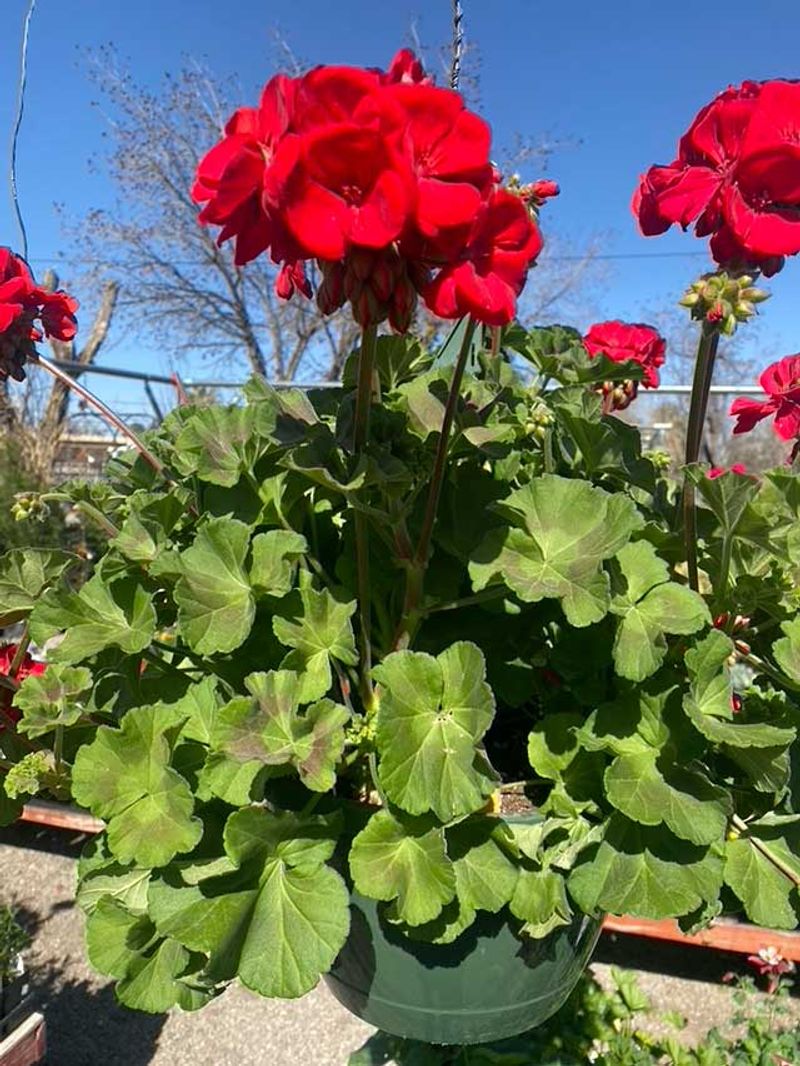
Sunlight is the engine that turns fertilizer into flowers. Without enough light, even the best plant food just sits in the soil, because the plant lacks the energy to use it.
The great news is that Arizona winters deliver some of the sunniest days anywhere. Spots that were way too hot for geraniums in July become ideal in December.
A south or west-facing patio that would scorch them in summer can be the perfect winter location.
Aim for at least six hours of direct sun. Watch how shadows move across your yard, since the winter sun sits lower in the sky.
A spot that was bright in September may fall into the shade of a mesquite or the house by January.
Pots on wheeled caddies make life easier. You can roll them into the sunniest corner as the season changes, then slide them back to an eastern exposure when spring heat returns in April.
Plants in too much shade send out long, pale stems reaching for light, and they bloom very little. If you see that stretching, move them before adding more fertilizer.
Light first, food second, and the flowers follow right behind.
9. Pause Feeding Around Frosty Nights
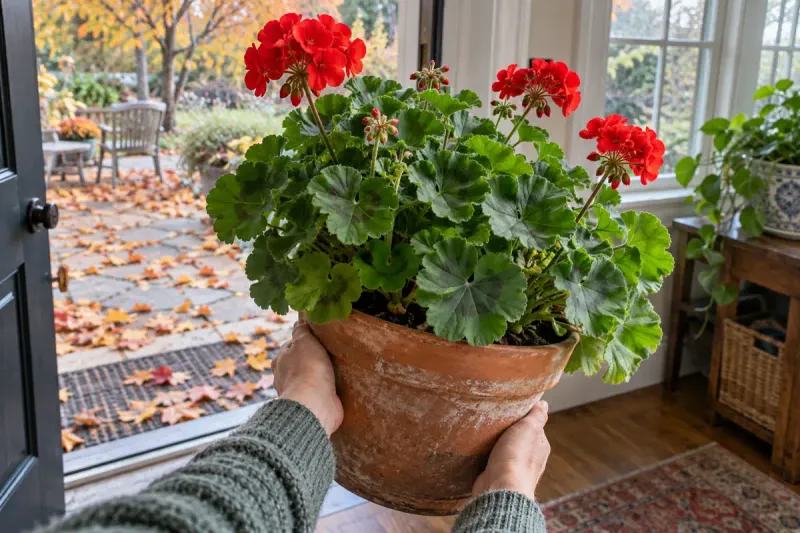
Yes, frost does happen in the desert. Phoenix may only see a few freezing nights a year, while Tucson and outlying areas can dip below 32 degrees several times each winter.
Geraniums are not frost-hardy. A hard freeze can damage leaves, turn stems mushy, and set your bloom show back by weeks.
That is why smart feeding works hand in hand with frost protection.
When a cold snap is in the forecast, hold off on fertilizing for a few days. Fresh fertilizer encourages tender new growth, and that soft growth is the first to suffer in the cold.
Let the plant rest until temperatures settle.
On freezing nights, move pots under a covered patio, against a warm south-facing wall, or into the garage. For plants too heavy to budge, drape them with frost cloth or an old bedsheet, letting it reach the ground to trap soil warmth.
Remove covers in the morning so the plants can soak up sunshine.
Watering the day before a freeze also helps, since moist soil holds heat better than dry soil. Once the chill passes, resume your regular half-strength schedule and your geraniums should bounce right back into bloom.
10. Deadhead So Food Goes to New Flowers
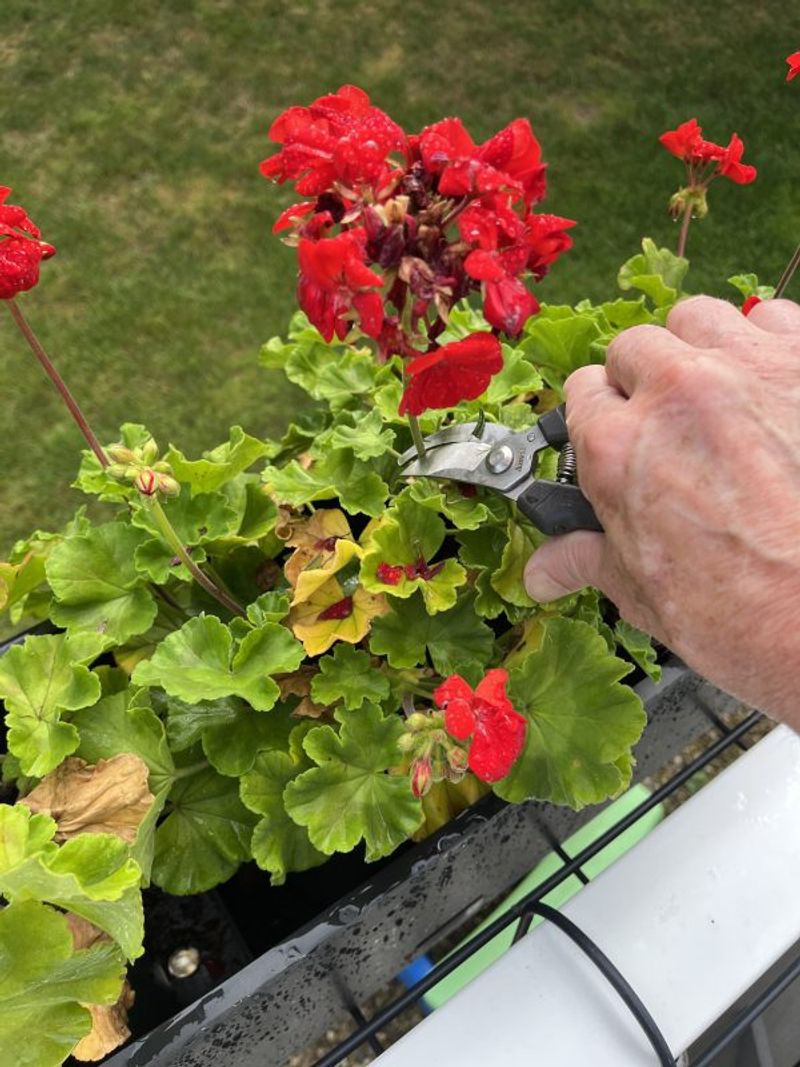
Every faded flower left on a geranium is a little energy thief. Once blooms fade, the plant starts trying to make seeds, and it pours nutrients into that job instead of producing fresh color.
Deadheading fixes the problem in seconds. Follow the spent flower stalk all the way back to where it joins the main stem.
Then snap or pinch it off cleanly. Removing just the flower head while leaving the long bare stalk looks messy and can invite rot.
Make it a relaxing routine. A quick stroll past your pots every few days with a cup of tea in hand is often all it takes.
You will be amazed how fast new buds appear once the old ones are gone.
Think of deadheading as the partner to fertilizing. You supply the food, and deadheading steers that food toward new flowers.
Together, they keep blooms coming in waves all winter long.
Drop the clippings in your compost bin rather than leaving them on the soil surface. Fallen petals can hold moisture against the stems and attract unwanted bugs.
A tidy pot is a healthier pot, and healthier geraniums use their nutrients more efficiently.
11. Pinch Tips for Bushier Plants
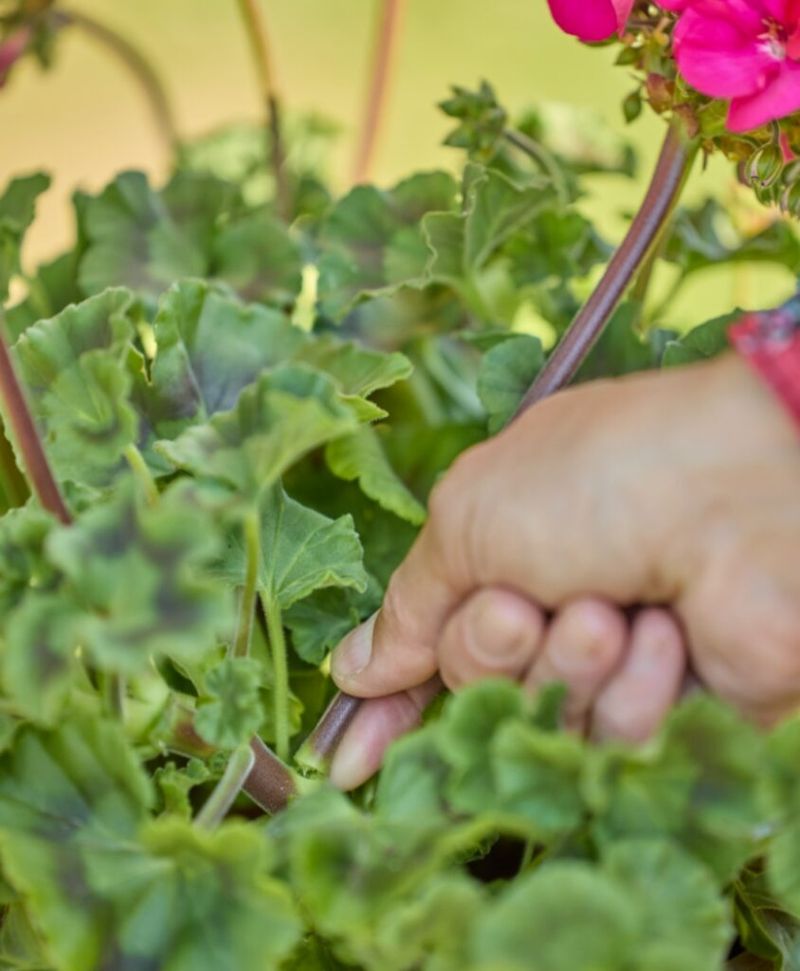
A single pinch can turn one stem into two. That simple fact is the secret behind those full, rounded geraniums you see in garden center photos.
Each stem tip holds a growth point that tells the plant to keep stretching upward. When you pinch that tip off just above a leaf, the plant wakes up buds lower on the stem.
Two new branches usually form, and each branch eventually carries its own flower clusters.
More branches means more places for blooms, and it also means your fertilizer gets spread across a sturdier, more compact plant. Bushy geraniums handle Arizona winds better, too, since short stems are less likely to snap.
For stems that have already grown long and leggy, go bolder. Cut them back by a third to a half, making each cut just above a leaf node.
Focus on the woody, bare stems first.
Give the plant a light half-strength feeding about a week after pinching. That small boost fuels the new side shoots as they push out.
Within a few weeks, you will have a fuller plant ready to bloom. Bonus: those pinched tips can be rooted in moist soil to create brand-new plants for free.
12. Check Leaves for Hungry Pests
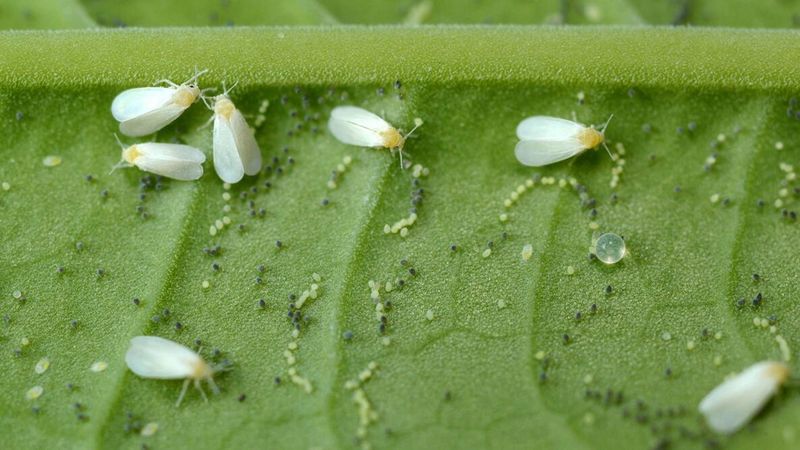
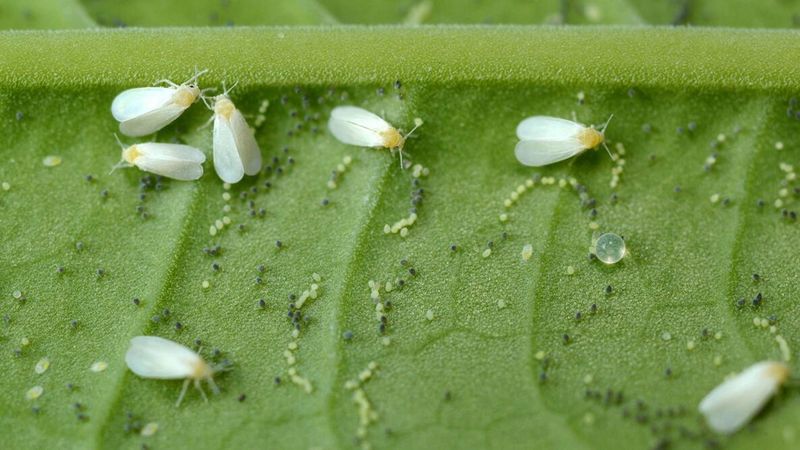
Not every hungry visitor is welcome. Whiteflies and aphids love tender, well-fed growth, and they can quietly drain your geraniums of the nutrients you work so hard to provide.
Geraniums are fairly tough and often stay trouble-free. Still, a quick weekly look under the leaves can catch problems early.
Aphids cluster on new tips and buds, while whiteflies flutter up in a little cloud when you brush the plant.
Here is the good part for wildlife-friendly yards. Lady beetles, lacewings, and small birds like verdins happily snack on aphids.
Planting native flowers such as penstemon or desert marigold nearby can make your yard more inviting to these helpful predators, which may help keep pest numbers down naturally.
For small outbreaks, a strong spray of water from the hose usually knocks pests off. Insecticidal soap is a gentle backup if needed.
Apply it in the cool morning, not under harsh afternoon sun.
Overfeeding with nitrogen can actually attract more aphids, since they love soft, lush growth. Sticking to balanced, diluted feedings keeps plants sturdy and less appealing.
Always clean your pruning shears between plants to avoid spreading disease from one pot to the next.
13. Cut Back Tired Plants in Fall
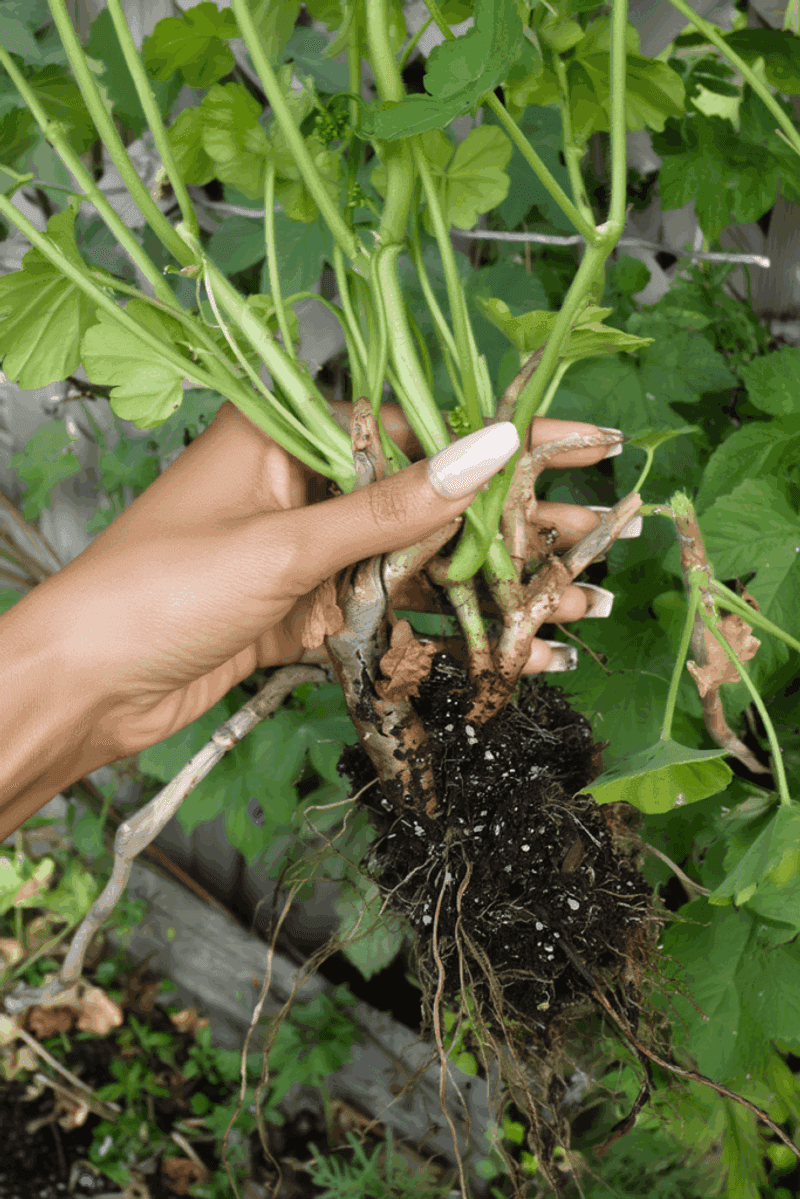
After surviving a brutal Arizona summer, many geraniums look ragged by September. Long, woody stems, sparse leaves, and few flowers are common.
Do not toss them. A fall haircut can bring them roaring back.
Once nights cool below about 75 degrees, usually in late September or October, cut leggy plants back to within a foot of the soil. It may feel drastic, but geraniums respond with a flush of fresh growth as the weather turns mild.
Timing the cutback with your fall feeding is the real trick. Right after pruning, mix slow-release fertilizer into the top layer of soil or repot with fresh mix.
Those new shoots then have a ready food supply as they emerge.
Within four to six weeks, you should see compact new branches loaded with buds. By Thanksgiving, many plants are back in full color, just in time for holiday gatherings on the patio.
Keep the cut stems and leaves out of the pot, and skip heavy watering for a week while the plant recovers. Fewer leaves means it needs less water.
Then ease back into your regular routine and enjoy months of blooms from a plant that looked finished.
14. Keep Moisture Even, Never Soggy
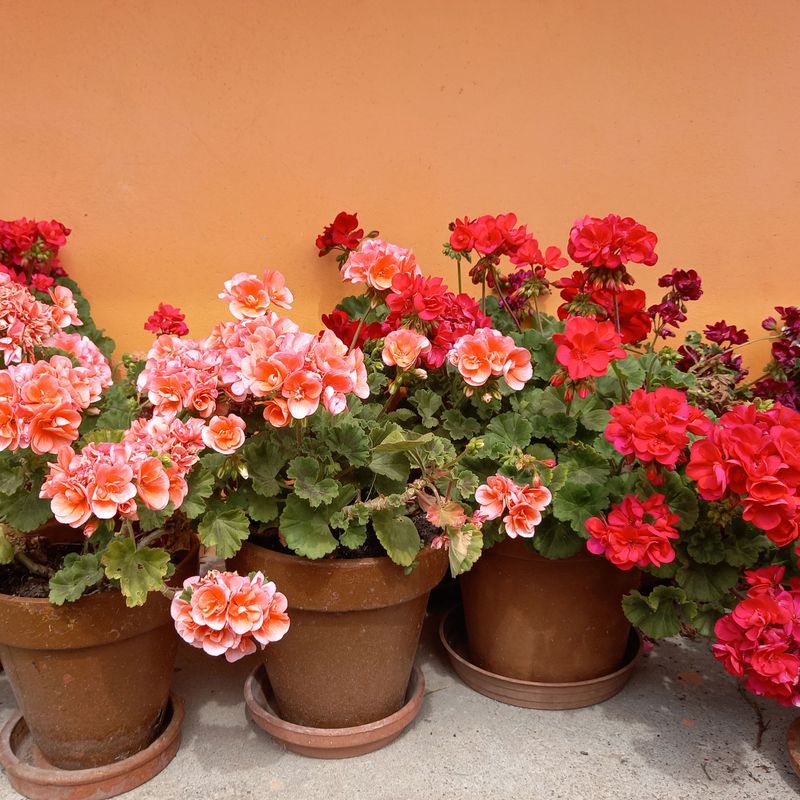
Steady is the word to remember. Geraniums bloom best when their soil swings gently between slightly moist and slightly dry, not between desert-dry and swamp-wet.
Big swings cause stress. When soil dries out completely, roots shrink back and fertilizer salts concentrate.
Then a heavy soaking follows, and roots struggle to breathe. Each cycle slows nutrient uptake and can make buds drop before they open.
A few easy habits help. Spread a thin layer of fine gravel or bark mulch over the soil to slow evaporation in our dry air.
Group pots together so they shade each other slightly and hold humidity. If you already use drip irrigation for desert shrubs, adding an emitter to each pot can deliver small, regular amounts of water with very little waste.
Remember to check before you water, every single time. Winter rain storms and cloudy stretches can keep soil damp for days, so let your finger, not the calendar, decide.
When moisture stays balanced, fertilizer dissolves and moves evenly to the roots. That smooth delivery is what keeps geraniums blooming steadily from fall right through to spring.
Water-wise and flower-rich, it is the best of both worlds.