10 Fall Porch Decor Ideas Using Plants That Thrive In Georgia
Store-bought fall displays often look great for a couple of weeks before the mums brown out.
Living plants chosen for cooler weather can carry a porch well past Halloween, sometimes right through winter.
Plenty of options handle mild days and chilly nights without much fuss. Pots with different heights, colors, and textures look fuller than a row of identical containers.
Some of the best choices are edible or evergreen, so they keep earning their spot after the holidays.
Warm afternoons on a sunny Georgia porch can dry containers quickly, so check the soil twice a week. Pots set against the house also stay warmer on frosty nights than ones near the steps.
Small swaps through the season keep your display fresh without starting over. Each idea ahead uses plants that tend to handle local conditions well.
1. Mass Mums In Matching Urns For A Classic Fall Welcome
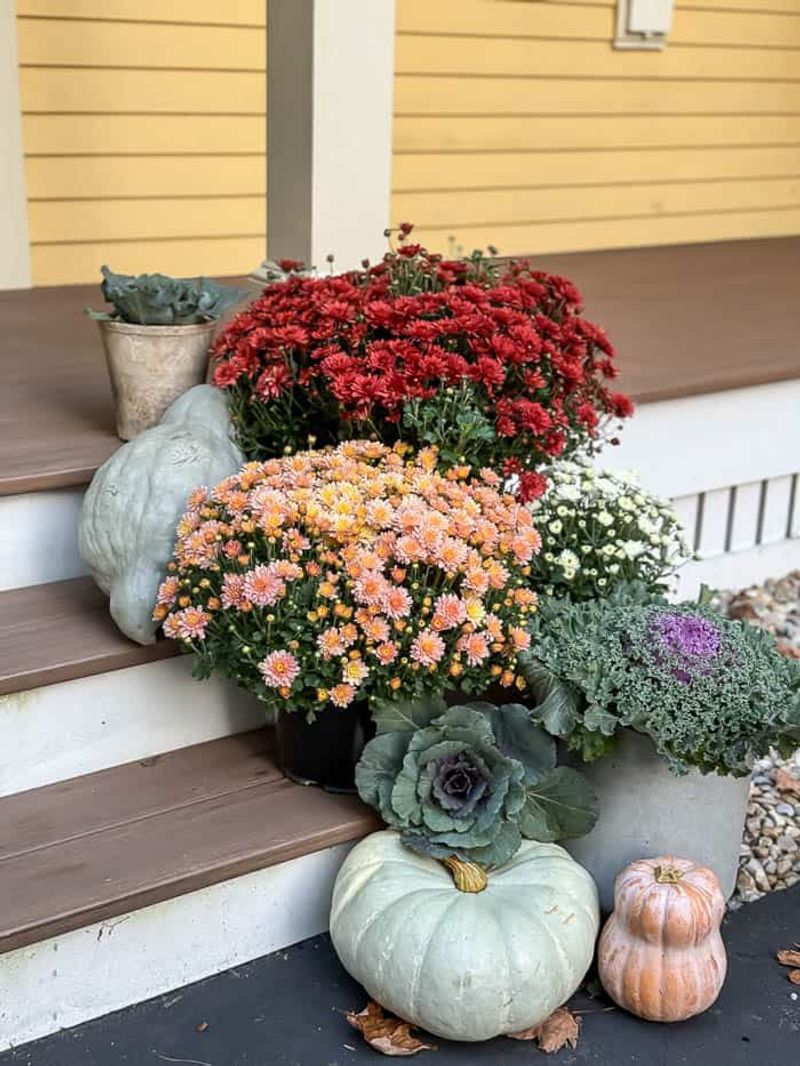
Nothing says fall on a Southern porch faster than a pair of full, round mums. Set them in matching urns on each side of the door, and the whole entry feels balanced and ready for the season.
Garden mums sold in fall are usually grown to bloom right away, so buy plants with plenty of tight buds.
Plants already in full flower look great on day one, but they tend to fade sooner. Mostly closed buds can stretch the show for several weeks, depending on heat and sun.
Mums dry out quickly in pots, especially on a warm Georgia afternoon in early October.
Check the soil daily by pushing a finger into it. Water at the base when the top inch feels dry, and try to keep water off the blooms.
Pick urns that are a bit wider than the nursery pot so the mum fits snugly inside. You can drop the plastic pot right in and fill gaps with moss or small gourds.
Color matters more than you might think on a brick or painted house.
Bronze and rust shades glow against white trim, while yellow or white mums can brighten darker siding. Matching both urns in the same color keeps the look tidy rather than busy.
Once blooms brown, you can try planting hardy types in the garden, though fall-bought mums do not reliably return.
2. Ornamental Kale Rosettes Gain Color As Nights Turn Cool
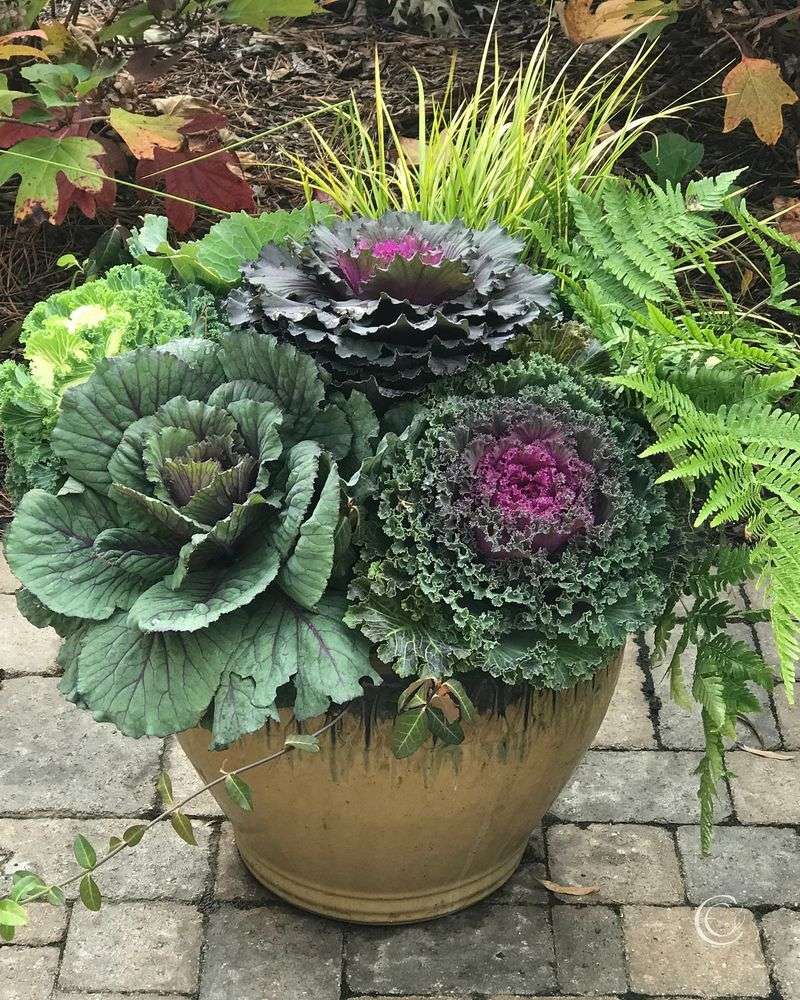
Here is a plant that actually looks better as the weather gets colder. Ornamental kale starts mostly green, then its centers shift to pink, purple, or creamy white once nights cool down.
Cool temperatures trigger that color change, so warm spells can slow it.
Across much of Georgia, the brightest rosettes usually show up from late October into winter. In south Georgia, you may wait a little longer for the full effect.
Kale handles light frost well, which makes it a solid choice for porches that stay open to the weather.
Give it at least six hours of sun if you can. Shadier spots still work, but plants may stretch and color less vividly.
Your Georgia Garden Changes Every Week. Your Plan Should Too.
Gardening in Georgia changes quickly throughout the season. Every Friday you’ll receive a simple weekly plan showing exactly what to plant, prune, fertilize, harvest, and protect so you never miss the right timing.
Plant rosettes a little deeper than they sat in the nursery pot to help them stay upright.
A single large kale in a low bowl makes a bold statement by the steps. Smaller ones look sweet tucked around mums or pansies in a mixed container.
Watch the leaves for small green caterpillars and chewed holes, which are common on cabbage family plants.
Picking them off by hand often handles light problems. Heavier cases may call for a product labeled for caterpillars on ornamentals, used as directed.
With steady watering and good drainage, kale often lasts into early spring before it bolts and gets leggy.
3. Window Boxes Of Pansies And Violas Can Carry Color Into Spring
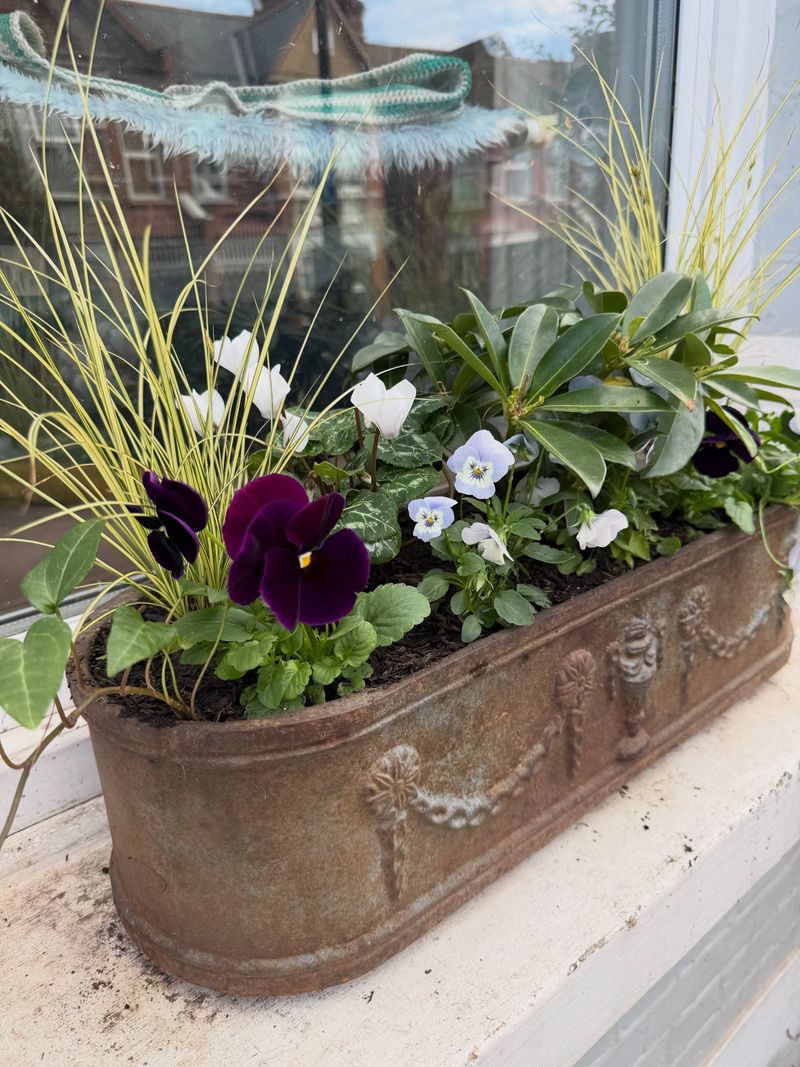
Few cool-season flowers work as hard as pansies. Planted in fall, they can bloom on and off through winter and then put on a big show again in spring.
Timing helps a lot in Georgia, and mid-October through November is a common planting window.
Planting while soil is still warm lets roots settle in before cold weather arrives. Wait too long, and plants may sit still until spring.
Violas have smaller flowers than pansies, but they often bloom more freely in cold snaps.
Mixing the two in a window box gives you both big faces and lots of little ones. Pick colors that suit your shutters, like blue with white trim or orange with dark green.
Window boxes drain fast and can dry out on windy days, even in winter.
Check moisture every few days, more often in sunny spots. A slow-release fertilizer at planting, or a light liquid feed during warm stretches, can support steady blooms.
Snip off faded flowers when you water to keep new buds coming.
Hard freezes can flatten pansies for a day or two. Most bounce back once temperatures rise, though very harsh cold can damage plants in exposed boxes.
Squirrels sometimes dig in fresh soil, so a few small twigs laid across the surface may discourage them.
4. Snapdragons Add Height To The Back Of Porch Containers
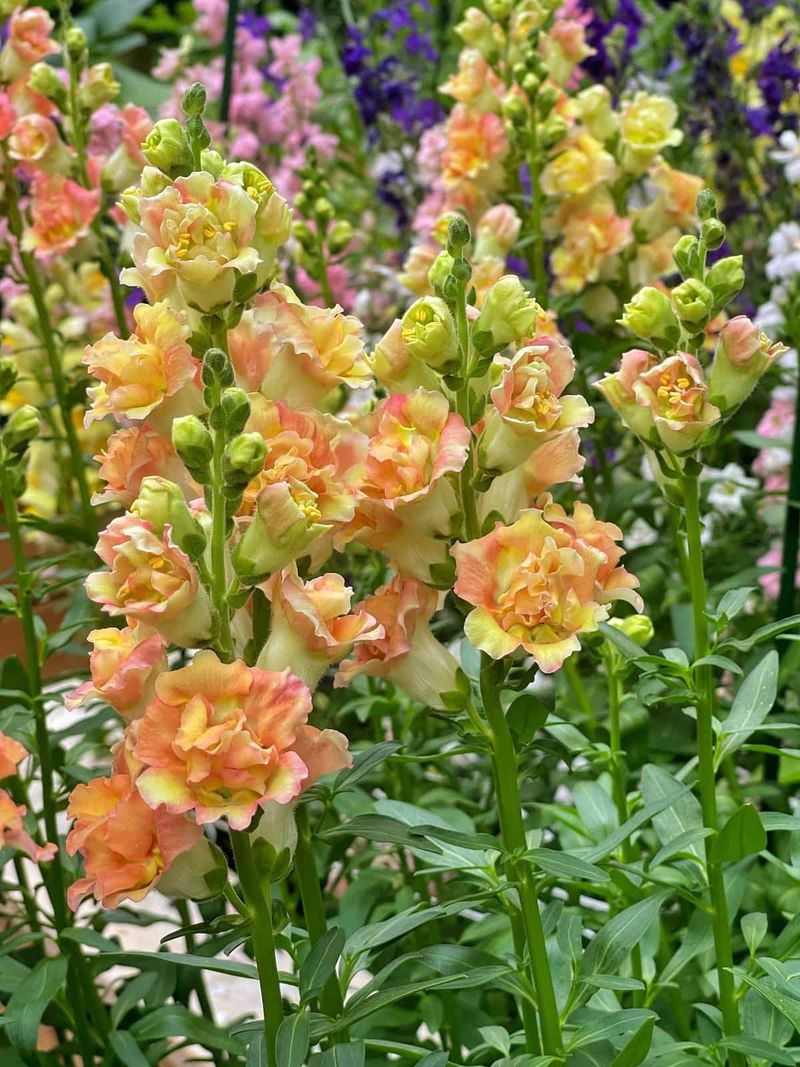
Flat containers can look a little sleepy. Snapdragons fix that by sending up upright flower spikes that pull the eye higher.
Gardeners in Georgia often treat them as a cool-season annual planted in fall.
In milder areas, they may bloom some in fall, rest during the coldest weeks, and flower strongly in spring. Results vary with variety and how harsh your winter turns out.
Place them at the back of a pot that sits against a wall or railing.
Shorter plants like pansies or trailing ivy can then fill the front edge. That simple tall, middle, and spilling layout makes a container look full and planned.
Choose medium or tall types for this job, since dwarf snapdragons stay low.
Full sun keeps stems sturdy and blooms coming. In too much shade, they may lean toward the light and flower less.
Pinching the tip of young plants once can encourage extra side shoots.
After a spike finishes, cut it back to a set of leaves to make room for new ones. Wet, crowded foliage can invite leaf diseases, so allow some airflow around each plant.
Colors range from soft peach to deep burgundy, which makes them easy to match with your other fall plants.
5. Tuck Ornamental Peppers Beside Pumpkins For Matching Orange Tones
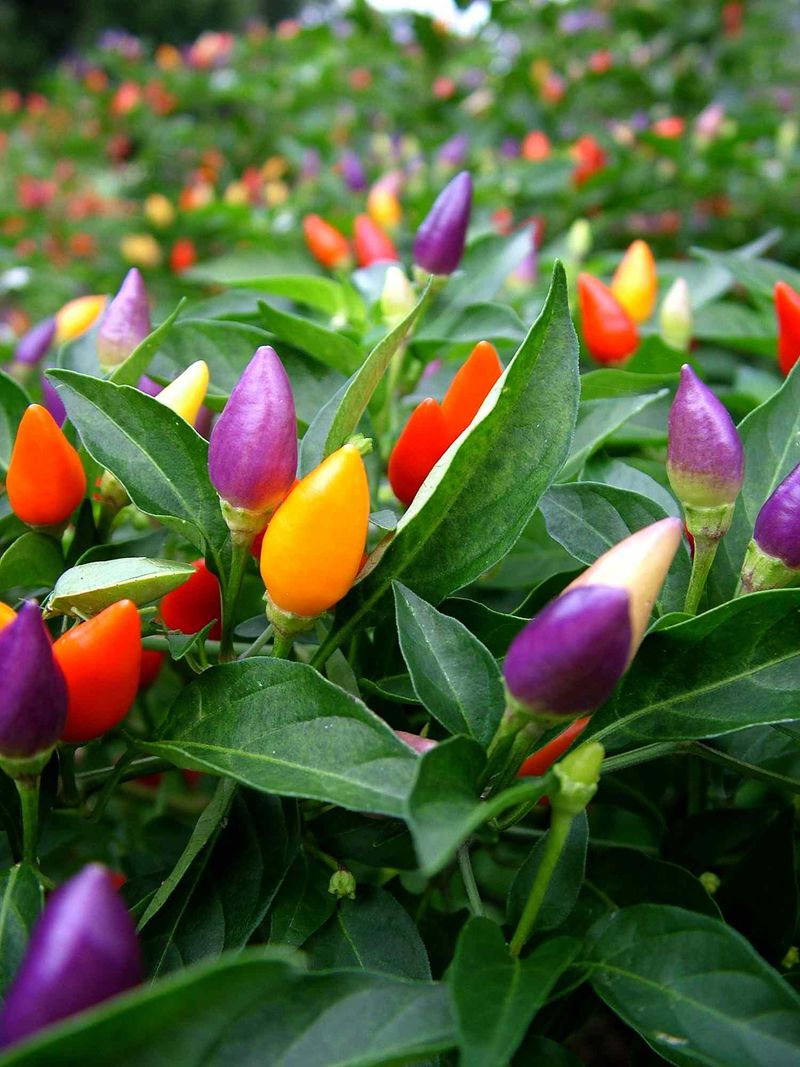
Small, glossy peppers and round pumpkins look like they were made to sit together. Ornamental peppers carry fruit in orange, red, purple, and yellow, often on the same plant.
Peppers love heat, so they shine in early fall before nights get chilly.
In Georgia, they usually look their best in September and October. Once frost arrives, the plants will not survive outdoors, so treat them as a short seasonal accent.
Group a few potted peppers on the porch steps beside pumpkins of different sizes.
Repeating orange tones ties the display together. A purple-fruited pepper can add contrast if you want a little drama.
Give them sun and keep the soil evenly moist, since stressed plants may drop fruit.
Here is a safety point worth taking seriously. Many ornamental peppers are edible, but they are often very hot, and some nursery plants may be treated with products not meant for food.
Keep them out of reach of small kids and pets who might grab a bright berry.
Wash your hands after touching broken fruit, and avoid rubbing your eyes. Simple care like that keeps the display fun rather than painful.
Pumpkins on wood can trap moisture, so a small mat underneath helps protect the boards.
6. Heuchera Foliage In Caramel And Burgundy Fills Shady Porch Pots
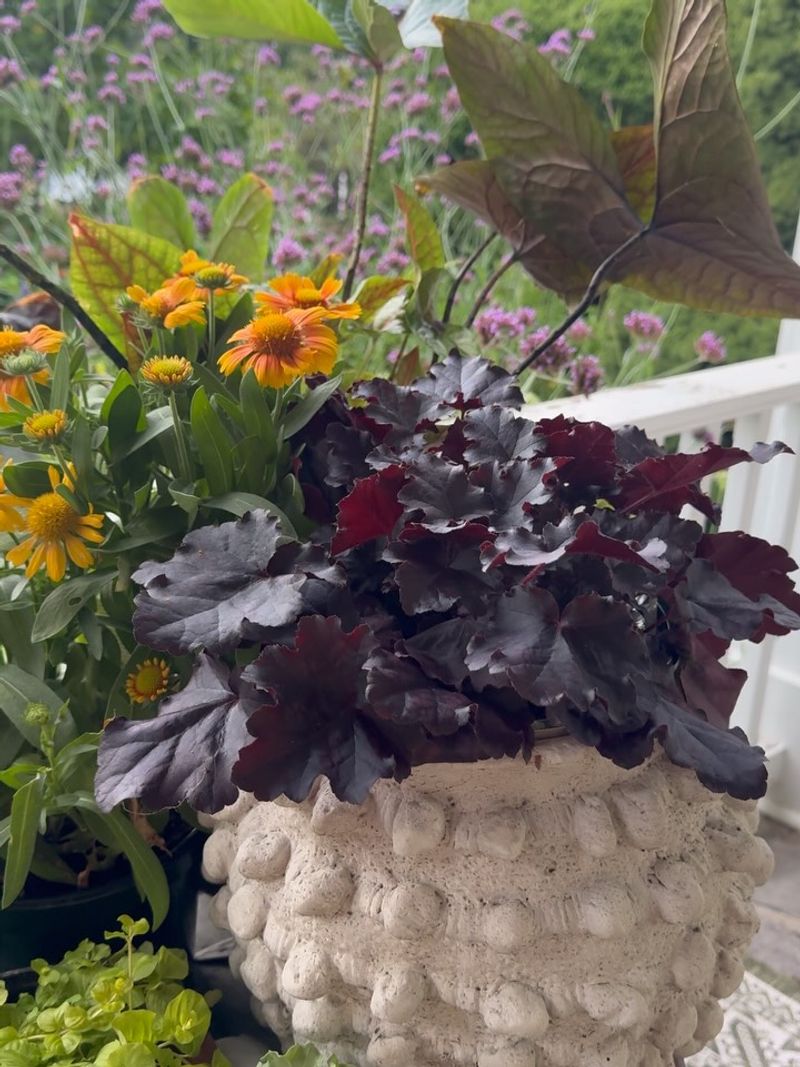
Shady porches often get stuck with plain green ferns. Heuchera, also called coral bells, brings warm leaf color that fits right in with fall.
Leaves come in shades like caramel, amber, burgundy, and near black.
Since the color comes from foliage, you do not have to wait for flowers. That makes heuchera handy for covered porches where blooming plants struggle.
Hot, humid Georgia summers can be tough on some heuchera types.
Varieties with native Heuchera villosa in their background often handle Southern heat better. Check plant tags or ask a local nursery which ones do well near you.
Drainage is the big deal here, since heuchera dislikes soggy roots.
Use a quality potting mix and a container with holes. Water when the top of the soil feels dry, not on a fixed schedule.
Try pairing a caramel heuchera with a burgundy one in the same pot.
Add a trailing plant like creeping Jenny along the edge for a bright contrast. Morning sun with afternoon shade often brings out the richest color.
Many heucheras stay semi-evergreen through mild winters, though some leaves may look worn by late winter. Trimming tattered foliage in early spring tidies the plant before new growth starts.
7. Bright Lights Swiss Chard Adds Colorful Stems You Can Also Eat
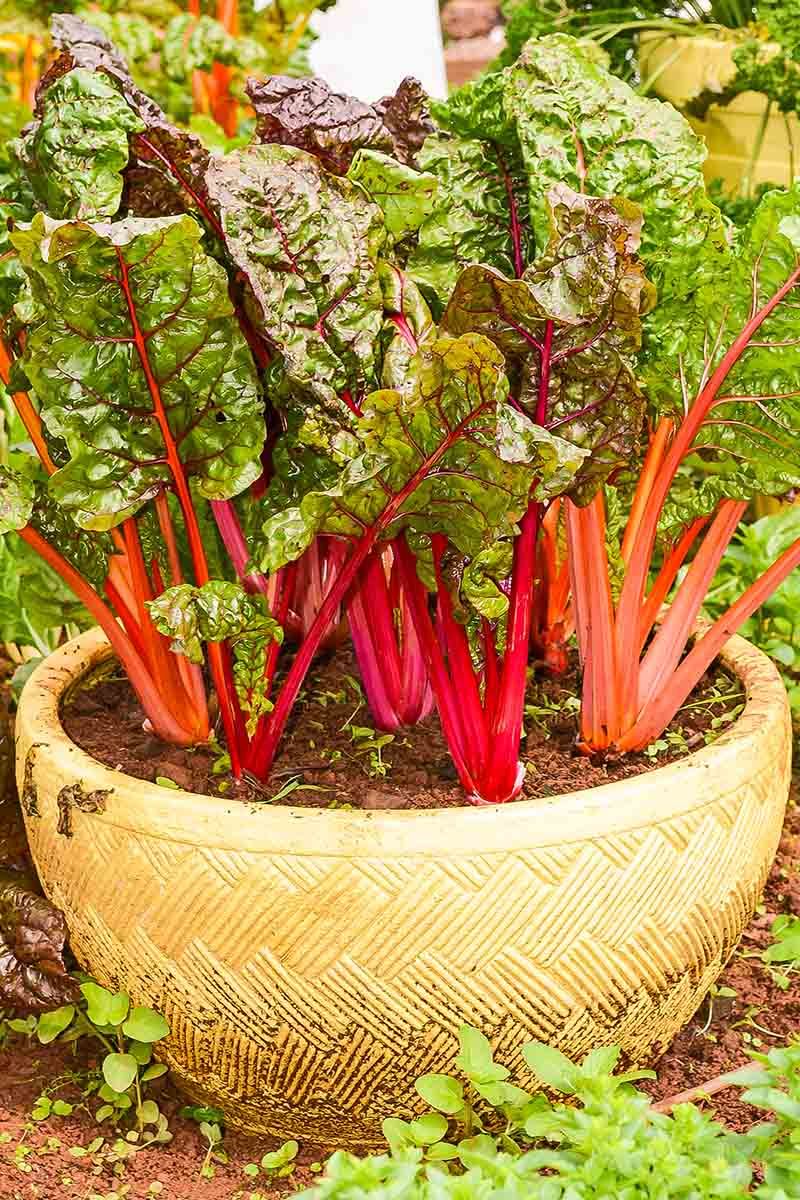
Who says porch pots must be purely for looks? Bright Lights Swiss chard offers stems in red, gold, pink, and orange, and you can cook the leaves too.
Chard grows well in cool weather and handles light frost.
Across much of Georgia, fall-planted chard can keep producing into winter. Hard freezes may damage leaves, especially in north Georgia, so expect some setbacks in colder spells.
Those glowing stems look striking when sunlight hits them from behind.
Place a pot where afternoon light shines through the stalks. Pair chard with yellow pansies or orange violas to echo the stem colors.
Harvest the outer leaves first and leave the center to keep growing. Cutting a few leaves at a time keeps the plant full instead of bare.
Give it at least several hours of sun and steady moisture.
Since you plan to eat it, choose a potting mix and fertilizer labeled safe for edibles. Skip any pest sprays not approved for vegetables.
Leaf miners and aphids sometimes show up on chard.
Remove damaged leaves and rinse aphids off with water. Those simple steps often keep small problems in check.
Young leaves taste great sauteed with garlic, so your decor can end up on the dinner table.
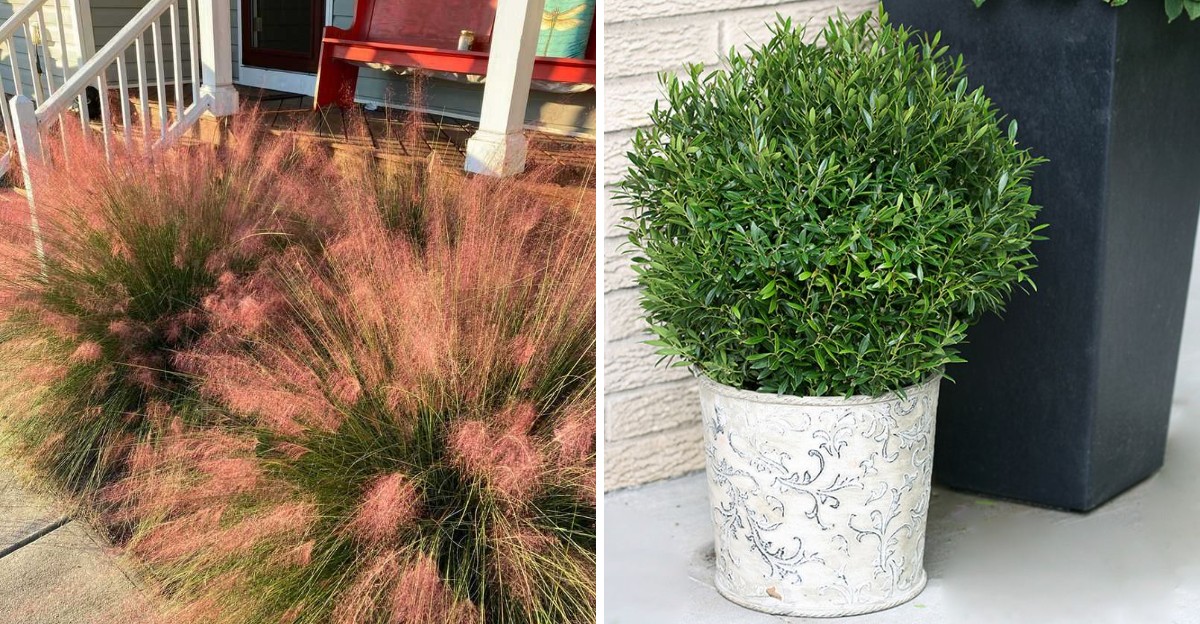
8. Potted Dwarf Yaupon Gives Containers Year-Round Evergreen Structure
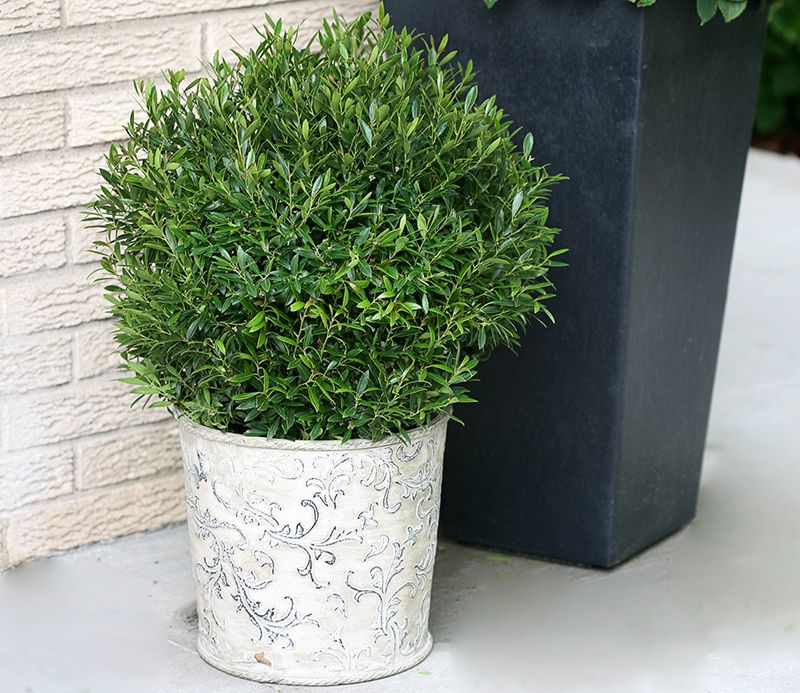
Seasonal flowers come and go, but a good evergreen anchors the whole porch. Dwarf yaupon holly forms a tidy, rounded mound of small green leaves.
Yaupon is native to the Southeast and grows well in Georgia.
It handles heat, some drought once settled, and a wide range of soils. Those traits make it a reliable pick for a large pot that stays out all year.
Common dwarf types like Schillings or Nana stay compact.
Most dwarf forms do not produce many berries, so think of this plant as structure rather than color. Its steady green shape lets bright flowers around it stand out.
Use a container big enough to hold moisture and protect roots from extreme cold. Larger pots also tip over less in wind.
Plant the yaupon in the center, then swap seasonal flowers around its base.
Pansies fit in fall, and summer annuals can replace them later. Rotating them keeps the pot fresh while the shrub stays put.
Plants in pots need more water than those in the ground, even evergreens in winter. Check soil during dry stretches, especially when cold wind pulls moisture from leaves.
Light shaping in late winter or spring keeps the mound neat without heavy pruning.
9. Cut Beautyberry Stems Add Vivid Purple Berries To Arrangements
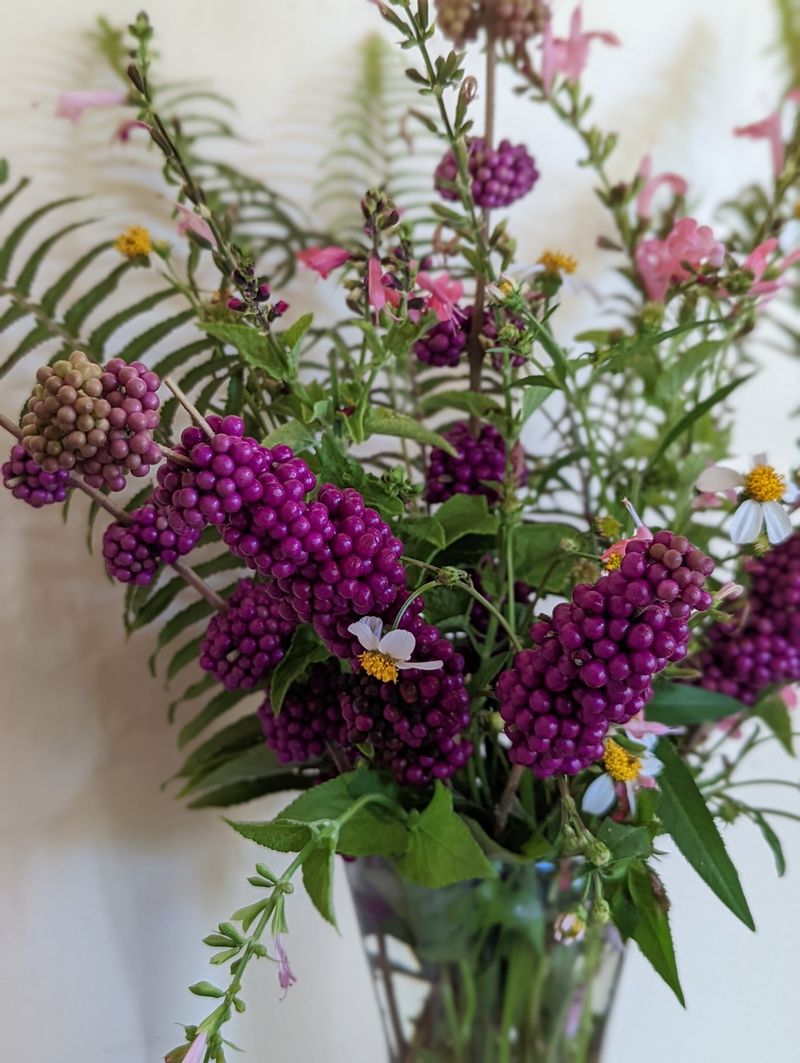
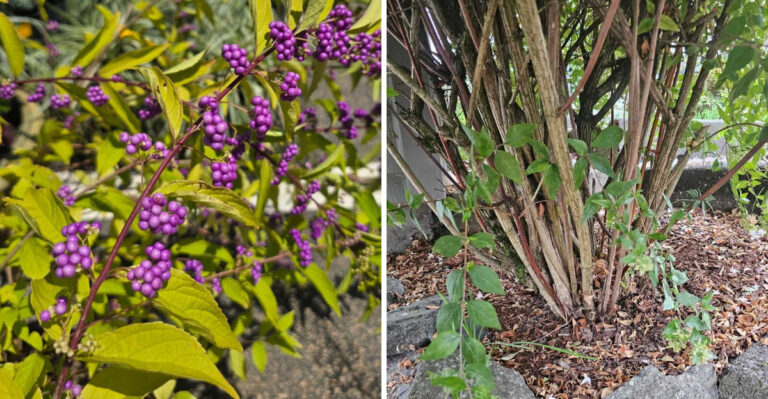
Bright purple berries in the woods often stop people in their tracks. American beautyberry is a native shrub, and its clustered fruit ripens in late summer and fall.
Cut stems make a striking porch arrangement in a crock, bucket, or vase.
The color is unusual among fall plants, so it pairs nicely with orange pumpkins or gold mums. A few stems go a long way.
Leaves on cut stems tend to wilt quickly, while berries hold up better.
Strip most of the leaves before arranging to keep things looking neat. Place stems in fresh water right away, and change the water every couple of days.
Only cut from your own plants or with permission from the landowner.
Beautyberry grows in many Georgia yards and handles sun or part shade. If you have one, pruning a few stems for decor causes little harm.
Birds eat the berries, especially later in the season, so leave plenty on the shrub.
Cut arrangements usually look good for about a week, though warm weather can shorten that. Keeping the container out of direct afternoon sun may help.
Planting a shrub this fall gives you your own supply of stems in future years.
10. Pink Muhly Grass Plumes Soften Tall Planters Near The Steps
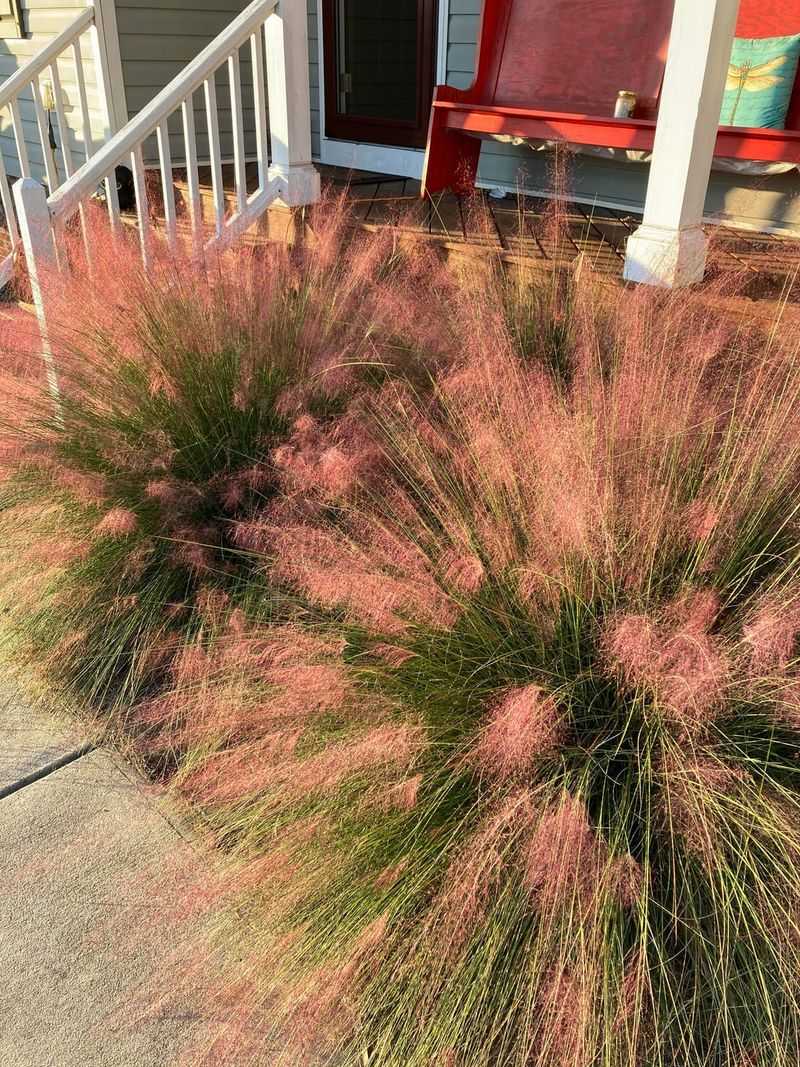
Walk past pink muhly in October and it can look like a pink cloud. Fine, airy plumes rise above the clump in fall and glow when backlit by low sun.
Muhlenbergia capillaris is native to the Southeast and grows across much of Georgia.
It prefers full sun and well-drained soil. In heavy shade, plumes may be sparse or missing altogether.
Tall planters near the steps let the soft texture sit at eye level.
Its loose shape balances the stiff lines of railings and stairs. Pair it with dark foliage or orange pumpkins to make the pink pop.
Pots must drain well, since soggy roots can cause rot.
Once established, muhly tolerates dry spells, but container plants still need regular watering. Check more often during hot, windy weeks.
Plumes typically last several weeks before turning tan.
Many people leave the faded tan clumps up through winter for texture. Cut the grass back in late winter before new growth appears.
Larger pots give roots more room and help the clump overwinter.
In tight spaces, consider moving the grass into a garden bed after a season or two, where it can spread and look even fuller.