Black Spots All Over Your Ohio Maple Leaves? It May Be Tar Spot
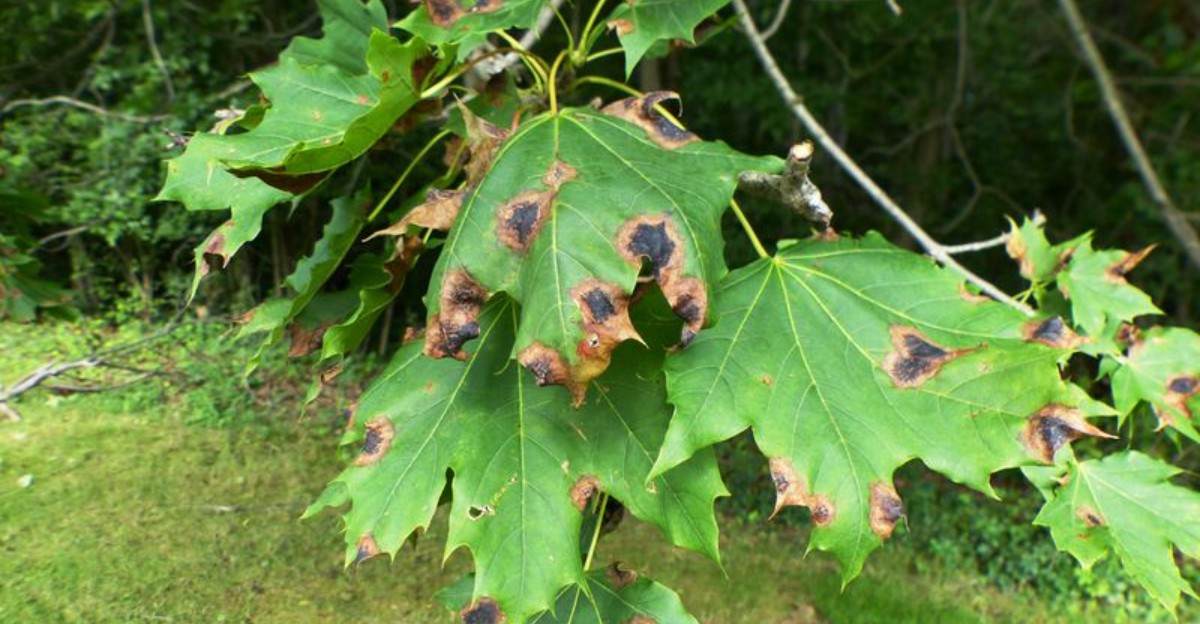
Those shiny black blotches on your tree leaves this fall actually started as an infection back in spring. Tiny spores landed on young leaves in April or May, then quietly grew inside the tissue all summer.
The marks can look like someone splashed road tar across the yard, which is how the problem got its nickname. I find it reassuring that the raised spots rarely cause lasting harm to a healthy, established shade tree.
The fungus behind them spends winter tucked inside the fallen leaves piled under your branches right now. Across Ohio, extension experts point to those leaf piles as the starting point for next spring’s new spots.
You need to flip over one of those speckled leaves on your Ohio lawn and look closely. Have you noticed how each black patch feels slightly raised and bumpy under your fingertip?
Those Inky Blotches Come From A Common Leaf Fungus
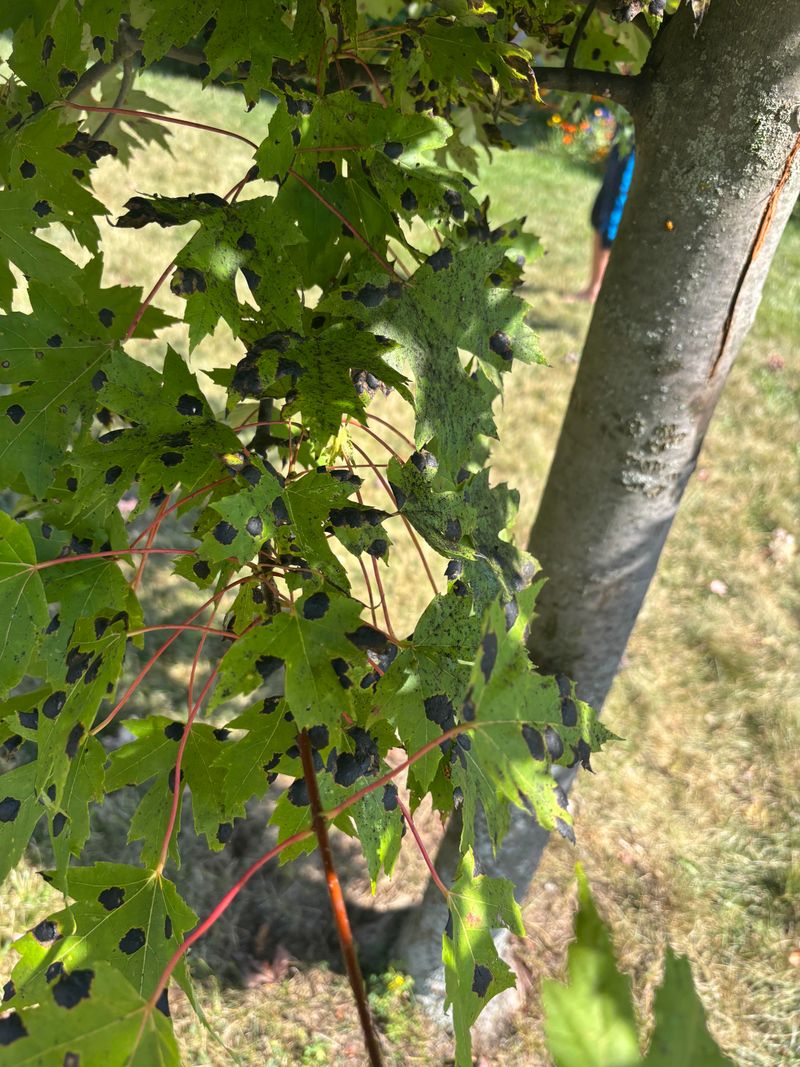
Most of the time, those glossy black spots on Ohio maples point to a fungal disease called tar spot. Fungi in the genus Rhytisma cause it, and several species can show up on different kinds of maple trees.
Rhytisma acerinum mostly targets Norway maples, which were planted along many Ohio streets in past decades. Native red and silver maples tend to get smaller speckles from related species such as Rhytisma punctatum.
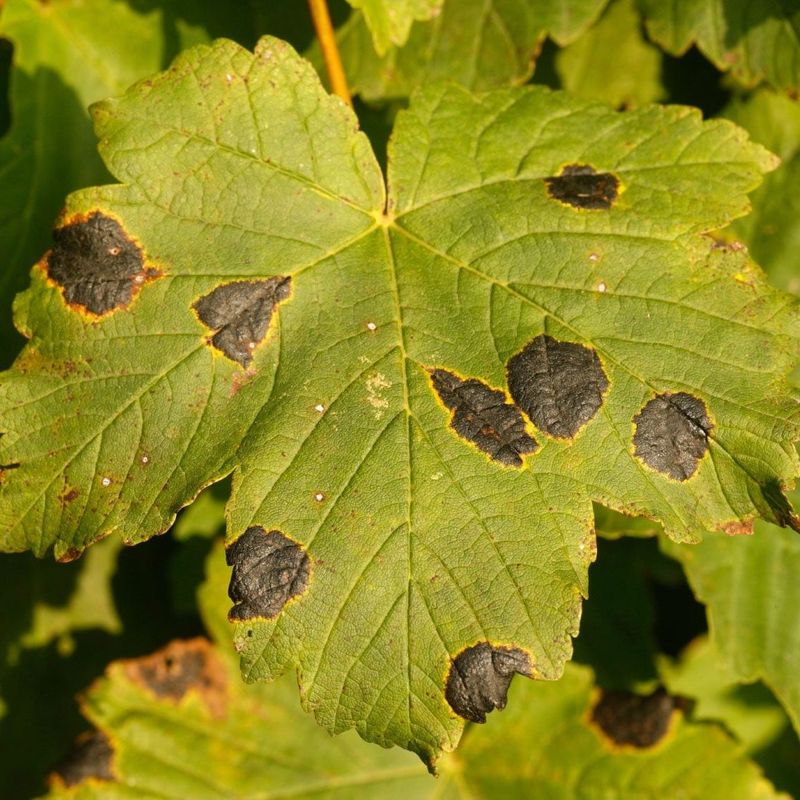
The larger spots on Norway maples can reach about half an inch to three quarters of an inch across. Each one often has a thin yellow ring around the edge, which makes the black center stand out even more.
Those raised patches are not paint or soot, even though their glossy black surface can look wet or smeared. They are fungal structures called stromata, and they hold the spores that will carry the disease into next year.
Many homeowners first notice tar spot in October, when leaves start dropping and the spots suddenly seem everywhere. The disease was there for months, though, building slowly until the black layer formed in late summer.
Ohio State University Extension and other Midwest programs describe tar spot as mostly a cosmetic problem for trees. Heavy cases can make leaves drop a little early, but the tree usually keeps growing normally the following year.
So if your yard looks speckled right now, you are seeing the final stage of a long seasonal cycle. Knowing that cycle helps you make smart choices about cleanup instead of worrying about the health of your tree.
Your Tree Caught It Back In The Spring
Spring weather sets the whole thing in motion, long before anyone notices a single black mark on the leaves. As new leaves unfold in April and May, spores shoot out of last year’s fallen leaves on the ground.
Wind and splashing rain carry those spores up to the tender young foliage, where they settle in and begin growing. Cool, wet springs give the fungus the best chance, so infection levels can change a bit from year to year.
Your Ohio Garden Changes Every Week. Your Plan Should Too.
Gardening in Ohio changes quickly throughout the season. Every Friday you’ll receive a simple weekly plan showing exactly what to plant, prune, fertilize, harvest, and protect so you never miss the right timing.
By early summer, you might spot pale yellow-green areas on the leaves if you look carefully in good light. Those faint patches are easy to miss, and most people walk right past them without a second thought.
In July and August, small black dots appear inside the yellow areas and slowly merge into larger raised spots. By late summer the tar-like look is in full swing, and it stays visible until the leaves fall.
That timing explains a lot of confusion, because the infection you see now really happened about six months ago. Spraying anything in October will not change the spots already on the leaves, so please save your money.
Fall is still an important season in this story, but for a different reason than most people expect. The fungus keeps maturing inside fallen leaves through winter, getting its spores ready for the next spring release.
A rainy April in Ohio often leads to a heavier crop of black spots by the following autumn. Jotting down spring weather in a garden notebook can help you connect those dots, both literally and figuratively.
A Few Lookalikes Deserve A Closer Look
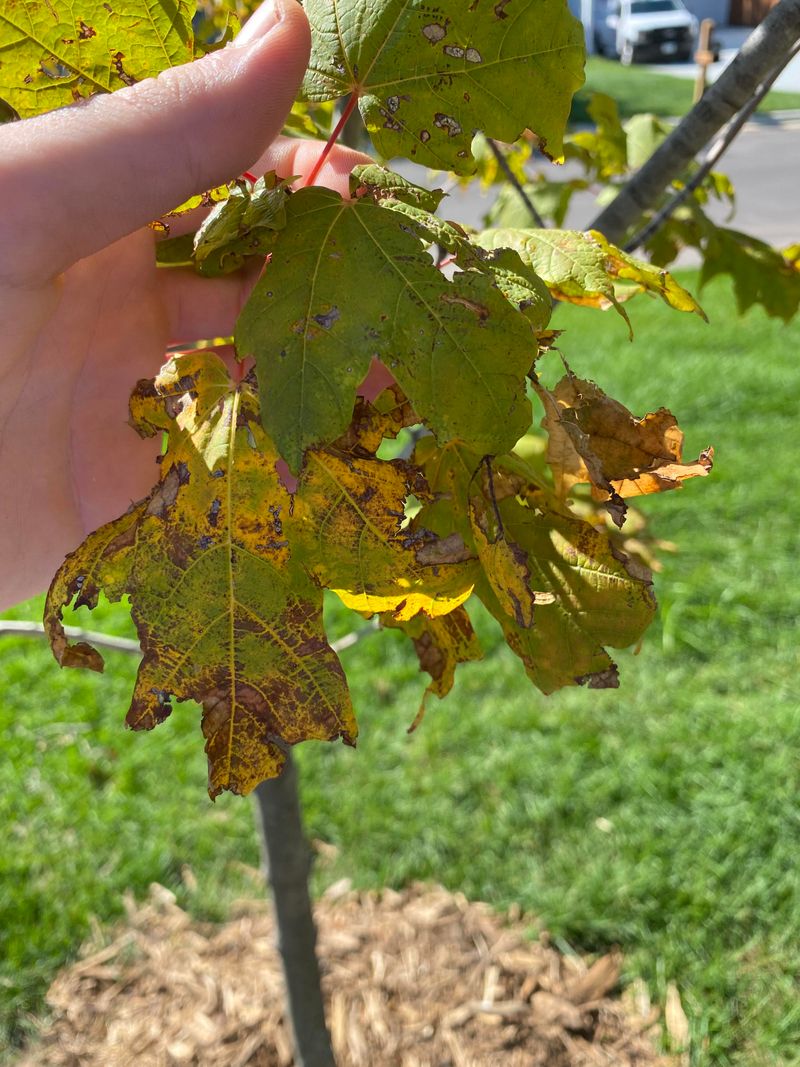
Before you blame tar spot for every dark mark, take a minute to compare what you see with other problems. A few maple issues create dark leaf spots too, and they call for slightly different responses from you.
Anthracnose is a frequent suspect, and it usually causes brown or tan blotches that follow the veins of the leaf. Those patches look flat and dry, not raised and glossy like the thick black crust of tar spot.
Sooty mold is another lookalike, and it forms a dusty black film that sits on top of the leaf. It grows on sticky honeydew from insects like aphids or scale, and you can wipe it off with a finger.
Tar spot will not wipe away, because the black layer is part of the leaf tissue itself. That simple rub test is one of the fastest ways to tell these two problems apart in your yard.
Leaf scorch can also brown the edges of maple leaves after a hot, dry summer with little rain. Scorch usually starts at the margins and moves inward, while tar spot shows up as round islands inside the leaf.
Snapping a clear photo of both sides of a leaf can help if you still feel unsure. Many county offices of Ohio State University Extension accept photos or samples and can help confirm what you have.
Getting the right answer matters, because each problem points to a different cleanup or care plan for your tree. A five-minute check now can save you from buying products that will not help at all.
Fallen Leaves Hold The Key To Control
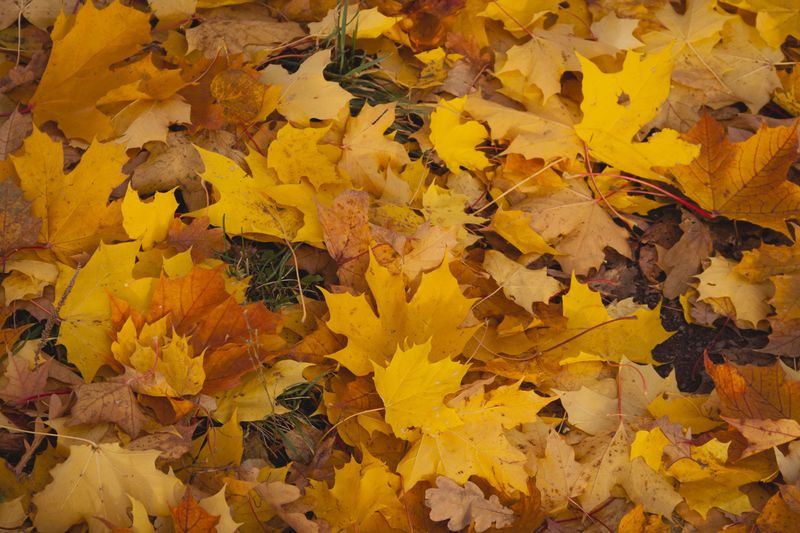
Raking might sound too simple to work, yet it is the main control method most extension experts recommend. Removing infected leaves this fall cuts down the spores that could reinfect your tree next spring.
Try to rake often during October and November, before wet leaves mat down and become harder to gather. Pay extra attention to flower beds, fence lines, and corners where blown leaves tend to collect in thick piles.
Bagging the leaves for yard waste pickup is a solid choice in towns that offer fall collection. Many Ohio cities run curbside leaf programs each autumn, so check your local schedule before the last pickup date.
Composting works too, as long as the pile heats up well and the leaves break down over winter. Shredding leaves with a mower first speeds up decay and helps the fungus lose its hold on the tissue.
Some gardeners prefer to bury shredded leaves under a layer of mulch, which also keeps spores from launching easily. Open leaf burning is restricted in many Ohio communities, so check local rules and stick with raking, bagging, or composting.
Fungicides are rarely needed for tar spot on yard trees, according to most university plant disease specialists. Any spray would have to go on in spring as buds open, and tall trees make that tough to do.
Your neighbors’ trees can still send spores your way, so cleanup reduces tar spot without stopping it fully. Sharing a rake day with the folks next door can make a bigger difference for the whole street.
Your Maple Will Most Likely Bounce Back
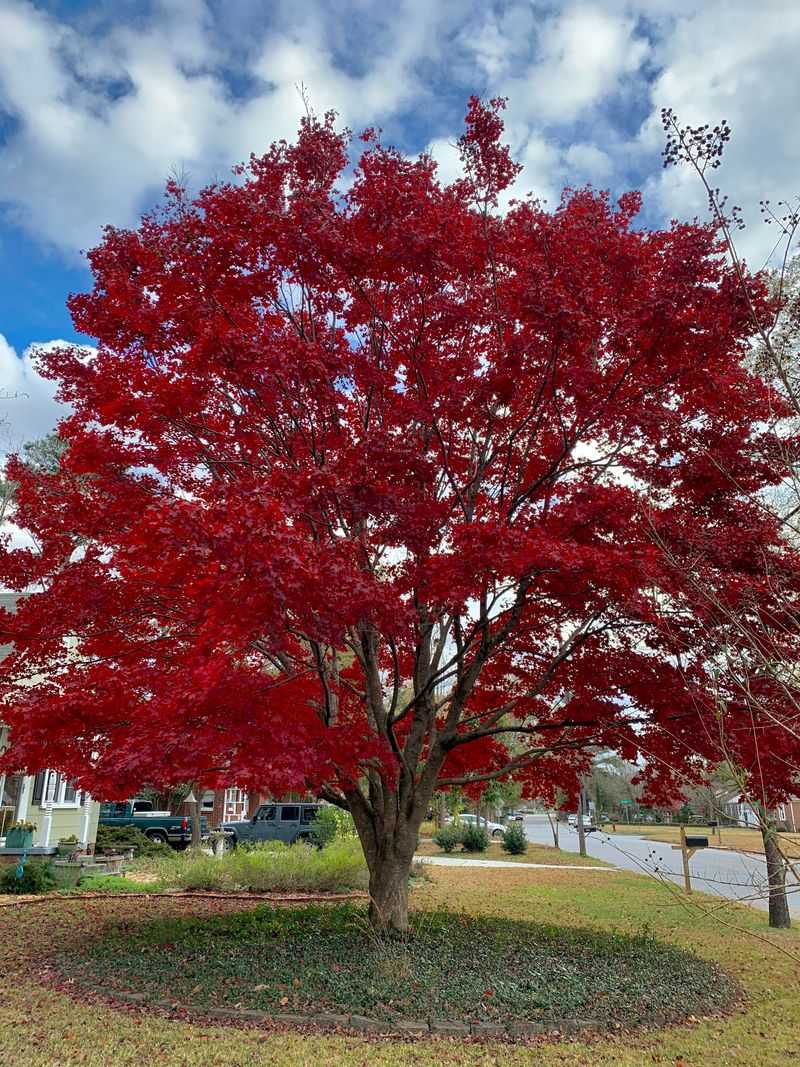
Take a deep breath, because a maple covered in black spots is usually much tougher than it looks this month. Trees finish most of their food making by early fall, so losing spotted leaves now costs them very little.
Even heavily spotted leaves keep doing their job for most of the summer before the black stromata fully develop. That is a big reason university specialists label tar spot a cosmetic disease rather than a serious threat.
Early leaf drop can happen in bad years, and a yard full of fallen leaves in September may look alarming. Healthy maples handle that loss well and push out fresh, clean leaves when spring arrives the next year.
Trouble can build when a tree already struggles with drought, root damage, compacted soil, or other ongoing stress. Several years of heavy leaf spotting on a weak tree may add to that stress and slow its growth.
Scientists are still studying how much repeated tar spot infections affect long-term tree health, so some uncertainty remains. For now, most experts agree that basic care matters more than worrying about the spots themselves.
Deep watering during fall dry spells helps roots stay strong as the tree heads toward winter dormancy. A ring of mulch two to three inches deep, kept away from the trunk, also protects roots.
If large branches look bare in summer or the canopy thins year after year, call a certified arborist. Those signs point to a deeper issue than tar spot and deserve a professional look before problems grow.
Next Spring Starts With A Tidy Yard This Fall
Planning ahead this fall can make next year’s leaves look a lot cleaner, especially on trees that get hit often. Start by choosing a regular cleanup routine, since steady raking works better than one big push in December.
Good airflow also helps, because leaves that dry quickly after rain give spores less time to settle in. An arborist can thin crowded branches during winter dormancy, which is a common time for maple pruning work.
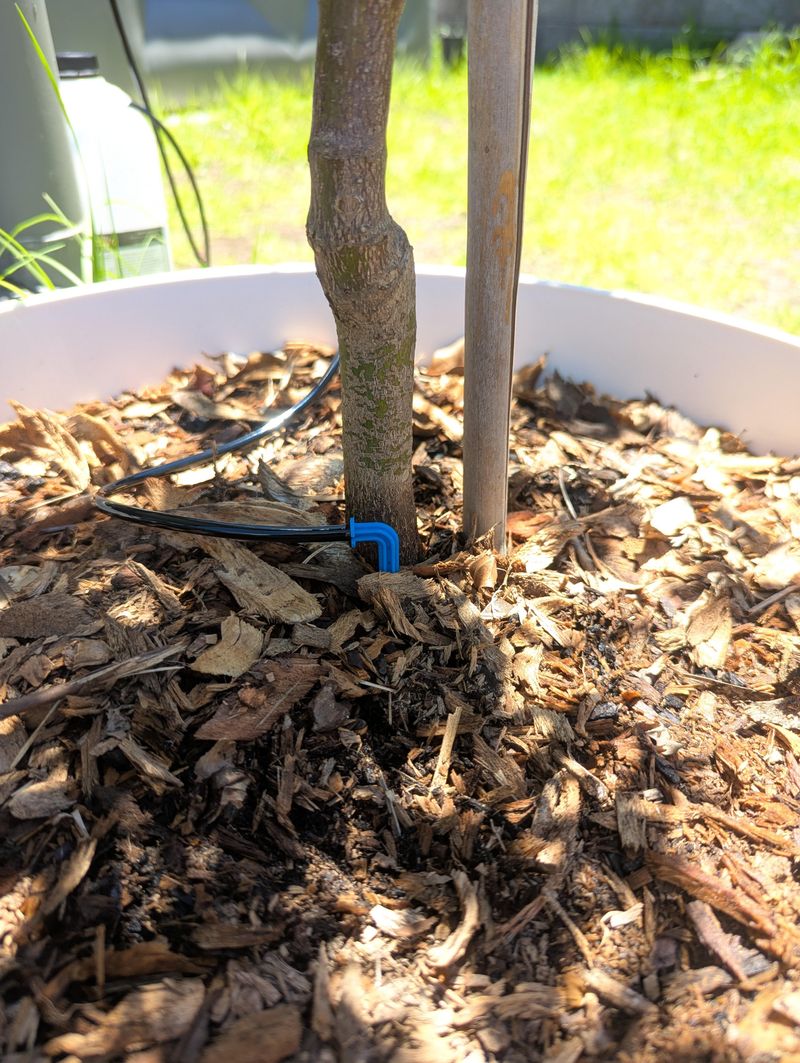
Watering at the base of young trees, instead of spraying the leaves with sprinklers, keeps the canopy drier. That small change matters most in spring, when wet leaves give the fungus its best chance to spread.
Fall is also prime planting season in Ohio, so it is a fine time to think about tree variety. Norway maples tend to get the heaviest tar spot, and they also spread aggressively into Ohio woodlands.
Mixing in native trees like oaks, hickories, tuliptrees, or serviceberries adds variety and lowers the impact of one disease. A yard with many kinds of trees rarely looks spotted from end to end in any single season.
Keep notes each October on how spotted your maples look, along with how wet the previous spring was. Over a few years, those notes show whether your cleanup is helping or whether weather is the bigger factor.
Tar spot may return in some form, but steady habits can keep it a minor fall curiosity in your yard. Grab that rake this weekend, and you will give next spring’s leaves a cleaner, brighter start.