The One Thing You Must Do To Ohio Black-Eyed Susans In July For Stronger Plants

Black-Eyed Susans in a July Ohio garden are a genuine mood booster. Bold yellow blooms, reliable color, pollinators showing up like they got a personal invitation: it is one of the better summer combinations going.
But July also has a way of making those same plants look a little less glamorous than they did a few weeks ago. Crowded clumps, spotted lower leaves, stems leaning into each other like they are too tired to stand up straight.
Sound familiar? The culprit is almost always the same: warm days, humid Ohio nights, and not enough airflow moving through dense plantings.
Here’s the reassuring part though: the fix is not dramatic. No heavy cutting, no extra fertilizer, no starting over.
Just a few targeted adjustments that give your plants more room to breathe and keep the blooms coming strong.
1. Improve Airflow Around Crowded Plants

By July, a thick patch of Black-Eyed Susans can look cheerful from the sidewalk while hiding crowded growth near the soil.
Ohio’s humid midsummer weather can keep lower leaves damp after rain, sprinklers, or heavy morning dew, especially when stems are packed tightly together.
That is why improving airflow is the most accurate “stronger plants” task for this topic. Start by looking inside the clump, not just at the yellow flowers.
If stems are pressed together, leaning into neighboring perennials, or trapping spotted leaves near the base, remove a few weak or crowded stems close to the ground with clean pruners. Keep the cleanup selective.
Black-Eyed Susans still need plenty of healthy leaves to fuel summer growth and flowering. The goal is not to make the plant look thin, but to create small openings where air can move through the foliage.
This is especially helpful in mixed Ohio borders where bee balm, coneflowers, grasses, or shrubs may be growing close by. A little space around the plant can reduce lingering moisture, make watering easier, and help the clump hold a cleaner shape.
After thinning, gather the clippings instead of leaving them under the plant. The bed will look neater, and the remaining stems should have more room to stand well.
2. Remove Spotted Lower Leaves Carefully

Spotted lower leaves are a familiar midsummer sight on Black-Eyed Susans, and they often show up first where foliage is shaded, crowded, or splashed by water.
In Ohio gardens, July humidity can make those lower leaves look rough even when the plant is still blooming well.
A careful cleanup can help the clump look fresher and reduce messy plant material near the crown. Use clean scissors or pruners, then remove only the worst leaves – the ones that are heavily marked, yellowing, or lying against damp mulch.
Avoid stripping every stem from bottom to top. The plant needs healthy foliage to keep growing, so think of this as tidying, not renovating.
It also helps to water at the soil level afterward rather than spraying the foliage again. Place removed leaves in yard waste rather than dropping them under the plant, especially if the leaves show a lot of spotting.
Your Ohio Garden Changes Every Week. Your Plan Should Too.
Gardening in Ohio changes quickly throughout the season. Every Friday you’ll receive a simple weekly plan showing exactly what to plant, prune, fertilize, harvest, and protect so you never miss the right timing.
This simple habit works best when paired with better spacing and airflow. If the plant is badly crowded, leaf cleanup alone will not solve the underlying problem.
Still, a few minutes of careful July trimming can make a sunny border look more cared for and help the remaining leaves dry more quickly after rain or watering. It also makes future spotting easier to notice before the whole clump looks messy.
3. Give Clumps Room To Breathe

A Black-Eyed Susan clump often expands quietly until it becomes much wider than the space you planned for it.
That can be a good problem in a sunny Ohio border, because it means the plant is settling in, but packed growth can make the center less sturdy by July.
Give the clump room to breathe by checking what is touching it on all sides. Nearby perennials may be leaning over the stems.
Seedlings may be filling the front edge of the bed. Mulch, weeds, or low branches may be closing in around the base.
Pull small volunteer plants where they are not wanted, trim nearby growth lightly, and keep a few inches of open space around the main clump.
If stems are flopping over a walkway, use a discreet support ring or a few stakes with soft ties rather than cutting the whole plant back hard.
This keeps the flowers visible while reducing crowding. Room also helps sunlight reach more of the foliage, which can encourage better shape and stronger-looking growth.
In small beds, one large clump may be enough. In bigger borders, repeated groups look better when each group has space instead of merging into one tangled patch.
That spacing also makes it easier to inspect leaves, water neatly, and remove spent blooms.
4. Water At The Base During Dry Weather
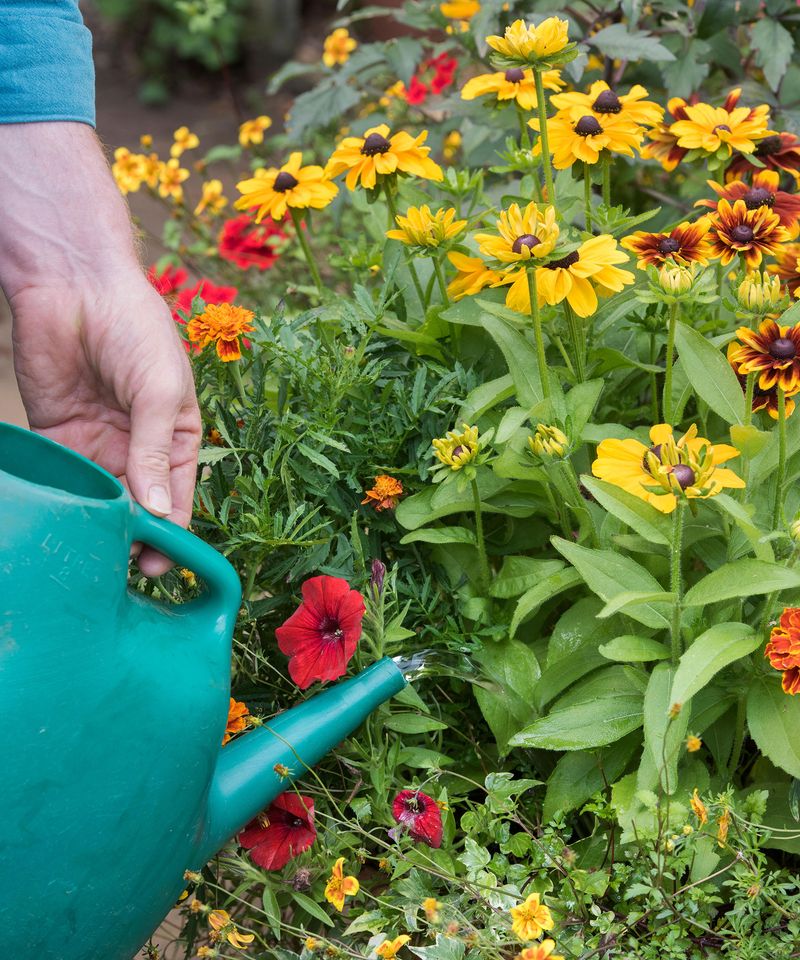
Dry July weather can make Black-Eyed Susans look tired by afternoon, especially in beds near pavement, brick walls, or reflected heat.
These plants can handle average garden conditions once established, but they still benefit from thoughtful watering during long dry stretches.
The key is to water at the base, where the roots can use it, instead of showering the entire plant. A watering wand, drip line, or soaker hose lets moisture soak into the soil while keeping the leaves drier.
That matters in humid Ohio summers, because wet foliage can stay damp longer inside crowded clumps. Before watering, check the soil with your finger a couple of inches down.
If it still feels moist, wait. If it feels dry, water slowly so it sinks in rather than running across the mulch.
Morning is usually the most practical time, since plants have moisture available before the hottest part of the day. Avoid quick daily sprinkles that only wet the surface.
Deeper watering, when the soil needs it, supports roots more effectively. In containers or raised beds, check more often, because they can dry faster than in-ground plantings during sunny, breezy weather.
A slow soak also helps nearby companion plants without creating a humid spray over the border. It is simple, but it makes the whole clump easier to manage.
5. Keep Soil Moisture More Even

Uneven moisture can make a midsummer perennial bed harder to manage than it needs to be. Black-Eyed Susans often tolerate some dryness once they are established, but repeated swings between very dry soil and soggy soil can leave plants looking less steady.
In Ohio, that pattern can happen when thunderstorms are followed by hot, bright days, or when gardeners water lightly every evening without checking the soil first. Aim for a more even rhythm.
A modest layer of mulch helps shade the soil and slow evaporation, but keep it pulled back slightly from the crown so the base of the plant is not buried. During dry spells, water deeply enough to moisten the root zone.
Then let the soil begin to dry before watering again. Heavy clay soil may need slower watering so moisture can soak in.
Sandy or raised beds may need attention sooner. If leaves wilt briefly in the hottest sun but recover by evening, the plant may simply be responding to heat.
If the soil is dry several inches down, it is time to water. Even moisture helps Black-Eyed Susans hold their shape, keep blooming, and move through July with less visible stress.
It also keeps gardeners from overcorrecting with constant shallow watering. That steadier approach supports July care without turning the bed into a daily chore.
6. Avoid Overfeeding Leafy Growth
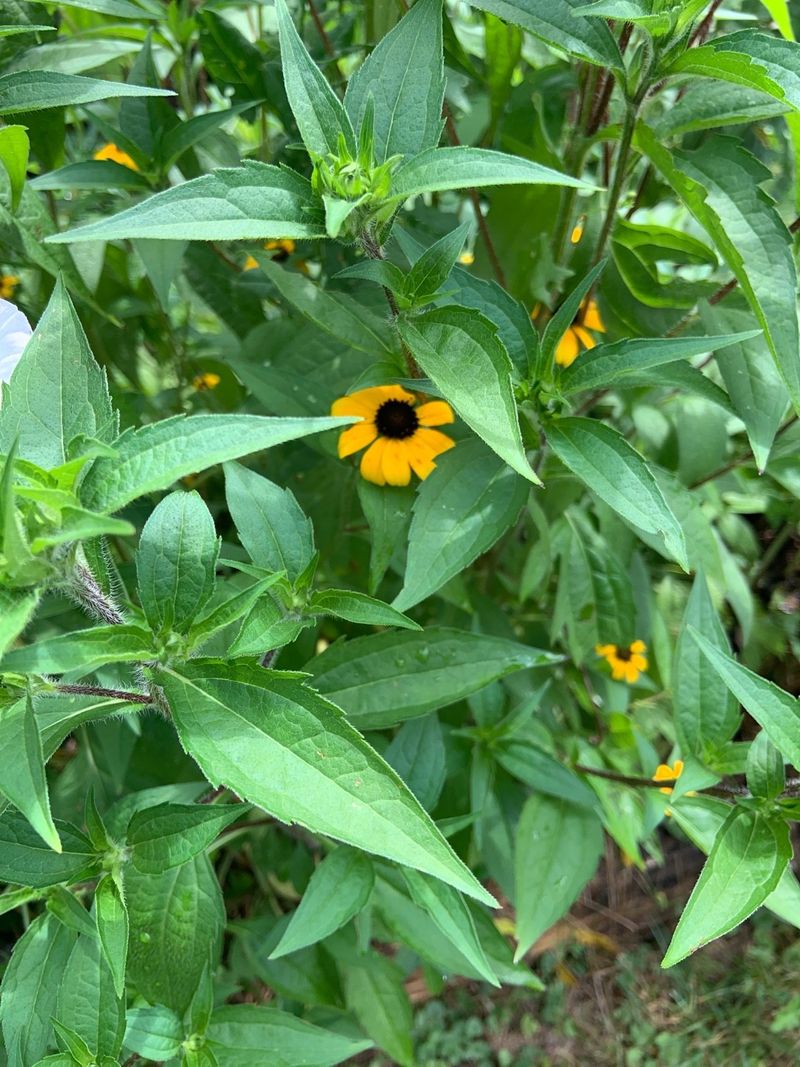
Fertilizer is not the first fix for Black-Eyed Susans that look weak, floppy, or crowded in July. In many Ohio home gardens, these perennials grow well in average soil, and too much nitrogen can encourage soft leafy growth that bends more easily.
Before feeding, look at the basics. Is the plant getting enough sun?
Is it packed against other perennials? Is the soil staying too wet near the crown?
Is the clump overdue for dividing? Those questions often explain the problem better than a lack of plant food.
If the bed already receives compost each year, the plants may have enough nutrients for steady growth. A soil test is the most reliable way to know what the garden actually needs.
If you choose to fertilize, use a light hand and follow the product label. Avoid pushing fast growth during humid midsummer weather, when dense foliage already struggles to dry quickly.
Stronger plants usually come from balanced conditions – sun, air movement, reasonable moisture, and enough space. Feeding may have a place in poor soil, but it should not replace good planting habits.
For many Black-Eyed Susans, less fuss leads to better form and fewer heavy stems leaning across neighbors. Compost used lightly around the bed is usually gentler than repeated high-nitrogen feeding.
7. Cut Spent Blooms For A Tidier Plant

Faded flowers can make a July planting look older than it really is. Black-Eyed Susans often keep producing buds while earlier blooms lose their bright petals, so cutting spent blooms is useful when you want a cleaner, longer-looking display.
Use small pruners or scissors and follow each faded flower stem down to a healthy leaf or side shoot. Make the cut there instead of clipping only the flower head, which can leave a stubby look.
This kind of light grooming can encourage additional bloom and keeps the plant from putting all its energy into seed production right away.
It is not the main “stronger plants” task, but it supports a neater clump when combined with airflow, base watering, and good spacing.
In Ohio cottage gardens and sunny borders, one quick pass every week or so is usually more realistic than trying to catch every fading bloom immediately. Remove stems that are bent into paths or resting on nearby plants first.
Leave strong, healthy stems alone if they still have fresh flowers or buds. The plant should look natural after cutting, not clipped into a tight ball.
A little restraint keeps the summer texture intact and preserves food for pollinators visiting fresh blooms. It also helps the front of the border look cared for without removing useful green growth.
8. Leave Some Seed Heads Later For Birds

Late-season seed heads are one reason many gardeners keep Black-Eyed Susans in sunny Ohio borders even after the main flower show slows. The dark center cones add texture, and birds may visit them for seeds as summer shifts toward fall.
That does not mean every spent flower has to stay in place through July. A balanced approach works better for most home gardens.
Cut some faded blooms now to keep the plant tidy and encourage more flowers, then allow a few sturdy stems to remain later in the season. Choose seed heads that stand upright and are not crowding the center of the clump.
This keeps the bed from looking neglected while still leaving something useful for wildlife. If you garden in a very formal front bed, leave fewer seed heads and focus on the back or middle of the planting.
If you enjoy a more natural style, you can leave more of them for structure. Black-Eyed Susans may also reseed where conditions suit them, so remove extras if you do not want seedlings in nearby paths or small beds.
The point is to manage the plant with intention, not cut everything or leave everything. This gives you summer color and later-season interest in the same planting.
In mixed beds, those upright cones can pair nicely with asters and grasses.
9. Divide Crowded Clumps In Spring Or Fall

July is a useful time to notice crowding, but it is usually not the best time to dig up Black-Eyed Susans and divide them. The plants are often blooming, temperatures are high, and dry weather can make transplanting more stressful for both the plant and the gardener.
Instead, use July as your planning window. Look for clumps that have become too wide, have tangled centers, produce fewer flowers in the middle, or crowd neighboring plants.
Take a photo or add a garden marker so you remember which clumps need attention later. Spring or fall is generally a better time to divide established perennials because cooler weather gives divisions a gentler start.
When that season comes, lift the clump with a garden fork, separate healthy sections with roots attached, and replant them with enough spacing for future growth. Water them in well and mulch lightly, keeping mulch away from the crown.
Division is not needed on a strict schedule, but it can refresh an overcrowded planting and restore better spacing. In an Ohio garden, that extra room helps airflow, light, and stem strength, which is exactly what crowded July plants often need.
It also gives you extra plants for bare sunny spots elsewhere. Make notes now, then do the heavier work when cooler weather makes recovery easier.