The Meaning Behind Seeing Hummingbirds In Your Ohio Yard This August
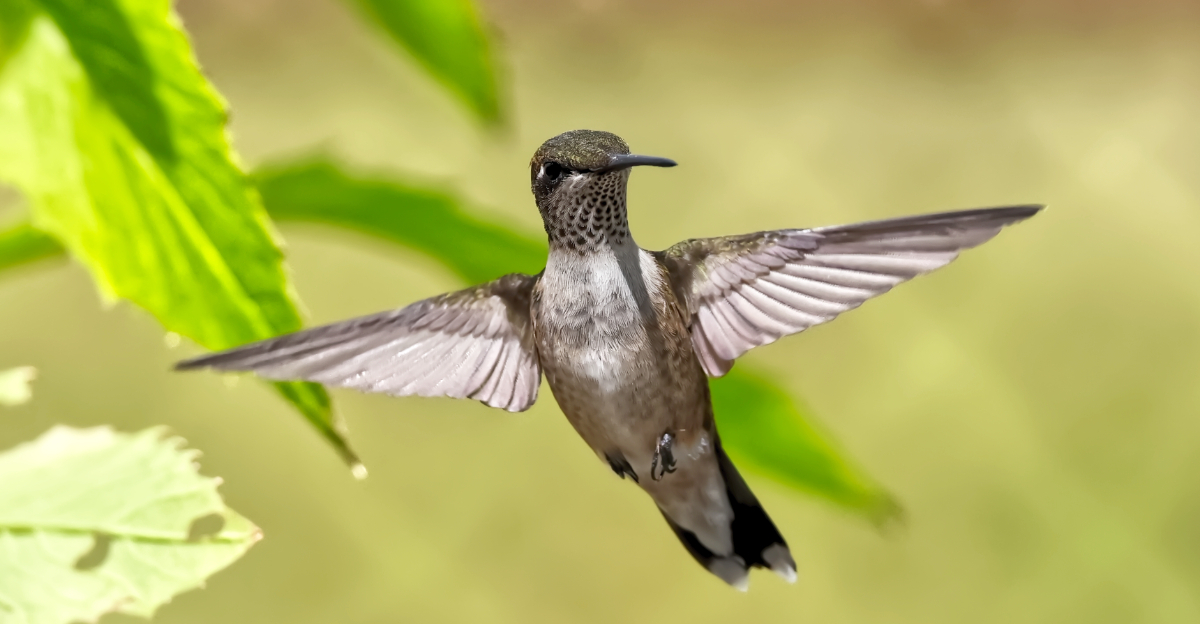
A hummingbird in an Ohio yard in August stops people mid-sentence. That hovering precision, the iridescent flash, the impossible speed.
August sightings carry a weight that June and July visits do not. Most Ohio residents never stop to ask why.
August hummingbirds are on a biological schedule. August accelerates it.
Every sighting this month is more significant than it appears. What a hummingbird visiting your Ohio yard in August is actually doing says something real.
The plants growing there, the habitat they created, the food sources available right now. All of it factored into why that bird stopped.
The timing and the behavior behind an August sighting is worth understanding fully. It changes how the yard gets looked at for the rest of the season.
1. Read The Visit As A Late Summer Fuel Stop
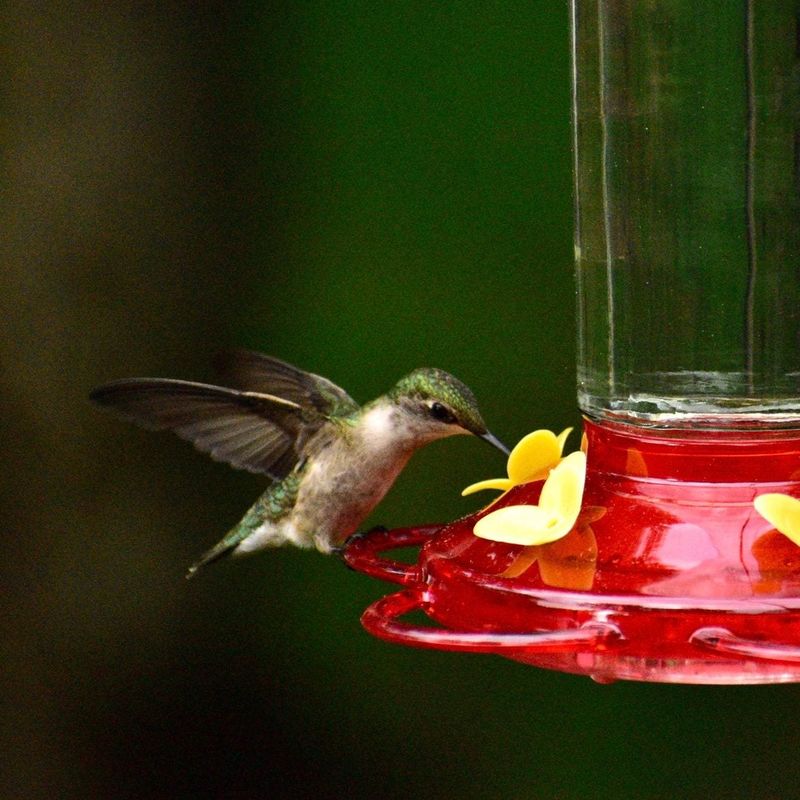
A green blur pausing at your Ohio feeder or flower patch is not a random event. When a hummingbird shows up in your yard during August, it may be reading your space as a reliable fuel source.
Cornell Lab of Ornithology resources explain that hummingbirds rely on nectar and small insects. Both help meet their high energy needs as late summer approaches.
Nectar provides quick carbohydrate energy, while tiny insects and spiders supply protein and fat. A yard that offers both can be genuinely useful to a bird that burns through calories at a remarkable rate.
Noticing which flowers or feeders the bird visits most can tell you a lot about what your space is providing.
Keep a simple sighting note, just a date, time, and location. This can help you track whether the same bird returns or whether different individuals are passing through.
Watch whether the bird lingers near cover, perches on a thin branch, or moves quickly between flowers. One visit does not prove the yard is perfect habitat, but it can suggest the space has something worth stopping for.
That is a hopeful and practical starting point for any backyard gardener.
2. Know Ruby Throats Are Getting Ready To Move
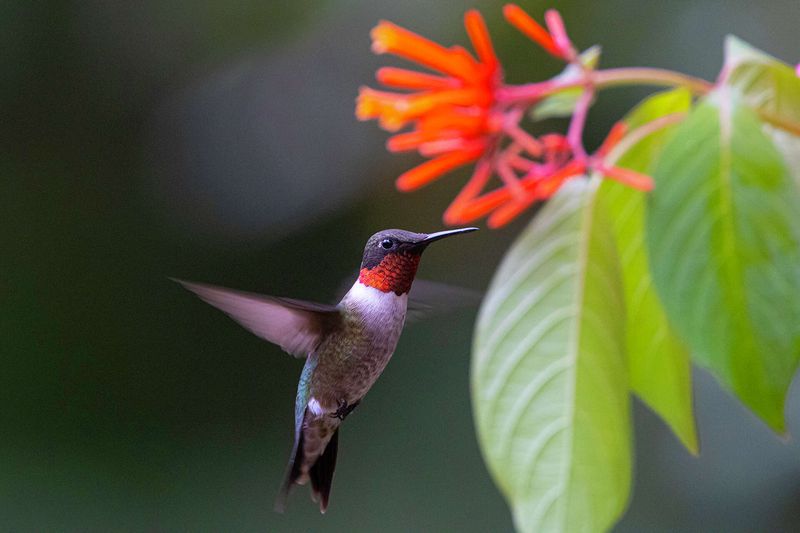
August in Ohio is not a quiet month for ruby-throated hummingbirds. Archilochus colubris is the species most homeowners in this region are expected to encounter.
Late summer can bring breeding adults, young birds from this season, and individuals already shifting toward migration.
Cornell Lab resources and Audubon guidance note that ruby-throated hummingbirds begin moving south through the eastern United States in late summer. Timing varies by individual, weather, and food availability.
Not every August bird is leaving immediately. Some adults may still be finishing local activity, and young birds may be exploring new areas for the first time.
The practical takeaway is to keep food sources available through late summer rather than pulling feeders early. A hummingbird that finds a clean, filled feeder in mid or late August may stop, rest, and fuel up before continuing south.
Migration timing is not fixed to a single date, so keeping the yard ready through September can still benefit birds moving through. Never assume every August visitor is staying for the full season, but do not assume it has already left either.
Your Ohio Garden Changes Every Week. Your Plan Should Too.
Gardening in Ohio changes quickly throughout the season. Every Friday you’ll receive a simple weekly plan showing exactly what to plant, prune, fertilize, harvest, and protect so you never miss the right timing.
3. Keep Feeders Clean Without Adding Red Dye
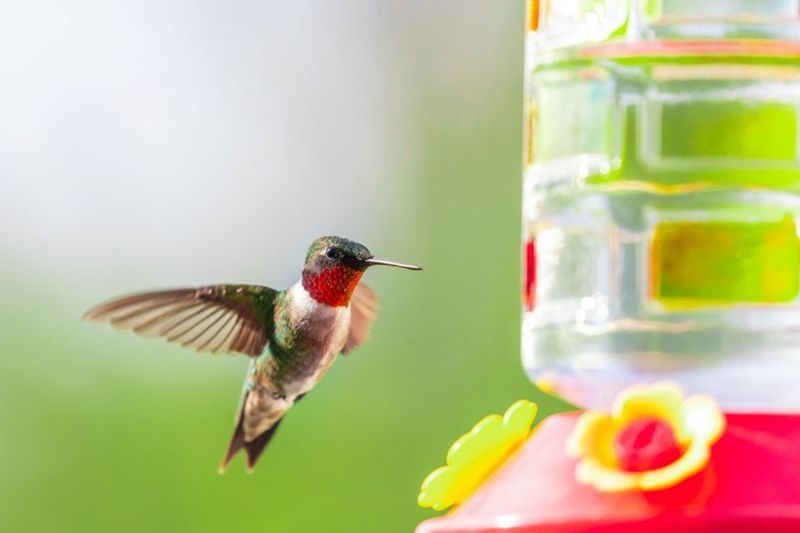
A cloudy feeder with murky nectar is worse than no feeder at all. Sugar-water feeders can genuinely support hummingbirds during late summer in Ohio, but only when they are maintained carefully.
Audubon guidance recommends a simple ratio of one part white granulated sugar to four parts water, boiled to dissolve and then cooled before filling the feeder.
Red dye should not be added. Major conservation groups, including Audubon and Cornell Lab, advise against red dye in hummingbird nectar.
Its safety for birds has not been established. The red color on the feeder itself is enough to attract hummingbirds.
Honey, artificial sweeteners, brown sugar, and fruit juice should also be avoided, as none of these are safe or source-backed nectar options.
Hot August weather speeds up nectar spoilage significantly. Change nectar every two to three days during warm spells, and inspect the feeder ports for mold or residue each time.
Rinse with hot water and a bottle brush, and let the feeder dry before refilling. A clean feeder in a shaded spot will stay fresh longer and attract more visits.
Small, consistent maintenance habits matter more than any fancy feeder design.
4. Plant Cardinal Flower For August Nectar
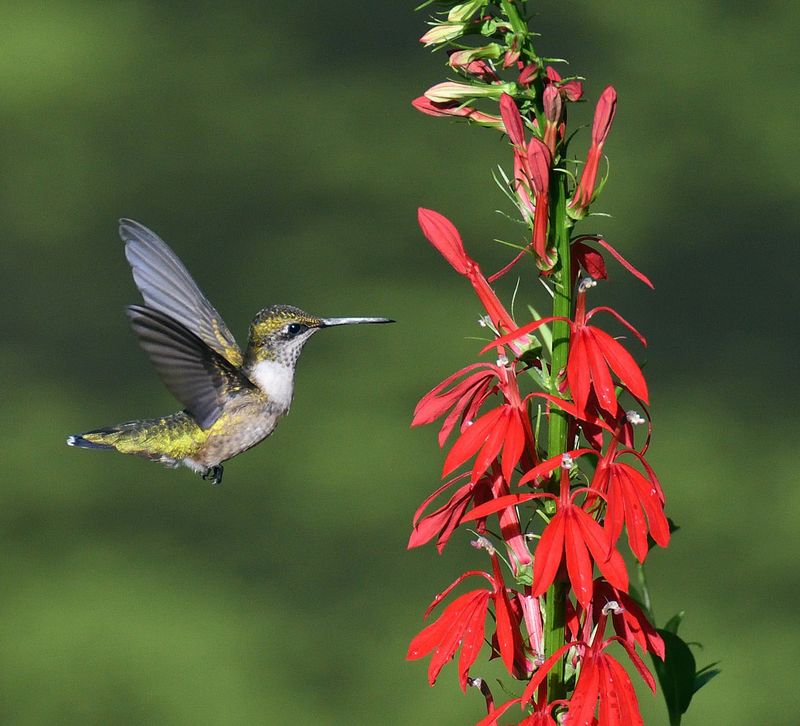
Few Ohio native plants bloom as boldly in late summer as cardinal flower, known botanically as Lobelia cardinalis.
Its tall spikes of deep red tubular blooms appear right when hummingbirds need late-season nectar most, making it a well-timed addition to any yard.
OSU Extension and native plant resources consistently list cardinal flower as one of the top native nectar plants for ruby-throated hummingbirds in this region.
The plant thrives in moist to wet soil and does well along rain garden edges, damp low spots, or partially shaded borders near water features. It is not suited to dry, sandy, or baking-hot sites.
Planting it in the right location matters as much as planting it at all. Full sun to part shade works well as long as moisture is consistent through the growing season.
Cardinal flower is one excellent native option, not the only one. Native plant guidance also points to bee balm, trumpet honeysuckle, and wild columbine as plants that can support hummingbirds at different times of year.
Adding cardinal flower to an existing native garden can extend the bloom season and give late-summer visitors a reliable nectar stop. Start with a few plants and observe which spots in your yard stay reliably moist through August heat.
5. Watch Young Birds Learn The Yard
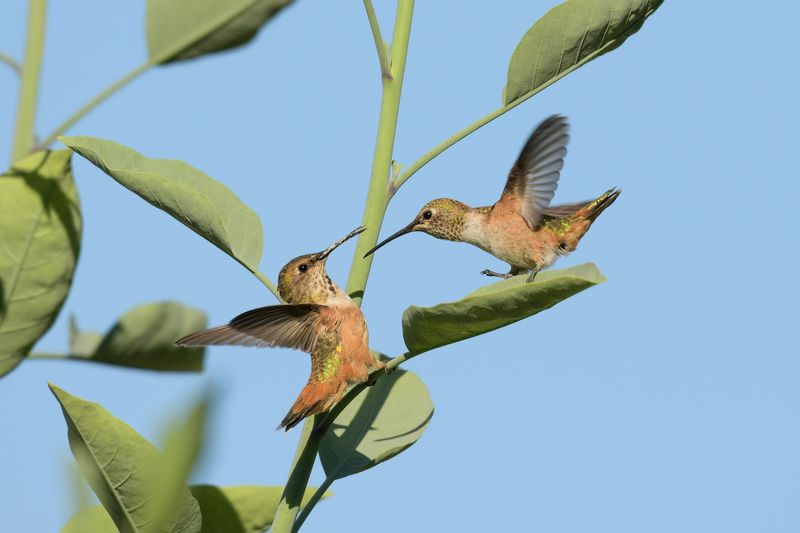
Young ruby-throated hummingbirds can appear in late summer as they begin exploring beyond their hatching territory in Ohio.
These birds are often less bold than adult males and may hover at flowers or feeders with a slightly hesitant quality, as if testing whether a resource is safe.
Cornell Lab resources note that juvenile hummingbirds tend to look less colorful than adult males, often lacking the iridescent red throat patch entirely.
A dull-looking hummingbird in August is not always a juvenile, though. Adult females and immature birds can look similar, so avoid labeling every plain-looking bird as a young one without careful observation.
What matters more is the behavior. A bird that seems to be exploring the yard cautiously, pausing at multiple flowers before committing, may be learning its surroundings for the first time.
Observe quietly from a short distance and avoid sudden movements near active feeders or flower patches. If your yard has windows that reflect sky or foliage, consider window collision deterrents, since young birds may not yet recognize glass as a hazard.
Avoid rearranging feeders or removing flowers during periods of active visits. Stability in the yard gives young birds a better chance to learn the space and return before migration begins.
6. Leave Perches Near Safe Flower Patches
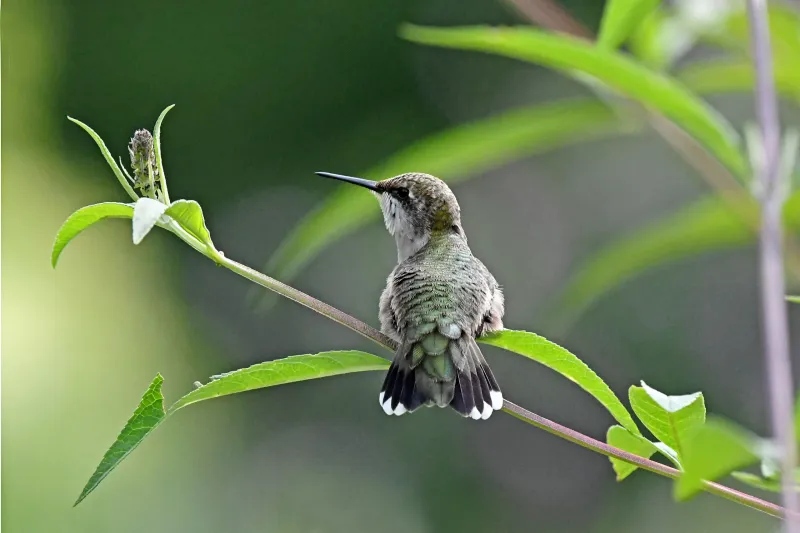
Watching a hummingbird feed can make it seem like the bird never stops moving, but that is not quite true. Hummingbirds rest regularly between feeding bouts, and they need small, exposed perches where they can watch their territory, preen, and recover energy.
Audubon and Cornell Lab resources both describe perching as a normal and important part of hummingbird daily behavior.
Thin branches, trellises, small shrubs, and the tops of garden stakes can all serve as resting spots if they are placed near nectar sources.
An open perch with a clear sightline is more useful to a hummingbird than a dense tangle of branches where the bird cannot see approaching threats.
Placing a slender branch or small trellis within a few feet of your feeder or cardinal flower patch gives the bird a natural resting option.
Avoid creating dense cover directly around feeders, especially if outdoor cats use the yard. A hummingbird perching low in thick shrubs near a feeder can become vulnerable to ambush.
The goal is open perches with nearby escape routes, not hidden nesting-style cover. An Ohio yard that pairs good nectar sources with safe, visible perches is more functional for a visiting hummingbird than flowers alone.
Small structural details in the garden can make a real difference during a bird’s brief stop.
7. Skip Pesticides Where Tiny Insects Gather
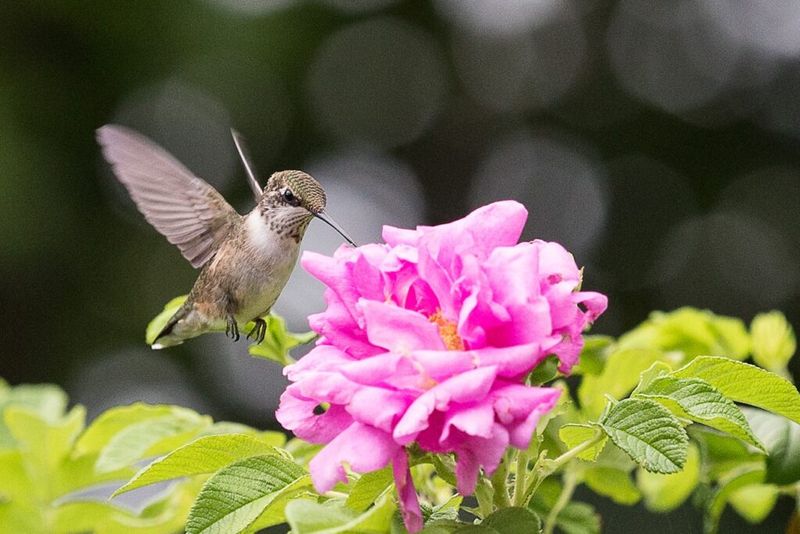
Nectar gets most of the attention, but insects are just as important to a hummingbird’s diet. Cornell Lab of Ornithology resources confirm that ruby-throated hummingbirds regularly eat small insects, gnats, aphids, and spiders.
These foods provide the protein and fat they need, especially during late summer. A yard that offers nectar but no insects is providing only half the picture.
Broad insecticide use near feeders, flowering plants, shrubs, and soft new plant growth can reduce the insect populations hummingbirds depend on. Some products may also directly harm wildlife depending on the compound, concentration, and how the bird is exposed.
Avoiding wide-coverage sprays in areas where hummingbirds actively feed is a straightforward way to protect a food source that often goes unnoticed.
Soft plant growth, aphid clusters on rose stems, and small flying insects above moist garden beds are all potential food sources for a visiting hummingbird. Leaving those areas untreated when possible can make the yard more nutritionally complete.
If pest pressure in the garden is a real concern, targeted and label-safe approaches are less likely to affect the broader insect community. Protecting tiny insects is not just good ecology.
For a hummingbird fueling up before migration, it can be genuinely critical.
8. Let One Hummingbird Change Your August Garden
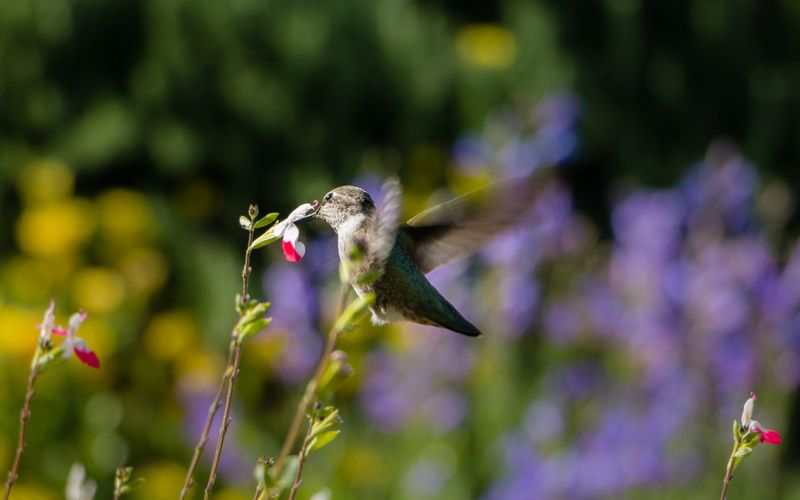
A single hummingbird sighting can quietly shift the way a gardener thinks about late summer. Once you know the bird may be looking for nectar, insects, perches, and safe cover, the yard starts to look like a system.
It becomes more than a collection of plants and feeders. Small changes in each of those areas can add up to something genuinely more useful for a bird on the move.
Keep feeders clean and filled with plain sugar water through late summer and into September. Add or expand native nectar plants like cardinal flower in spots with reliable moisture.
Leave thin perching branches near flower patches and avoid disturbing active feeding areas. Reduce insecticide pressure where small insects gather, especially near soft plant growth and moist garden edges.
Sightings are never guaranteed. Migration timing, weather, local food supply, and nearby habitat all play a role in whether a hummingbird finds your yard.
But a yard that offers clean nectar, insect food, safe perches, and native flowers is more likely to attract and hold a visiting bird. A feeder alone offers less.
An August hummingbird may be the smallest visitor your yard receives all season. It may also be the one that shows you exactly what your garden still has left to give before the warm days finally end.