How To Give Ohio Grass One Last Feeding Before Winter
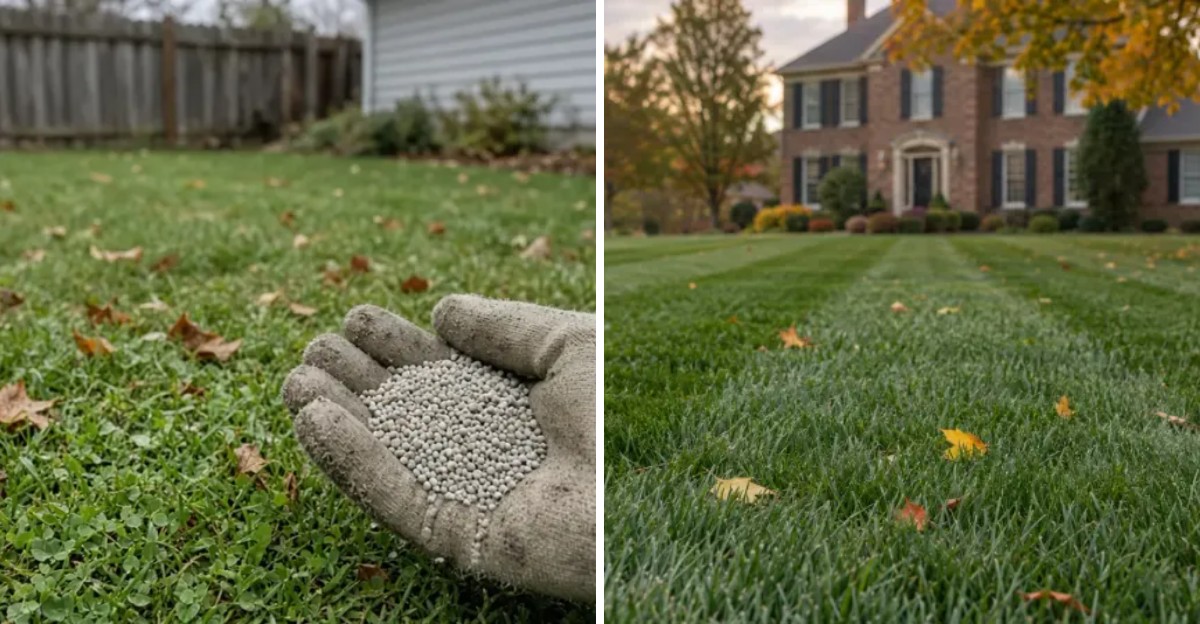
Your lawn is about to go quiet for months, and it’s reaching for one last meal before it does.
Ohio grass doesn’t stop working when growth slows. Roots keep soaking up whatever they can find well after the blades quit climbing, and that last feeding tucks the turf in with a full pantry.
Neighbors who skip it often wake up to a pale, hungry lawn in April.
The timing is trickier than the bag suggests. Too early and you push growth the cold will punish.
Too late and the ground locks up before the food can do any good. Even the product you grab off the shelf can help or hurt depending on what’s inside.
Plenty of homeowners guess, then hope for the best.
Read the label and check the forecast before you load the spreader. The window is real, and it won’t stay open long.
1. Time It Around Your Last Mowing Of The Season
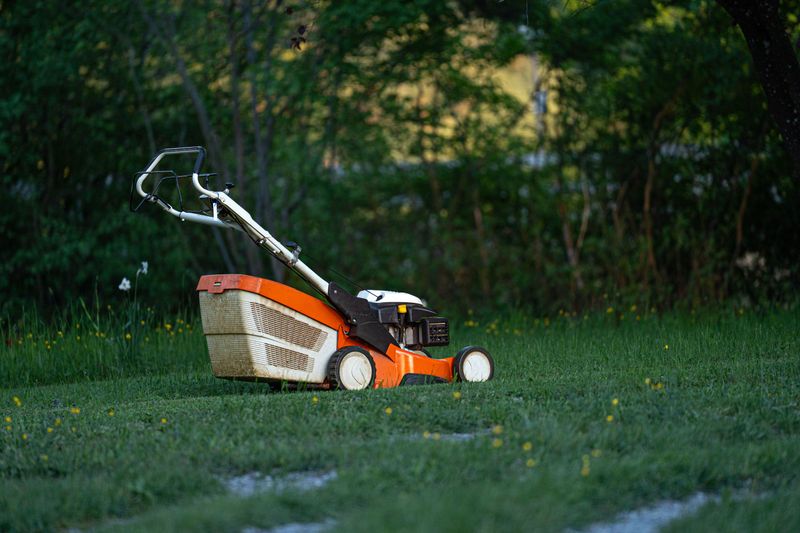
Picture the final pass of the mower in late fall, with leaves crunching underfoot and your breath showing in the cool air. That last trim is your best clue for when to feed the lawn one more time.
In Ohio, the sweet spot usually runs from late October to early December. Northern counties tend to cool off first, especially inland, so folks there should aim for the earlier end.
Central and southern Ohio often get a few extra weeks of mild weather. Homeowners around Columbus or Cincinnati can usually wait until November without much worry.
A handy rule is to fertilize around one of your final two mowings. At that point, the grass has slowed its upward growth but still has green blades working hard.
Keep an eye on the forecast as the season winds down. A stretch of dry, calm days with temperatures in the 40s or 50s makes spreading easy and pleasant.
Try not to wait until the first hard freeze shows up. Once the ground locks up, the window closes and the food goes to waste.
Jot the date on a calendar or set a phone reminder in mid-October. A little planning keeps this job from slipping past while you rake leaves and hang holiday lights.
2. Apply While The Grass Is Still Green
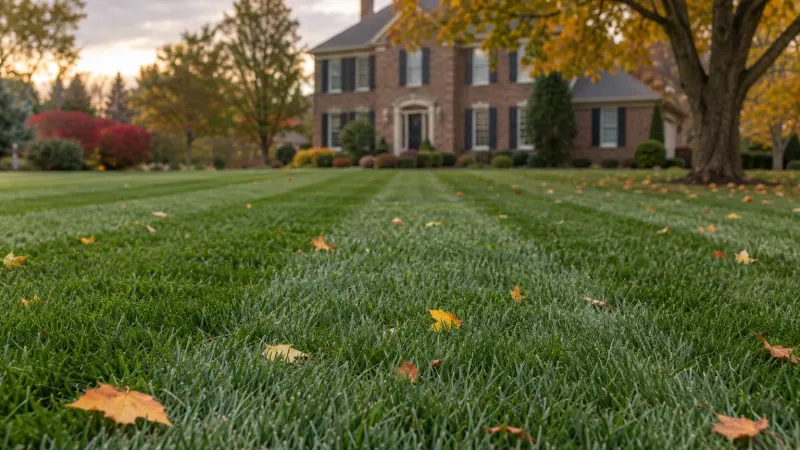
Grass is a lot like a squirrel stashing acorns before the snow flies. Even when the blades stop growing tall, the roots keep busy underground, packing away energy for later.
That is why feeding while the lawn still looks green matters so much. Experts call this late-season fertilization, and it differs from dormant feeding, which happens after the color fades to tan.
Green blades mean the plant can still make food from sunlight. When you add nutrients now, the grass sends them down to the roots instead of pushing out new leaves.
Those roots turn the extra fuel into stored carbohydrates, which work like a pantry for the cold months. A well-stocked pantry helps the lawn handle icy winds and heavy snow.
Your Ohio Garden Changes Every Week. Your Plan Should Too.
Gardening in Ohio changes quickly throughout the season. Every Friday you’ll receive a simple weekly plan showing exactly what to plant, prune, fertilize, harvest, and protect so you never miss the right timing.
Come spring, that stash pays off in a big way. Fed lawns often green up sooner and look thicker than neighboring yards that skipped the snack.
Not sure if your grass is still green enough? Walk outside on a sunny afternoon and look closely at the blades near the soil.
If most of the lawn shows a healthy green tint, you are good to go. If it has turned mostly straw-colored, you have likely missed the best moment for this year.
Snap a quick photo of the lawn on feeding day. Next fall, you can compare colors and pick the perfect week with confidence.
3. Never Spread Fertilizer On Frozen Ground
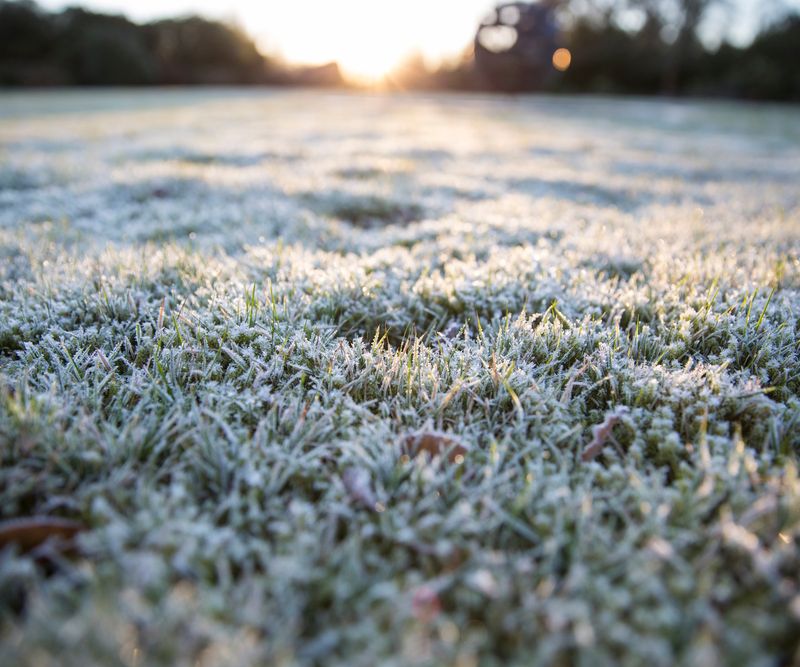
Here is a rule Ohio takes seriously enough to put in writing. In the Western Lake Erie Basin, state law bans spreading fertilizer on frozen or snow-covered ground, and experts recommend following the same rule everywhere for solid reasons.
Frozen soil acts like a locked door. Roots cannot reach through the ice to grab nutrients, so the granules just sit on top with nowhere to go.
Then the snow melts or a cold rain rolls in. That water carries the fertilizer across the surface, into gutters, and down storm drains.
From there, it can flow into creeks, rivers, and eventually Lake Erie. Extra nutrients in the water feed algae blooms, which can cloud lakes and harm fish.
So how can you tell if the ground counts as frozen? A simple test is to push a screwdriver or garden trowel into the soil.
If it slides in and you could work fertilizer into the dirt, the ground is not considered frozen. If it feels hard as a sidewalk, put the spreader back in the garage.
Snow cover is another stop sign. Even a thin white blanket keeps granules from touching the soil where they belong.
Missed your chance this year? That is okay, since your lawn will still bounce back, and you can plan an earlier date next fall.
Spring feeding can pick up the slack once the soil thaws. Your local waterways will thank you for waiting.
4. Get A Soil Test To See What Else Your Lawn Needs
Guessing what your lawn needs is like buying groceries without checking the fridge. A soil test opens that fridge and shows you what is inside.
The report measures pH along with key nutrients such as phosphorus, potassium, calcium, and magnesium. With those numbers in hand, you only buy products your yard actually needs.
That saves money, and it protects local streams too. Extra phosphorus that grass cannot use often washes away and ends up feeding algae instead of turf.
Getting a test is easier than most people think. Ohio State University Extension offices around the state can point you to soil testing labs, and many results come with clear recommendations.
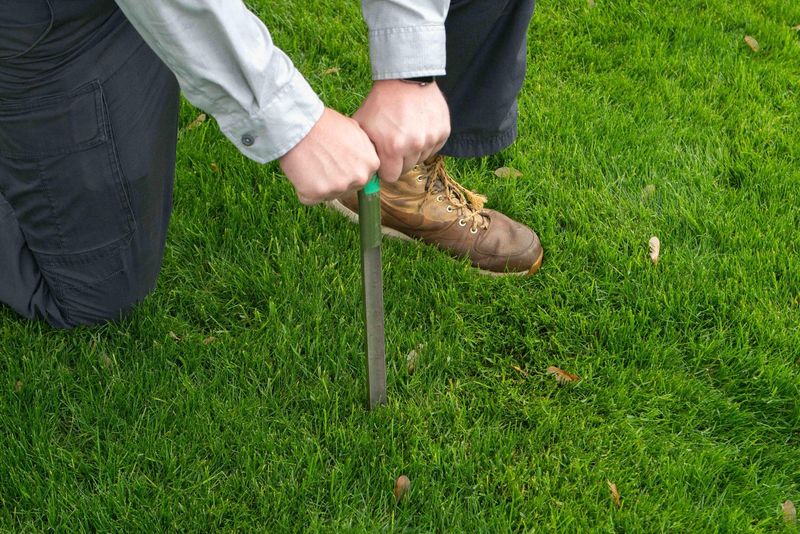
To collect a sample, grab small cores from 10 or more spots across the lawn. Dig about 3 to 4 inches deep, mix them in a clean bucket, and send in about a cup.
Fall is a great season to test, especially if you suspect a pH problem. Lime or sulfur adjustments take time to work, so starting now gives them a head start.
You do not need to test every year. Once every two to three years usually keeps you well informed.
Fun fact: soil pH changes how well grass can absorb food. Even a well-fed lawn can look hungry if the pH is way off.
5. Nitrogen Is The Nutrient That Matters Most
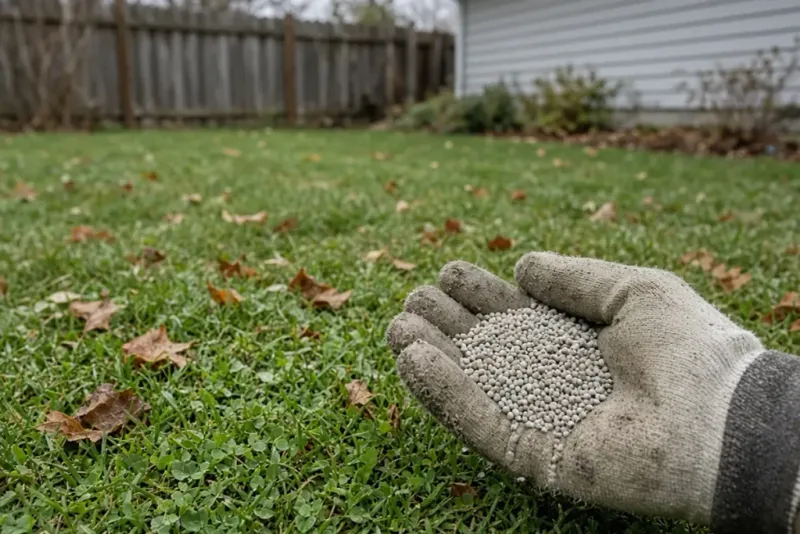
If fertilizer had a star player, nitrogen would wear the captain’s armband. It does more to keep turf thick and green than any other nutrient in the bag.
Grass uses nitrogen to make chlorophyll, the green pigment that captures sunlight. More chlorophyll means more energy for the plant to grow and repair itself.
Nitrogen also helps cells divide, which leads to sturdier blades and a denser lawn. A thick carpet of grass leaves less room for weeds to sneak in next spring.
In late fall, nitrogen plays a slightly different role. Instead of fueling tall top growth, it helps the plant build deeper roots and store carbohydrates for winter.
Think of it as packing a warm lunch before a long, cold hike. The grass draws on those reserves when temperatures drop and sunlight runs short.
When spring arrives, the payoff shows up fast. Lawns that got a late nitrogen boost often wake up earlier and look richer than those that did not.
Phosphorus and potassium still have jobs to do, but your soil may already hold plenty. Your soil test results will tell you whether to add them.
For this final feeding, put nitrogen at the top of your list. It gives your Ohio lawn the biggest bang for the buck.
6. Stick To About 1 Pound Of Nitrogen Per 1,000 Square Feet
Goldilocks would make a great lawn care expert. Too little nitrogen does not help much, and too much can cause real trouble, so the goal is just right.
For a single dose of quick-release nitrogen, the general target is about 1 pound of actual nitrogen per 1,000 square feet. Ohio State University Extension suggests 0.75 to 1.0 pound for late fall feeding in central Ohio.
Notice the word actual in there. That means the nitrogen itself, not the whole weight of the bag, which is a detail many folks miss.
Going over the limit can scorch blades and leave brown streaks. It may also trigger soft, tender growth that struggles when the cold sets in.
Slow-release fertilizers work a bit differently. They feed the lawn over a longer stretch, so the label may allow a slightly higher rate.
Before you spread anything, measure your lawn. Pace off the length and width of each section, multiply them, and add up the totals for the square footage.
A typical suburban front yard might be around 5,000 square feet. At 1 pound per 1,000, that yard needs about 5 pounds of actual nitrogen.
Write your measurements on a sticky note and keep it with your spreader. You will reuse those numbers every season.
7. Do The Math From The First Number On The Bag
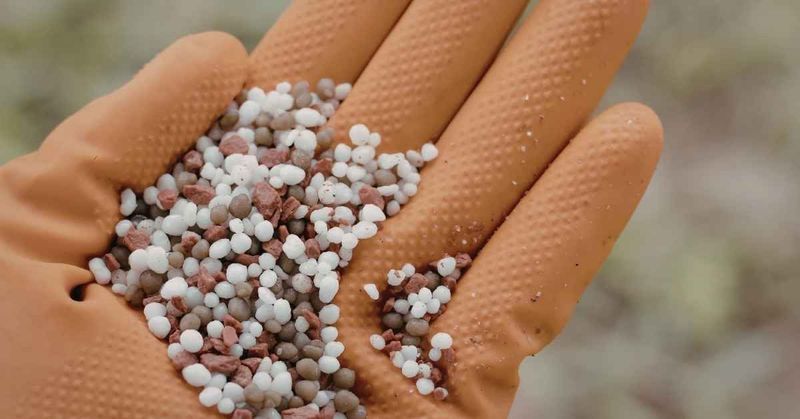
Grab any fertilizer bag and you will spot three numbers printed big and bold, like 20-0-5 or 24-0-10. Those numbers are the key to feeding your lawn the right amount.
They show the percentage by weight of nitrogen, phosphorus, and potassium, listed in that order. Nitrogen gets the first slot on every bag.
Here is the easy formula. Divide the pounds of nitrogen you want by the first number written as a decimal.
Say your bag reads 20-0-5 and you want 1 pound of nitrogen per 1,000 square feet. Twenty percent is 0.20, and 1 divided by 0.20 equals 5 pounds of product.
Now try a 32-0-4 bag. One divided by 0.32 comes out to about 3.1 pounds of product for each 1,000 square feet.
Multiply that result by your lawn size in thousands. A 6,000-square-foot yard using the 20 percent bag would need about 30 pounds total.
This little bit of arithmetic keeps you from guessing. It also helps you buy the right size bag so you are not stuck with leftovers in the garage.
Check the spreader settings printed on the bag, too. Many brands list settings for popular spreader models, which makes dialing in your rate much simpler.
Keep a calculator app handy on your phone. Math class finally pays off in the front yard.
8. Close The Spreader When Crossing Driveways
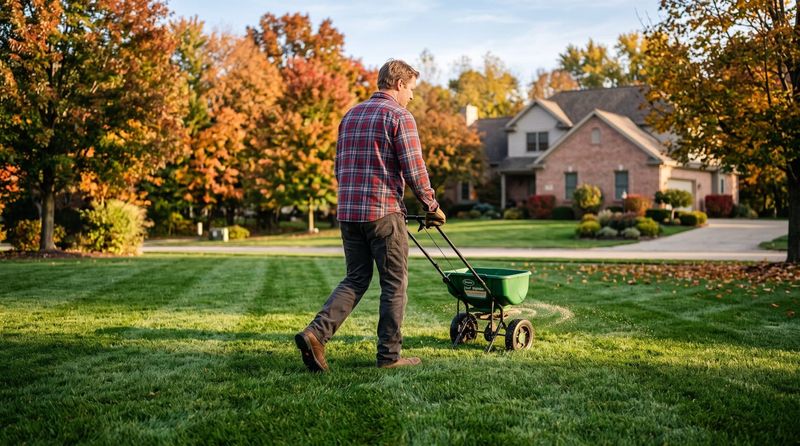
Every driveway is a tiny highway to the nearest storm drain. Fertilizer that lands on concrete does not stay put for long.
When you push a granular spreader across pavement, close the hopper first. Most spreaders have a simple lever on the handle that shuts the opening in a snap.
Hard surfaces like driveways, sidewalks, and patios cannot soak up nutrients. Rain or a quick spray from the hose can wash those pellets straight into the street.
From there, they ride the storm sewer to local creeks and lakes. That runoff can fuel algae growth and upset the balance for fish and other creatures.
A good habit is to start by spreading a border strip around the edges of your lawn. Then fill in the middle with back-and-forth passes, closing the hopper at each turn.
Pay attention near flower beds and mulch too. Rotary spreaders fling granules several feet, so a deflector shield can help keep them on the grass.
Walk at a steady, normal pace while the hopper is open. Speeding up or slowing down changes how much product hits the ground.
Kids helping out can be the official lever checkers. Giving them a job makes yard work feel like a team sport.
It may feel like a small step, but it adds up across a whole neighborhood. Clean pavement means cleaner water for everyone downstream.
9. Sweep Stray Granules Back Onto The Lawn
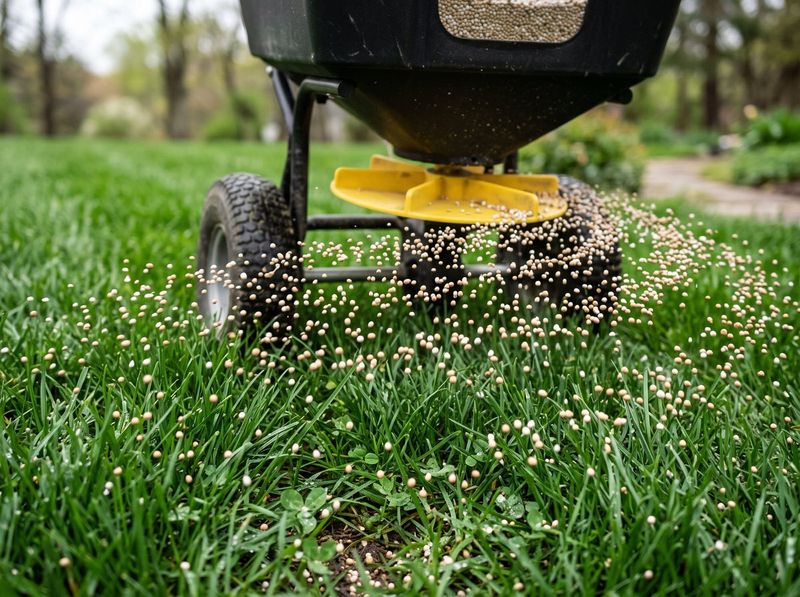
The spreader is parked, the bag is folded, and the lawn looks ready for winter. Before you head inside for hot cocoa, take one more lap around the yard.
Chances are a few granules bounced onto the driveway, sidewalk, or porch steps. Grab a broom and sweep them back onto the grass where they can do some good.
Those little pellets may look harmless, but they add up. Left on pavement, they wash into storm drains with the next rain and pollute nearby streams.
A leaf blower works great for bigger areas. Just aim it toward the lawn rather than the street so the granules land on turf.
Check the curb and gutter along your street as well. Granules tend to hide in cracks and corners where you might not expect them.
Rinse the spreader on the lawn afterward, not on the driveway. Leftover dust in the hopper can rinse straight into the gutter if you clean it on concrete.
Store any leftover fertilizer in a dry spot with the bag sealed tight. Moisture can turn it into hard clumps that clog your spreader next season.
This final sweep takes about five minutes. Your lawn gets every bit of food you paid for, and your neighborhood waterways stay cleaner all winter long.