Texas Mountain Laurel In Your Arizona Yard May Be Setting Buds For A Fragrant Spring Bloom
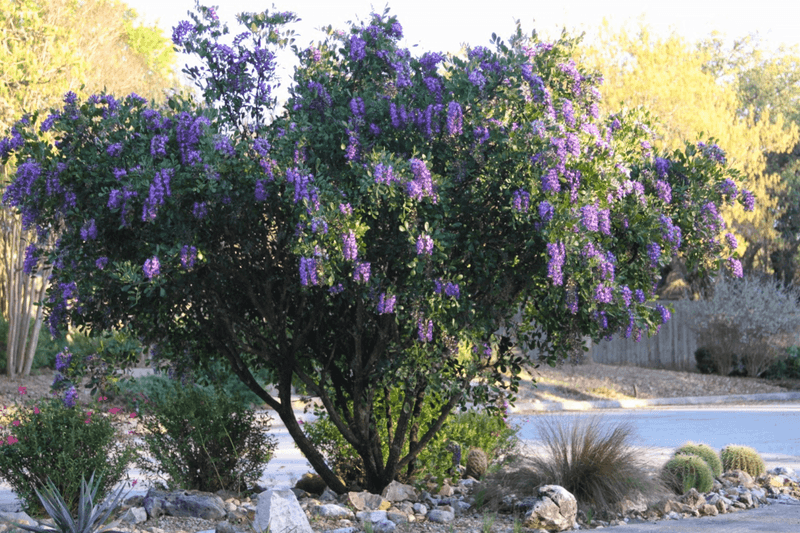
Texas mountain laurel is a tough desert shrub, and it may already be forming next season’s flowers this fall. Those blooms are purple and fragrant, and plenty of people say they smell like grape soda.
What you do with your pruning shears in the coming months can decide whether you get a show. Here is how to care for the plant in low-desert Arizona so the flowers have their best chance.
Fall Buds May Be Developing Already
Texas mountain laurel goes by Dermatophyllum secundiflorum, the current botanical name. Some Arizona sources still list it as Sophora secundiflora, so you may see either one on plant tags and websites.
Here is the part that surprises people. An Arizona plant account says flower buds begin forming in August and then stay latent until late February to early March.
That means that as of this fall, your shrub may already be carrying the beginnings of its spring flowers.
Keep in mind that this is a guide, not a guarantee for every yard. Plant age, health, and seasonal conditions all play a part, so one shrub may be further along than its neighbor.
Young plants may also take time to bloom well.
Buds can be small and easy to miss, so do not expect a dramatic preview. The leaves stay glossy and green, and the real payoff comes later.
For now, the best move is simply knowing that the groundwork may already be in place.
Fragrant Purple Flowers, with a Scent Some Compare to Grape Soda
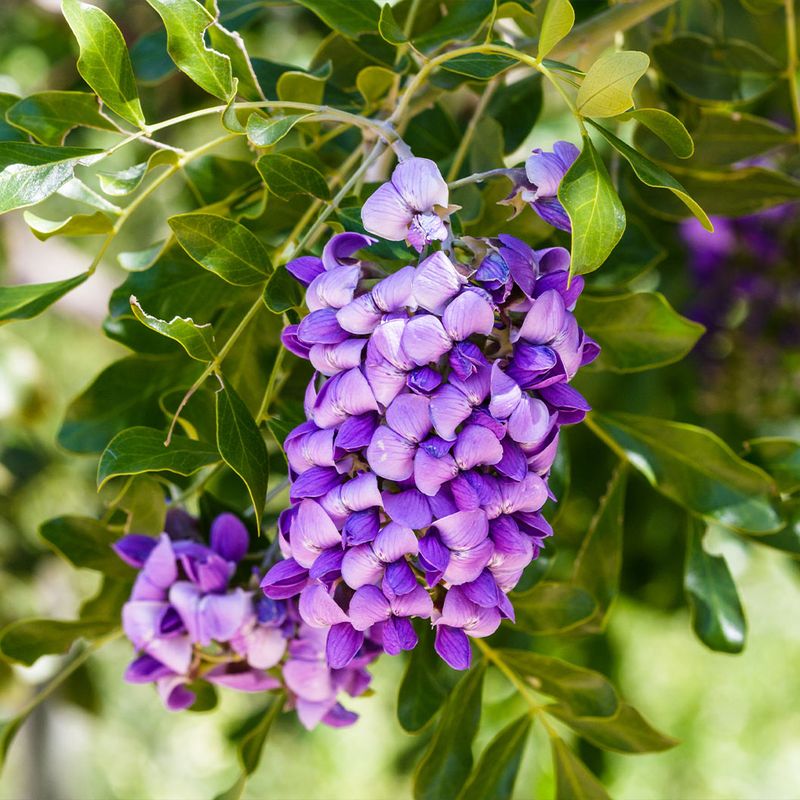
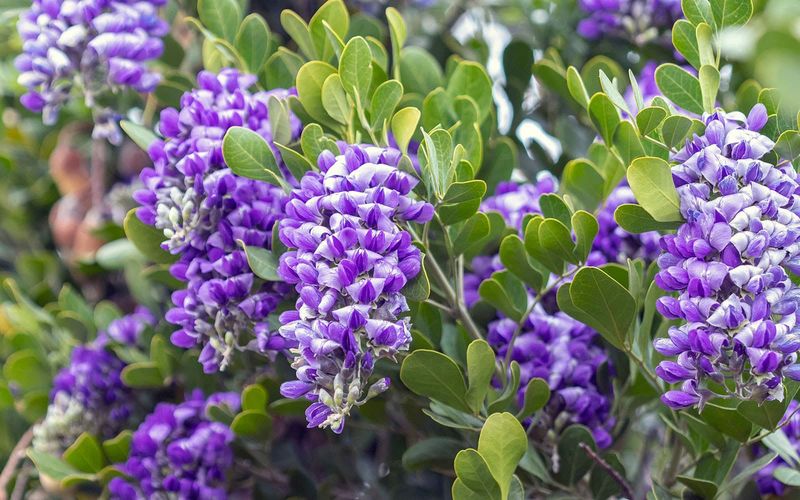
When the flowers open, they hang in showy purple clusters that look a bit like wisteria. They are fragrant, and many people compare the smell to grape soda.
Scent is personal, though, so your nose may pick up something different, and it can seem stronger on warm, still days.
Timing is where yards differ. The Arizona plant account puts bloom in late February to early March.
The University of Arizona Campus Arboretum lists Texas mountain laurel in its spring blooms listing, which spans a wider window from February through April.
Location and the weather of the season can nudge flowers earlier or later. A shrub in a warm, sheltered spot may open before one in a cooler corner.
Some years bring a heavy display and some bring a lighter one, so treat late winter as a typical possibility rather than a promise.
Unnecessary Pruning Before Bloom Can Remove Flowers
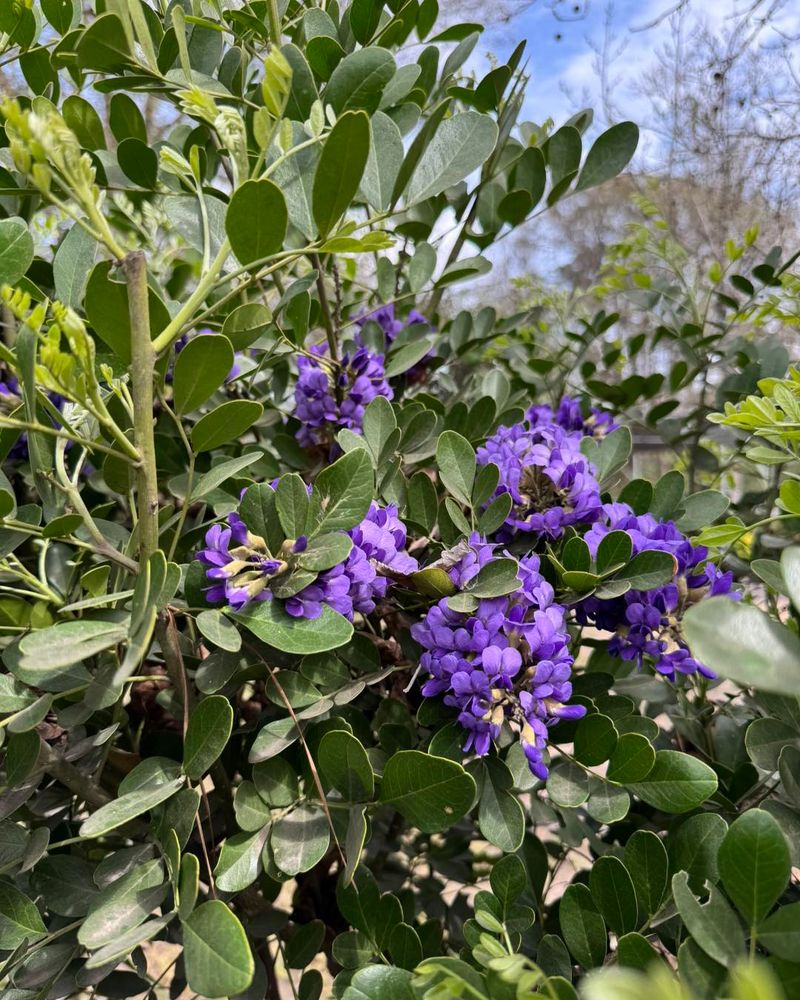
Spring-flowering shrubs set their buds the season before they bloom. According to Arizona pruning guidance, cutting in early spring can take off that year’s flowers along with the branch tips.
For Texas mountain laurel, that means any cut made between now and bloom could remove buds that are already waiting. If flowers are your goal, leave the shrub alone unless a cut is truly needed.
Needed cuts do exist. A broken branch, a limb rubbing a wall, or a stem blocking a walkway are fair reasons to reach for the shears.
Make the smallest cut that solves the problem and skip the general tidying.
Your Arizona Garden Changes Every Week. Your Plan Should Too.
Gardening in Arizona changes quickly throughout the season. Every Friday you’ll receive a simple weekly plan showing exactly what to plant, prune, fertilize, harvest, and protect so you never miss the right timing.
This is not a never-prune rule. It is simply a way to avoid trading flowers for neatness.
A little shaggy growth over winter is a small price for a purple spring.
Shape the Shrub After It Finishes Flowering
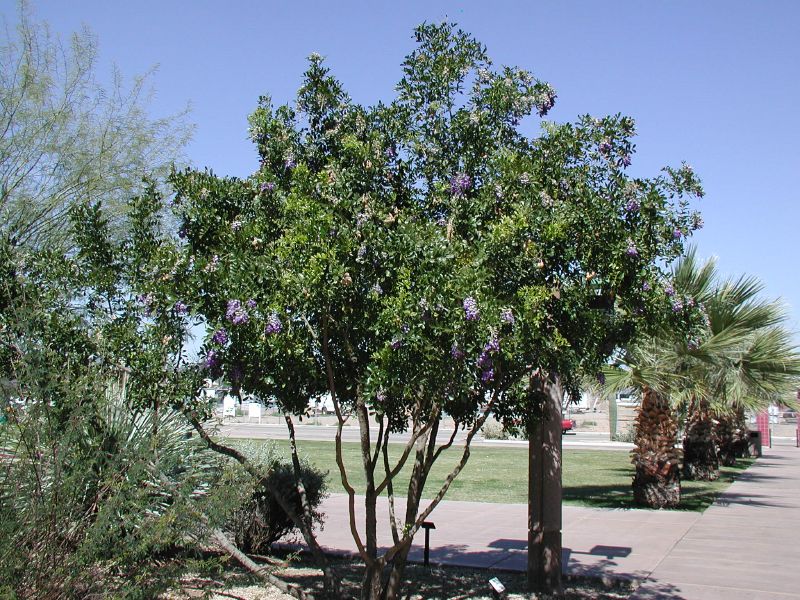
Once the last blossoms fade, you have your window. Cuts made then will not cost you that season’s show, and the shrub has the rest of the year to grow.
Go light. Texas mountain laurel grows slowly, and the Arizona plant account notes it recovers slowly from severe pruning.
A heavy chop can leave a bare, awkward plant for a long time.
A few practical habits help. Remove crossing or damaged branches first, then trim a little off any stems sticking out of the overall shape.
Step back after every few cuts and look at the whole shrub before taking more.
If you want a small tree form, you can raise the canopy gradually by taking off low branches over several seasons. Spreading the work out is easier on the plant than one big session.
Arizona pruning advice favors timing cuts after flowering for shrubs like this one.
Adjust Watering to the Plant and Its Site
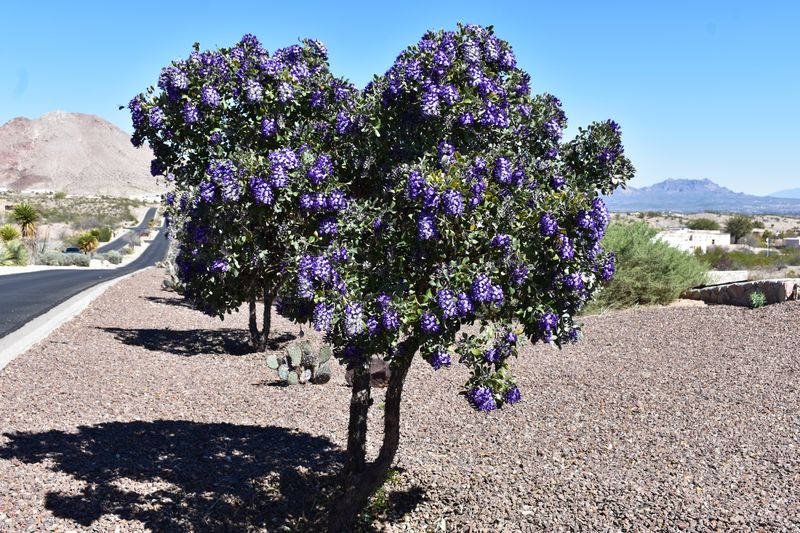
This shrub likes heat, full sun, and well-drained soil, which makes it a natural fit for many low-desert yards. Soggy ground is more of a problem than dry spells, so avoid planting it where water pools.
For Phoenix-area gardens, the Arizona plant account suggests deep watering every one to two weeks. Think of that as a starting point, not a calendar to follow blindly.
Your own yard sets the real schedule. Sandy soil drains fast, while heavy or caliche-laden soil holds water longer.
A young plant needs more attention than an established one, and a rainy stretch means you can skip a session.
Check the soil a few inches down before you water. If it is still damp, wait.
Water slowly so it soaks deep, and keep the emitters spread out from the trunk as the shrub grows.
Keep Children from Ingesting the Red Seeds
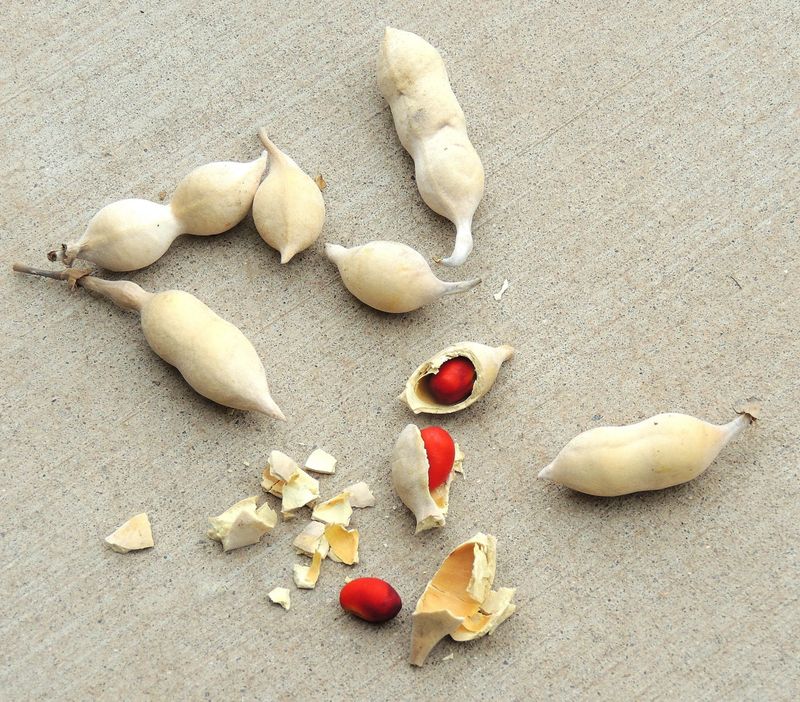
After the flowers, the shrub may produce woody pods holding bright red seeds. Those seeds are toxic if eaten, and their color can look tempting to small children.
Teach kids not to put seeds or pods in their mouths, and rake up fallen pods near play areas. Keep a close eye on toddlers who explore with their hands and mouths.
The name mescal bean sometimes gets attached to these seeds, but Poison Control says they are not chemically related to the mescaline in peyote. The seeds are still a real hazard to swallow.
If you think a child or pet has eaten one, contact a poison resource such as Poison Control or call a veterinarian right away. Do not assume the shrub is pet-safe.
A little caution at seed time keeps the spring blooms a pure pleasure.