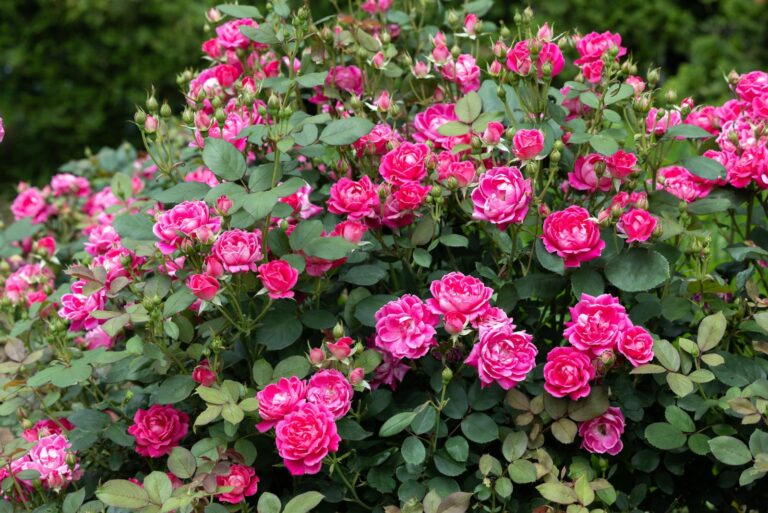
8 Low-Water Shrubs That Hide An Ugly Texas Block Wall By Next Summer
Early American colonists once boiled the berries of a humble shrub to skim off wax for fragrant candles. That same tough plant still grows wild across East Texas and happily hides ugly walls in many backyards today.
Gray concrete block soaks up afternoon sun and keeps radiating warmth long after the sun goes down. Many thirsty shrubs struggle in that hot strip, yet a few native toughies seem to genuinely enjoy it.
I have to admit my own fence line looked like a gloomy parking garage for years before I started planting. You need shrubs that grow quickly yet still look fresh during a long, sweaty Texas August.
Some of my favorites feed birds all winter, while one even blooms right after a summer rain. Which of these clever wall hiders will earn a sunny spot in your yard by next summer?
1. Southern Wax Myrtle
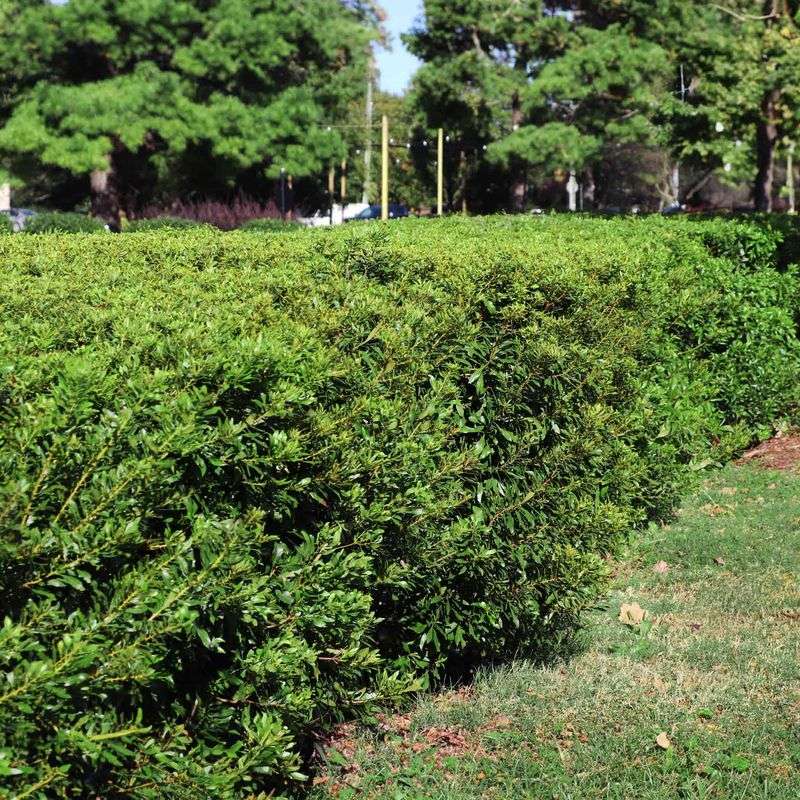
Crush a single leaf of southern wax myrtle and your fingers will smell like a spicy, clean bayberry candle. That scent hangs in the air after warm rain, and I catch myself sniffing the hedge every time.
Known to botanists as Morella cerifera, this native shrub grows wild through the eastern half of the state. It handles zones 7 through 11, so most gardeners outside the coldest Panhandle pockets can grow it happily.
Speed is the real reason it earns a spot against your wall, since young plants can add three feet yearly. Most specimens settle around 10 to 15 feet tall, which hides a six-foot block wall with room to spare.
Plant in full sun or part shade, spacing shrubs about six to eight feet apart for a seamless screen. Water deeply twice a week the first summer, then taper off once new growth looks steady and strong.
Female plants carry clusters of waxy gray-blue berries that yellow-rumped warblers and other winter birds happily gobble up.
Berries form only when a male plant grows nearby, so ask your nursery about sexed plants when shopping.
One quirk worth knowing is that wax myrtle spreads by suckers, slowly filling gaps along the base. I treat that habit as a bonus, though you can snip unwanted shoots with sharp pruners each spring.
Older trunks often turn smooth and silvery gray, which looks lovely if you limb up the lower branches. Just keep a few low stems in place, because the whole point is hiding that blank concrete face.
2. Yaupon Holly
Native peoples brewed a caffeinated tea from yaupon leaves, and it is often called North America’s only native caffeine plant.
I love having a screen plant with a backstory, especially one tough enough to laugh at blazing afternoon sun.
Ilex vomitoria grows across zones 7 through 10 and shows up naturally from East Texas woods to coastal prairies. It tolerates heavy clay and short periods of soggy ground, which makes it a rare all-terrain shrub.
Unpruned plants can reach 15 to 20 feet tall, though most settle near 12 feet in a typical yard. For quick wall coverage, buy larger 15-gallon plants instead of tiny starters, since growth is moderate rather than speedy.
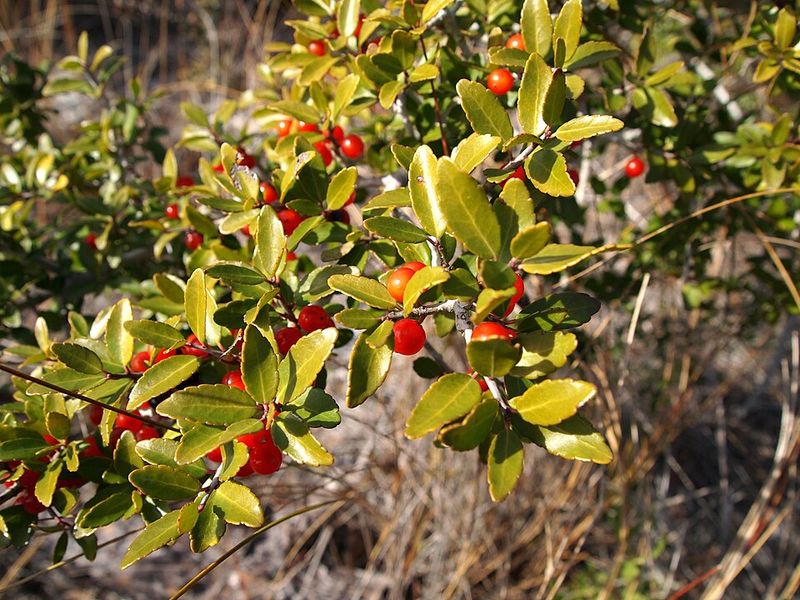
Sun or shade works, but full sun produces the densest branching and the heaviest crop of glossy berries. Only female plants bear fruit, so check the tag before buying if bright red winter color matters to you.
Those berries feed cedar waxwings and mockingbirds in late winter, yet they can upset human stomachs if eaten.
Keep curious toddlers away from fallen fruit, and teach older kids that the berries are strictly for birds.
Water new plants deeply once or twice weekly through their first summer, then let rainfall handle most of the work. Established yaupon shrugs off drought impressively, which is a big reason Texas water utilities often list it.
Skip the dwarf varieties for this job, since they stay knee-high and rarely hide anything taller than a mailbox. Pick the upright species or a selection like ‘Pride of Houston’ for a tall, dense green curtain.
3. Cenizo
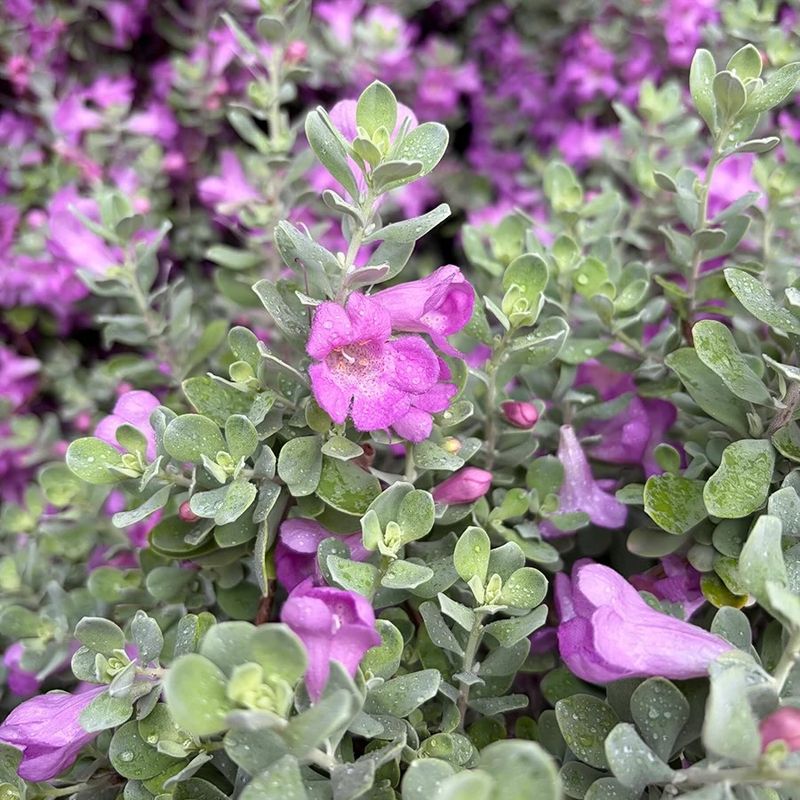
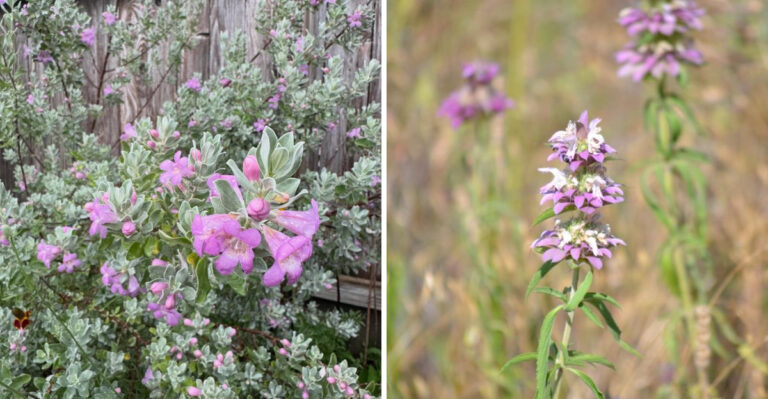
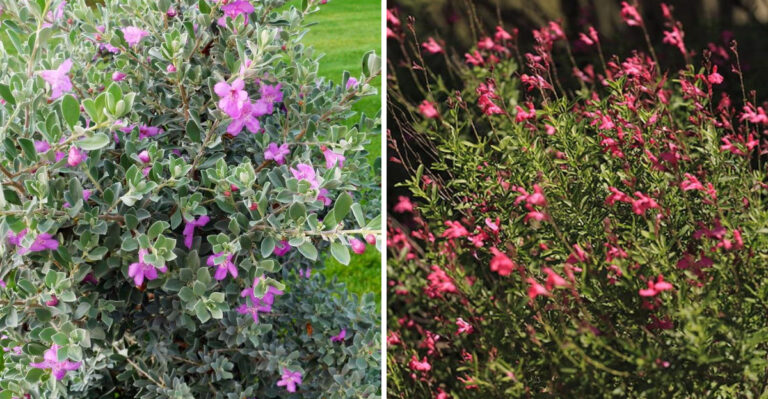
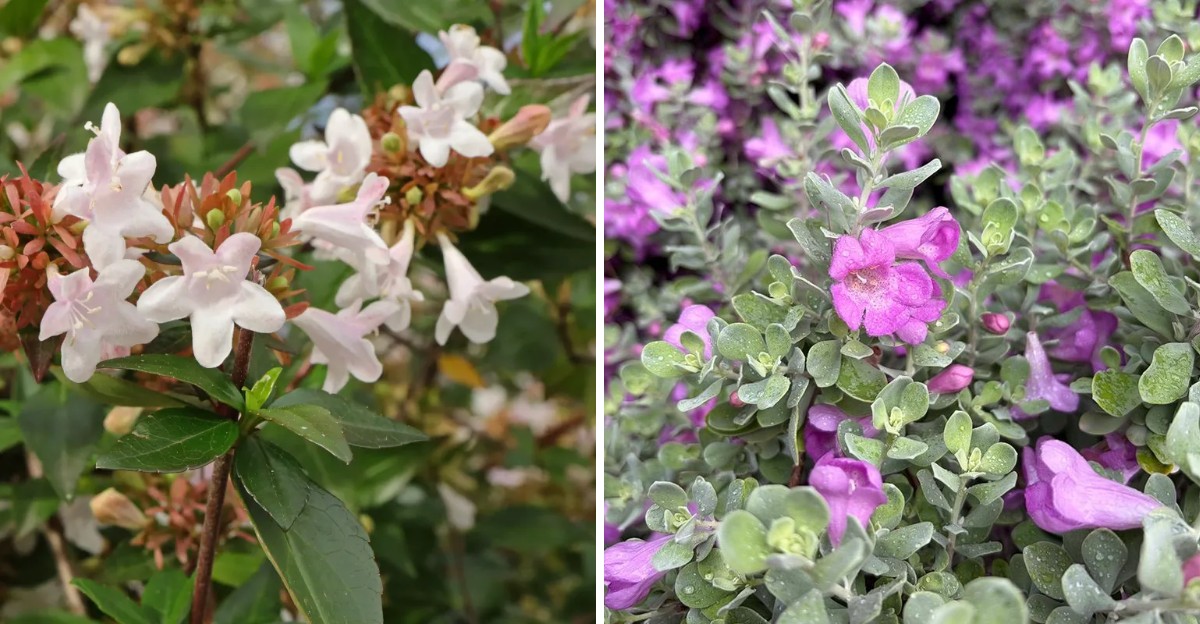
Locals call it the barometer bush because it often bursts into purple bloom right after a rain or humid spell. I still grin every time a gray summer storm rolls through and the shrubs explode with color days later.
Leucophyllum frutescens is native to the Rio Grande Valley and Edwards Plateau, where it thrives on rocky limestone hills. Its soft silver leaves reflect harsh light, which helps it handle reflected heat from a sunny block wall.
Most plants reach five to eight feet tall and nearly as wide, enough to soften a standard backyard wall. Growth runs moderate, so start with five-gallon or larger plants if you want real coverage by next summer.
Sharp drainage matters more than anything, because cenizo sulks and rots quickly in soggy, poorly drained clay beds. Plant on a slight berm or mix in decomposed granite, and skip the regular sprinkler zone near your lawn.
Full sun is a must, since shady spots produce floppy, sparse shrubs that show more wall than leaf. After the first summer, deep watering once or twice a month during long dry spells keeps foliage looking full.
Resist the urge to shear it into tight boxes, which removes the wood where those surprise blooms would appear. Light shaping in late winter keeps it natural, and the loose silhouette looks far softer against hard concrete.
Bees and butterflies swarm the flowers, so you get a pollinator buffet along with a tidy privacy screen. Choose a selection like ‘Green Cloud’ if you prefer greener leaves, or stick with the classic silvery type.
4. Evergreen Sumac
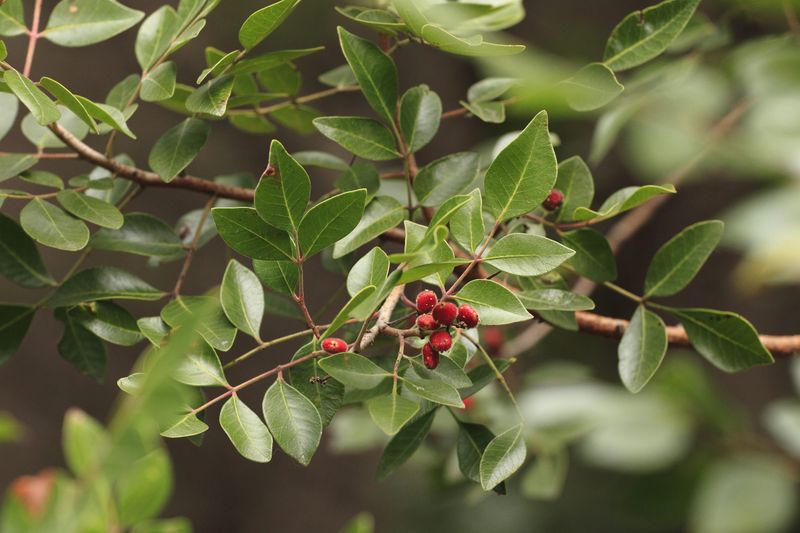
Most folks picture scraggly roadside thickets when they hear sumac, yet this Hill Country native stays glossy most winters. Personally, I think it is one of the most underrated screening shrubs any dry-climate gardener could plant.
Rhus virens grows naturally on rocky slopes across central and western parts of the state, roughly in zones 7 through 9. Alkaline, limestone-heavy soil suits it perfectly, so there is no need to amend that chalky ground near your wall.
Expect a rounded shrub eight to twelve feet tall, wide enough that a few plants can cover a long stretch.
Growth is moderate, but regular summer watering during the first year speeds things up quite a bit in my experience.
Late summer brings fuzzy clusters of small white flowers that buzz with bees and visiting butterflies on warm afternoons.
Sticky red fruits follow in fall, and birds clean them up before most neighbors even notice they were there.
Cold snaps sometimes tint the leathery leaves a handsome maroon, giving your screen a little seasonal costume change. Leaves usually return to deep green by spring, so the wall rarely peeks through for very long.
Plant in full sun or light afternoon shade, and make sure water drains away quickly after heavy storms.
Once roots settle, this shrub handles long dry stretches with surprising grace and rarely asks for extra fertilizer.
Many nurseries do not stock it year-round, so call native plant specialists or check spring native plant sales. Grabbing a few early is smart, since demand climbs once neighbors see how well your wall disappears.
5. Glossy Abelia
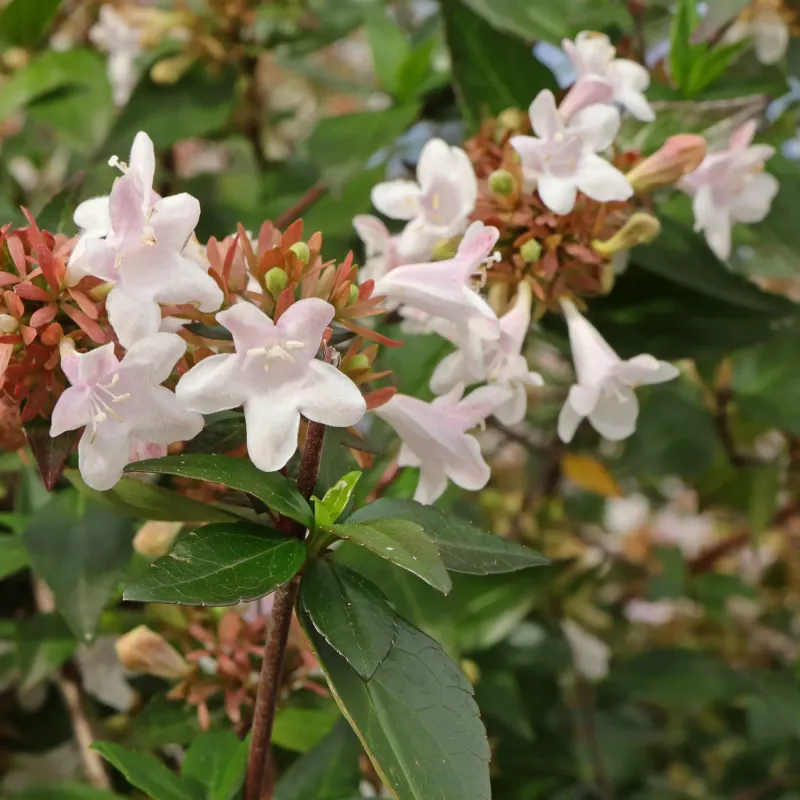
Hummingbirds treat glossy abelia like an all-day snack bar, zipping between tiny pink-white bells from late spring into fall. I love parking a lawn chair nearby just to watch the bumblebees wrestle their way into each flower.
Abelia x grandiflora is an Italian hybrid from the 1880s, and it is not considered invasive in our region. It handles zones 6 through 9, which covers most of the state except the warmest southern tip.
Standard types reach about six feet tall and wide, with arching branches that drape softly over hard edges. Growth is fairly quick, so a row of three-gallon plants often fills out nicely within one or two seasons.
Steer clear of compact varieties like ‘Kaleidoscope’ for this job, since they top out around three feet. The classic green form gives the most height, and its leaves pick up bronze tones when nights turn chilly.
Abelia tolerates drought fairly well once established, but it looks happier with a deep soak every couple of weeks.
Morning sun with afternoon shade works best in the hottest regions, where full western exposure can scorch tender tips.
Prune lightly in late winter, cutting a few of the oldest canes to the ground to keep growth vigorous. Shearing into a flat box removes the graceful arching habit, so let it stay loose and relaxed instead.
Leaves may thin a bit during hard freezes in northern areas, so mix it with evergreens for steady coverage. Down south it mostly holds foliage all year, giving you a soft green curtain that blooms for months.
6. Compact Cherry Laurel
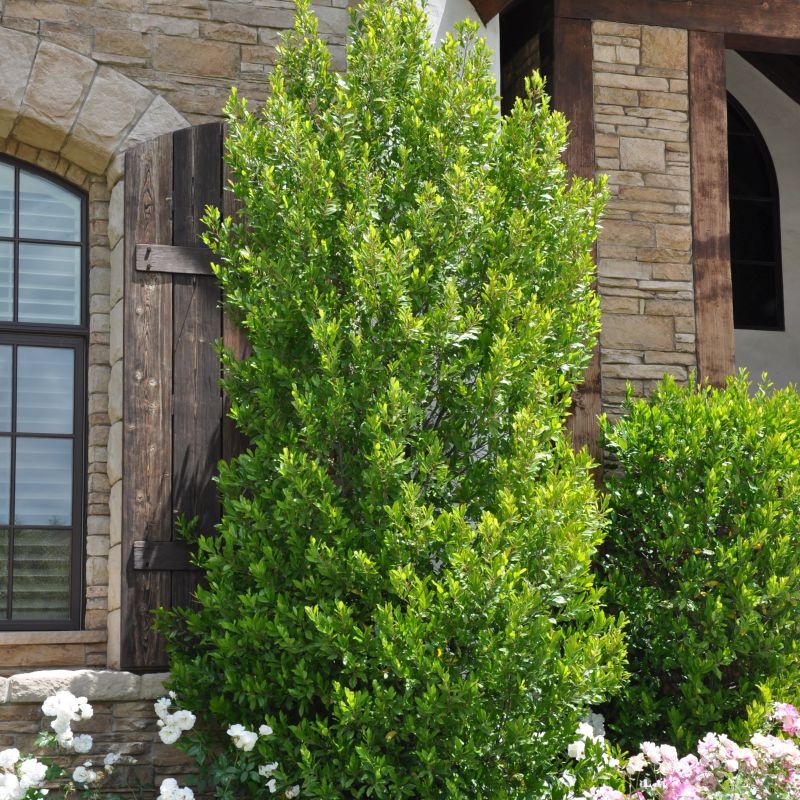
Scratch a cherry laurel twig and you will catch a faint almond scent, a quirky trait many gardeners overlook. That smell hints at compounds that make the leaves toxic to livestock, so keep clippings away from grazing animals.
Prunus caroliniana is native to eastern parts of Texas, and ‘Compacta’ is a denser selection chosen for tidy hedges.
It thrives across zones 7 through 10, handling clay or sandy soil as long as water drains reasonably well.
Expect it to reach roughly ten feet tall and six to eight feet wide, though pruning keeps it shorter. Growth runs moderate to fast, and container plants in the seven-gallon size give a strong head start.
Glossy dark leaves stay dense from top to bottom, which is exactly what you want against a bare wall. Small creamy flowers appear in early spring and feed bees when few other shrubs are blooming yet.
Black fruits follow and draw birds, but they can sprout seedlings in nearby beds if you skip cleanup. I pull those little volunteers each spring, which takes just minutes and keeps the planting looking intentional.
Full sun to part shade suits it, and established shrubs ride out summer drought with occasional deep watering.
Avoid soggy, low spots, since wet roots invite disease and can cause sudden decline in otherwise healthy hedges.
Space plants about five feet apart for a hedge that knits together quickly into a smooth green wall.
Personally, I like trimming it in early summer after flowering, which keeps the shape neat without sacrificing next year’s blooms.
7. Walter’s Viburnum
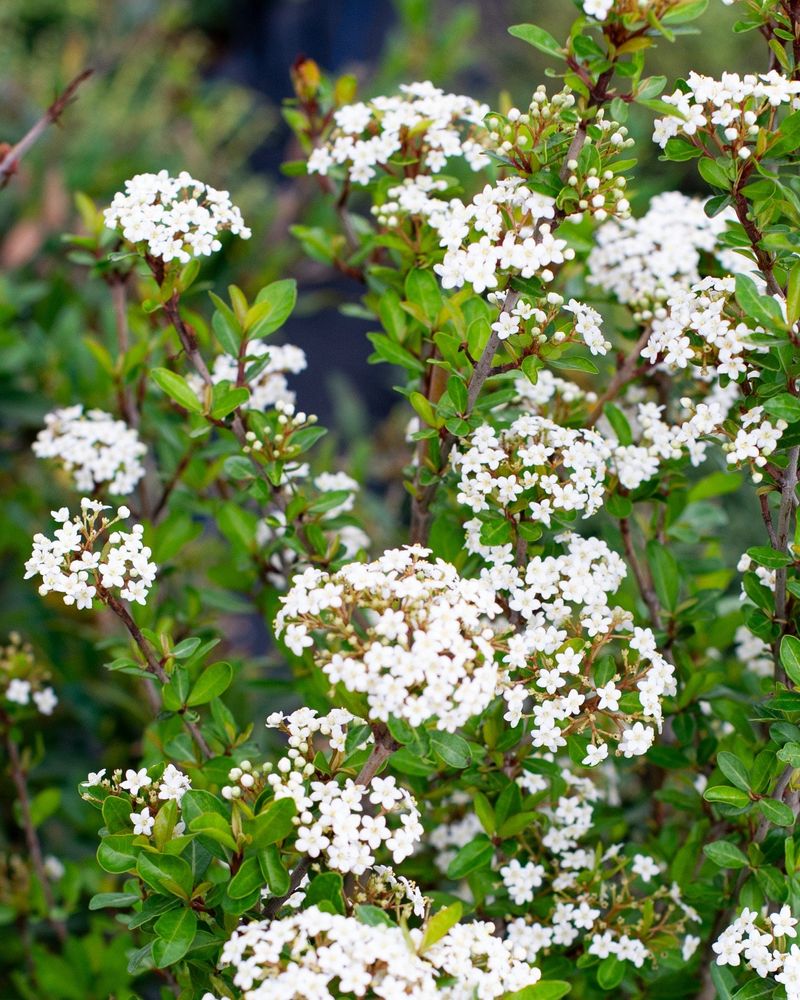
Early spring turns Walter’s viburnum into a fluffy cloud of creamy white flowers that almost hides the leaves.
You might notice butterflies drifting through in droves, and honestly, the show rivals far fussier ornamental shrubs.
Viburnum obovatum is native to the Southeast, including Florida and Georgia, and adapts well to eastern and central regions.
It grows in zones 7 through 10 and handles heat and humidity better than many of its viburnum cousins.
Full-size plants reach about ten to twelve feet tall with small, leathery leaves packed tightly along stiff branches. Dwarf selections like ‘Densa’ stay much shorter, so read tags carefully when you shop for wall coverage.
Growth is moderate to fast, and the fine texture makes it easy to shape into a formal or informal hedge. Plant in full sun or part shade, giving each shrub about six feet of room to spread out.
One of its oddest talents is tolerating both brief flooding and dry spells once its roots get established. That makes it handy along walls where gutters dump water during storms but soil bakes dry afterward.
Plan to water weekly through the first hot season, since this species is only moderately drought tolerant overall.
A thick layer of shredded mulch keeps roots cooler and stretches the time between your watering trips noticeably.
Small berries ripen from red to black and vanish quickly once mockingbirds and catbirds discover the buffet. Light pruning right after spring bloom keeps the plant full without cutting off next year’s flower buds.
8. Desert Olive
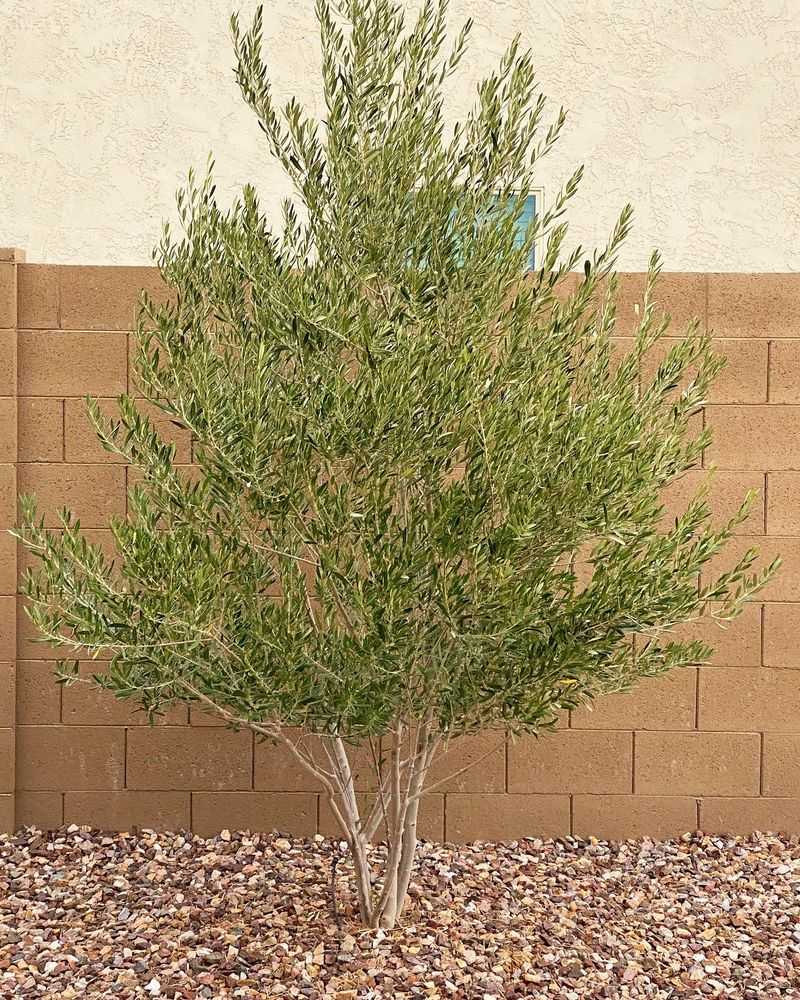
Tiny greenish flowers appear on bare desert olive stems in late winter, sometimes before almost anything else wakes up. Early bees find them fast, and I admit I enjoy seeing pollinators working while the rest of the yard naps.
Often sold as Texas elbowbush, Forestiera angustifolia grows wild across South Texas brushland and rocky central hillsides.
Its stiff, tangled branches hold narrow little leaves that create a fine-textured, almost hedge-like look without much effort.
Most plants reach six to ten feet tall, which is plenty to hide a typical backyard block wall. Growth is moderate, so buying larger container plants gives you the best shot at real coverage next summer.
It may drop some leaves during hard freezes up north, yet it stays fairly evergreen in warmer southern zones. Pairing it with yaupon or cenizo helps cover any thin patches that appear after an unusually cold winter.
Full sun and well-drained, alkaline soil make it happiest, and established plants need very little extra water.
A deep monthly soak during brutal summer droughts keeps leaves from looking tired along a hot western wall.
Female plants produce small dark fruits that songbirds and even quail eat, which adds life to your screen. The dense, twiggy interior also gives small birds a safe hiding spot from hawks and roaming neighborhood cats.
Shear it lightly if you prefer a formal edge, since it tolerates shaping better than many native shrubs do. Nurseries specializing in native plants usually carry it, and it is well worth asking for by name.