The Easy Trick That Turns One Virginia Rose Bush Into Many
A rose stem no longer than a pencil can grow into a full-blooming shrub with its own roots. Old farm roses along Virginia fences often started this way, passed from one neighbor to the next in a damp cloth.
The whole secret involves a tiny wound. A light scrape near the base of a stem wakes up hidden tissue that can form new roots. I love that something so small can make such a big difference.
You don’t need a greenhouse, a fancy kit, or years of practice. You need a healthy plant, a sharp blade, a pot of gritty soil, and some patience. Personally, I find the waiting part the hardest.
So what happens when you give that favorite bush by the porch a chance to copy itself? You might end up with more roses than you have room to plant. Which friend gets the first one?
One Healthy Rose Stem Holds More Promise Than You Expect
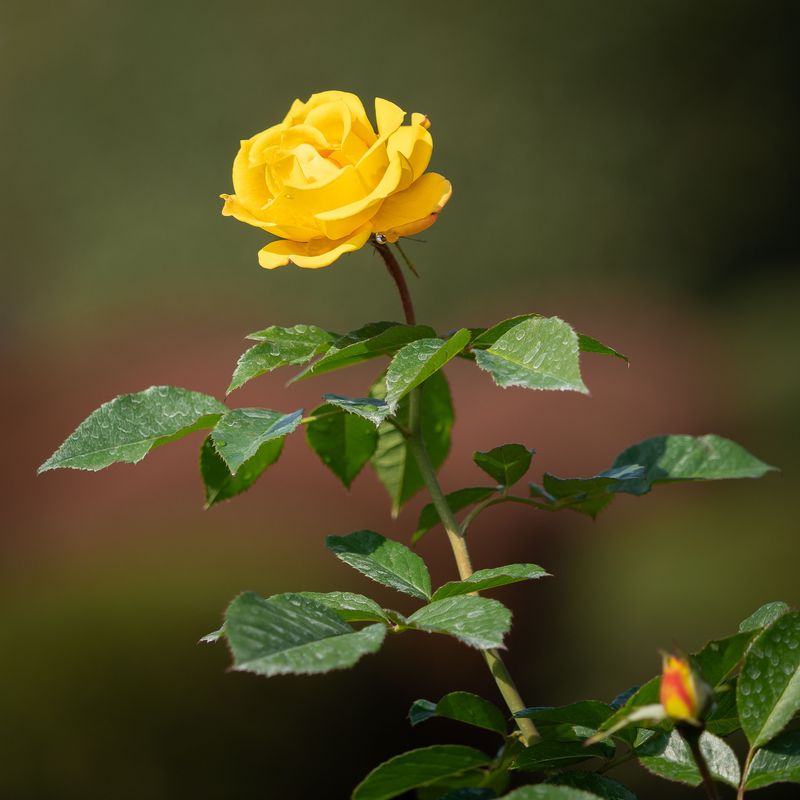
Every rose cane carries tiny growth points called nodes. Those little bumps where leaves attach can sprout roots if the stem lands in the right conditions.
Gardeners call this method propagation by cuttings. You take a short piece of the parent plant and coax it into growing roots of its own.
The new plant is a genetic match, so the flowers look and smell just like the original.
I find that part thrilling. That climbing rose your grandmother loved can live on in your yard and in your kids’ yards too.
Many old homesteads still have heirloom roses that were shared this way for generations.
The trick has three simple steps. First, you cut a section of stem.
Next, you scratch the bottom to expose the green layer under the bark. Finally, you plant it in moist, loose soil and let time do the rest.
Success rates vary. Some cuttings root quickly, while others sulk and give up.
Experienced growers usually take several cuttings at once, knowing a few may not make it.
Roses grown from cuttings are called own-root roses. They grow on their own roots instead of being grafted onto another variety.
That means if a hard winter knocks the top back, the plant that regrows is still the rose you wanted.
Pick Pencil-Thick Rose Canes Right After The Blooms Fade
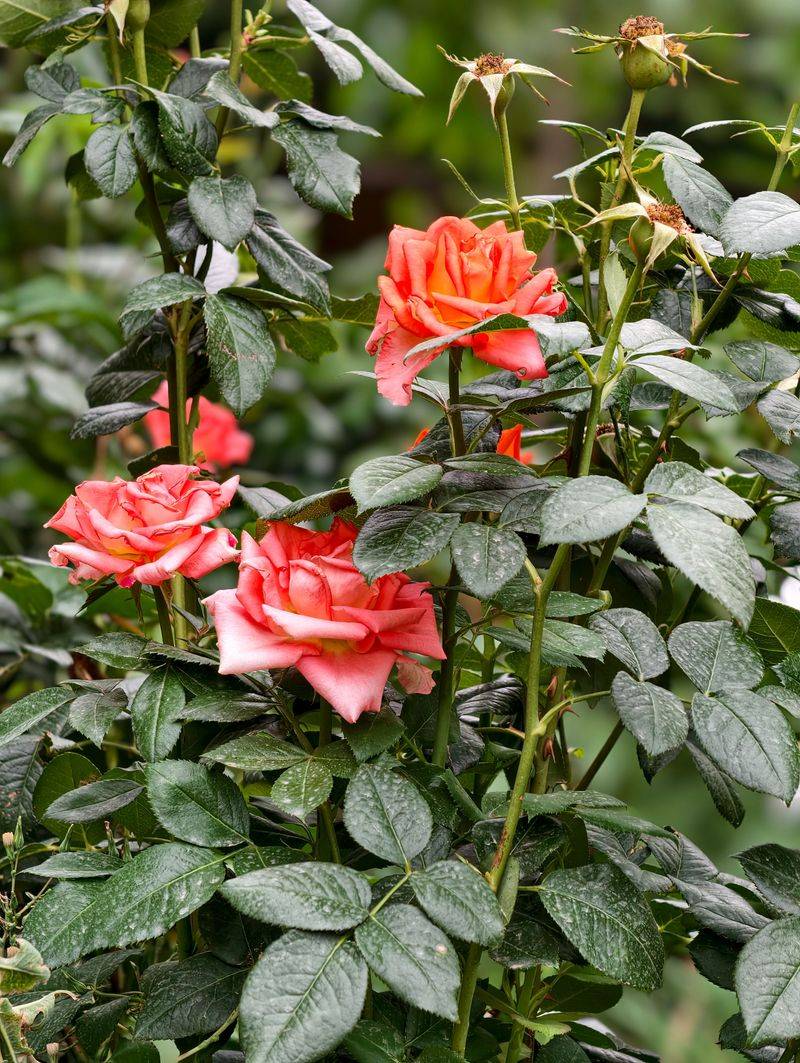
Choosing the right stem matters more than any product you could buy. Look for growth from this season that feels firm and is about as thick as a pencil.
A great clue sits right at the top. Stems that just finished blooming, or where petals have dropped and hips are starting to swell, are usually at the right stage of maturity.
Skip skinny, floppy shoots and old woody canes with gray bark.
Health counts too. Avoid stems with black spots, yellow leaves, or signs of pests, since problems can follow the cutting into its new life.
Morning works best for collecting. Plants are full of water then, so the stems stay crisp longer.
I like to carry a damp paper towel or a jar of water and tuck each cutting in right away.
Aim for pieces about 6 to 8 inches long. Each one should have at least three or four nodes along its length.
Take more than you think you need. If you want three new bushes, try eight or ten cuttings.
The extra effort costs almost nothing and greatly raises your odds of ending up with healthy young plants. Label them too, especially if you clip from several varieties, because tiny rose plants look very similar.
A Light Scratch On The Rose Cutting Base Wakes Up New Roots
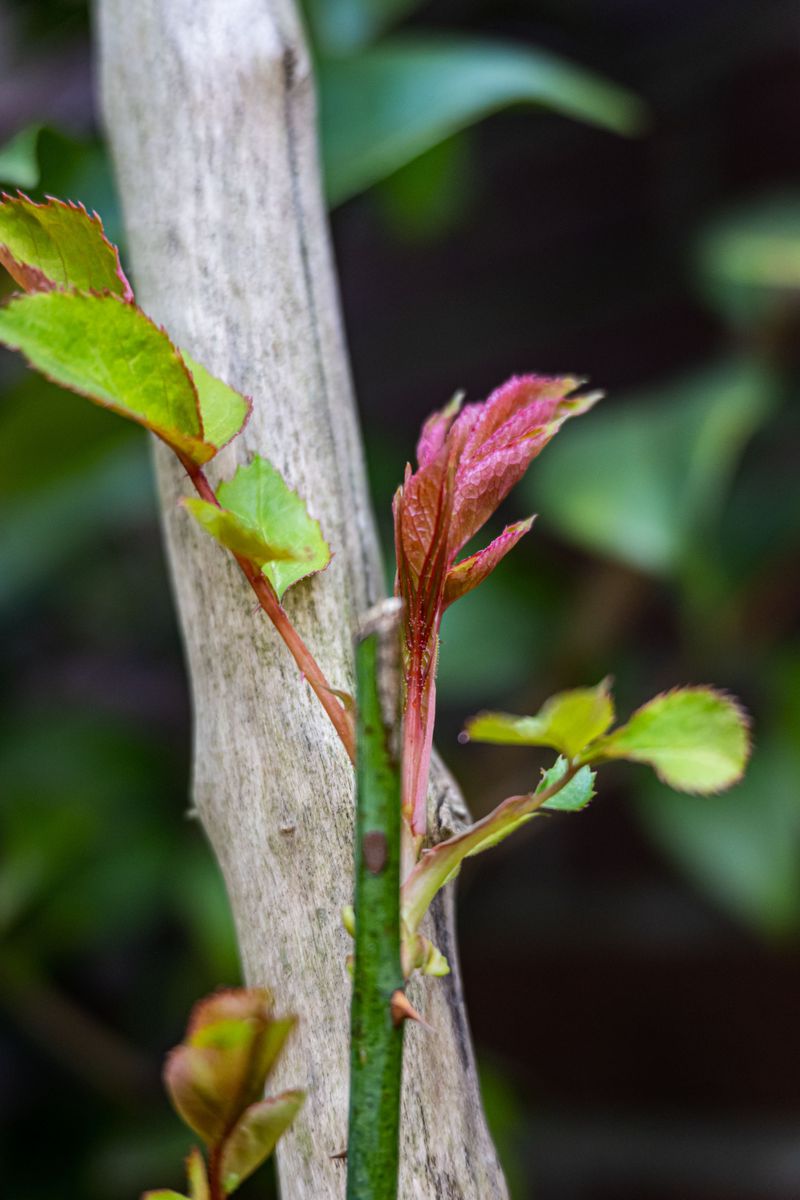
Here comes the clever part. That small scrape is what gives this trick its name, and it works for a real reason.
Just under the thin outer skin lies the cambium, a green layer of active cells. Exposing it lets the cutting form callus tissue and roots more readily, and it helps rooting hormone soak in.
Many extension guides recommend this wounding step for woody cuttings.
Start by trimming the bottom of the stem at a 45-degree angle just below a node. Then strip off all leaves except the top two sets.
Snip off the lower thorns too, so they don’t get in the way.
Now grab a clean knife. Gently scrape the bark on one or two sides along the bottom inch.
You want to see a thin strip of green, not a deep gouge into the white wood.
Dip the wounded end into rooting hormone powder or gel. Tap off the extra, because a thin coat works better than a thick clump.
Hormone is optional, yet it often improves results.
Keep your tools clean. Wipe blades with rubbing alcohol between plants to avoid spreading disease.
Sharp tools matter as well, since a crushed stem has a harder time healing.
Plant Your Rose Cuttings Under A Clear Jar Or Bottle Dome
Picking the right soil mix comes next, and loose is the magic word. Roots form best in a gritty medium that holds moisture but lets extra water drain away.
A simple blend of equal parts coarse sand and perlite works well. A good seed-starting mix or well-draining potting soil is fine too.
Wet the mix before planting so it feels like a squeezed-out sponge.
Poke a hole 3 to 4 inches deep with a pencil. That way, the hormone stays on the stem instead of rubbing off.
Slide the cutting in so at least two nodes sit below the surface, then press the soil firmly around it.
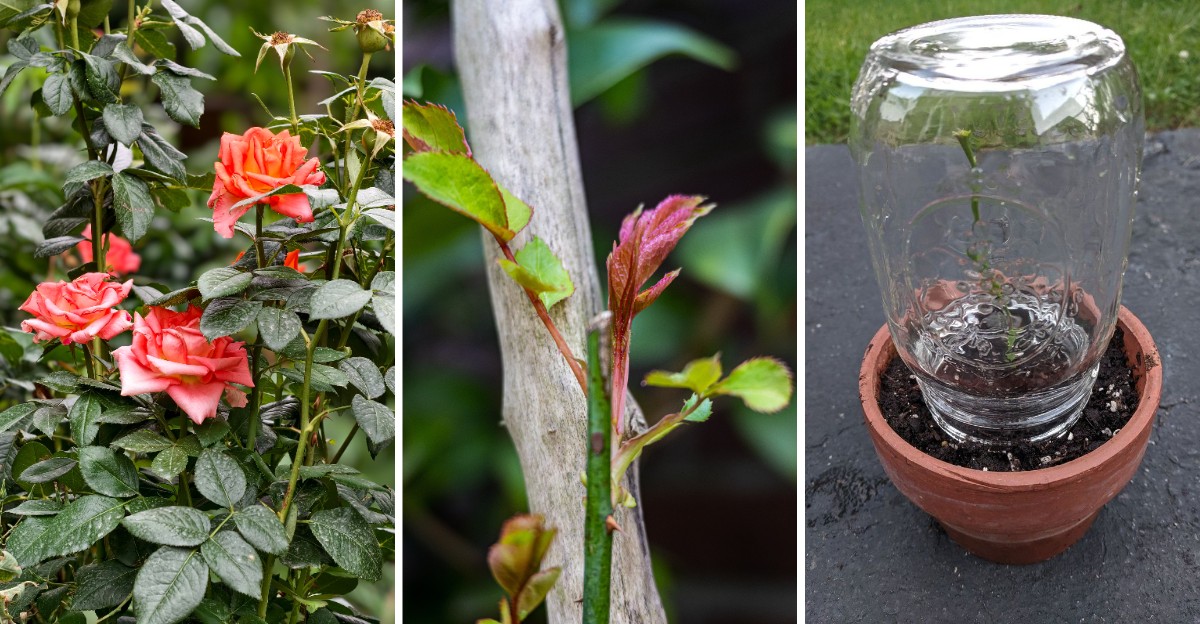
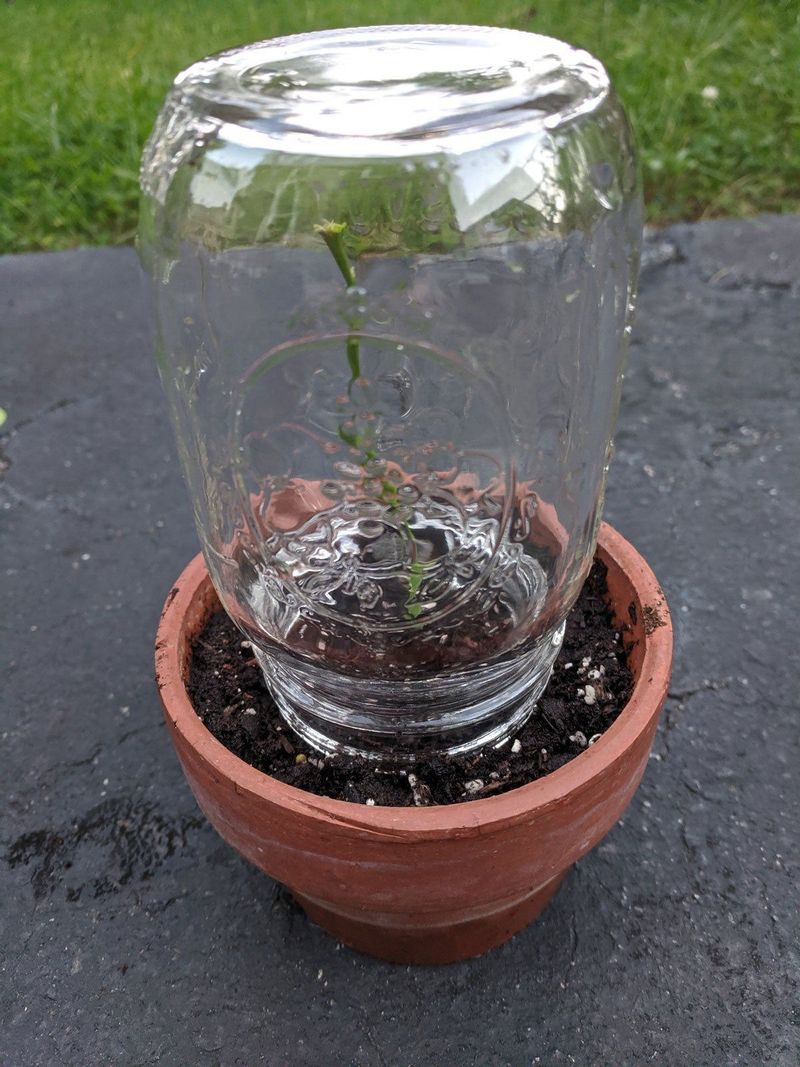
Moisture in the air keeps leaves from drying out before roots exist. A clear plastic bottle with the bottom cut off makes an easy mini greenhouse.
Old glass jars work nicely too, and many grandparents used canning jars for this exact job.
You can root cuttings in pots or right in a garden bed. If you go with the ground, choose a spot with bright light but some afternoon shade.
I like to put a small stake beside each one. It reminds me exactly where my future roses are hiding, especially once leaves and mulch start to pile up.
Virginia Seasons Decide Which Rose Cuttings Work Best

Timing can feel confusing, but roses give you several chances each year. The type of cutting changes with the season.
Softwood cuttings come from fresh, flexible growth in late spring and early summer. They often root fastest, sometimes in a few weeks, but they wilt easily and need steady humidity.
Semi-hardwood cuttings come from firmer stems in late summer and early fall.
Hardwood cuttings come from mature, leafless canes during dormancy, roughly November through February. Many gardeners like these because they need less fuss.
In Virginia, folks often stick them in the ground in a sheltered spot and let them root slowly through winter and spring.
Virginia spans roughly USDA zones 6 through 8. Mountain gardeners in the west deal with colder winters, while the Tidewater area and Hampton Roads stay milder.
That means hardwood cuttings may need more protection in places like Blacksburg than in Norfolk.
Summer heat across much of the state can be tough on softwood cuttings. Keep them in bright shade and check moisture often during muggy July stretches.
My advice is simple. Try a few cuttings in two different seasons and see what your yard prefers.
Your own results will teach you more than any calendar.
Heirloom And Native Roses Root Far Easier Than Fancy Hybrids
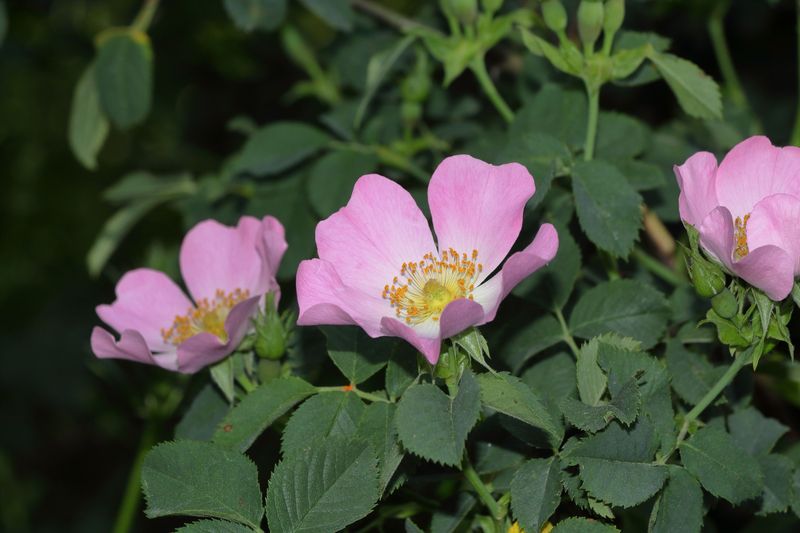
Not every rose plays along. Old garden roses, shrub roses, many climbers, and native wild roses tend to root with little trouble.
Virginia even has its own native species. Carolina rose and swamp rose grow wild here and can make lovely, pollinator-friendly additions.
Both can often be started from cuttings, giving you local plants that suit the region.
Modern hybrid teas are another story. Many are grafted onto tough rootstock because they grow weakly on their own roots.
Cuttings may root, but the plants often grow slower and smaller.
A legal detail surprises lots of people. Many newer rose varieties are protected by plant patents, which typically last 20 years.
Making copies of a patented rose without permission is not allowed, even for personal use. Check the plant tag for a patent number or the words PPAF.
Older varieties with expired patents are fair game. So are most heirloom roses passed along at church sales and garden club swaps.
One more caution matters a lot. Multiflora rose is invasive across the state, so please don’t propagate or share it.
Its clusters of small white flowers look sweet, but it spreads aggressively into fields and woods.
Watch For New Leaves And A Gentle Tug Test On Young Roses
Patience becomes your best tool after planting. Some softwood cuttings root in two or three weeks, while hardwood ones can take months.
Keep the soil evenly moist but not soggy. Soggy soil invites rot, and dry soil stops roots from forming.
Bright, indirect light works best, because hot afternoon sun can cook a cutting under a clear cover.
Watch for signs of life. Fresh leaf buds are encouraging, though leaves sometimes appear before roots do.
The real proof is resistance when you give the stem a very gentle tug.
White roots peeking from a pot’s drainage holes are another happy clue. Leave the cover on until you see steady new growth.
Then remove the jar or bottle slowly. Lift it for an hour or two a day at first, then a little longer each day.
This helps the plant adjust to drier air.
Don’t panic if a cutting turns black or brown. That happens, and it simply means that one didn’t take.
Pull it out so it doesn’t spread mold to its neighbors.
Avoid fertilizing until roots are well established. Strong feeding too early can burn tender new roots, so a weak dose later works better.
Move Your New Rose Bushes Into The Garden And Share The Extras
Your little rose plants have earned a real home. Most do best spending several months in pots to build strong roots before going in the ground.
In Virginia, many gardeners move rooted cuttings outdoors in early spring or fall, when temperatures are mild. Avoid the hottest part of summer, when young plants dry out fast.
Roses love sun. Pick a spot with at least six hours of direct light and soil that drains well.
Morning sun is a bonus, since it dries dew from the leaves and helps reduce black spot.
Dig a hole a bit wider than the pot and set the plant at the same depth it grew before. Water deeply, then add two or three inches of mulch, keeping it away from the stem.
Expect slow growth in year one. Own-root roses often focus on roots first and put on more size in their second and third years.
Small blooms may show up early, and I like to pinch some off so energy goes to the roots.
Extra plants make wonderful gifts. A rose rooted from your own garden carries a story with it.
Teachers, neighbors, and new homeowners all seem to light up when you hand one over.