The Tan Fuzzy Patches On Your New Jersey Tree Trunks Look Harmless But Spring Is Coming For Your Leaves
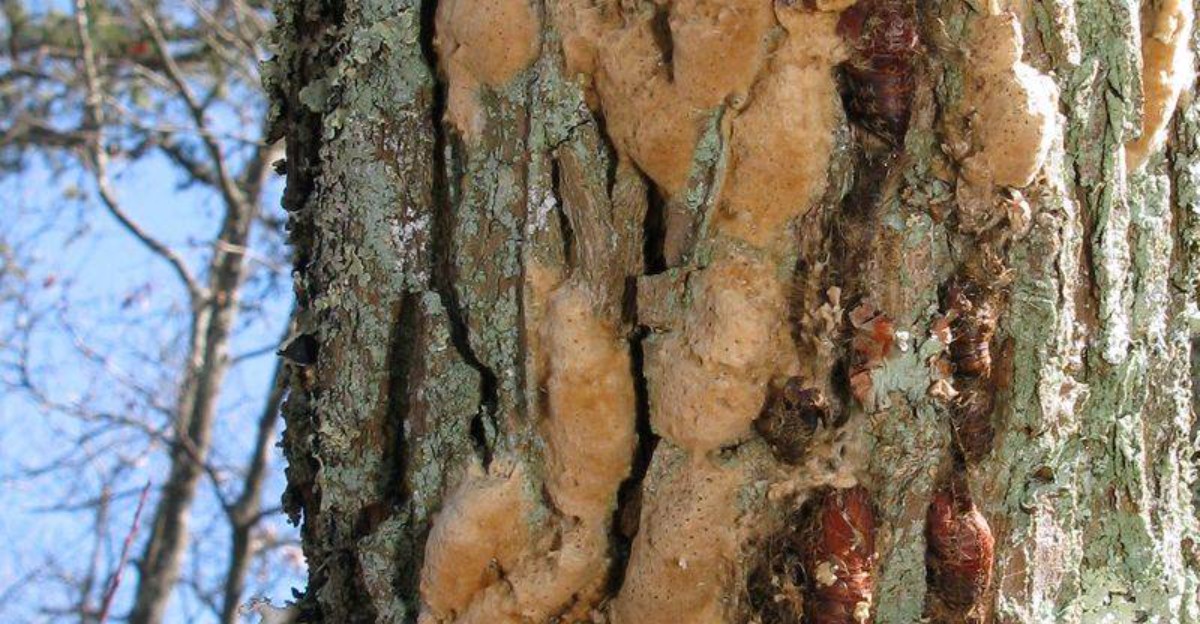
One tan, fuzzy smudge on an oak trunk can hold hundreds of eggs. I learned that while poking at a patch I had walked past all winter.
Each patch is covered in hairs from the mother moth’s own body. The texture feels a bit like felt or a dry sponge, and it blends right into gray bark. You might notice them on fences, firewood, and patio chairs too.
Here in New Jersey, these patches sit quietly from late summer through the cold months. Nothing seems to happen, so most of us shrug and move on.
I skipped them for years before I connected them to the chewed-up leaves I saw every June.
Now I check every trunk in my yard before the buds swell. Inside each quiet patch, hundreds of hungry caterpillars are waiting, and spring is the alarm clock.
Those Tan Fuzzy Patches On Oak Bark Are Hiding A Spring Surprise
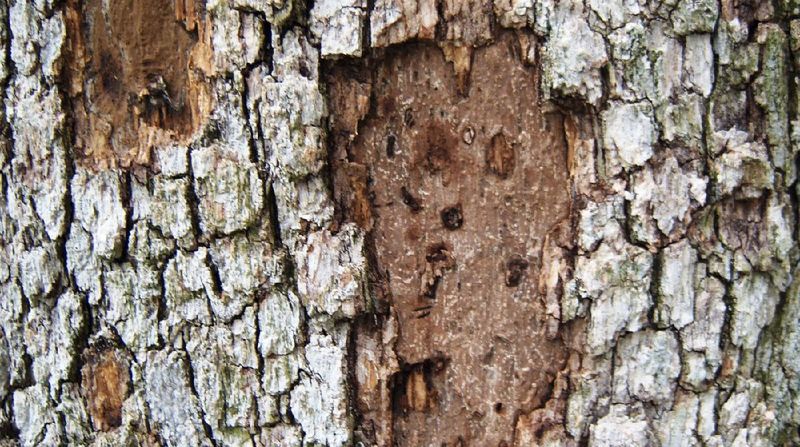
Run a finger over one of those patches and it feels soft, almost like a cotton ball pressed flat. That softness is the whole trick. It looks like a bit of bark texture, not a threat.
Each patch is about the size of a quarter to a thumb, oval in shape, and tan to light brown in color. Fresh ones look buff and puffy. Older patches from past years often look faded, pale, and a little ragged.
The location tells you a lot. Look on the shady or sheltered side of trunks, under branches, in bark cracks, and around the base of trees.
They also appear on stone walls, sheds, picnic tables, and the underside of outdoor furniture.
I started counting them one February morning with a cup of tea in hand. By the third tree I had stopped smiling. A few patches can turn into a lot of hungry mouths, and they almost never come alone.
Spend ten minutes walking your New Jersey yard on a mild winter day. Bring your phone and snap pictures of anything fuzzy and tan. You will want those photos for the next step.
Spongy Moth Egg Masses Are The Usual Culprit
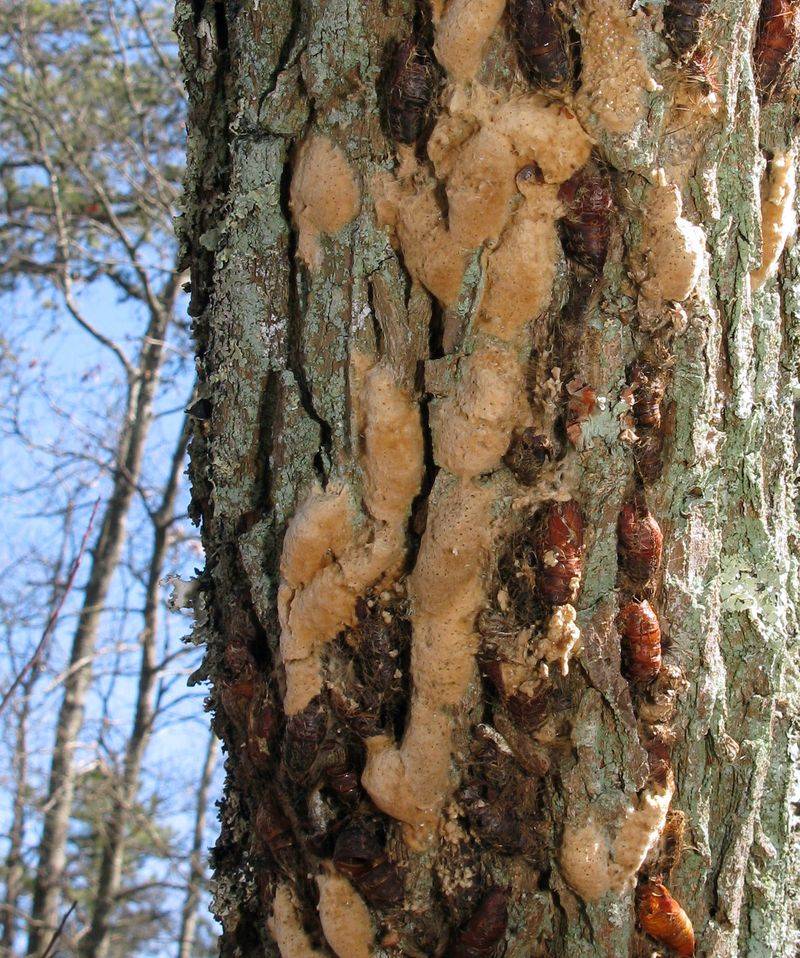
Meet the spongy moth, the insect once called the gypsy moth. The name changed in 2022, and the new one fits the egg masses perfectly since they feel spongy when pressed.
Female moths lay these masses in July and August. Each one can hold roughly 100 to 1,000 eggs, according to Rutgers Cooperative Extension. The mother covers them with tan hairs from her body to protect them through winter.
The species is not native. It arrived in Massachusetts in 1869, and it has been chewing through New Jersey forests for decades.
The New Jersey Department of Agriculture runs a yearly survey because outbreaks rise and fall over time.
Some years are quiet. Other years, entire hillsides look bare in early summer. Weather, natural diseases, and predators all play a part in those swings.
Here is a helpful detail for identification. Spongy moth masses are tan and fuzzy, while lichens are gray-green and crusty or leafy. If the patch crumbles into tiny round beads when scraped, you have found eggs.
Once you know the shape and color, you start spotting them everywhere. That is a good thing, because spotting them early gives you real power.
Scrape Those Egg Masses Into Soapy Water Before The Buds Open
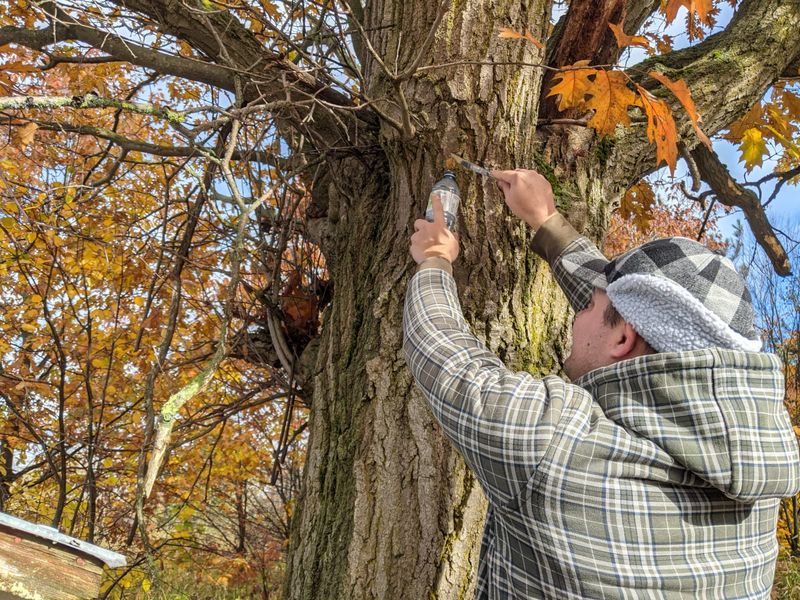
A plastic putty knife and a bucket might be the best tree tools you own this season. Scraping egg masses is cheap, simple, and surprisingly satisfying.
Fill a container with warm, soapy water. Hold it under the patch and scrape firmly so the eggs fall straight in. Let them soak for at least two days before tossing them out.
Do not just knock the masses onto the ground. The eggs can still hatch in the grass or leaf litter. Bagging them and leaving the bag in the sun works too.
Wear gloves for this job. The hairs can irritate skin, and some people get an itchy rash after handling them. Long sleeves help if you are reaching into rough bark.
Timing matters most. Egg masses can be removed anytime from August through April, before hatching starts. In many parts of the state, caterpillars appear in late April or early May.
For high patches, a long-handled scraper helps. Skip ladders on icy days, and leave tall trees to a certified arborist.
You will not catch every mass, but each one removed means fewer caterpillars chewing your oak leaves later.
Tiny Hairy Caterpillars Climb Up Your Trees In Late April
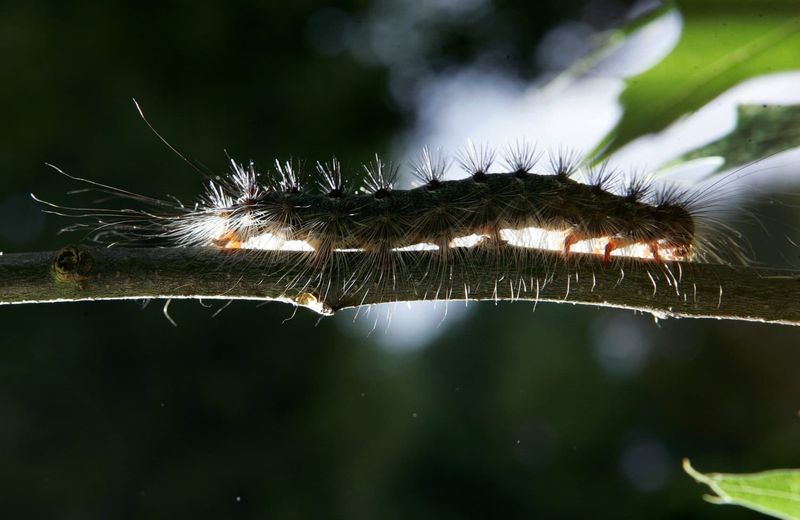
Warm spring days wake the eggs up. Little black, hairy caterpillars wriggle out and march up the trunk toward the new leaves.
Young caterpillars have a clever travel trick. They spin silk threads and dangle from branches until the wind carries them off. This is called ballooning, and it helps them spread to nearby trees.
As they grow, the caterpillars change. Older ones have rows of blue and red dots along their backs, five pairs of blue followed by six pairs of red. That pattern makes them easy to identify.
Feeding peaks in late May and June. Large caterpillars feed mostly at night and hide during the day in bark crevices or under loose debris. You might hear a faint sound like rain, which is actually droppings falling from the canopy.
A simple burlap band can help in summer. Wrap a strip around the trunk, fold it over twine, and check underneath each afternoon. Brush any caterpillars hiding there into soapy water.
Skip sticky bands placed directly on bark. They can trap birds, squirrels, and helpful insects. Burlap does the job without those problems.
Defoliated Oak Branches in June Are What Heavy Feeding Leaves Behind
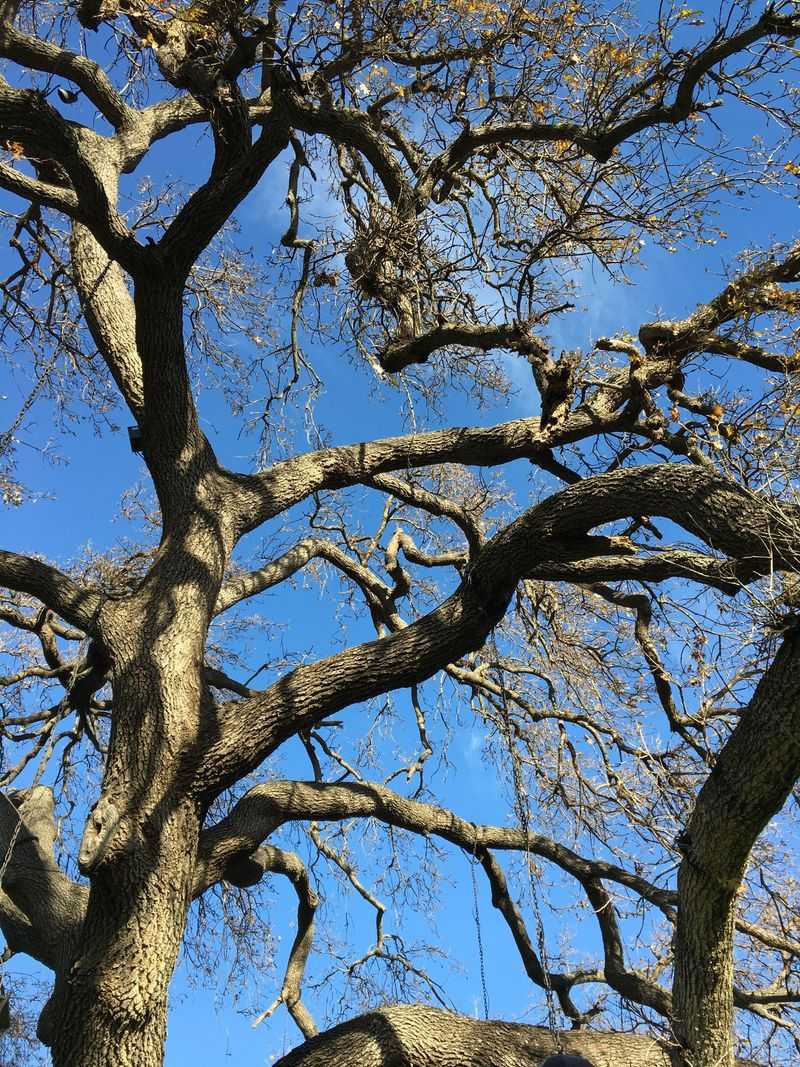
June should look lush and shady. In a bad outbreak year, oaks can look more like November instead, with thin, ragged crowns and holes everywhere.
Spongy moth caterpillars favor oaks, but they also feed on maples, birches, aspens, willows, apples, and many other trees. Large caterpillars will even munch pines and spruces when hardwoods run out.
Most healthy hardwoods push out a second set of leaves by midsummer. That regrowth costs the tree stored energy, though. One rough year usually is not a crisis.
Repeated defoliation is the real worry. Two or three years in a row can weaken trees, especially oaks already stressed by drought.
Weakened trees become easier targets for borers and root diseases, and some may decline over time.
Evergreens have a harder time bouncing back. Conifers do not regrow lost needles the same way hardwoods replace leaves, so heavy feeding hits them harder.
I keep a little notebook of which trees lost leaves each year. It sounds fussy, but patterns appear quickly. Trees that get hit year after year deserve extra watering and closer monitoring.
Gray-Green Lichen And Moss On Bark Are Usually Fine
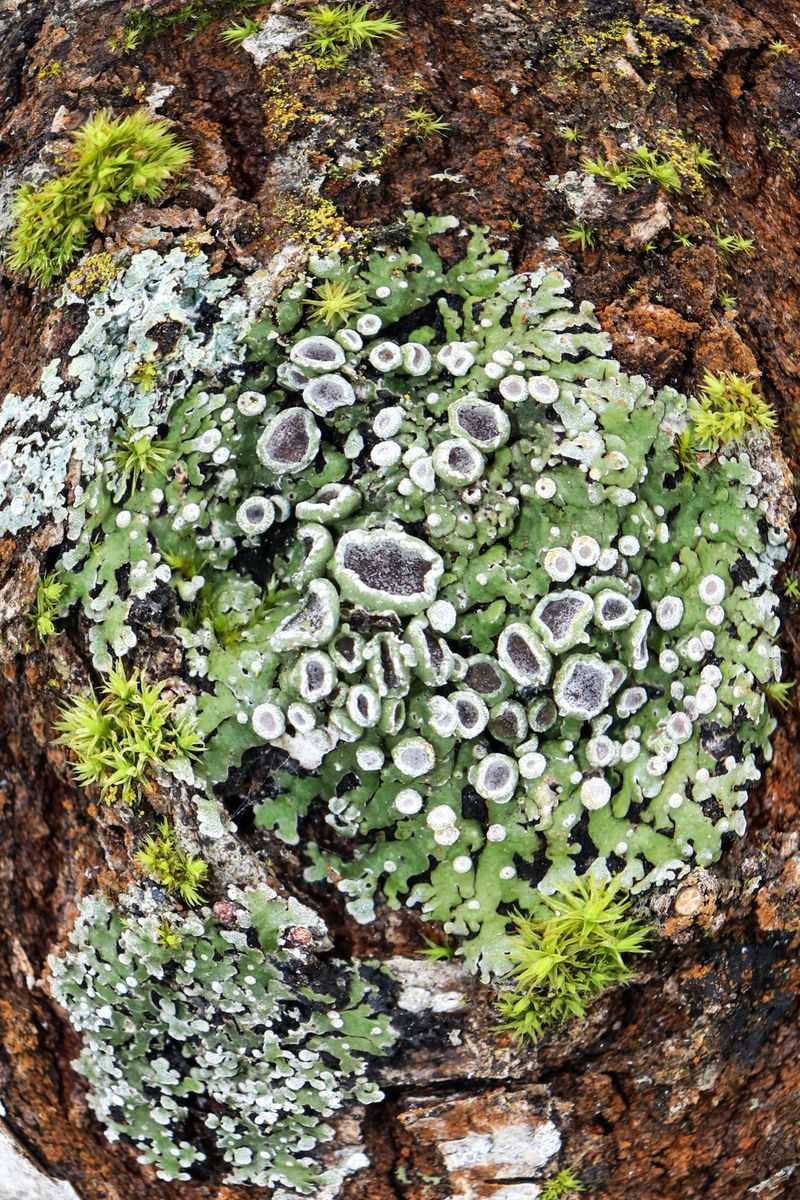
Not every fuzzy thing on bark is a villain. Lichens get blamed all the time, and they rarely deserve it.
A lichen is a partnership between a fungus and an alga or cyanobacteria. It grows on bark the way it grows on rocks, simply using the surface as a place to live. It does not take water or nutrients from the tree.
Lichens come in gray, green, pale yellow, and even orange. Some look crusty, some look leafy, and some look like tiny shrubs.
They often stand out on older trees or branches with thinning leaves because more sunlight reaches the bark.
Moss is another harmless neighbor. It looks like soft green velvet and loves shady, damp sides of trunks. Scrubbing it off can actually scrape and injure the bark.
Fun fact for curious kids and grownups alike. Many lichens are sensitive to air pollution, so a healthy lichen crop can be a sign of fairly clean air.
So how do you tell the difference fast? Tan, fuzzy, and oval points to spongy moth eggs. Green, gray, or flaky usually means you can relax and enjoy the show.
White Cottony Scale Insects And Sooty Mold Can Fool You Too
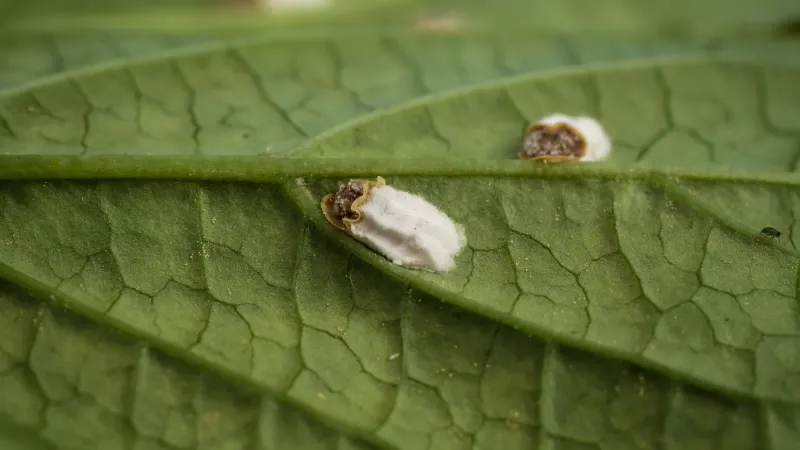
Some bark patches look woolly or cottony instead of tan. Those may be scale insects, a different pest group that sucks sap from branches and twigs.
Cottony maple scale, for example, forms white fluffy egg sacs on maple twigs in late spring. Beech scale makes white woolly patches on beech trunks, and it can open the door to beech bark disease.
Many scale insects drip a sticky liquid called honeydew. If your car parked under a tree feels tacky, honeydew might be the reason.
Sooty mold does not infect leaves directly. It sits on top like dust and blocks sunlight, which can slow growth. Controlling the insects makes the mold fade over time.
Horticultural oil sprayed in the dormant season can smother overwintering scale. Another spray window comes when the tiny crawlers hatch in spring or summer.
Always follow the label and check timing with Rutgers Cooperative Extension resources. Lady beetles and tiny parasitic wasps also feed on scale. Avoiding broad insecticides helps keep those helpers around and working for you.
A Quick Winter Trunk Check Keeps Your Tree Canopy Full
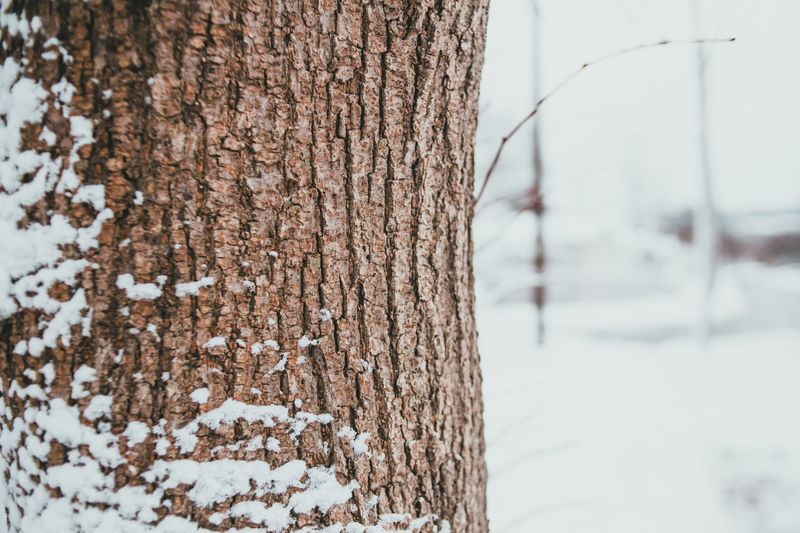
My favorite tree habit costs nothing. Every few weeks between fall and April, I walk the yard and look closely at every trunk, wall, and woodpile.
Healthy trees handle pests far better than stressed ones. Water deeply during dry spells, especially in late summer. Spread two to three inches of mulch in a wide ring, keeping it a few inches away from the trunk.
Nature helps too. A fungus called Entomophaga maimaiga and a virus known as NPV often knock caterpillar numbers down, especially in wet springs. Birds like cuckoos, along with white-footed mice, eat caterpillars and pupae.
For valuable trees in heavy outbreak areas, talk to a certified arborist. Treatments such as Btk, a natural bacterial product, work best on young caterpillars in spring.
Some New Jersey towns also join state suppression programs, so check with your municipality.
Moving firewood or outdoor gear? Inspect it first so egg masses do not hitch a ride to new places.
A full summer canopy starts with a few minutes of attention right now. Grab your scraper, check those trunks, and give your trees a head start before spring arrives.