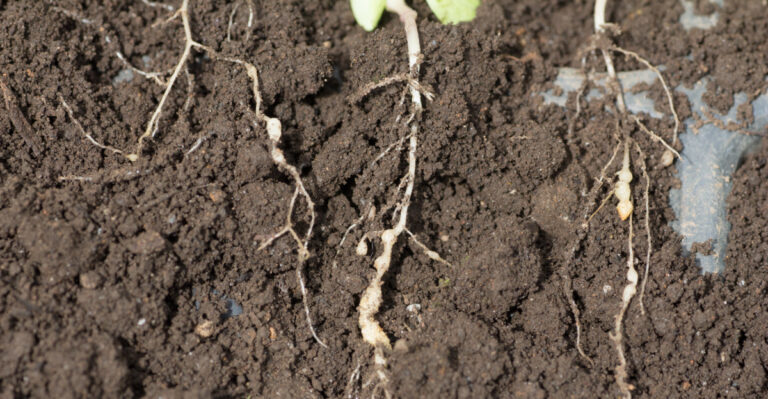
Watch Local Forecasts Near 50°F to Protect Your Potted Desert Rose
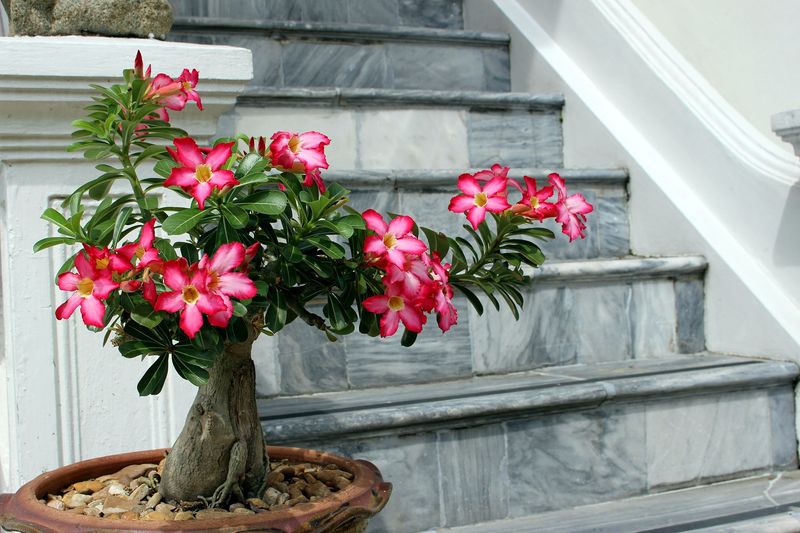
A tropical plant with a swollen trunk can feel chilly well before frost shows up. That is the story of the desert rose, and it surprises many growers.
Cool nights in October can start the trouble long before a freeze. I want your plant to wake up next spring happy, so let us sort out the timing.
Use 50°F as a Local Warning Point
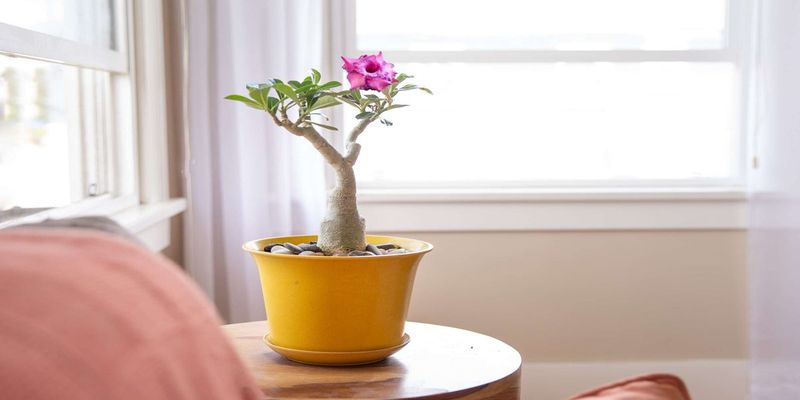
Forget waiting for frost. University of Arizona Cooperative Extension says the common desert rose, Adenium obesum, may show cold damage below 50°F.
It recommends stopping water and moving plants indoors or to a sheltered location once nights drop under that mark.
So when your local forecast starts creeping toward 50°F at night, that is your cue to act. Think of the number as a warning light on the dashboard.
It tells you trouble is possible, not that one chilly dip will injure every plant.
Sensitivity varies among adenium species and cultivars, and Adenium obesum is especially cold-sensitive. Lower temperatures and longer exposure also raise the risk of damage.
A single brief dip is less worrying than several cold nights in a row, but moving early gives you room for error.
Remember that the name desert rose is only a common name. These plants come from regions stretching from South Africa to the Arabian Peninsula, and they are not Arizona natives or built for winter cold.
Let Local Conditions Guide the Timing
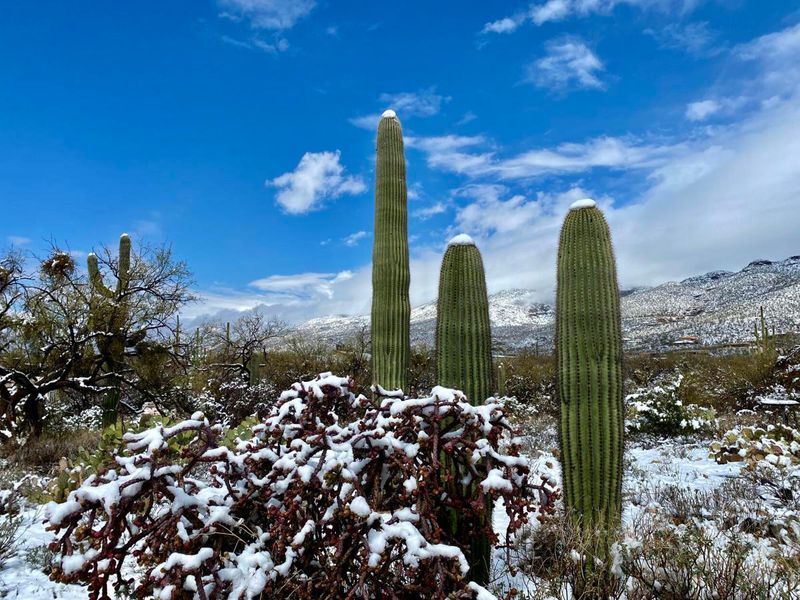
Your neighbor across town may have a very different October than you do. Arizona spans low deserts and high elevations, so one statewide date simply does not work.
Check your own nighttime forecast and notice how your yard behaves, such as cold pockets or open, exposed spots.
For regional context, the National Weather Service in Tucson lists average first 32°F freeze dates across southeastern Arizona. They run from October 24 at Duncan to December 3 at Tucson.
These are freeze averages for that region, not statewide dates.
They also are not the same as the adenium warning point. Your desert rose can be in trouble weeks before a freeze ever arrives, because 50°F comes first.
Frost cloth is a general frost tool, and you can read about it in University of Arizona frost protection advice. It does not replace a dry, protected winter location for this plant.
Treat it as a backup for a cold snap, not as the plan.
Choose a Dry, Protected Winter Spot
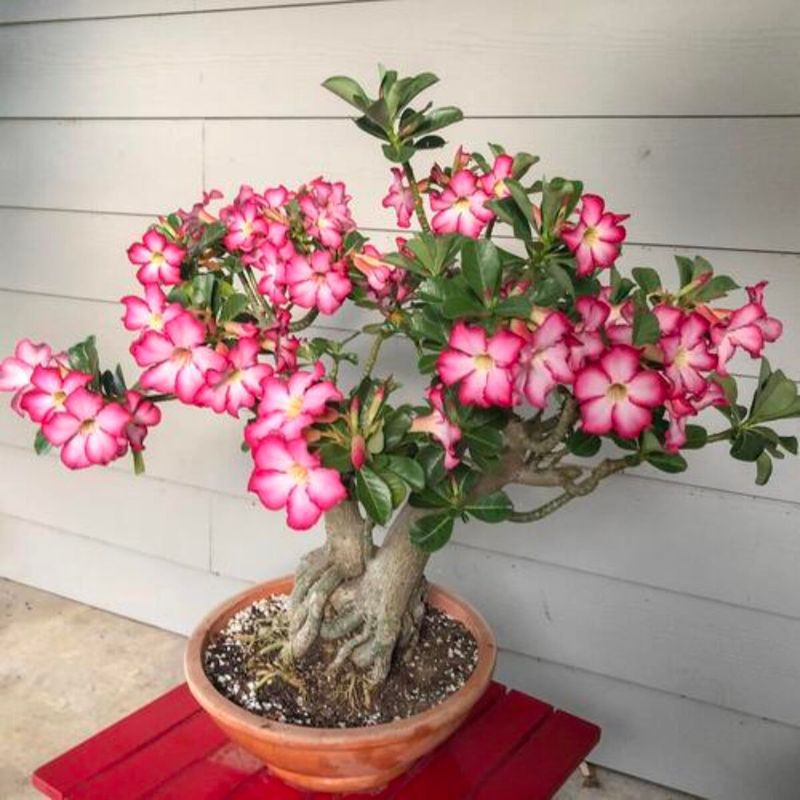
This is why a pot beats a garden bed. The University of Arizona recommends growing adeniums in containers so you can move them with the seasons, and it advises against planting them in the ground in Arizona.
Look for a spot shielded from both cold and rain. Use a fast-draining mix and a pot whose drainage holes are not blocked, so water never sits around the roots.
Bringing the plant in does not mean turning it into a lush houseplant. A covered, sheltered location can work, and the Desert Botanical Garden says a dormant plant can be stored with minimal light.
A covered patio corner, a shed, or a garage may fit, as long as it stays protected from cold and wet. Pick the place before the forecast forces your hand.
Inspect the Plant and Handle It Carefully
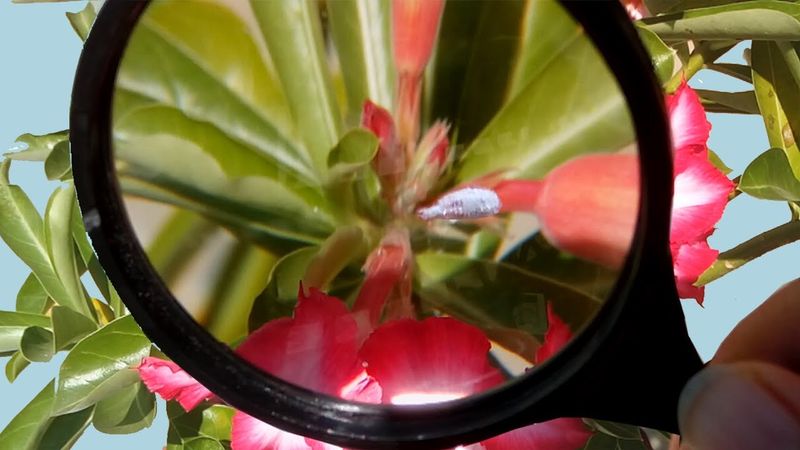
Hitchhikers love a cozy move. Before the plant goes anywhere, check the leaves, stems, soil, and pot.
The University of Arizona notes that adeniums can host aphids, spider mites, and mealybugs, including root mealybugs.
Look under leaves and along stems, then peek at the soil surface and the pot itself. Root mealybugs hide below ground, so the soil and pot deserve a close look.
Indoor spaces can make pest problems harder to spot, which is covered in guidance on indoor plant care.
Handle the plant with care too. The University of Arizona cautions you to keep the sap away from your eyes.
The ASPCA lists the plant as toxic to dogs, cats, and horses if ingested, so pick a storage spot pets cannot reach.
Keep Winter Soil Mostly Dry
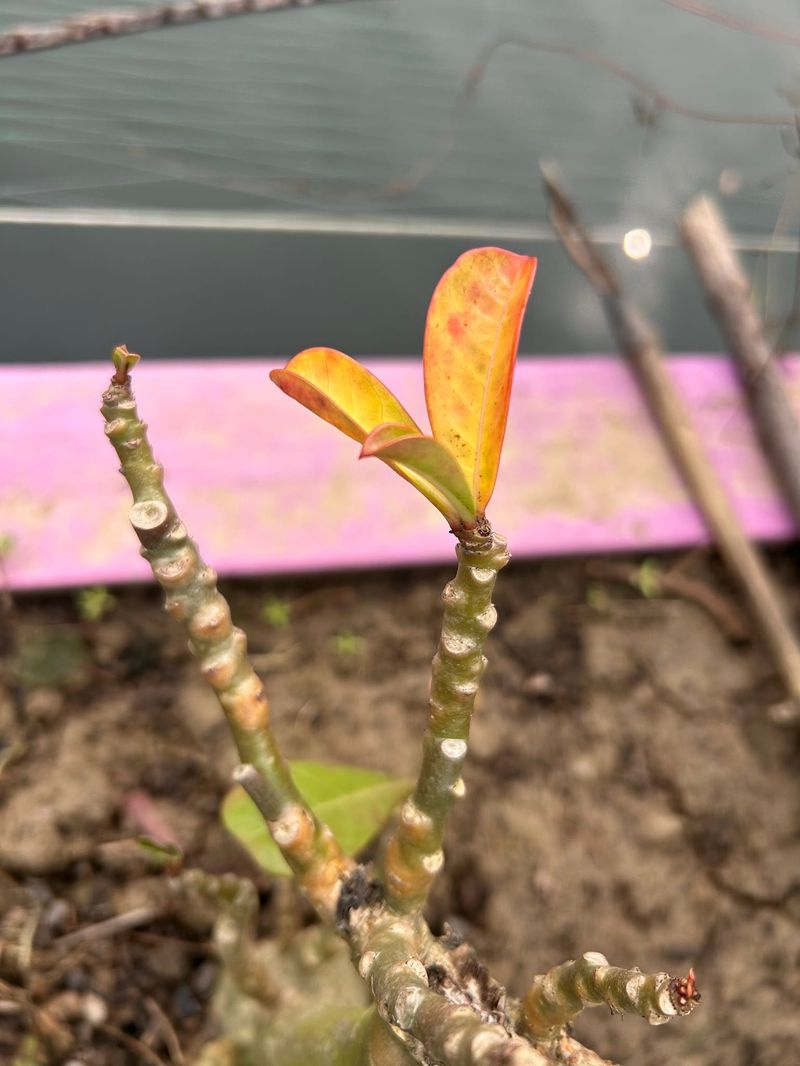
Put the watering can away for a while. The Arizona guide advises withholding water once nights fall below 50°F, because the plant is slowing down and cannot use much moisture.
Cold, wet soil raises the risk of root rot. A dormant plant generally needs little or no water, and the Desert Botanical Garden also advises keeping overwintering plants dry.
There is one limited exception. The Arizona guide allows very light watering for some young plants or those stored somewhere warm if they noticeably shrivel.
That is a small exception, not a schedule. If your plant looks plump and settled, leave it alone.
Dry soil is the safer winter default.
Recognize Dormancy Without Assuming Damage
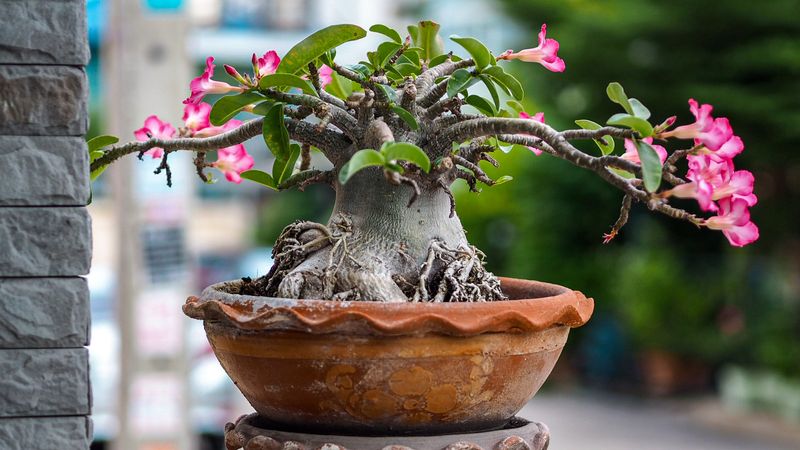
A bare plant can give you a scare. Leaf drop can be part of winter dormancy, so it does not prove the plant has been hurt by cold.
Look at the whole picture, including how the plant was stored and what the nights were like.
The Desert Botanical Garden says a dormant plant can be kept in a dark garage or shed. If storage stays above 55°F, its guide advises withholding water to encourage dormancy.
It also notes that warm nights above 70°F may prompt weak, out-of-season growth. That is guidance from one source, not a guarantee for every home.
The Arizona guide adds that lower temperatures and longer exposure increase damage, so keep storage protected from real cold. A resting, leafless plant is often just doing its winter job.
Act on the Forecast, Not a Statewide Date
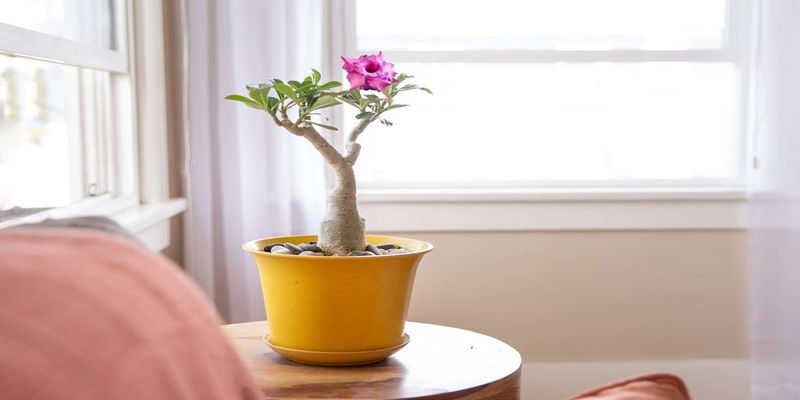
Keep an eye on your local nighttime forecast. When lows approach the 50°F warning point from the University of Arizona guide, protect your potted desert rose without waiting for a freeze.
Choose a dry, sheltered spot, and keep winter watering restrained. No single date works across Arizona, so let your own yard and forecast decide.
A little early effort now means a calm spring. Your desert rose will not mind sleeping through the cold.