The Arizona Trees That Actually Turn Red and Gold in Late Fall
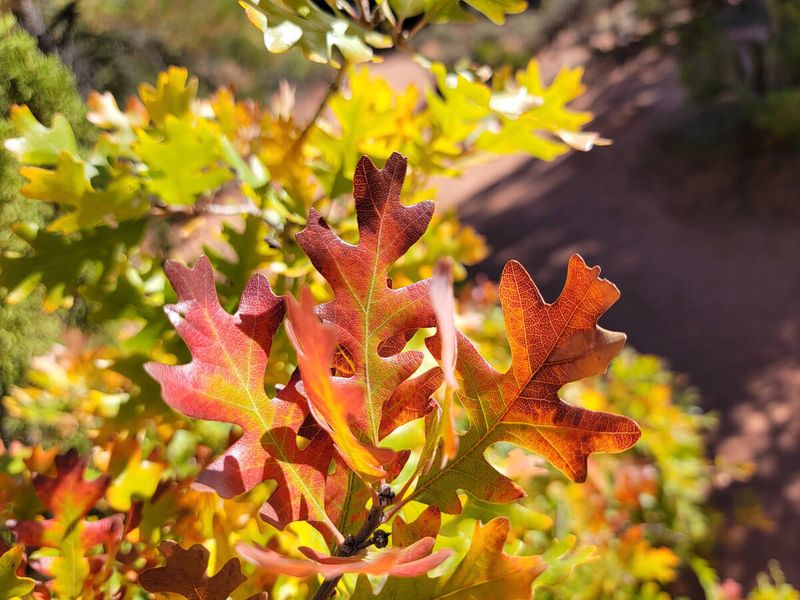
Some of the reddest autumn leaves in the Southwest glow inside canyons less than two hours from busy desert freeways. Arizona hikers crowd Oak Creek Canyon each autumn to watch whole hillsides flicker between scarlet and butter yellow.
What surprises me most is how late the show arrives in the low desert, sometimes lingering into December. Cool nights finally break the summer spell, and certain leaves respond with color you would expect in Vermont.
I have to admit my first desert garden felt a little beige once October rolled around each year. Then I learned the right trees can cool your patio all summer and still blaze with fall color later.
Several of these picks are native to Arizona and welcome the birds and bats that patrol your yard for bugs. So which ones truly deliver red and gold, and which one might fit beside your own back fence?
1. Bigtooth Maple
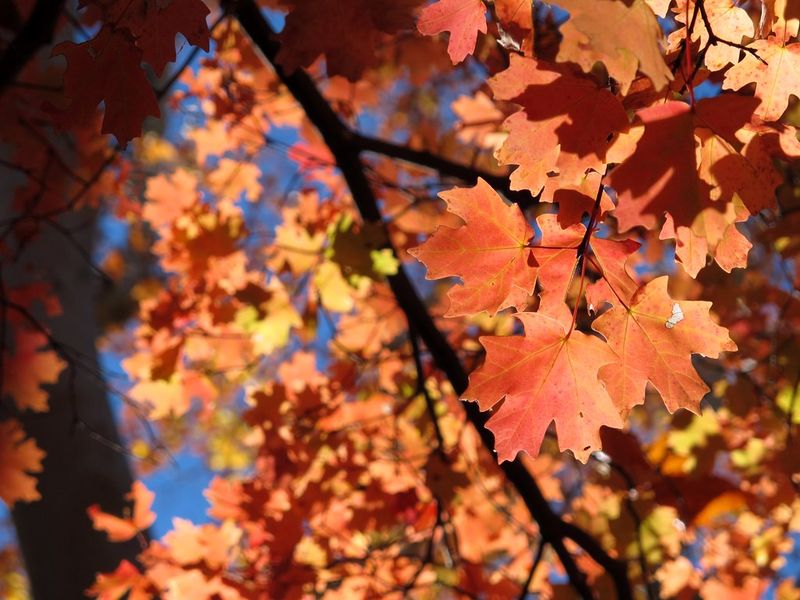
Every autumn, a native maple turns hidden canyons into scenes that look borrowed from a New England postcard. Single leaves often blend scarlet with tangerine, which still makes me stop mid-step on the trail every single year.
In the wild, Acer grandidentatum grows in moist canyons and mountain slopes, mostly between roughly 4,000 and 7,000 feet. Oak Creek Canyon near Sedona and Ramsey Canyon near Sierra Vista are classic places to see it glow.
For home gardens, the tree handles alkaline soil well and tolerates more drought than most maples once established. Give it full sun or afternoon shade, plus a deep watering every couple of weeks during long dry spells.
Low desert yards are tougher, since reflected heat from block walls can scorch tender leaves by late summer. I would plant it on an east-facing side and spread wood mulch generously over the whole root zone.
Spring flowers draw early bees, and the dense branches give nesting songbirds a shady place to raise their chicks. October is a smart time to plant, because cooler soil helps new roots settle in before winter arrives.
2. Chinese Pistache
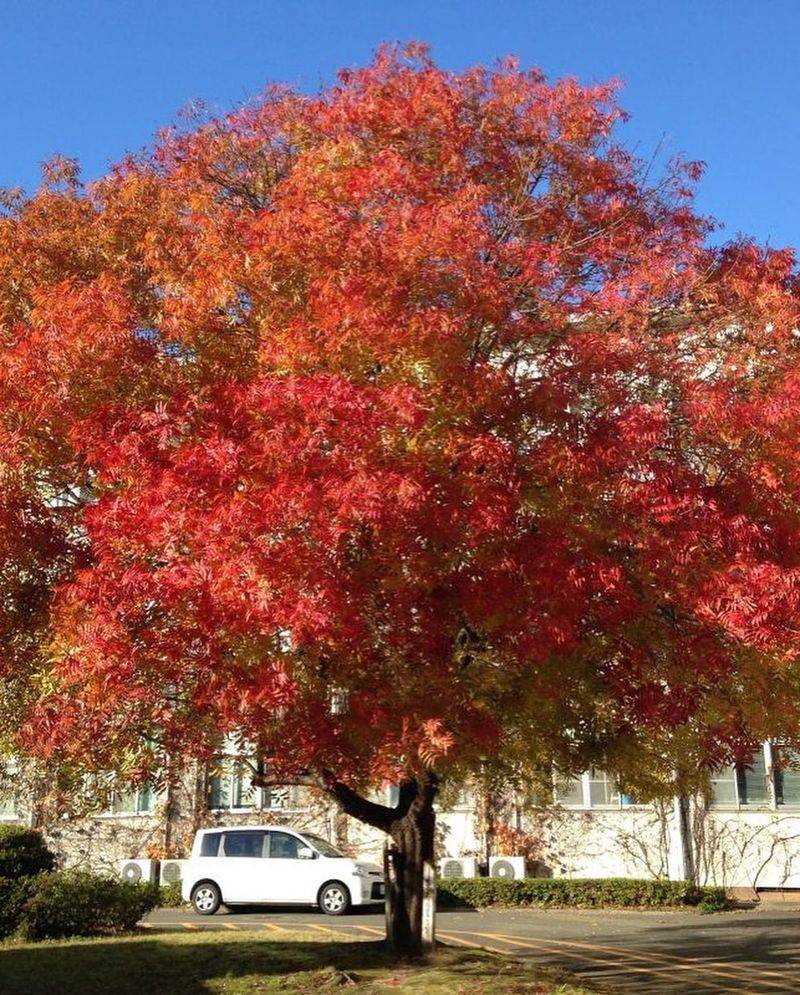
If one landscape tree explains those sudden flashes of scarlet along desert streets in late fall, this is probably it. Pistacia chinensis hails from China, yet desert nurseries rank it among the most reliable red trees for hot valleys.
Seedling trees vary widely, shifting between yellow and orange or red, so unnamed plants can surprise you each autumn. Grafted selections like Keith Davey or Red Push were chosen for steadier red tones and far fewer messy berries.
Once established, the tree shrugs off heat and alkaline soil with just a deep watering every few weeks. Growth is moderate, eventually reaching around 30 to 40 feet with a rounded canopy wide enough for real shade.
Female trees produce small red to blue fruits that birds enjoy, though stray seedlings can sprout in some regions. Pulling those sprouts keeps it well behaved, and I appreciate that it rarely needs fussy pruning after early shaping.
Planting in October gives the roots several mild months to grow before the next blazing summer returns. Color usually peaks in late November in the low desert, a welcome reward for that small early effort.
3. Quaking Aspen
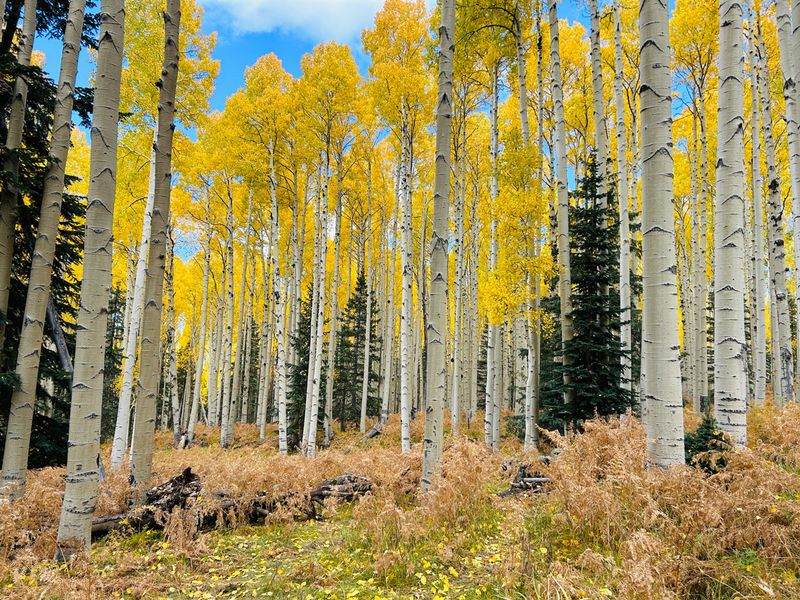
Golden aspen leaves tremble on flattened stems, so even a faint mountain breeze sets entire groves shimmering and whispering. Around Flagstaff, the Inner Basin of the San Francisco Peaks becomes a sea of gold each autumn.
Populus tremuloides is native to the high country here and often spreads by root suckers into large connected clones. Some aspen colonies across the West are thought to be thousands of years old, which I find wonderfully humbling.
Honestly, the tree belongs in cool mountain gardens, not hot valleys where summer stress invites boring insects and cankers. High-elevation yards above roughly 6,000 feet give it the chilly nights and steady moisture it truly craves.
Expect suckers to pop up around the trunk, so plant it away from patios and lawn edges you prize. Small clusters of trunks look more natural than a lone tree, echoing the wild groves you see on hikes.
Elk and deer browse young shoots, and cavity-nesting birds often raise families inside older aspen trunks each spring. Fall planting works while ground stays workable, though October is ideal in mountain towns before the first hard freeze.
4. Arizona Sycamore
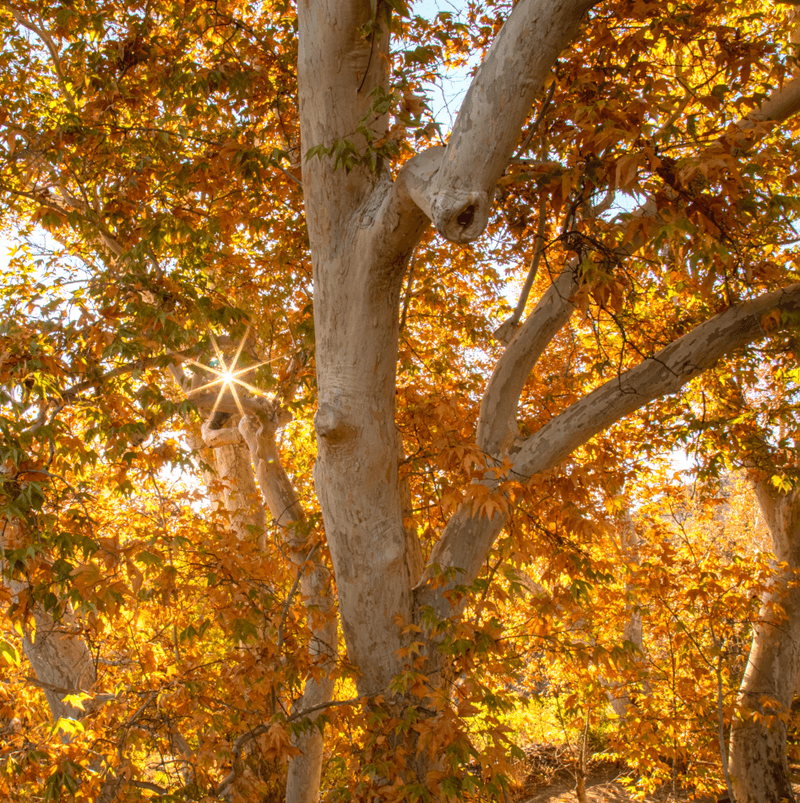
Ghostly white bark makes this sycamore the showoff of desert canyons, even long after its leaves tumble down. In late fall, the big lobed leaves fade to gold and russet brown along streams like Sabino Creek.
Platanus wrightii is native to riparian canyons and washes in the Southwest, often towering somewhere between 50 and 80 feet. It grows fast, which sounds great until you realize how much elbow room those roots and limbs demand.
Place it at least 20 feet from your house, and keep watering deep and regular through the hottest months. Without steady moisture, leaves can crisp early, and anthracnose fungus sometimes browns new spring growth during wet years.
Hawks and owls nest in the broad crowns, and those raptors happily hunt rodents around your property after dark. I love how the peeling bark reveals cream and olive patches, giving bare winter yards some genuine character.
Fall leaf drop is heavy, so think of it as free mulch for nearby shrubs rather than an annoying chore. Shredded with a mower, those leaves break down quickly and help hold moisture in thirsty desert soil.
5. Fremont Cottonwood
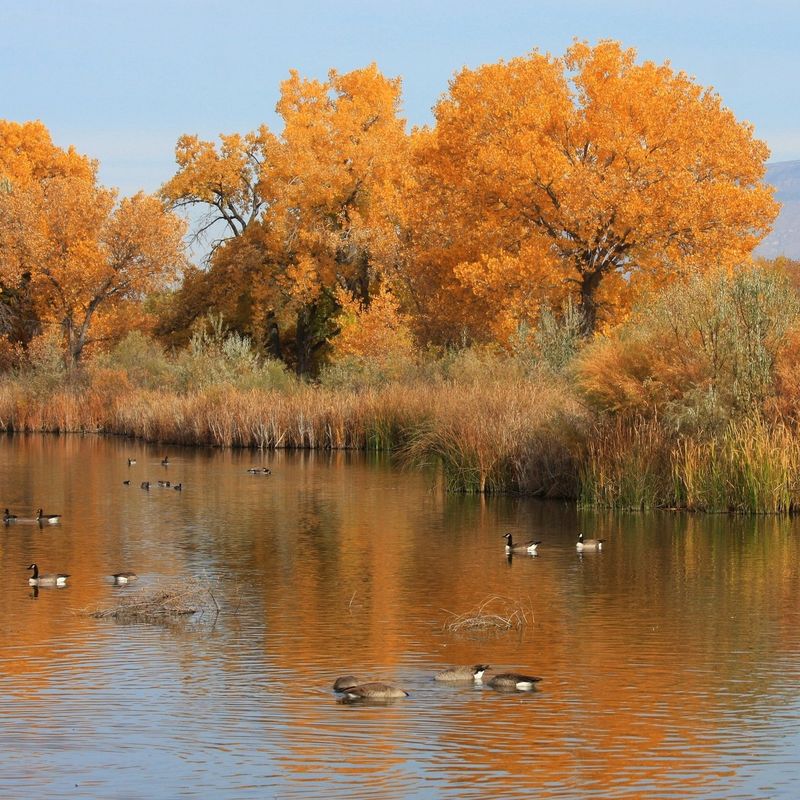
Long before air conditioning, desert travelers searched for gold-leaved cottonwoods because those trees signaled water close by. Populus fremontii still lines rivers like the Verde and San Pedro, glowing a buttery yellow by November.
Growth is remarkably fast, sometimes several feet a year, giving thirsty landscapes generous shade in surprisingly little time. That speed comes with a catch, since the tree needs abundant water and spreads wide, aggressive roots underground.
Keep it well away from water lines and foundations, ideally on large rural lots or beside ponds and channels. Female trees release fluffy cotton seeds in spring, so many gardeners choose male trees for tidier yards.
Riparian cottonwood forests support a huge variety of birds, including nesting hawks and migrating songbirds every spring. Bats forage over these green corridors at dusk, snapping up mosquitoes and moths that might otherwise pester you outdoors.
Personally, I think this giant suits ranch properties better than suburban backyards squeezed between tight block walls. Plant young trees this fall near a reliable water source, and the roots will reward you with the strongest start.
6. Arizona Ash
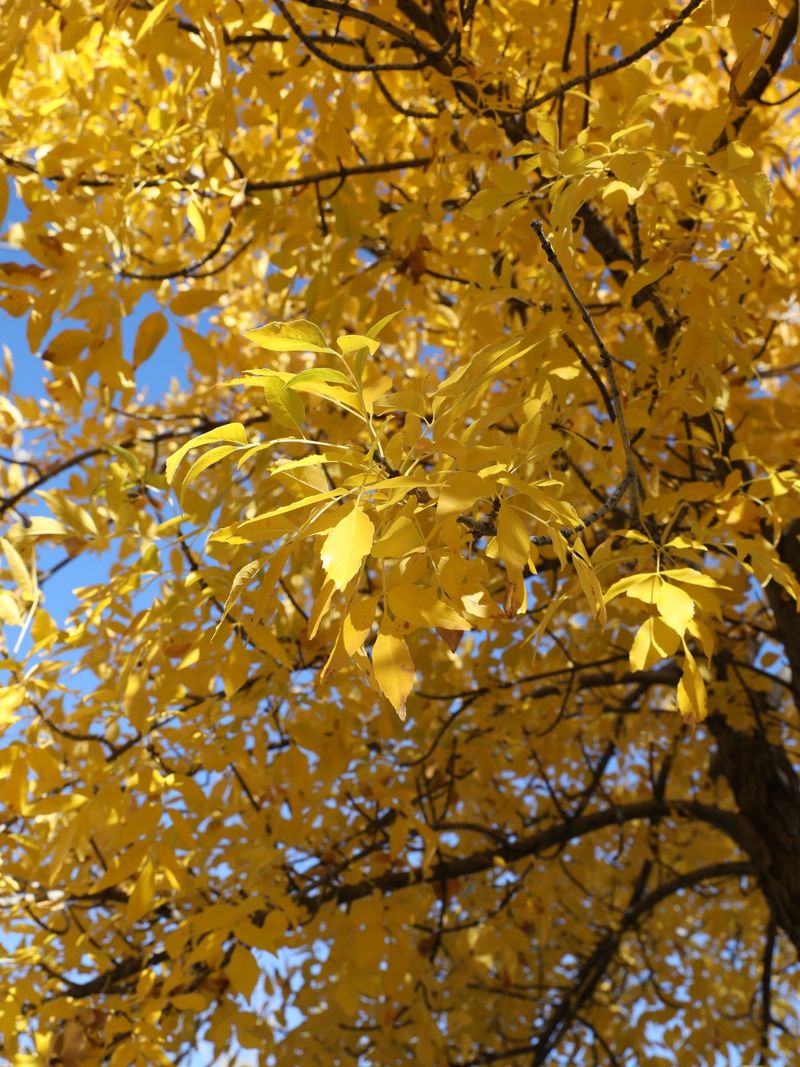
Few native shade trees go gold as cheerfully as velvet ash, which earns its nickname from fuzzy young leaves. Fraxinus velutina grows wild along washes and streams, and its foliage turns clear yellow during late fall.
Old Modesto ash plantings once filled desert neighborhoods, but that selection often struggled with disease and shorter lifespans. Seed-grown natives handle heat well and tolerate the alkaline soil that is so common across the region.
Deep watering every two to three weeks in summer keeps the canopy dense, while winter needs drop off sharply. Prune young trees for one strong central leader, because weak crotches can split during gusty monsoon storms.
Watch for ash whitefly, tiny pests clustering on leaf undersides, though natural predators often keep their numbers in check. Songbirds nest in the branches, and the winged seeds feed finches and other birds through the colder months.
I like it as a fast, honest shade tree for a west wall that bakes every single afternoon. Male trees skip the seed clusters, which matters if you dislike sweeping winged seeds off the driveway each year.
7. Gambel Oak
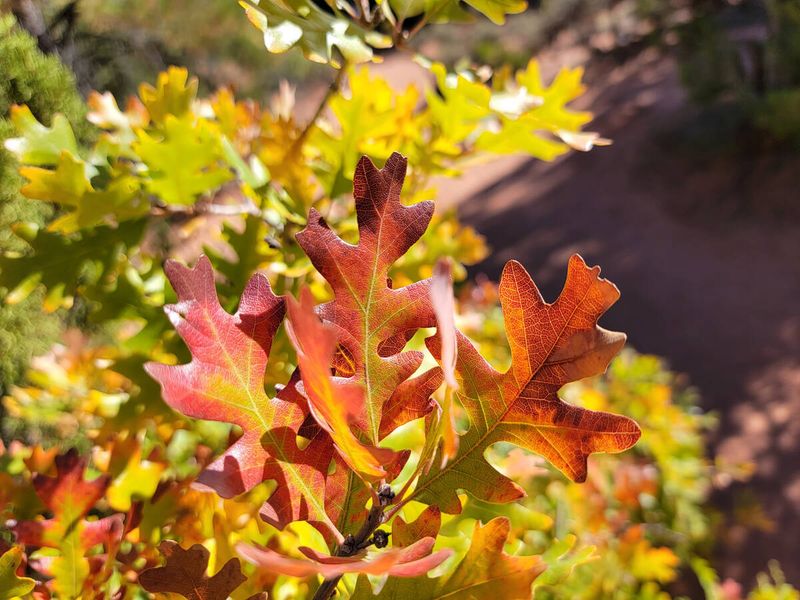
Gambel oak leaves shift from green to warm gold and sometimes rusty red across pine country each fall. Hiking near Flagstaff in October, I love how these oaks light up the shadows beneath tall ponderosa pines.
Quercus gambelii is native to mountain areas from roughly 5,000 to 8,000 feet, often forming dense natural thickets. Its deeply lobed leaves resemble eastern white oak foliage, only on a smaller and much tougher plant.
For gardens in Prescott or Flagstaff, it handles drought and rocky soil well once its deep roots are established. Growth is slow, and it may stay shrubby, which actually suits smaller lots needing a modest living screen.
Acorns feed Steller’s jays and wild turkeys, so expect a lively crowd beneath mature trees once autumn arrives. I have to admit the root sprouts can annoy tidy gardeners, but regular clipping keeps them nicely in line.
Fall planting from containers works well while soil stays warm and the mountain air turns pleasantly crisp. Skip heavy fertilizer, because native oaks prefer lean soil and steady patience over lots of fussy pampering.
8. Western Soapberry
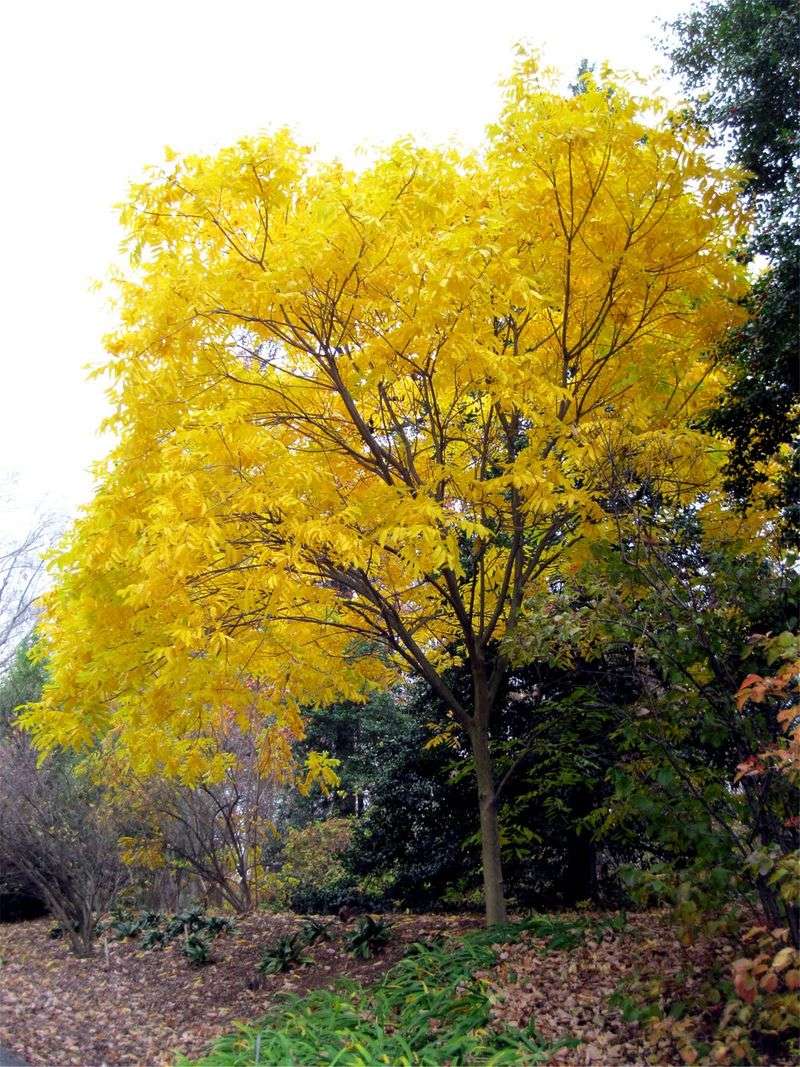
Chances are you have walked past western soapberry without noticing, until its leaves flash brilliant golden yellow in fall. Sapindus saponaria var. drummondii is native to the Southwest, including desert grasslands and canyon bottoms nearby.
Its translucent amber berries contain saponins, and people historically crushed them into a lather as a soap substitute. Those berries are toxic if eaten, so treat them with respect around curious kids and dogs in your yard.
The tree handles heat and alkaline soil remarkably well, needing only occasional deep soakings once it gets established. Mature size typically lands near 25 to 30 feet, making it a handy shade tree for average backyards.
Root suckers can form small groves, which wildlife appreciate but formal gardeners may want to trim back regularly. Birds eat the fruit through winter, and the creamy spring flowers attract a steady buzz of native bees.
Personally, I think soapberry deserves a spot on every water-wise shade list for the low and middle deserts. Fall color usually arrives in November, and the berries cling to bare branches long after the leaves drop.
9. Arizona Walnut
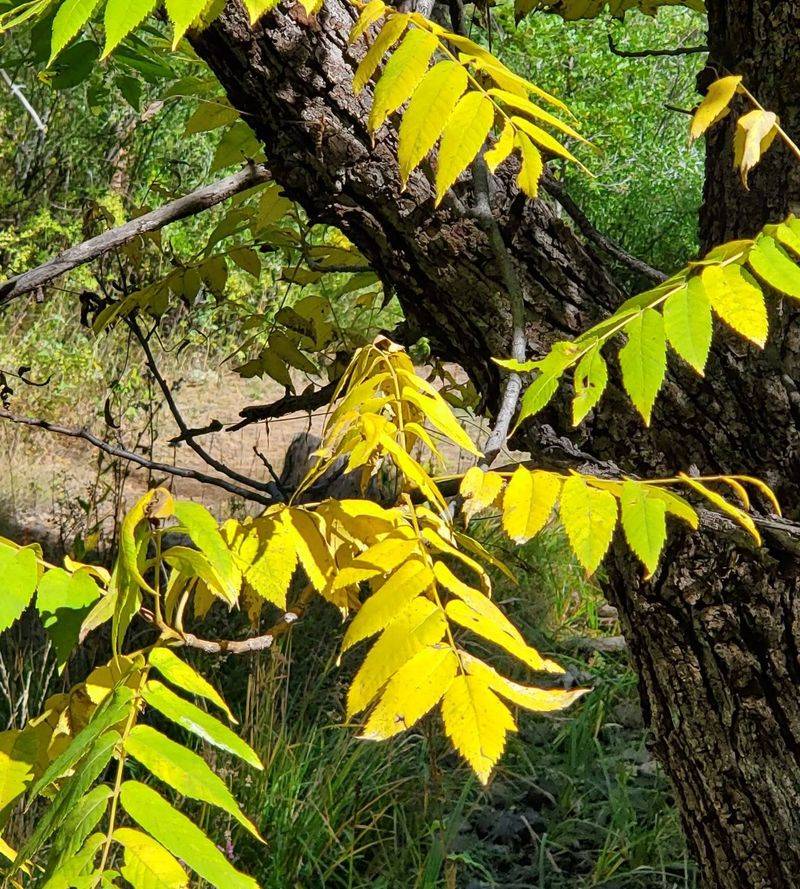
Walking a canyon trail in November, you might crunch through golden leaves from a native walnut without realizing it. Juglans major grows along streams and washes in central and southern parts of the state, reaching about 30 to 50 feet.
Its slender leaflets turn bright yellow in late fall, glowing beautifully against the dark and deeply furrowed bark. The small, hard nuts are edible but tough to crack, so hungry squirrels usually win the harvest race.
Walnut roots release juglone, a natural compound that can stunt tomatoes and some other sensitive garden plants nearby. I would keep vegetable beds at a respectful distance and pair the tree with tolerant native shrubs instead.
The tree prefers deep soil and regular water, though established trees handle moderate dry spells fairly well overall. Rodents and birds feed on the nuts, and the broad canopy shades resting wildlife during hot afternoons.
October planting gives the long taproot a head start, which matters because walnuts dislike being moved later on. Choose a permanent spot with room to spread, and this native will reward you for many decades.
10. Shumard Oak
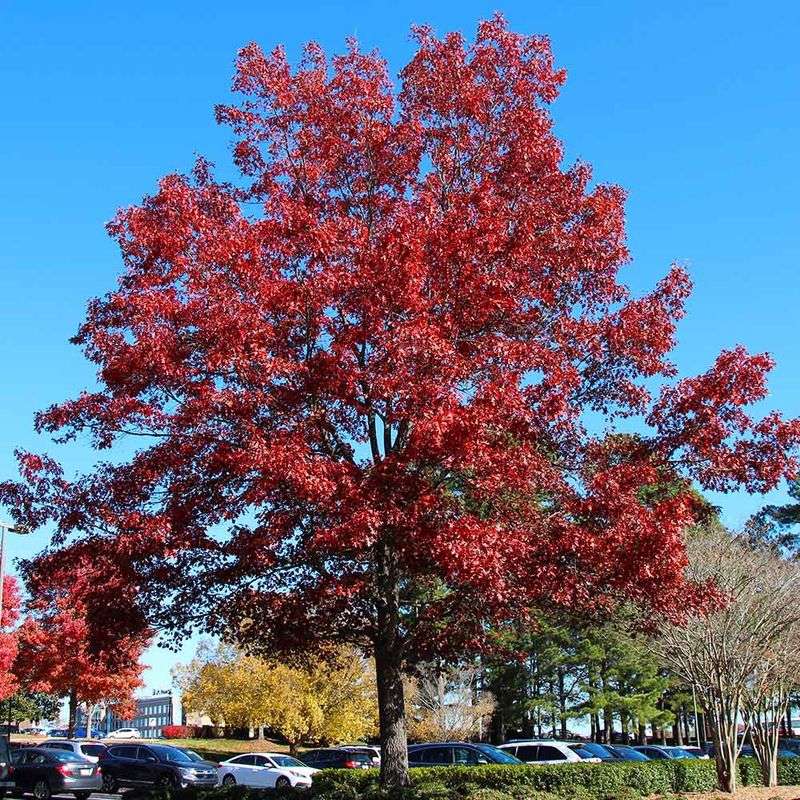
Big red oak color in the desert sounds like wishful thinking, yet Shumard oak delivers it surprisingly well. Quercus shumardii comes from the southeastern United States, but it tolerates heat and alkaline soil better than most oaks.
Fall foliage turns scarlet to russet during late November and into December in many low desert yards. Expect a large tree, eventually 40 to 60 feet tall, so give it plenty of room away from overhead lines.
Moderate water helps, with deep soaks every two to three weeks during summer and far less in winter. Shade from the broad crown cools west-facing walls and can help trim those painful summer cooling bills.
Acorns feed squirrels and birds, while the leaves host caterpillars that nesting songbirds collect for their hungry chicks. I love that an oak this showy still asks for little pruning beyond some early structural shaping.
Plant in October so the roots can spread through mild winter months before the heat returns again. Once established, this oak becomes a long-lived anchor tree that keeps blushing red for generations of fall seasons.