Hard Brown Balls Stuck to Indiana Oak Twigs Aren’t Acorns
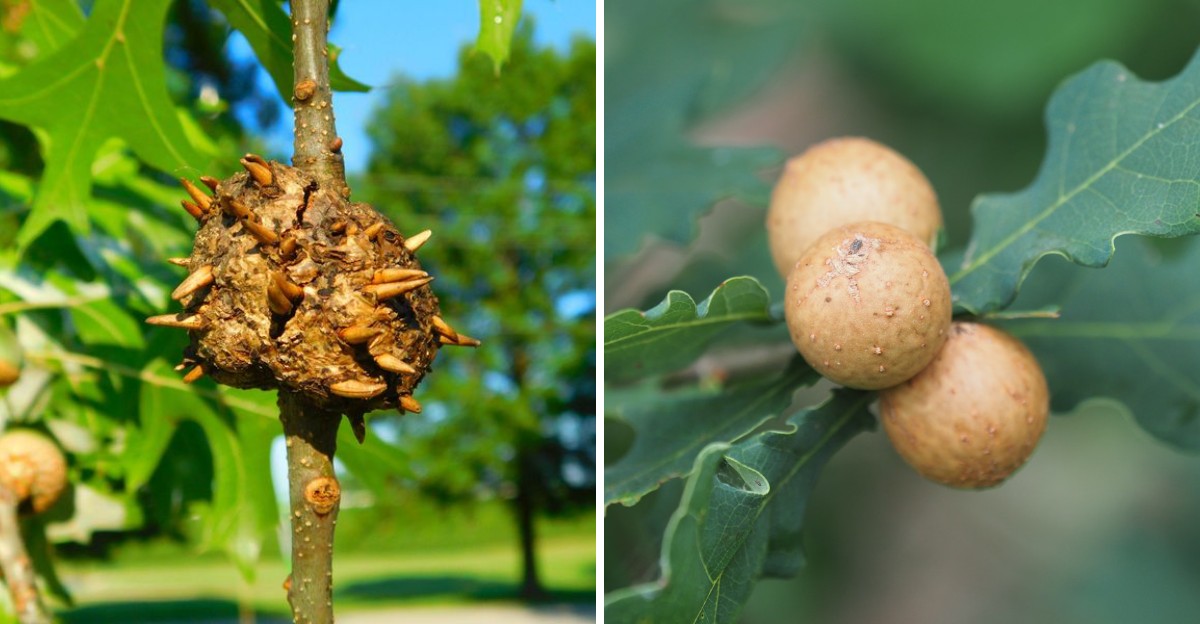
Some of those round brown lumps on oak branches started as a single egg the size of a pinpoint. The tree built the rest of the ball itself.
I’ll be honest, the first time I spotted a cluster of them on a pin oak in Indiana, I assumed a squirrel had stashed acorns in a weird place. Then I tried to pull one off. It was rock hard, woody, and welded right into the twig.
Here’s what gets me. A tiny insect, smaller than a grain of rice, can talk a giant tree into building it a private bedroom with a pantry included. No teeth, no tools, just chemistry.
You’ll notice them more once the leaves drop and the branches go bare. So what exactly is living inside, and should your oak be worried about its uninvited guests?
Those Woody Lumps on Bare Oak Branches Hold a Tiny Secret
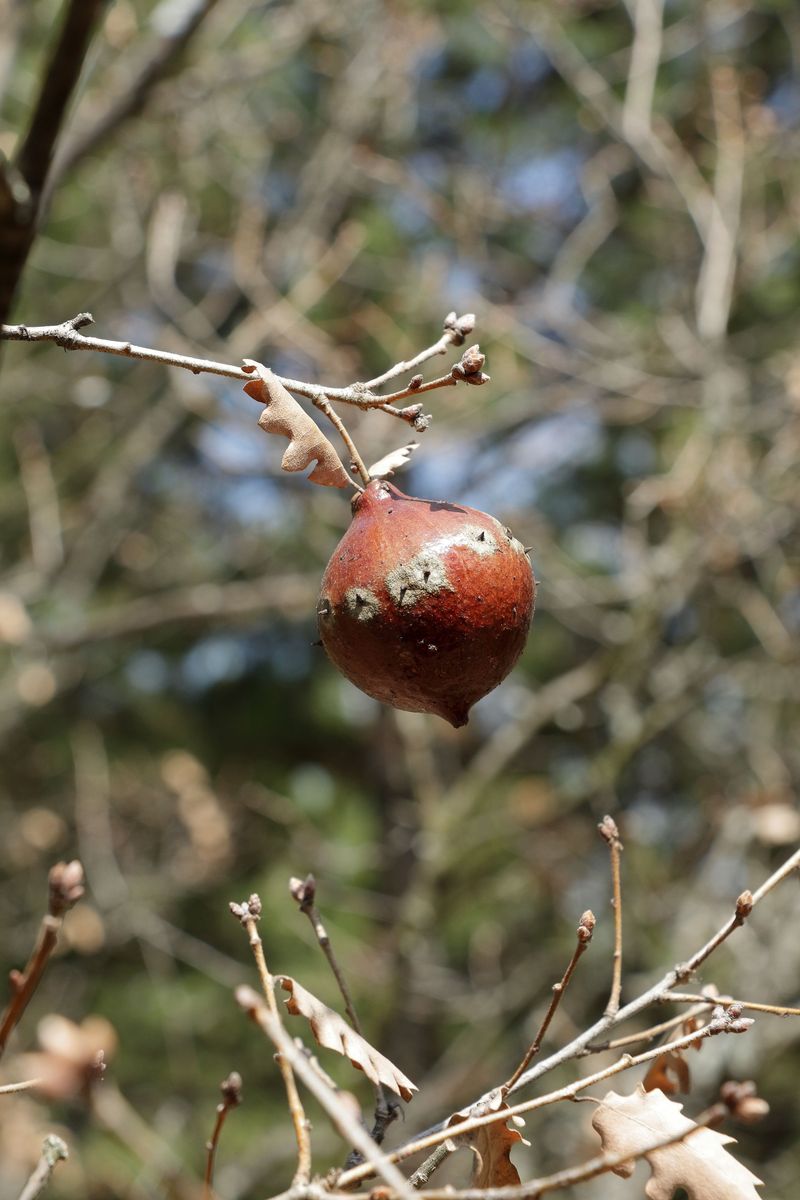
Grab one of those brown balls and give it a squeeze. You will notice right away that it feels nothing like an acorn, with no cap, no smooth shell, and no clean break from the twig.
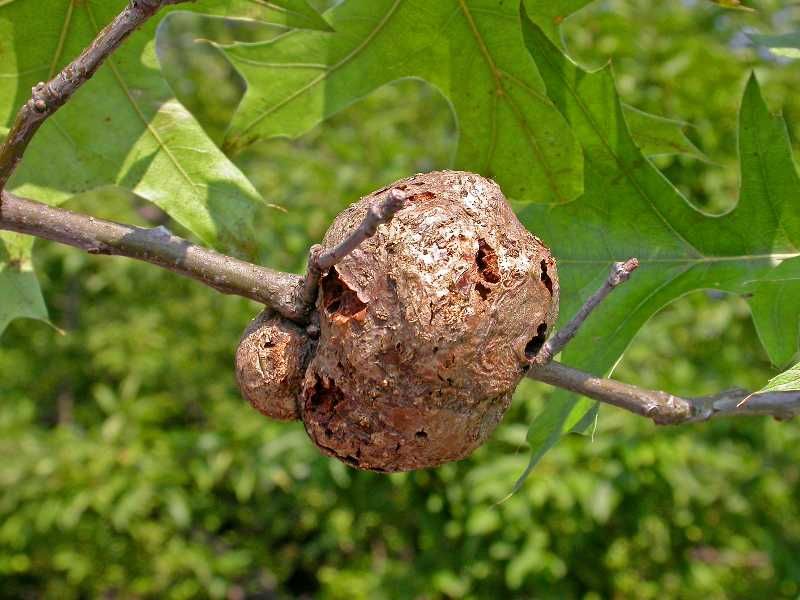
Those lumps are called galls, and they are made of the oak’s own tissue. The tree grows them in response to an insect living inside, so the ball is part of the branch rather than something stuck onto it.
Acorns hang from short stalks and drop off when they ripen in late summer and fall. Galls stay put, sometimes for years, and they often grow in tight clusters that make a twig look lumpy or swollen.
Cut one open with pruners and you may find small chambers inside. Older galls sometimes show tiny exit holes, which means the residents have already moved out.
Winter is the easiest time to spot them. With the leaves gone, the dark knobs stand out against the sky, which is why so many people suddenly notice them from November through March.
So if you have been calling them weird acorns, you are in good company. The real story is far stranger and more interesting than a nut that grew in the wrong spot.
A Tiny Gall Wasp Talks Your Oak Into Building Its Nursery
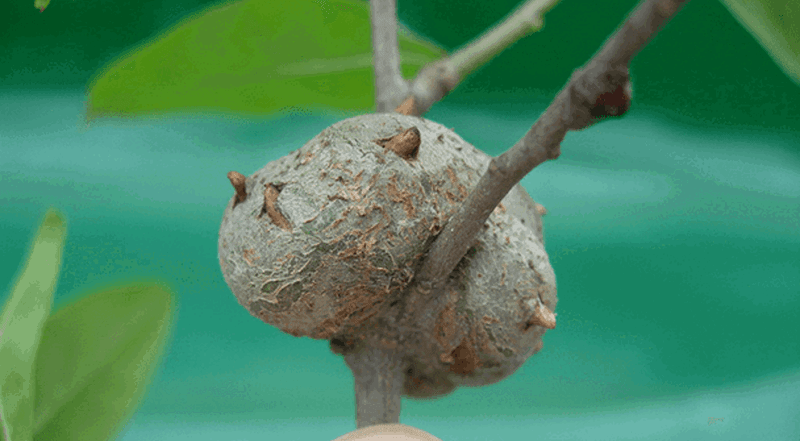
Meet the architect, a gall wasp from the family Cynipidae. Most are just a few millimeters long, and they do not sting people, so there is no reason to fear them.
A female lays eggs into growing oak tissue, usually in a bud or young twig. Scientists believe chemicals linked to the egg and developing larva change how the plant’s cells grow.
The oak responds by swelling around the larva and forming a protective structure. That gall becomes both a shelter and a food supply, since the larva feeds on the nutrient-rich inner tissue.
Not going to lie, I find this setup a little brilliant. The insect never builds a thing on its own, yet it ends up with walls, insulation, and snacks.
The gall also protects against weather and some predators. It is not foolproof, though, because certain tiny parasitic wasps specialize in drilling into galls to reach the larvae inside.
Each gall wasp species tends to pick specific oak species and create a gall with its own shape. That consistency helps experts identify the insect simply by looking at the gall, much like recognizing a bird by its nest.
Horned Oak Galls and Gouty Oak Galls Top the Suspect List
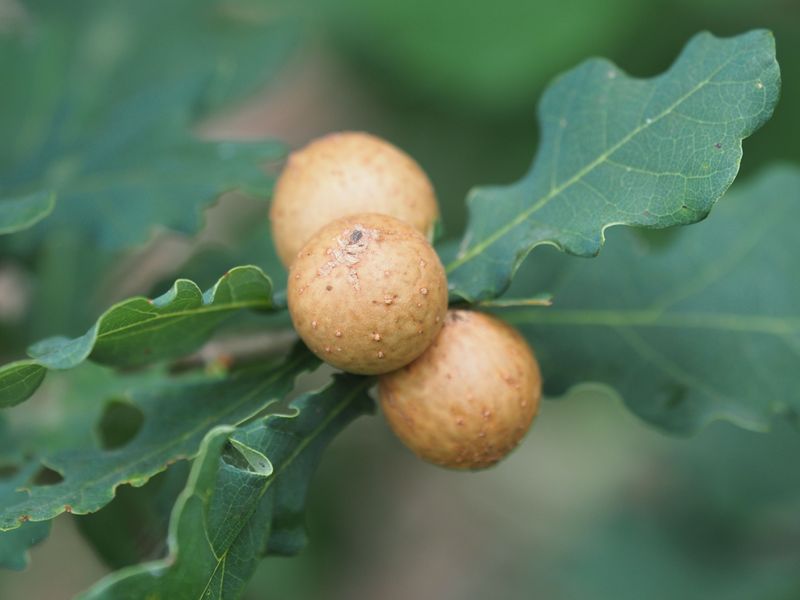
In the Midwest, two gall wasps usually get the blame for hard twig balls. They are the horned oak gall wasp, Callirhytis cornigera, and the gouty oak gall wasp, Callirhytis quercuspunctata.
Horned oak galls sprout small, pointed horns from their surface once they mature, while gouty oak galls are irregular, knobby swellings without horns.
Both prefer oaks in the red and black oak group. Pin oak is a frequent target in Indiana yards, and black, scrub, red, and water oaks can host them too.
Size varies quite a bit. Some galls stay around the size of a marble, while horned oak galls can swell to an inch or two across and cluster tightly along a single branch.
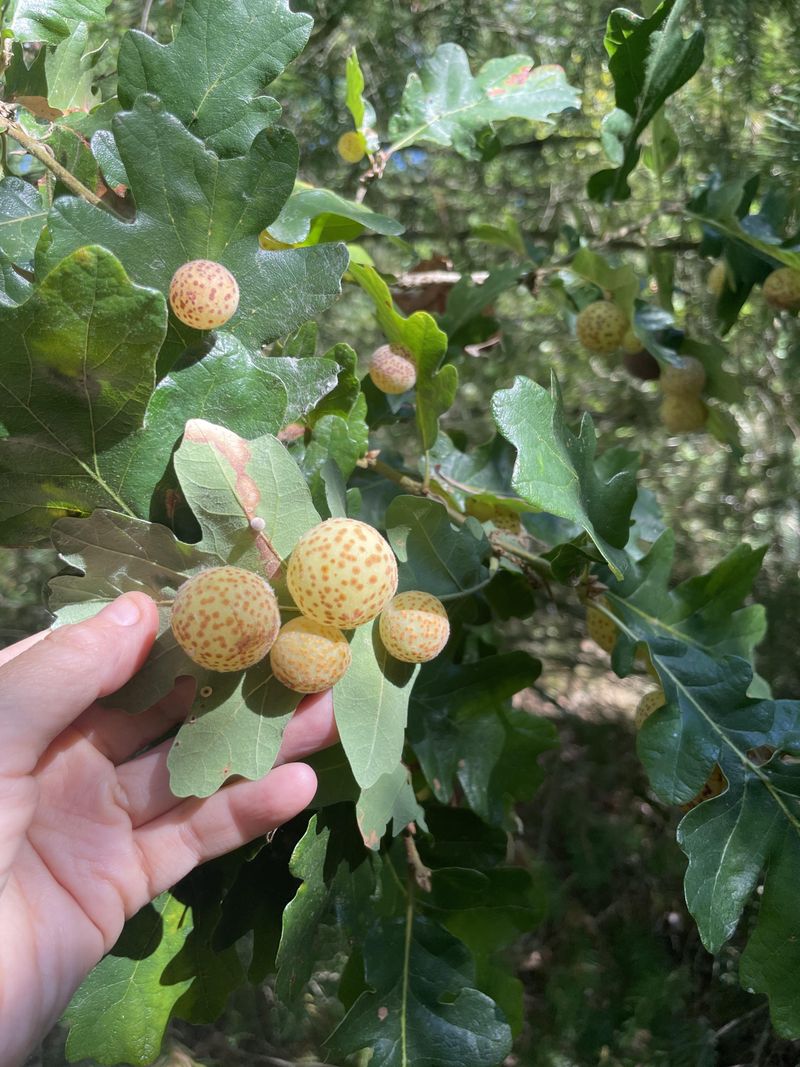
White oaks generally host different gall species, so a white oak with odd growths may have another culprit. Leaf galls, oak apples, and bullet galls are other common sights on various oaks.
A clear photo of the twig, the gall surface, and the leaves will help your county Purdue Extension office confirm what you are seeing. Bring a sample in a sealed bag if you visit in person.
Gall Wasp Generations Take Years to Finish One Round
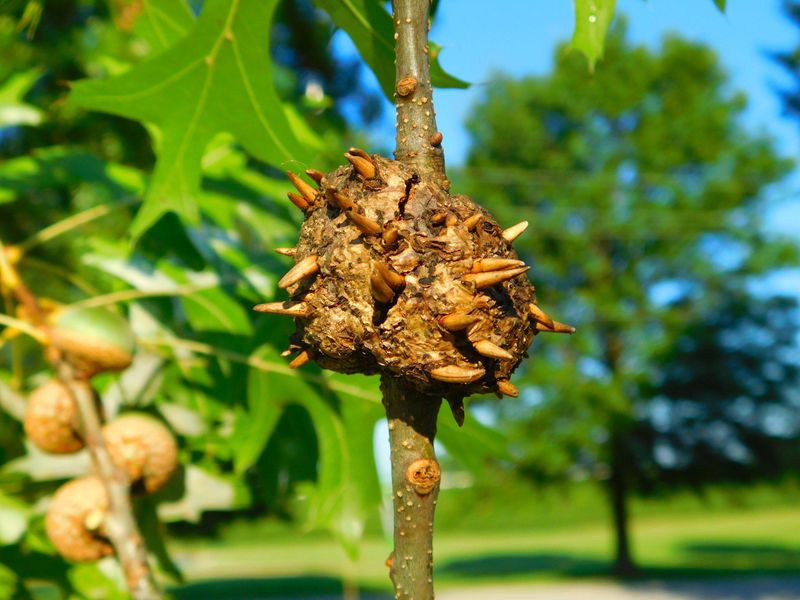
Patience is the name of the game for these insects. A woody twig gall can take two to three years to mature, so the balls you see this winter may have started long before you noticed them.
The life cycle includes alternating generations. One generation forms the woody twig galls, and the other forms small, mostly harmless galls on leaves or leaf veins.
Here is how it often plays out for horned oak galls. Adult wasps chew out of mature twig galls in spring, often around bud break, and lay eggs on new leaves.
Those eggs produce small leaf galls that mature quickly in early summer. Wasps from the leaf galls then lay eggs in twigs, and the slow woody stage starts again.
Because the generations look so different, early naturalists sometimes thought they were separate species. Researchers had to carefully raise the insects to connect the two stages.
This timing also explains why galls build up gradually. A tree may carry a few for years before you suddenly notice a heavy load, which can feel like an overnight outbreak even though it has been developing quietly all along.
Most Oaks Shrug Off a Few Twig Galls Just Fine
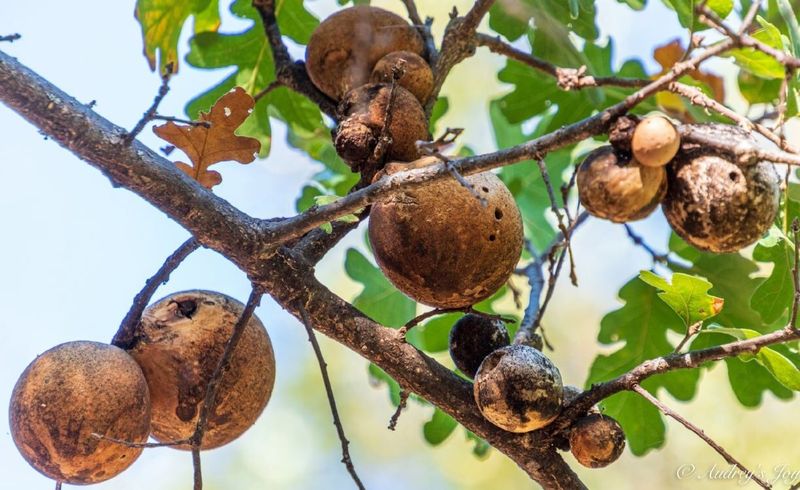
Take a deep breath, because a handful of galls rarely spells trouble. Most mature oaks carry some galls and keep growing with no lasting harm.
Leaf galls are mainly cosmetic. Woody twig galls deserve a closer look, since heavy clusters can interfere with the flow of water and nutrients through the branch.
When that happens, the twig past the gall cluster may wilt, brown, and drop leaves early. You might see scattered brown flags of leaves in summer, a pattern called branch dieback.
Small, young oaks are more vulnerable than big ones. A young pin oak with dozens of large horned oak galls can lose a good portion of its smaller branches and look thin for a season or two.
Gall wasps are rarely the sole cause of a large oak’s decline. Drought, compacted soil, root damage, and other stresses often play a bigger role, and galls simply pile on.
If your oak looks sparse, check those other factors too. Oak wilt, bur oak blight, and construction damage can look similar from a distance, so a certified arborist can help sort out what is truly going on.
Snipping Gall-Covered Oak Twigs Works Best in Late Winter
Ready to get hands-on? Pruning is the only practical way to reduce twig galls you can reach, and it works best on small trees.
Aim for the dormant season, ideally before buds swell in spring. Removing mature galls before adult wasps chew their way out helps cut down on the next generation.
Here is a key Indiana timing detail. Purdue and other experts advise against pruning oaks from April through July because fresh cuts attract sap beetles that can spread oak wilt.
Cut back to healthy wood just past the gall cluster, using clean, sharp bypass pruners or a small saw. Make smooth cuts near a bud or side branch and skip the wound paint unless you must prune during that risky window.
Bag the cuttings or burn them where local rules allow. Tossing them in a brush pile can let wasps finish developing and fly back to your tree.
Be realistic about tall trees. You cannot reach galls 40 feet up, and climbing or hiring someone just to remove galls on a big, healthy oak is rarely worth the expense.
Sprays Can’t Reach Wasp Larvae Hiding Inside Hard Galls
I learned the hard way that a sprayer is not much help here. Once a gall forms, the larvae sit tucked inside thick woody walls that insecticides simply cannot penetrate.
Extension specialists generally do not recommend chemical treatments for oak galls. Timing a spray to catch tiny adult wasps in spring is tricky, and the results are often poor.
Spraying a big oak also brings real downsides. Drift can harm pollinators, beneficial insects, and the natural enemies that help keep gall wasps in balance.
Those natural enemies matter more than most folks realize. Parasitic wasps, birds, and other predators open or invade galls, and woodpeckers sometimes peck into them for a meal.
Some years, gall numbers climb, and then they fall as those predators catch up. Populations tend to rise and drop in waves on their own.
Systemic products occasionally get mentioned online, but evidence supporting them for gall wasps is limited. If someone offers an expensive treatment, ask for research from a university extension service before signing up. Your money is usually better spent on watering, mulching, and good tree care.
Healthy Oak Roots Are Your Best Gall Insurance
Strong trees handle insects better, plain and simple. Giving your oak steady care does more for its long-term health than fretting over every lump on a twig.
Water deeply during dry spells, especially for young or recently planted oaks. A slow soak over the root zone every week or two in drought beats frequent light sprinkles.
Spread wood chip mulch two to three inches deep in a wide ring, keeping it a few inches off the trunk. Mulch holds moisture, cools the soil, and protects roots from mower damage.
Avoid piling soil over roots, parking on them, or trenching nearby. Oak roots spread far beyond the canopy, and damage underground often shows up as branch problems years later.
Planting a new tree? Consider mixing species instead of filling a yard with pin oaks, which are frequent targets in Indiana. Native options such as white oak, swamp white oak, or bur oak add variety.
Finally, give these odd brown balls a little respect. They are part of a busy native ecosystem, and next time a friend calls them acorns, you will have a great story ready to share.