How to Prune Crape Myrtles in Arizona Without Topping Them
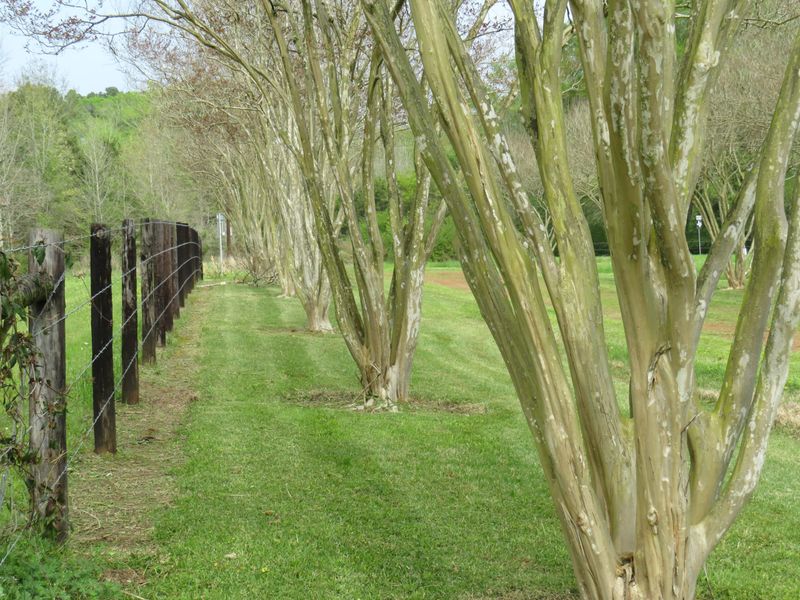
A crape myrtle can bloom for weeks in Arizona summer heat, and it does so on brand new growth. That fact tempts many of us to grab the saw and cut hard.
Personally, I think a gentler plan gives better results with less work. Here is how to prune with confidence and skip the cuts that cause trouble later.
The Problem Is Topping, Not Simply Winter Pruning
Nobody has measured how often Arizona homeowners prune in winter, so this is not a story about a statewide habit. The advice that holds up is simpler: avoid topping your crape myrtle.
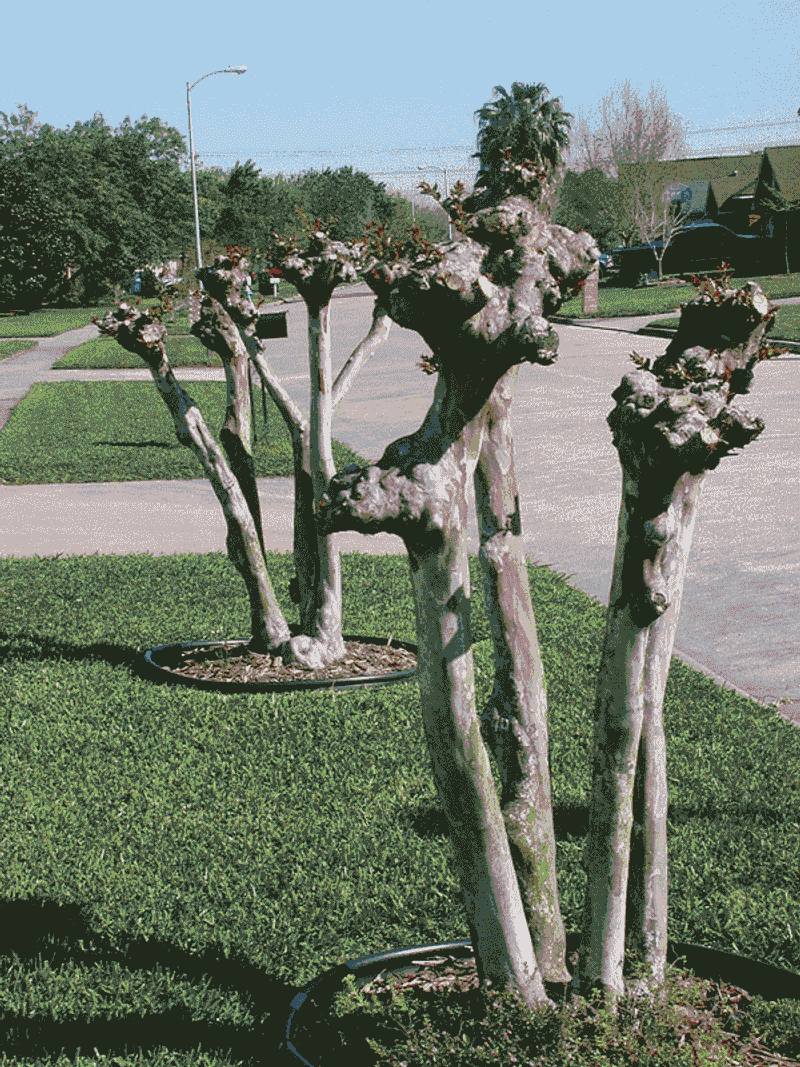
Topping means cutting stems back at arbitrary heights and leaving stubs. The tree ends up with blunt, same-height branch ends and no natural shape.
Selective pruning is a different job. You thin out chosen branches, or you shorten one by cutting back to a lateral branch, as Virginia Tech Extension explains.
Each cut has a purpose, and the tree keeps its natural structure.
Timing matters too. University of Arizona Extension suggests pruning summer-flowering shrubs such as crape myrtle in spring before growth begins, so a quiet winter day is not the problem.
Chopping stems to stubs at any time of year is.
Why Topping Can Create More Work
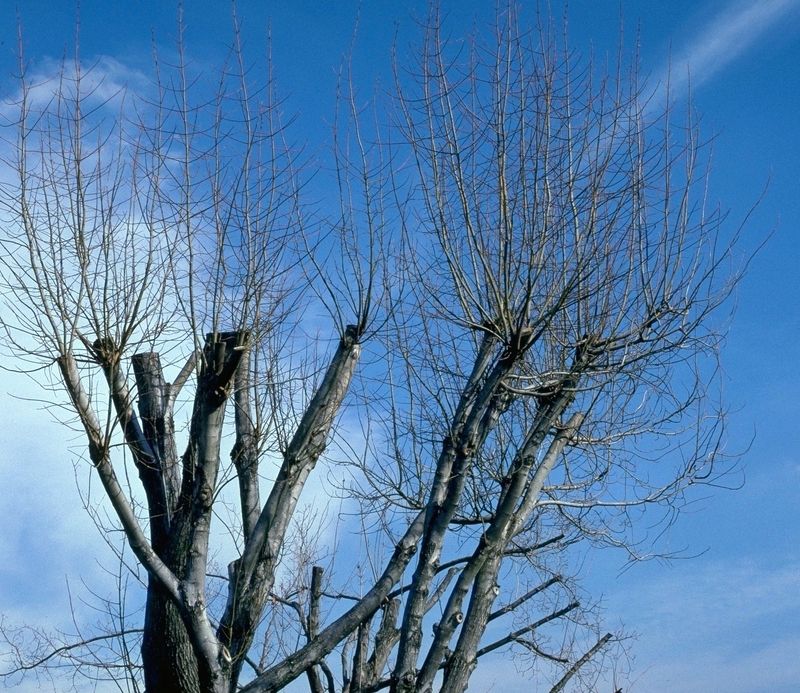
Cut a branch back to a stub and the tree answers with a flush of thin shoots. These water sprouts are often weakly attached and crowd the top of the tree.
Stubs can also be slow to seal. Extension sources describe weak branching, decay, and ongoing upkeep as risks of topping, though none says topping inevitably harms the tree.
One Florida study gives a closer look. Researchers compared topped, pollarded, and unpruned Natchez crape myrtles and found more dead stub wood after topping than after pollarding.
That study used one cultivar and a particular pruning regime, so it is not a recipe for your yard. It shows that stubs left by topping can leave extra wood to deal with later, and that is a good reason to choose other cuts.
Time Necessary Pruning to Spring Growth
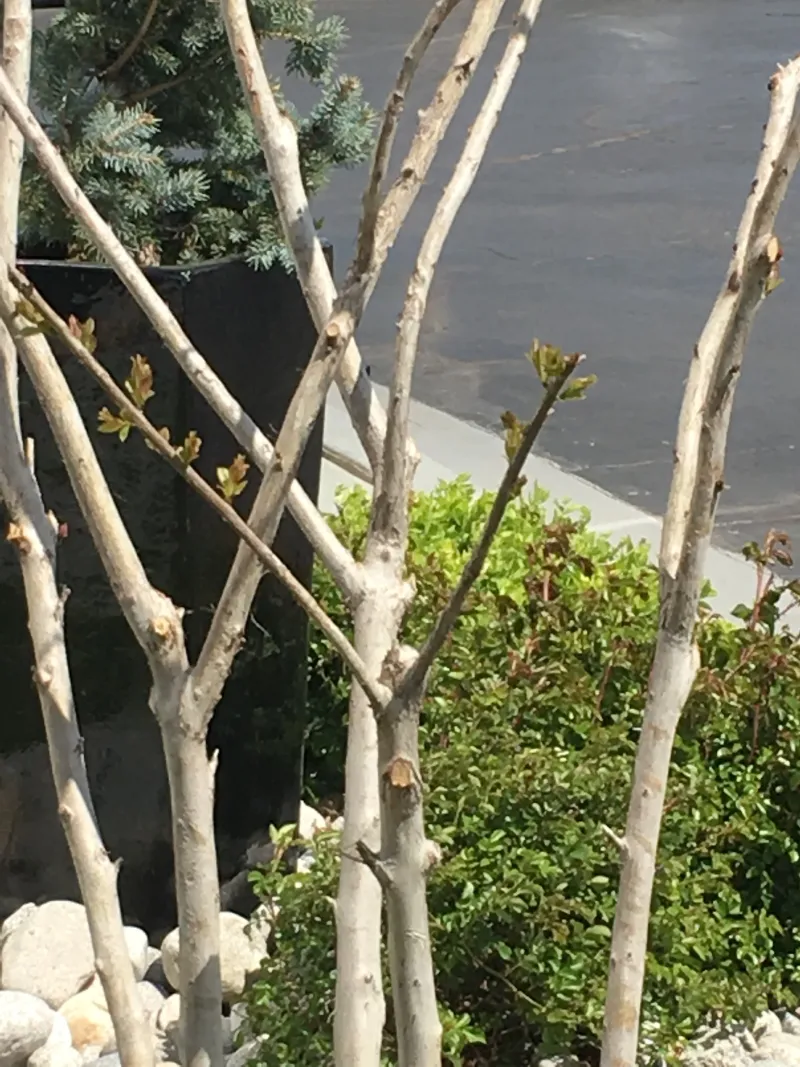
Watch the tree, not the calendar. Arizona Extension recommends pruning summer-flowering shrubs, including crape myrtle, in spring before growth begins.
Your cue is the plant’s growth stage. Buds are swelling, but new shoots have not taken off yet.
Arizona covers a lot of ground, from low desert to high country, so frost and warmth arrive at different times. A fixed date that suits Yuma could be far too early in Flagstaff.
Frost is the other reason to wait. Arizona frost guidance advises holding off on pruning frost-damaged woody plants until spring growth shows what is truly damaged.
So if a cold snap browned a few tips, resist the urge to cut right away. Let the new growth show you where living wood begins.
Decide Whether the Tree Needs Pruning
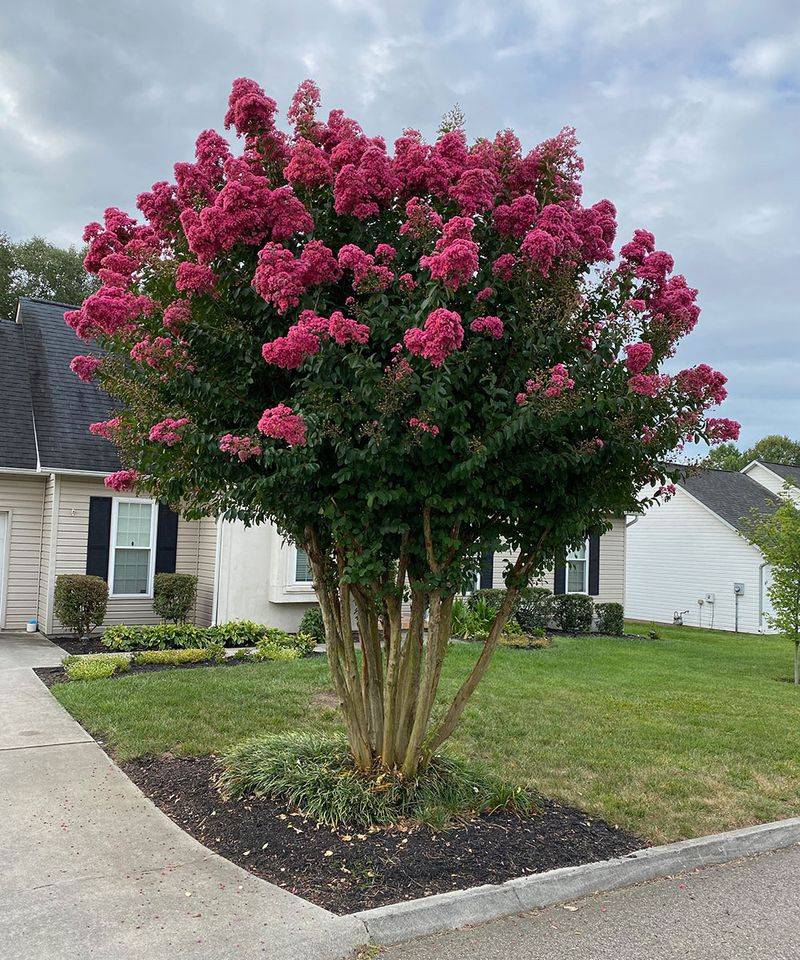
Before any cut, walk around the tree and ask whether it needs work at all. A crape myrtle planted with enough room and sized right for the spot may need little or no pruning.
Look for practical clues. Branches rubbing a roof or wall suggest the tree is too big for its space, while a tidy canopy over open ground usually means you can leave it alone.
Flowering is not a reason to cut hard. UF/IFAS guidance says routine severe cuts are not required to produce blooms, and crape myrtles can bloom well with light care.
Variety matters, too. UGA Extension’s crape myrtle culture guide stresses choosing a cultivar whose mature size fits the site, which prevents many pruning headaches from the start.
Make Selective Cuts That Preserve the Canopy
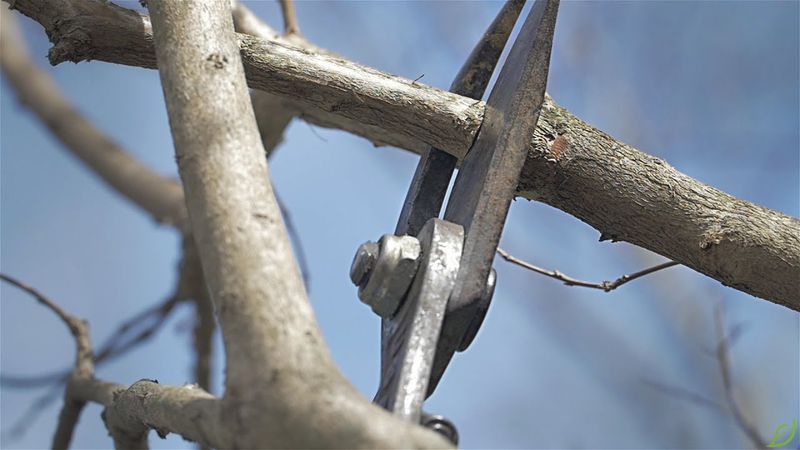
If your tree does need a tune-up, think small. Remove branches that cross, rub, are damaged, or grow toward the center of the canopy.
To remove a whole branch, cut just outside its branch collar, the slightly swollen ring where it joins the trunk or a larger limb. NC State Extension describes this approach for crape myrtles.
For a partial cut, shorten the branch back to a suitable lateral branch or bud. Virginia Tech Extension describes this kind of reduction cut as the proper alternative to chopping stems at random heights.
Not every crape myrtle needs these cuts. A healthy tree with open, airy branching can simply be admired, and sometimes the best pruning job is none.
Harder Pruning Does Not Mean More Flowers
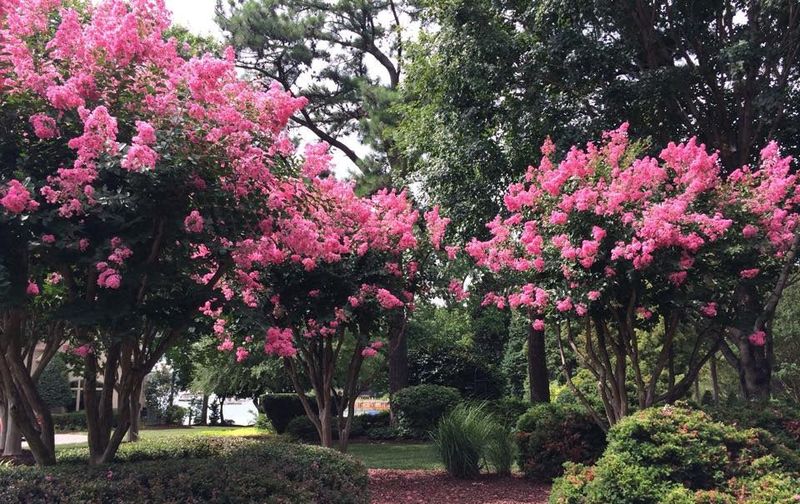
It is true that crape myrtles flower on new growth. That fact fuels the belief that hard cutting makes more blooms, but the tree does not need severe pruning to flower.
UF/IFAS reports that flower numbers generally decrease as pruning gets more severe. Pruned plants may produce somewhat larger clusters, so you may trade many blooms for fewer, bigger ones.
Topping or pollarding can also delay flowering. Some cultivars bloom best when left unpruned.
So skip the heavy cut if a long summer show is the goal. Check your cultivar’s habits and let the tree do what it already does well.
Keep Do-It-Yourself Pruning Within Safe Reach
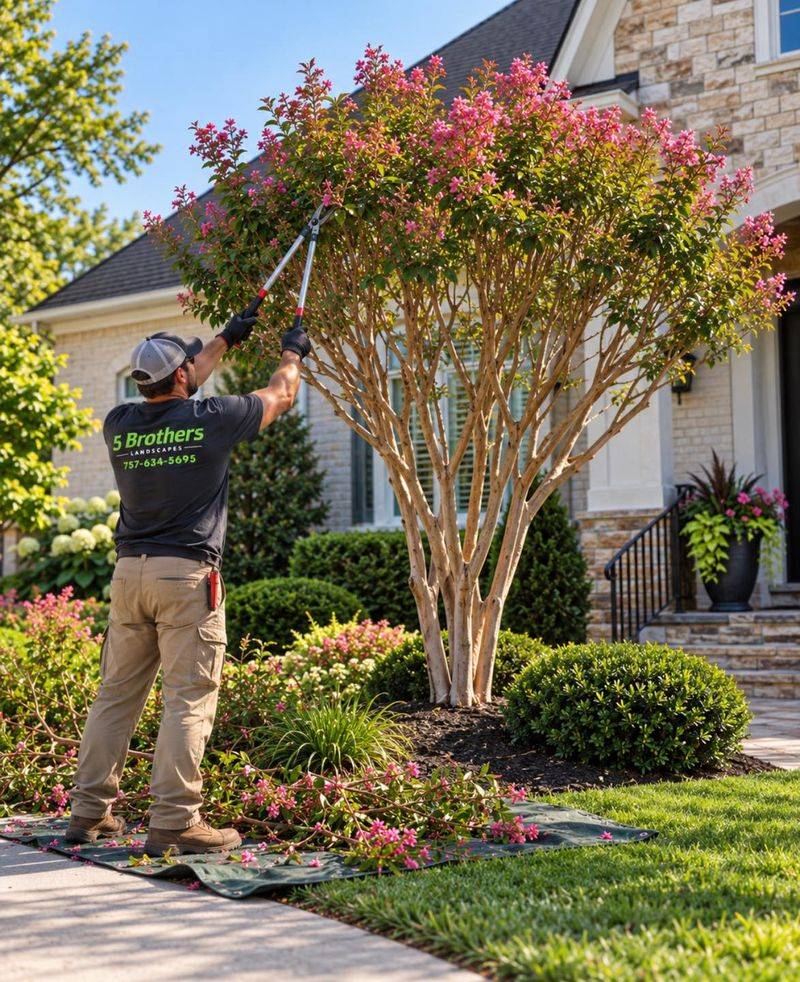
A good pruning day starts with the right tools. Sharp, clean pruners or loppers make tidy cuts that heal well, and wiping blades between trees helps avoid spreading problems.
Stay with work you can reach safely from the ground. Arizona Extension’s pruning guide recommends professionals for large jobs.
Call a qualified tree pro for anything that needs climbing, involves big or hazardous limbs, or sits near power lines. Do not attempt those jobs yourself.
An ISA Certified Arborist is one good resource, and Arizona Extension’s guide to hiring a tree expert explains what to look for. Ask for credentials and proof of insurance before you agree to any work.
A Topped Tree May Be Improved, Not Restored
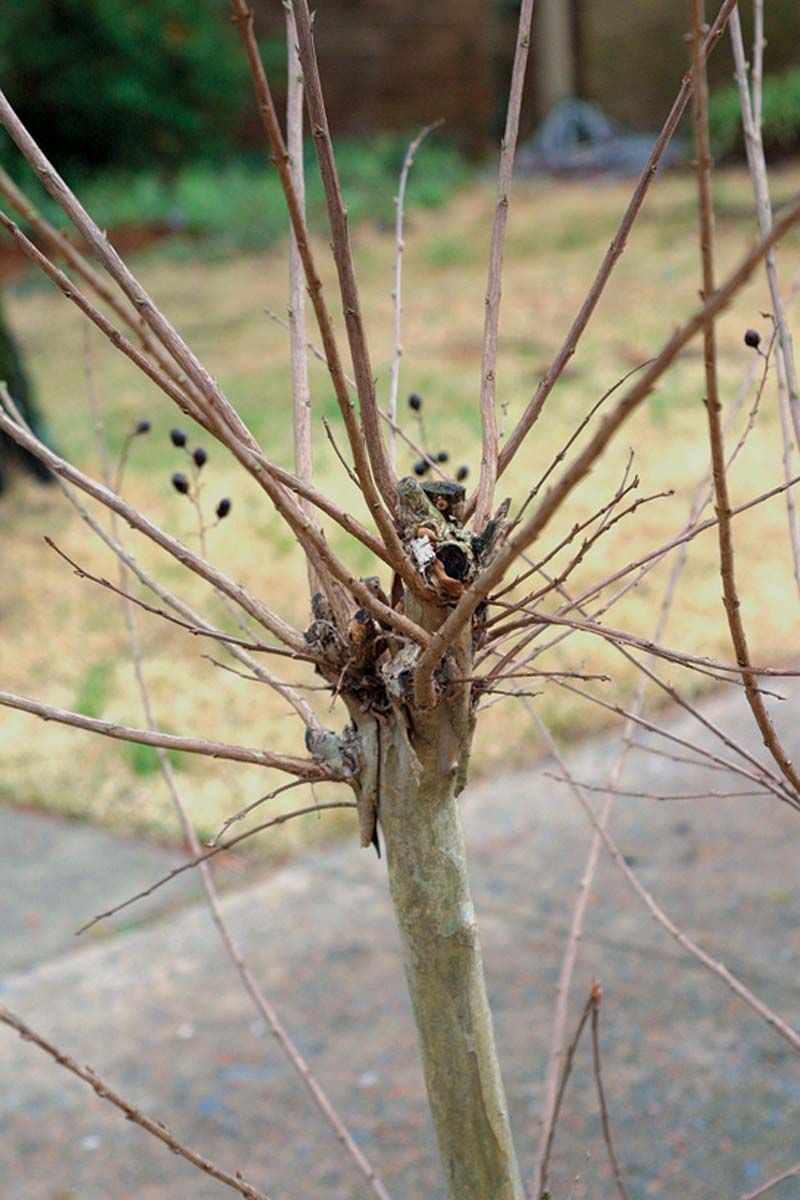
If your crape myrtle was topped, whether by you or a previous owner, take a breath. The tree is not necessarily doomed, and you have options.
One option is gradual rehabilitation. Virginia Tech Extension describes selectively reducing competing shoots at the cut ends so the strongest ones can develop.
Expect improvement, not a rewind. Nobody can promise the tree will return to its original form, and the old stubs and cut points remain part of its structure.
Do not read the Florida study as advice to pollard. That research compared pruning types on one cultivar and does not make pollarding a routine homeowner plan.
Patience is the real tool here, and a calm hand beats a fresh round of heavy cuts.