8 Thanksgiving Centerpieces You Can Make From Your Virginia Garden
Frosty nights in late autumn can make certain leafy garden plants glow brighter pink than they did in summer. I love how Virginia yards keep hiding color like that long after the tomatoes and zinnias fade away.
Native shrubs here produce berries so purple they almost look painted, and birds happily wait for them all winter. Even faded flower heads can dry on the stem into soft shades of rose and antique green.
I would rather snip something from my own Virginia beds than buy a plastic arrangement at the store.
You need little more than sharp pruners and maybe twenty minutes of quiet wandering around your yard.
Thanksgiving guests rarely guess that the prettiest thing on the table grew just a few steps from the door. Your own backyard might already have everything you need for a beautiful holiday centerpiece.
1. Oakleaf Hydrangea
Few shrubs pull off a costume change like oakleaf hydrangea, whose big lobed leaves turn deep burgundy each fall.
I swear the leaves look like they were cut from velvet when the late afternoon sun hits them.
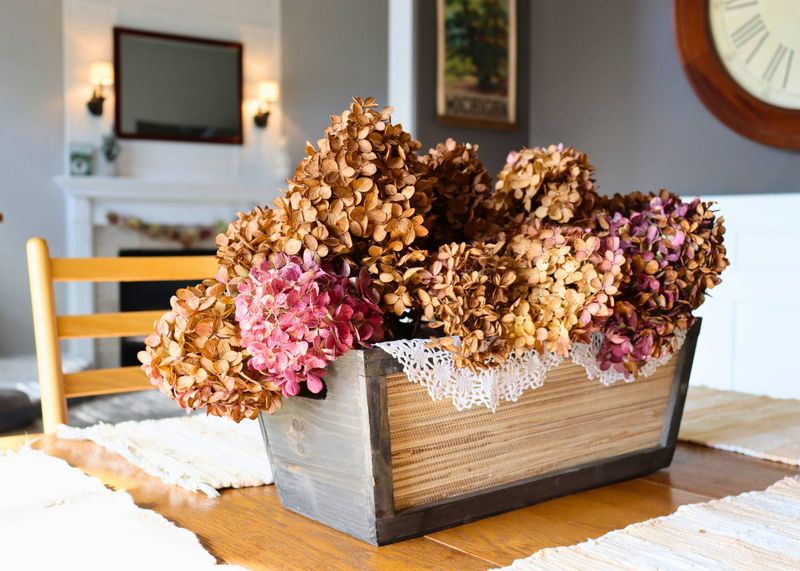
Its cone-shaped flower clusters open creamy white in early summer, then slowly blush pink as the weeks pass. By late fall, many panicles have dried right on the shrub into a papery rose and tan blend.
This native grows wild across parts of the Southeast and handles USDA zones 5 through 9 without fuss. It enjoys morning sun with some afternoon shade, plus moist soil that drains well after heavy rain.
For a centerpiece, cut a few leafy branches and several dried flower heads with clean, sharp pruners. Leave plenty of growth behind, because next summer’s blooms form on the old wood you can see now.
Strip any leaves that would sit underwater, then place the branches in a low pitcher or crock. The dried panicles need no water at all, so tuck them in wherever the arrangement looks thin.
I like pairing the burgundy foliage with small white pumpkins because the contrast feels cozy without trying too hard.
A few sprigs of something silvery, like dusty miller, can brighten the darker leaves on a gray afternoon.
Expect the cut leaves to stay handsome for about a week indoors, especially in a cool room. The dried flower heads last much longer, so save them for wreaths once the holiday dishes are washed.
2. Autumn Joy Sedum
Broccoli-like green buds sit on ‘Autumn Joy’ sedum all summer, and plenty of visitors mistake them for a vegetable.
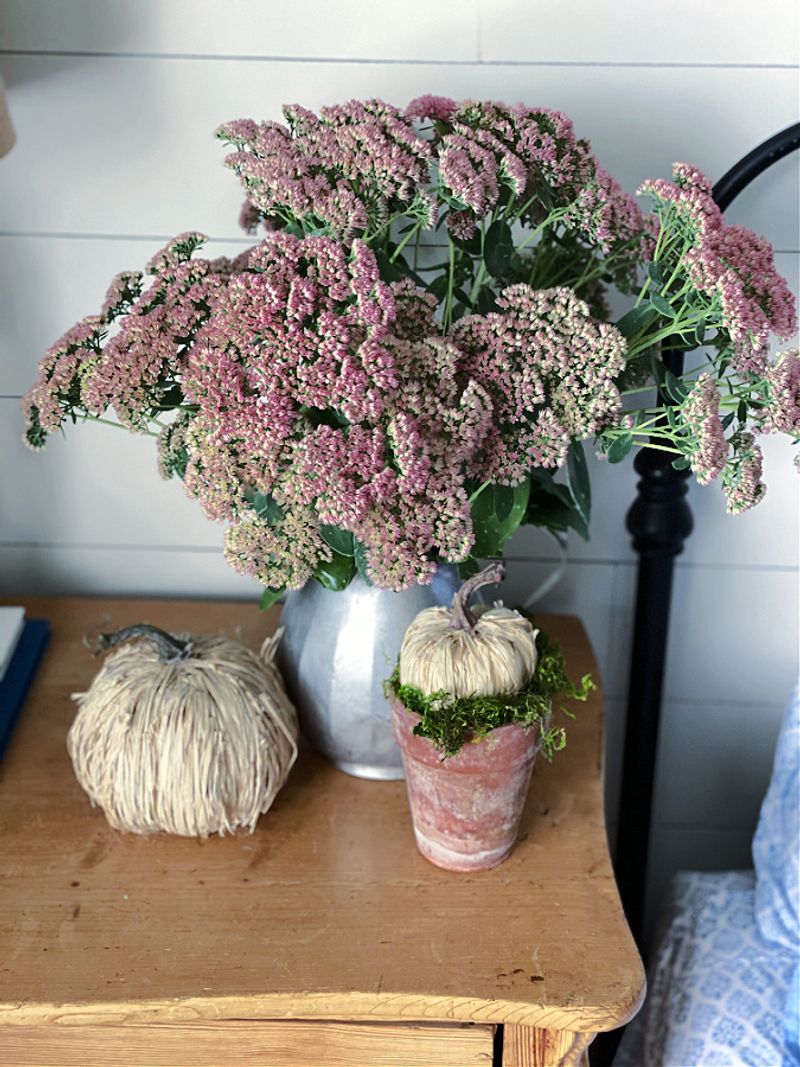
Then the clusters flush pink, and by late autumn they deepen into a rusty copper that suits Thanksgiving perfectly.
Botanists now list this plant as Hylotelephium, though most garden centers still sell it under the old sedum name. Either way, it grows happily in USDA zones 3 through 9, which covers every corner of the state.
Give it full sun and lean, well-drained soil, and it will stand tall without much help from you. Rich soil and too much fertilizer make the stems flop open, which looks sloppy right before the holidays.
The flower heads last a surprisingly long time once cut, thanks to their thick, water-storing stems and leaves.
Snip them at different heights so you can build a domed arrangement with no gaps showing between clusters.
Honestly, I love tucking these rusty heads into a shallow wooden box packed with moss and small gourds. The flat, sturdy blooms act like a cushion that holds lighter pieces in place across the table.
Leave some flower heads standing in the garden, too, because they look charming dusted with frost in winter. Cut the old stems back in late winter, just before fresh rosettes push up from the crown.
Dividing clumps every few years in spring keeps the plants compact and gives you extra starts for free. Those divisions make thoughtful gifts for friends who admired your centerpiece and asked where to buy one.
3. American Beautyberry
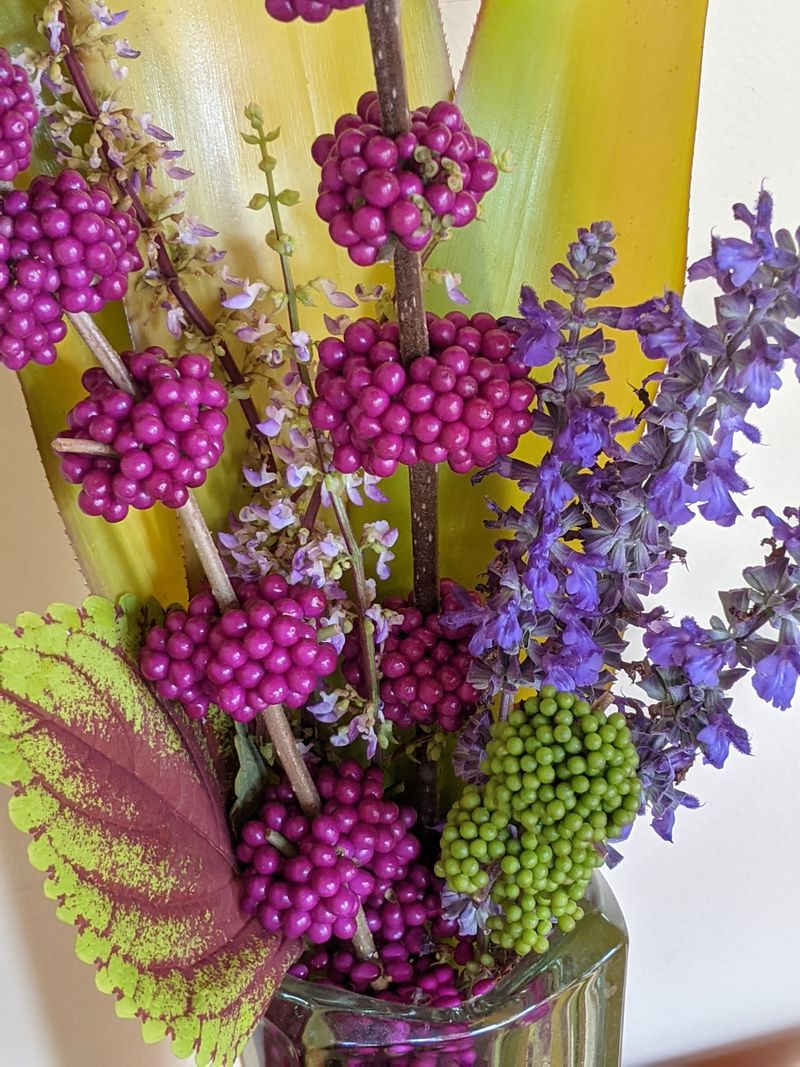
Neon purple berries do not seem like something nature would invent, yet American beautyberry produces them every fall. The glossy clusters hug the stems in tight rings, and guests often ask whether the color is real.
This native shrub grows wild in woodland edges of southeastern Virginia and much of the Southeast.
Most plants reach three to six feet tall and wide, with loose, arching branches that fill a vase.
Plant it in full sun or light shade, since more sunlight generally means a heavier crop of berries. It handles a range of soils and needs little care once roots settle in after the first year.
Flowers form on new growth, so prune in late winter, cutting stems back to about a foot tall. Hard pruning sounds scary, but the shrub bounces back quickly and covers itself in fresh berry clusters.
Indoors, strip most leaves from cut branches because the berries look brighter without green foliage hiding them. Keep the stems in water, as the fruit can shrivel within a few days if left dry.
I think beautyberry shines next to warm copper tones, like rusty sedum heads or a hammered metal bowl. Purple and orange sit across from each other on the color wheel, which explains why they pop together.
Leave plenty of branches outside, since mockingbirds and other birds eat the berries as food gets scarce. Sharing the harvest feels fair, and those visiting birds give you something lovely to watch during dinner.
4. Winterberry
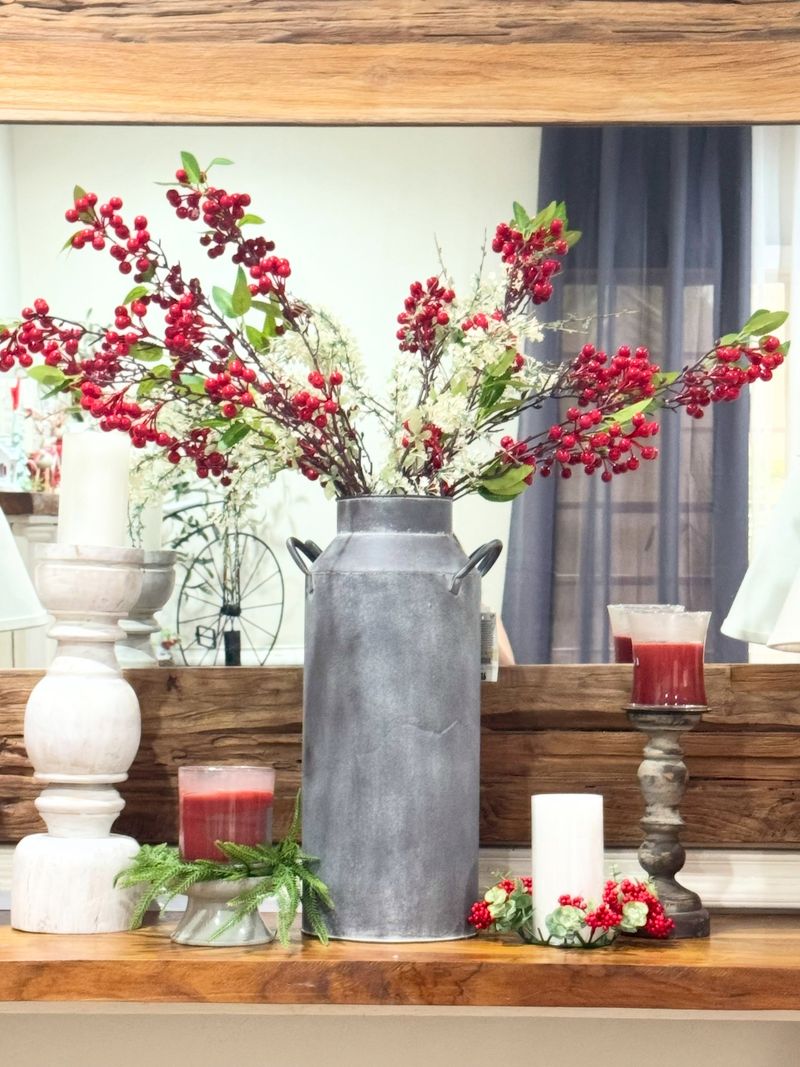
Bare twigs covered in scarlet berries look almost too dramatic to be real, but winterberry pulls it off naturally.
Once its leaves drop in late fall, the bright fruit seems to glow against gray skies and brown lawns.
Though it is a true holly, this native sheds its leaves each year and has no prickly edges. It grows across the eastern United States and thrives in USDA zones 3 through 9 with little complaint.
You need at least one male plant nearby for the female shrubs to set fruit, so check plant tags. Nurseries often sell matched pairs, such as ‘Southern Gentleman’ paired with females like ‘Winter Red’ for good pollination.
Winterberry handles soggy ground better than most shrubs, making it ideal for low spots that stay wet.
Full sun brings the biggest berry crop, although partial shade still gives a respectable show each autumn.
For the table, cut branches long and stand them upright in a tall vase or galvanized bucket. The berries hold well even without water, so you can also lay short pieces along a table runner.
I adore the simple look of winterberry stems mixed with pinecones and a few creamy candles in jars. Keep candles safely away from dry twigs, and set the arrangement where curious pets cannot nibble the berries.
Cutting branches works like light pruning, so harvesting for decorations actually helps keep the shrub tidy and full. Leave some berries outdoors, too, since robins and bluebirds often feast on them later in winter.
5. American Holly
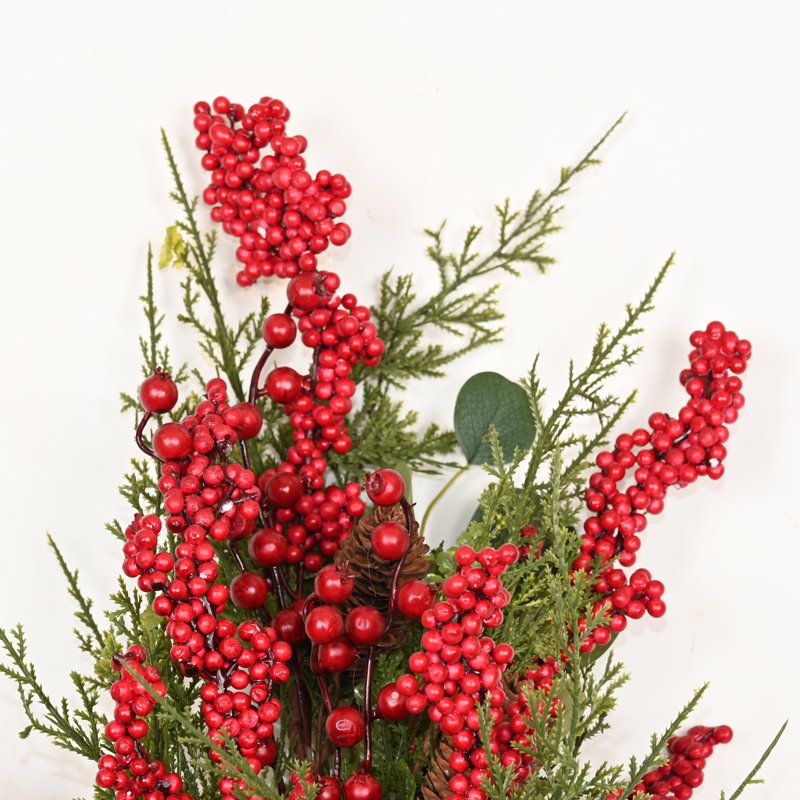
Long before store-bought garland existed, families in early America often decorated with holly cut from nearby woods. Its glossy, spiny leaves and red berries still look elegant on a table without any extra fuss.
This native evergreen grows across much of the eastern United States and handles USDA zones 5 through 9.
Older trees can reach 40 feet or more, though garden cultivars often stay smaller and tidier.
Only female trees produce berries, and they need a male holly somewhere nearby for good pollination. If your tree rarely fruits, a missing male partner nearby is often the main reason behind it.
Plant holly in sun or part shade, in slightly acidic soil that drains well and stays evenly moist. Clipping branches for decorations is a fine way to shape the tree, as long as you cut thoughtfully.
Wear sturdy gloves when harvesting, because those leaf spines feel like tiny needles on bare fingers. Snip just above a leaf or side branch so the cut heals neatly and the tree stays natural looking.
Holly berries are toxic to people and pets, so keep arrangements away from little hands and curious dogs. I usually place holly toward the center of the table, well out of reach of younger guests.
A wreath of holly sprigs around a hurricane candle holder feels classic and takes only minutes to make. Mist the leaves with water every day or two, and they will stay shiny through the long weekend.
6. Ornamental Kale
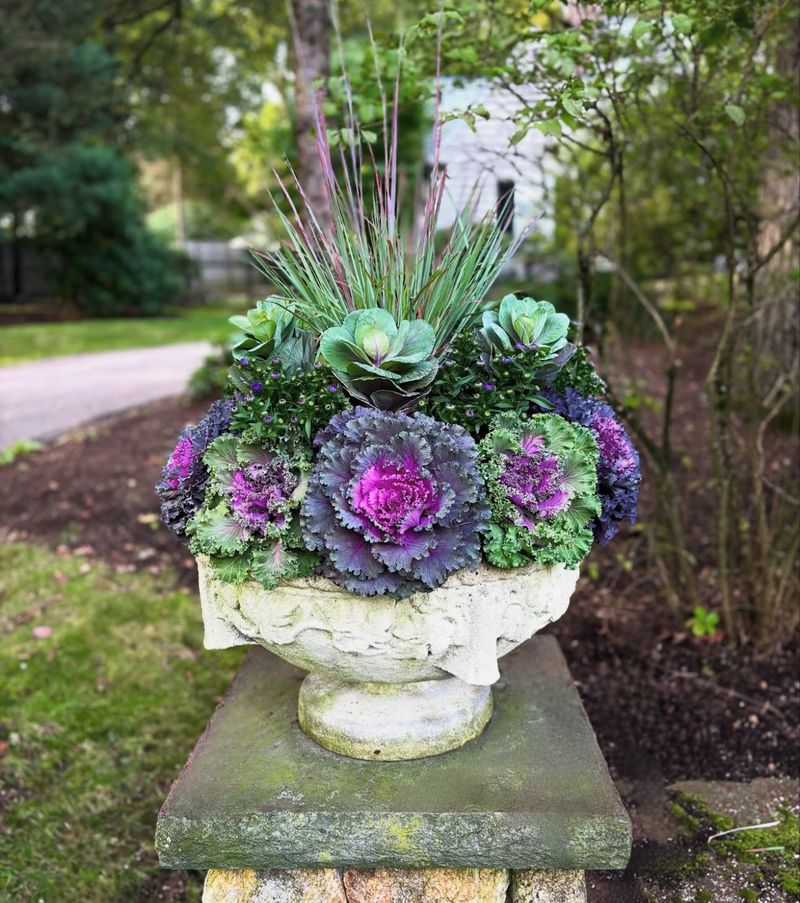
Cabbage on a holiday table sounds silly until you see ornamental kale glowing hot pink in the center. Its ruffled rosettes look like oversized roses, and they get brighter as autumn nights turn chilly.
Color in the center leaves develops best once nighttime temperatures dip consistently below about 50 degrees. Light frost does not bother them much, and many plants hold up until temperatures fall into the teens.
Garden centers sell transplants in late summer and early fall, which is the ideal time to plant them.
Set them in full sun and well-drained soil, and water regularly until the roots settle into their new home.
You can choose frilly fringed types or feathery kinds that look a bit like fancy peacock tails. Mixing the two shapes in one arrangement adds texture without needing any other flowers at all.
For a centerpiece, cut a whole head at the base and remove the lower, tougher outer leaves. Set it in a shallow bowl with a little water, or pop the entire potted plant into a basket.
I like nestling several heads together in a long wooden trough with a few shiny apples. Kitchen leftovers suddenly look intentional, and the whole arrangement costs far less than a florist’s bouquet would.
Ornamental kale is technically edible, but most varieties taste bitter and work better as garnish than salad. Skip eating any plants treated with pesticides labeled for ornamentals, and stick to admiring their gorgeous colors.
7. Switchgrass
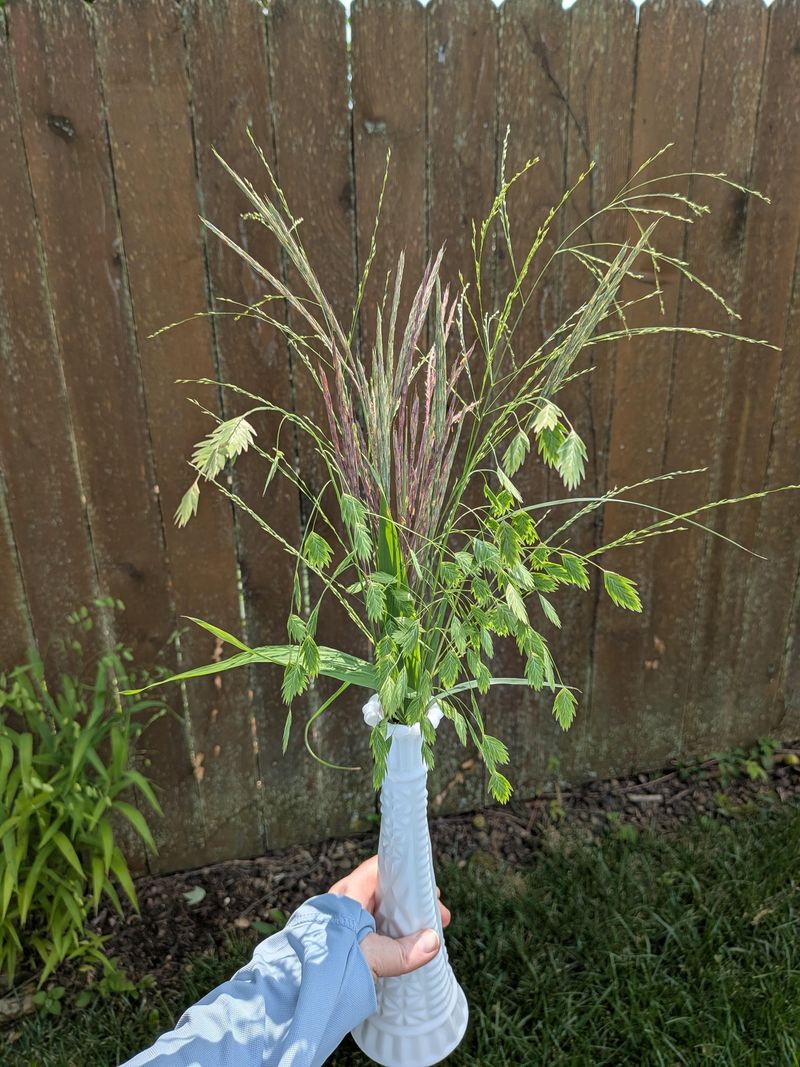
Tall prairie grass might seem out of place indoors, but switchgrass seed heads look like tiny fireworks in a vase.
The airy clouds catch candlelight beautifully and make even a plain mason jar feel special for the holiday.
Switchgrass is native to much of North America, including meadows and coastal areas here in Virginia. It thrives in USDA zones 4 through 9 and shrugs off drought once its deep roots settle in.
Popular varieties like ‘Shenandoah’ turn rich burgundy by fall, while ‘Northwind’ stays tall with golden autumn tones.
I find the red types especially striking beside orange pumpkins and copper candlesticks on a wooden table.
Plant switchgrass in full sun, since too much shade makes the clumps flop open and lose color. Average soil works fine, and you rarely need fertilizer, which makes this grass wonderfully easy to keep.
Cut stems when the seed heads look fluffy, then bundle them loosely to keep their airy shape intact. A light spritz of unscented hairspray helps reduce shedding, though some seeds will drift onto the table anyway.
Group tall stems behind shorter blooms to add height without blocking anyone’s view across the dinner table. Keep arrangements low enough that guests can chat easily, because nobody enjoys peeking around grass at Grandma.
Leave most clumps standing outside through winter, since birds eat the seeds and insects shelter at the base. Cut the old foliage down to a few inches in late winter before fresh green shoots appear.
8. Ornamental Gourds
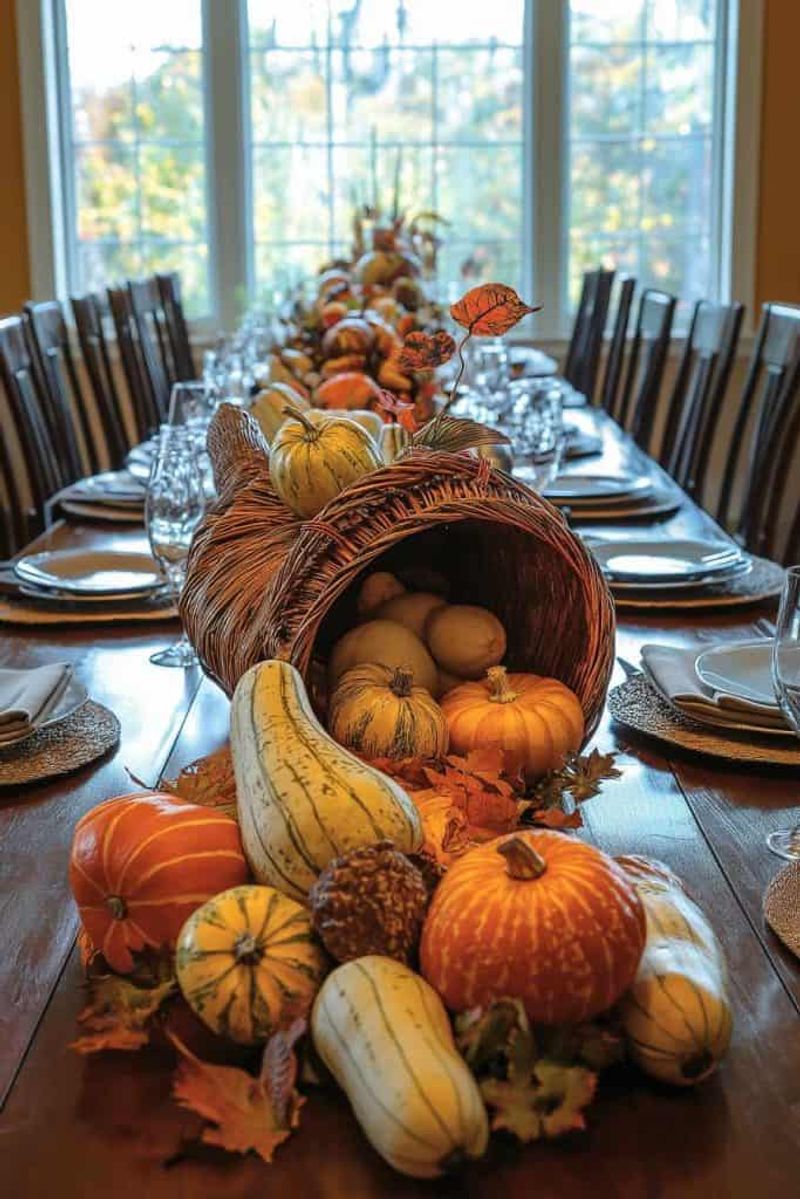
Lumpy little gourds with warty skins and goofy shapes might be the most cheerful harvest your garden produces. They practically beg to be piled on a platter, and kids love picking favorites before dinner starts.
Small ornamental gourds belong to the same family as pumpkins and squash, so they grow on rambling vines.
Seeds go into warm soil after the last spring frost, giving vines roughly three months to ripen fruit.
Choose a sunny spot with rich, well-drained soil, and give vines room or a sturdy trellis to climb. Trellising keeps the fruit clean and off damp ground, which reduces rot problems during humid summers.
Harvest gourds once stems turn brown and dry, and finish picking before hard frost damages the shells. Leave a few inches of stem attached, because a stubby stem can let decay start inside.
Wipe each gourd clean, then cure it in a warm, airy spot out of direct sun for about two weeks. Small ornamental types often keep for weeks on a table, which comfortably covers the whole holiday season.
I enjoy scattering gourds down the middle of the table between sprigs of sedum and branches of beautyberry. Their bumpy textures and mixed colors tie the other garden pieces together without stealing the spotlight.
Remove any gourds that soften or leak, and compost them rather than tossing them in the trash. Save seeds from favorites if you like surprises, since cross-pollination often produces funny new shapes next year.