Northern Flickers Spend More Time On Georgia Lawns Looking For Ants In Fall And Winter
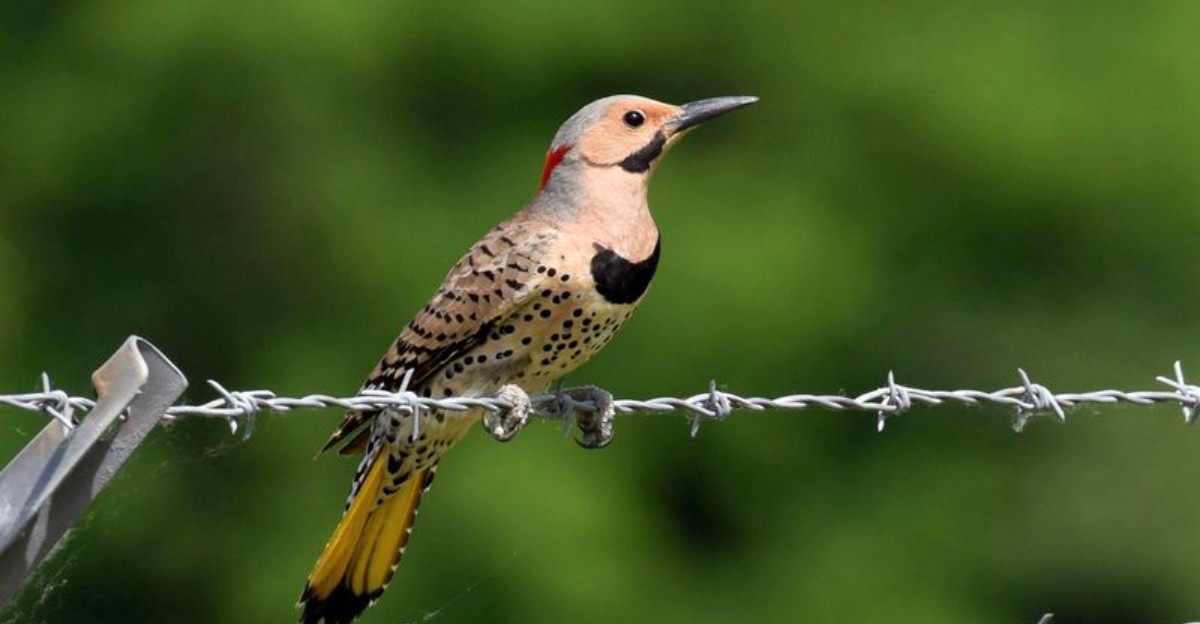
One Georgia woodpecker would rather dig in your grass than drum on a tree. Its tongue can stretch about two inches past the tip of its bill, and that tongue is sticky.
I like how this bird breaks the woodpecker rules. It hops across open turf like a robin, then jabs the soil as if it lost something important.
Ants make up a big share of its diet, more than for most North American birds.
Cold months bring more of these spotted visitors to the South. Birds from northern states drift down to join the local year-round crowd.
Your yard might suddenly feel like a busy diner.
I used to think those birds poking at bare patches were just lost. You’re in for a surprise once you learn what they find down there.
Even the plainest patch of lawn can offer something worth searching for during the colder months.
1. That Spotted Woodpecker Poking Your Grass Has A Plan
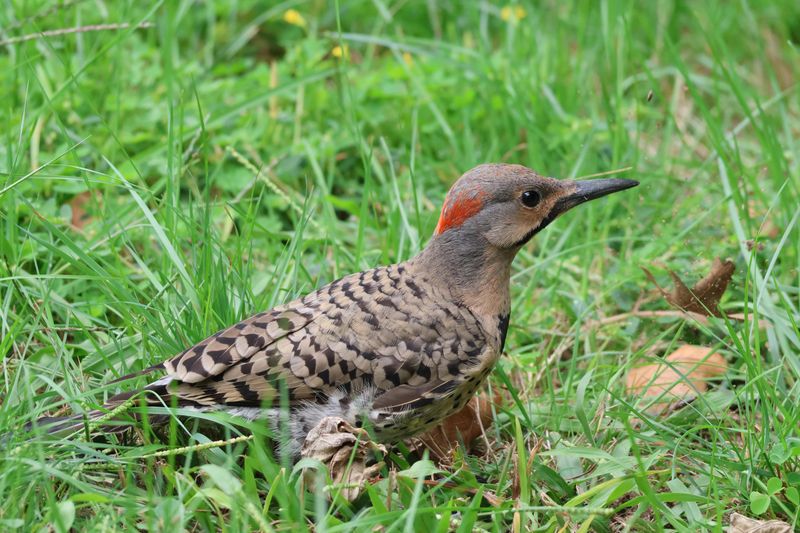
Most woodpeckers cling to bark, but the Northern Flicker happily walks the ground. You can spot one by its brown, barred back, black bib, and a chest covered in round black polka dots.
In flight, a bright white rump patch flashes like a signal.
Here in the South, flickers show up on lawns, ball fields, golf courses, and park edges. They choose open ground with short grass because it makes digging easier.
Bare patches and sandy spots near sidewalks are favorite hunting areas.
The flickers you see in Georgia during fall and winter may not all be locals. Some flickers live here all year.
Others move south from colder regions when the ground up north freezes, so winter numbers can rise.
That mix of residents and visitors explains why the birds seem to appear out of nowhere in October and November. More birds simply means more chances to watch them work.
Watch closely and you will see a steady routine. A flicker hops, pauses, tilts its head, and then drives its bill into the dirt.
It may stay at one spot for several minutes. That focus tells you it found something worth eating, and that something is usually ants.
2. Ant Colonies Under Your Lawn Are The Real Attraction
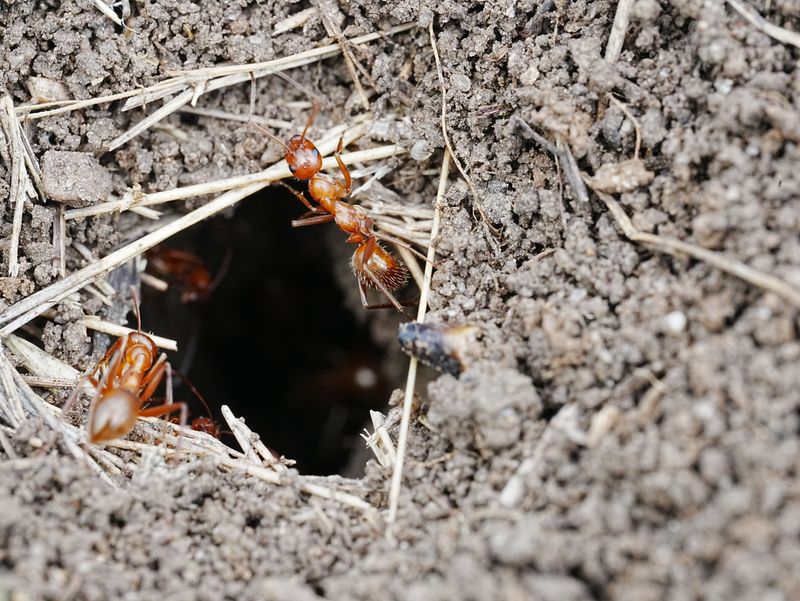
Ants are the flicker’s favorite food, and that is no small fact. According to the Cornell Lab of Ornithology, ants can make up a large share of what this bird eats, often close to half its diet.
Georgia’s mild climate keeps many ant colonies active late into fall. On warm winter afternoons, ants often come back near the surface.
A flicker can find them in lawns, mulch edges, and cracks along driveways.
The bird’s tools are built for this job. Its slightly curved bill digs into soil instead of wood.
Then a long, sticky tongue with tiny barbs reaches into tunnels and grabs ants, larvae, and pupae.
Fire ant mounds, which are common across much of the state, can draw flickers too. Birds often scratch at loose soil around mounds, though one bird will not clear out a whole colony.
As days get colder, flickers do add more berries and seeds. Still, ants stay on the menu whenever they can be reached.
That is why your lawn keeps getting visits even in January.
Notice a flicker returning to the same patch each morning? You likely have a healthy ant colony right below that spot.
3. Those Little Holes In Your Turf Are Mostly Harmless
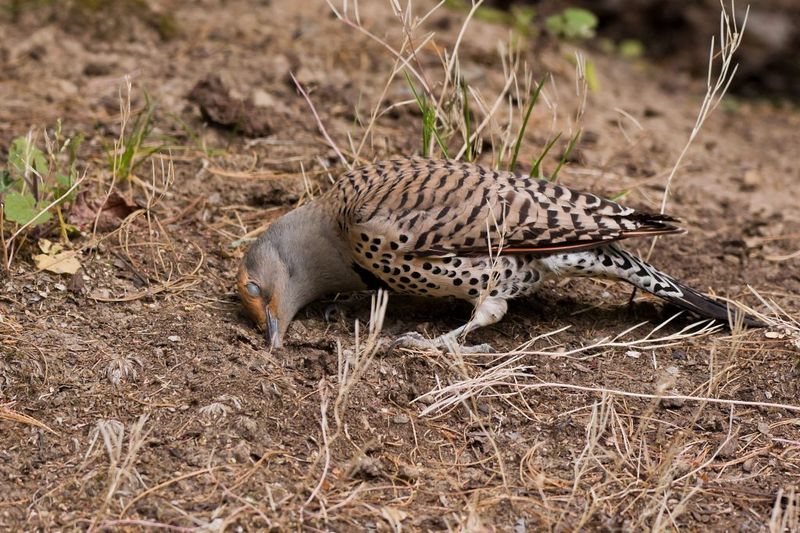
A few small holes popped up in my yard one November, and I blamed moles at first. Then I caught a flicker in the act.
Those tiny pokes were its handiwork.
Flicker holes are usually shallow and narrow, about the width of a pencil or a bit wider. They are scattered in loose clusters rather than long raised tunnels.
Small piles of soil may sit beside them.
For most lawns, this digging causes little lasting harm. The holes can even let a bit of air and water into packed soil.
Warm-season grasses like bermuda and zoysia will fill in once spring growth returns.
Bigger torn-up patches tell a different story. Armadillos, skunks, and raccoons dig wider holes when they hunt grubs.
If you see large divots, another animal is probably responsible.
You can simply rake soil back into place and let the grass recover. Avoid reaching for insecticides just to stop the birds.
Removing the ants also removes one of the flicker’s food sources.
A bit of patience usually pays off. By late spring, most people cannot even find where the birds were digging.
4. Pesticide Sprays Can Hurt Your Hungry Flickers
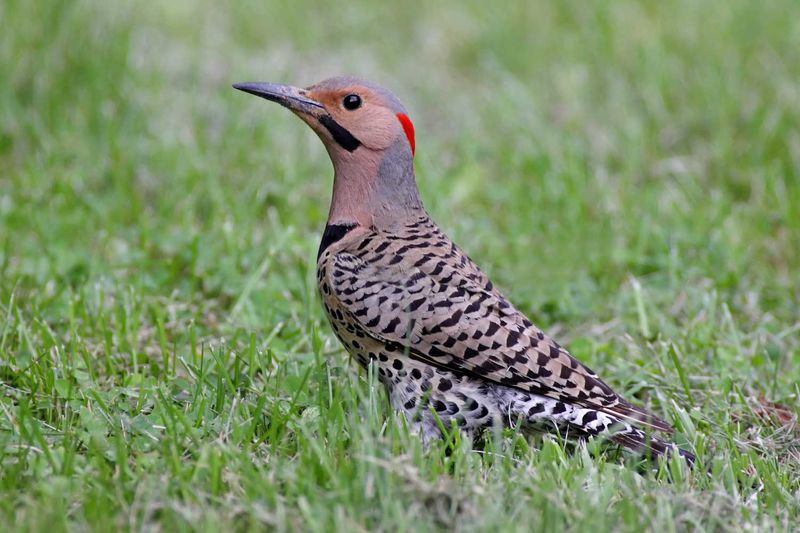
A bird that eats ants all day takes in whatever is on those ants. That simple fact should make any gardener think twice before spraying the whole lawn.
Broad insecticides can lower the number of insects flickers depend on. Some products can also harm birds that swallow treated insects.
University extension services often suggest spot treatments over blanket sprays for that reason.
Fire ants are a real problem in Georgia, and nobody wants painful stings near a play area. University of Georgia Extension recommends targeted options, such as baits placed only where fire ants are active.
Baits use small amounts of product compared with sprays.
Try to treat individual mounds in high-traffic areas. Leave quiet corners of the yard alone.
Native ant species play useful roles, and they feed flickers too.
Read every label carefully and follow the directions. Timing matters, since baits work best when ants are actively foraging in mild weather.
Think of your yard as a shared space. A few ant hills in a back corner can support birds you enjoy watching.
Meanwhile, the spots where your family walks stay safer and more comfortable.
5. Native Berry Shrubs Keep Flickers Fed When Ants Slow Down
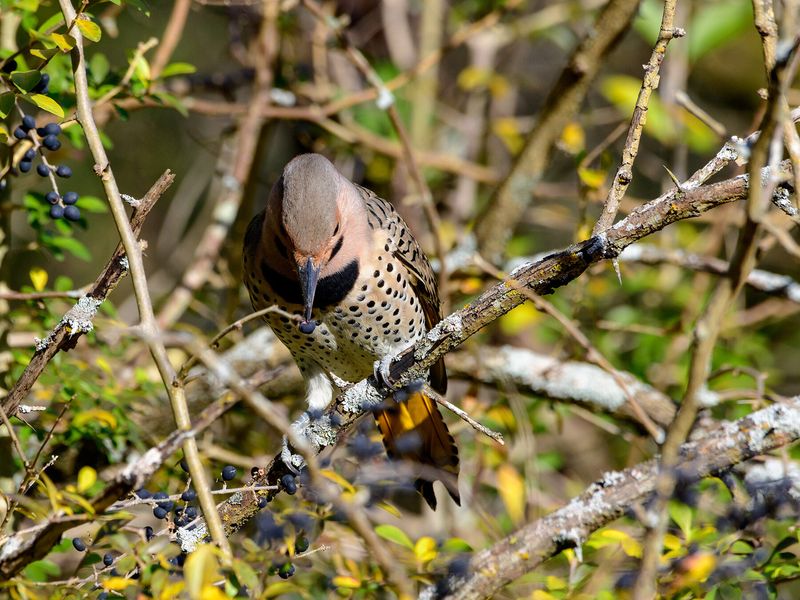
Cold snaps push ants deeper underground, and flickers know how to adapt. They switch to fruits and seeds when digging gets harder.
Your plantings can make that switch easier.
Flowering dogwood is a great pick for Georgia yards. Its bright red fall berries attract flickers, bluebirds, and robins.
Southern wax myrtle, a native evergreen, holds small waxy berries that birds eat through winter.
Other native choices include American beautyberry, hackberry, black cherry, and sumac. Elderberry also feeds many birds, though its fruit ripens earlier.
Mixing several plants spreads the food supply across more months.
Steer clear of invasive shrubs like Chinese privet and nandina. Privet spreads fast into woods, and nandina berries can be harmful to some birds.
Native plants are a safer and smarter choice.
Fall and early winter are good planting times in much of the state. Cooler air and winter rain help roots settle before summer heat.
Check with your county extension office for plants suited to your area.
Plant in small groups near open lawn. Flickers like to dart between cover and feeding spots, so this setup gives them both.
6. Suet Feeders Bring Flickers Up Close In Winter
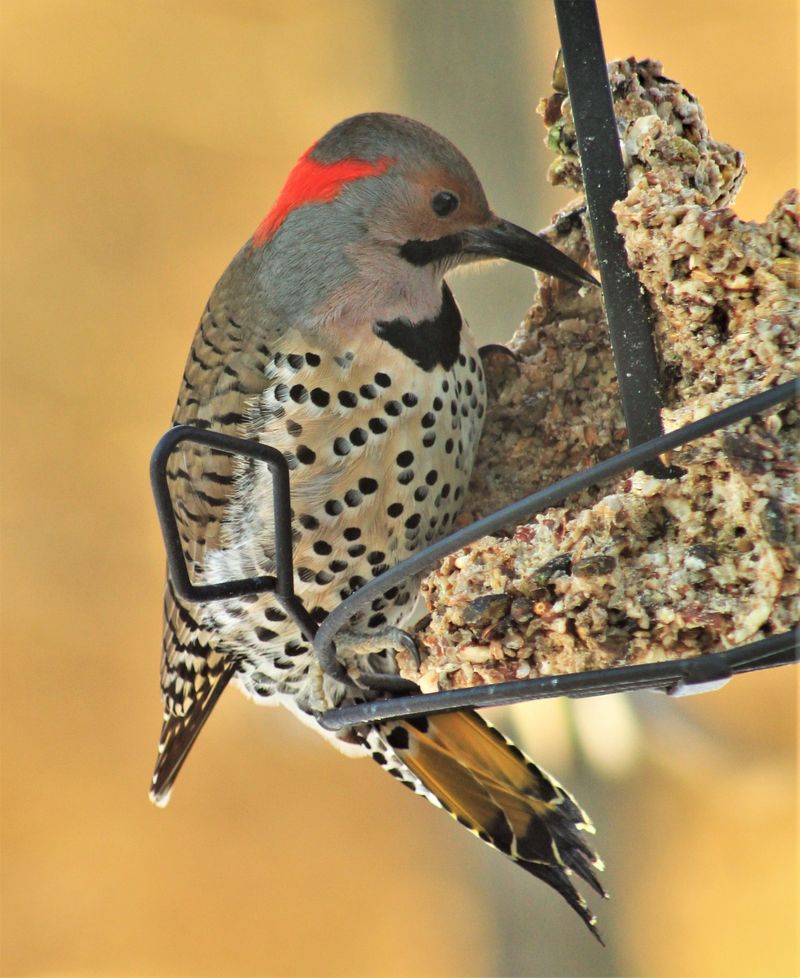
Ever seen a flicker hang off a feeder like an acrobat? It looks a little clumsy, and that is half the fun.
These birds will visit feeders, especially during chilly stretches.
Suet is their top feeder treat. A suet cage with a tail prop board works well, because flickers are large and like to brace with their stiff tail feathers.
Hang it near a tree trunk for extra comfort.
Platform feeders also help. Offer shelled sunflower seeds, peanuts, or cracked corn on a flat tray.
Flickers prefer feeding low, so a platform near ground level suits them.
In warmer parts of Georgia, suet can soften on sunny days. Choose no-melt suet blends, or hang the feeder in shade.
Swap out spoiled food quickly.
Keep feeders clean every couple of weeks with hot soapy water. Dirty feeders can spread illness among birds.
Rinse well and let them dry before refilling.
A birdbath adds another draw. Winter droughts happen, and fresh water is valuable.
Place feeders and water near open grass, and you may watch a flicker switch between lawn and feeder in one morning.
7. Drumming On Gutters Is A Flicker Way Of Talking
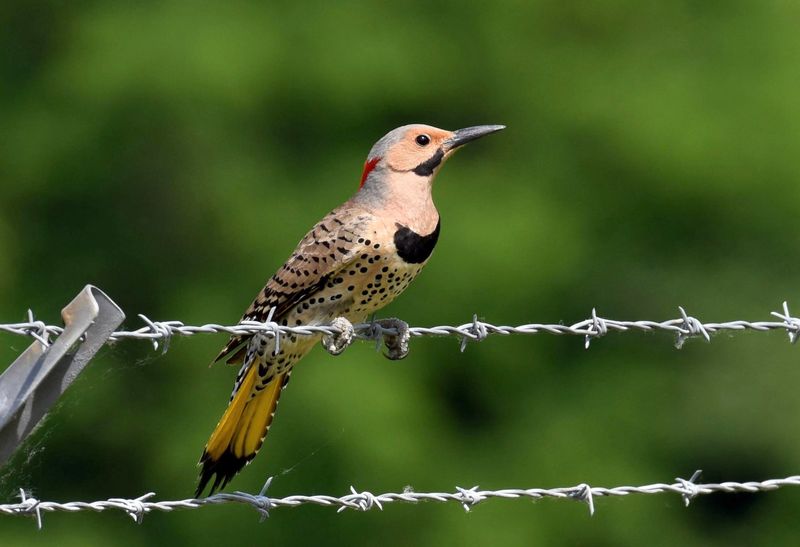
Rat-a-tat-tat on a metal gutter at sunrise can jolt anyone awake. Odds are good a flicker is behind that racket.
The bird is not looking for food there.
Flickers drum to claim territory and attract mates. Louder surfaces carry the message farther, so they pick gutters, chimney caps, and metal vents.
This behavior picks up in late winter and spring.
Drumming usually causes little damage to metal. Wooden siding is another matter, since flickers sometimes dig roosting or nesting holes.
Cedar and soft wood siding tends to attract them more.
Gentle fixes work best. Hang shiny streamers, reflective tape, or lightweight netting over the problem spot.
Cover dents and holes quickly so the bird loses interest.
Putting up a nest box made for flickers can redirect a bird looking for a home. Fill the box with wood shavings, since flickers like to dig out their own space.
Remember that Northern Flickers are protected under the federal Migratory Bird Treaty Act. You may not harm the birds or disturb active nests without a permit.
Patient, humane steps are the right path.
8. Old Snags And Open Lawns Make Your Yard Flicker Friendly
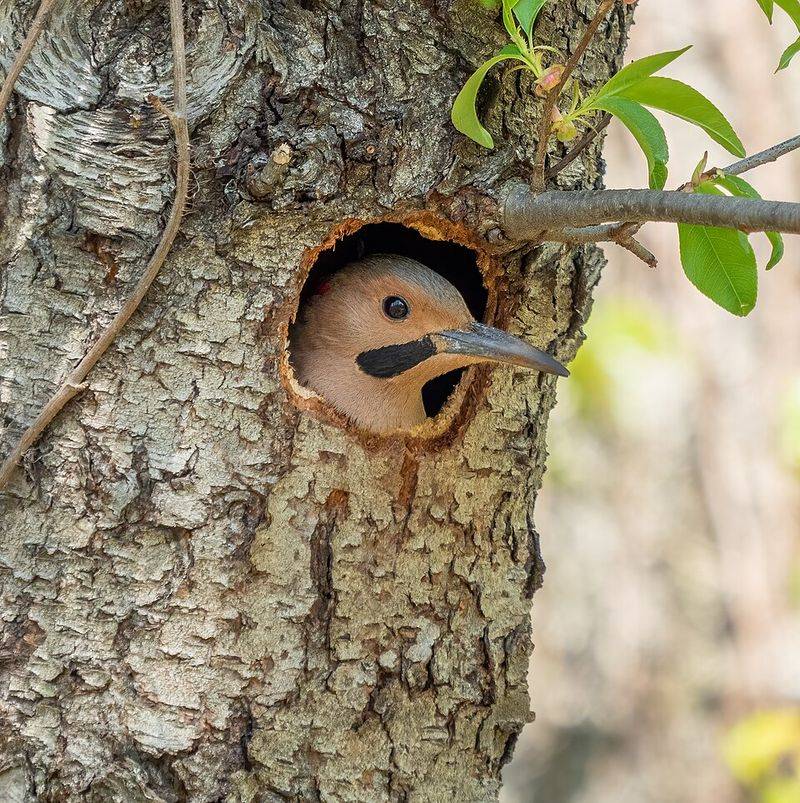
A good flicker yard has two things, open ground and old wood. Get that combination right, and these birds may stick around long after winter ends.
Standing old trees, called snags, give flickers places to carve nest holes. If a snag is safe and far from your house, consider leaving it.
Trim it shorter if you worry about falling limbs.
Flicker holes later become homes for other wildlife. Bluebirds, owls, wood ducks, and flying squirrels may move in.
One bird’s work ends up helping a whole neighborhood of animals.
Keep part of your lawn short and open for foraging. A border of native shrubs nearby gives birds quick cover from hawks.
Leaf litter under trees also holds insects they enjoy.
Start small this season. Add one native berry shrub, leave a quiet corner unsprayed, or set up a suet feeder.
Then grab a cup of coffee and watch.
You can even share your sightings with Project FeederWatch or eBird. Those reports help scientists track bird numbers across Georgia and beyond.
Your lawn becomes a small but real part of something bigger.