Red Velvet Bugs on Arizona Ground After Rain May Be Giant Velvet Mites
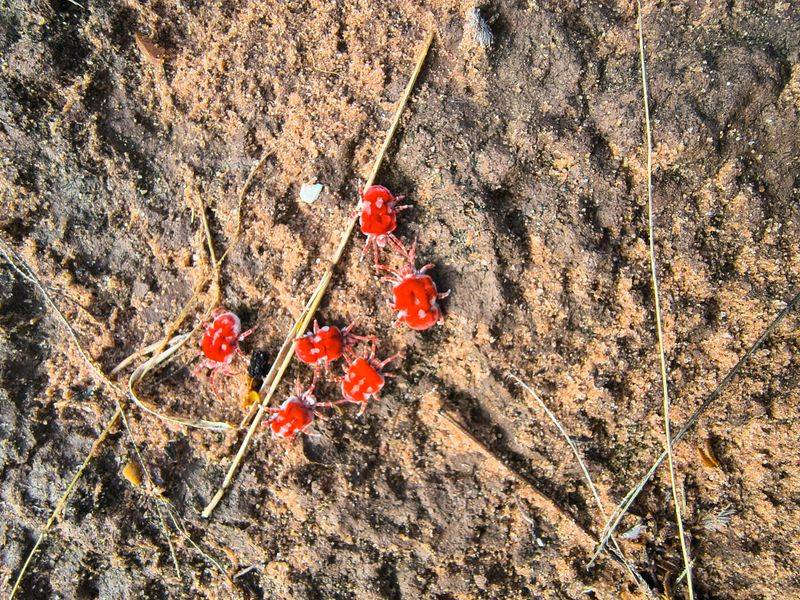
A bright red, velvety creature can pop up on desert soil right after a big storm. I love how a quiet patch of dirt can turn into a tiny parade overnight.
Some of these critters are harmless, but not every red bug fits that story. Let’s sort out what you might be seeing in southern Arizona.
What Researchers Observed Near Willcox After Summer Rain
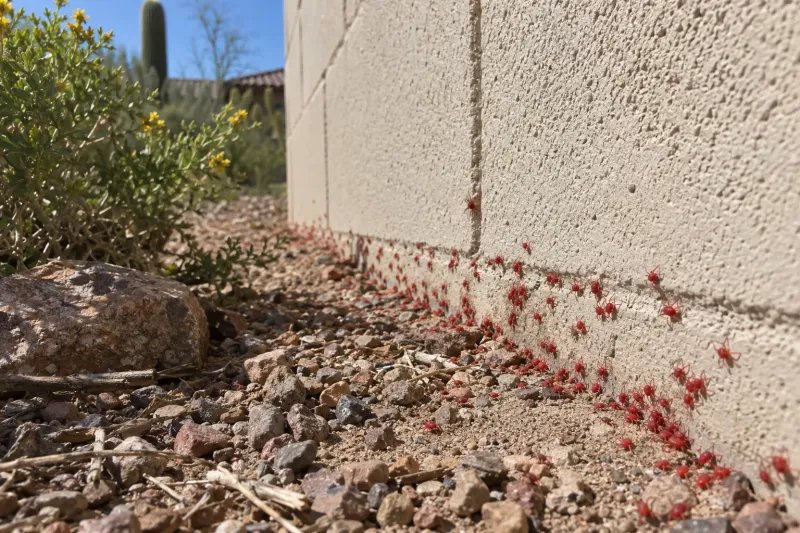
Soggy desert ground can bring out surprises. Near Willcox, in southern Arizona, researchers watched for red mites after summer storms, and what they found was quite specific.
In a Journal of Arachnology study, abundant mites above ground usually followed the first substantial summer rain, meaning more than about 1 cm. Smaller rains were linked with few or very few mites.
Once a major storm passed, the mites were active for about one to three days.
Those details come from one study area. They do not tell us that every rain brings mites out, that a single rainfall number works everywhere, or that the same thing happens across all of Arizona.
Think of the Willcox findings as a useful clue, not a statewide rule.
A Red, Velvety Mite Is a Possibility, Not a Certain Identification
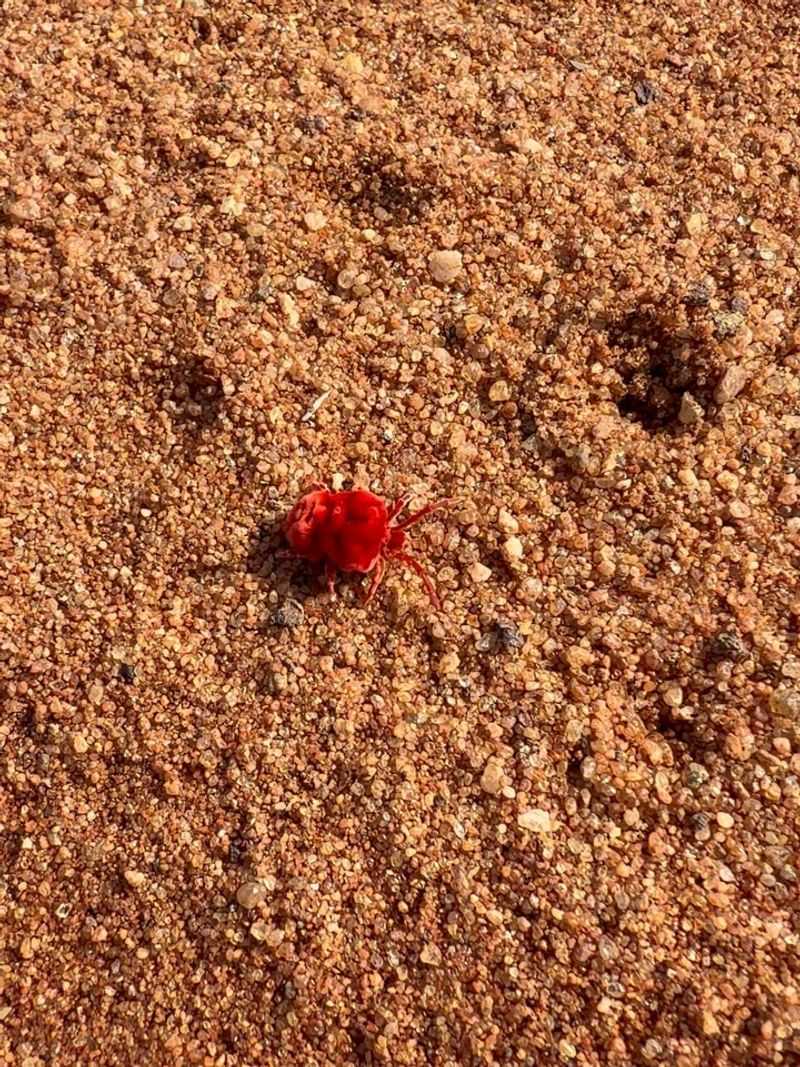
Bright red color and a soft, velvety look do fit a giant velvet mite. If you spot one on the ground after a big summer rain in southern Arizona, that is a reasonable first guess.
It is still only a guess.
The Willcox researchers considered their mites likely to be Dinothrombium magnificum, and they were careful with that wording. The same research paper notes that the naming of giant velvet mites is unsettled.
So a casual sighting in your yard cannot earn a species name. A photo, a location, and the date of the last big storm make a better starting point than a confident label.
Treat your find as a possible giant velvet mite until someone with expertise says more.
Arizona Has Red Look-Alikes
Plenty of small red creatures show up when the monsoon arrives. Color and timing simply cannot confirm what you are looking at.
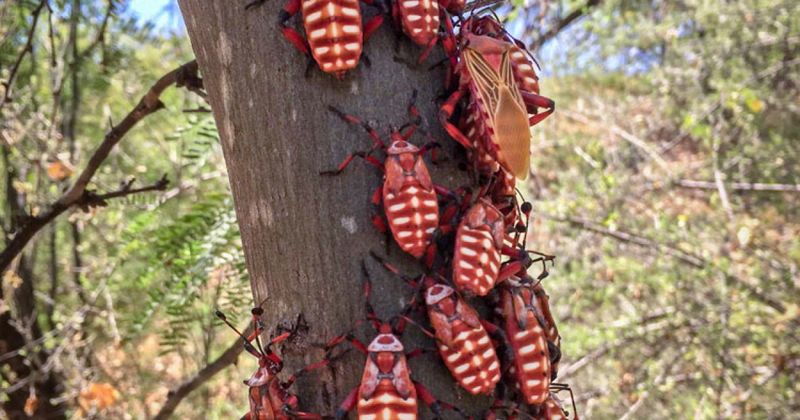
One example comes from University of Arizona Cooperative Extension, which describes bright red mesquite bug nymphs with white markings on mesquite trees. Those are insects, not mites, so they belong to a different group altogether.
They are only one look-alike, and other red arthropods can turn up too. A useful clue is where you found it.
A fuzzy red mite wandering over soil is a different situation from a red, white-marked nymph clustered on a mesquite trunk, and noting that spot helps with identification.
True Velvet Mites Do Not Parasitize People
Here is the question most of us really want answered: will it bite me? For true velvet mites, the answer is reassuring.
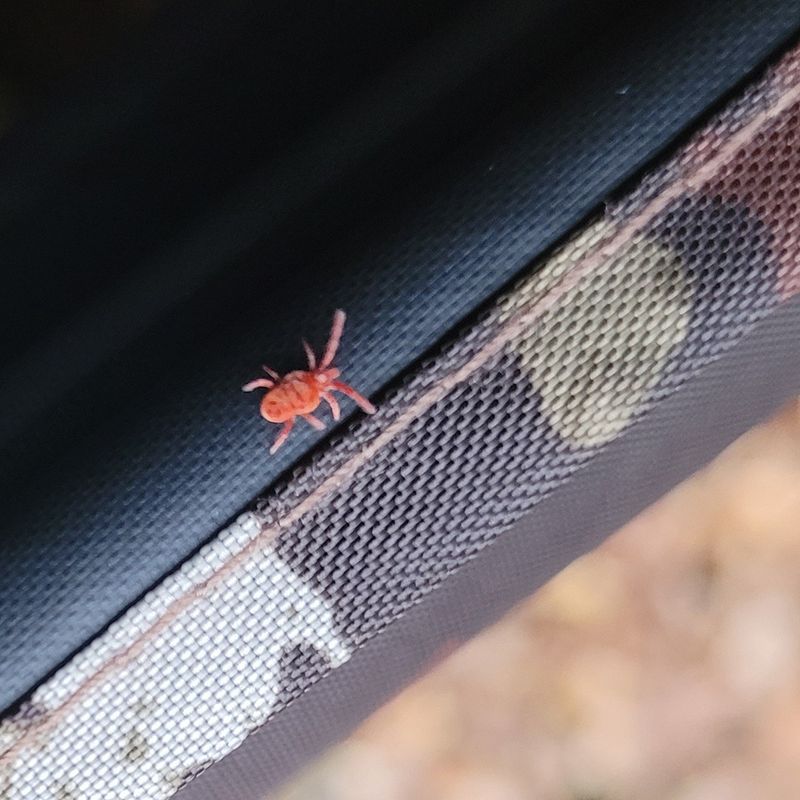
They belong to the family Trombidiidae and do not parasitize people.
According to the Missouri Department of Conservation, velvet mite larvae attach to insects or other arthropods. The free-living stages feed on small invertebrates or their eggs.
Those are family-level facts, so local species may differ in their details.
Chiggers are different. They belong to Trombiculidae, and their larvae can parasitize vertebrates, including people.
Because the name red velvet mite can point to different mites, it is wrong to call every red mite harmless. Your safest move is simply to avoid handling an unknown mite.
The Willcox Mites Appeared Alongside Reproductive Termites
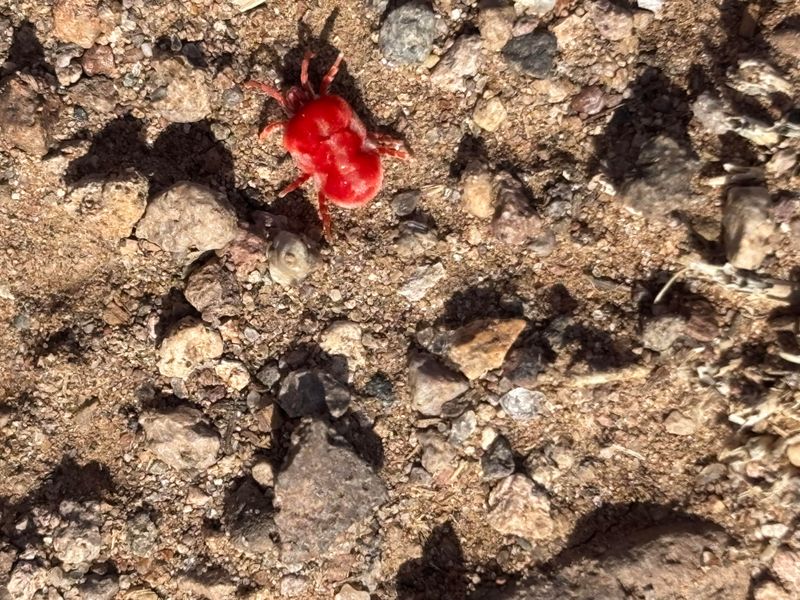
The storm brought out more than mites. At Willcox, researchers tied adult mite emergence to flights of reproductive termites.
They also saw adult mites feeding on those termites, as described in the same study. That makes the mites part of a seasonal feast that follows the rain.
It helps to keep the story small. The observations do not show the mites invading homes or damaging plants.
They also do not show that the mites reliably control common garden pests. They show a short, natural event in one place, and it fades within days.
Leave Outdoor Sightings Alone Rather Than Spraying
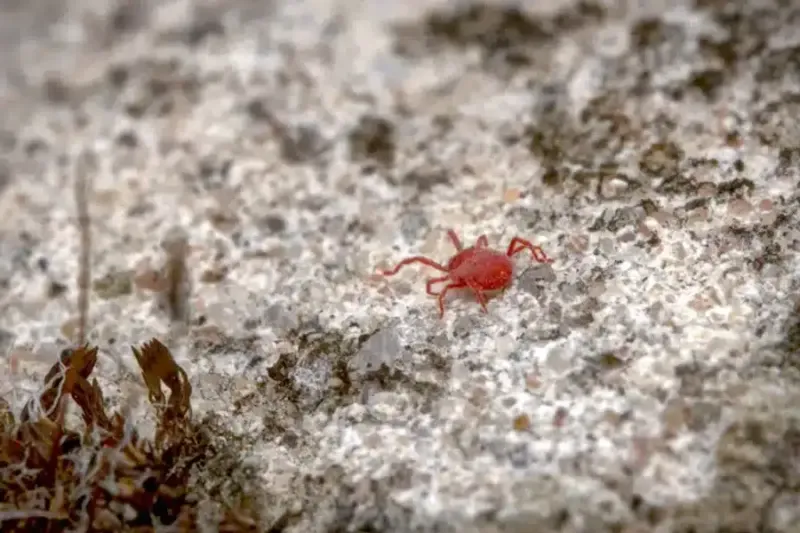
If you meet a red mite outside, the easiest plan is to let it be. Spraying or crushing it adds nothing when it is simply wandering across the ground.
An unconfirmed identification is no reason for treatment.
Want help naming it? Take a clear photo, ideally with a coin beside it for scale, and note where you found it.
Share that with your local extension office.
Guidance from University of Maryland Extension advises against treating lawns for wandering velvet or concrete mites and cautions that broad-spectrum products can harm beneficial insects and pollinators. That is general advice, not Arizona-specific research.
Leaving mites alone will not promise garden pest control, but it spares everything else in your yard. After the storm, the show is brief.