How to Bring a Struggling Christmas Cactus Back to Life in an Arizona Home
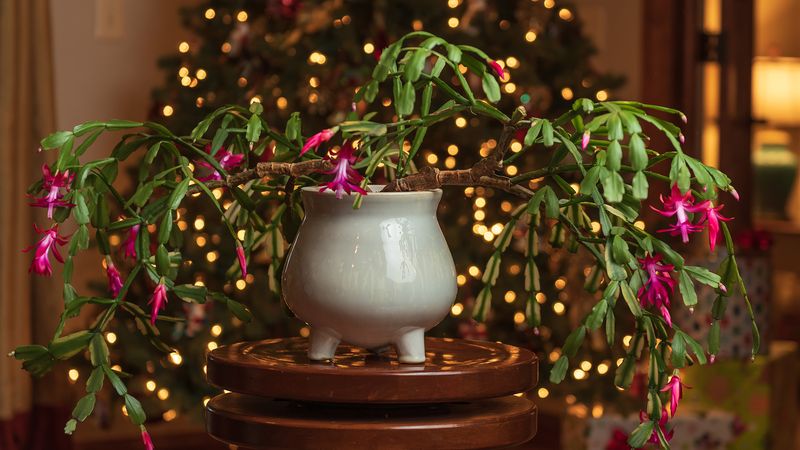
A Christmas cactus does not grow in sand. In the wild it clings to tree branches in Brazilian forests.
That is why a wilting one in an Arizona living room can leave even skilled plant owners guessing. Before you water, repot, or move it, a few quick checks can show what the plant is actually telling you.
Start With the Plant and Its Recent Conditions
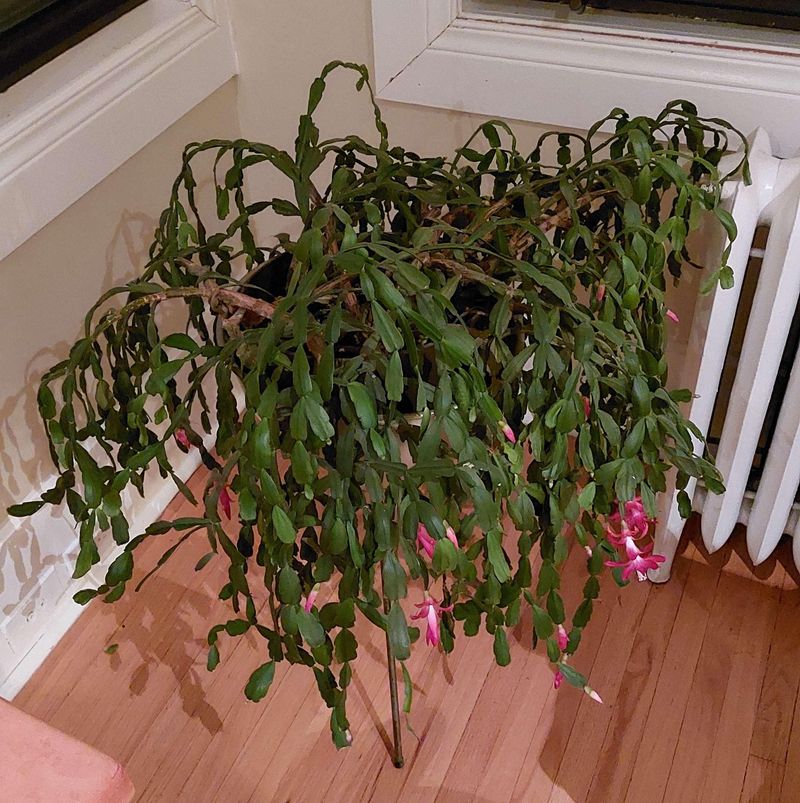
Grab a notepad and jot down what you see. Are the stems limp, are segments dropping, or are buds falling off?
Then think back over the last few weeks. Did you move the pot, change the watering, or switch the thermostat?
Here is why that matters. A single symptom can have several causes, so a droopy plant does not automatically mean it is thirsty.
UC IPM houseplant guidance notes that yellowing, wilting, and dropped parts can come from more than one problem.
It also helps to remember who you are caring for. Christmas cactus is the familiar name for a group of holiday cacti, and they are epiphytes that grow on trees in Brazil, not desert dwellers.
That means the dry-cactus routine you might use for a spiky desert plant is the wrong starting point. Keep your notes handy, because the next sections walk through the checks one at a time.
Check the Potting Mix Before You Water
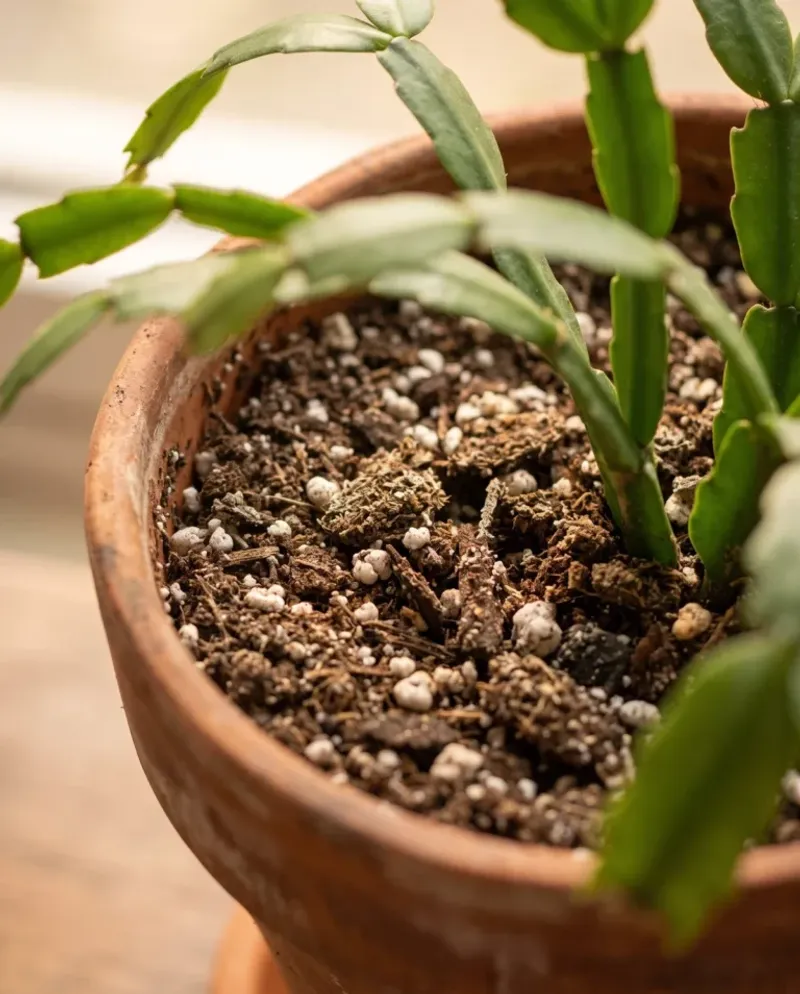
Poke a finger into the mix before you reach for the watering can. Feel the top inch or so.
If it has begun to dry, a thorough drink is a sensible next step, and if it still feels damp, wait.
When you do water, let the extra drain out and empty the saucer afterward. Sitting in a puddle can keep the roots soggy.
University of Arizona Extension cautions against heavy, wet mix for holiday cacti and points toward a well-drained, airy medium.
Treat the finger test as a practical guide, not a law. A small pot in a warm, bright room may dry quickly, while a big pot in a shaded corner may stay damp far longer.
A fixed calendar cannot account for that, so let the mix guide you. If it stays wet for a long time, check the drainage holes and the mix itself instead of adding more water.
When Wet Soil and Wilting Point to Root Trouble
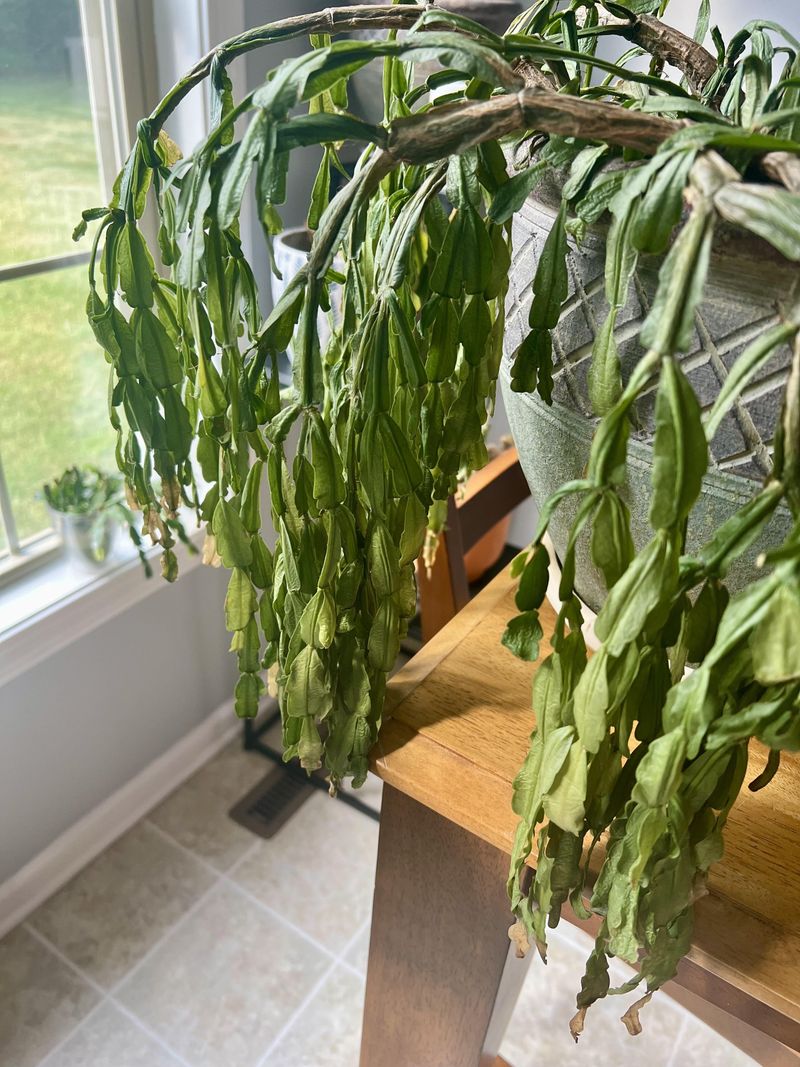
A wilted plant in dry mix probably wants a drink. A wilted plant sitting in wet mix is a different puzzle.
Both underwatering and root decay can cause wilting, so the condition of the mix is your best clue.
If the plant stays limp while the mix is soggy, it may be time to look at the roots. Gently slide the plant out of its pot.
Healthy roots are usually firm, while dark and mushy ones are a concern. University of Minnesota Extension describes gray-green, wilting growth and rot as signs of trouble.
Soft stems right at the soil line are another warning. Still, none of these signs is a final answer on its own.
Treat them as clues that point you toward the next step, and match what you do to what you actually find in the pot.
Repot When Drainage or Root Health Calls for It
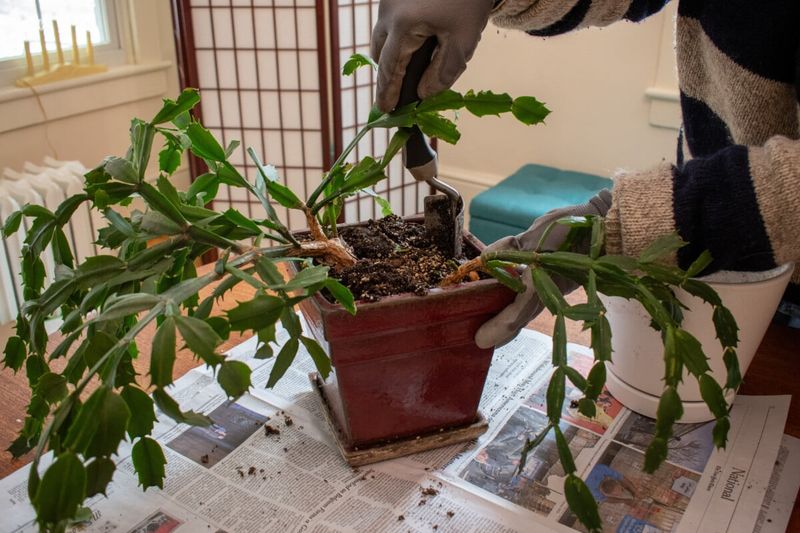
If the mix is waterlogged or the roots look damaged, repotting can give the plant a fresh start. Remove the old, soggy mix and trim away roots that are dead or diseased.
Then set the plant in fresh, well-drained mix in a pot with drainage holes.
University of Wisconsin Extension describes this approach for badly stressed plants, including watering sparingly around the roots that remain. Think of it as nursing a plant with a smaller root system, since it cannot use much water yet.
Be honest with yourself about the odds. Repotting helps some plants, but it is not a guaranteed fix.
If most of the roots are gone, the plant may not bounce back, and that is a good reason to keep a backup plan in mind.
Find Bright Light Away From Harsh Window Heat
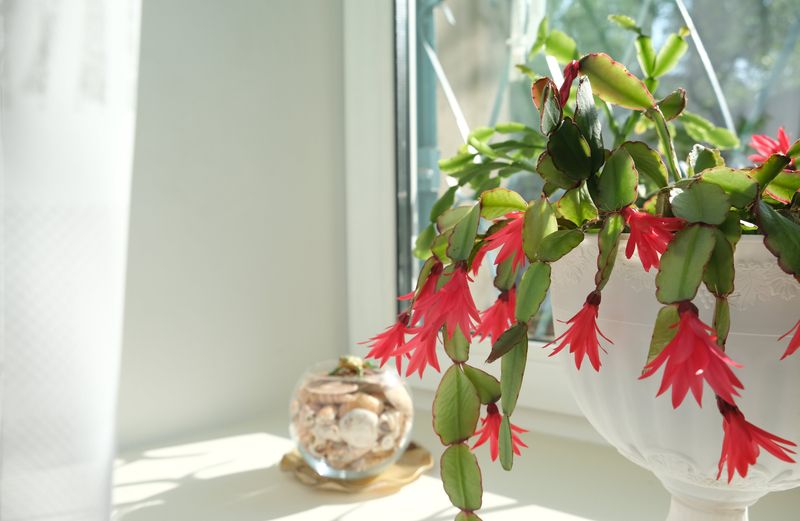
Holiday cacti like bright light, but not a blast of direct sun. Strong rays can bleach or scorch the stems, and a window that glows nicely in the morning may bake in the afternoon.
University of Arizona Extension notes that indoor light and temperature can vary a lot from one spot to another.
That is worth remembering, because no two Arizona homes are the same. Walk around your own space and look at the plant’s perch.
Is a hot, sunny window close by? Is there a heater, an air-conditioning vent, or a drafty door nearby?
A bright spot with filtered light is often a good place to start, such as a bit back from the glass or behind a sheer curtain. Once you find a spot that works, try to leave the plant there.
Constant moves can add stress, so steady is better than fussy.
Treat Bud Drop as a Clue, Not a Verdict
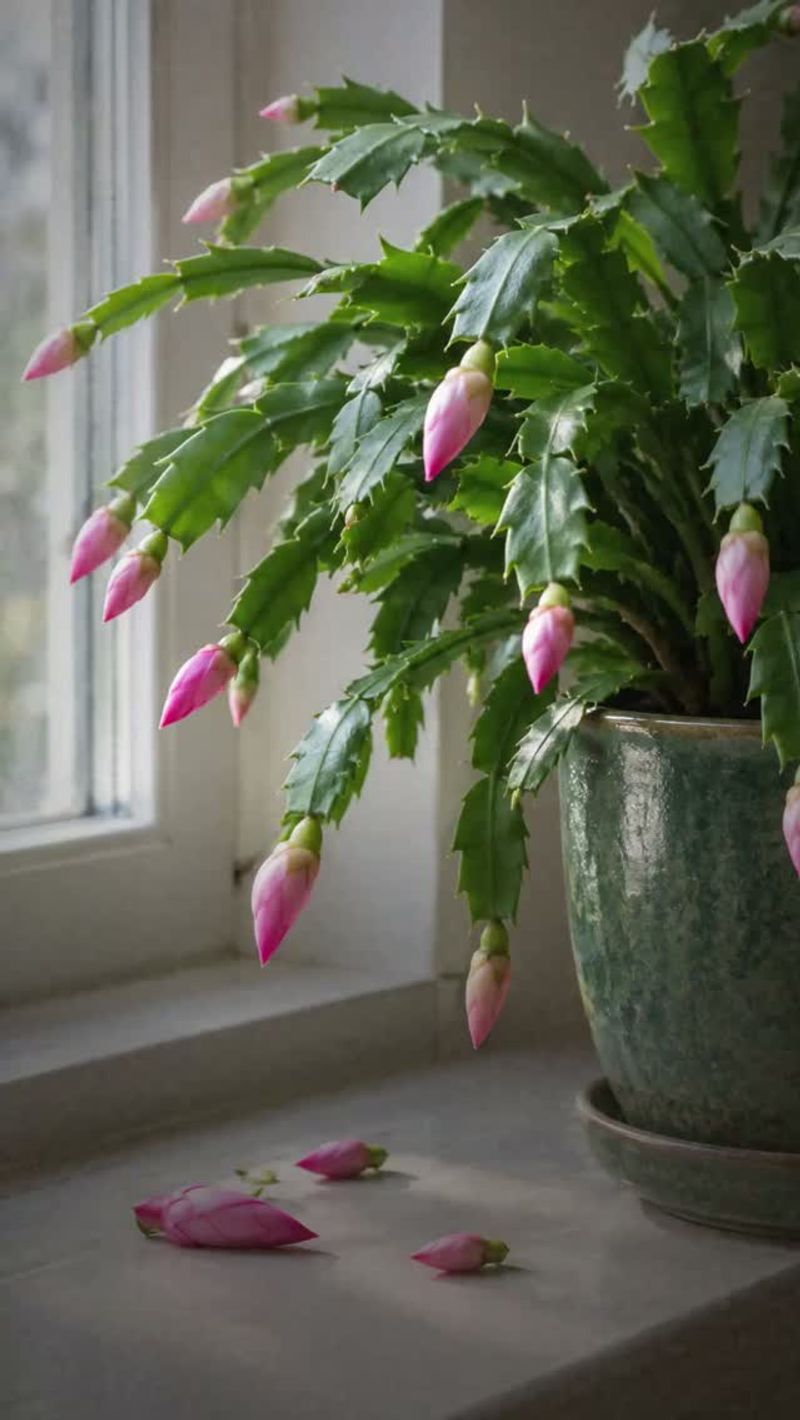
Finding tiny buds on the floor is discouraging, but it is information. Changes in light or temperature, drafts, excessive heat, and improper watering can all contribute to bud drop.
Iowa State Extension explains that flowering depends on factors such as day length and temperature.
So when your plant is carrying buds, keep life as steady as you can. Skip the big rearranging and avoid parking it near a vent or a draft.
Check the mix with your finger instead of guessing.
If the plant never blooms at all, that does not mean it cannot recover. Many different things can affect flowering, and no single darkness routine fits every plant or home.
Focus on healthy growth first, and let the flowers follow when conditions allow.
Save Healthy Stem Sections When Root Loss Is Severe
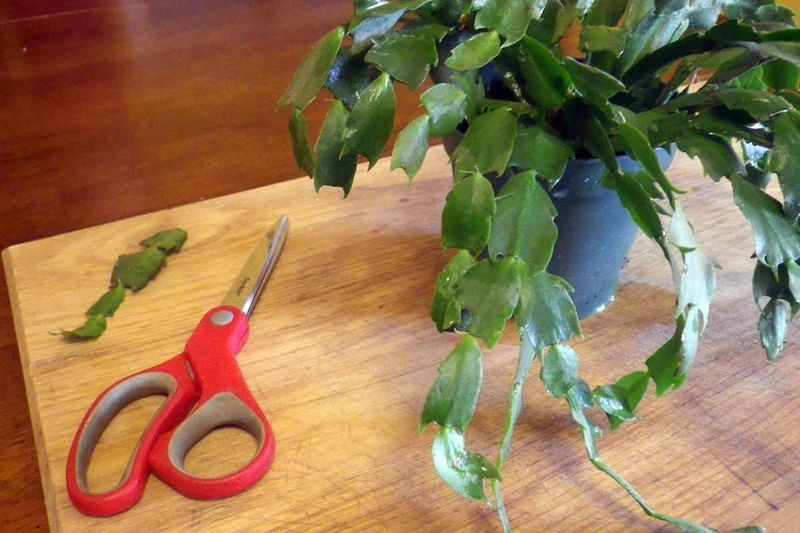
When most of the roots are gone, cuttings give you a backup. Pick healthy sections with two to five stem segments.
UConn Extension advises letting them dry in a shady spot for two to three days.
Then plant them in moist, well-drained mix and place them in bright, indirect light. Keep the mix from turning soggy, and be patient while the cuttings settle in.
Taking cuttings is also suggested for plants with severe root loss, as noted by University of Wisconsin Extension.
No rescue is guaranteed, and some plants with extensive root damage may not recover. Cuttings simply keep the plant’s story going.
Sometimes the best comeback is a small green piece with a second chance.