Winterberry and Holly: 8 Berry Shrubs for a Festive Virginia Yard
A flock of cedar waxwings can strip a loaded berry shrub bare in one hungry winter afternoon. I watched it happen once in my yard, and honestly, I felt robbed and delighted at the very same moment.
Many native shrubs in Virginia hold their fruit for months, turning gray yards into bright winter feeding stations. Some of them only make berries when a partner plant grows close by, which surprises plenty of new gardeners.
My own garden looked pretty sleepy every December until I started planting for berries. Now bright red and inky black fruit glows outside my kitchen window on the frostiest winter mornings.
A small Virginia yard has room for at least one of these shrubs, even beside a busy driveway. So which berry bush will your local birds fight over first when the cold weather finally arrives?
1. Winterberry
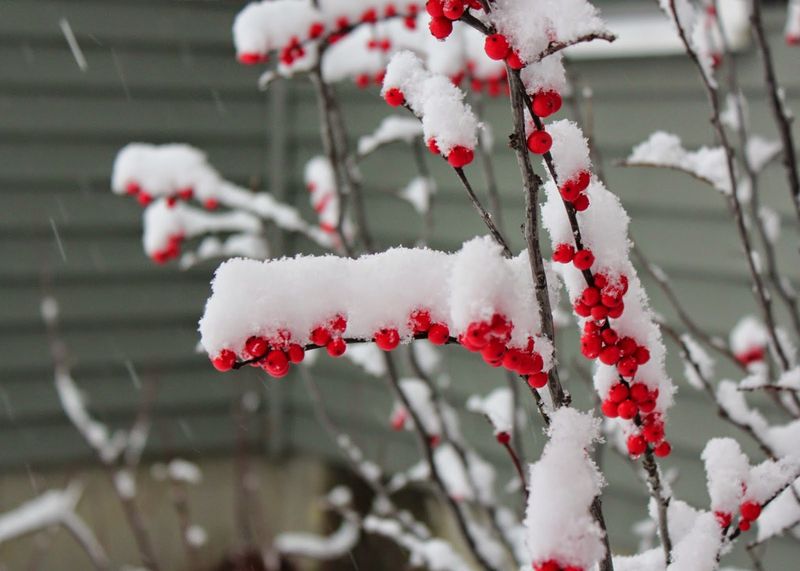
Once the leaves drop in late fall, winterberry looks like someone glued red beads to every bare twig. Honestly, it is the shrub that made me fall in love with winter gardening in the first place.
Ilex verticillata is a deciduous holly native to the eastern United States, including much of our state. It grows well in USDA zones 3 through 9, so it handles cold mountains and warm coastal plains.
Wild plants often grow in swamps and along stream banks, which tells you a lot about their preferences. Give yours moist, acidic soil and at least half a day of sun for the heaviest berry crop.
Now comes the tricky part, since only female shrubs make berries and they need a male nearby. Nurseries usually recommend one male for several females, planted within about fifty feet of each other.
Match bloom times too, because an early flowering male cannot help a late flowering female very much at all. Ask your garden center for the right partner, like Jim Dandy for Red Sprite or Southern Gentleman for Winter Red.
Robins and bluebirds snack on the fruit through winter, and I love watching them squabble over branches. Keep in mind that the berries are mildly toxic to people and pets, so admire them without tasting.
Cut a few berry-covered stems for holiday vases, which also counts as light pruning for the plant. Your shrub will sprout fresh growth next spring, and the birds will still find plenty left behind.
2. American Holly
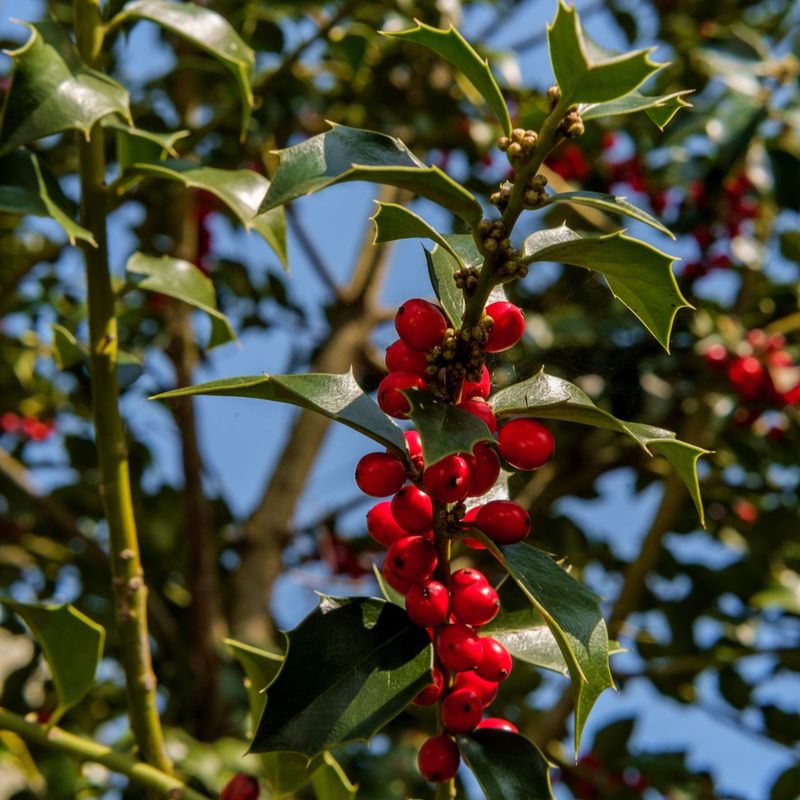
Glossy spiny leaves and scarlet berries make American holly the plant most people picture on a holiday card. I still remember pricking my fingers on one while gathering greens with my grandmother as a kid.
Ilex opaca is an evergreen native tree that grows wild in forests across much of the eastern states. It thrives in USDA zones 5 through 9 and slowly forms a handsome pyramid shape over many years.
Patience pays off, since older trees can reach forty or fifty feet tall in the right spot. Pick a site with well-drained, slightly acidic soil and full sun to partial shade for best results.
Like its holly cousins, this tree has separate male and female plants, and only females produce berries. A male growing in a nearby yard or woodland often does the pollinating job just fine.
The red fruit ripens in fall and often hangs on through winter, feeding hungry birds during lean weeks. Thick evergreen branches also give songbirds a cozy shelter from icy wind and snow on stormy nights.
Small white spring flowers look plain to us, but bees and other pollinators visit them eagerly. Spring is also when older leaves drop, so expect a little extra cleanup under the tree then.
Plant it away from walkways, because those prickly fallen leaves are no fun under bare feet. If you ask me, nothing beats snipping a few sprigs from your own tree for the mantel.
3. Yaupon Holly
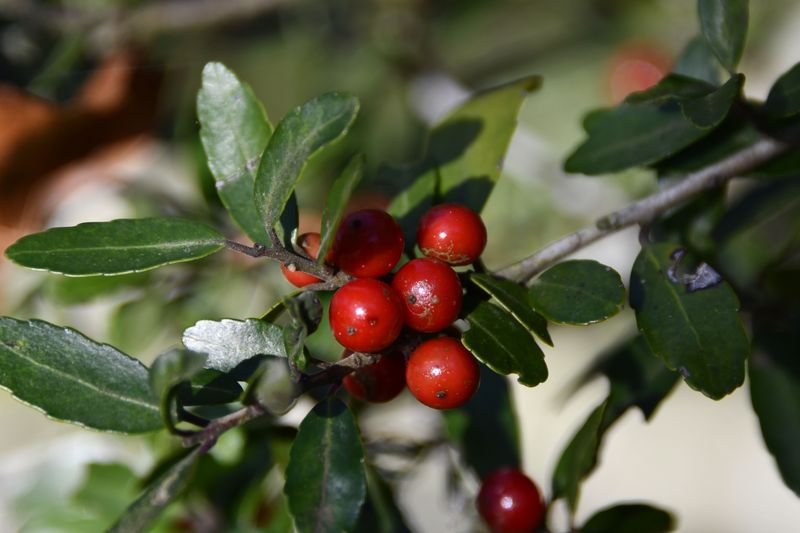
Yaupon holly holds a quirky title as the only native North American plant whose leaves contain caffeine. Native peoples of the Southeast brewed a ceremonial tea from it long before coffee reached these shores.
Its scientific name, Ilex vomitoria, came from a European misunderstanding about that ceremonial drink and its effects. Yaupon tea made from properly prepared leaves is enjoying a comeback, though the berries are not for people.
In the wild, this evergreen reaches the far southeastern corner of Virginia, mostly near the sandy coast. It suits USDA zones 7 through 10, so gardeners in Tidewater and the warmer Piedmont have the best luck.
Toughness is its real superpower, since established plants shrug off drought and handle salty coastal breezes with ease. It grows in sun or fairly deep shade, though you will get more berries with more light.
Female plants carry heavy crops of small, shiny red berries, as long as a male grows nearby. Mockingbirds and cedar waxwings gobble them up, often late in winter when other food runs short.
Dwarf types like Schillings stay low and tidy, but most of them are males with no fruit. For berries, pick a female upright form or a full-size shrub you can shape into a small tree.
In my garden, yaupon handles clipping beautifully and makes a great native swap for boxwood hedges. It also tolerates the hot, sticky summers that leave many fussier evergreens looking tired and stressed.
4. Inkberry
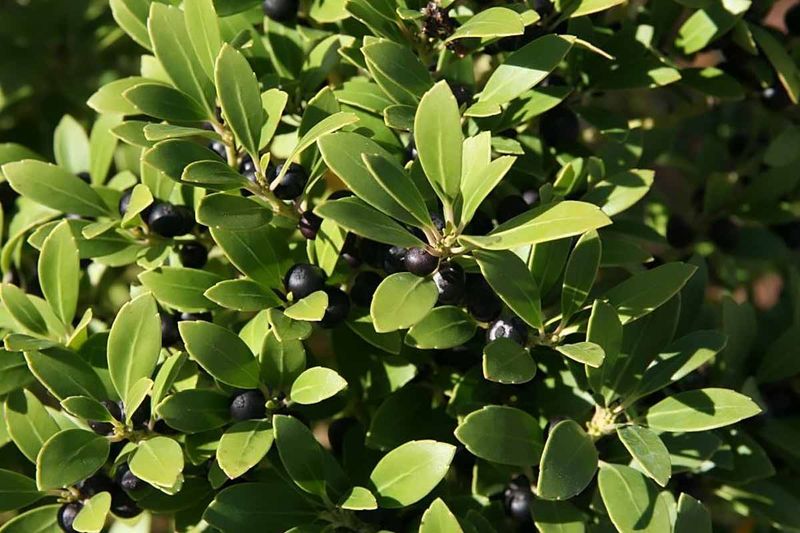
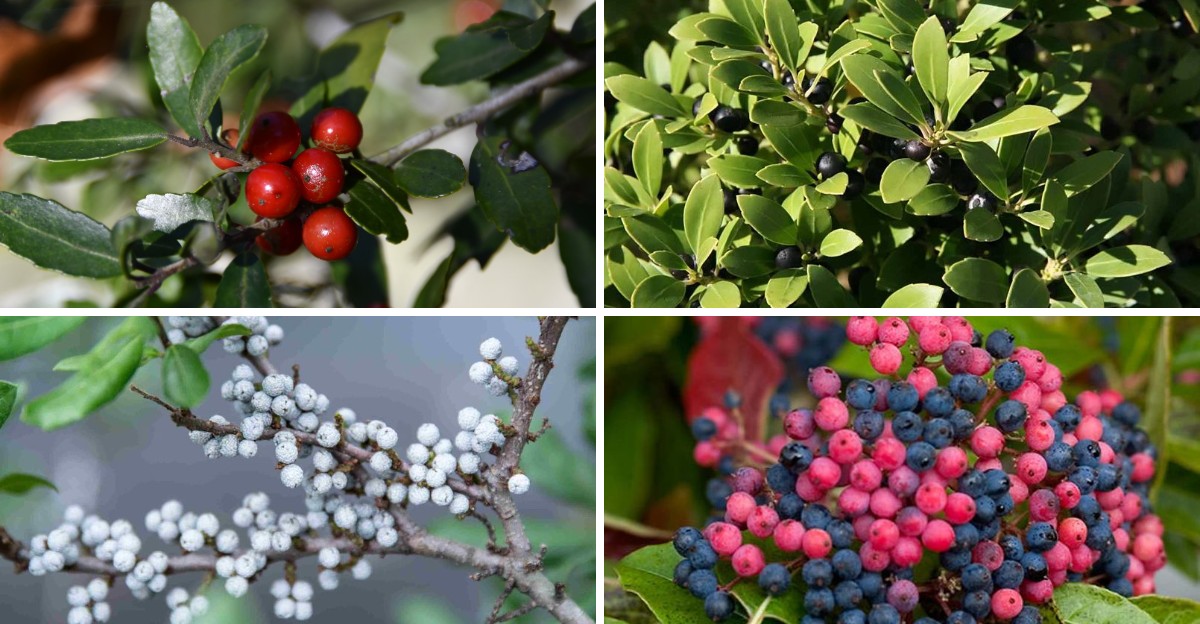
Not every festive shrub needs red berries, and inkberry proves that dark fruit can look surprisingly elegant. Its berries look like tiny drops of black ink scattered among glossy, deep green evergreen leaves.
Ilex glabra is a native holly that grows wild in wet coastal plain woods and boggy pine savannas. It is hardy in USDA zones 5 through 9, which covers the whole state with room to spare.
Soggy ground rarely bothers it, so try it in that low spot where rainwater likes to linger. It prefers acidic soil, and yellowing leaves can signal soil that is too alkaline for its taste.
Small greenish white flowers open in late spring and draw in bees, including some native specialist species. Inkberry honey, sometimes called gallberry honey, is a prized regional favorite in the southern coastal states.
As with other hollies, female shrubs need a male nearby before they set their shiny black fruit. Those berries often hang on well into winter, giving birds a snack after showier crops have vanished.
Mature plants spread by underground suckers, which helps them fill a bed but can annoy tidy gardeners. Older shrubs sometimes lose their lower leaves, so a hard spring trim every few years keeps them full.
Compact selections like Shamrock and Gem Box stay smaller, making them handy foundation plants near the house. A couple of seasons ago, I swapped two tired boxwoods for inkberry and have not looked back.
5. American Cranberrybush
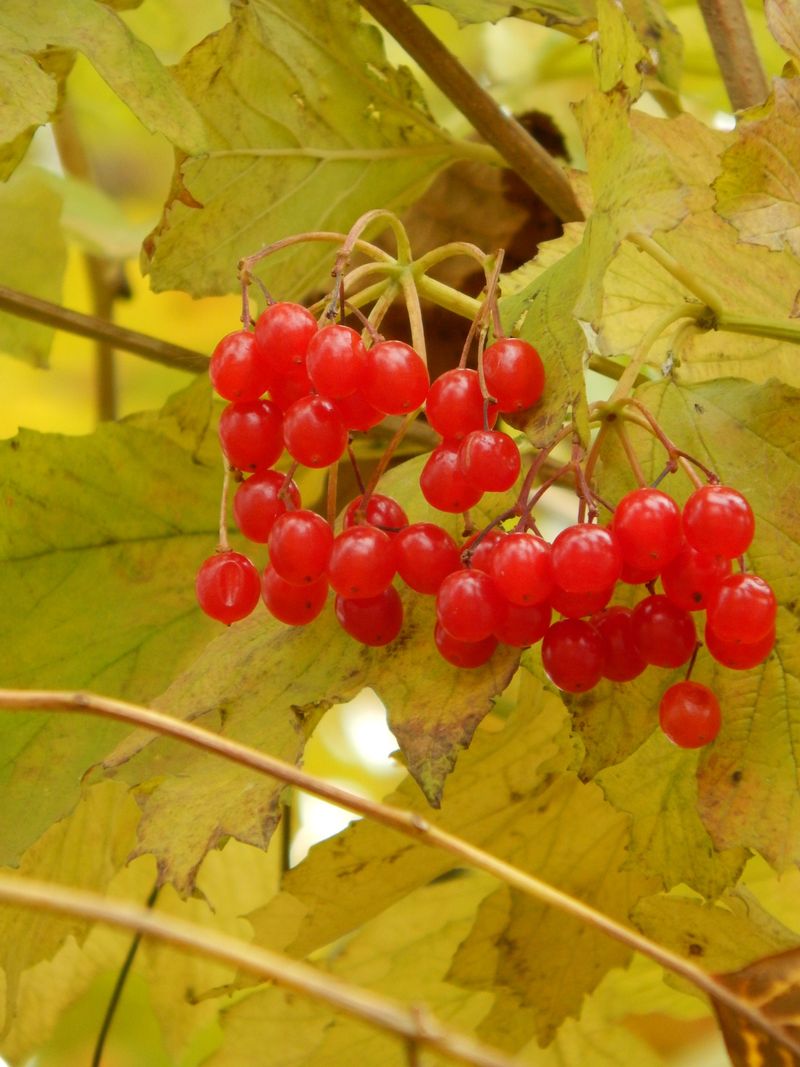
Translucent red berries dangle from American cranberrybush like tiny glass ornaments catching the low, golden winter sunlight. Despite the name, it is not a true cranberry at all, but a viburnum with a fruity disguise.
Its scientific name is Viburnum opulus var. americanum, and you may also see it sold as Viburnum trilobum. Shop carefully, because the look-alike European cranberrybush can spread aggressively into natural areas in many regions.
This native prefers cooler places and grows in USDA zones 2 through 7, so it likes mountain gardens best. Folks in hot coastal areas may find it struggles through long, humid summers without afternoon shade.
Flat clusters of white lacecap flowers appear in late spring, with showy outer blooms circling tiny fertile ones. Bright red fruit follows by late summer and often clings to the branches into early winter.
Birds tend to leave the sour berries alone until other foods run low, which keeps the display going longer. That makes it a handy backup buffet for wildlife during the leanest stretch of the cold season.
People can eat the cooked fruit, and old-time cooks turned it into tart jellies and sauces. Raw berries taste sharply acidic, so skip snacking straight from the bush unless you enjoy puckering.
Plant it in moist, well-drained soil with full sun to light shade for the fullest berry clusters. Give it room, since a mature shrub can stretch eight to twelve feet tall and just as wide.
6. Northern Bayberry
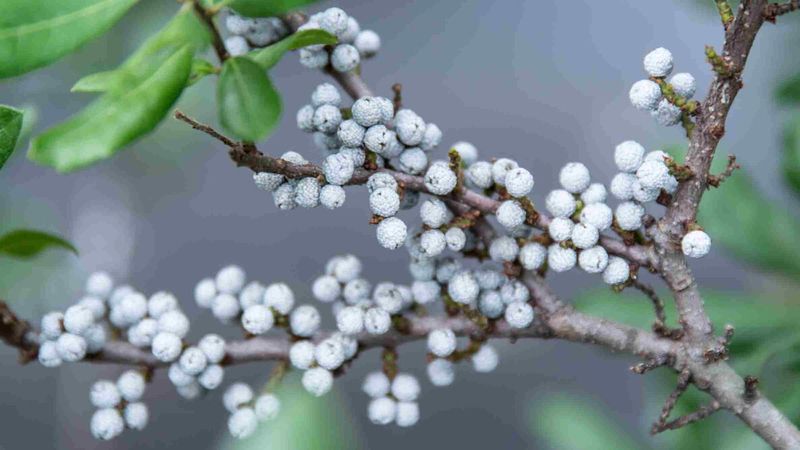
Rub a northern bayberry leaf between your fingers, and a spicy, clean scent drifts up like fresh candles. That smell is the reason colonial families once boiled the waxy berries to make fragrant holiday candles.
It took a huge pile of berries to make a single candle, so those candles were a real treat. Today, I would rather leave the gray-blue fruit on the shrub for birds to enjoy all winter.
Morella pensylvanica grows naturally along the Atlantic coast and is hardy in USDA zones 3 through 7. It shines in sandy soil near the shore and also handles poor, rocky soil inland surprisingly well.
Salt spray and wind rarely faze it, so beach house gardens and roadside beds are perfect spots. Its roots partner with special bacteria to capture nitrogen, which helps it thrive where other shrubs struggle.
Only female plants carry the waxy berries, so plant a male close by to guarantee a good crop. The fruit clusters hug the stems tightly, giving bare winter branches a frosted, almost silvery look.
Tree swallows and yellow-rumped warblers can digest that waxy coating, which most other songbirds cannot manage nearly as easily. In milder winters, the shrub may also keep some leaves, adding a soft green backdrop to the berries.
Give it full sun to part shade and space to sucker, since it slowly forms a broad colony. Mature plants usually reach five to ten feet tall, making a handy screen along a property line.
7. Red Chokeberry
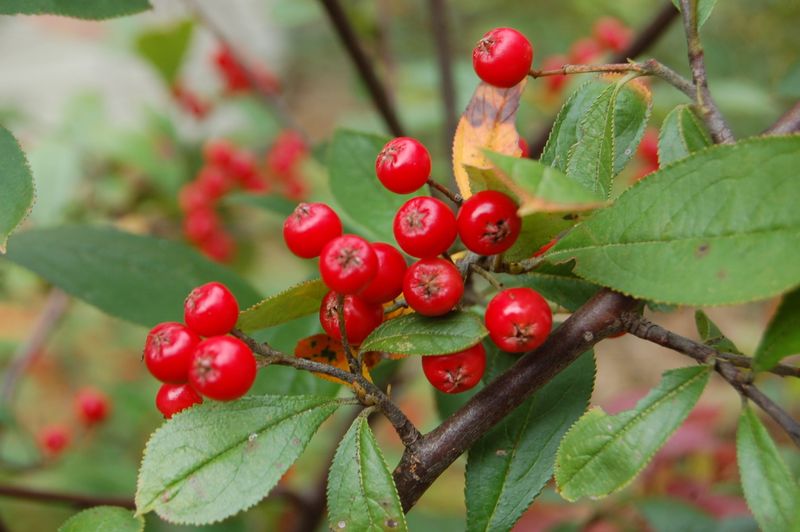
Despite a name that sounds like a warning, red chokeberry is a cheerful shrub with glossy scarlet fruit. The name comes from the berries’ mouth-puckering taste, which can make you cough if you try one raw.
Aronia arbutifolia is native to the eastern United States and grows well across USDA zones 4 through 9. It often appears in bogs and wet woods, yet it adapts nicely to ordinary garden beds too.
Clusters of small white flowers with pink centers open in spring and attract busy native bees. By late summer, bright red berries take their place and often hang on deep into the winter.
Birds usually wait to eat them until late winter, so you can enjoy the color for months. In my yard, the fall leaves steal the show first, glowing orange and red before they drop.
Moist soil suits it best, though established plants can handle some dry spells without much fuss. Plant it in full sun if you can, because shade means fewer flowers and a smaller berry crop.
Unlike the hollies on this list, chokeberry does not need a separate male plant to make fruit. Still, planting several shrubs together often improves pollination and creates a fuller, more natural looking group.
Watch for suckers spreading from the base, and snip them off if you want a tidier shape. The popular selection Brilliantissima is known for its extra glossy fruit and especially fiery fall color.
8. Possumhaw Viburnum
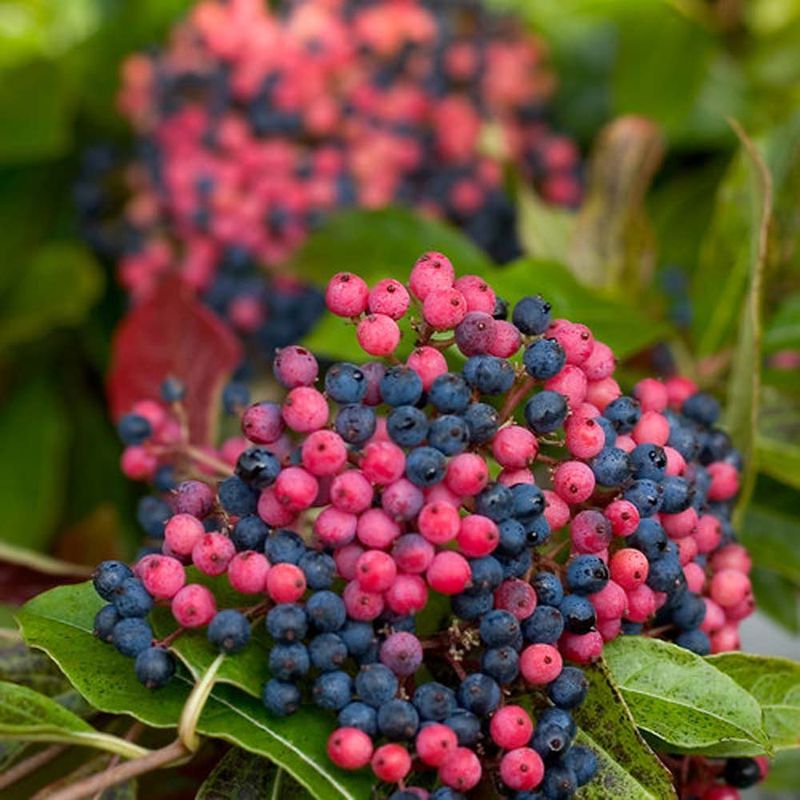
Few berries change outfits as often as possumhaw viburnum, which shifts from pale green to pink to blue. A single cluster can show several colors at once, like a bag of mixed candy hanging from the branch.
Viburnum nudum is a native deciduous shrub found in swamps and wet woods across much of the Southeast. It is hardy in USDA zones 5 through 9, fitting gardens from the Blue Ridge to the Eastern Shore.
Creamy white flower clusters open in late spring, and they smell a little musky up close, if you ask me. Pollinators do not mind the scent, and you will often find bees and beetles crawling all over the blooms.
The berries ripen into deep blue and purplish black in fall, while the glossy leaves turn rich burgundy. Birds often eat the ripe fruit fairly quickly, so this shrub shines brightest in autumn and early winter.
That shorter berry season is worth it, since few shrubs offer such a wild mix of colors together. Pair it with winterberry, and the hungry birds will have food long after the viburnum fruit disappears.
Moist, acidic soil makes it happiest, and it puts up with soggy spots better than many shrubs. Full sun gives the best fall color, but it still performs well in partial shade near trees.
A popular selection called Brandywine bears heavy crops, especially when another possumhaw grows nearby for cross-pollination. Most plants reach six to twelve feet tall, so give them elbow room along a wet border or pond.