Why Aphid Numbers Rise So Fast In Virginia Gardens Every July, And What Actually Helps
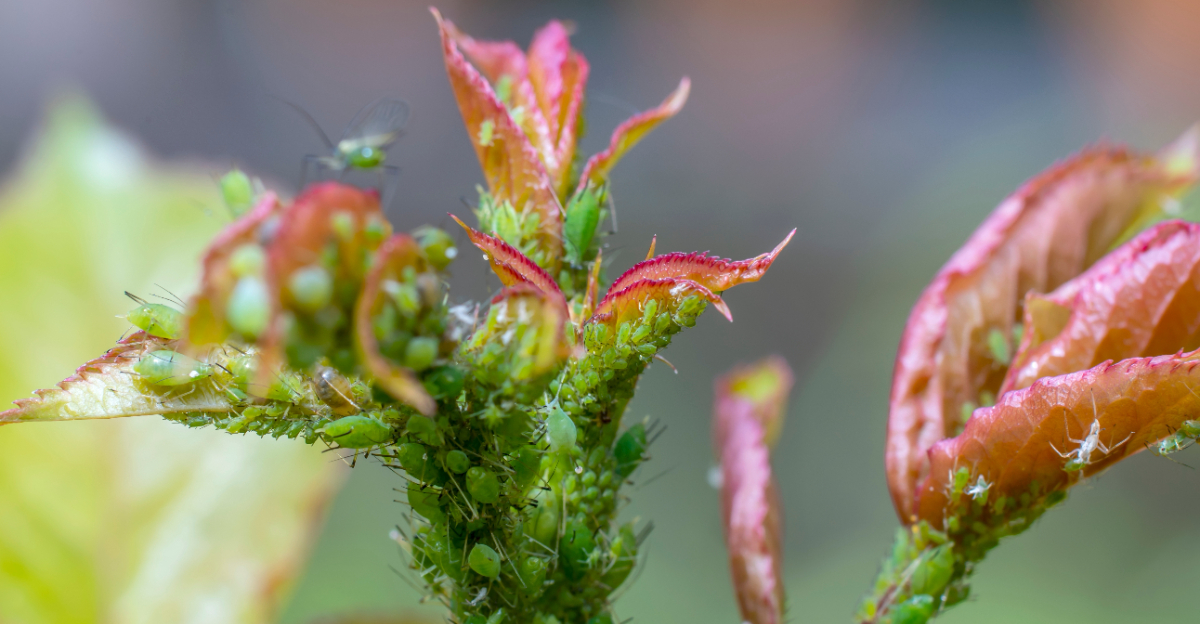
Your rose bush looked flawless on Tuesday, glossy leaves, tight buds ready to open. By Saturday, that picture has flipped completely, with tiny pale green bodies crowding every stem tip and curling the newest leaves inward.
Virginia gardeners run into this shift almost every summer, with July often bringing its sharpest version. Warm, humid nights push roses into a burst of soft new growth, and that tender tissue becomes an easy target for insects hunting a quick meal.
There’s a quieter piece to this puzzle too, one involving a smaller insect that trades protection for a steady supply of sugary waste. Once that partnership forms, the population can multiply faster than most gardeners expect.
The Reason Aphid Numbers Climb So Fast In July
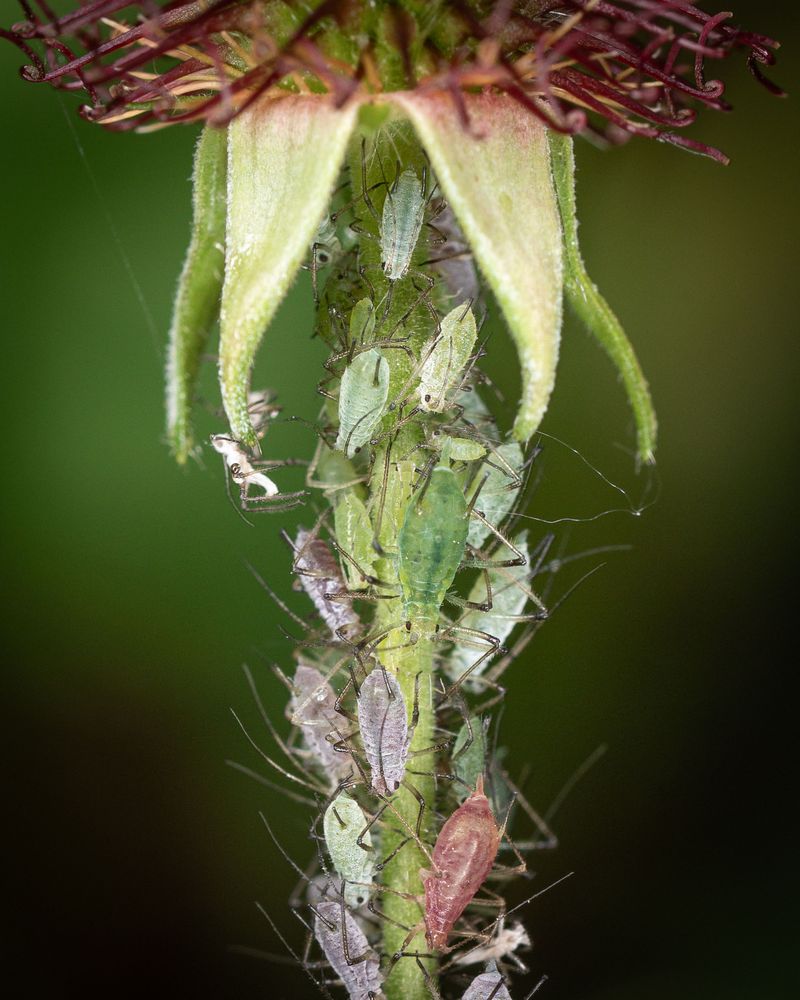
July heat is basically an aphid breeding machine. Warm temperatures speed up their reproductive cycle to an almost shocking pace.
Most insects need weeks to reproduce, but aphids skip that waiting period almost completely. A single female can produce live young without mating, a process called parthenogenesis.
In cooler months, one aphid might produce a few dozen offspring over a season. In July, that same aphid can birth up to ten nymphs per day.
Those nymphs reach adulthood in about a week when temperatures stay between 70 and 85 degrees. Virginia summers land right in that sweet spot almost every single day.
The colony doubles, then doubles again, before most gardeners even notice the first cluster forming. By the time you spot curling leaves or sticky residue, thousands may already be feeding.
High humidity adds another layer to the problem. Aphids thrive when moisture stays in the air, which is exactly what Virginia summers deliver consistently.
Gardens with dense plantings hold heat and humidity close to the soil. That microclimate becomes a perfect nursery for rapid colony expansion.
Understanding the biology behind aphid numbers rising so fast helps you stop reacting and start watching smarter. Catching them early, before the population doubles twice over, makes every other strategy far more effective.
Soft New Growth Draws Them In First
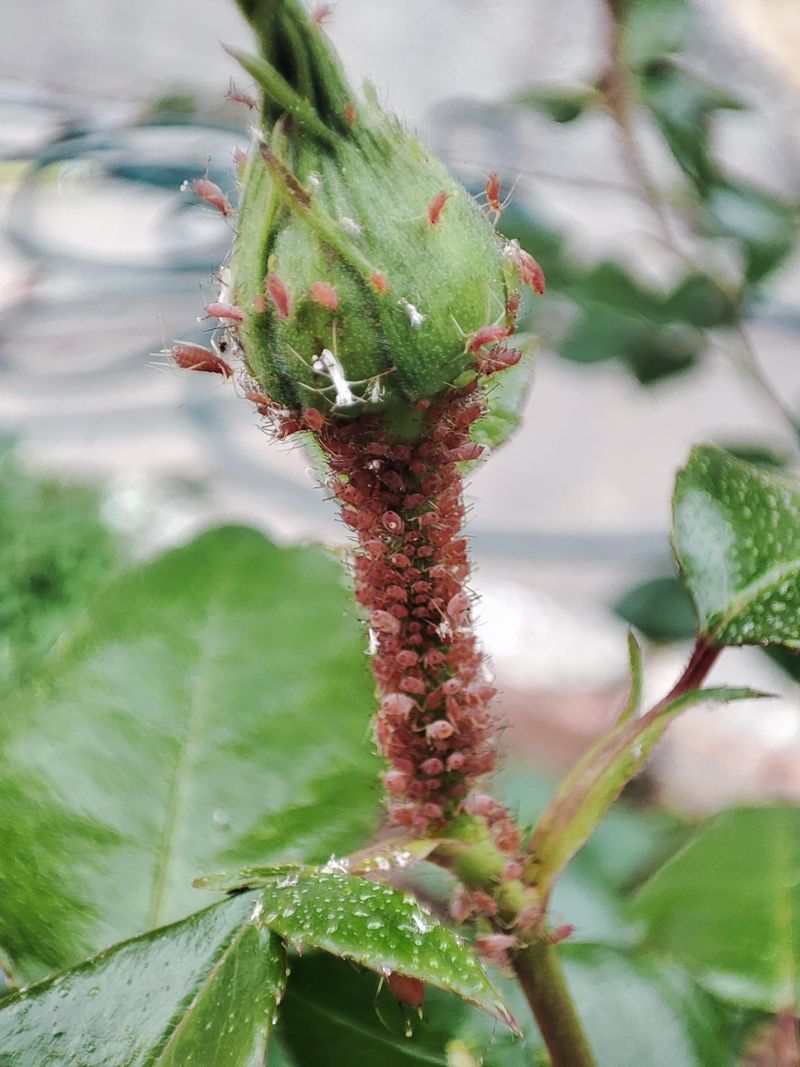
Aphids are picky eaters in the best possible way for them. They target the softest, most tender plant tissue they can find.
New growth is packed with sugars and amino acids that aphids need to reproduce quickly. Mature, tougher leaves offer less nutrition and are harder to pierce with their needle-like mouthparts.
In July, most garden plants push out fresh growth because of the long daylight hours. That flush of new shoots is essentially an invitation written in plant language.
Roses, tomatoes, peppers, and ornamental shrubs all produce new stems throughout summer. Each tender tip becomes a potential feeding station for aphid colonies looking to settle in.
Gardeners who fertilize heavily in late spring often make the problem worse without realizing it. Excess nitrogen pushes plants to produce lots of soft, leafy growth that aphids find hard to resist.
Cutting back on nitrogen fertilizer in June can reduce how attractive your plants are to incoming colonies. Balanced, slower-release fertilizers keep growth steady without creating a buffet of vulnerable tissue.
Your Virginia Garden Changes Every Week. Your Plan Should Too.
Gardening in Virginia changes quickly throughout the season. Every Friday you’ll receive a simple weekly plan showing exactly what to plant, prune, fertilize, harvest, and protect so you never miss the right timing.
Pinching off heavily infested new growth early can also slow colony spread. You remove the feeding site and the insects at the same time, which is a two-for-one win.
Focusing on plant health rather than just pest control shifts your whole approach. Strong, well-nourished plants with balanced growth are naturally less appealing and more resilient against pest pressure.
Ants Often Protect The Colonies They Feed On
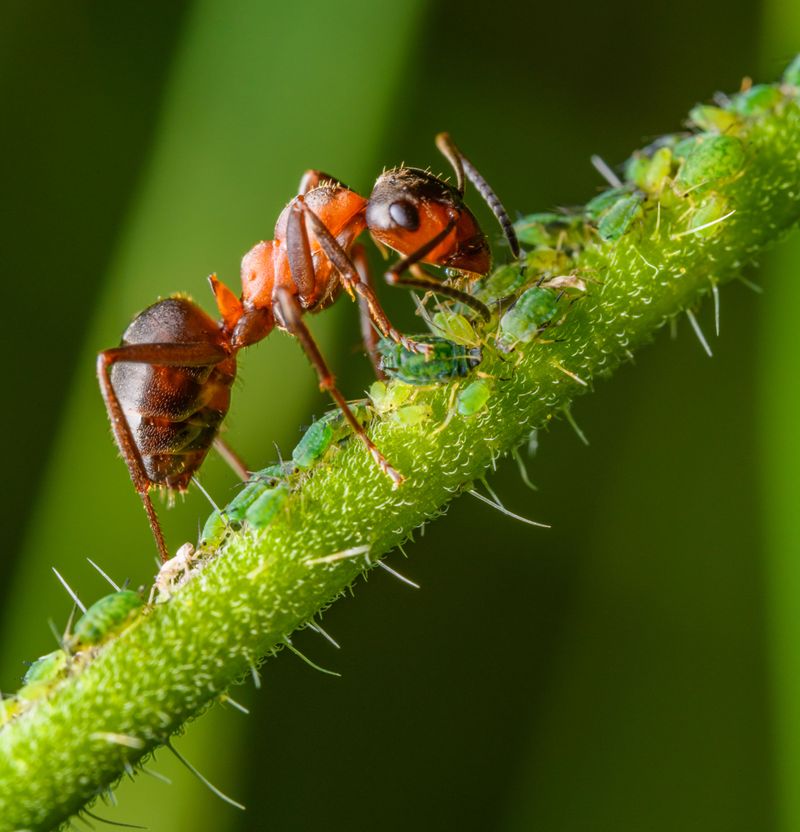
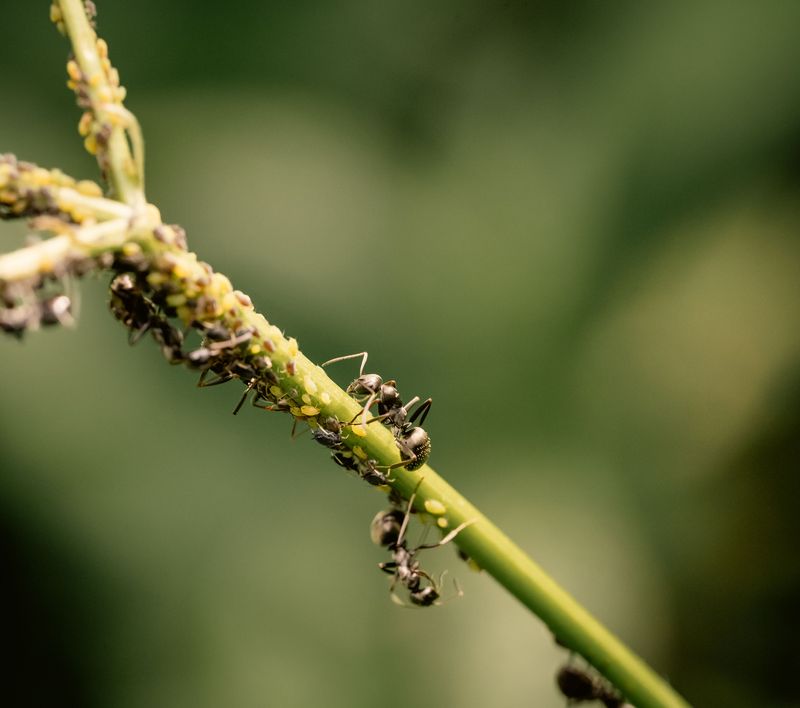
Ants and aphids have one of the strangest partnerships in the garden world. Ants actually farm aphids the way humans farm livestock.
Aphids produce a sweet liquid called honeydew as a byproduct of feeding. Ants collect that honeydew and carry it back to their colony as a food source.
In exchange, ants protect aphids from predators like ladybugs and lacewings. They physically chase away or attack most intruders that threaten their honeydew supply.
Some ant species even move aphids to fresh plant growth when the current feeding site gets crowded. This gives the colony continued access to tender tissue even as older growth toughens up.
This partnership is one reason aphid numbers can stay high even when natural enemies are present. Predators get driven off before they can make a dent in the population.
Breaking up this relationship is one of the most underrated strategies in the garden. If ants cannot reach the aphid colony, predators get a fair chance to do their job.
Sticky barriers wrapped around plant stems block ant access without harming the plant. Products like Tanglefoot applied to a tape collar work well and last through rain.
Once ants are excluded, ladybugs and parasitic wasps move in much more freely. Watching that shift happen over just a few days is genuinely satisfying for any gardener paying close attention.
Washing Plants Down Instead Of Reaching For A Spray
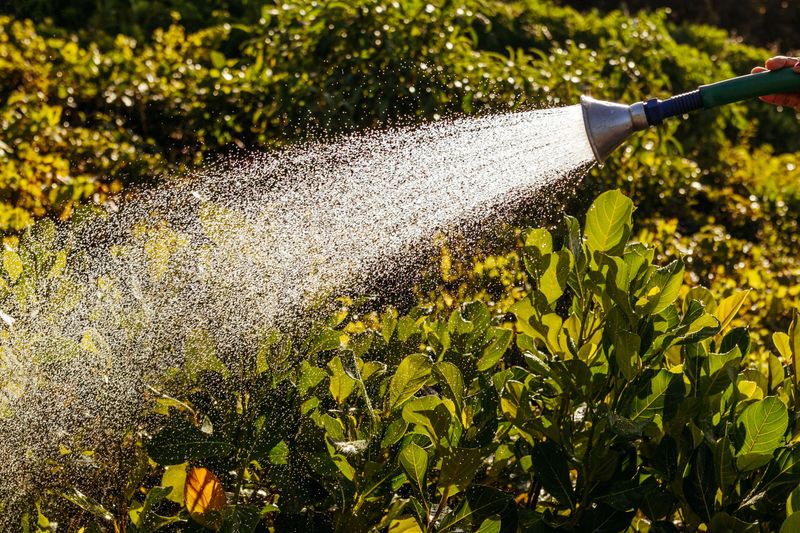
Before grabbing any bottle from the shelf, try the simplest fix first. A strong stream of water knocks aphids off plants fast and costs nothing.
Aphids that fall to the ground rarely make it back up to the plant. They are weak climbers, especially the young nymphs that make up most of a colony.
Aim the hose at the undersides of leaves where colonies hide in the shade. A focused nozzle setting works better than a gentle spray for dislodging stubborn clusters.
Morning is the best time to wash plants down. The foliage dries out during the day, which reduces the chance of fungal issues that wet leaves can encourage.
Repeat this every two to three days for best results. One good rinse will not solve the problem, but consistent pressure keeps numbers manageable while other controls catch up.
This approach works especially well on roses, tomatoes, and pepper plants. Those crops tend to bounce back quickly after a good rinse without any stress from chemical exposure.
Insecticidal soap sprays are a reasonable next step if water alone is not enough. They work on contact and break down quickly, leaving no harmful residue on edible crops.
Neem oil mixed with water and a small amount of dish soap also disrupts the aphid life cycle. Apply it in the evening to avoid burning leaves in the hot July sun.
Giving Natural Predators Time To Catch Up
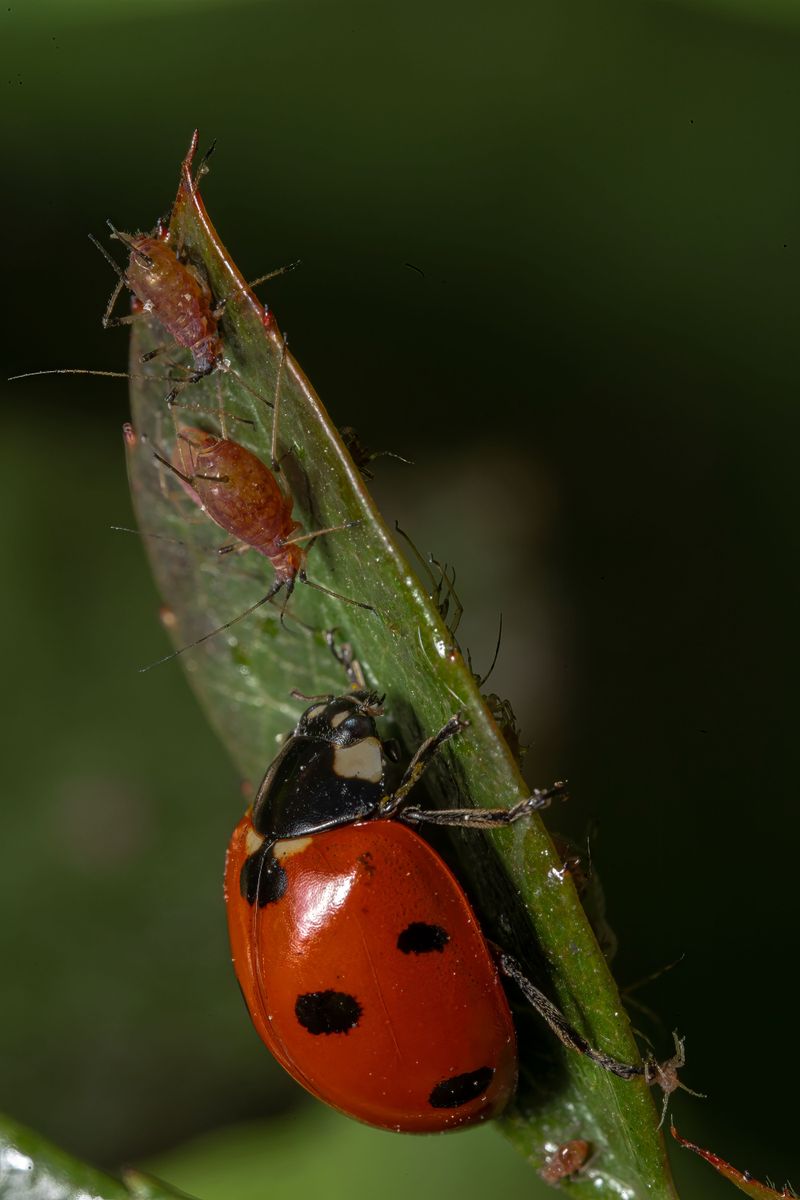
Nature already has a response team for aphid outbreaks. The problem is that predators tend to arrive a little later than the pest population does.
Ladybugs are the most famous aphid predators, but they are not alone. Lacewing larvae, parasitic wasps, hoverfly larvae, and even some spiders all feed on aphids regularly.
A single ladybug larva can eat hundreds of aphids during its development. Adult ladybugs are also active hunters that can consume fifty or more per day.
The challenge is that predator populations build more slowly than prey populations do. Aphids reproduce daily, while ladybugs complete one or two generations per season.
Spraying broad-spectrum pesticides at the first sign of aphids often removes the predators too. That leaves a clean slate for the next aphid wave, with nothing to slow it down.
Planting flowers that attract beneficial insects nearby gives predators a reason to stay. Dill, fennel, yarrow, and sweet alyssum are all excellent choices for Virginia summer gardens.
Avoiding pesticide use for at least two weeks after spotting the first aphids gives the predator community time to respond. Patience here pays off more than most gardeners expect.
Watching a ladybug work through a colony is one of those genuinely rewarding garden moments. Supporting that natural balance is both effective and genuinely satisfying to watch unfold.
Watching Plants Closely Before Numbers Get Out Of Hand
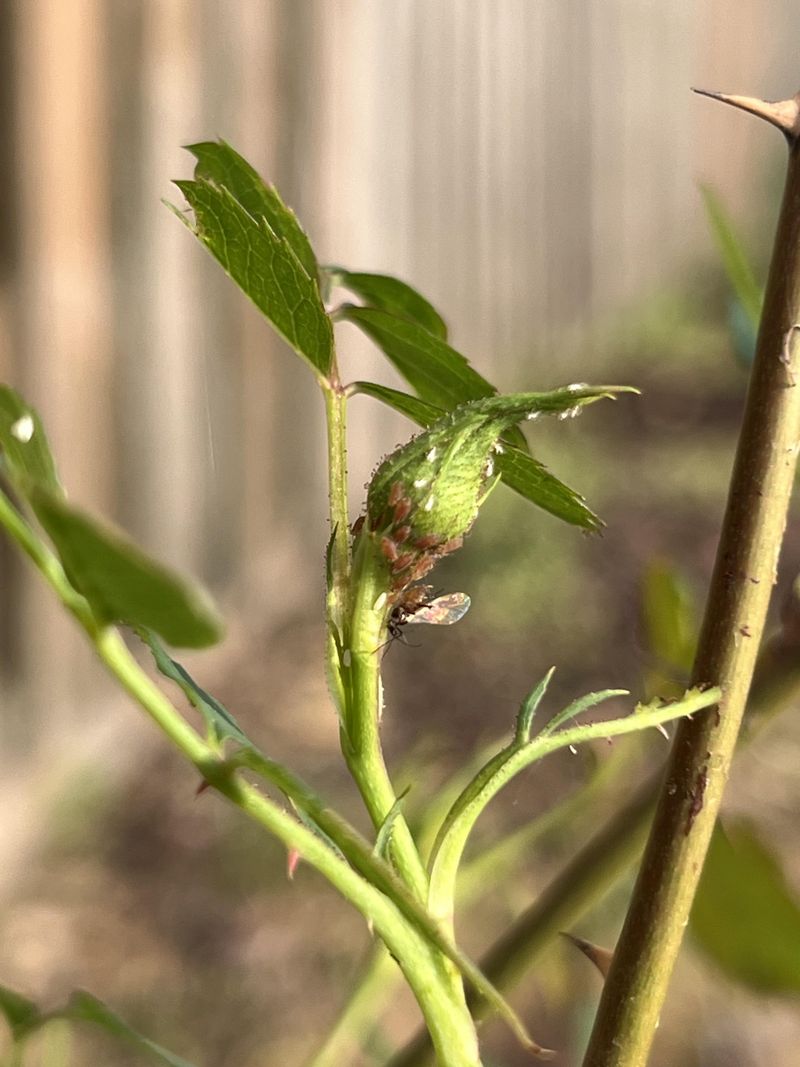
Catching an aphid colony early is the single biggest advantage a gardener can have. Small clusters are easy to manage, but large infestations take weeks to reverse.
Check the undersides of leaves at least twice a week during July. Aphids prefer shaded, protected spots, so the top of the leaf is rarely where you find them first.
Look for curled or puckered leaves, which signal that feeding has already been happening for a few days. That distortion happens when aphid saliva disrupts normal plant cell development.
Sticky, shiny residue on leaves or the ground beneath a plant is another early clue. That is the honeydew byproduct, and it often shows up before you even spot the insects themselves.
Keeping a simple garden journal helps you track patterns from year to year. If your tomatoes always get hit in mid-July, you can start monitoring them more closely in late June.
Checking new transplants and recently pruned plants first makes sense because those are the most vulnerable. Fresh wounds and tender new tissue attract scouts looking for a colony site.
Early detection also means you have more options available. Water sprays and manual removal work well on small colonies but become impractical once aphid numbers rise into the thousands.
Staying consistent with observation is what separates gardeners who stay ahead of aphid numbers from those who feel constantly behind. Your eyes are your best tool all season long.
Strategies Virginia Gardeners See Actually Working
After trying several approaches, a few strategies consistently stand out as genuinely useful. Virginia gardeners dealing with aphid numbers rising in July tend to agree on what actually moves the needle.
Combining water rinses with ant exclusion handles the bulk of most outbreaks. Remove the ant protection, knock off the insects physically, and the natural balance shifts surprisingly fast.
Companion planting with strong-scented herbs like basil, catnip, and garlic chives acts as a mild deterrent. Aphids rely heavily on scent cues to find host plants, and those herbs may help confuse the signal.
Reflective mulch under vulnerable plants has shown real results in studies and home gardens alike. The reflected light disorients winged aphids looking for a landing spot, reducing initial colonization.
Avoiding over-fertilization remains one of the most overlooked preventive steps. Lush, overfed plants are like a neon sign for every soft-bodied pest in the neighborhood.
Staying consistent with monitoring through the whole month matters more than any single treatment. July in Virginia is long, hot, and full of reinfestation chances from neighboring yards and wild plants.
Building a garden that supports beneficial insects year-round is the long game worth playing. Diverse plantings, minimal pesticide use, and healthy soil create conditions where aphid outbreaks rarely spiral out of control.
Managing aphid numbers rising in Virginia gardens every July is doable with the right habits. Small, steady actions tend to beat one dramatic intervention.