What It Means When Deer Start Bedding In Your Michigan Yard This November
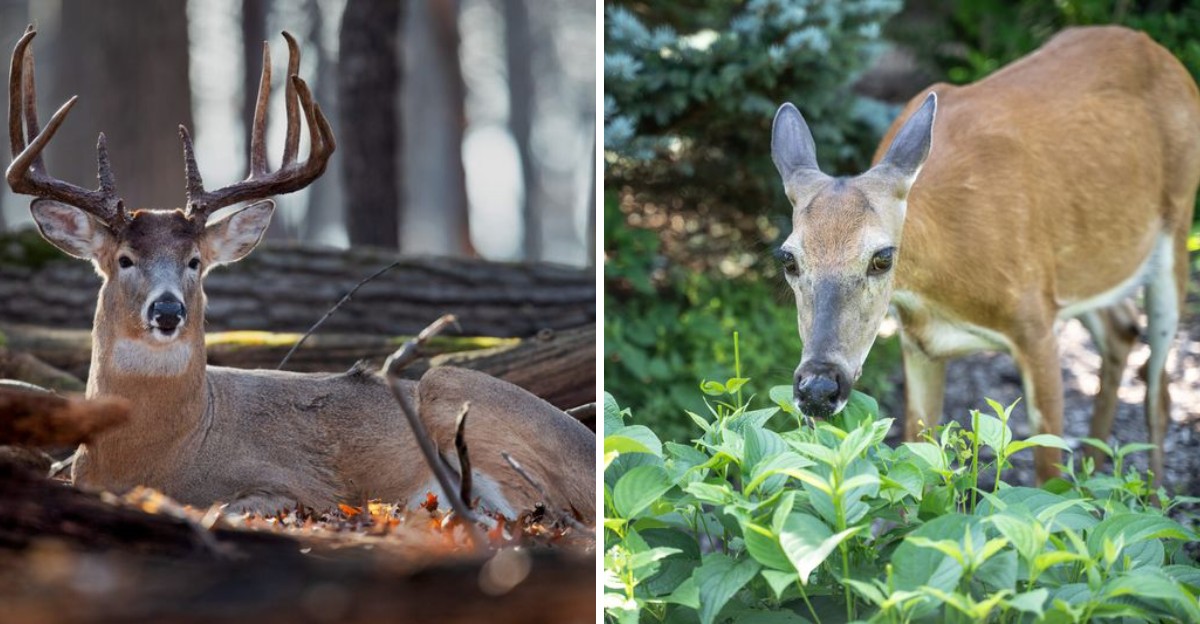
A whitetail can doze in the open with its eyes half closed and still catch the faint snap of a twig far off. That same alert animal might now be napping behind your arborvitae.
What I find interesting is how picky these visitors are about where they lie down. They want cover, a clear view, a breeze carrying scent, and a quick exit.
Your yard apparently checks enough of those boxes.
November in Michigan adds its own twist. Bucks are restless, hunters are in the woods, and the first hard cold is pushing every animal to save energy.
You might be surprised how much a flattened oval in the leaves can tell you about all of it.
So is that oval a compliment, a warning sign for your shrubs, or a little of both? I have a hunch you already suspect the answer.
1. That Flattened Spot Under Your Evergreens Has A Story
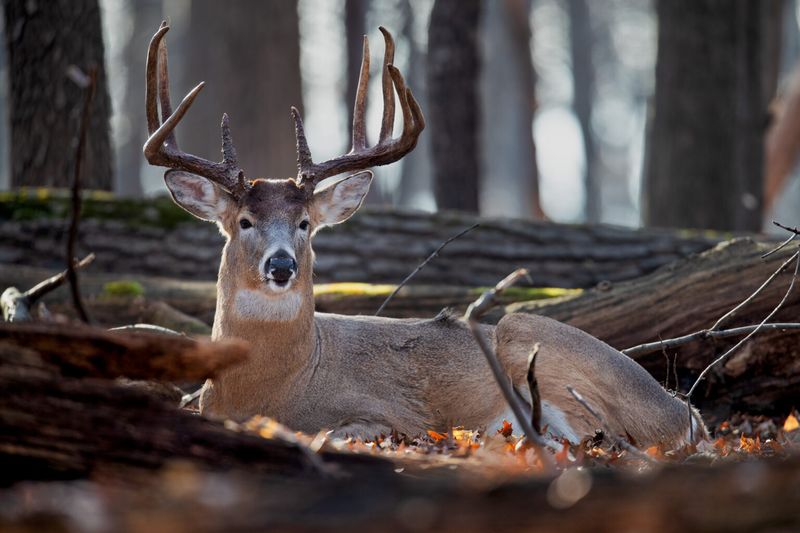
Finding a deer curled up near your spruce trees feels a bit like discovering a houseguest you never invited. Mostly, it means your yard offers something the deer values right now.
Safety, food, and shelter are the big three.
Deer are creatures of habit and energy savers. They usually feed around dawn and dusk, then rest during the day in a spot that feels secure.
A quiet corner with thick cover, a little sun, and few interruptions can rank higher than a noisy patch of woods.
Suburban deer also learn quickly. Many grow used to cars, lawn mowers, and dog walkers, so a yard no longer seems scary to them.
Fewer predators roam most neighborhoods, which adds to the appeal.
Here is how I read the situation. One visit could just be a deer passing through and taking a breather.
Repeated beds in the same place suggest your property has become part of a regular daily route, often called a home range.
Whitetail home ranges are often under a square mile, so the same few animals may stay close all season. That makes your yard a small but steady part of their routine.
None of this means the deer is sick or lost. In most cases, it is behaving normally and simply picked a comfortable spot.
The real question is whether you are happy about that or would rather nudge it along.
2. November Rut Sends Bucks And Does Wandering Into Neighborhoods
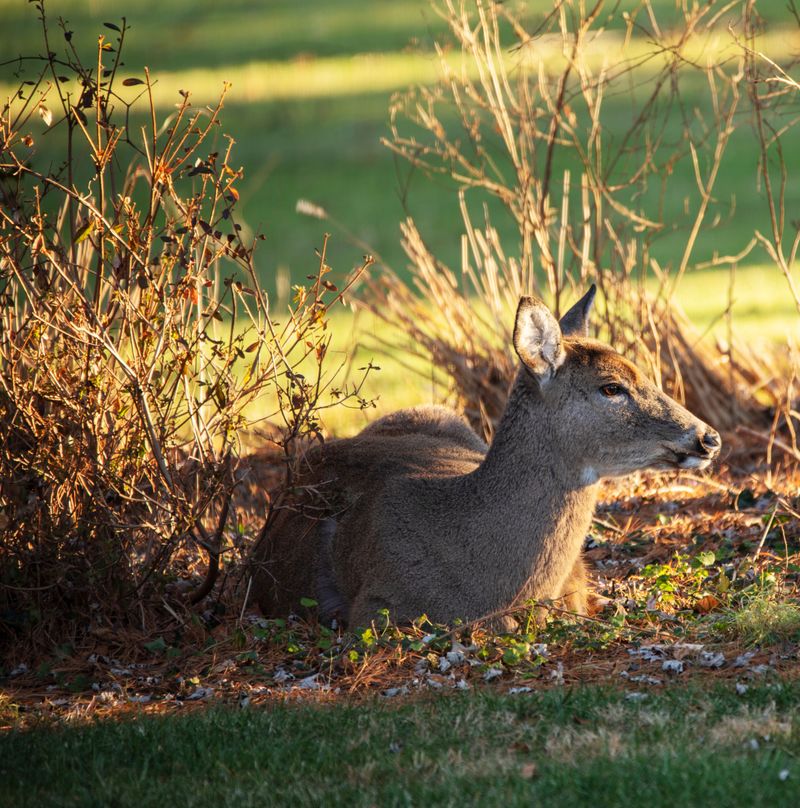
Bucks in late fall act a lot like teenagers with car keys. The rut peaks across much of Michigan in early to mid November, and breeding activity pulls deer far beyond their usual paths.
During this stretch, bucks travel widely to check on does. Does, in turn, sometimes slip into odd hideouts just to get away from pushy suitors.
A thick hedge row behind your garage can work as a break room for a worn-out doe.
Bucks bed in unusual places too. After a long night of cruising, a tired buck may drop down wherever cover is decent, even near houses.
You might spot one resting in the middle of the day, which feels surprising if you mostly see deer at dusk.
Hunting pressure plays a role as well. Michigan’s regular firearm deer season opens November 15 every year, and the woods fill with orange vests.
Deer quickly figure out that some neighborhoods, where hunting is limited or not allowed, are quieter places to lie low.
So a sudden November uptick in yard bedding often lines up with two things at once. Breeding is in full swing, and outside pressure is rising.
By December, things usually calm down. Many visitors drift back toward their winter areas once the rut fades and the gun season ends on November 30.
3. Thick Shrubs And Brush Piles Feel Like A Safe Deer Bedroom
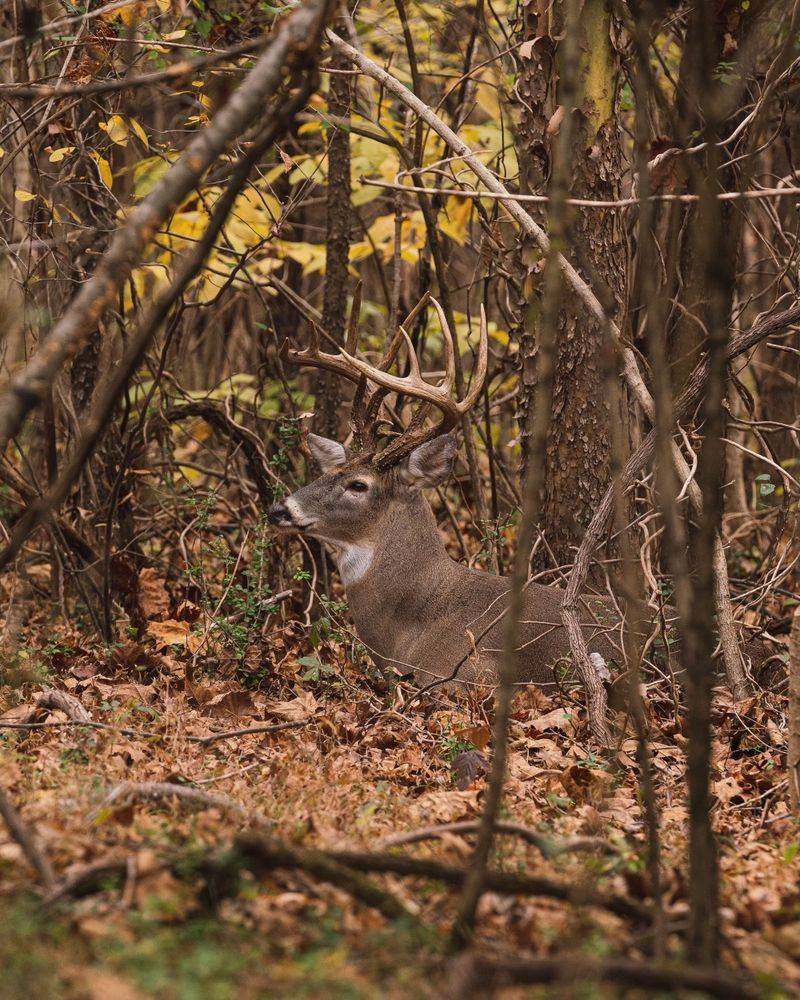
Ever notice how your favorite reading chair sits with its back to the wall? Deer use the same idea when choosing a bed.
They want something solid behind them and an open view ahead.
Dense cover tops their wish list. Overgrown fence lines, brush piles, tall native grasses, and evergreen hedges such as arborvitae or yews give deer a hidden place to rest.
Leaving a back corner wild, which many of us do in fall, can create the exact setup they love.
Wind matters too. Deer often bed so the breeze carries scent from behind them, letting their nose guard one side while their eyes watch the other.
A slight rise, a hillside, or the edge of a wooded lot gives them a better lookout.
They also care about escape routes. A yard that connects to woods, a creek corridor, or a field gives a deer several ways to bolt if a dog barks.
Take a walk around your property and look at it from a deer’s point of view. Where could you hide, see danger coming, and leave quickly?
Those spots are usually where the beds show up.
Once you understand this checklist, you hold the power. Keeping cover or thinning it out will strongly shape whether deer keep returning.
4. Your Landscape Plants Might Be The Deer Buffet Nearby
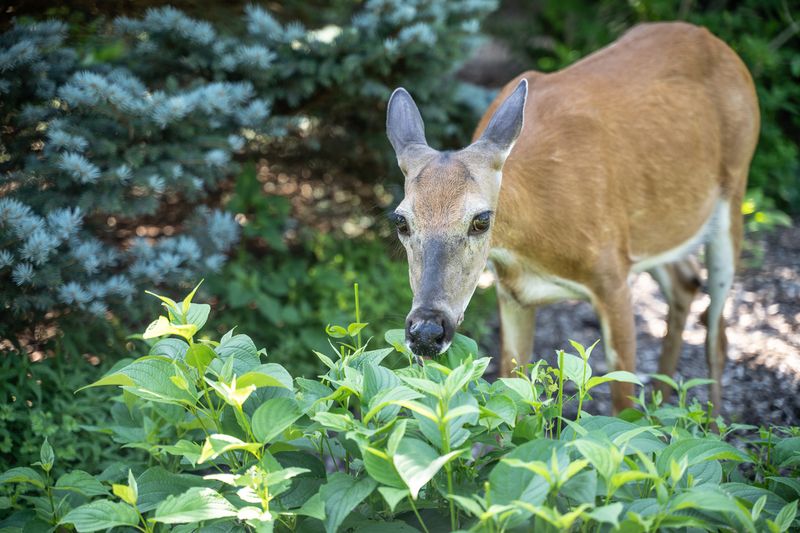
Deer don’t bed far from a good meal if they can help it. Short trips between food and rest save precious energy as days get colder.
By November, acorns are getting picked over and crops in many farm fields have been harvested. That makes yard plants look extra tempting.
Arborvitae, yews, hostas, tulip bulb foliage, fruit tree twigs, and young saplings are all common targets.
Other easy snacks catch their attention too. Fallen apples and pears, spilled birdseed, pumpkins on the porch, and compost piles can all draw deer in.
I’ve seen a single forgotten pile of windfall apples turn a yard into a nightly stop.
Watch for browse damage as a clue. Deer have no upper front teeth, so they tear plants and leave ragged, shredded tips.
Rabbits leave a clean, angled cut lower to the ground.
Food is also where legal issues come in.
Michigan bans deer baiting for hunting in the Lower Peninsula, partly to slow chronic wasting disease and bovine tuberculosis, though a 2026 law now allows limited backyard feeding there and baiting is generally allowed with restrictions in the Upper Peninsula.
Check current Michigan DNR rules before putting out corn or apples.
If deer are bedding close by, look first at what they might be eating. Cleaning up the free snacks often does more than any spray.
5. Cold Snaps And First Snow Push Deer Toward Sheltered Yards
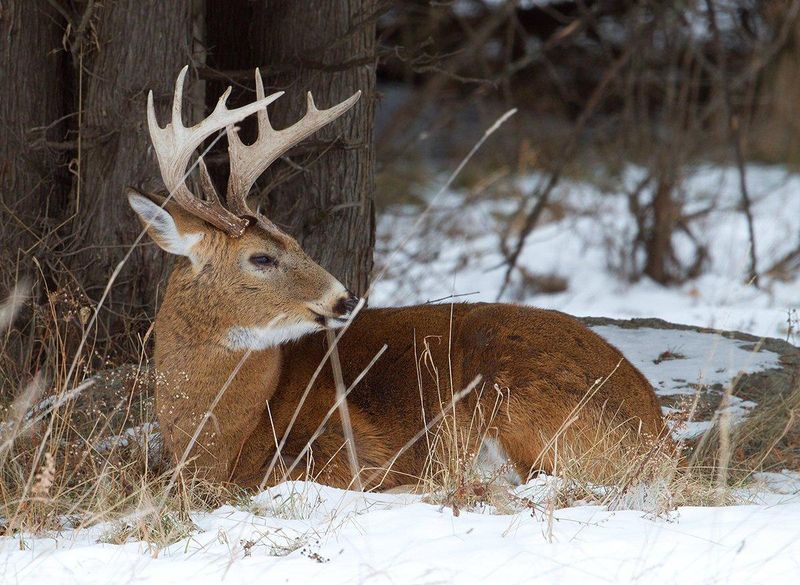
A deer’s winter coat is a small engineering marvel. Hollow guard hairs trap air, and snow can sit on a resting deer’s back without melting.
Even so, deer still look for spots that help them hold onto heat.
As November cools, deer shift toward places that block wind and catch sunshine. A south-facing slope, a row of evergreens, or the sheltered side of a shed can feel noticeably warmer than an exposed ridge.
Homes and pavement can even raise nearby temperatures slightly.
Deer also change how they eat. Their metabolism slows as winter approaches, and they rely more on fat stored during fall.
Bedding near food and shelter cuts down on wasted steps.
Regions matter here. Up North and in the Upper Peninsula, snow arrives earlier and deer may head to conifer swamps called deer yards.
In southern Michigan, milder weather means yard bedding can continue well into winter.
A quick tip for gardeners: wrap young trees and protect evergreens before deep snow. Once natural food gets buried, browse pressure on landscape plants usually climbs.
So a bedded deer during the first cold snap is not really a mystery. It found a cozy pocket of shelter, and your yard happened to provide it.
6. Oval Beds, Buck Rubs, And Tracks Reveal Where Deer Sleep
Some of the best detective work happens with a cup of coffee and a slow morning walk. Deer leave plenty of clues if you know what to look for.
Start with the beds. They look like oval patches of flattened grass, leaves, or snow, often about three to four feet long.
In snow, you may see a melted outline where body heat softened the surface.
Nearby, check for droppings. Fresh pellets are shiny and dark, while older ones turn dull and crumbly.
Heart-shaped hoof tracks heading into thick cover help confirm a regular trail.
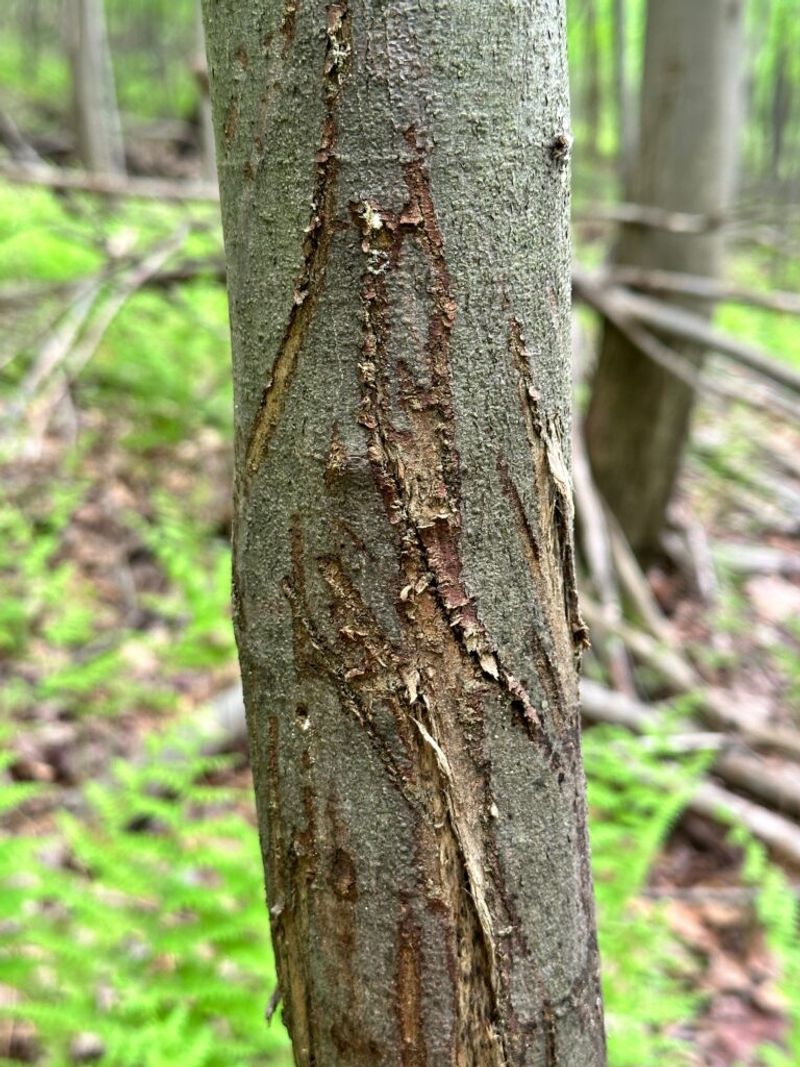
November adds a couple of rut signs. Buck rubs are strips of scraped bark on small trees, usually one to three inches thick, where bucks rub their antlers.
Scrapes are pawed patches of bare soil, often under a low branch the buck has chewed or marked.
Several beds grouped together usually mean a doe with fawns. A single larger bed with rubs close by often hints at a buck.
Snap a few photos and note the dates. Over a couple of weeks, you will see whether deer are using your yard occasionally or daily.
That information helps you decide on next steps without guessing.
Keep a respectful distance if a deer is present. Let it leave before you inspect.
7. Fencing And Smart Plant Choices Help Move Bedding Deer Along
Persuading a deer to nap somewhere else takes patience more than force. Small, steady changes usually work better than one big effort.
Remove the attractions first. Pick up fallen fruit, move bird feeders indoors or onto a deck, and store pumpkins out of reach.
Trim the lower branches of dense shrubs so they offer less hiding space.
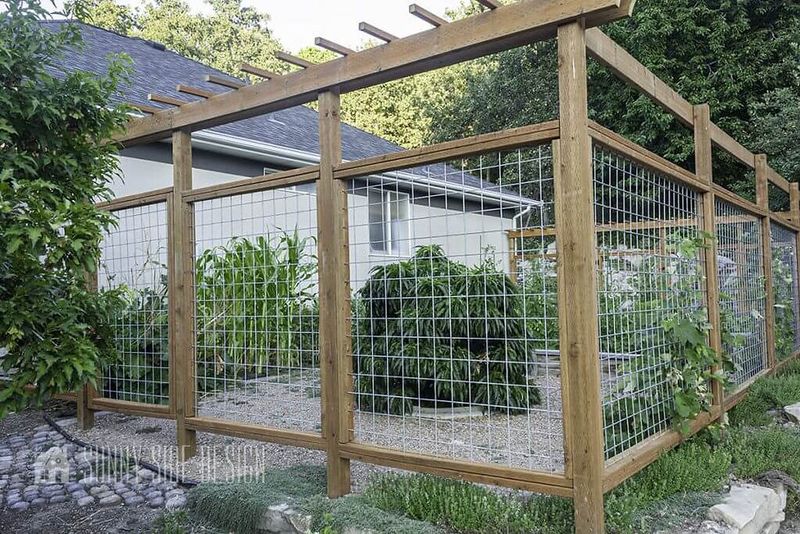
Fencing is the most reliable option for valuable plants. Michigan State University Extension notes that deer can clear around eight feet, so tall fencing works best for gardens.
For single shrubs, burlap wraps or plastic mesh cages around evergreens protect them through winter.
Repellents can help in the short term. Products with putrescent egg or strong scents work better when you rotate them and reapply after rain or snow.
Motion-activated sprinklers are less useful once temperatures drop below freezing.
Plant choice makes a long-term difference. Deer tend to skip strongly scented or fuzzy plants.
Natives like wild bergamot, butterfly milkweed, little bluestem, and spicebush are often left alone, though hungry deer will sample almost anything.
Skip invasive barrier plants like Japanese barberry, which Michigan regulates. A friendly dog in the yard also does wonders.
Combine a few of these steps and many deer gradually shift their beds elsewhere.
8. Sharing Your Yard With Whitetails Can Work With A Little Planning
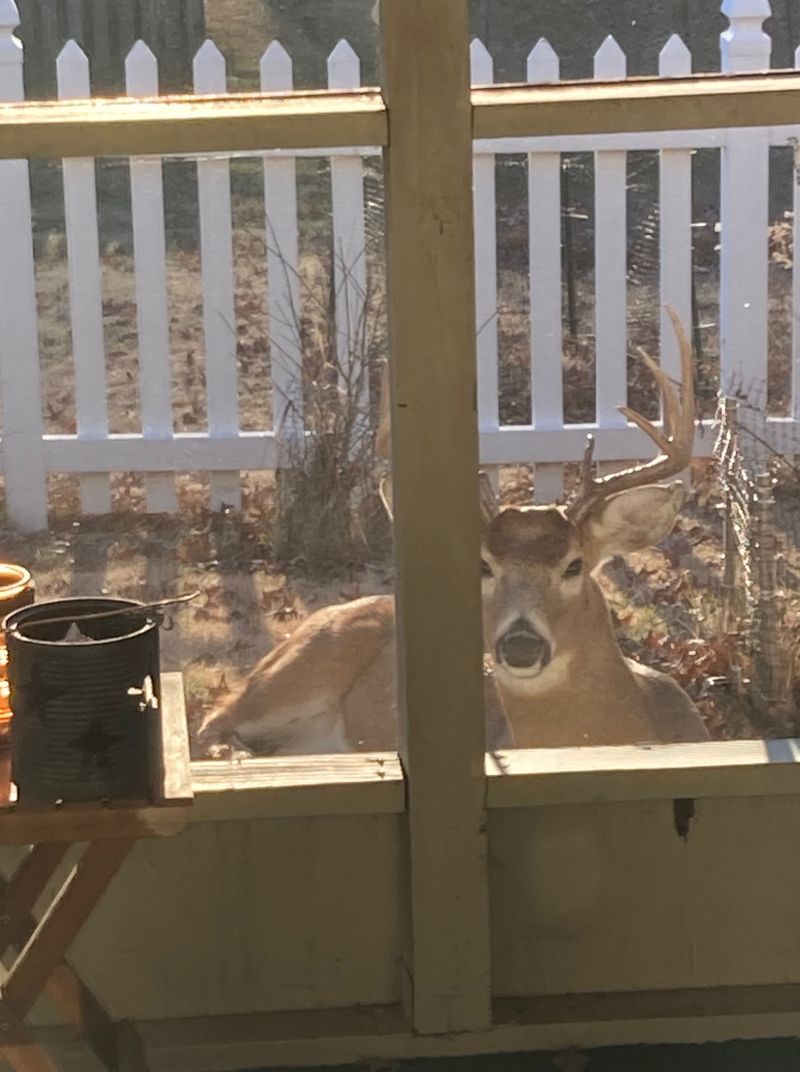
There is something quietly special about glancing out the kitchen window and seeing a doe tucked into the frost. Plenty of gardeners decide that view is worth a few nibbled shrubs.
The middle path is often the smartest. Protect what matters most, such as fruit trees, young evergreens, and vegetable beds.
Then let the deer have the wild back corner if it does not bother you.
Keep safety in mind. Never approach or try to touch a resting deer, especially during the rut, when bucks can act unpredictably.
Keep dogs leashed, and drive carefully at dawn and dusk, since November is a peak month for deer crashes in the state.
Watch for health concerns too. A deer that seems confused, very thin, or unafraid of people could be sick.
Report it to the Michigan DNR instead of handling it yourself, since chronic wasting disease is monitored in parts of the state.
Remember the rules about feeding. Even well-meant corn piles can spread disease, and using them to bait deer for hunting in the Lower Peninsula is still illegal.
My takeaway is simple. A bedded deer usually means your yard offers good cover and nearby food during a busy, chilly season.
Decide which parts you are willing to share, protect the rest, and enjoy the show while it lasts.