The White Fluff Hiding Under Your Alabama Hemlock’s Branches
A tree loaded with extra cones can be a tree in trouble. I learned that the hard way while admiring a shady Alabama evergreen that looked busier than ever.
The cones were tiny, barely an inch long, and they dangled from nearly every twig. I assumed it was a lucky year.
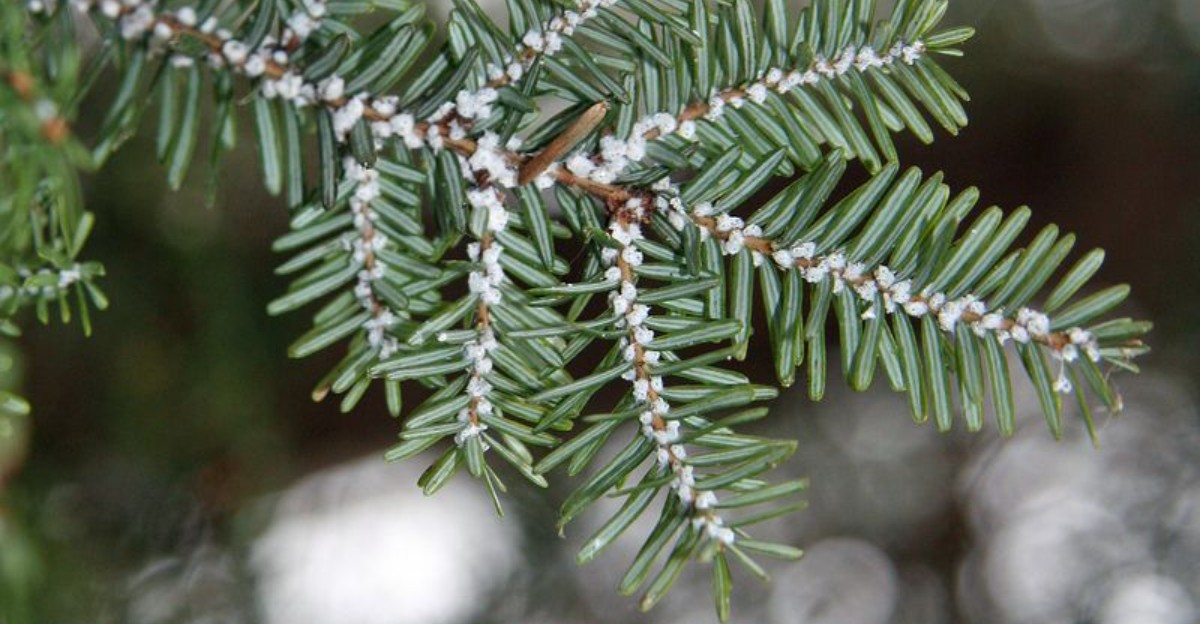
Then I flipped a branch over and spotted small white tufts clinging near the needles, like someone had dabbed cotton along the stem.
Those fluffy specks belong to an insect smaller than a sesame seed. It arrived in Alabama only a few years ago, and it has a big appetite for one of our most graceful native trees. You might walk past it a hundred times and miss it.
So what is that tree really telling you when it suddenly bursts with cones, and what is tucked under all those branches?
A Hemlock Covered in Tiny Cones Might Be Sending a Message
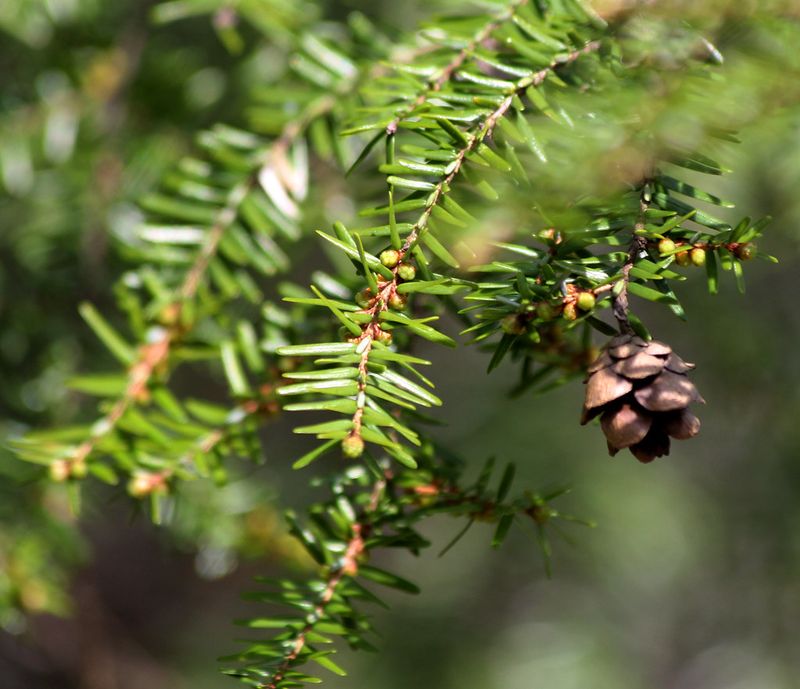
Eastern hemlocks make some of the smallest cones you will find on any native conifer. Most are oval, light brown, and only about three quarters of an inch to one inch long. They ripen in fall and drop seeds through winter.
A healthy hemlock produces a few cones every year. A heavy crop also shows up naturally every two to three years, so a busy branch is not automatically bad news. That part matters, because plenty of thriving trees go through good cone years.
Foresters do notice something different on stressed trees. When a hemlock is weakened by drought, root damage, or insects, it may push out an unusually large crop of cones.
People sometimes call this a stress crop. The idea is that the tree shifts energy toward seeds while it still can.
So the cones themselves are not the problem. They are more like a flashing porch light asking you to look closer.
If your tree looks thin, pale, or loaded with cones in an off year, it deserves a careful inspection.
Grab a lower branch and turn it over. The real story usually hides on the underside, right where the needles meet the twig.
White Woolly Tufts Under Hemlock Needles Reveal the Hidden Pest
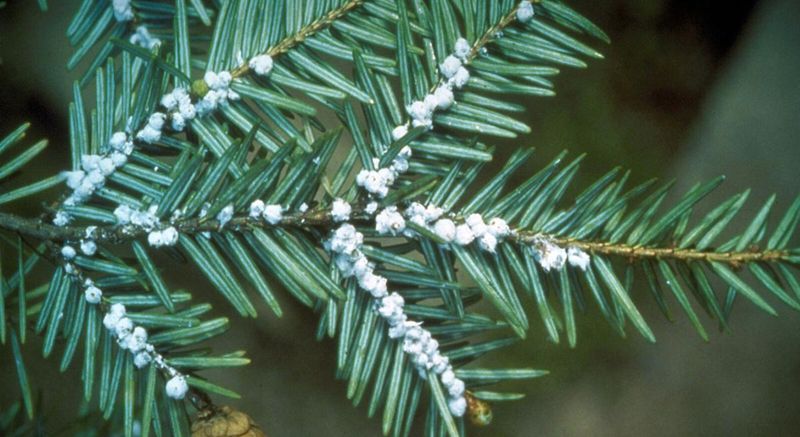
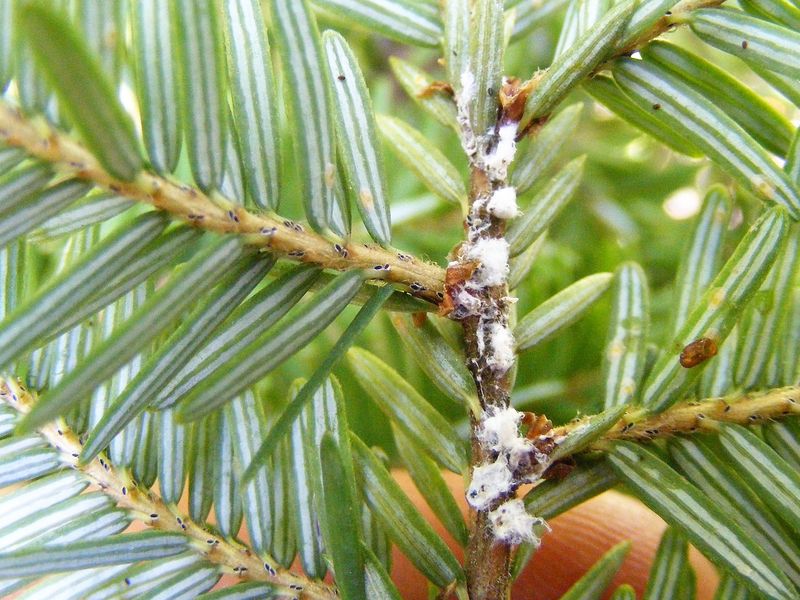
Cotton balls the size of a pinhead were the first clue on my branch. Those white tufts are the waxy covering of the hemlock woolly adelgid, a tiny aphid-like insect native to Asia.
The Alabama Cooperative Extension System reports the pest was first confirmed in the state in June 2020, in Mentone in DeKalb County. That makes it a fairly new arrival here. Each woolly mass measures about one sixteenth of an inch.
Look at the base of the needles on the underside of new twigs. The tufts sit in neat little rows, almost like someone sprinkled salt along the stem. They are easiest to see from late fall through early summer.
Underneath that fluff, the insect is busy feeding. It slips a long, straw-like mouthpart into the twig and draws out stored starches the tree needs for new growth.
A few lookalikes can confuse you. Spider egg sacs, spittlebug foam, and elongate hemlock scale can all show up on branches. Adelgid wool is round, fuzzy, and tucked tight against the needle base.
Snap a clear photo with a coin for size. Your county Extension office can help confirm what you found.
Thinning Hemlock Branches and Grayish Needles Tell the Rest
Trees rarely shout when they are struggling. They whisper through small changes that are easy to brush off as a rough summer.
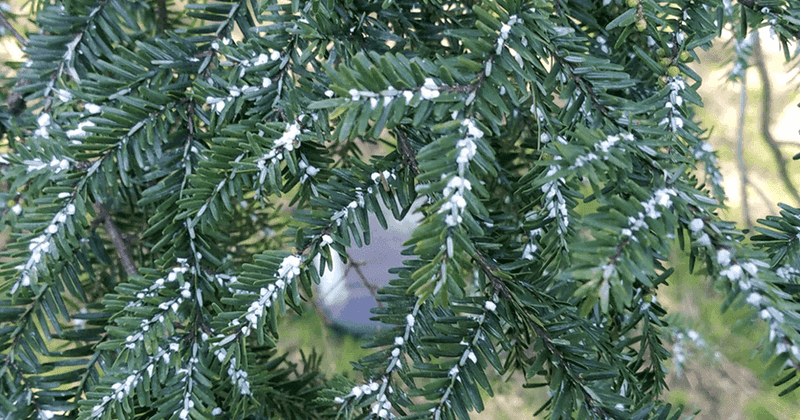
With adelgids feeding, a hemlock first loses its sparkle. Needles shift from deep, glossy green to a dull gray green or yellowish tint. New spring growth may be short or missing on infested twigs.
Next, needles start dropping early. The canopy looks see-through, and you can spot sky where thick foliage used to be. Lower branches often thin out first, and some may turn bare.
Without treatment, research from university and Park Service sources shows heavily infested hemlocks can decline over roughly four to ten years. In warmer southern climates, the slide can happen on the faster end of that range.
One habit helps a lot. Take a photo of your tree from the same spot every season. Side by side, those pictures reveal changes your eyes might miss day to day.
Also check the base of the tree. Drought, compacted soil, and lawn equipment damage can cause similar thinning. Ruling those out gives you a clearer picture before spending money on treatment.
Treating Infested Hemlocks Works Better Than You Might Expect
Hope is real here. Landscape hemlocks can often be saved, and the treatments are well tested.
Extension specialists point to systemic insecticides as the most reliable option for yard trees. Imidacloprid and dinotefuran are the two main choices. Both are taken up by the roots or bark and travel through the tree.
Imidacloprid moves slowly, taking several months to spread fully. In return, it can protect a tree for about three to seven years.
Dinotefuran works faster, often within three to six weeks, but lasts one to two years. Many arborists use dinotefuran first on badly stressed trees, then follow with imidacloprid.
Common methods include soil drench, soil injection, and a basal bark spray. Trunk injections need special tools and leave small wounds, so a certified arborist is the better choice there.
Horticultural oil or insecticidal soap can help on small trees you can reach. Full coverage of every twig is the tricky part.
Read every label carefully. Keep soil applications away from streams and wet areas, since these chemicals can harm aquatic insects. Near water, ask a professional about safer application methods.
Winter Walks Are the Best Time to Check Hemlock Twigs
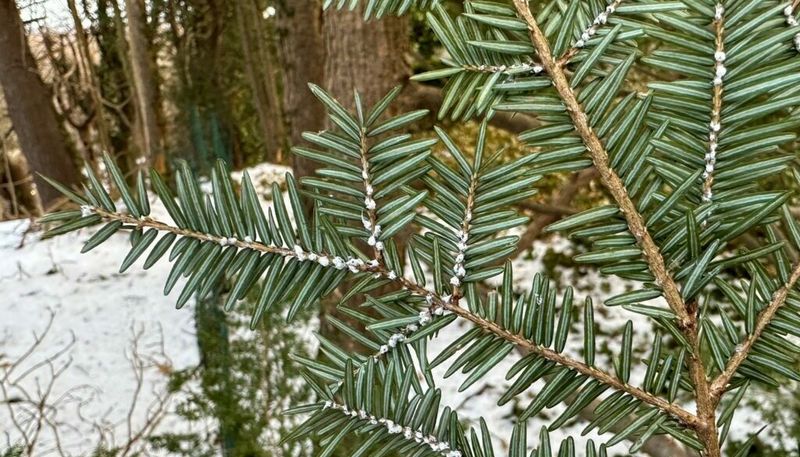
Cold months give you a secret advantage. From about November through early summer, adelgid wool is fluffiest and easiest to spot.
During that window, the insects are actively feeding and building their waxy cover. In summer, they rest quietly and the white tufts are much harder to see.
My routine is simple. I check lower branches on all sides of the tree, flipping each one to scan the newest twigs.
Shady north sides deserve extra attention. Birds and deer can carry tiny crawlers on feathers and fur. Wind helps too. That means even a backyard tree far from the woods can pick up hitchhikers.
Take a few minutes after each check to jot notes. Record the date, branches inspected, and what you saw. Over a few years, that little notebook becomes a useful health record.
Squeeze a suspicious tuft gently. Live adelgids often leave a small reddish purple smear, while old wool stays dry and crumbly.
If you find nothing, celebrate quietly and check again next winter. Early detection makes treatment cheaper and far more effective.
Alabama Hemlock Groves Are Rarer and More Precious Than Most Folks Realize
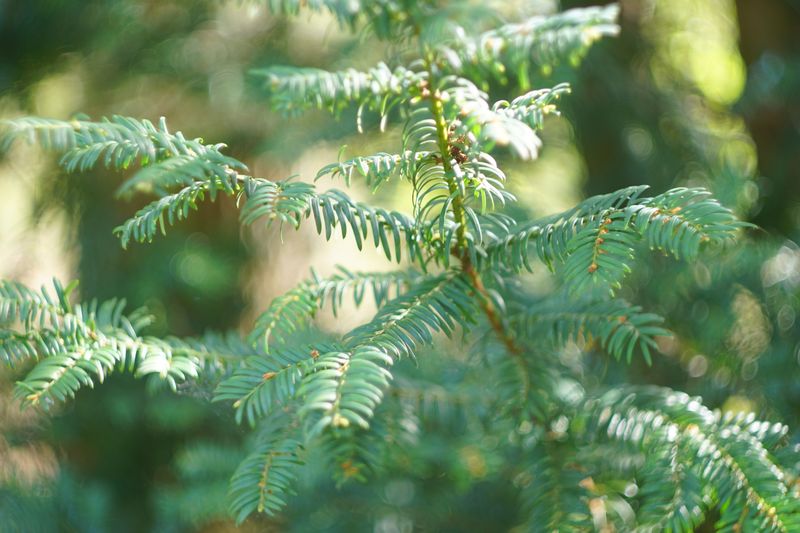
Cool shade along a mountain creek in summer is a gift, and hemlocks are often the reason. Eastern hemlock sits near the southern edge of its range in Alabama.
Native stands grow in the northern hills, including the Bankhead National Forest and areas near Little River Canyon. Large protected stands also grow in the Bankhead National Forest.
These trees cling to moist ravines, rocky bluffs, and stream banks. Hemlocks are considered a foundation species in these spots. Their dense evergreen shade keeps streams cool for trout, salamanders, and aquatic insects.
Birds like warblers nest and feed in their branches, and other species shelter there year round.
Losing them changes a whole creek. More sunlight warms the water, and banks can erode once shallow roots weaken.
Native hemlocks have little defense against this pest. In Asia, the trees evolved alongside natural predators and resistance. North America has no strong native predator to keep adelgid numbers in check.
The insect also reproduces without mating and produces two generations a year. Every adult can lay many eggs, so a small population grows fast. That is why spotting it early in Alabama matters so much.
Clean Boots and Careful Plant Shopping Slow the Adelgid Down
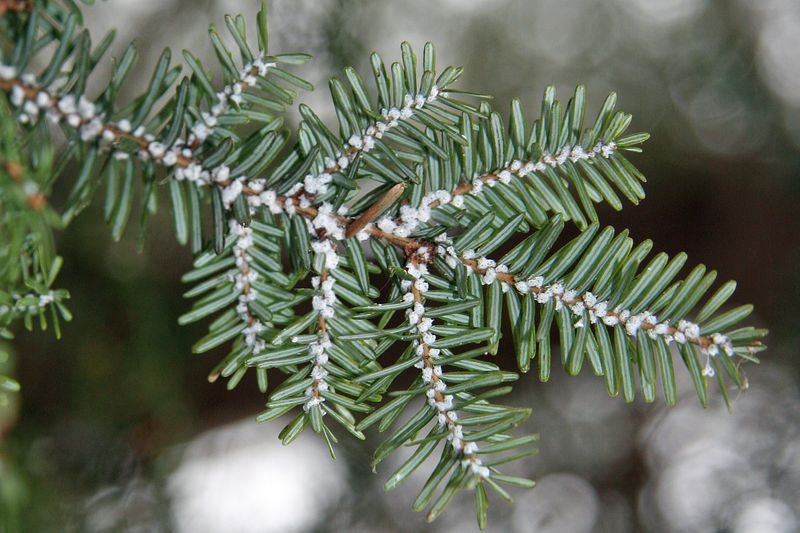
Crawlers are the traveling stage of this insect, and they are almost too small to see. They catch rides easily, which makes people part of the spread problem.
Infested nursery stock has carried adelgids across many states. Before buying a hemlock, check every twig for white wool. Ask the nursery where the tree was grown and whether it was inspected.
Hikers and campers can help too. After visiting areas with known infestations, brush off boots, clothing, packs, and tents before heading to a new trail. Spring is crawler season, so take extra care from March through June.
Leave firewood where you find it. Moving wood and branches can spread several forest pests at once.
Bird feeders near hemlocks can draw visitors that carry crawlers. That does not mean removing them, but it is worth extra branch checks nearby.
Groups like Wild Alabama run volunteer efforts to monitor hemlocks in the Bankhead National Forest.
Joining a survey day teaches you to spot the pest and adds real data for land managers. Small habits add up. One clean pair of boots might protect an entire ravine.
Steady Water and Patient Care Help Your Hemlock Bounce Back
Recovery is slow but satisfying. I have watched a treated hemlock push out soft, bright green tips after two thin years, and it felt like a small victory.
Water comes first. Hemlocks have shallow roots and dislike drought, which hits hard during hot Alabama summers.
A deep soaking every week or two in dry spells helps a lot. Spread two to three inches of mulch over the root zone. Keep it a few inches away from the trunk. Mulch holds moisture and protects roots from mowers.
Go easy on fertilizer. Extra nitrogen can actually boost adelgid numbers, so wait until pests are under control. Then use a modest slow-release product if a soil test shows a need.
Severely damaged trees with heavy branch loss may not regain their old fullness. Even so, they can stabilize and keep providing shade.
Plan follow-up treatments on schedule, roughly every few years for imidacloprid or every year or two for dinotefuran. Keep checking each winter.
Next time you see a branch dripping with tiny cones, flip it over. A thirty-second look could give your tree many more years.