Thanksgiving Cactus or Christmas Cactus? How Michigan Gardeners Can Tell Them Apart
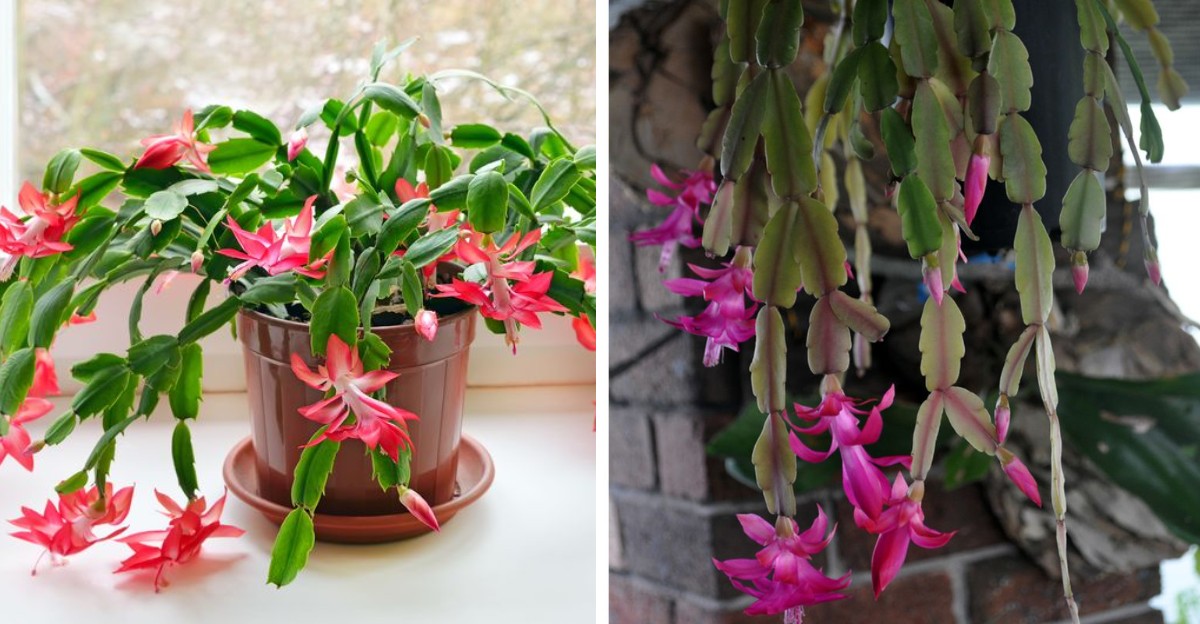
That plant labeled Christmas cactus on your windowsill is probably blooming for the wrong holiday. Growers ship most of these popular plants in time for Thanksgiving, and plenty of shoppers never notice the swap.
I love that the answer is hiding in plain sight. You only need a curious eye and maybe five minutes of quiet attention at the kitchen table.
Here’s something you might not expect. Neither plant comes from a desert. Both grow wild on mossy tree branches in the coastal mountain forests of Brazil, far from any sand or tumbleweeds.
For those of us in Michigan, gray November skies make these bright blooms feel like a small rescue mission. I can’t help but think that knowing your plant’s real name makes the show even sweeter.
1. Those Flat Holiday Cactus Stems Hold the First Clue
Grab your plant and look closely at one of the green pads. Those flat pieces are not true leaves at all. Botanists call them stem segments or cladodes, and they work like leaves by making food from sunlight.
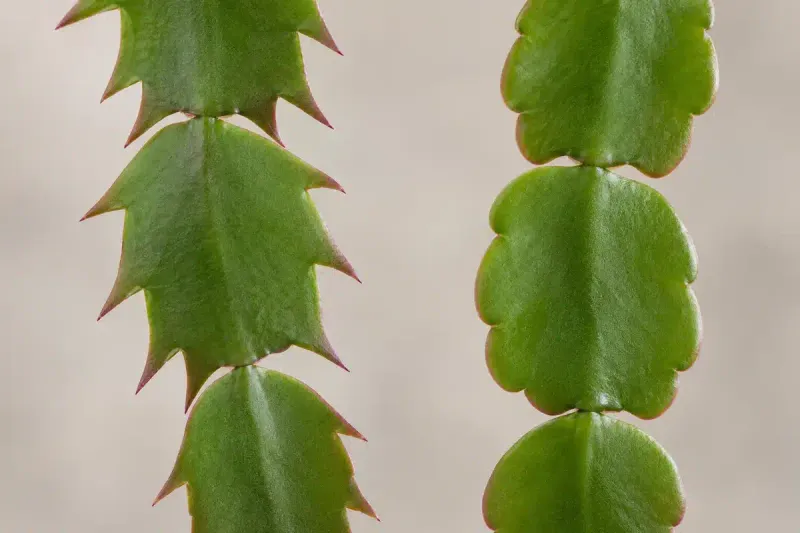
On a Thanksgiving cactus, each segment has two to four sharp, pointed teeth along its edges.
Some gardeners say they look like tiny crab claws, which explains the plant’s other nickname, crab cactus. The tip of each segment also tends to look squared off or slightly pointed.
A true Christmas cactus looks softer. Its segments have rounded, gently scalloped edges with no sharp points at all. Run your finger along one and it feels smooth, like the edge of a wavy cookie.
I find this clue the easiest one to trust because the stems are there all year long. You do not have to wait for flowers or guess based on the calendar. A summer check works just as well as a December one.
One small warning applies here. Plant breeders have created many hybrids over the years, so some plants show features that land somewhere in the middle.
If your segments look only a little toothy, compare them with a picture from a university extension page. Most of the time, though, the difference jumps right out once you know what to look for.
2. Peek Inside the Blossoms for Yellow or Purple Pollen
Once buds open, the flowers give you a second way to solve the puzzle. It feels a bit like detective work with a magnifying glass, and kids usually love helping.
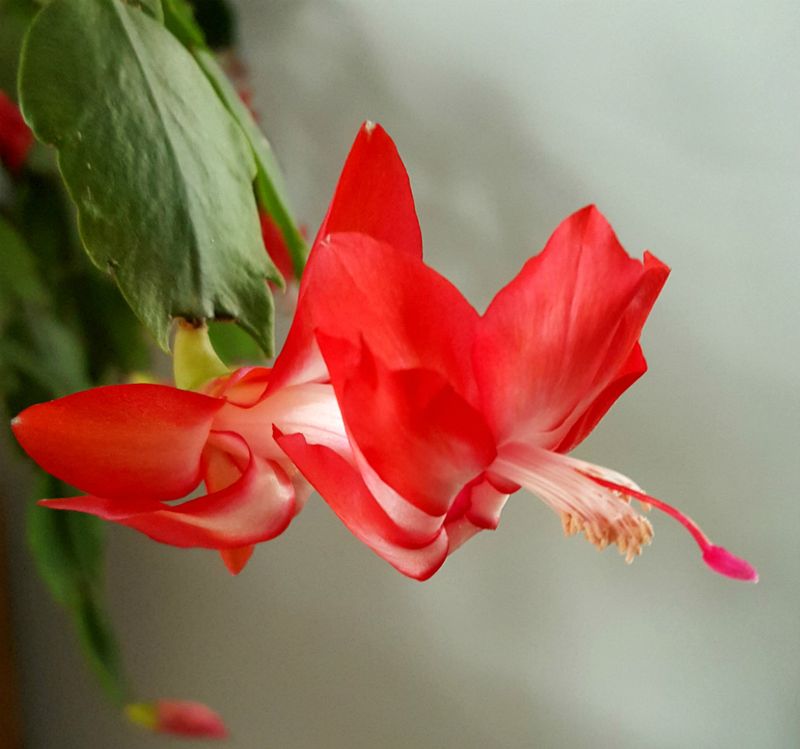
Start with the anthers. Those are the small tips at the end of the long threads poking out from the center of the bloom, and they carry pollen. Thanksgiving cactus anthers are yellow.
Christmas cactus anthers are purplish brown. Next, watch how each flower sits on the stem. Thanksgiving cactus blooms usually stick out sideways or tilt slightly upward, almost parallel to the floor.
Christmas cactus blooms tend to hang down in a drooping, dangling way, a bit like tiny lanterns. Flower shape can help too.
Thanksgiving cactus blossoms are often a little lopsided, with the top petals bending back more than the lower ones. Christmas cactus blossoms look more balanced and even all the way around.
Colors, on the other hand, will not help you much. Both types come in pink, red, white, salmon, purple, and even yellow shades thanks to breeders. So skip the color and focus on the pollen and the angle of the bloom.
Put the flower clues together with the stem segments from the first check. When two or three signs agree, you can feel confident about which plant you really own.
3. The Calendar Can Fool You About Holiday Cactus Bloom Time
Plenty of folks figure the name on the tag settles everything. Sadly, bloom timing is the least reliable clue of the bunch.
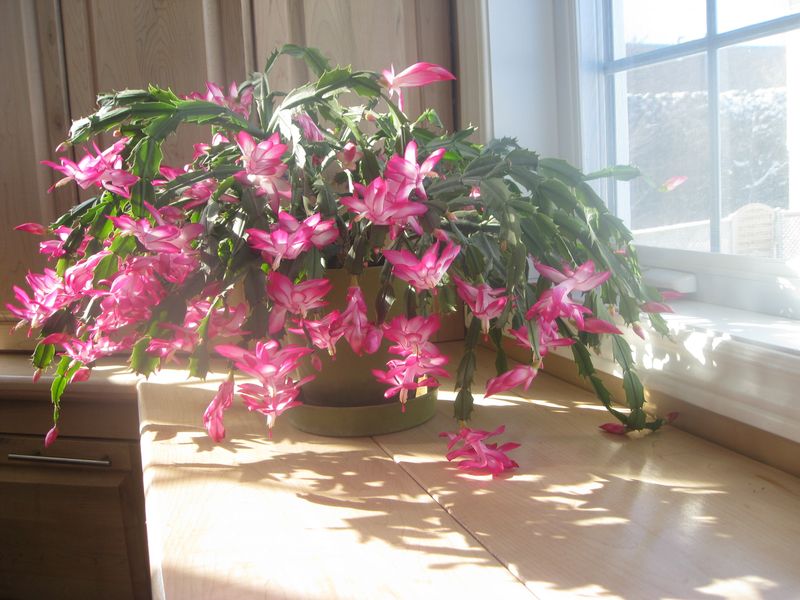
Under typical home conditions, Thanksgiving cactus often starts flowering in late October or November. True Christmas cactus usually blooms about a month later, around December and sometimes into January.
That gap sounds handy, but your living room has the final say. Both plants set flower buds in response to cool nights and long, dark evenings. A chilly sunroom can push blooms earlier. A warm, brightly lit family room can delay them by weeks.
I have heard of Thanksgiving types flowering at Christmas and Christmas types opening before the turkey was even thawed.
There is also a third cousin that adds to the mix. The Easter cactus, now often listed as Schlumbergera gaertneri, is a close relative that blooms in spring. Its segments have soft bristles at the tips, and its flowers look like flat, open stars.
So treat bloom time as a fun hint rather than proof. If your plant flowers in November, that leans toward Thanksgiving cactus, but double-check the stems before you decide.
Write the bloom dates down each year. After a couple of seasons, you will see your plant’s personal rhythm, which is handy when planning holiday decorating or gifting cuttings to friends.
4. Store-Bought Christmas Cactus Plants Are Often Something Else
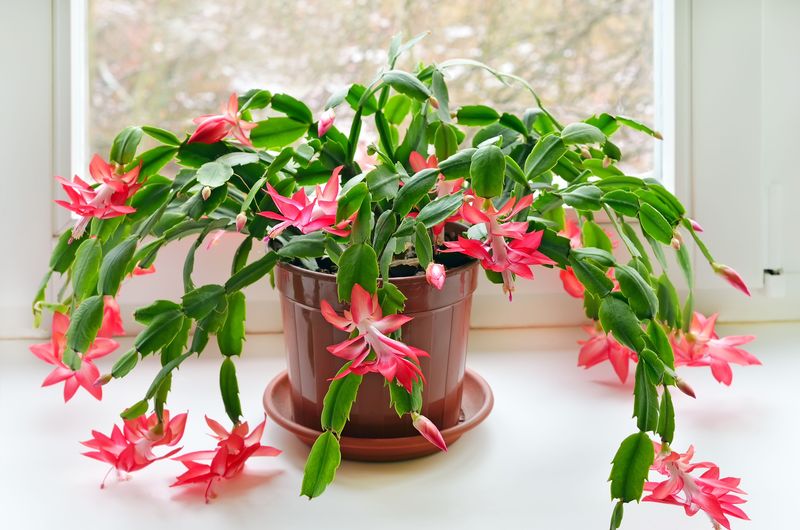
Walk into almost any garden center in November and you will see racks of blooming holiday cacti. Many carry tags that say Christmas cactus. Look at the stems, and you will usually find pointy Thanksgiving cactus segments instead.
There is a practical reason for that. Thanksgiving cactus and its hybrids bloom earlier and ship well, so growers can have them in full flower for the busy holiday shopping season.
University extension experts, including those at Michigan State University, point out that most plants sold as Christmas cactus are really Thanksgiving types.
Retailers are not trying to trick anyone. The name Christmas cactus simply became a catch-all label for the whole group, much like people call every tissue by one brand name.
The true Christmas cactus, a hybrid known as Schlumbergera x buckleyi, is less common in stores. Many of the old ones still around came from grandparents or neighbors as passed-along cuttings.
If someone in your family has a big, droopy plant that blooms around Christmas Day, it may be the real deal.
So check your plant before you correct the tag in your head. Once you know what to look for, shopping becomes a little game. I now catch myself inspecting stems in the checkout line, and I suspect you will too.
5. Rainforest Roots Explain How These Cacti Like Their Water
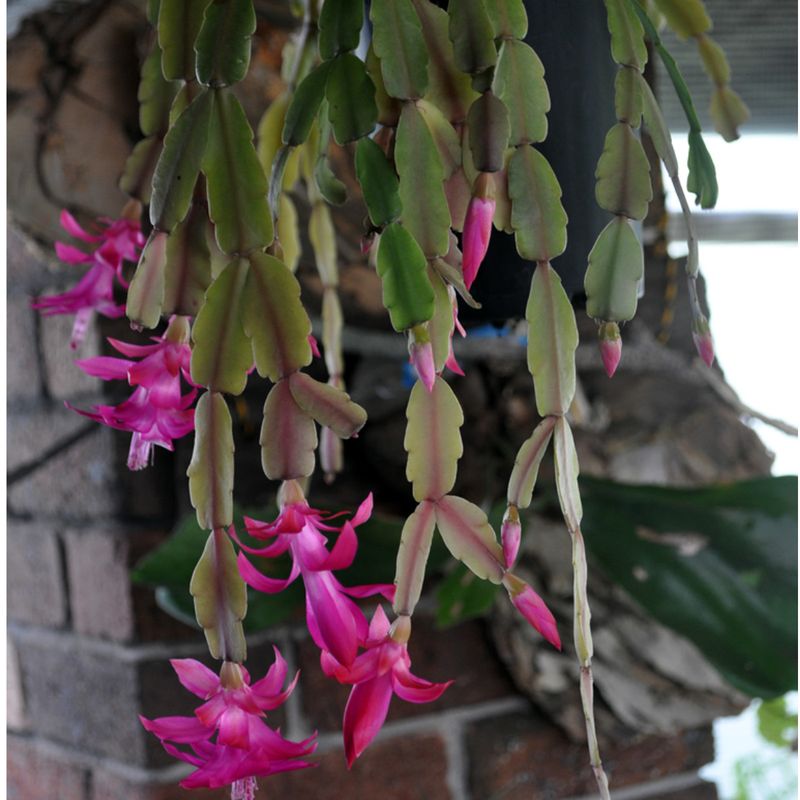
Forget everything you know about prickly desert cactus care. These plants come from humid mountain forests in southeastern Brazil, where they grow on tree branches and mossy rocks. Plants that live this way are called epiphytes.
That background shapes how you should care for both types. They like bright light but not harsh, all-day sun, so an east window or a spot near a sheer curtain works nicely. Hot afternoon sun can turn the segments reddish or pale.
Water when the top inch of soil feels dry, then let extra water drain away. Soggy roots are the most common trouble, and they can lead to root rot.
A loose potting mix made for cactus or orchids, blended with regular potting soil, gives roots the airflow they crave.
Michigan homes get very dry once the furnace kicks on. A tray of pebbles with water underneath the pot adds a bit of moisture to the air. Just keep the pot sitting above the water line.
Keep plants away from heat vents, fireplaces, and drafty doors. Sudden temperature swings can stress them. With steady conditions, a holiday cactus grows slowly and happily for years, whichever name it carries.
6. Cool Nights and Long Darkness Coax Out Holiday Cactus Buds
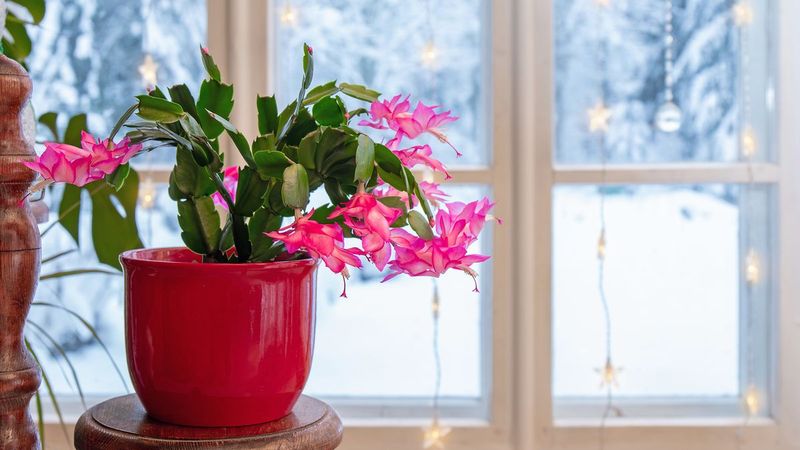
My favorite trick with these plants feels a little like magic. You can nudge them into blooming just by controlling light and temperature. Both Thanksgiving and Christmas cacti form buds when nights turn cool and long.
Extension guidance suggests nighttime temperatures around 50 to 55 degrees Fahrenheit help strongly, while warmer rooms in the low 60s still work if the plant gets long nights.
Aim for about 12 to 14 hours of uninterrupted darkness each night for roughly six weeks. Early fall is the time to start.
In Michigan, many people use a cool spare bedroom, an unheated but frost-free porch, or a basement window. Before the first frost, bring any plant that summered outside back indoors.
Lamps and streetlights can interrupt the process, so a closet at night or a cardboard box cover can help. Cut back on water a bit during this period, but do not let the plant shrivel.
Once buds appear, move the plant to its display spot and leave it there. Big changes in light, temperature, or watering can make buds fall off. A steady routine keeps them on track to open into full flowers.
7. An Old Christmas Cactus Can Become a Family Heirloom
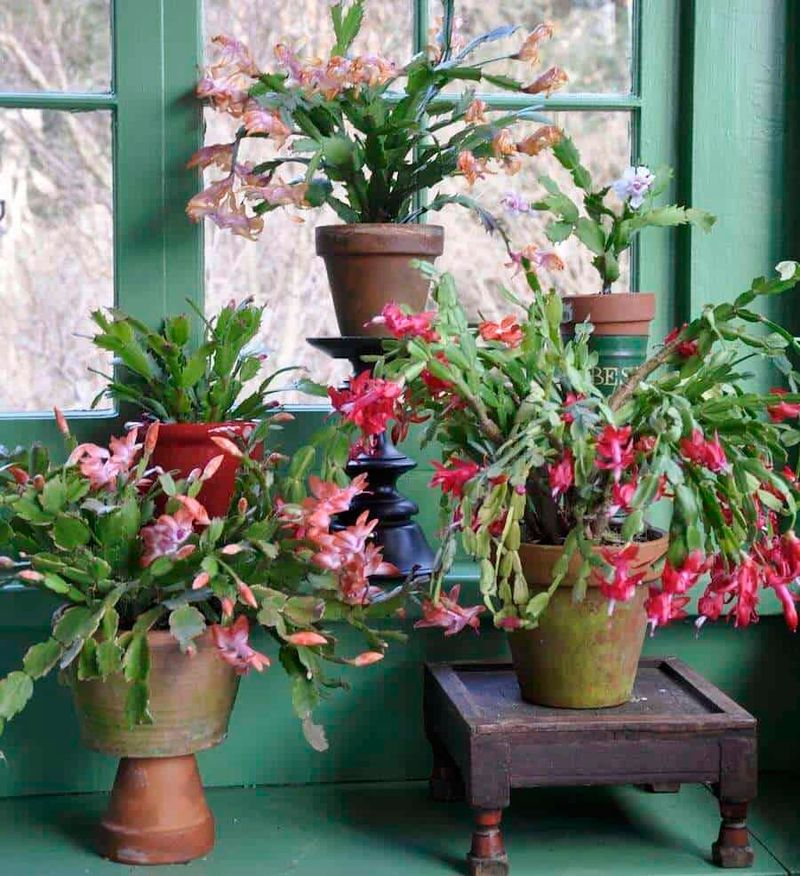
Some of these plants outlive the people who first bought them. Stories of holiday cacti passed through families for 50 years or more are common, and a few are said to be even older.
Keeping yours going is not hard. Feed it with a balanced houseplant fertilizer at half strength about once a month from spring through late summer. Stop feeding in early fall so the plant can focus on setting buds.
These plants bloom best when slightly snug in their pots. Repot only every few years, usually in spring after flowering, and move up just one pot size. Fresh potting mix gives the roots a boost.
Late spring or early summer is a great time to shape the plant. Twist off a few stem pieces at the joints to encourage bushier growth. Then put those pieces to work.
Let cuttings of two or three segments dry for a day, then tuck them into slightly moist potting mix. Roots usually form within a few weeks. Label each new pot with its true name, Thanksgiving or Christmas, now that you know how to tell.
Sharing those cuttings is my favorite takeaway. A small pot of rooted stems makes a thoughtful gift, and it carries your plant’s story to a brand new windowsill.