The Shade Grass That Crowds Out Creeping Charlie in Ohio Yards
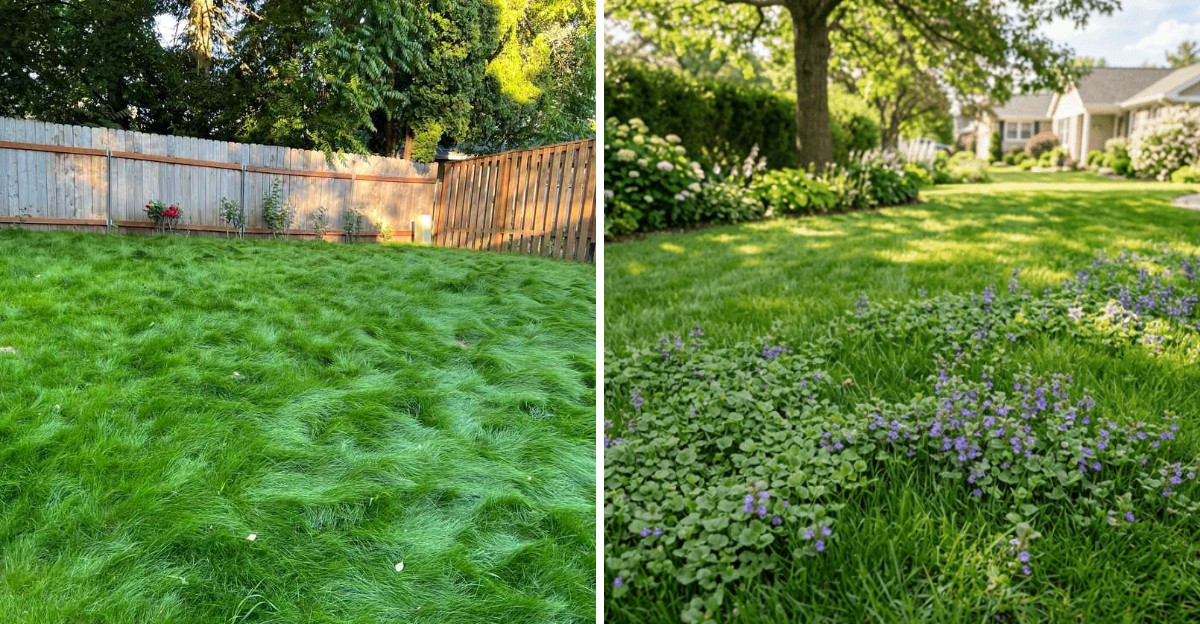
A single snapped stem from one sneaky lawn weed can root itself and start a brand new patch. Every little joint along its runners is ready to grow roots wherever it touches soil.
I learned this the hard way under my maple tree. I yanked handfuls of the minty-smelling stuff, felt proud, and watched it bounce back within weeks.
Ohio yards with big shade trees are a favorite hangout for this plant. It loves damp, dim, packed soil where regular lawn grass gives up and goes thin.
You can spray it, pull it, and grumble at it all summer.
The smartest fix, I’ve found, is a much quieter one. A certain family of skinny-bladed grasses actually likes the shade that this weed calls home.
Give it a real fighting chance, and that minty invader may finally meet its match.
That Minty Purple-Flowered Ground Ivy Has A Weak Spot
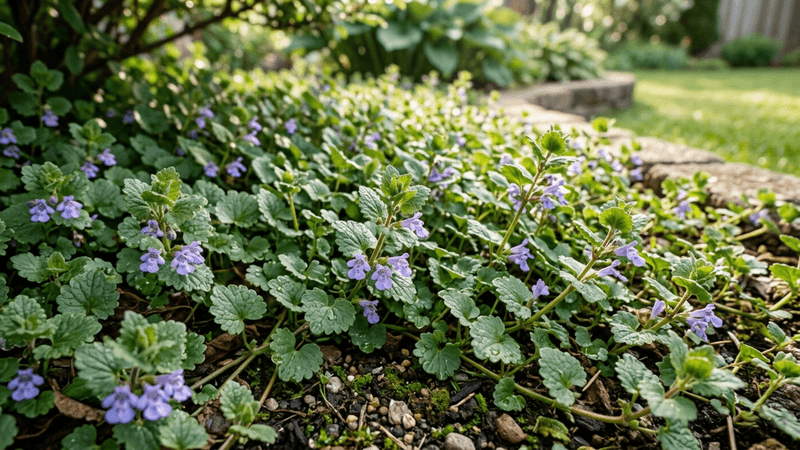
Crush a leaf of Creeping Charlie between your fingers and you will smell mint. That makes sense, because ground ivy, or Glechoma hederacea, belongs to the mint family.
Look for square stems, round leaves with scalloped edges, and tiny purple-blue flowers from April to June.
The plant spreads in three ways at once. It drops seeds, it sends out underground rhizomes, and it runs long stems called stolons across the surface.
Each node on those stolons can put down roots, so a mat forms fast.
Its favorite spots are moist, shaded, fertile soils that drain poorly or are packed hard. It can handle sun too, but shade is where it often wins easily.
Under trees, regular lawn grass grows thin, and that bare space is an open invitation.
Here lies the weakness. Creeping Charlie is a bully that mostly moves into empty room.
It struggles to push into a thick, healthy carpet of grass that is already using the light, water, and soil.
So the real question is not just how to remove the weed. It is which grass can stay thick in the shade long enough to keep the gaps closed for good.
Fine Fescue Is The Skinny-Bladed Grass That Loves Ohio Shade
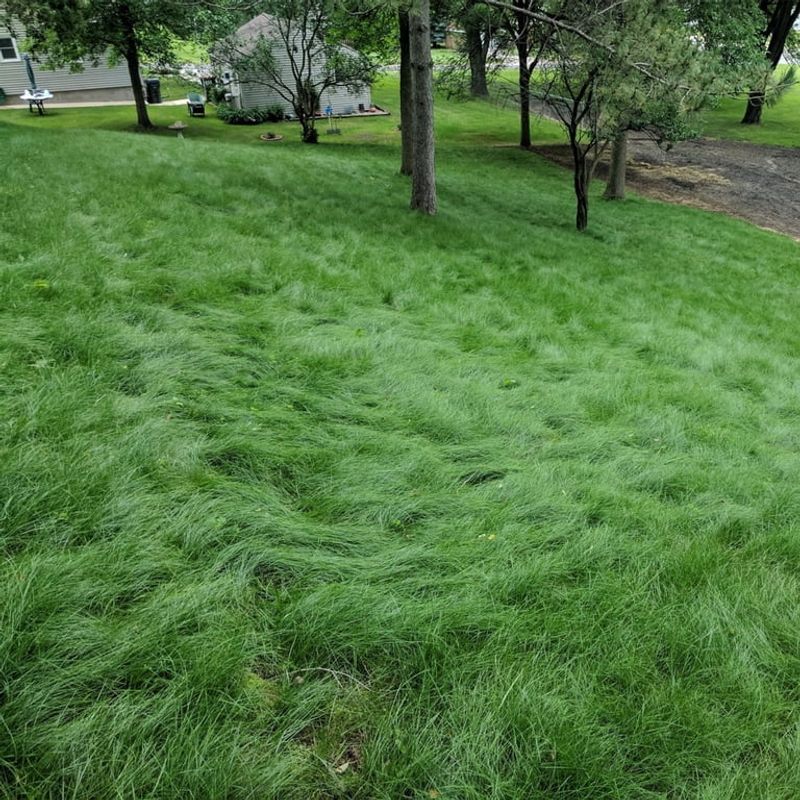
Meet the answer in grass form, though it hardly looks tough. Fine fescues have narrow, almost needle-like blades.
Ohio State University researchers rank them among the most shade-tolerant cool-season turfgrasses you can grow.
The fine fescue group includes a few close cousins. Strong creeping red fescue, Chewings fescue, and hard fescue are the main ones.
Certain Chewings and strong creeping red cultivars have shown strong performance in tree shade during OSU studies.
I love how low-maintenance they are. Fine fescues establish fairly easily and need less fertilizer than many other lawn grasses.
They also hold nice color through cool spring and fall weather.
Extension experts across the Midwest point to shade-tolerant grasses like these as a key tool against Creeping Charlie. The idea is simple.
A grass that stays dense in the dark leaves fewer gaps for ground ivy runners to grab.
One warning before you buy a bag. Fine fescues do not handle heavy foot traffic well when planted alone.
If your kids and dog race across that shady corner daily, you may want a blend, which the next section covers in detail.
Mixing Chewings, Creeping Red, And Hard Fescue Seed Works Best
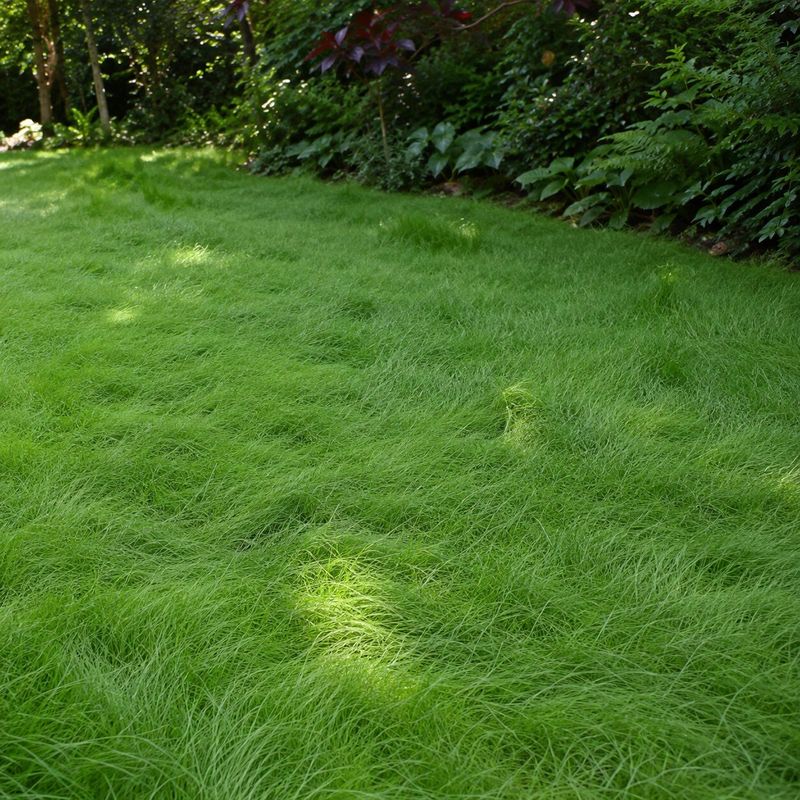
A good seed blend works a bit like a team roster. Each player covers a different weakness.
For dense tree shade, a popular recommendation is about 40 percent Chewings fescue, 40 percent strong creeping red fescue, and 20 percent hard fescue.
Why mix them? Creeping red fescue spreads by short rhizomes, helping fill thin spots.
Chewings fescue grows in tight bunches and handles shade well. Hard fescue is a sturdy, slow grower that copes with poorer soils.
When you shop, read the label instead of the front of the bag. Look for named fine fescue varieties and check the weed seed percentage.
A bag labeled shade mix that is mostly Kentucky bluegrass will disappoint you under trees.
For partly shaded areas that get heavier use, many Ohio blends lean on turf-type tall fescue. Some Northeast Ohio mixes use about 80 percent tall fescue.
A little perennial ryegrass can also sprout fast and cover soil while slower fescues settle in.
My tip is to match the blend to your actual light. Watch the spot for a full day and count sunny hours.
That small chore saves money and frustration later.
Kentucky Bluegrass Under Big Maples Is Setting You Up For Trouble
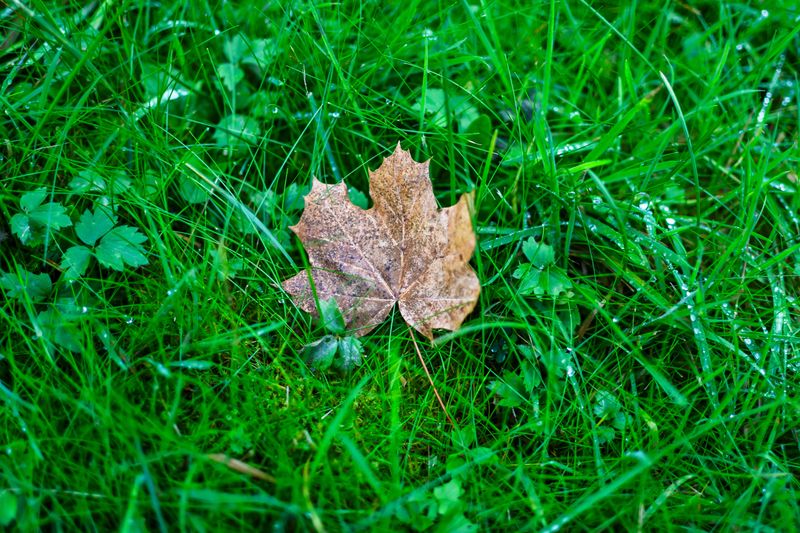
Plenty of Ohio lawns started out as Kentucky bluegrass, and it looks gorgeous in the open. Under a big maple, though, it often fades into a sad, patchy mess.
It generally needs at least six hours of direct sun daily to thrive.
Perennial ryegrass is a bit better but still picky. It typically wants four to six hours of sunlight.
In heavy shade it grows thin and weak and picks up disease more easily.
Turf-type tall fescue sits in the middle. It has good shade tolerance, deep roots, solid heat and drought tolerance, and real durability.
A very thick tall fescue lawn can slow Creeping Charlie, though it may not clear out an established patch on its own.
So where does that leave you? Think of your yard in zones.
Sunny areas can keep bluegrass or tall fescue. Light shade suits tall fescue blends, and deep shade belongs to fine fescues.
I made the mistake of seeding one mix everywhere once. The sunny side looked great, and the shady side became a Creeping Charlie buffet.
Matching grass to light is honestly the biggest win you can get.
Late Summer Overseeding Gives Shade Grass A Head Start
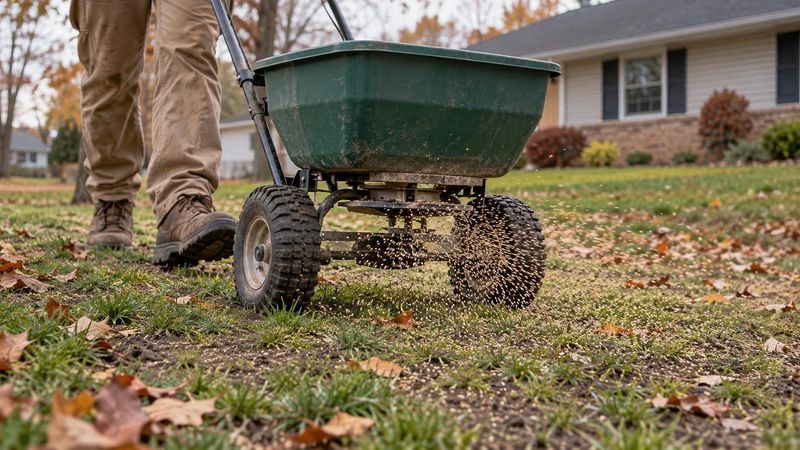
Timing is the secret sauce of a thick shade lawn. In Ohio, the sweet spot for seeding cool-season grass is late summer into early fall.
Aim for roughly 45 days before your first expected frost, and mid-August can work well for battling Creeping Charlie.
Fall seeding has two big perks. Warm soil helps seeds sprout quickly, while cooler air is easier on young grass.
Plus, many trees start dropping leaves, so more light reaches the ground.
Before seeding, rake out thatch and loosen the soil surface. Good seed-to-soil contact matters more than throwing extra seed.
Keep the top layer lightly moist until the new grass is up and growing.
Northern Ohio usually sees frost earlier than the southern counties near the Ohio River. Check your local average frost date and count backward.
That way the new grass roots in before winter arrives.
Make overseeding a yearly habit in shady spots. Fine fescues can thin out over time under trees.
A fresh round of seed each fall keeps the turf dense and leaves Creeping Charlie fewer empty patches to claim.
Taller Mowing And Thinning Tree Branches Tip The Odds
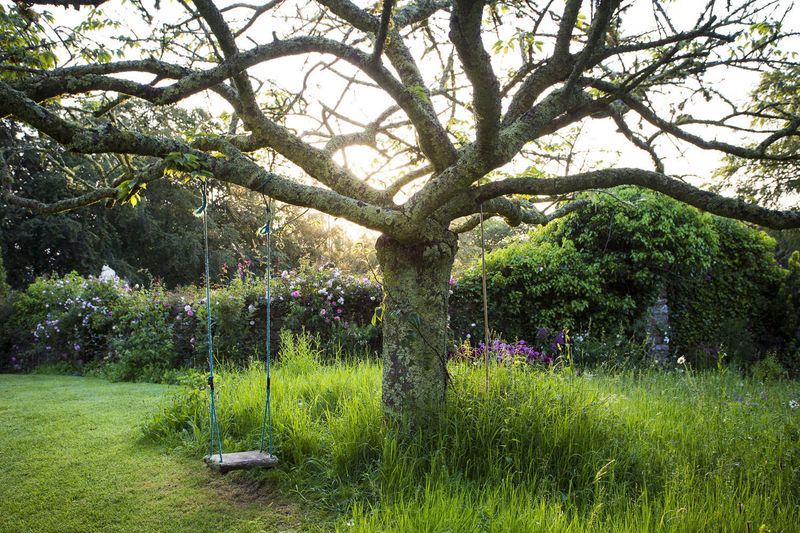
Raise that mower deck, friend. Ohio guidance suggests keeping cool-season grass at about 2.5 to 4 inches.
In shade, the higher end helps because taller blades capture more light and shade the soil against weed seeds.
Watering style counts too. Deep, less frequent watering pushes grass roots deeper into the ground.
Creeping Charlie has shallow roots, so it tends to lose ground when the surface stays drier between waterings.
Compacted soil under trees is another sneaky problem. Core aeration pulls out small plugs, letting air and water reach the roots.
Improving drainage in soggy spots also takes away the damp conditions ground ivy enjoys.
Then look up. Thinning lower or crowded tree branches can let in more sunlight and better airflow.
Even a little extra light can turn struggling turf into thick turf. For large trees, hire a certified arborist so the tree stays healthy.
Feed lightly and wisely. Fine fescues need less nitrogen than bluegrass, so too much fertilizer can backfire.
A modest fall feeding usually supports shade grass without pushing weak, floppy growth.
Pulling Or Spot-Treating Ground Ivy Clears Room For New Grass
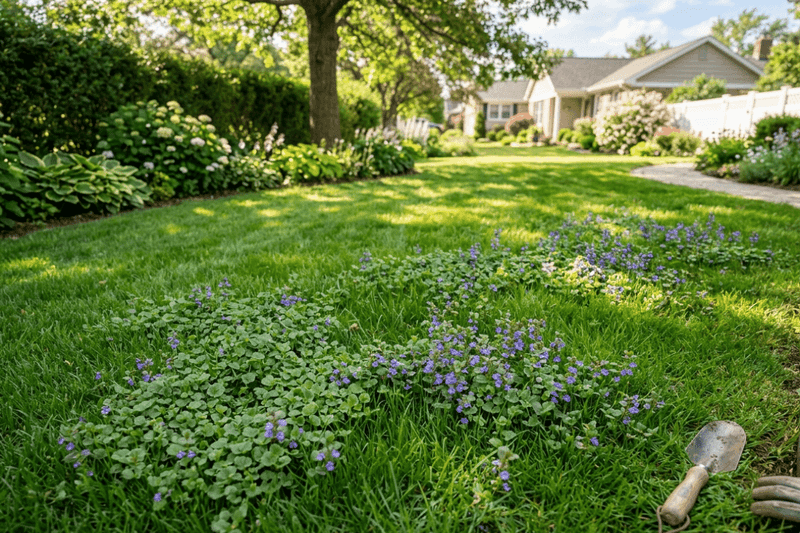
Good grass needs open soil, and sometimes that means clearing the weed first. Small patches can be pulled by hand.
Get every root and stem piece, since tiny fragments can regrow.
Pulling is easiest when the soil is moist. Gently lift the runners and follow them back to their rooting points.
It is weirdly satisfying, though it takes patience and repeat visits.
For larger infestations, selective broadleaf herbicides are an option. Products with triclopyr, or blends of 2,4-D, MCPP, and dicamba, work best on ground ivy in cool-season lawns.
Read and follow every label direction, since the label is the law.
Timing makes a big difference. Fall applications after the first frost are especially effective because the plant sends food down to its roots.
A second round in spring while it flowers often helps, and several treatments may be needed.
Skip the old borax trick. Research shows it is usually ineffective against Creeping Charlie and can harm grass and other plants.
Also check herbicide labels for waiting periods before overseeding, so your new fescue seed gets a fair start.
Wild Ginger And Native Sedges Can Take Over Where Grass Gives Up
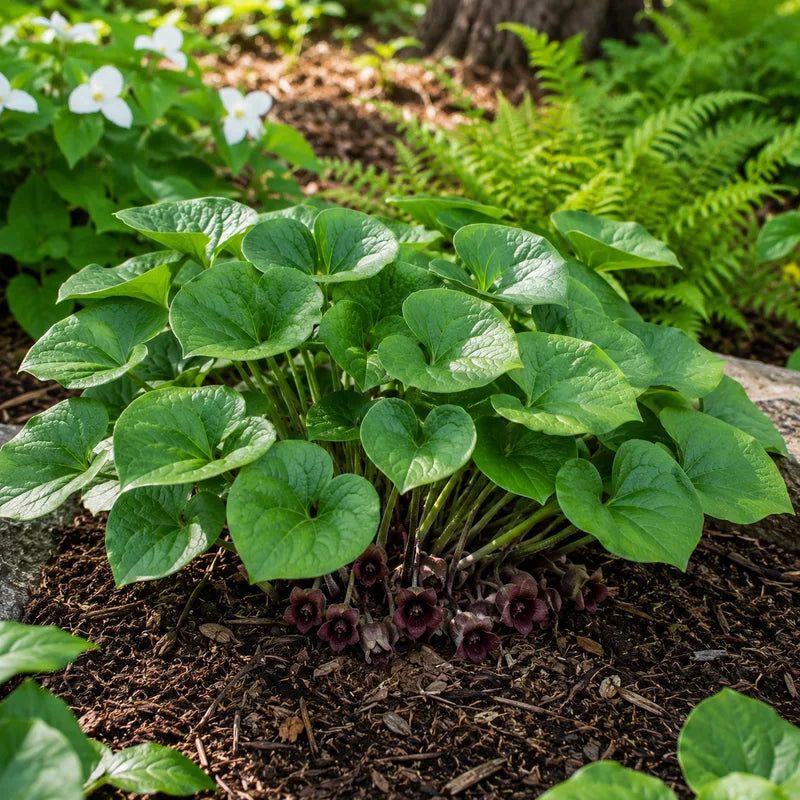
Some spots are just too dark for any lawn. Under dense evergreens or thick maple canopies, even fine fescue can fade.
Rather than fight forever, consider giving that space a new job.
Native groundcovers make a lovely swap. Wild ginger has heart-shaped leaves that form a low, glossy carpet.
Native sedges look grassy and soft, and native violets and ferns fit right into Ohio shade.
Hostas are another popular shade choice for adding size and texture. A simple mulched bed also works if you want almost zero upkeep.
Keep the mulch a few inches away from tree trunks.
Before planting, remove as much Creeping Charlie as you can. Mulch and dense plantings help limit new runners, but watch the edges for a season or two.
Quick touch-up pulling keeps it from sneaking back.
My biggest takeaway is to be honest about your light. Grow fine fescue where it can thrive, overseed each fall, and mow high.
Where shade wins, plant something that loves the dark, and Creeping Charlie loses its favorite home.