The Texas Native Tree That Resists Storm Damage Better Than Most
Near Rockport on the Texas coast stands a massive tree known simply as the Big Tree. It’s believed to be hundreds of years old, possibly more than a thousand.
Over the centuries, it has weathered countless Gulf hurricanes that flattened buildings and toppled trees all around it. That kind of toughness isn’t a fluke.
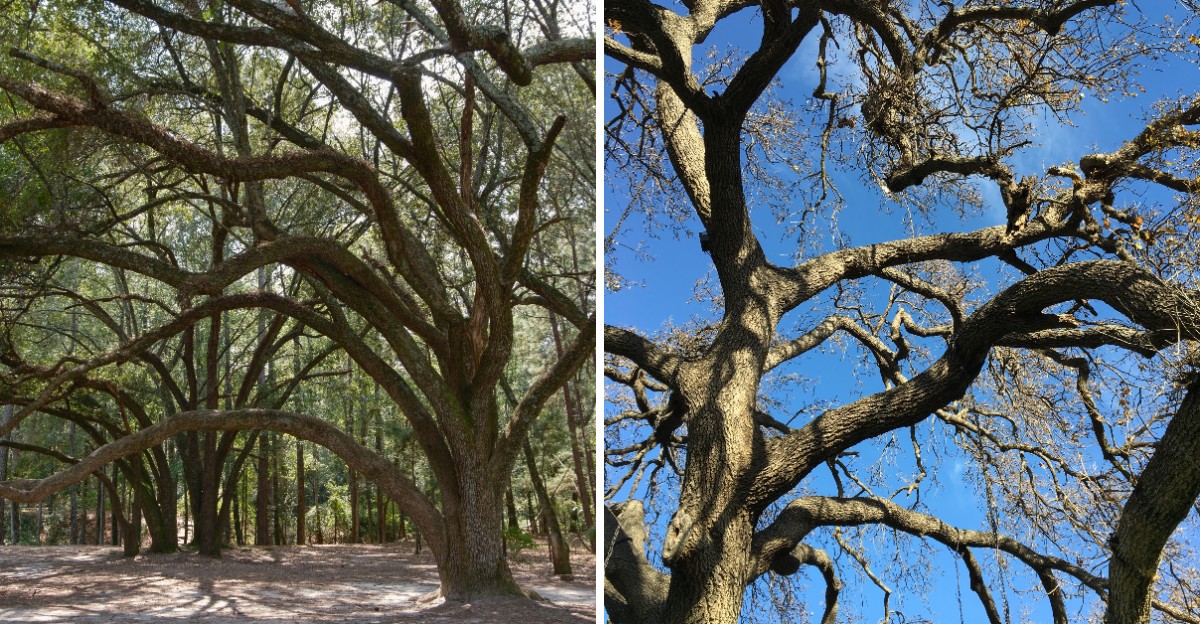
This native tree is built to take a beating. Its low, wide canopy lets strong winds slip through instead of catching them like a sail. Its dense, heavy wood resists snapping, and its wide-reaching roots anchor it firmly in place.
Studies after major hurricanes have repeatedly ranked it among the most wind-resistant trees in the South. If you want a tree that can stand up to Texas storms for generations, few options compare.
That Wide, Low Oak Canopy Hides a Clever Survival Plan
Researchers at the University of Florida studied trees after several major Gulf hurricanes. Southern live oak, Quercus virginiana, landed near the top of their wind-resistance rankings again and again.
A hurricane survey after Hurricane Ike in Texas pointed the same way. Live oaks lost small twigs and leaves, but far fewer of them snapped at the trunk or tipped over than pines, pecans, or water oaks nearby.
So the tree in the headline is the live oak. You probably already know it from courthouse squares and old ranch yards across the state.
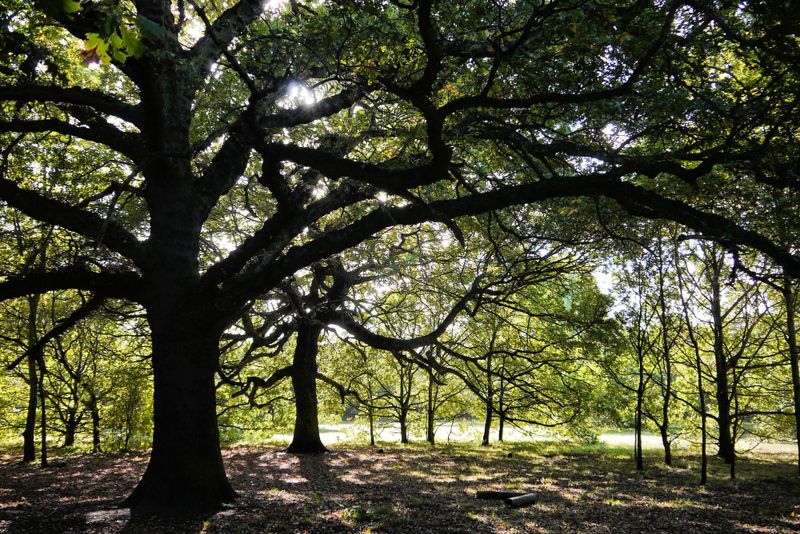
I like how its winning strategy feels almost humble. The tree grows wide instead of super tall, with a low center of gravity that keeps wind from getting much leverage.
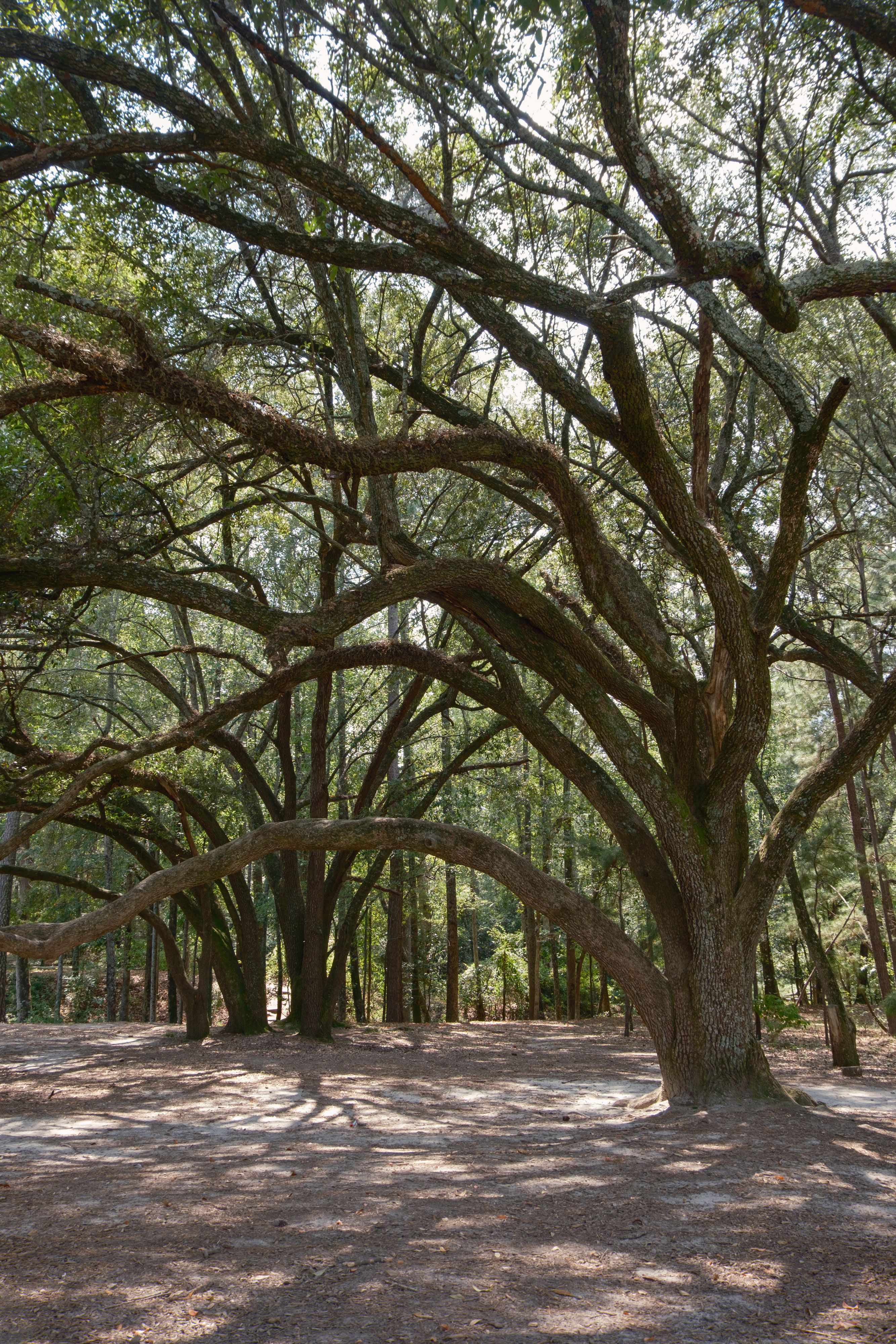
Its trunk tapers quickly, and its big limbs spread out sideways like the arms of someone bracing on a bus. That shape spreads the stress around instead of loading it all on one weak spot.
Nothing is storm-proof, though. Even live oaks can fail when they are poorly planted, badly pruned, or already decayed.
Still, if you want one native shade tree with a strong track record in rough weather, this one deserves the first look. The rest of the story explains why, and how you can help yours stay strong.
Heavy, Dense Live Oak Wood Bends Before It Breaks
Pick up a chunk of live oak firewood and you will feel the difference right away. It is one of the heaviest native woods in North America.
Back in the 1700s and 1800s, shipbuilders hunted for this wood. The famous USS Constitution earned the nickname Old Ironsides partly because its hull frame used live oak, and cannonballs reportedly bounced off it.
That same toughness helps in a thunderstorm. Dense wood with tightly packed fibers handles bending stress much better than soft, fast-grown wood.
Fast growers like Bradford pear, silver maple, and some cottonwoods add size quickly but often split when gusts hit. Slow, steady growth gives live oak strength that lasts.
Flexibility matters too. Long, curving limbs can sway and twist a little, which lets them absorb a gust instead of fighting it head-on.
Personally, I find the trade-off worth it. You may wait a few extra years for serious shade, but you get a tree built more like a fence post than a toothpick.
Keep in mind that dense wood still has limits. Hidden rot, old wounds, or cracks can weaken even the strongest limb, so regular checks still matter.
Live Oak Roots Spread Far Beyond the Branches
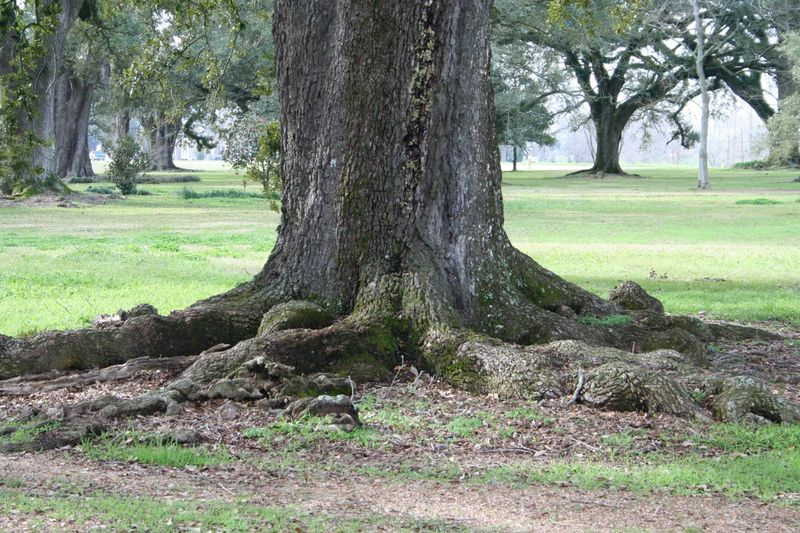
Most of a tree’s anchor is hiding right under your lawn. Live oak seedlings start with a taproot, but mature trees rely mostly on a wide mat of lateral roots.
Those roots can reach well past the drip line, the outer edge of the canopy. Many arborists say the roots of large trees often spread two to three times wider than the branches.
Picture a camping tent held by dozens of stakes instead of one. Wind has a hard time tipping something gripped from so many angles at once.
That is a big reason live oaks rarely blow over in healthy, open soil. Trees with shallow, cramped roots, or roots chopped by construction, are much more likely to topple.
You can protect this hidden anchor with a few smart habits. Avoid trenching, piling fill dirt, or parking heavy vehicles under the canopy.
Soil compaction squeezes out air, and roots need air as much as water. Even a new patio or driveway poured too close can weaken a tree’s grip years later.
If you plan any digging near an older live oak, call a certified arborist first. A short visit now can save you from a toppled giant later.
Small, Leathery Live Oak Leaves Let the Wind Slip Through
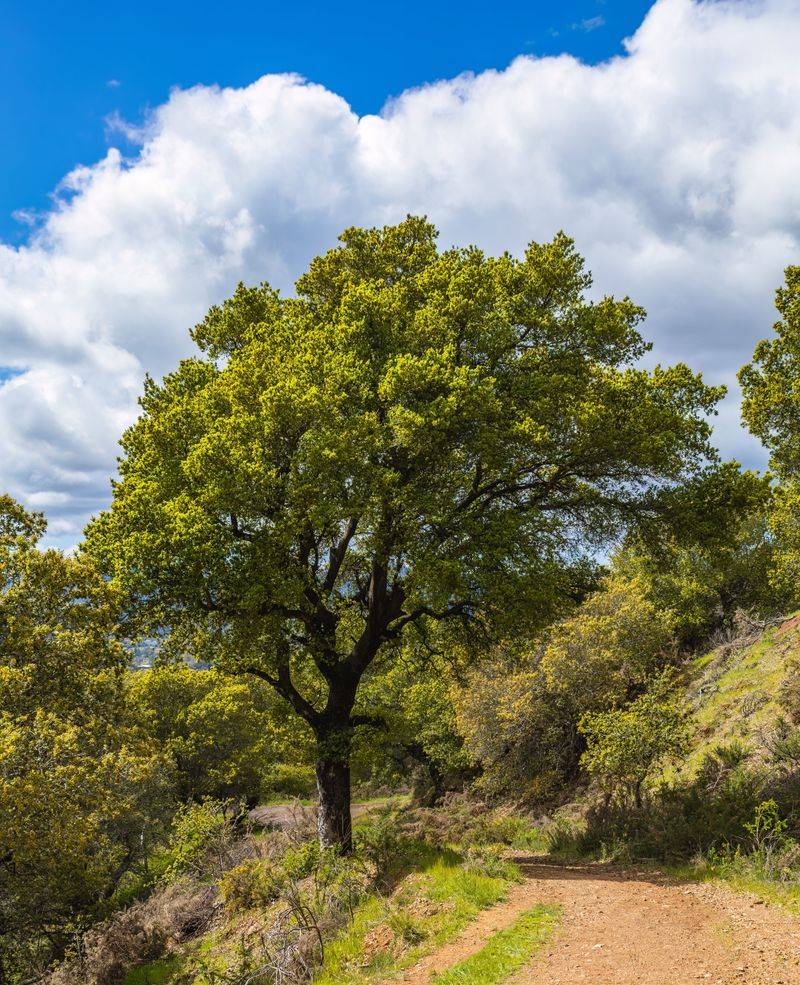
Grab a live oak leaf and compare it to a sycamore leaf. One fits in your palm with room to spare, while the other could almost fan your face.
Size matters a lot in a storm. Big, flat leaves act like tiny sails, and thousands of them together can pull hard on a tree’s limbs.
Live oak leaves are small, thick, and leathery, with a waxy surface. When strong wind hits, many of them can fold, flutter, and drop without dragging whole branches down.
Believe it or not, losing some leaves during a hurricane is actually helpful. A lighter canopy catches less wind, almost like a sailor lowering a sail.
The open branch pattern helps too. Air moves through gaps in the crown instead of slamming into a solid wall of foliage.
Now for the catch. Because live oaks keep most leaves through winter, freezing rain can coat them and add serious weight.
During the February 2021 winter storm, some Texas live oaks lost limbs to ice. Leaf drop and a little twig loss in spring afterward was common and usually not a sign of serious trouble.
Plant Your Young Live Oak With Plenty of Elbow Room
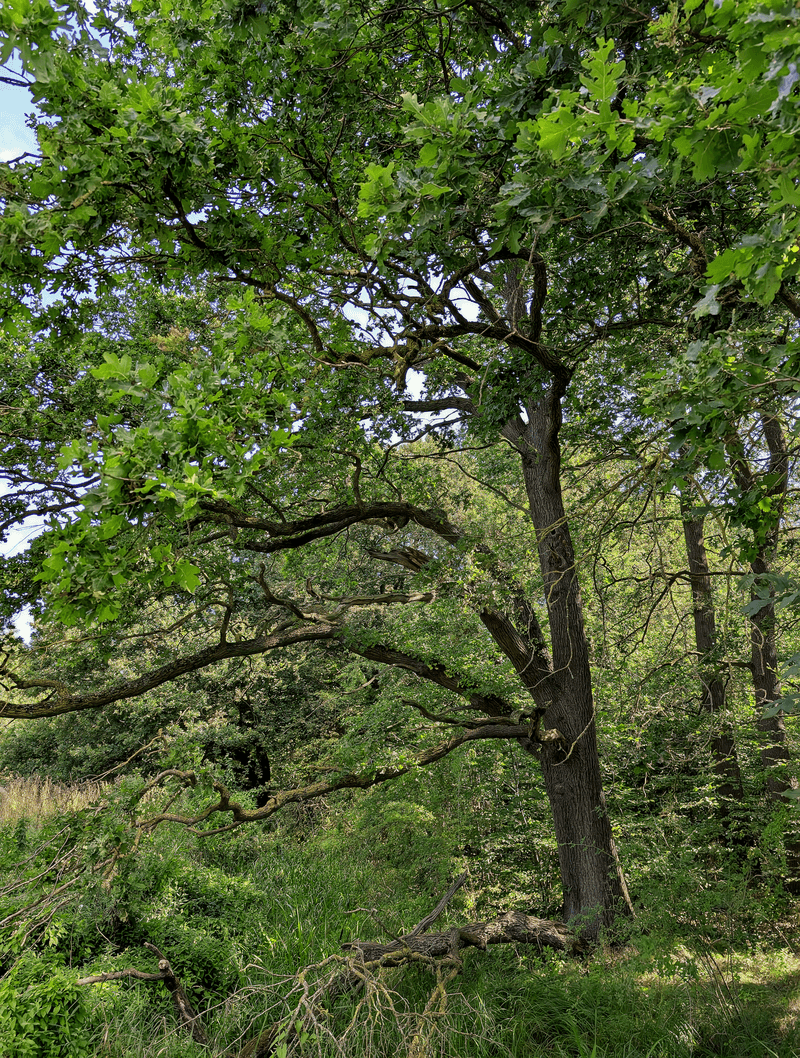
Grab your shovel, but measure first. A full-grown live oak can reach 40 to 80 feet tall and spread even wider, so a corner by the garage is not the spot.
Texas A&M AgriLife suggests digging a hole two to three times wider than the root ball but no deeper. Set the tree so the root flare, where the trunk widens at the base, sits right at or slightly above the soil.
Planting too deep is one of the most common reasons young trees struggle. Buried trunks can rot, and girdling roots may circle and choke the tree later.
Fall and winter are the best planting seasons across most of the state. Cooler weather lets roots settle in before summer heat arrives.
Leave at least 20 to 30 feet between the tree and your house, and more if you can. Keep it away from power lines too.
Spread two to four inches of mulch in a wide circle, keeping it a few inches from the trunk. Skip the heavy fertilizer during the first year.
Water deeply once or twice a week during the first summer. Steady moisture builds the wide root system that later holds the tree upright.
Smart Pruning Keeps Those Massive Oak Limbs Balanced
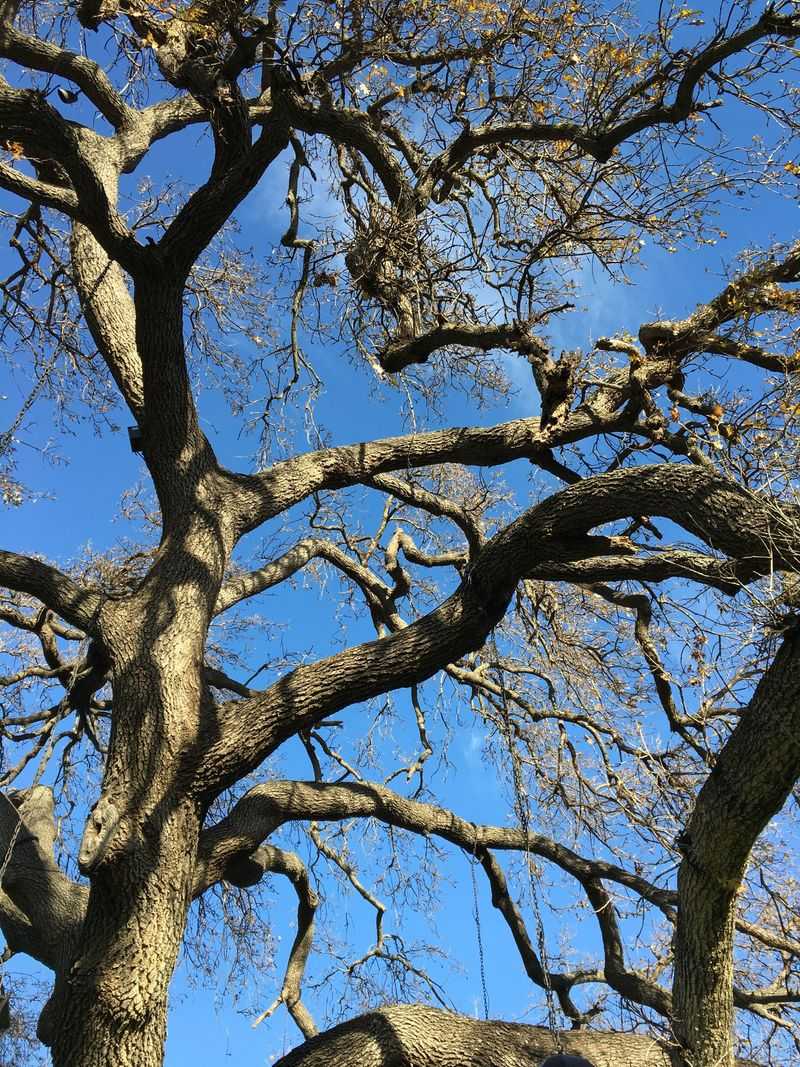
A little trimming at the right time can prevent a big mess later. Young live oaks benefit from structural pruning that encourages one main trunk and well-spaced limbs.
Weak forks, called co-dominant stems, are a common failure point. When two trunks of equal size grow tightly together, bark can get trapped between them and the joint stays weak.
An arborist can gradually reduce one of those stems while the tree is young. That fix is far easier at age five than at age fifty.
Here is the timing rule that matters most in Texas. Oak wilt, a serious fungal disease, spreads through beetles attracted to fresh wounds.
The Texas A&M Forest Service recommends avoiding oak pruning from February through June. The safest windows are midwinter and the hottest part of summer.
Paint every fresh cut right away with wound dressing or latex paint, no matter the season. That simple step blocks the beetles.
Avoid lion-tailing, which strips interior branches and leaves tufts at the ends. It actually makes limbs more likely to snap in wind. Remove no more than about a quarter of the canopy in one year.
Watch for Oak Wilt Before It Weakens Your Live Oak
Strong wood cannot protect a tree that is quietly sick. In Central Texas, oak wilt is one of the biggest threats live oaks face.
The disease is caused by a fungus that clogs a tree’s water-carrying tissue. Live oaks often share connected roots, so it can spread underground from tree to tree in groups.
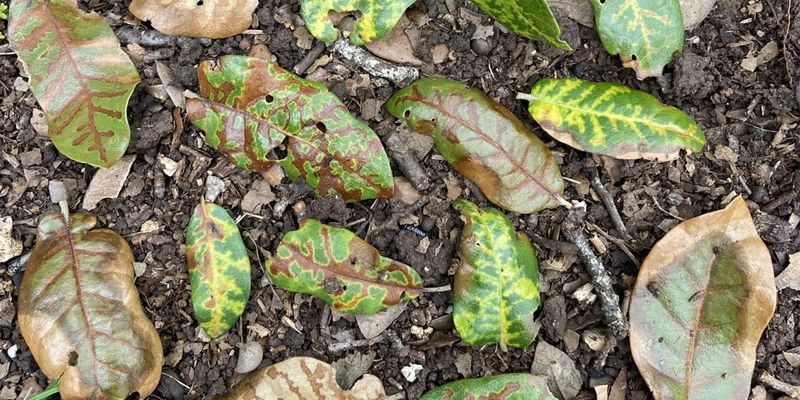
Watch for leaves with yellow or brown veins, a pattern called veinal necrosis. Fast leaf drop in spring or summer, especially across a group of trees, is another warning sign.
A weakened tree loses some of its storm toughness. Brittle limbs and thin canopies make wind damage much more likely.
If you suspect trouble, contact the Texas A&M Forest Service or a certified arborist trained in oak wilt. Testing helps rule out other causes like drought stress or normal spring leaf drop.
Treatments such as trenching to cut root connections and fungicide injections can slow the spread. Results vary, so early action helps most.
Also be careful with firewood. Moving infected red oak wood can spread the fungus to new places, so buy local and seasoned wood when you can.
A Healthy Live Oak Pays You Back for Generations
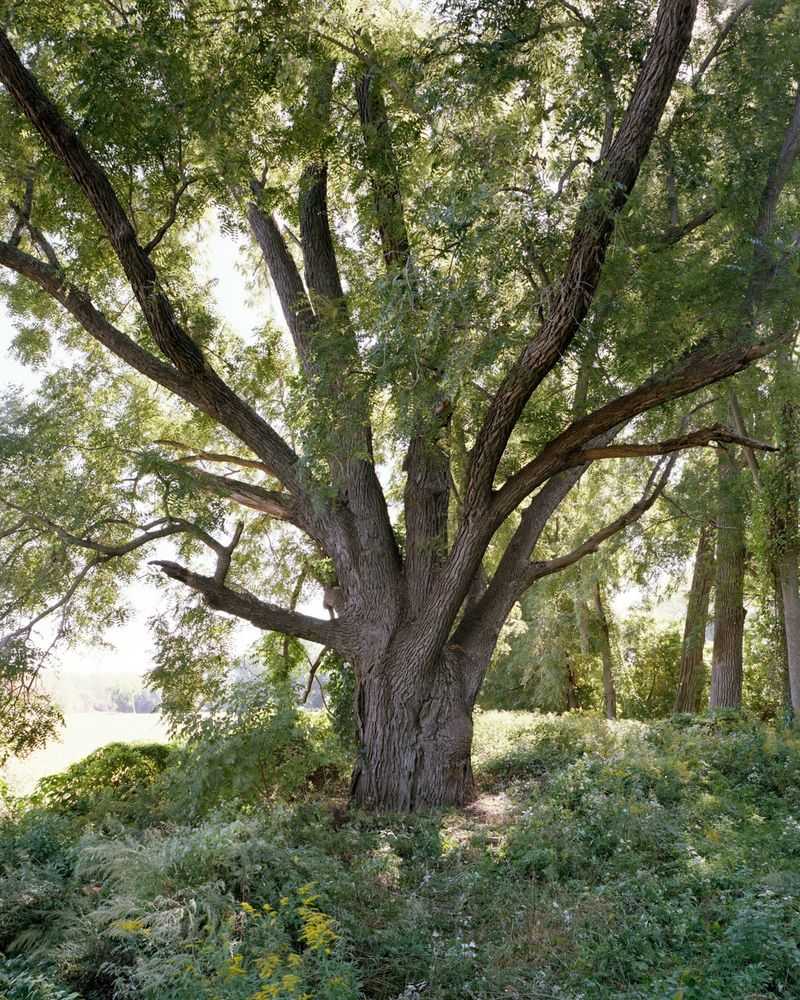
Some Texas live oaks have stood for centuries. The Treaty Oak in Austin is estimated to be around 500 years old.
That staying power is the real takeaway. Storm toughness, shade, and wildlife value all add up when a tree gets a good start and steady care.
The acorns feed deer, squirrels, wild turkeys, and blue jays. The branches host birds, and the leaves support many native caterpillars that songbirds need for their babies.
Shade from a large canopy can cool your yard and help lower summer cooling costs. On a hot July afternoon, that benefit feels pretty personal.
Your next steps are simple. Choose a healthy nursery tree with a straight trunk and no circling roots, and plant it in fall or winter with lots of room.
Water through the first two summers, keep mulch wide and thin, and schedule structural pruning in safe seasons. After big storms, walk around and look for hanging limbs or cracks.