Rattlesnakes Spend Winter Closer to Some New York Neighborhoods Than You’d Think
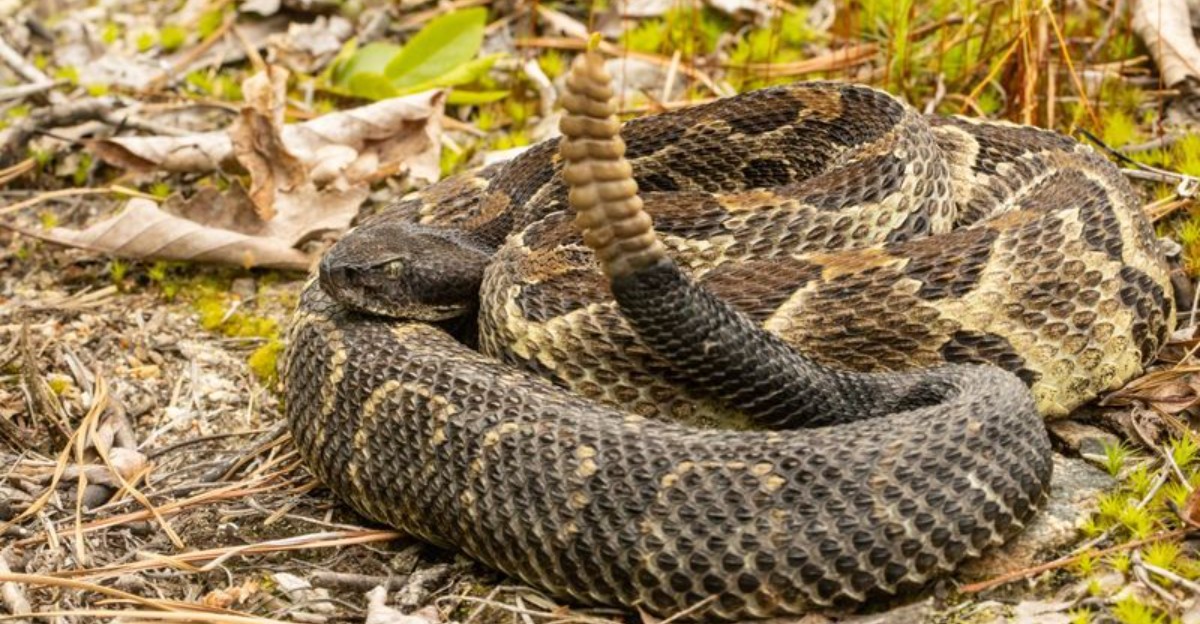
Some snakes return to the exact same rock crack every winter for decades, and a few of those cracks sit within a short walk of backyards, hiking trails, and quiet country roads.
It’s remarkable that a venomous reptile can share a ridge with a neighborhood and go unnoticed for years.
Most people living nearby have no idea what’s tucked under the ledges just uphill, thanks to these snakes’ long, patient lives and their stubborn loyalty to home.
Here in New York, these snakes are rare, protected, and far shyer than their reputation suggests. They want very little to do with us, spending much of the year hidden, and the cold months are the quietest stretch of all.
Where do they actually go when the snow flies? The answer could be closer to your garden gate than you expect.
1. Those Rocky Ledges Above Town Hold a Winter Secret
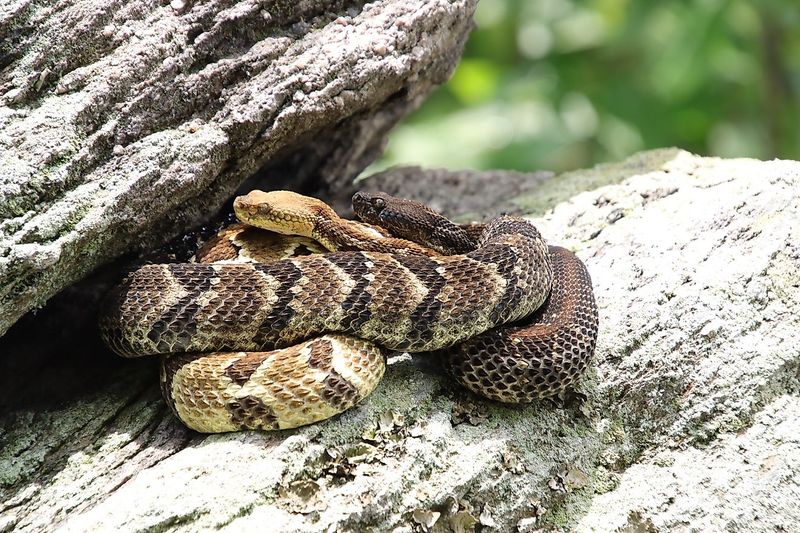
Timber rattlesnakes in New York spend winter in places called dens, or hibernacula. These are deep cracks in rock that reach below the frost line, where temperatures stay steady and cold but not freezing.
Most of these dens sit on rocky, south-facing slopes in hardwood forests. The sun warms those slopes early in spring and late in fall, which helps the snakes get in and out at the right time.
Talus slopes, which are piles of broken rock at the base of cliffs, are another favorite spot.
Here is the part that surprises people. Some of these ridges rise right behind towns in the Hudson Valley, the Catskills, the Shawangunks, and the southern Adirondacks near Lake George.
A den might be a mile or less from homes, roads, or popular trails.
That does not mean the snakes are moving into houses. It simply means people built close to habitat the snakes were using long before any roads existed.
Some den sites are thought to have been used for hundreds or even thousands of years.
So if you live near a wooded ridge with rocky outcrops, you might share the neighborhood with a quiet, ancient winter roost.
2. Timber Rattlesnakes Come Back to the Same Den Year After Year
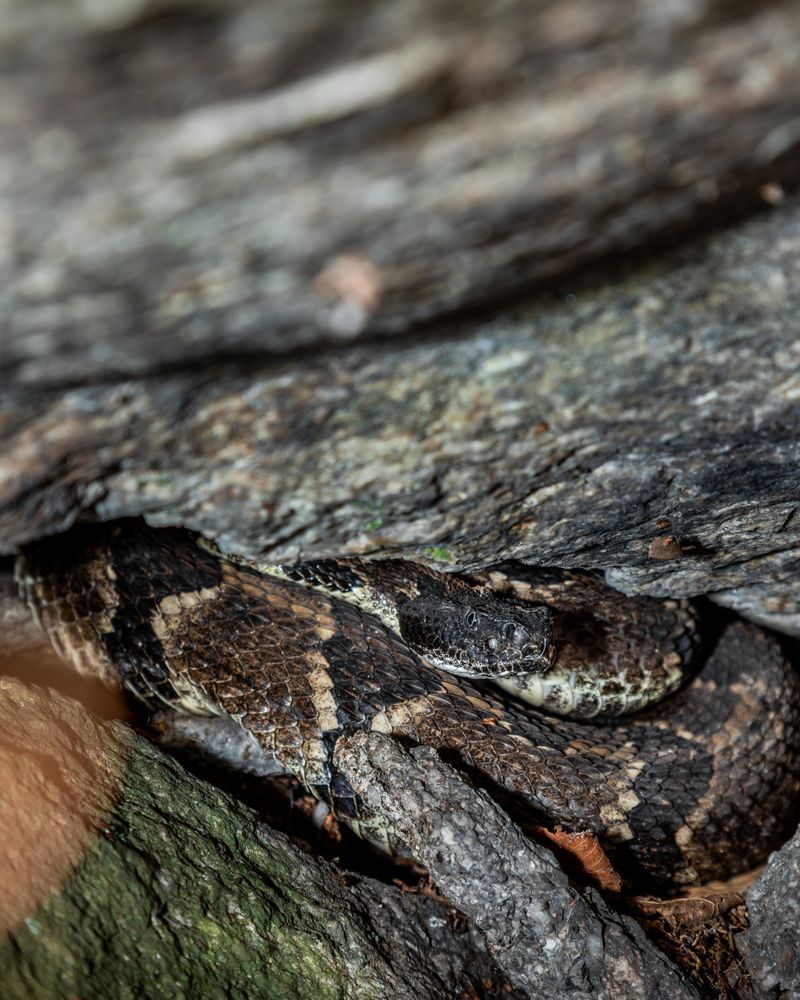
Loyalty might be the most remarkable trait these reptiles have. A timber rattlesnake usually returns to the same den every fall for its whole life, and that life can stretch past 20 or even 30 years in the wild.
Young snakes often find their way to the den by following scent trails left by adults, including their mothers. That learned route helps explain why the same rock pile can host generations of snakes.
Dens are often shared. Dozens of rattlesnakes may gather in one site, and other species like black rat snakes and garter snakes sometimes tuck in nearby.
Packing together helps them hold onto warmth and moisture through the long cold season.
This loyalty has a downside for the snakes. When a den is damaged, blocked, or built over, the snakes do not easily pick a new one.
A whole local group can decline after losing one key site.
That is why biologists with the state Department of Environmental Conservation keep many den locations private. Keeping them quiet protects the snakes from collectors and from people who might harm them.
Respecting that secrecy is one simple way anyone can help.
3. Rattlesnakes in Winter Stay Tucked Deep Below the Frost
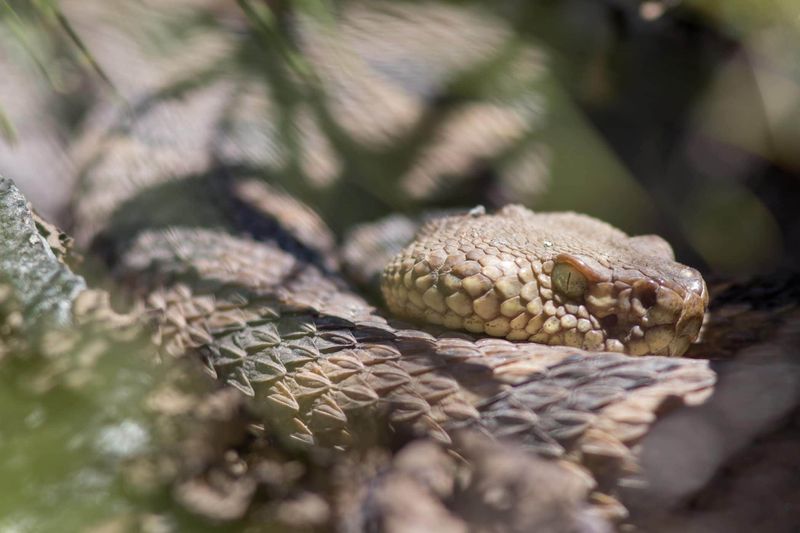
Snow on the ground means the snakes are about as far out of sight as they can get. From roughly October through April, most timber rattlesnakes in New York stay deep inside rock crevices in a slow, low-energy state called brumation.
Brumation is a little different from true hibernation in mammals. The snakes are not fully asleep, but their bodies slow way down.
They do not eat, and they move very little, relying on fat stored during summer.
Because they are cold-blooded, they need the stable underground temperatures to make it through. A cold snap that reaches too deep can be hard on them, so the depth of the crevice matters a lot.
You may read online that a mild winter day can coax rattlesnakes out. A snake might sit near a den entrance on a warm stretch in early spring or late fall.
In the middle of a New York winter, though, sightings are very rare.
For gardeners, that means winter chores like pruning, brush cutting, and hauling firewood near wooded edges carry little snake risk. Your more watchful months come later, from spring through early fall.
4. Spring Basking Near the Den Is When You Might Spot One
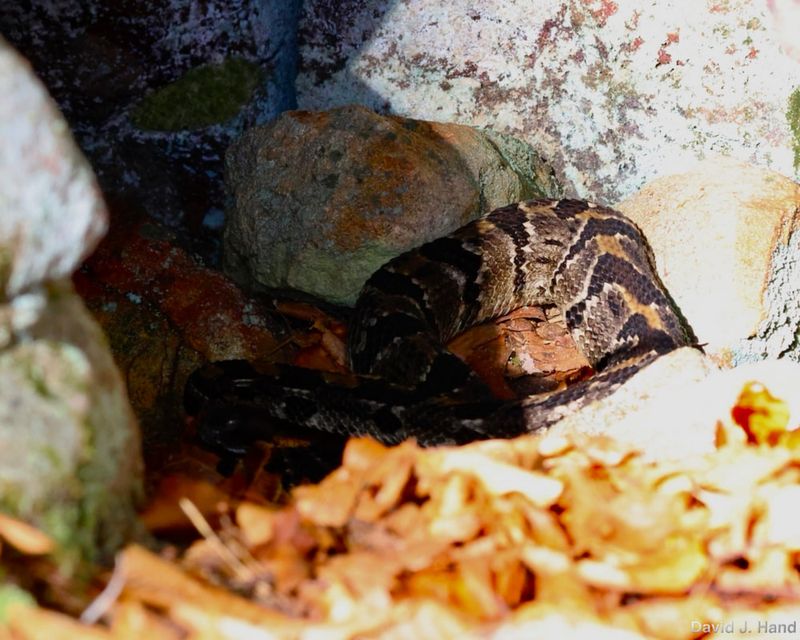
April and May bring a busy little show on those sunny ledges. As the rocks warm, rattlesnakes creep to den entrances and bask, often for days or weeks before they head out for summer.
This is one of the times people living near den areas are most likely to notice them. A hiker might find a snake soaking up sun on a flat rock beside a trail.
A homeowner near the base of a ridge might see one cross a stone wall.
Fall is the other window. In September and October, snakes travel back toward their dens and may bask near the entrance again before slipping underground.
Pregnant females also favor warm, open rocky spots called basking or gestation sites during summer. These are often close to the den and are another reason sunny ledges deserve a careful look.
A few simple habits help a lot during these months. Watch where you put your hands and feet on rocky ground.
Step onto logs and rocks rather than over them, and use a flashlight on warm evenings. Most encounters end peacefully when people simply notice the snake first.
5. Male Rattlesnakes Can Roam Miles From Their Winter Home
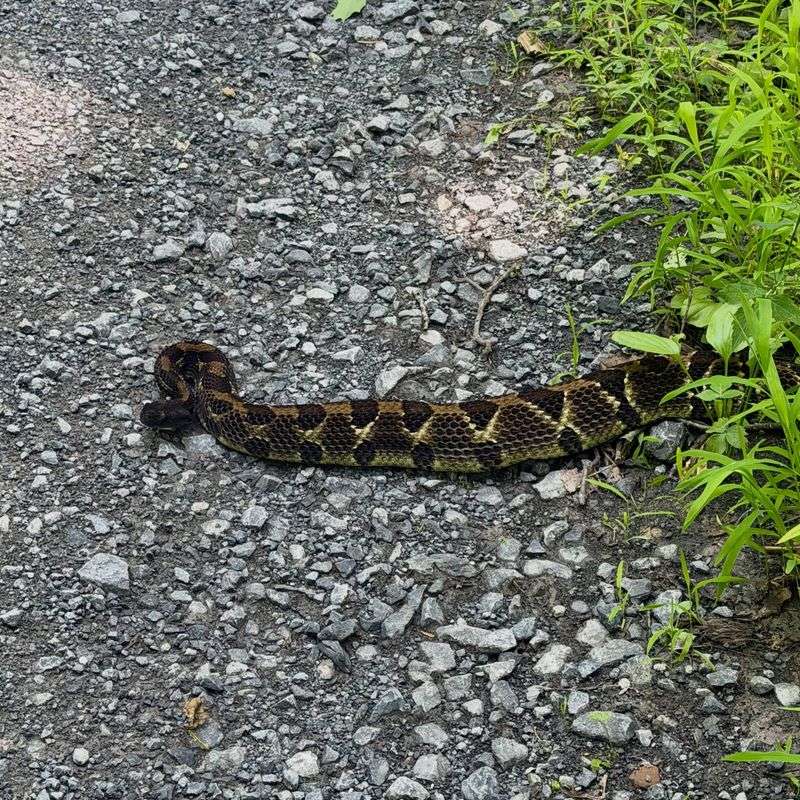
Summer turns these homebodies into travelers. After leaving the den, timber rattlesnakes spread out to hunt, find mates, and in the case of females, carry young.
Male snakes may wander up to about five miles from their den over a season. Females that are not pregnant often stay within a mile or two, and pregnant females usually stick even closer.
Those summer loops tend to follow the same paths each year. Snakes often move along wooded edges, stone walls, and fallen logs, because those are good places to ambush mice, chipmunks, and squirrels.
Here is where neighborhoods come in. When houses or roads are built inside a traditional route, snakes may pass through yards simply because the path was there first.
They are usually just passing by, not settling in.
Roads are a real hazard during these trips. Many snakes are struck by cars in late summer and fall, especially on quiet country roads near ridges.
If you live in a known rattlesnake area, slowing down on back roads during warm months can help. It also gives you a better chance to spot a snake stretched across warm pavement in the evening.
6. Woodpiles and Rock Piles Can Make Your Yard More Snake-Friendly
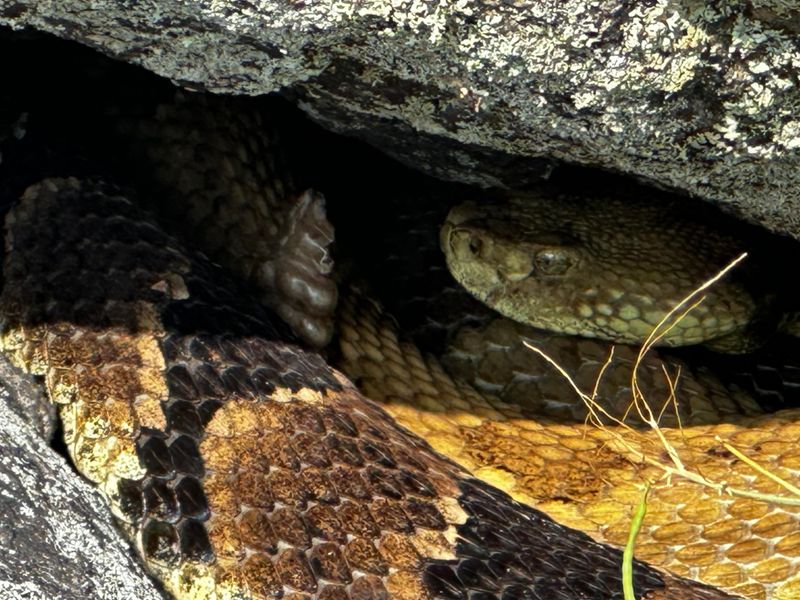
Mice are the real magnet. Snakes follow food, and a yard full of rodents is a yard that may get a passing visitor.
Firewood stacked on the ground, loose rock piles, old boards, and brush heaps give mice shelter. They also offer cool, shady hiding spots for snakes on hot summer days.
In known rattlesnake areas, a few changes can lower the odds of a surprise. Stack firewood on a raised rack, ideally away from the house and away from paths.
Keep grass trimmed near doors, gardens, and play areas.
Seal gaps under sheds, porches, and decks. Store bird seed and pet food in tight bins, since spilled seed draws rodents fast.
A note of honesty helps here. Backyard features are not the same as natural winter dens.
A rock pile in a yard rarely offers the deep, frost-free shelter rattlesnakes need for the cold season.
Still, these spots can attract snakes during warm months, especially near wooded ridges. Tidying them up helps with mice, ticks, and snakes all at once.
Skip snake repellents and mothballs, since they show little proven effect and can harm pets and soil.
7. Spotting a Rattlesnake in the Garden Calls for Calm Steps
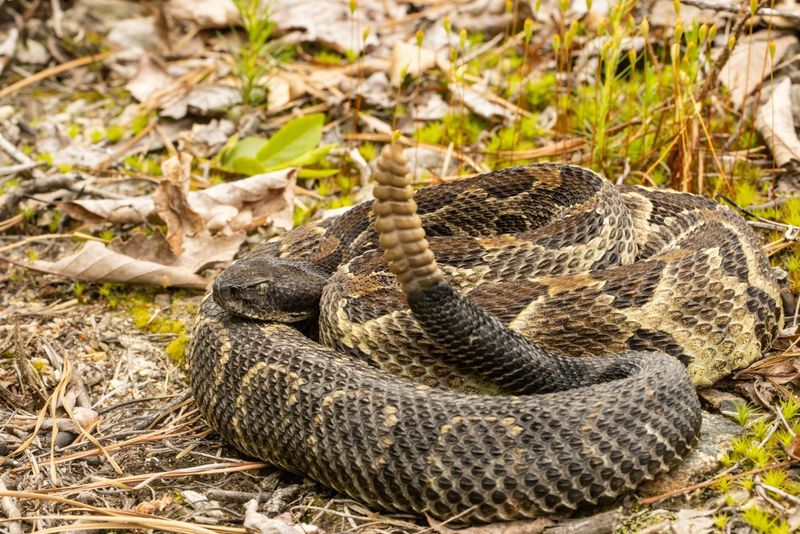
Stay calm and back up. That simple advice covers most rattlesnake meetings, because these snakes would much rather hide than fight.
Timber rattlesnakes are known for being mild-tempered. They often freeze and rely on camouflage, and many will not rattle unless they feel cornered.
Bites mostly happen when people try to handle, move, or harm a snake.
If you see one, give it plenty of room, at least several feet and more if you can. Keep kids and pets away, and let the snake move along on its own time.
It usually will.
Do not try to catch it, poke it, or remove it yourself. If a snake is in a spot where it truly cannot stay, contact your regional DEC office for advice on getting licensed wildlife help.
Dogs are the most curious members of many families. Keeping them leashed on trails in rattlesnake country during warm months is a smart habit.
If a bite does happen, call 911 or head to the nearest hospital right away. Skip ice, cutting, or suction, and keep the person still and calm.
Bites in New York are rare, and prompt medical care works well.
8. New York Protects Its Timber Rattlesnakes for Good Reason
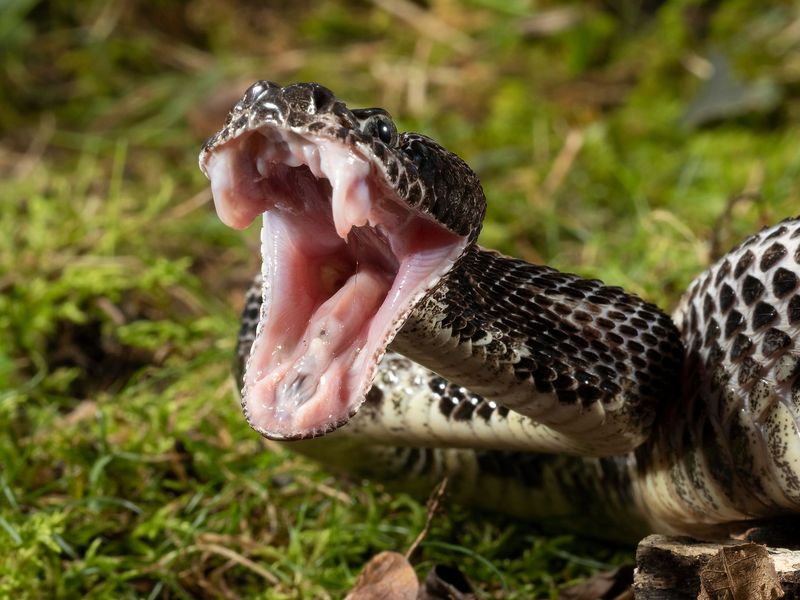
Few people realize how rare these snakes have become. The timber rattlesnake is listed as a threatened species in New York, and harming, collecting, or harassing one is against state law.
Habitat loss from building, road traffic, illegal collecting, and past bounty hunts all played a part in their decline. Today they live mainly in scattered pockets, from the Hudson Valley and Catskills to the Lake George area and parts of western New York.
These snakes do a quiet but useful job. By eating mice and chipmunks, they help keep rodent numbers in check.
That can mean fewer animals carrying ticks that spread Lyme disease.
Gardeners can help in small ways. Keep wild edges and stone walls where they are not near busy spots, drive slowly on country roads, and avoid sharing exact den locations online.
If you spot one in an unusual place, you can report the sighting to the DEC. Those reports help biologists track where snakes still live.
Living near rattlesnake country is a rare kind of privilege. With a little care and a lot of respect, people and these old ridge dwellers can keep sharing the same hills.