Why Oak Trees Keep Their Brown Leaves All Winter In New York
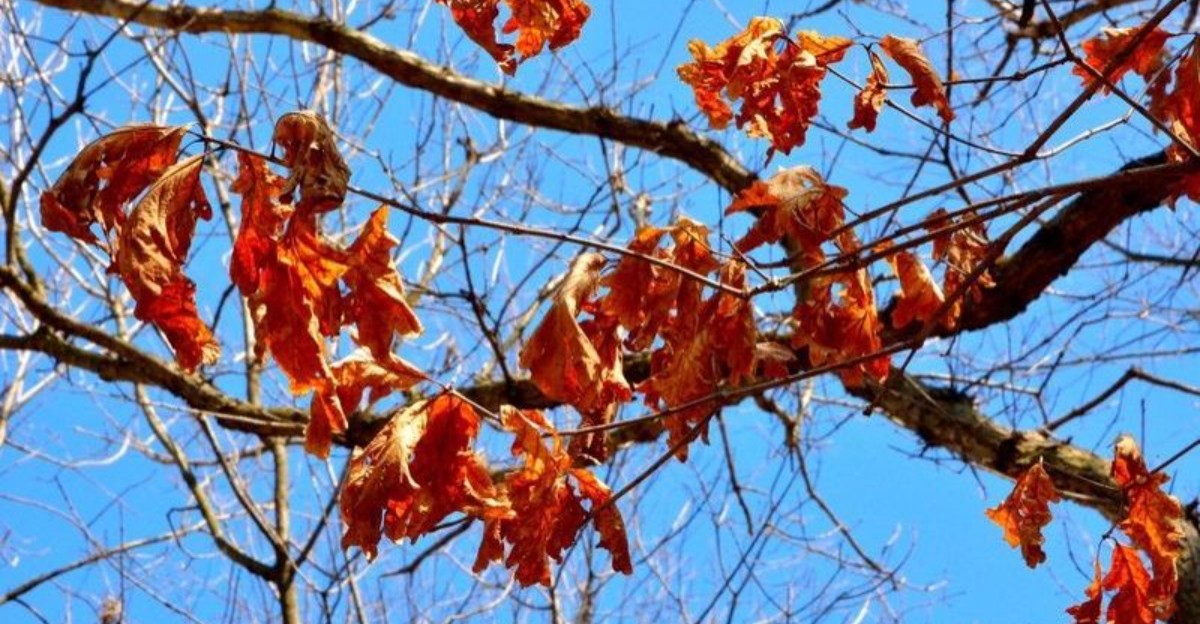
Some trees in your yard hold onto crisp brown leaves until April, and scientists still debate exactly why. Those papery leaves rattle in January winds when nearly every maple and birch nearby stands bare and gray.
Across New York, the habit even carries a fancy botanical name that few people outside forestry ever hear. Researchers have spent decades testing ideas about hungry deer and drifting snow around young saplings in winter.
I used to think those rustling leaves meant my backyard tree was sick or badly stressed. After I dug into university research, I learned the brown leaves are mostly a normal and healthy pattern.
You might notice the same stubborn trees on your next snowy walk through a New York park or woodlot. So which clever reasons keep those brown leaves hanging on long after everything else has let go?
1. Delayed Abscission Keeps Oak Leaves Attached All Winter
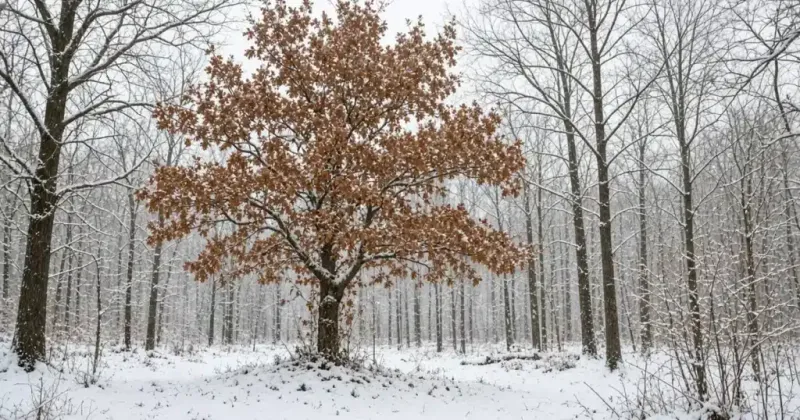
Every autumn, most broadleaf trees grow a thin layer of special cells where each leaf stem meets the twig. That layer acts like a perforated line on a paper coupon, letting the leaf snap off cleanly.
Botanists call this zone the abscission layer, and it usually finishes forming before the first hard freeze. On many oaks, the layer stays unfinished through winter, so the brown leaves keep a stubborn grip.
The leaves lose their green chlorophyll and stop making food, yet the stem connection stays surprisingly strong. I once tugged a leaf off a red oak in February, and it tore instead of popping free.
That simple tug test shows the difference between a held leaf and a loose one ready to drop. In spring, swelling new buds push against the old stems and finally finish the job winter started.
Scientists call this leaf-holding habit marcescence, which comes from a Latin word meaning to wither or shrivel. You will also spot it on American beech and hornbeam, two other common trees in eastern woods.
For gardeners, the takeaway is reassuring because a brown oak in winter is usually a healthy oak. There is no need to strip those leaves by hand or reach for pruning shears in a panic.
Save any pruning for late winter dormancy, which also lines up with oak wilt guidance for New York. Just let the tree handle its own schedule, and enjoy the soft rustle while you wait for spring.
2. Brown Oak Leaves May Discourage Hungry White-Tailed Deer
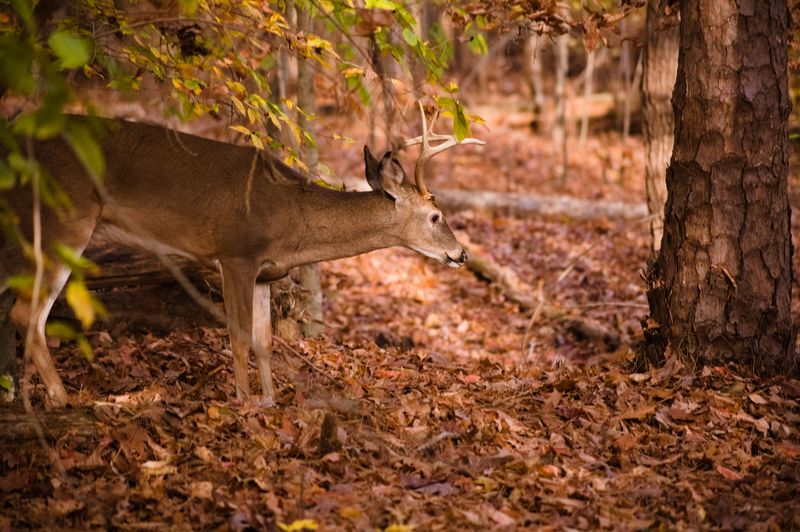
Hungry deer in winter will happily nibble twig tips and buds, but dry oak leaves make a poor snack. Those crunchy brown leaves are low in nutrients and tough to chew, so browsing animals often move along.
A popular hypothesis suggests the leaves shield tender buds and twigs by making the whole branch less tempting. Researchers proposed this idea partly because leaf holding shows up mostly on low branches within easy deer reach.
I find that pattern fascinating, since the upper canopy of big oaks usually drops its leaves much sooner. Leaves stay where the mouths are, which feels almost too tidy to be a simple coincidence.
Still, the evidence is mixed, and scientists treat this as one possible explanation rather than settled fact. Some studies found deer browsed marcescent saplings anyway, especially during long, snowy winters with little other food.
White-tailed deer are abundant across much of New York, so young oaks in yards face real pressure. Even if the leaves help a bit, you should still protect new saplings with sturdy fencing or tree tubes.
A tube about five feet tall keeps browsing mouths away from the leader during the first several years. Check the tubes each fall for snug ties, and loosen anything that might rub or squeeze the bark.
Once a young oak grows above deer height, it can usually handle occasional nibbling on lower limbs. Until then, give it a little help and let those crunchy leaves do whatever extra work they can.
3. Dormant Oak Buds Hide Behind Rattling Brown Leaves
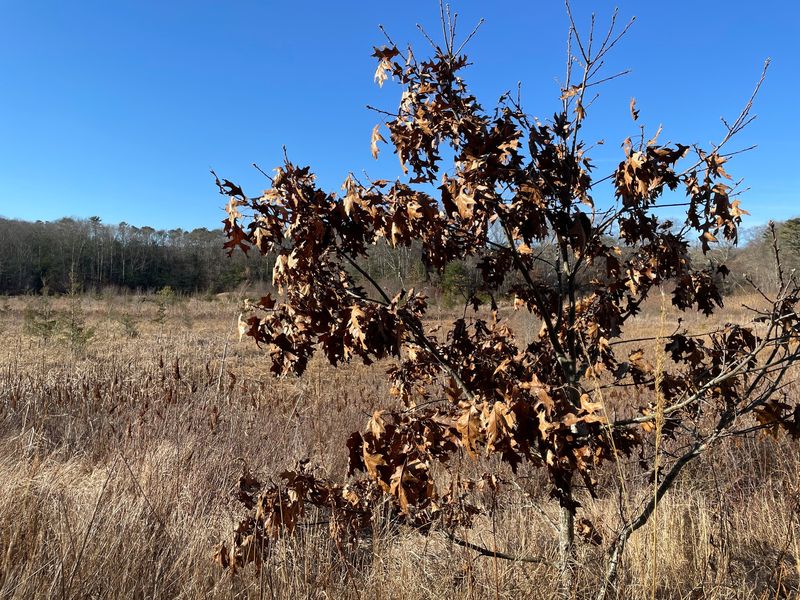
Look closely at a winter oak twig, and you will find tight clusters of pointed buds at the tip. Those small buds hold next spring’s leaves and flowers, packed away like folded umbrellas inside protective scales.
Some foresters suggest the clinging leaves add a bit of shelter from harsh drying winds around those buds. Winter wind can pull moisture from twigs, and frozen ground makes it hard for roots to replace water.
Honestly, I treat this explanation with some caution, because strong research on bud protection is still limited. Oak buds already have overlapping scales, which do most of the heavy lifting against cold and dry air.
Even so, an extra layer of leaves near the twig tips could plausibly soften the worst gusts. Trees growing on open hillsides or exposed lawns face the strongest winds, so any shelter might matter there.
You can help your own oak handle dry winter weather by watering deeply during a dry autumn. A good soak before the ground freezes gives roots stored moisture to draw on during cold months.
Spread two to three inches of shredded bark mulch in a wide ring, keeping it away from the trunk. Mulch holds soil moisture and protects shallow surface roots from lawn mower bumps and foot traffic.
Avoid piling mulch against the bark like a volcano, since trapped moisture invites rot and gnawing rodents. A flat, even layer looks tidy and gives your oak a calm, comfortable start next spring.
4. Late-Falling Oak Leaves Feed The Soil In Spring
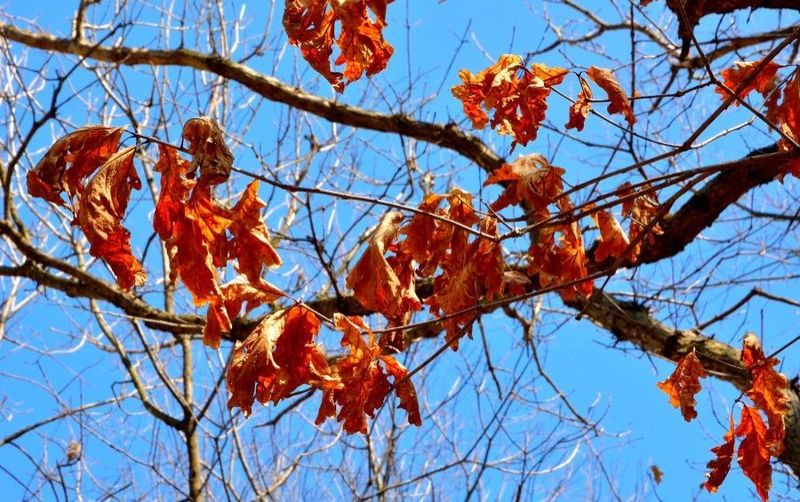
Timing is everything in the garden, and some oaks may have mastered the art of a delayed delivery. By dropping leaves in spring, the tree could add fresh organic matter right as new roots wake up.
Leaves that fall in autumn spend months getting rained on, and some nutrients wash away before spring arrives. Leaves that fall later decompose closer to the growing season, possibly sending nutrients when roots need them most.
Scientists have floated this idea especially for oaks growing on dry, sandy soils with fewer available nutrients. The Long Island pine barrens are a good example, where scrub oaks grow in ground that drains quickly.
I love that this theory turns raking season into a conversation about patience and smart natural recycling. Researchers still debate how much difference it makes, so treat it as an intriguing possibility, not proof.
You can borrow this strategy by leaving fallen oak leaves under shrubs or shredding them into mulch. Oak leaves break down slowly, which makes them a long-lasting cover for perennial beds and vegetable paths.
Running a mower over a pile cuts the leaves into small bits that rot faster and stay put. Contrary to an old myth, oak leaves do not make most garden soil noticeably more acidic over time.
Extension specialists report that finished oak leaf compost ends up close to neutral, much like other leaf compost. So go ahead and pile them up, because your soil will thank you when spring planting time arrives.
5. Clinging Oak Leaves Catch Drifting Winter Snow
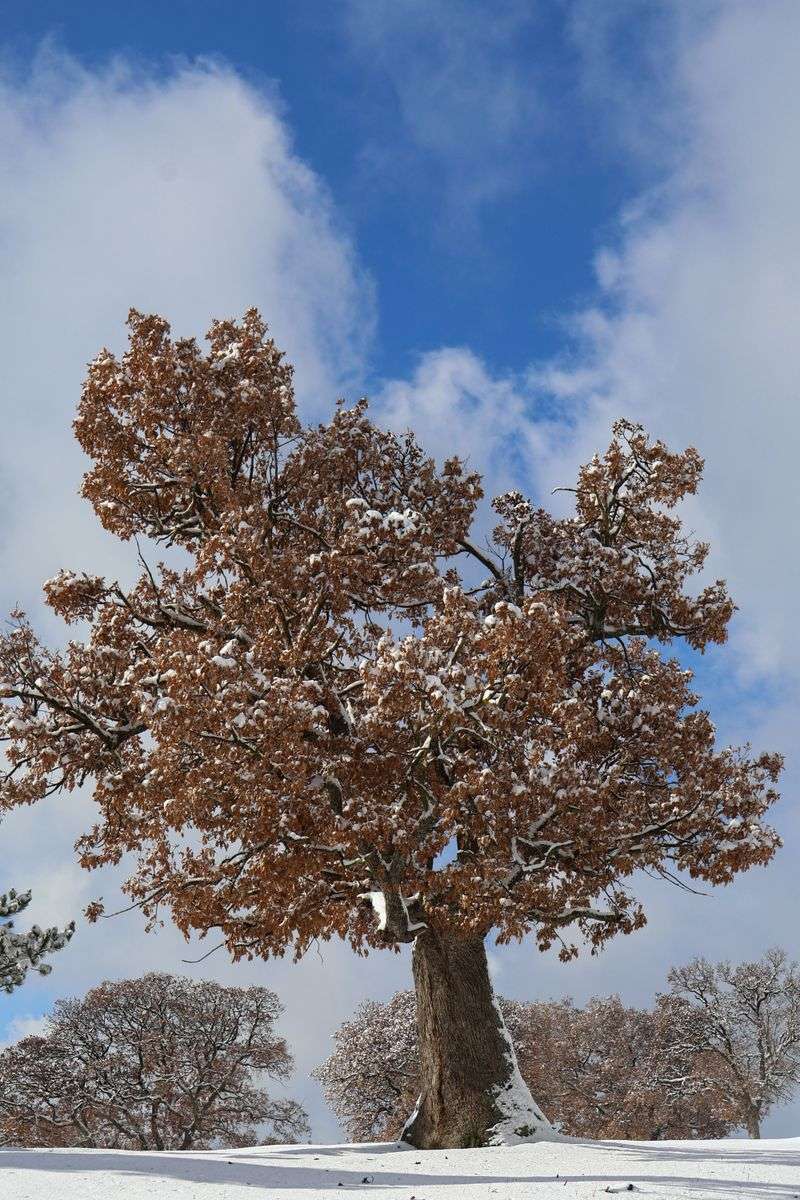
Snow sliding across an open field tends to pile up wherever something slows the rushing wind down. A small oak wearing a coat of brown leaves works a bit like a living snow fence.
Researchers have suggested that marcescent saplings trap extra blowing snow around their bases during windy winter storms. When that drift melts in spring, the soil beneath the tree could receive a welcome boost of moisture.
I have noticed small snowdrifts tucked behind leafy young oaks along the edge of my own backyard. That casual observation fits the theory nicely, though one gardener’s backyard is hardly a careful scientific study.
Snow also insulates the ground, protecting shallow roots from wild swings between freezing nights and mild afternoons. Upstate New York often sees deep lake effect snow, while the city and coast usually get far less.
Your own yard can collect snow the same way, especially around new plantings that need extra spring moisture. Pile clean shoveled snow over perennial beds and around young trees, but avoid snow full of road salt.
Salt from sidewalks and driveways can burn roots and leave brown edges on evergreen needles by spring. Calcium magnesium acetate is a gentler deicer option near beds, although it usually costs a little more.
Each snowy shovelful becomes a slow-release drink once the weather warms and spring melting begins in earnest. Your oak handles the job naturally, and you can copy its trick with nothing more than a shovel.
6. Oak Genetics Decide Which Trees Hold Their Leaves
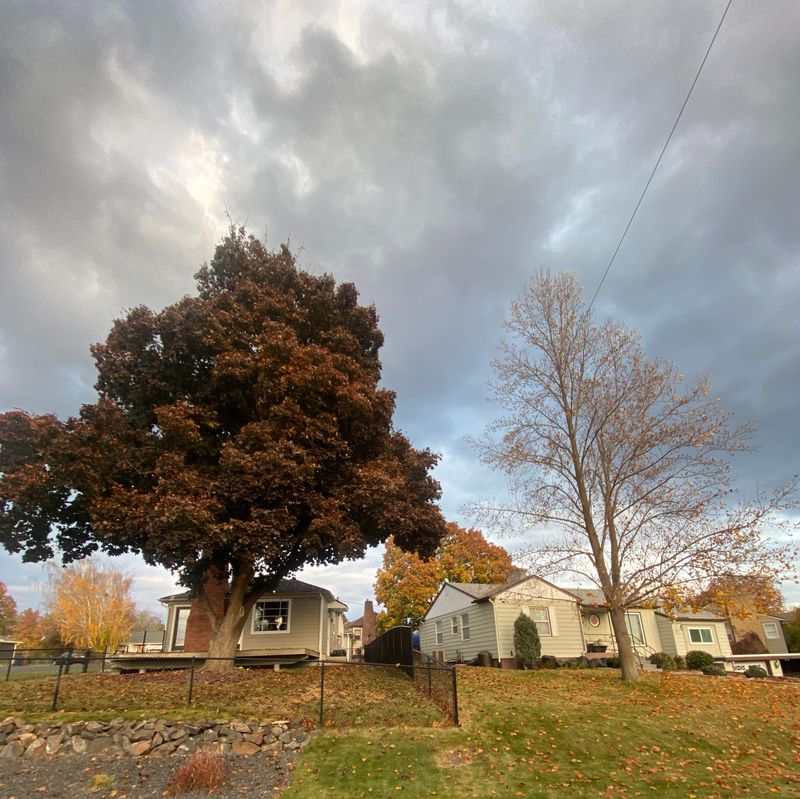
Two oaks of the same age can stand side by side, with one bare and the other rustling. That difference often comes down to species and family genes rather than anything you did in the yard.
Leaf holding is an inherited trait, and some oak species show it far more strongly than others. Pin oak and white oak commonly keep many brown leaves through winter, especially on younger lower branches.
Even within one species, individual trees vary, much like siblings who inherit different hair colors from parents. I find that comforting, because it means a leafy neighbor and a bare one can both be healthy.
Botanists also note that many oaks likely descend from ancestors that kept evergreen leaves in warmer climates. Some scientists think marcescence could be a leftover from that past, a habit that has not fully faded.
That idea remains a hypothesis, but it adds a fun twist to every winter walk in the woods. If you want a tree that drops leaves cleanly, choosing the right species matters more than any trick.
Native oaks are excellent wildlife trees, supporting hundreds of caterpillar species that feed nesting songbirds each spring. Ask a local nursery how strongly a given oak holds its leaves before you commit to planting one.
Plant new oaks in fall or early spring, once the soil is workable and not frozen solid. Whichever species you pick, those brown winter leaves come bundled with a long family story worth enjoying.
7. Young Oak Saplings Hold Their Leaves The Longest
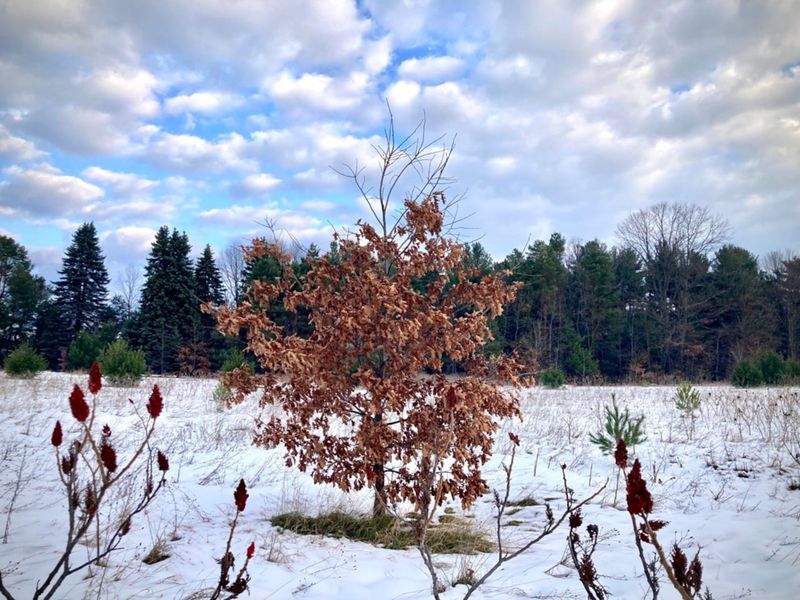
Kids and young trees share one funny trait, since both seem to hold onto things longer than adults. Marcescence shows up most often on young oaks and on the lowest branches of older, taller trees.
As an oak matures, its upper crown usually sheds leaves in fall like most other deciduous trees. Climb your eyes up a big oak in winter, and you will often see brown leaves only near the bottom.
Scientists connect this pattern to the deer and snow theories, since small trees benefit most from extra protection. A sapling’s buds sit within easy browsing reach, while a mature crown towers far above hungry mouths.
I enjoy spotting this layered look on old oaks along country roads during a snowy afternoon drive. The bottom looks like autumn lingered, while the top already resembles a bare winter sketch against gray skies.
For gardeners, juvenile leaf holding is a handy clue when identifying trees in winter woods and hedgerows. Brown oak leaves have lobes, while beech leaves look pale and papery with neat toothed edges.
If you are raising a young oak, expect plenty of winter leaves during its early years and beyond. Resist the urge to strip them, since pulling can tear bark around next year’s tender buds.
Patience pays off, and your tree will gradually shift toward a cleaner fall drop as it grows taller. Those lingering leaves are simply part of a young oak’s childhood, and they rarely signal any trouble.
8. A Sudden Early Freeze Can Lock Leaves On Oaks
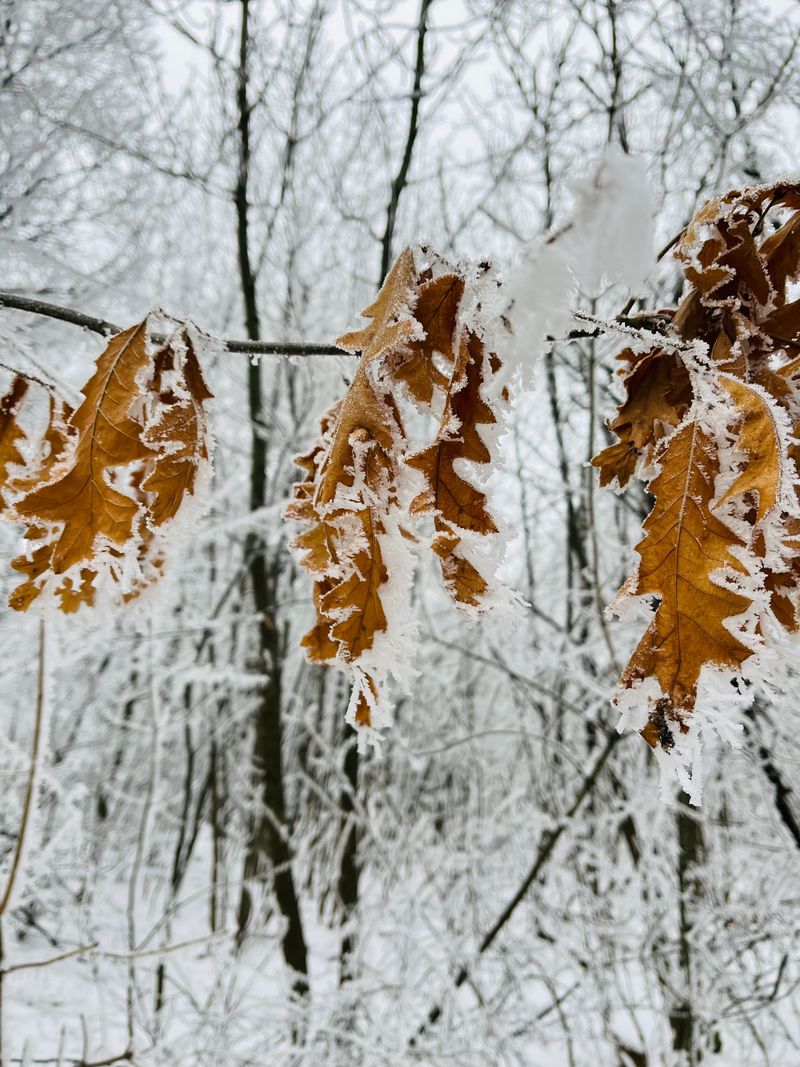
One sharp cold snap in October can leave even normally tidy trees wearing brown leaves well into winter. When a hard freeze arrives early, leaf cells may stop working before the abscission layer finishes forming.
Tree experts describe this as leaves getting frozen in place, with the clean separation process interrupted midway. Some arborists report seeing more leaf holding after autumns that turned cold quickly, though measured data is limited.
This explanation differs from the others because it involves weather rather than an inherited survival strategy. It can even affect other deciduous trees, which normally drop leaves cleanly when fall cools down gradually.
Gardeners in colder parts of New York may notice this more often, since frost can arrive in September. Coastal areas and the city usually enjoy a longer, milder fall, which gives trees more time to prepare.
Weather-related leaf holding is usually harmless, and those stuck leaves fall once spring growth begins pushing outward. You might see a messier spring cleanup, so keep a rake handy for April and May.
Early frost can still stress young or newly planted trees, especially when soil is dry going into winter. Deep autumn watering and a layer of mulch help roots recover from sudden temperature drops more easily.
If a tree holds leaves and also shows cracked bark or oozing, call a certified arborist for advice. Otherwise, enjoy the rustling show, because those brown leaves are one more fascinating chapter in your oak’s story.