How to Water a Christmas Cactus in Florida Without Causing Root Rot
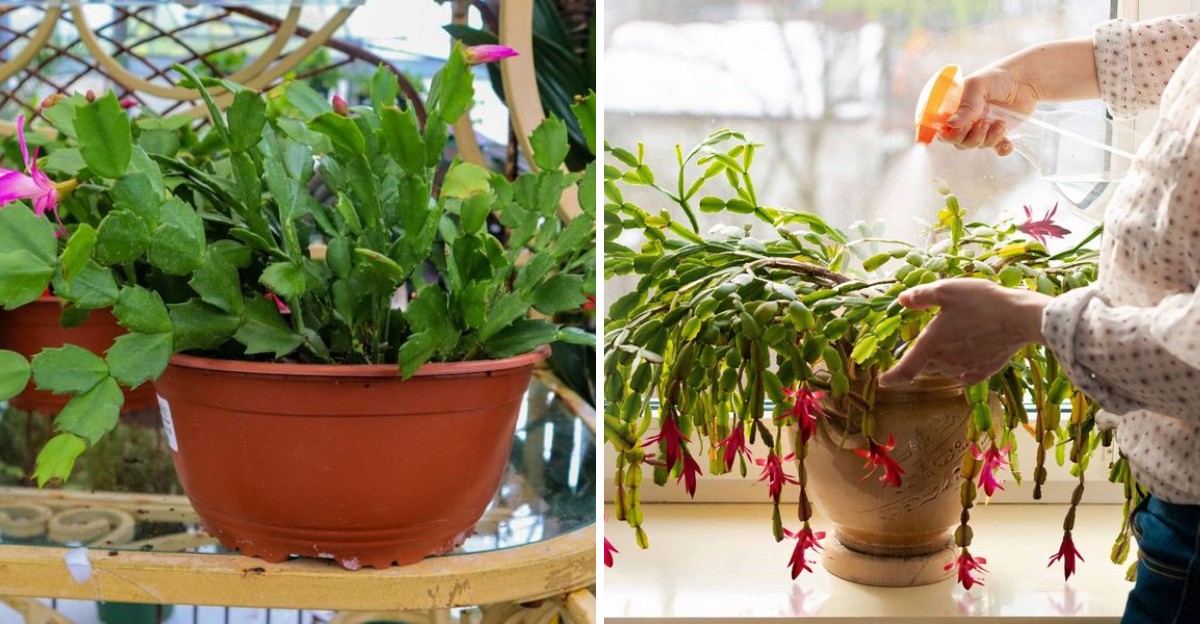
The rainforests of Brazil hide a plant that grows on tree branches instead of in the ground. Its roots hang onto bark and moss, and they dry out quickly between tropical showers.
That little detail changes everything about how you should care for it at home. I find it funny that a plant with such a desert-sounding name has never lived in a desert.
I learned this the hard way after loving one a little too much with my watering can.
Florida adds its own twist to the story. Our sticky air, summer downpours, and soggy afternoons can turn a healthy pot into a swamp faster than you expect.
Indoor air conditioning makes things even trickier.
Keeping a rainforest plant happy in a state that already feels like a rainforest half the year sounds like a puzzle. The secret is simpler than you might guess, and your plant will thank you with a burst of bright holiday color.
1. Those Christmas Cactus Roots Grew Up Hugging Trees
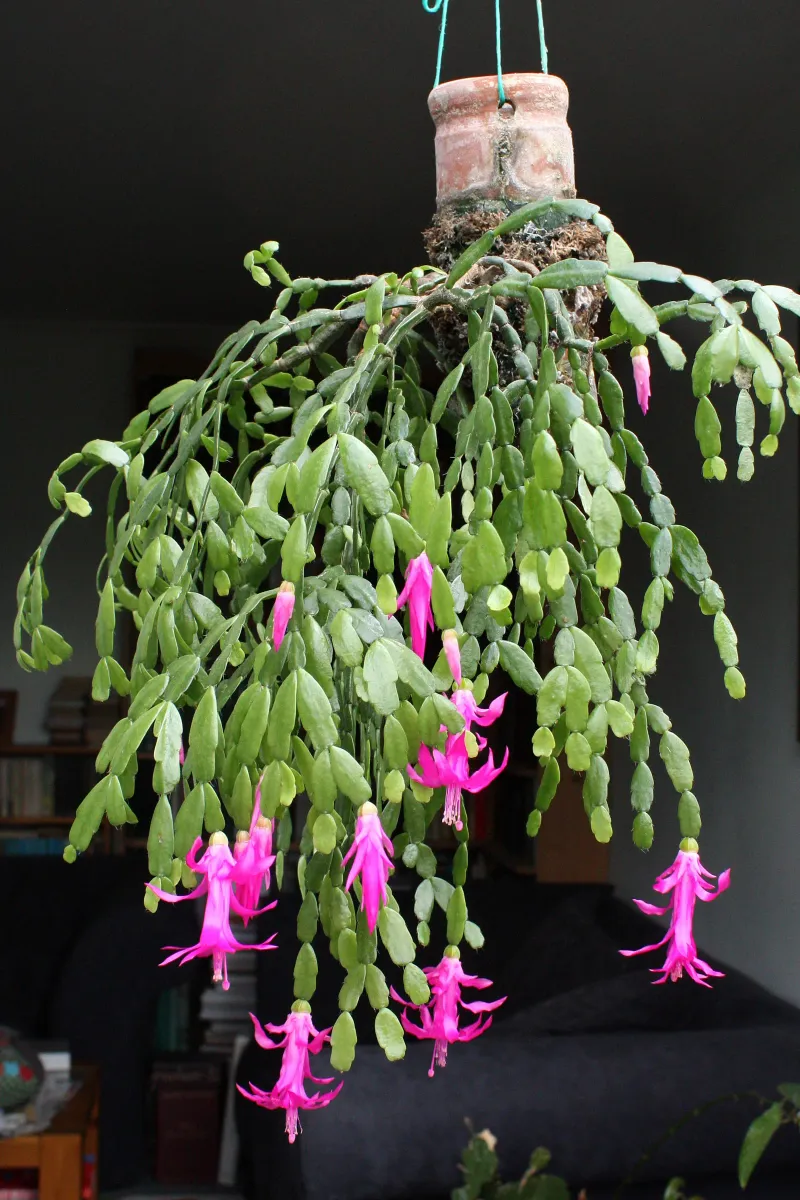
Out in the coastal mountains of southeastern Brazil, wild Christmas cactus plants perch on tree limbs and mossy rocks. They are epiphytes, just like many orchids and bromeliads.
Their roots wrap around bark and leaf litter instead of digging into deep dirt.
That lifestyle shapes how the roots work. Rain splashes over them, drains away fast, and leaves them breathing fresh, moist air.
The roots get wet often, but they rarely sit in standing water for long.
Inside a pot, the story can flip. Heavy soil holds water around the roots like a wet sponge, and air can no longer reach them.
Without oxygen, roots weaken, and fungi such as Pythium and Phytophthora move in to cause rot.
I like to think of these roots as tiny snorkelers. They love being near moisture, but they need to come up for air.
Once you understand that, watering stops feeling like a guessing game.
Fun fact for your next garden chat: the holiday plant sold in most stores is often a Thanksgiving cactus, with pointy edges on its stem segments. True Christmas cacti have rounded, scalloped edges.
Both share the same tree-dwelling roots and the same watering needs.
2. Push Your Finger Into the Christmas Cactus Soil Before Watering
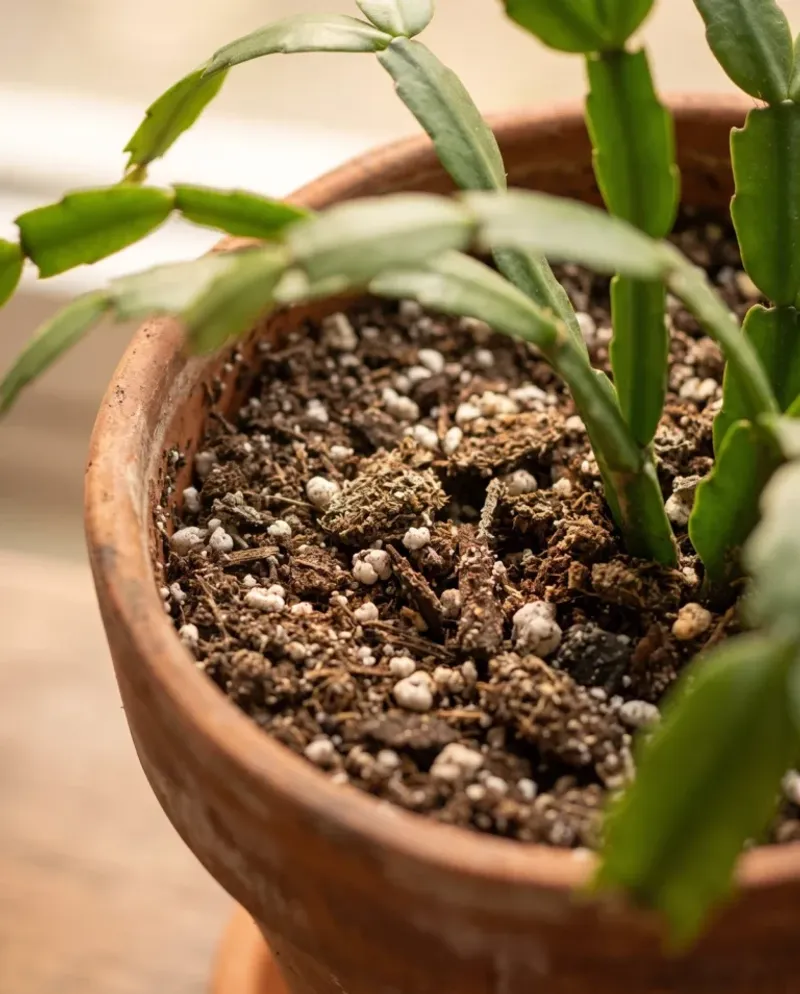
A calendar makes a poor watering partner for this plant. Your fingertip works much better.
Push it about one inch into the potting mix and pay attention to what you feel.
Dry soil at that depth means it is time to water. Damp or cool soil means you should wait a few more days.
For many Florida homes, that works out to roughly once every one to two weeks, though weather and pot size change things a lot.
When you do water, go all in. Pour slowly until water flows out of the drainage holes at the bottom.
A deep drink reaches every root and rinses out extra fertilizer salts.
Then comes the step people skip most often. Empty the saucer within about 15 minutes so the pot is not sitting in a puddle.
Standing water creeps back up into the soil and undoes all your hard work.
During budding and blooming in fall and early winter, keep the soil lightly moist so buds stay put. In late winter after flowering, ease up and let it dry a bit more.
You will soon get a feel for the rhythm, and so will your plant.
3. A Chunky, Fast-Draining Potting Mix Keeps Christmas Cactus Roots Breathing
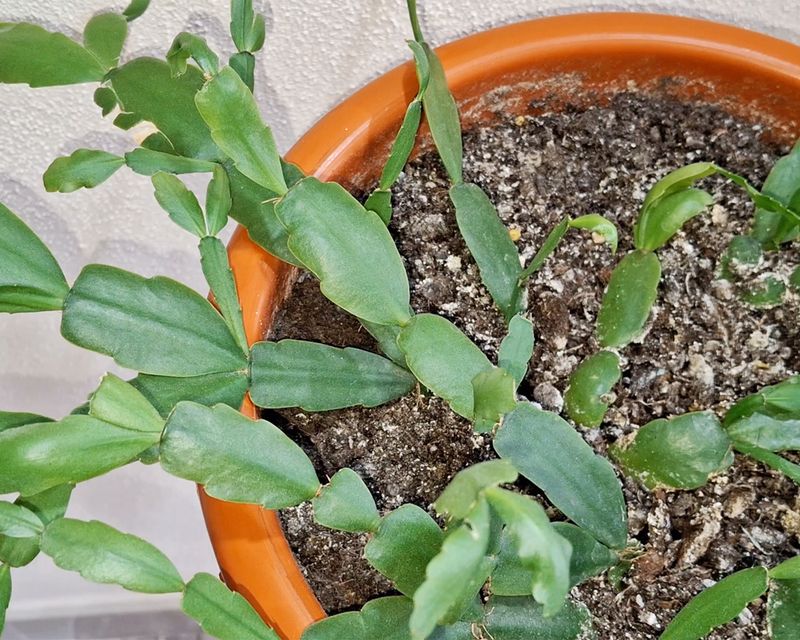
Bagged garden soil is one of the sneakiest troublemakers for a Christmas cactus. It packs down tight and stays soggy for days.
Your plant needs something lighter and airier.
A simple homemade blend works wonders. Mix about two parts regular potting soil with one part perlite and one part orchid bark.
Some gardeners use a store-bought cactus mix with extra bark added. The goal is soil that drains in seconds yet still holds a little moisture.
Pot choice matters just as much. Pick a container with at least one drainage hole, and skip decorative pots that trap water inside.
Unglazed terracotta is a favorite in humid areas because it wicks moisture through its walls.
Keep the pot snug, too. These plants bloom best when slightly root bound, and a huge pot holds extra wet soil the roots cannot use.
Move up only one size every few years, usually in spring after flowering.
Slightly acidic soil suits them nicely, around a pH of 5.5 to 6.5. Most peat-based mixes land in that range naturally.
Get the soil right, and half the battle against rot is already won.
4. Summer Downpours Can Flood an Outdoor Christmas Cactus Pot Overnight
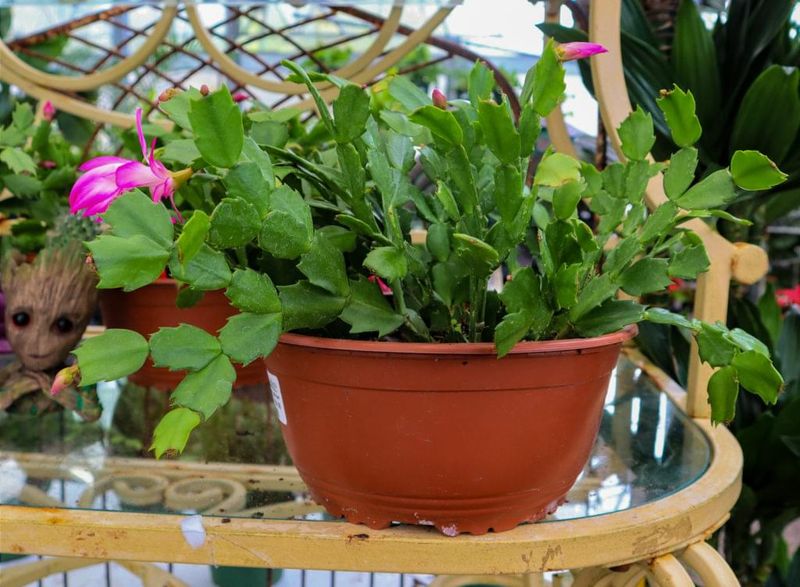
Anyone who has lived through a Florida summer knows the afternoon storm routine. Skies darken, rain pours for an hour, and the sun pops back out.
A potted Christmas cactus left in the open can get soaked several days in a row.
Our rainy season usually runs from late May through October. During those months, outdoor pots may never get a chance to dry.
That steady wetness is exactly what root rot fungi love.
You can outsmart the weather with a few easy moves. Keep your plant under a covered porch, lanai, or patio umbrella where it gets bright shade but stays out of direct rain.
Raise the pot on pot feet or a couple of bricks so water escapes freely.
Skip watering entirely after a good soaking. Check the soil with your finger once things dry out, and you may find you only need to water every couple of weeks in summer.
Bright shade also protects those flat green stems. Harsh midday sun can turn them reddish or bleached, especially in Central and South Florida.
Morning light with afternoon shade keeps them looking fresh and plump.
5. Limp Christmas Cactus Stems in Wet Soil Send a Warning
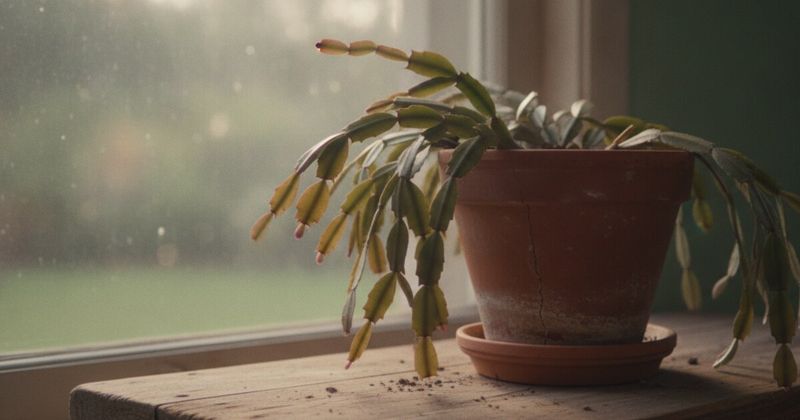
Droopy stems can fool even experienced gardeners. A thirsty plant and a rotting plant often look alike at first.
The soil tells you which one you are dealing with.
Limp stems sitting in dry soil usually mean the plant just needs a drink. Limp stems in soil that feels wet or heavy point toward trouble below.
Rotting roots cannot carry water up, so the plant wilts even while surrounded by moisture.
Watch for other clues as well. Stem segments may turn yellow, reddish, or translucent.
The base near the soil line can grow soft, dark, or mushy. Many plants also start dropping segments or buds for no clear reason.
Your nose can help too. A sour or musty smell drifting up from the pot is a strong sign of rot.
For a clear answer, slide the plant out of its pot and look. Healthy roots are firm and white to light tan.
Rotting roots look brown or black and feel slimy, and they often slip apart when touched. Catching this early gives you a much better chance of turning things around.
6. Trimming Mushy Roots Can Give a Struggling Christmas Cactus a Fresh Start
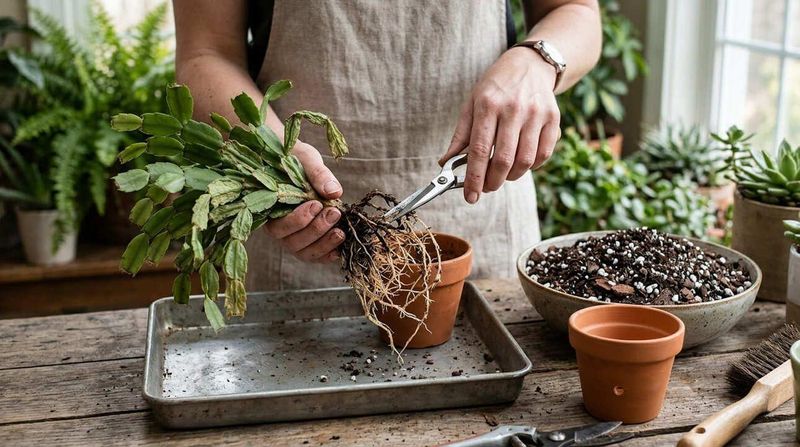
Finding rotted roots feels discouraging, but plenty of plants bounce back. Quick action makes the biggest difference.
Grab clean scissors, fresh potting mix, and a clean pot.
Start by easing the plant out and gently shaking or rinsing off the old soil. Snip away every soft, brown, or slimy root.
Wipe your blades with a household disinfectant between cuts to avoid spreading fungus.
Next, let the plant rest in a shady, dry spot for several hours or overnight. That short break lets the cut ends dry and seal.
Then repot into fresh, fast-draining mix in a pot just big enough for the remaining roots.
Hold off on watering for a few days. Moving too fast with the watering can is how many rescues fail.
After that, water lightly and let the soil dry before the next drink.
A smart backup plan is to root a few healthy cuttings. Twist off pieces with two or three segments, let them dry for a day, and tuck them into damp mix.
They root easily in our warm weather, so you will have spares no matter what happens.
7. Bright Shade and Fresh Air Keep Your Christmas Cactus Blooming for Decades
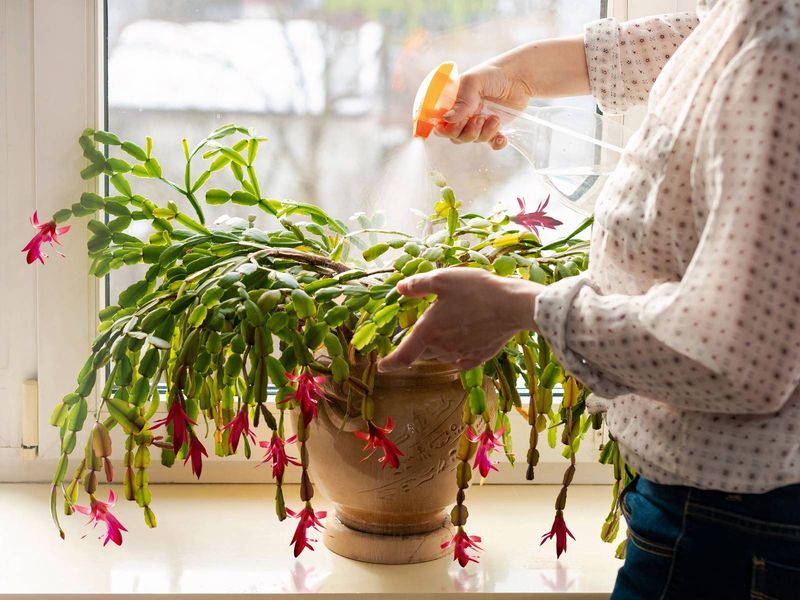
Some Christmas cacti get passed down through families for 50 years or more. Steady, simple care is the secret behind those heirloom plants.
Watering wisely is a huge part of it, but light and airflow help too.
Indoors, an east-facing window or a spot with filtered light works beautifully. Good air movement from a ceiling fan helps soil dry evenly and discourages fungus.
Air conditioning dries indoor air, so a pebble tray nearby adds humidity without wetting the roots.
Bloom time depends on cool nights and long darkness in fall. Plants need about 12 to 14 hours of darkness each night, plus temperatures near 50 to 60 degrees, for several weeks.
North Florida gardeners often get this naturally outdoors, while South Florida folks may need a dark closet routine.
Feed with a balanced houseplant fertilizer every few weeks from spring through summer, then stop in early fall. Cut back watering a little after blooms fade so the plant can rest.
Treat it like the tree-loving rainforest plant it is. Give it airy soil, a quick drink when dry, and a pot that drains fast.
Your reward is a cheerful splash of color every holiday season.