The Arctic Hawk That Hovers Over Ohio Fields Every Winter
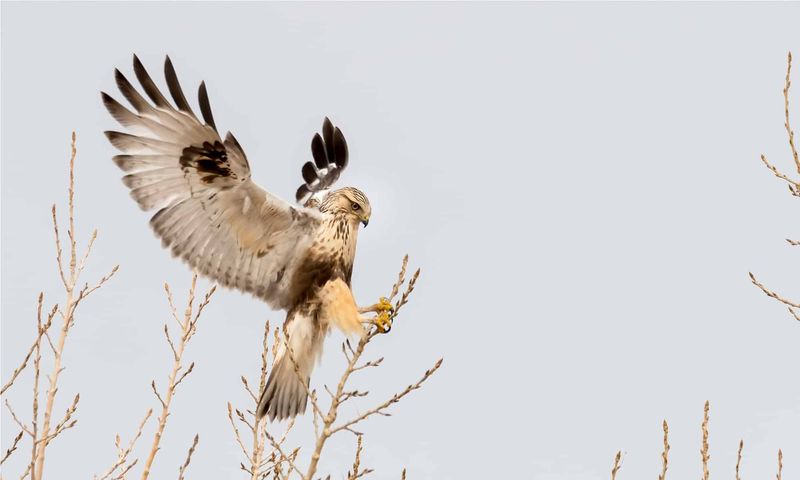
Some hawks wear feathered leggings right down to their toes. I first noticed one hanging in the air above a snowy cornfield, wings flapping, body frozen in place like a kite on an invisible string.
That bird had flown thousands of miles from the Arctic tundra. It nested near the top of the world last summer, where the sun barely sets in June.
Now it spends the cold months scanning farm fields across Ohio for a quick meal.
I love that our gray, quiet winter landscape counts as a vacation spot for someone. You might drive past this visitor on your way to work and assume it is just another roadside hawk.
Once you learn its tricks, though, you start spotting it everywhere. Down in that frozen stubble, it’s chasing something small enough to fit in your palm.
That Hovering Hawk Over The Frozen Cornfield Came A Long Way
Few birds look this calm while working this hard. The hovering hawk you spot over Ohio farmland in winter is most often a Rough-legged Hawk, a raptor that nests on cliffs and tundra slopes in the Arctic.
Each fall, these hawks leave Alaska and northern Canada as snow buries their summer hunting grounds. Many arrive in our region around November and stay until March or early April.
Biologists call them winter residents, not year-round neighbors.
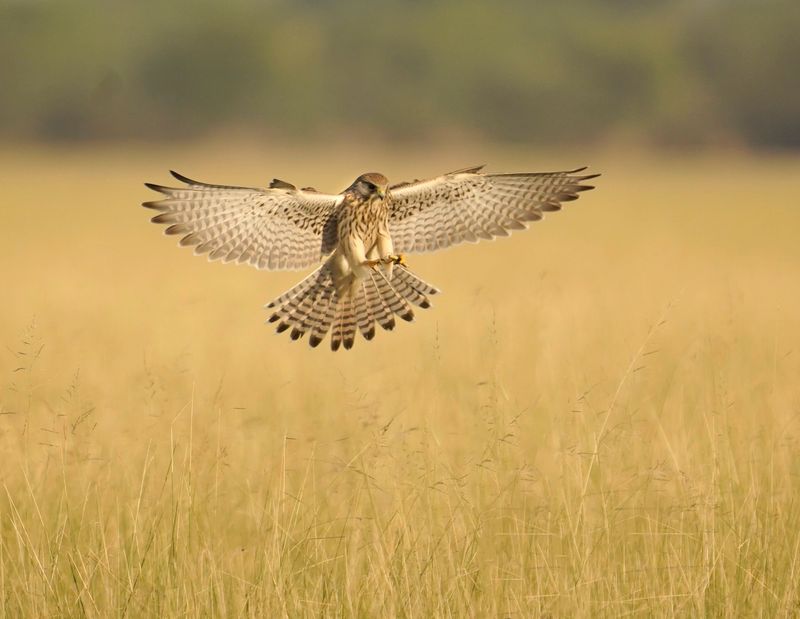
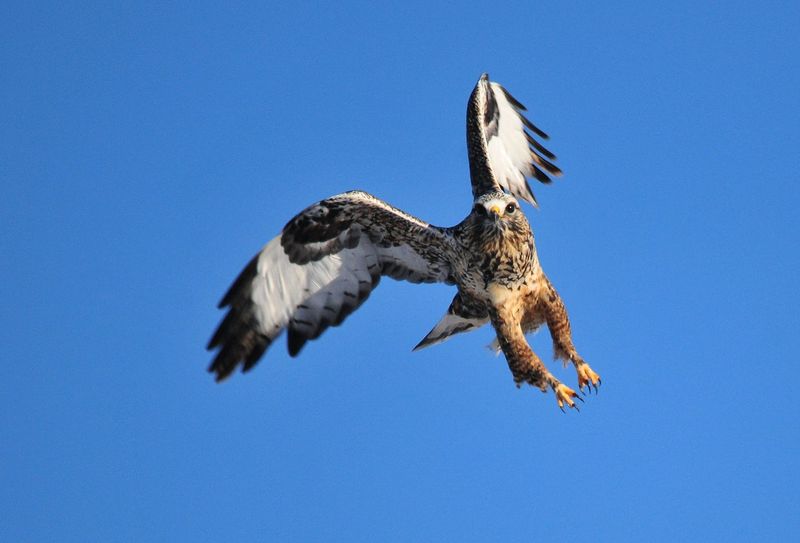
The hovering is the giveaway. Rough-legs face into the wind, flap steadily, and hold one spot in the sky while staring at the ground.
Birders call this kiting or wind-hovering, and few other large hawks in the state do it so often.
Red-tailed Hawks sometimes hover too, so a quick look is not proof. American Kestrels hover as well, but they are much smaller, about the size of a mourning dove.
Numbers change a lot from year to year. Some winters bring plenty to northern and western Ohio, while other winters feel nearly empty.
Researchers link those swings to rodent supplies up north and snow cover farther south. When you do see one, enjoy it.
You are watching a true tundra traveler.
Voles Are The Main Reason These Arctic Hawks Hover
Ask any gardener who has lost tulip bulbs or found chewed fruit tree bark in March, and you will hear about voles. Those chunky little rodents happen to be the favorite food of the Rough-legged Hawk.
According to Cornell Lab of Ornithology and other research sources, rough-legs eat mostly small mammals. In winter fields, that means meadow voles, deer mice, and the occasional shrew.
Their feet are fairly small for a hawk this size, which suits grabbing small, quick prey.
Voles spend winter running through grassy tunnels, sometimes right under the snow. A hovering hawk watches for tiny movements, then drops feet-first into the grass.
Plenty of attempts miss, so the bird simply rises and tries again.
I find this comforting as a gardener. Voles can girdle young apple trees, nibble hosta crowns, and tunnel through perennial beds.
A hawk working nearby farm fields will not solve a vole problem in your yard by itself, but every rodent caught out there is one fewer breeding in spring.
Keep realistic hopes, though. Hardware cloth around tree trunks and trimming tall grass near beds still matter.
Think of the hawk as a helpful bonus, not your entire plan.
Those Feathered Legs Are Built For Tundra Cold
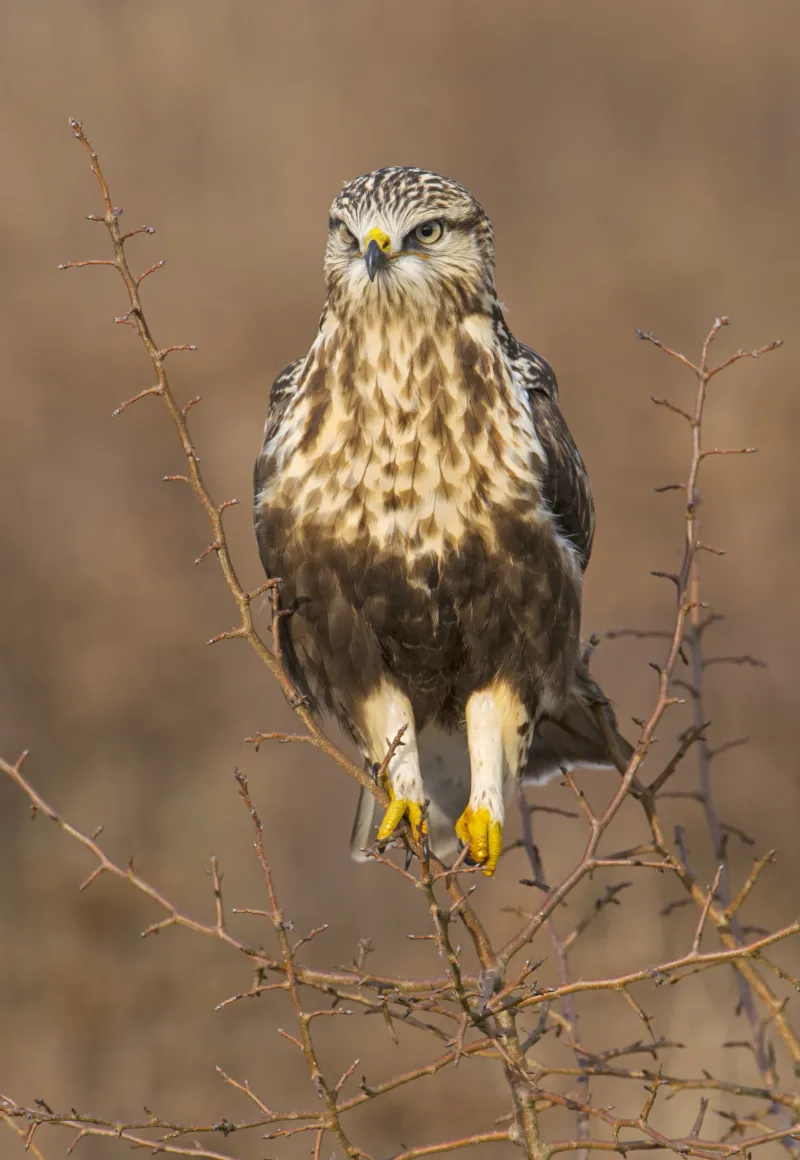
Here is my favorite fun fact. The name rough-legged comes from feathers that cover the legs all the way down to the toes, like cozy winter tights.
Only a few North American hawks share this trait. The Ferruginous Hawk of the western plains is the other main one, and the Golden Eagle also has feathered legs.
Most hawks you see in Ohio, including the common Red-tailed Hawk, have bare yellow scaly legs.
Why does it matter? Bare skin loses heat fast in bitter wind.
Feathered legs help a bird conserve warmth when it sits on a pole in subzero weather or nests on an Arctic cliff. The scientific name, Buteo lagopus, even means something like hare-footed, a nod to those fluffy feet.
You will rarely see the leg feathers clearly from a car window. A good pair of binoculars helps, especially when the bird perches low on a fence post.
If you catch the view, it feels like spotting a secret.
I like to tell kids that these hawks basically came to Ohio dressed for a harder winter than ours. Compared with the tundra, our January probably feels mild to them.
Watch For The Dark Wrist Patches Under Those Long Wings
Spotting the bird is half the fun, but naming it correctly is the real prize. Luckily, Rough-legged Hawks carry some handy field marks.
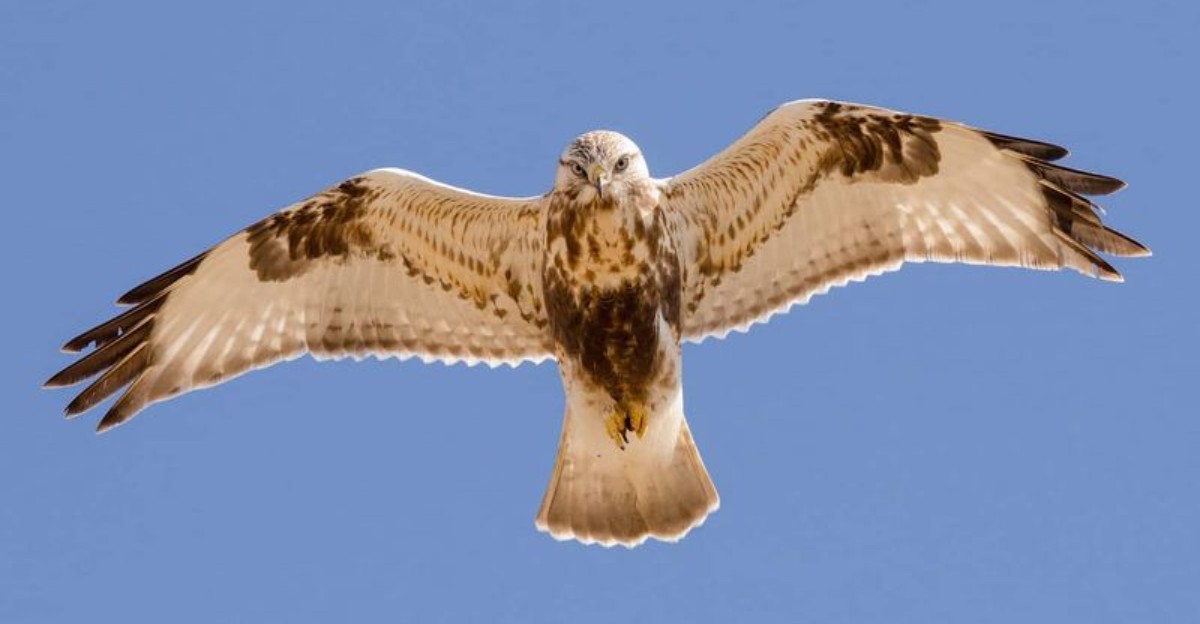
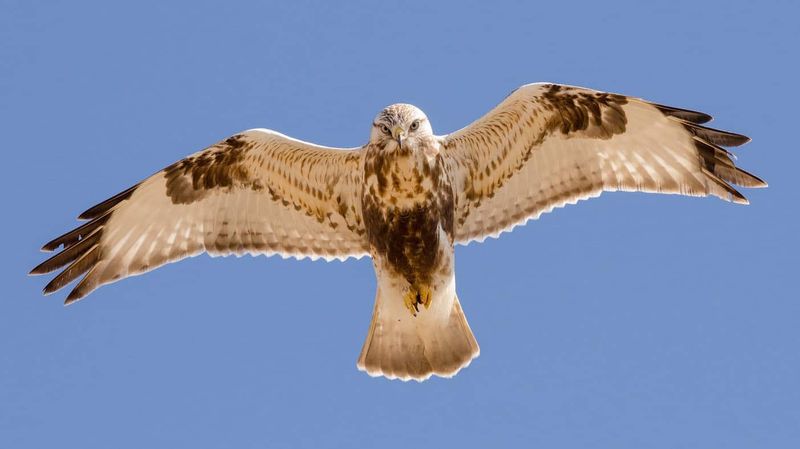
From below, look at the bend of each wing, sometimes called the wrist. Light-colored birds show bold dark patches there, almost like black thumbprints.
Many also have a dark band across the belly and a pale tail with a wide dark band near the tip.
The wings look long and fairly narrow for a buteo. Their flight feels a bit loose and buoyant, almost like a harrier.
When soaring, they often hold the wings in a shallow V.
Things get trickier with dark morph birds. Some rough-legs are chocolate brown nearly all over, with silvery flight feathers underneath.
Those dark birds surprise plenty of new birders, myself included the first time.
Compare with the Red-tailed Hawk, our most common winter hawk. Red-tails usually show a streaky belly band, a dark bar along the front edge of the wing, and adults have a rusty tail.
Free apps like Merlin from Cornell can help you check photos and narrow things down. Take your time and enjoy the puzzle.
Open Farm Fields And Reclaimed Grasslands Make Great Hawk Hunting Grounds
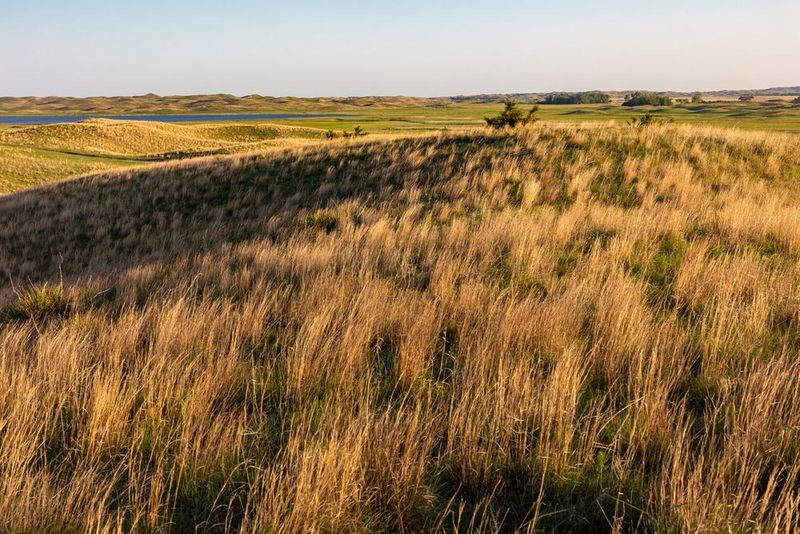
Forget the woods for this one. Rough-legged Hawks love wide open spaces where they can see for a long way.
In Ohio, birders find them over hayfields, pastures, harvested crop fields, wet meadows, and big grasslands. Reclaimed strip mine areas in the eastern part of the state are well known for winter raptors.
The Wilds near Cumberland and grasslands in places like Killdeer Plains Wildlife Area are popular spots to check.
Northwest Ohio, with its flat farmland, also gets regular visits. Lake Erie shorelines sometimes host migrating rough-legs in late fall and spring.
Look high and look low. These hawks often perch on utility poles, fence posts, hay bales, or the very tops of thin trees.
They will even sit right on the ground in a field.
Windy afternoons are prime time because the breeze makes hovering easier. Drive slowly on quiet back roads, pull over safely, and stay in your car.
Vehicles act like a blind, and birds often ignore them.
Please respect private property and posted signs. Most of the best viewing happens from public roads or state wildlife areas, so there is no need to wander onto farmland.
Some Winters Bring More Rough-Legs Than Others
Last winter you saw three, and this winter you have spotted none. Don’t worry, that pattern is normal for this bird.
Rough-legged Hawk numbers in the Lower 48 rise and fall from year to year. On the Arctic breeding grounds, these hawks rely heavily on lemmings and voles.
Those rodent populations boom and crash in cycles, and hawk nesting success follows along.
A strong breeding season up north can send more young hawks south. A poor one means fewer visitors.
Snow depth matters too, since deep snow makes voles harder to catch and can push hawks farther south than usual.
Hawk Mountain Sanctuary and HawkWatch International track raptor movements, and their counts show these ups and downs clearly. Christmas Bird Count data from Audubon also helps scientists study long-term trends.
So a quiet year is not necessarily a warning sign. It may just reflect conditions thousands of miles away.
You can help scientists by reporting your sightings on eBird, a free online tool from Cornell.
Every checklist adds a little piece to a big picture. I enjoy knowing my backyard birding notes might help a researcher understand these Arctic travelers a bit better.
Give Your Neighborhood Hawks Room And Skip The Rodent Poison
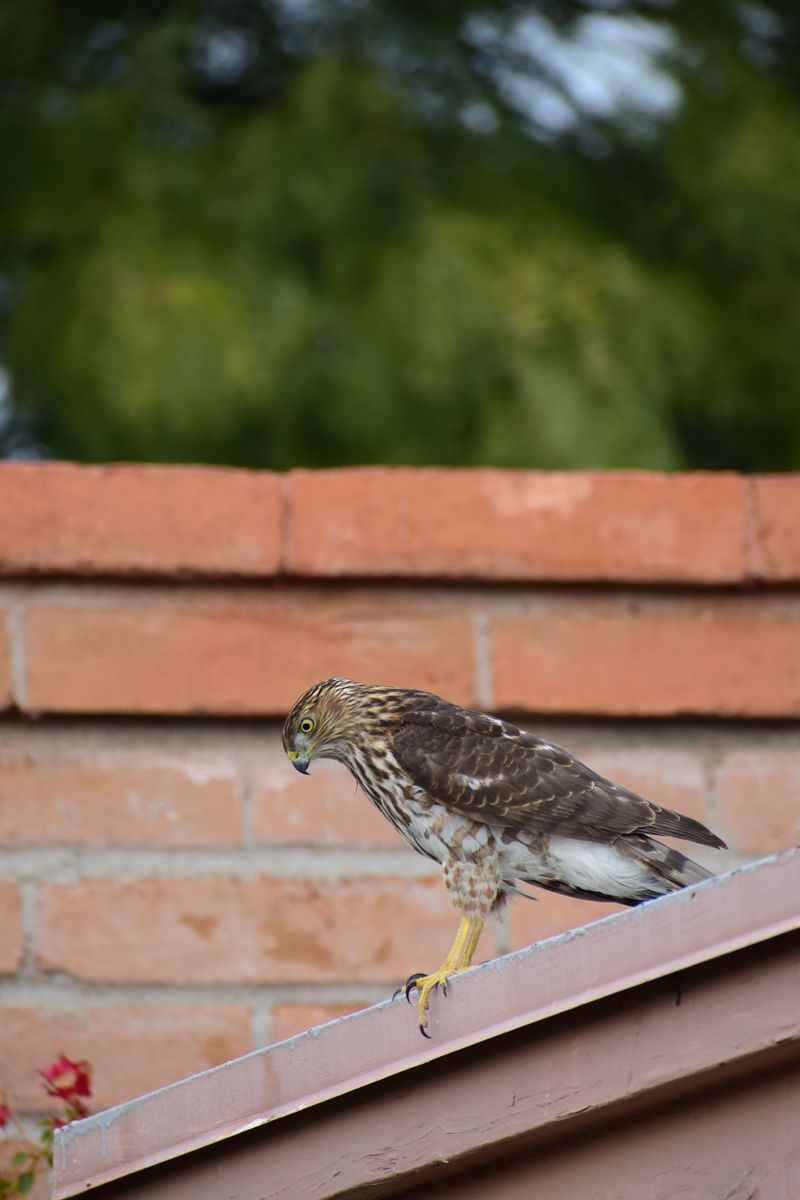
A little kindness goes a long way with wintering raptors. These birds burn lots of energy staying warm, so every interruption costs them.
First, keep your distance. If a hawk flushes from its perch, you have gotten too close.
Use binoculars or a zoom lens instead of walking toward it.
Next, think hard about rodent poisons. Anticoagulant rodenticides can build up in hawks and owls that eat poisoned mice and voles.
Wildlife agencies and bird groups have linked these products to harm in raptors. Traps, tree guards, and habitat changes are safer choices for gardeners.
Remember the law too. All hawks are protected under the federal Migratory Bird Treaty Act.
Harassing, capturing, or harming them is illegal, and that includes collecting their feathers.
If you find an injured hawk, do not try to handle it yourself. Contact a licensed wildlife rehabilitator or the Ohio Division of Wildlife for guidance.
Small choices add up. A yard free of rodent poison helps the hawks wintering nearby, plus resident owls, foxes, and even pets.
I consider that a fair trade for a few extra traps in the garage.
Grab Your Binoculars And Go Find A Winter Hawk This Weekend
Winter gardening chores are slim, so why not swap the seed catalog for a hawk hunt? A sunny, breezy weekend afternoon is perfect.
Pack binoculars, a thermos of hot cocoa, and a phone with a bird app. Pick a quiet country road near big open fields or a state wildlife area.
Drive slowly and scan the tops of poles, fence lines, and the sky above the stubble.
When you spot a hovering bird, pull over safely and watch for a few minutes. Note the wing patches, tail pattern, and whether it hovers again.
That patient watching is where the magic happens.
Bring the family along. Kids often spot birds faster than adults, and counting hawks turns a long drive into a game.
Keep a simple notebook of dates, places, and what you saw.
Back home, think about your own yard. Leaving some taller native grasses, skipping poison, and keeping a brush pile can support the whole food web that hawks depend on.
By March, these northern guests head back toward the tundra. Catch them while you can, and next fall you will know just where to look.