The Native Shrub To Plant Before November Ends If You Want Cardinals In Your Florida Yard All Winter
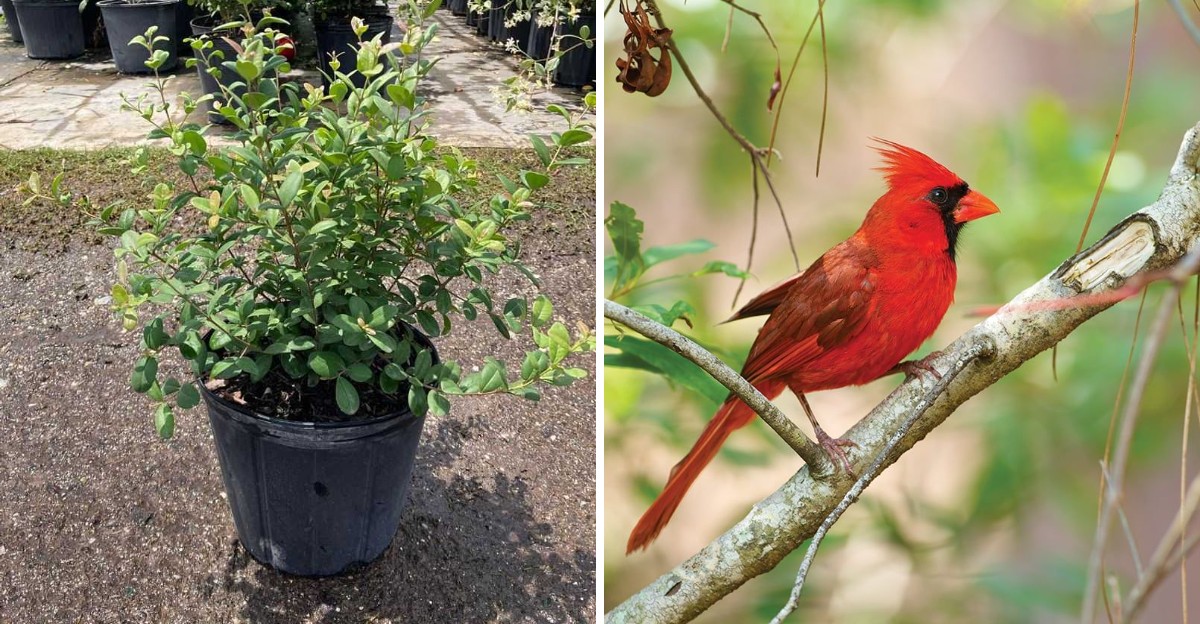
A cardinal can eat seeds and fruit from dozens of native plants, yet one glossy shrub with peeling copper bark keeps showing up on bird-friendly planting lists. Its crushed leaves smell a bit like nutmeg and citrus.
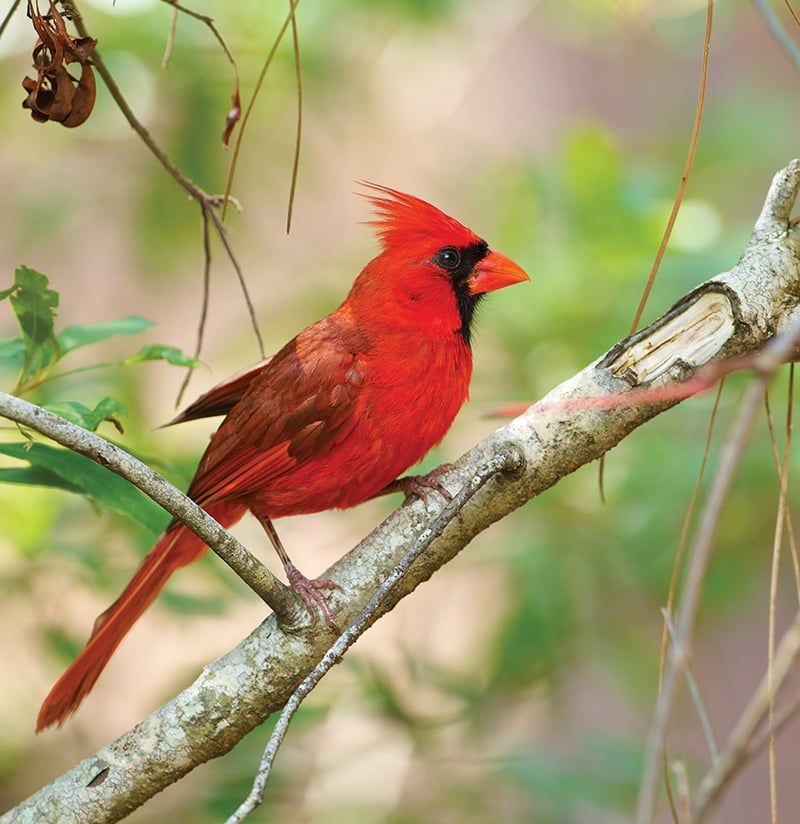
Florida cardinals stay put all year, so the birds outside your window in July are the same ones hunting for food in January. When insects get scarce, they lean harder on berries, seeds, and thick cover for safe roosting.
I love how one well-placed shrub can turn a quiet winter yard into a red-and-green show. I would rather watch birds at a living buffet than refill a feeder every other day.
You need to plant soon, though, because cool fall weather gives roots a valuable head start.
Which humble evergreen pulls off all of that while asking for so little water once it settles in?
Winter Cardinals Are Hunting For More Than Birdseed In Your Yard
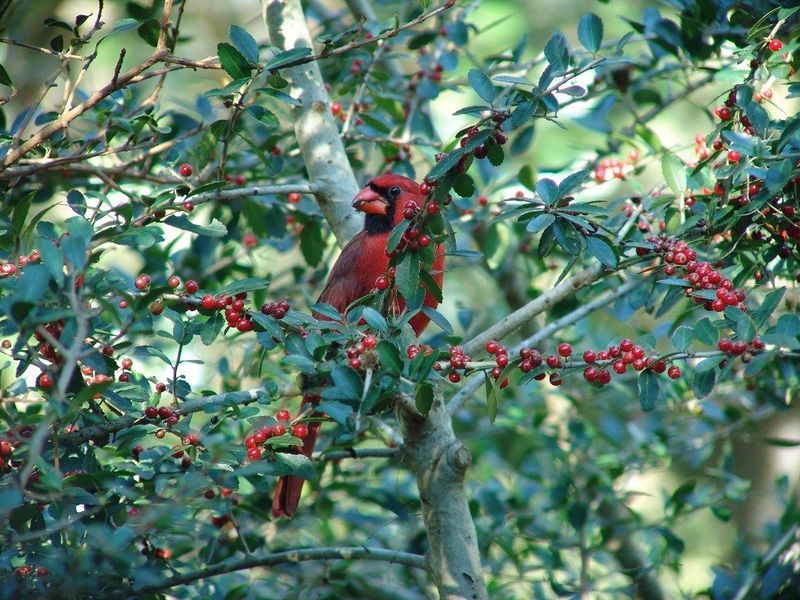
Cardinals in your yard this winter are the same birds you saw nesting last spring. Northern cardinals are permanent residents across the state, so they spend the cool months guarding a home range instead of flying off somewhere warmer.
In summer, adults stuff their young with caterpillars and other insects. By late fall, bug numbers drop, and the adults switch to a menu built mostly on seeds and fruit.
Their thick, cone-shaped bills are made for cracking hard shells and mashing small berries.
Food is only half the story, though. Cardinals are shy birds that like to stay close to dense, leafy cover where a hawk or a prowling cat can’t easily reach them.
They also roost at night in thick shrubs to stay out of the wind.
A bare lawn with one lonely feeder rarely feels safe enough to hang around. The winning combo is berries, seeds, and thick evergreen branches all in one spot.
Native shrubs check all three boxes better than most exotic hedges, and once a pair finds that setup, they tend to visit daily.
Fun fact for your next walk outside. Both male and female cardinals sing, and pairs often trade soft calls while foraging together.
Simpson’s Stopper Is The Berry Shrub Cardinals Keep Coming Back To
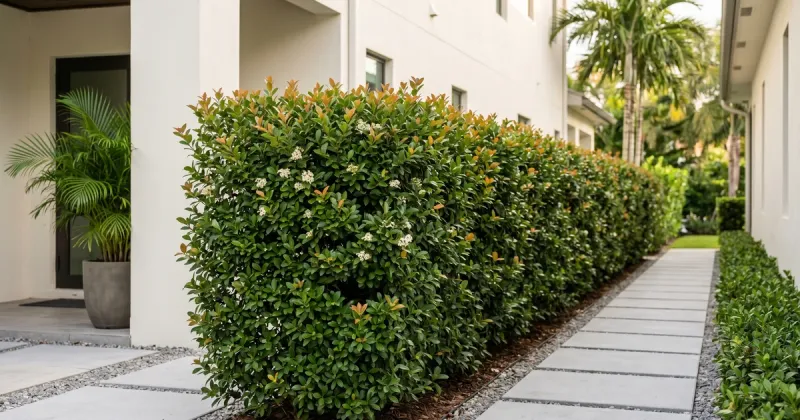
Ask a native plant nursery in central or south Florida for a bird-friendly evergreen, and Simpson’s stopper (Myrcianthes fragrans) will likely come up fast. It belongs to the myrtle family and grows wild in hammocks and coastal woods.
Small white flowers with fluffy stamens open mostly in spring and summer, sometimes in several flushes. Bees and butterflies work them hard.
Those blooms turn into pea-sized berries that ripen from green to orange and then deep red, usually in late summer and fall.
Cardinals, mockingbirds, blue jays, and catbirds go after that fruit with real enthusiasm. Berries often get eaten quickly, so a heavy crop can vanish in a few weeks.
That quick disappearance is a sign the shrub is doing its job.
Even after the fruit is gone, the dense evergreen canopy stays put. Cardinals use it as a hideout, a roost, and a lookout between trips to nearby seed sources.
A plant that feeds birds in fall and shelters them through January earns a prime spot in any yard.
The name has a quirky backstory, too. Stopper comes from old folk use of related plants to settle upset stomachs, which is a history lesson, not a home remedy.
Planting Your Stopper Before November Ends Gives Roots A Real Head Start
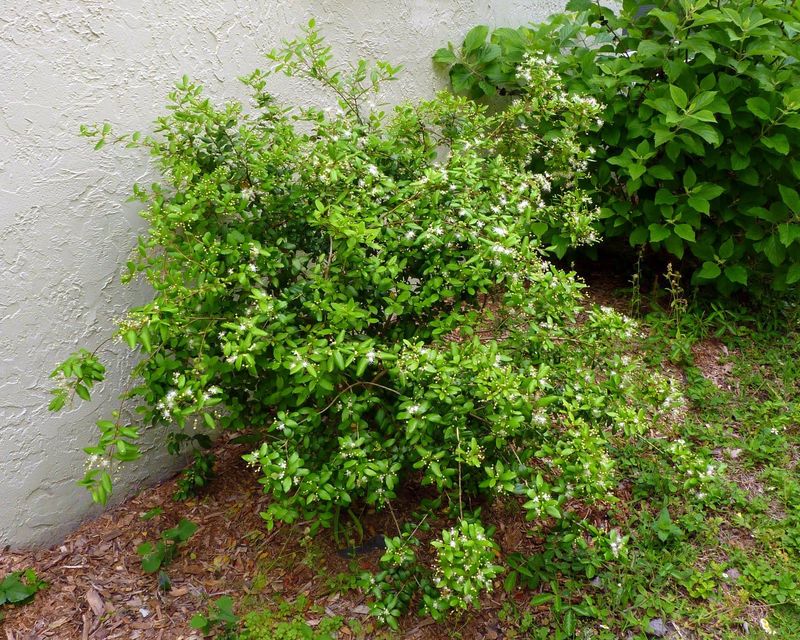
Late fall is a sweet spot for planting most woody natives in warm southern climates. Air temperatures cool off, the sun loses some of its punch, and a new shrub can put energy into roots instead of fighting heat stress.
Roots keep growing in warm soil long after the air feels pleasant. A stopper planted in November spends the mild winter quietly anchoring itself.
By the time the dry spring months arrive, it has a much better shot at handling them.
UF/IFAS points out that shrubs need several months, and sometimes longer, to establish, depending on container size. Bigger plants take longer to settle.
A 3-gallon stopper often roots in faster than a 15-gallon one and can catch up in size sooner than you might expect.
Be realistic about berries, though. A young plant may not fruit heavily its first season, so think of this as setting the table for next fall’s feast.
The shelter value for birds starts right away.
One more timing tip helps in cooler areas. Planting before the coldest nights of December and January lets roots settle while soil is still warm, so check your local frost history before you dig.
Sun, Sandy Soil, And A Steady Watering Can Keep Young Stoppers Happy
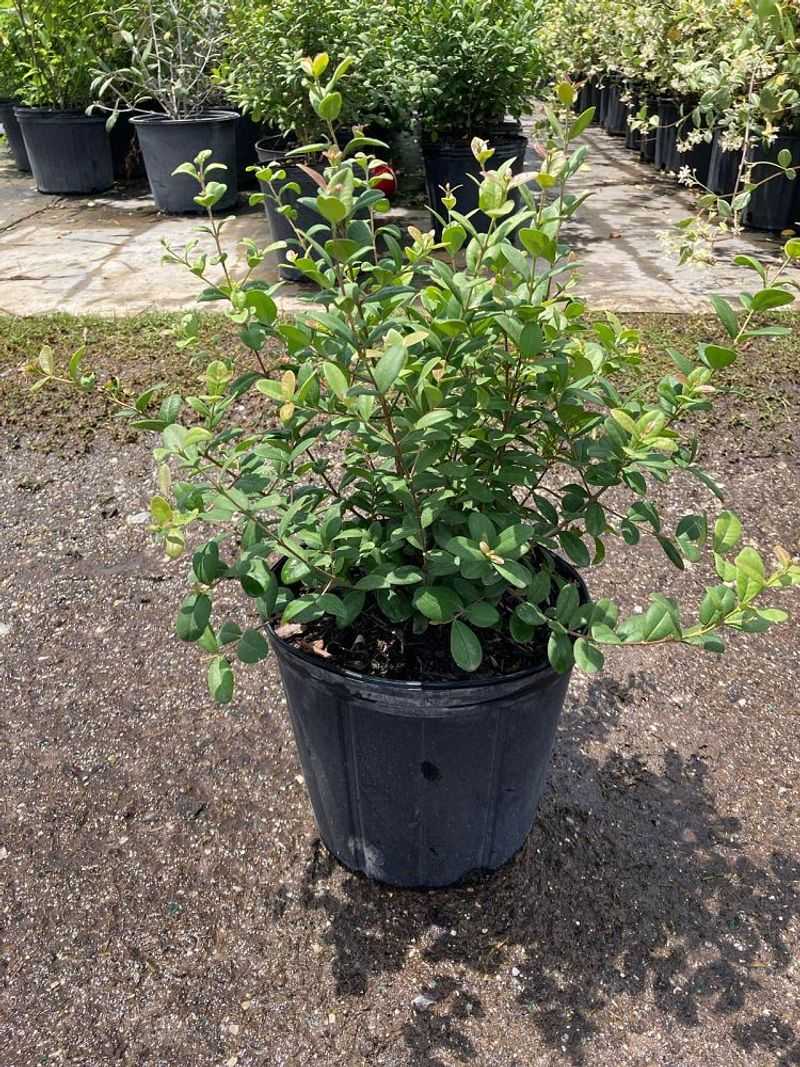
Soil prep for this shrub is refreshingly simple. Simpson’s stopper handles full sun to partial shade and grows happily in the sandy, well-drained ground found across much of the state.
Dig a hole about as deep as the root ball and two to three times as wide. Set the top of the root ball level with or slightly above the soil line, then backfill with the soil you removed.
Skip heavy amendments, since roots should learn to grow into real ground.
Water is the big job early on. UF/IFAS suggests frequent watering at first, often daily for the first week or two, then tapering to every few days, and finally weekly until the plant is established.
After that, the stopper is quite drought tolerant.
Spread 2 to 3 inches of mulch around the base, keeping it a few inches away from the trunk. Pine straw or leaf litter works well and gives birds a spot to scratch for bugs.
Growth is slow to moderate, with mature heights from about 5 to 20 feet. Prune lightly if you want a hedge, because heavy shearing removes the flowers and the berries that follow.
Glossy Fragrant Leaves And Peeling Copper Bark Turn This Shrub Into A Cardinal Hideout
Crush one leaf and take a sniff. The small, glossy leaves release a spicy scent that people compare to nutmeg or citrus, thanks to aromatic oils common in the myrtle family.
Those leaves grow thick and close together, which turns the shrub into a natural shelter. Cardinals slip inside to escape wind on chilly nights, dodge hawks during the day, and wait out sudden rain.
In spring, pairs may even build nests in dense evergreen shrubs like this one.
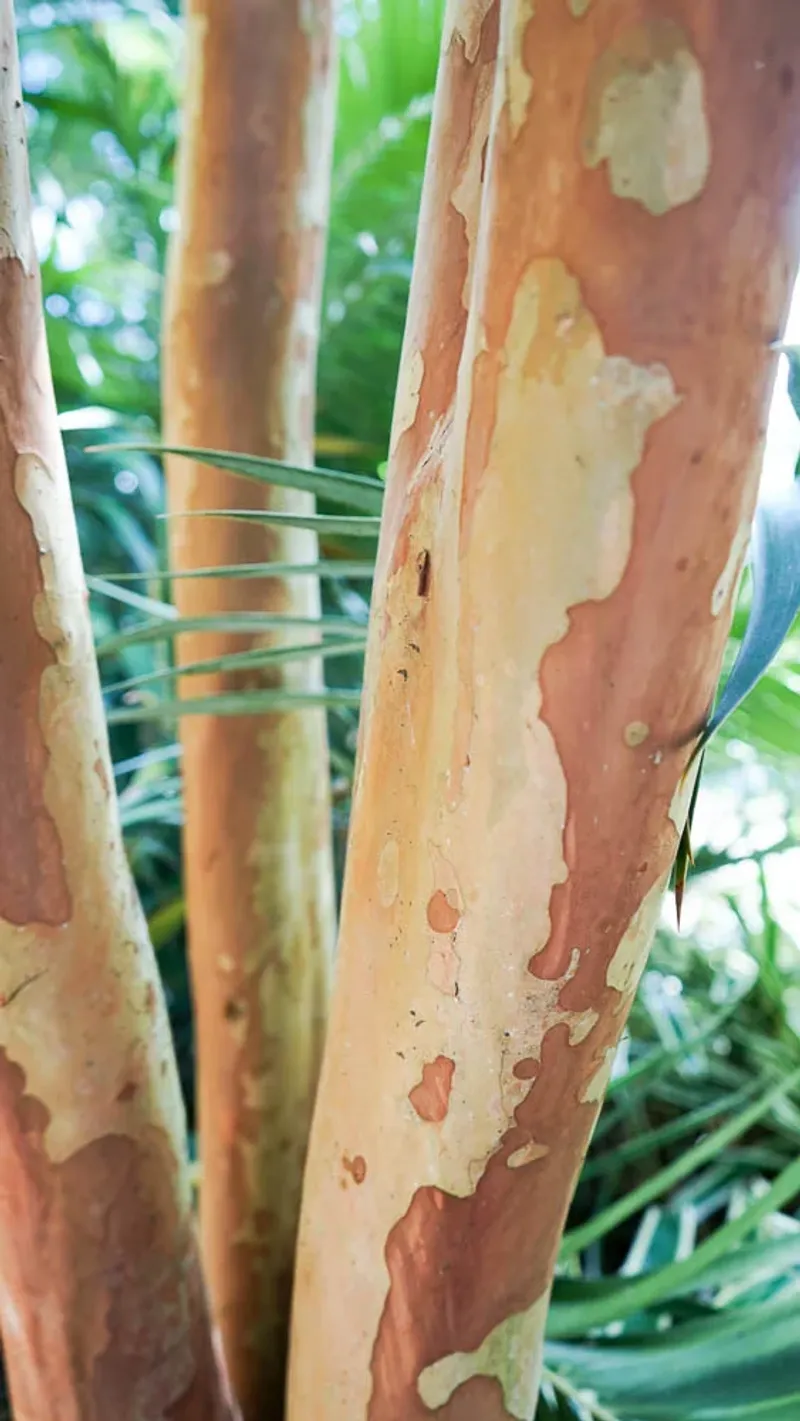
Older stems put on their own show. The reddish-brown bark peels away in thin flakes, revealing smooth, coppery to orange bark underneath.
Many gardeners train mature plants into small multi-trunk trees just to show it off.
Leaving lower branches in place helps birds most. Cardinals often feed low to the ground, and a skirt of foliage gives them a quick escape route.
Limbing it up too high turns a cozy hideout into an open umbrella.
I like placing one where morning sun hits the trunks. Light bounces off that copper bark, and a red bird perched nearby looks almost painted on.
Not Every Corner Of Florida Suits This Stopper, But Yaupon Holly Can Step In
Simpson’s stopper grows naturally from about central Florida southward, including the Keys. It does best in USDA zones 9b through 11, where winter freezes are short and rare.
Gardeners around Tampa, Orlando, and the coasts farther south usually have great luck. Some people in zone 9a grow it in protected spots, like the south side of a house.
A hard freeze can still damage leaves and twigs, so expect some cold injury in tougher winters.
North Florida and the Panhandle are a different story. Zone 8 winters are too cold for reliable growth, and berries need a healthy plant to show up.
Luckily, cardinals there have strong native options.
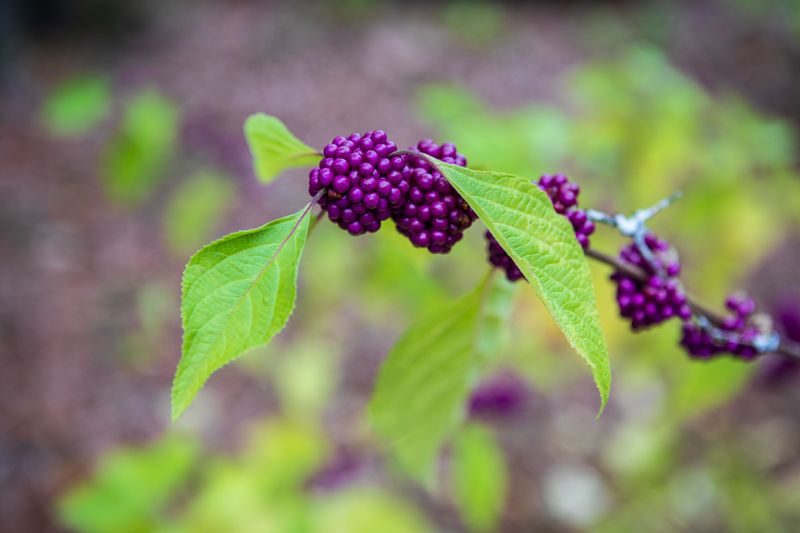
Yaupon holly (Ilex vomitoria) is a standout, with female plants holding red berries well into winter. Wax myrtle adds dense evergreen cover, and American beautyberry produces purple clusters that birds pick at into early winter.
A quick way to check your fit is to enter your ZIP code on the USDA Plant Hardiness Zone Map. Your county extension office can also suggest native shrubs proven in your neighborhood.
Pair Your Stopper With Beautyberry And Firebush For A Bird Buffet All Year
One shrub helps, but a small group works even better. Planting three or more stoppers together, spaced to grow into each other, creates the kind of thicket cardinals feel safe exploring.
Layering adds even more value. Mix in American beautyberry (Callicarpa americana) for bright purple fall berries, and native firebush (Hamelia patens) for tubular blooms that feed hummingbirds and butterflies.
Ask for the native form, since some compact firebush types sold in stores come from other regions.
Native wildflowers fill in the seed side of the menu. Let a few native sunflowers, blanketflowers, or grasses go to seed, and cardinals will pick through them on cool mornings.
A shallow birdbath nearby gives them a reliable drink.
Place your planting where you can enjoy it from a window. To reduce window strikes, keep bird features either within about 3 feet of the glass or more than 30 feet away, and skip broad pesticide sprays that shrink the insect supply for nesting season.
Plant before November wraps up, water faithfully, and give it time. Within a season or two, those flashes of red should become a familiar part of your winter mornings.