9 Florida Flowers That Look So Different Before Blooming
A flower bud can hang off a stem like a skinny pink sock for weeks, then open into a white bloom the size of a dinner plate for one single night. By breakfast, the show is over.
I still remember standing in my yard with a flashlight, refusing to blink.
Buds are sneaky like that. A fuzzy brown cone can turn into a lemon-scented giant.
A plain green knob can hide a fringe of purple threads that looks like it came from another planet.
Florida gardeners get a front-row seat to these costume changes all year long, thanks to warm weather and plenty of rain. I believe half the fun of gardening happens before the petals open.
Start paying attention to those odd little lumps, and your yard turns into a stage full of secrets. Keep a flashlight handy, because the best show might open after dark.
1. That Green Egg on the Passionflower Vine Is Hiding a Wild Purple Fringe
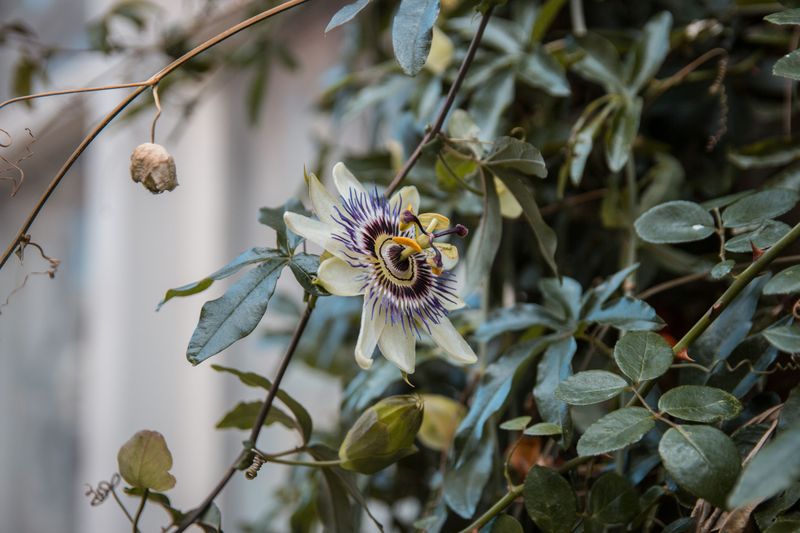
My first maypop bud fooled me for days. It looked like a smooth, pale green egg tucked inside three small leafy bracts, and I honestly figured it was a baby fruit.
Then one summer morning it split open. Out came a ring of wavy purple and white filaments, called the corona, surrounding a center that looks like a tiny sculpture.
Spanish missionaries once saw religious symbols in those parts, which is how the name passionflower came about.
Purple passionflower, or Passiflora incarnata, is native across most of the state and blooms from late spring through fall. Each flower usually lasts about one day, so check your vine early in the morning when the buds look plump and slightly cracked at the tip.
The vine also pulls double duty. Gulf fritillary, zebra longwing, and variegated fritillary caterpillars feed on the leaves, so a few chewed spots mean you are raising butterflies.
Give it full sun to part shade and room to ramble on a fence or trellis. It spreads by underground runners, so plant it where a little wandering is welcome.
Later, those flowers turn into egg-shaped fruits that pop when you step on them, which is where the nickname maypop comes from.
2. Fuzzy Southern Magnolia Buds Look More Like Tiny Brown Cones
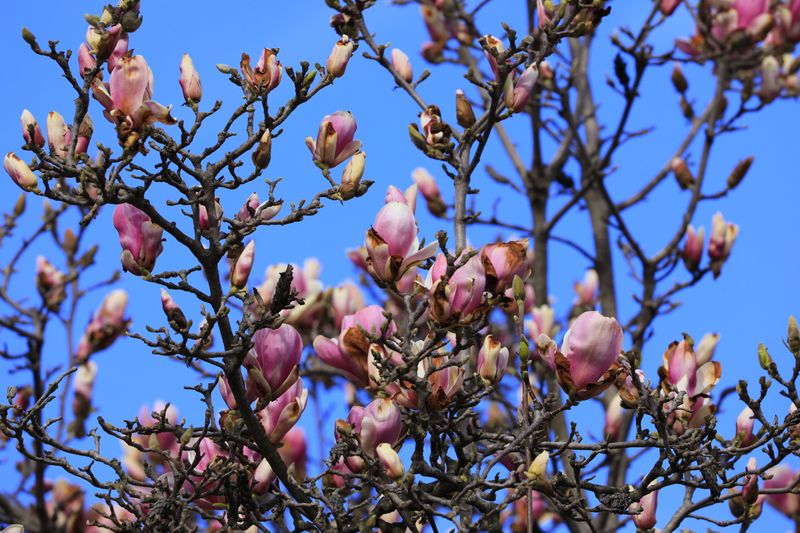
Run your finger over a southern magnolia bud and you will feel something like velvet. Before it opens, the bud is a pointed cone wrapped in a fuzzy sheath, often rusty brown or silvery green.
It looks more like a seed pod than a future flower.
That fuzzy covering peels away as the bud swells in late spring. Underneath sit thick creamy petals folded tightly together.
When they finally open, the flower can stretch 8 to 12 inches across and fill the air with a sweet, lemony scent.
Magnolias are an ancient group. Fossils show their ancestors lived before bees existed, so beetles did the pollinating, and beetles still visit the blooms today.
I love knowing a tree in a suburban yard has such an old family story.
Magnolia grandiflora is native to north and central Florida and grows well into parts of the south. Give it plenty of space, since mature trees can top 60 feet.
Avoid planting lawn underneath, because the dense shade and surface roots make grass struggle.
For a close look, find a low branch in May or June and watch one bud for a week.
3. Tightly Twisted Hibiscus Buds Unwind Into One-Day Wonders
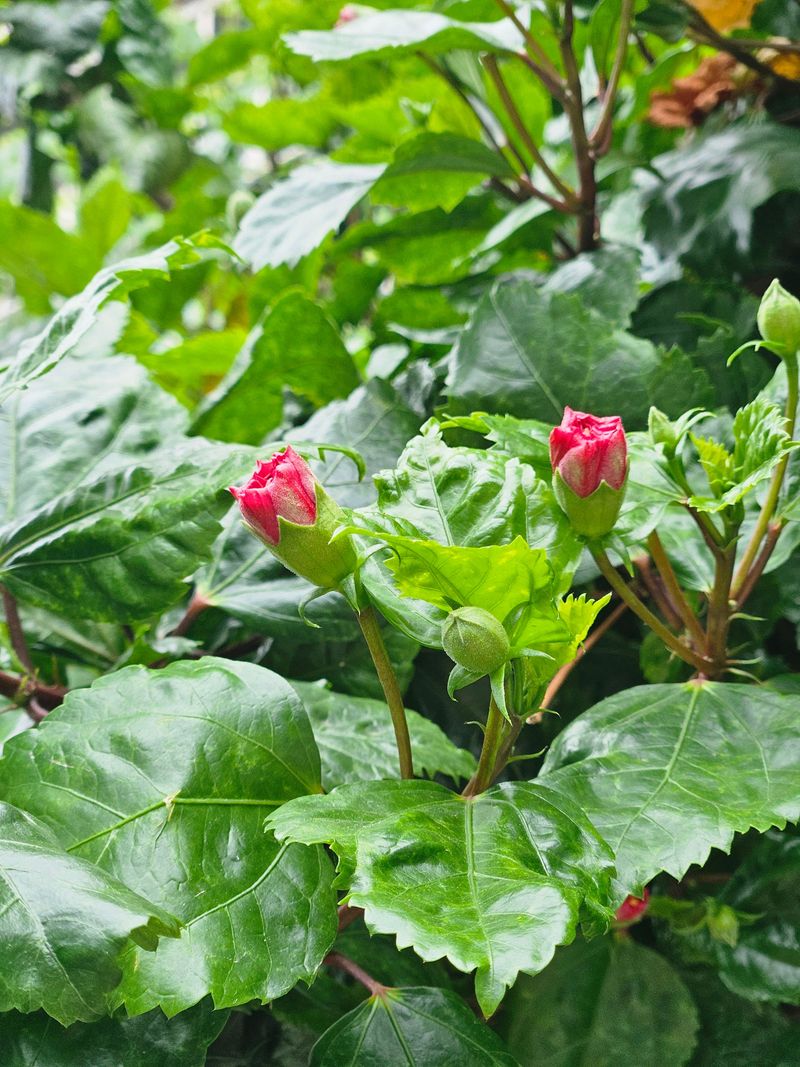
Ever notice how a hibiscus bud looks like someone rolled a paper umbrella and gave it a twist? The petals are wrapped in a neat spiral, usually peeking out with a stripe of color from inside a green cup of sepals.
Tropical hibiscus, Hibiscus rosa-sinensis, keeps its show short. Most blooms open in the morning and fade by the next day, so the twisted bud stage is actually the longest part of the flower’s life.
A bud that shows color and loosens at the tip is usually a day or so from opening.
Bud drop frustrates a lot of gardeners. Sudden swings in watering, a cold snap, too little sun, or tiny pests like thrips and hibiscus midge can make buds yellow and fall before they open.
Keep the soil evenly moist and give the plant at least six hours of sun.
Cold matters too. Tropical hibiscus handles the warm south easily, but northern gardeners often grow it in pots and move it indoors when temperatures dip into the 30s.
For a native option, try scarlet rosemallow, Hibiscus coccineus. Its long, slender buds open into star-shaped red flowers that hummingbirds adore.
4. Bougainvillea Bracts Start Out Small, Green, and Easy to Miss
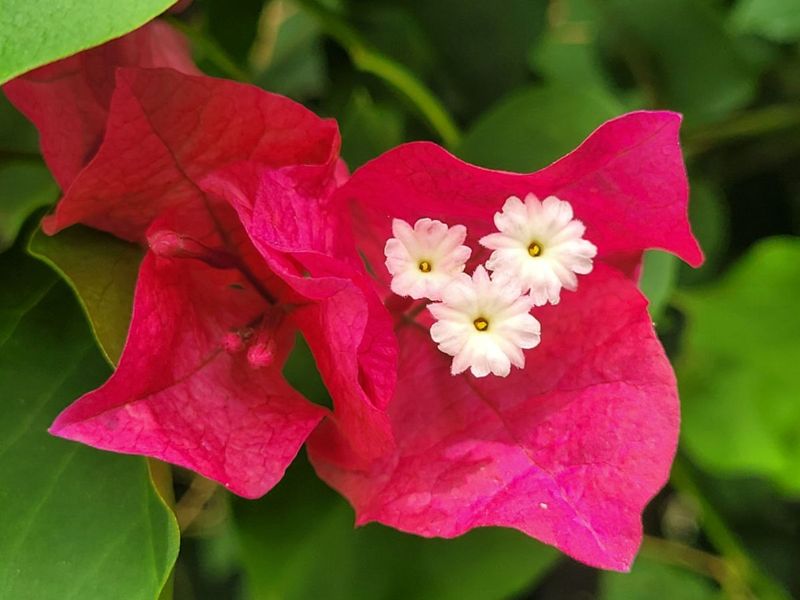
Try this trivia question at your next garden club meeting. Those hot pink petals on bougainvillea are not petals at all.
They are papery modified leaves called bracts, and the real flowers are the small creamy tubes tucked in the middle.
New bract clusters start out small and pale, often greenish with just a blush of color. Over a week or two they swell, thin out, and deepen into magenta, orange, red, purple, or white, depending on the variety.
Each set of three bracts usually holds three tiny flowers.
Bougainvillea blooms hardest when it feels a little stressed. Too much water and fertilizer push leafy growth instead of color, so let the soil dry between drinks and skip high-nitrogen feeds.
Full sun is a must.
The vine thrives in south and central coastal areas, while a hard freeze can knock it back farther north. Plants often regrow from the roots after mild cold damage.
Wear gloves when you prune, because those stems carry sharp thorns. Trim right after a bloom cycle to encourage the next round of colorful bracts.
Because the bracts last for weeks, one flush can keep your fence glowing well past the time most flowers would fade.
5. Night-Blooming Cereus Buds Dangle Like Pink Socks Before One Big Night
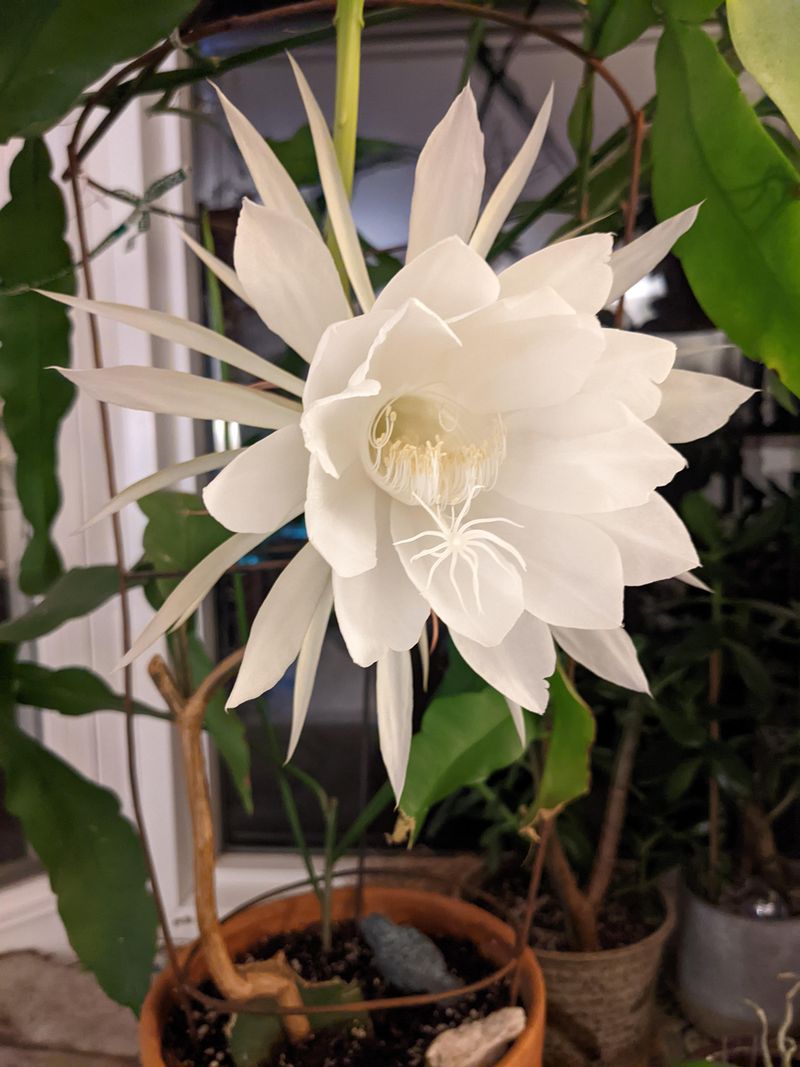
A friend once texted me at 10 p.m. with a single word: tonight. She meant her queen of the night was finally opening, and I grabbed my keys.
Epiphyllum oxypetalum, often called night-blooming cereus, grows flat, leaflike stems. Its buds start as small nubs along the stem edges and slowly stretch into long, curved tubes that droop and then turn upward.
They look like skinny pink socks hanging from a clothesline.
The buds take about two to three weeks to mature. On the big evening, they swell, the tips loosen, and after sunset a white flower up to about 10 inches across unfolds with a strong sweet fragrance.
By morning it has wilted.
The plant handles shade well and grows happily in a pot on a patio or porch. Use a fast-draining cactus or orchid mix, water when the top inch dries, and bring it inside when nights drop below about 40 degrees.
Older, slightly crowded plants often bloom best, so resist repotting too often.
Watch for the moment buds turn upward and look fat. That usually means opening night is close, so plan to stay up, grab a camera, and invite a few friends.
6. Firebush Starts With Clusters of Slim Orange Buds on Red Stems
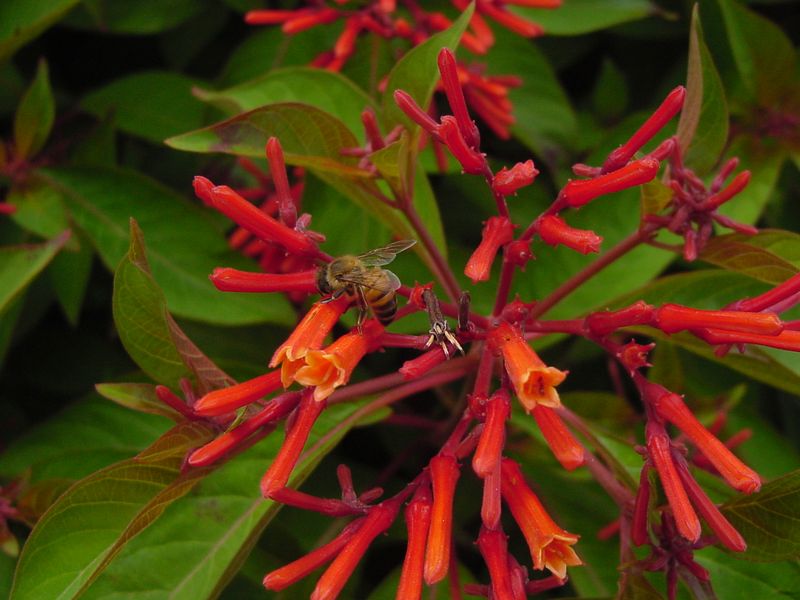
Hummingbirds seem to know a firebush is about to bloom before I do. The flower clusters begin as tight bundles of slim, closed tubes on reddish stems, looking more like a fistful of matchsticks than a bouquet.
Hamelia patens is native to central and south Florida and blooms from late spring until cool weather slows it down. As each bud lengthens, it shifts from yellowish orange to a deeper orange red and opens just slightly at the tip.
The open flowers are narrow, about an inch long, and built for long beaks and tongues.
After the flowers fade, the show keeps going. Small berries form, turning green, then red, then glossy black.
Birds snap them up, and the leaves often blush red in cooler months.
Plant firebush in full sun for the most flowers. It tolerates partial shade but blooms less.
Once established, it handles dry spells well and needs little fertilizer.
Shop carefully, since some nursery plants sold as firebush are a non-native relative with yellower blooms. Look for tags that say native Hamelia patens var. patens.
Frost can nip it back in the north, but it usually resprouts from the base in spring.
7. Coral Honeysuckle Buds Look Like Red Candles Before Showing Their Yellow Throats
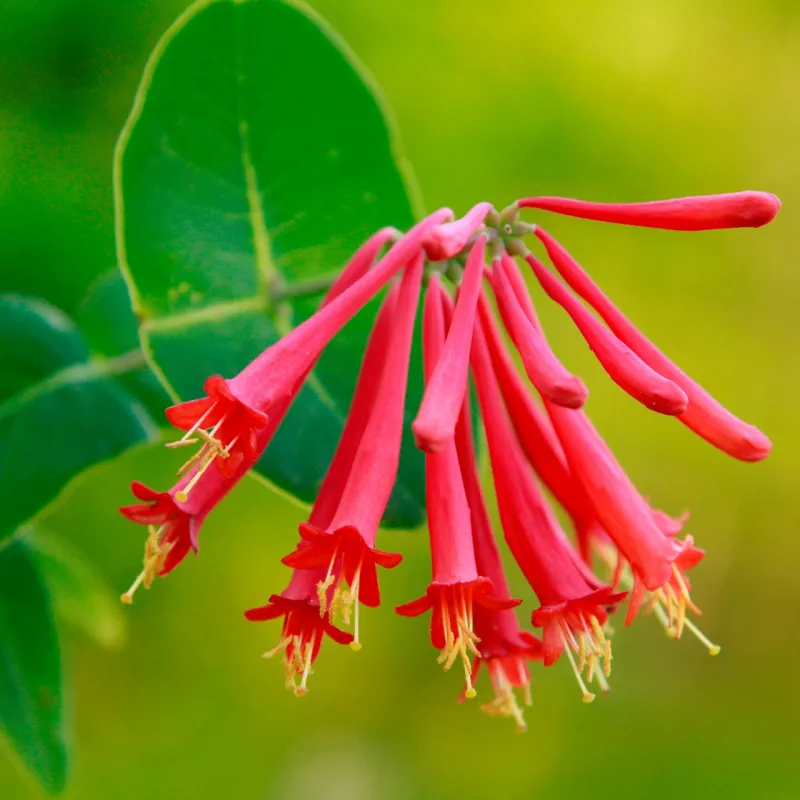
Long, waxy, and bright coral red, these buds stand in little rings at the tips of the vine like a cluster of birthday candles. Lonicera sempervirens keeps them closed and smooth until the very last moment.
When a bud opens, the tip flares into five short lobes and reveals a sunny yellow inside. That flash of yellow is easy to miss unless you look straight into the tube.
Hummingbirds, of course, look there all the time.
Unlike Japanese honeysuckle, which is invasive and should be pulled, coral honeysuckle is a well-behaved native. It does not smother trees, and it has little scent, so it relies on bright color to call pollinators.
Red berries follow in late summer for songbirds.
The heaviest bloom shows up in spring, with lighter flushes through the warm months. Give it at least half a day of sun on a trellis, mailbox post, or fence.
More sun means more flowers and fewer problems with powdery mildew.
Personally, I like planting it near a window. Watching a ruby-throated hummingbird work through a cluster of freshly opened buds beats most morning shows on TV.
Prune lightly after the spring flush to keep it tidy.
8. Golden Canna Flowers Unroll From Spikes Hidden in Bluish Leaves
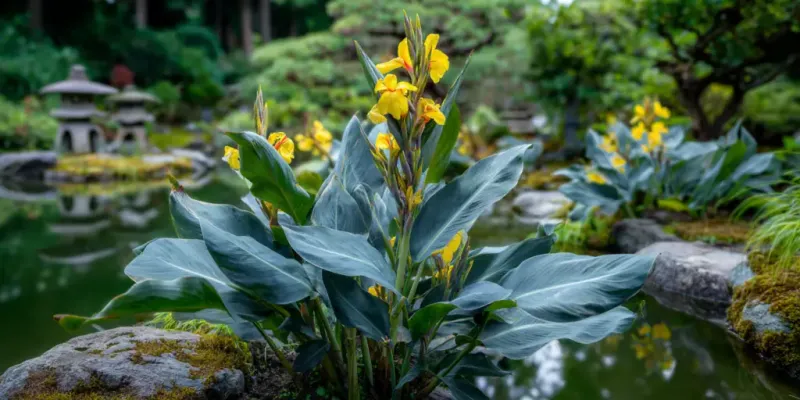
Wade into a wet ditch or pond edge in summer and you might spot our native golden canna. Canna flaccida grows big paddle-shaped leaves with a soft blue-green tint, and its buds hide in a tight spike at the top of the stem.
Those buds start out narrow and greenish, wrapped in bracts so they blend right into the foliage. Then each one unrolls into a pale yellow flower with soft, crinkly petals that look almost like tissue paper.
The blooms are more delicate than the bold hybrid cannas in garden centers.
Flowers open in the evening or early morning and last about a day, so the spike keeps producing new ones over several weeks. Sphinx moths and bees visit, and the leaves feed the Brazilian skipper caterpillar, which rolls itself up inside.
Golden canna loves moist soil, rain gardens, and pond margins in full sun to part shade. It spreads by rhizomes, so give it room or plant it in a container sunk at the water’s edge.
If leaf rollers move in, try to tolerate a few. You can snip badly damaged leaves, but those tattered spots mean a skipper is growing up right in your yard.
9. Blanket Flower Buds Start as Hairy Green Buttons on the Dunes
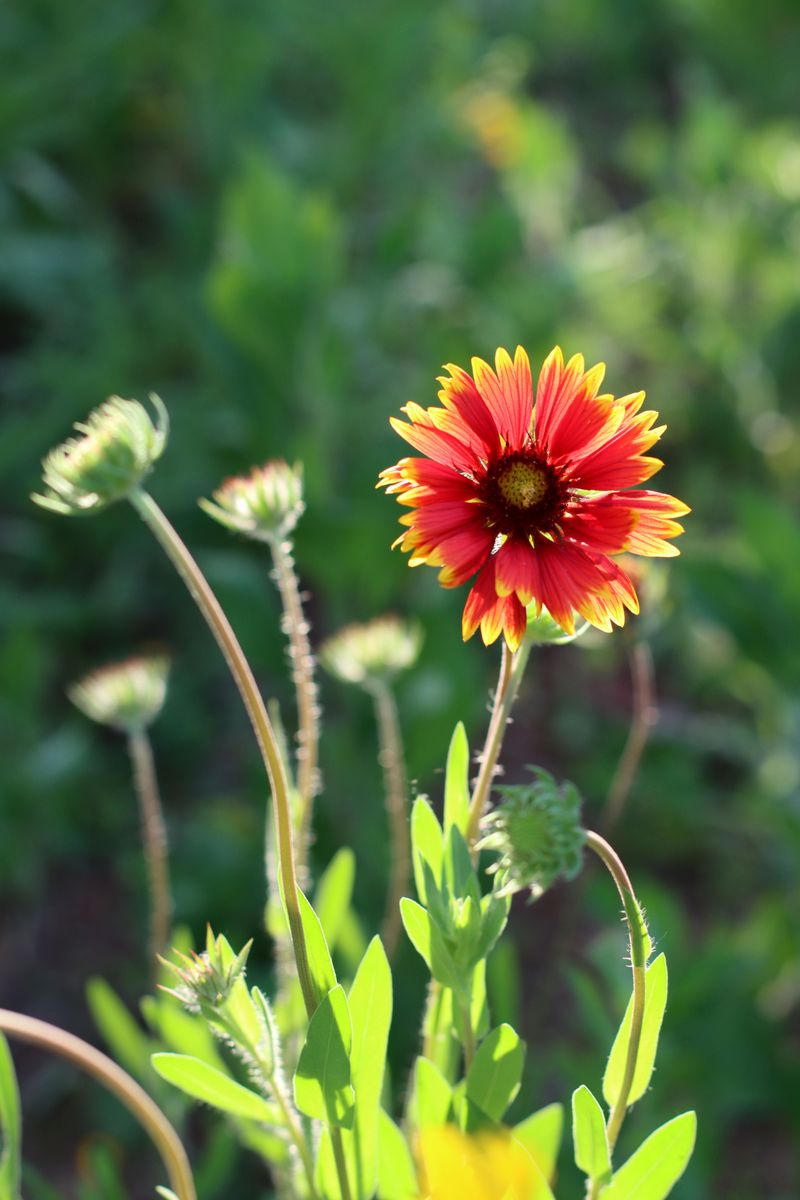
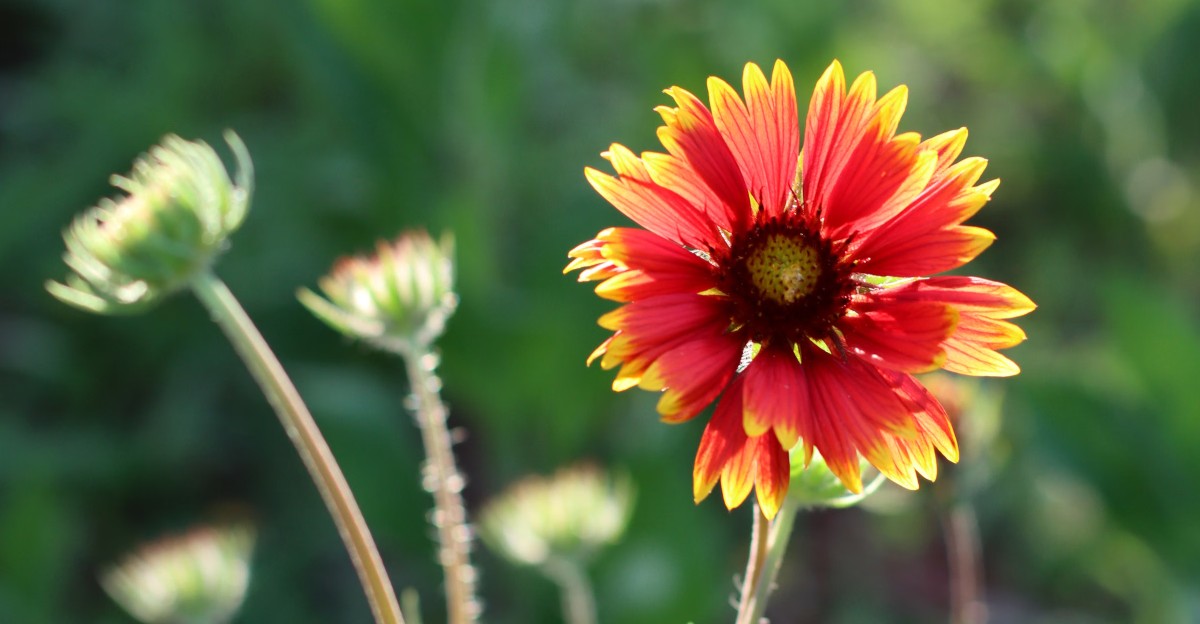
Beach walkers often stroll right past blanket flower buds without a second look. Before opening, each one is a small, hairy green button sitting on a slender stem, about as exciting as a pea.
Give it a few days. The button splits, and ray petals unfold in red with bright yellow tips, circling a dome of reddish center florets.
Gaillardia pulchella is native to coastal dunes and sandy spots across the state, and it shrugs off salt spray, heat, and poor soil.
The flowers bloom from spring well into fall. After the petals drop, the center turns into a round, spiky seed head that some folks mistake for a whole new kind of bud.
Leave a few in place and birds and new seedlings will follow.
Plant it in full sun with sandy, well-drained soil. Overwatering and rich soil make it floppy and short-lived, so treat it a little rough.
Blanket flower makes a fitting finale, because it teaches a simple habit. Walk your Florida garden slowly each week, look closely at those odd lumps and knobs, and snap a photo.
Within one season, you will know which buds are worth waiting for, and you might start loving the before as much as the after.