The Texas Native Tree That Won’t Crack Your Foundation Or Sidewalk
Tree roots rarely punch through solid concrete on their own. They mostly sneak into cracks that already exist, chasing water and air like thirsty little detectives.
Nobody warned me about that when I started planting trees in Texas. I spent years nervously eyeing every sapling near my driveway as if it were plotting something.
Then I found a small native beauty that blooms in brilliant pink on bare branches each late winter. Bees show up before most gardens even wake up. Birds snack on its flat seed pods later in the year.
The most interesting part? This tree stays modest in size, handles our tough alkaline soil, and asks for very little water once settled. I truly believe it deserves a spot in more front yards. So why do so many homeowners still plant giants right beside the porch?
A Small Flowering Tree With Surprisingly Polite Roots
Concrete cracks for lots of reasons, and tree roots get blamed more often than they deserve. Texas A&M AgriLife experts point out that clay soil shrinking and swelling with moisture causes many foundation problems.
Still, big thirsty trees can make that soil swing worse. Roots from oaks, sycamores, and cottonwoods spread far and pull huge amounts of water, which can dry out soil under slabs and sidewalks.
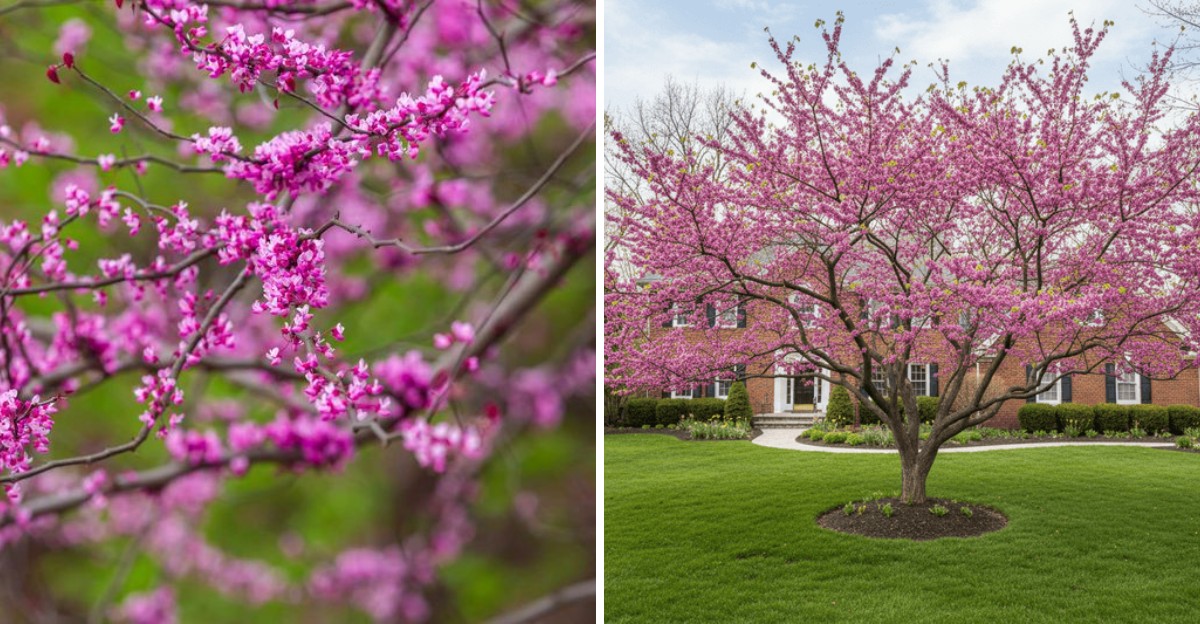
The Texas Redbud, Cercis canadensis var. texensis, plays a much smaller game. It usually tops out around 15 to 20 feet tall, with a similar spread. A tree that size simply builds a smaller root system than a towering shade tree.
Smaller trunks also matter. Many sidewalk lifts happen near the base of trees, where thick buttress roots swell over decades. Redbud trunks stay slender, so that pressure stays low.
I want to be honest here. No tree is a zero-risk tree if you jam it against your slab. Roots of any kind will follow leaky pipes and existing cracks.
Yet among Texas natives, this redbud is one of the most sensible picks for tight spaces. It gives you real tree beauty without the heavy root load of a giant.
Give That Redbud About Ten Feet From Your House
Spacing is the real secret behind a happy house and a happy tree. Even a modest redbud needs elbow room to spread its branches and roots.
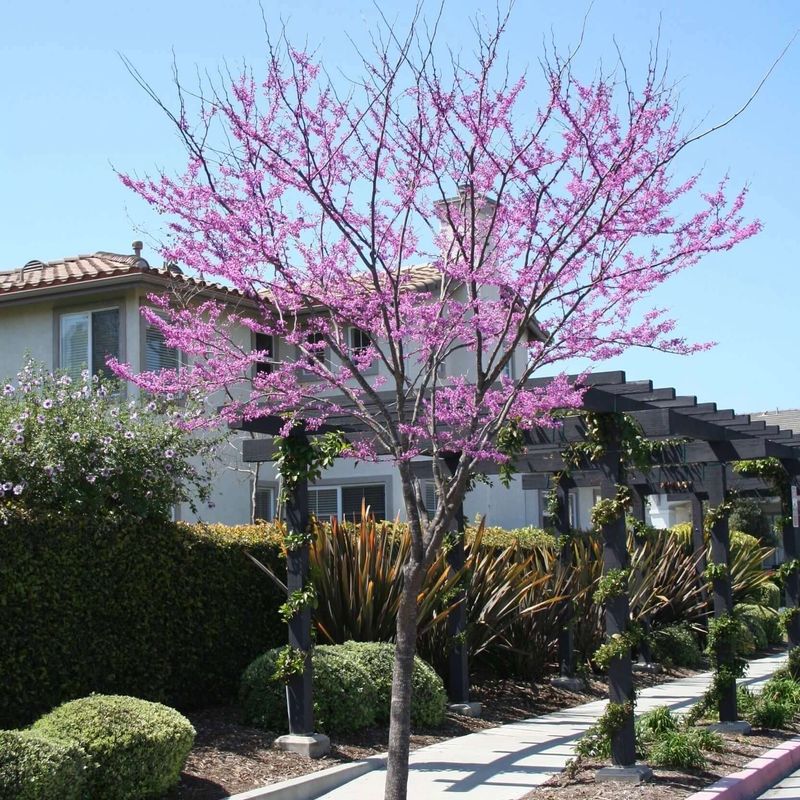
A good target is about 8 to 10 feet from your foundation. That keeps the canopy from rubbing your roof or gutters, and it gives roots plenty of soil to explore away from the slab.
For sidewalks and driveways, aim for at least 4 to 5 feet of distance. More is better if you have the room, especially in heavy clay.
Look up before you dig, too. Overhead power lines rarely bother a tree this short, but you still want branches clear of wires as it matures.
Call 811 before planting so buried utility lines get marked for free. It takes a few days and saves a lot of headaches.
Personally, I like to set a garden hose on the ground in a circle the width of the mature canopy. Standing back and looking at that circle tells me right away if the spot feels crowded.
Plan for the tree at age twenty, not the cute five-gallon size you bring home from the nursery.
Glossy Texas Redbud Leaves Built For Brutal Summers
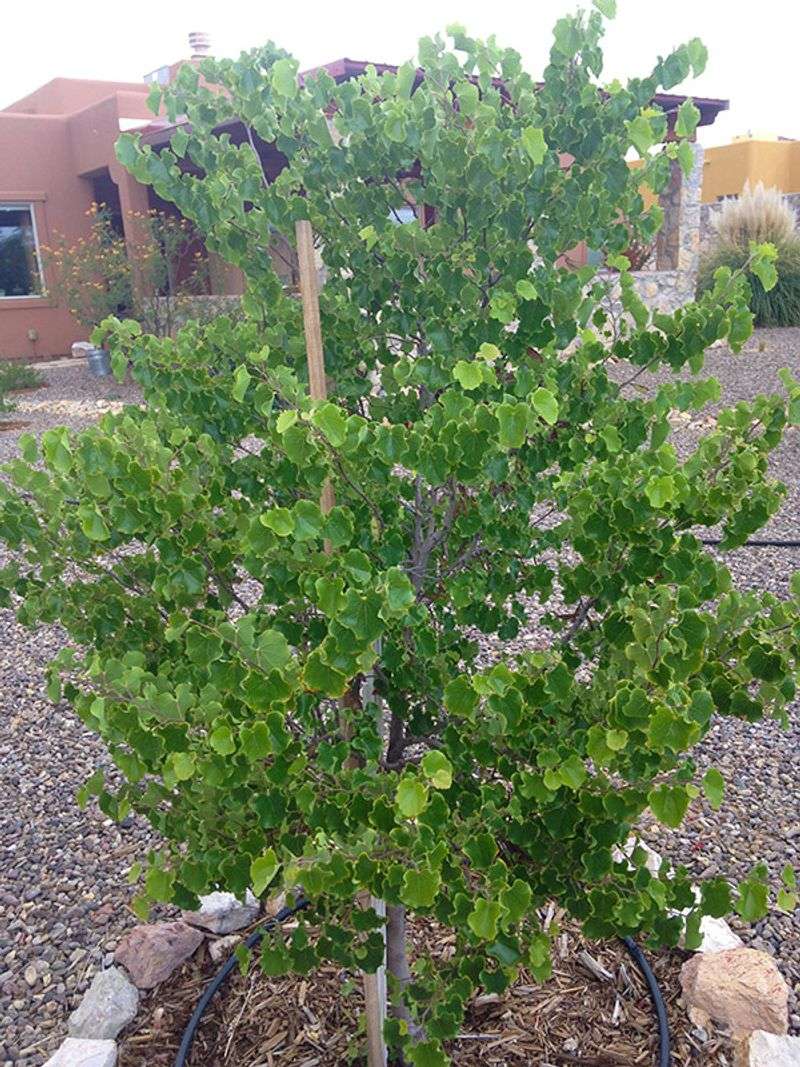
Run your fingers over a Texas Redbud leaf and you will notice something right away. It feels thicker and shinier than the leaf of the Eastern Redbud found in places like Ohio.
That waxy, leathery surface helps the leaf hold onto moisture during long, hot stretches. The leaves also have a rounder, more kidney-like shape with a slightly wavy edge.
Soil is another place where this variety shines. Much of Central and North Texas sits on alkaline, limestone-heavy ground, and the Texas Redbud grows naturally on rocky slopes across the Edwards Plateau and nearby regions.
Eastern Redbuds often sulk in that kind of soil, showing yellow leaves and weak growth. The Texas type feels right at home.
Fun fact: there is a close cousin called the Mexican Redbud, which has even smaller, wavier, glossier leaves. It suits the driest western parts of the state very well.
When you shop, check the tag carefully. Ask for Cercis canadensis var. texensis or a named selection like Oklahoma or Traveller. Grabbing a generic redbud could leave you with a tree that struggles through August.
Bare Branches Burst Into Magenta Pea Flowers Each Spring
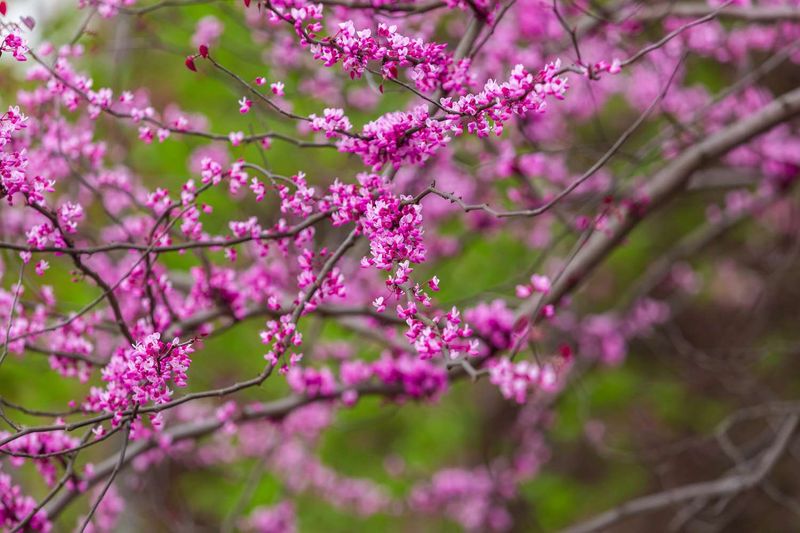
Late February in my neighborhood feels gray and sleepy. Then one week, the redbuds explode in pink and suddenly everybody is slowing their cars down to stare.
Blooms usually arrive from late February into March, depending on where you live. South Texas trees often start a little earlier, while Panhandle trees wait a bit longer.
The flowers appear before the leaves, so the color covers bare branches in thick clusters. Each tiny blossom looks like a sweet pea, which makes sense because redbuds belong to the legume family.
Here’s a fun twist. Redbuds often bloom right on the trunk and older limbs, not just on new twigs. Botanists call this habit cauliflory, and it gives the tree a fuzzy, glowing look.
The flowers are even edible. Some folks toss them into salads for a mild, slightly tangy crunch and a pop of color.
The show typically lasts two to three weeks. A white-flowered selection called Texas White is also out there if bright magenta feels like too much next to your brick. Either way, few small trees announce spring with this much cheerful energy.
Native Bees Line Up For Those Early Redbud Blossoms
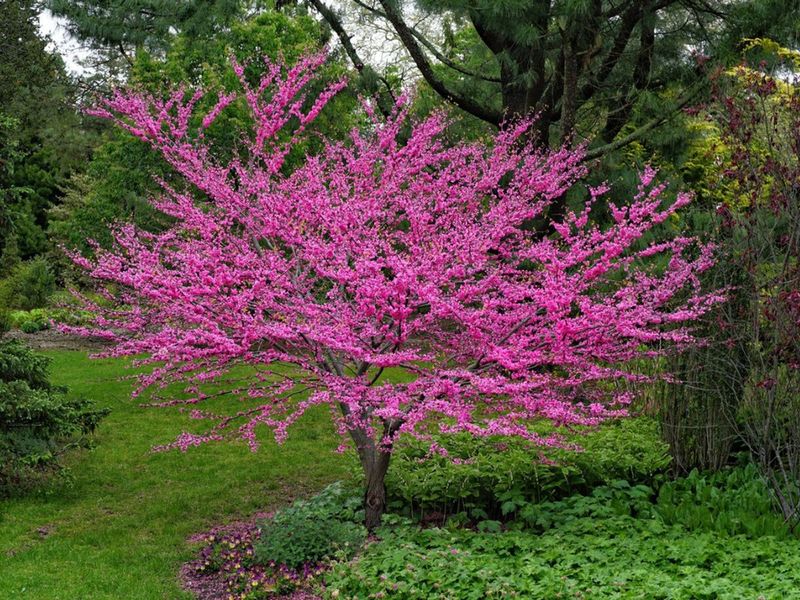
Spring can be a hungry time for pollinators. Bees wake up and buzz around, but many plants have not opened a single flower yet.
Redbuds help fill that gap. Their early blossoms offer nectar and pollen to native bees, honeybees, and some early butterflies when food is scarce.
Spend five quiet minutes under a blooming tree and you will likely hear a soft hum overhead. I find it oddly relaxing, like a tiny outdoor concert.
Once flowers fade, flat seed pods form and turn reddish-brown by summer. Many hang on through winter, rattling a little in the wind.
Some birds, including cardinals and other seed eaters, will pick at those seeds. The branching shape also gives small songbirds a handy place to perch and scout the yard.
The leaves feed certain caterpillars too, including the Henry’s elfin butterfly, a small brown butterfly tied closely to redbuds.
The Lady Bird Johnson Wildflower Center lists this tree as valuable for wildlife, which is one more reason to pick it over a non-native ornamental. You get beauty for yourself and a buffet for your neighbors with wings.
Plant Your Redbud In Fall For Stronger Roots
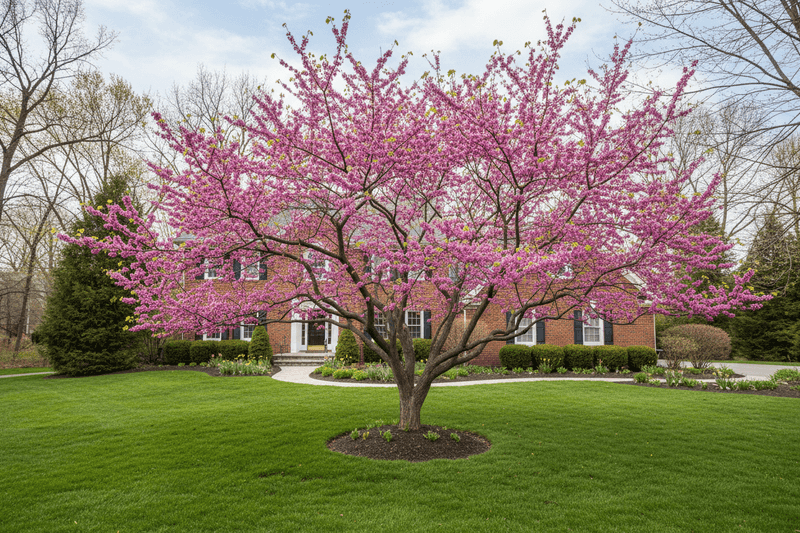
Timing your planting can save you a lot of hose dragging. In Texas, fall through late winter is the sweet spot, roughly October to February.
Cooler air lets roots grow without the stress of triple-digit heat. By the time summer arrives, your tree already has a head start underground.
Pick a spot with full sun to light afternoon shade. Six or more hours of sun gives you the best bloom, and a little shade helps in hot western or southern areas.
Drainage matters a lot. Redbuds dislike soggy soil, so skip low spots where water pools after storms.
Dig a hole two to three times wider than the root ball but no deeper. The root flare, where the trunk widens, should sit at or slightly above ground level. Planting too deep is one of the most common reasons young trees struggle.
Backfill with the native soil you removed. Heavy amendments can create a soggy bathtub effect in clay.
Spread 2 to 3 inches of mulch in a wide ring, keeping it a few inches off the trunk. Then water deeply right away to settle everything in.
Deep Watering Keeps Redbud Roots Away From Your Slab
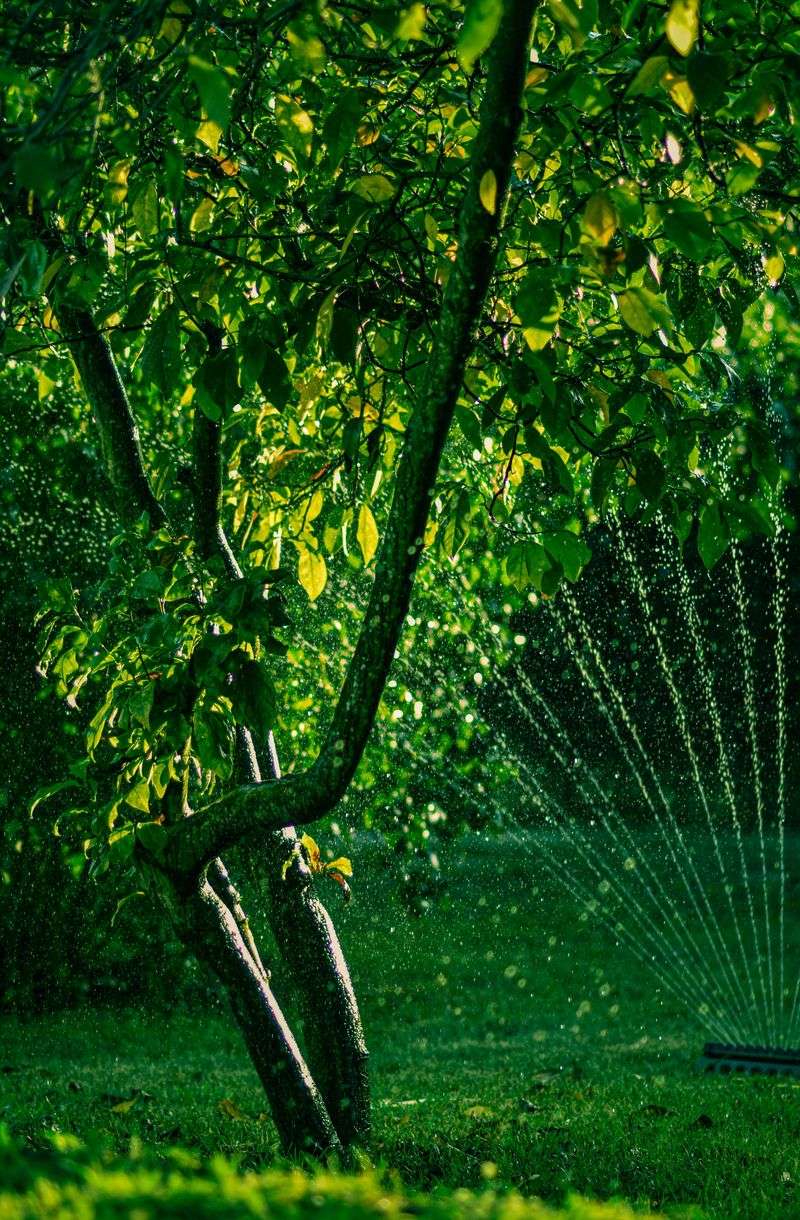
Smart watering might be the most underrated foundation protector in any Texas yard. It helps your tree and your house at the same time.
For the first one to two years, give your redbud a slow, deep soak about once a week during warm months. Adjust for rain, and check soil a few inches down with your finger before adding more.
Deep, infrequent watering encourages roots to grow down instead of hugging the surface. Shallow daily sprinkles do the opposite and can pull roots toward patios and walkways.
Once established, Texas Redbuds handle drought well. Still, an occasional deep drink during long dry spells keeps them looking sharp.
Many experts with Texas A&M AgriLife also suggest keeping foundation soil evenly moist during droughts. Steady moisture reduces the shrink and swell cycle in clay soils.
Fix leaky pipes and sprinklers quickly, since roots of any plant will chase that water.
Prune lightly in late winter or right after blooming, removing broken or crossing branches. Keep an eye out for canker on stressed trees.
Grab your gloves and give this tree a try. You will get spring color, happy pollinators, and a sidewalk that stays smooth.