Why Spotted Lanternfly Egg Masses Survive Pennsylvania’s First Hard Freeze
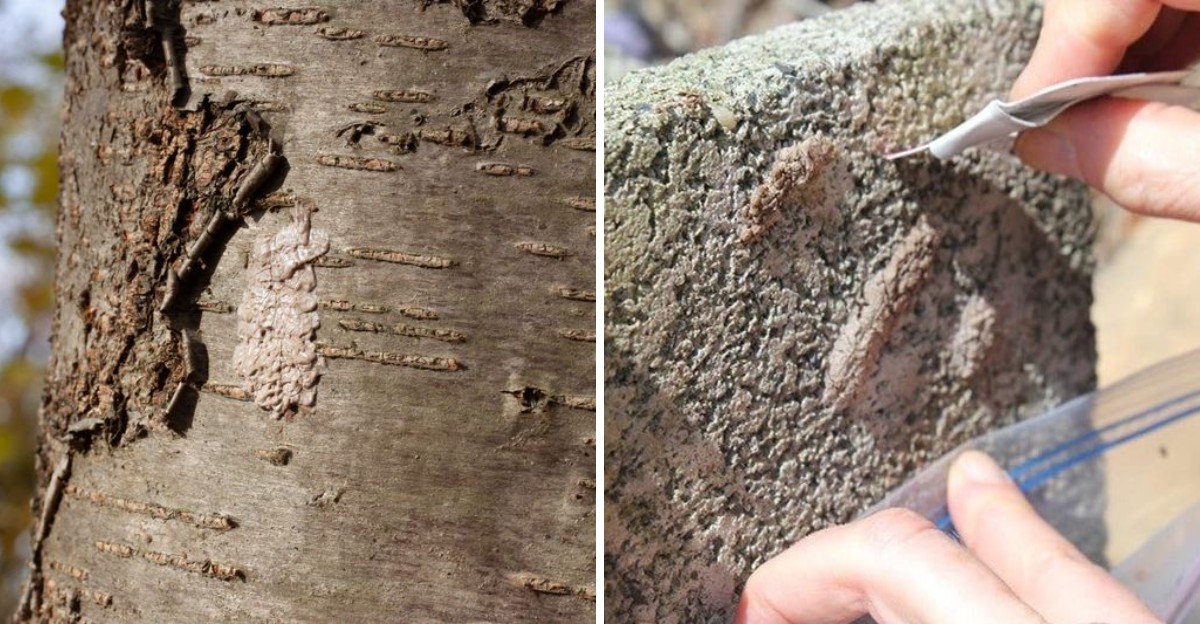
A blob no bigger than a stick of gum can hold up to 50 baby insects, and a frosty October night barely bothers it. I used to walk right past these gray smears on my maple, thinking someone flicked mud there.
Then the first hard freeze rolled across Pennsylvania. The leaf-sucking adults finally stopped crowding my deck railings, and honestly, I celebrated way too early.
Lab studies show the eggs tucked inside those smears can handle temperatures far colder than anything a typical first freeze delivers. Their parents fade away with the cold, yet the next generation just waits it out.
Take a closer look at your trees, fence posts, and even your grill. Those crusty patches might be the most stubborn thing in your yard right now.
1. Those Gray Mud Smears on Your Tree Bark Are Built for Winter
Frost on the windshield usually means bug season is over. With spotted lanternflies, that is only half true.
The adults struggle and fade once a hard freeze arrives, but the egg masses they left behind are designed for exactly this moment.
Females lay eggs from roughly September through early winter. Each mass holds about 30 to 50 eggs, lined up in neat rows.
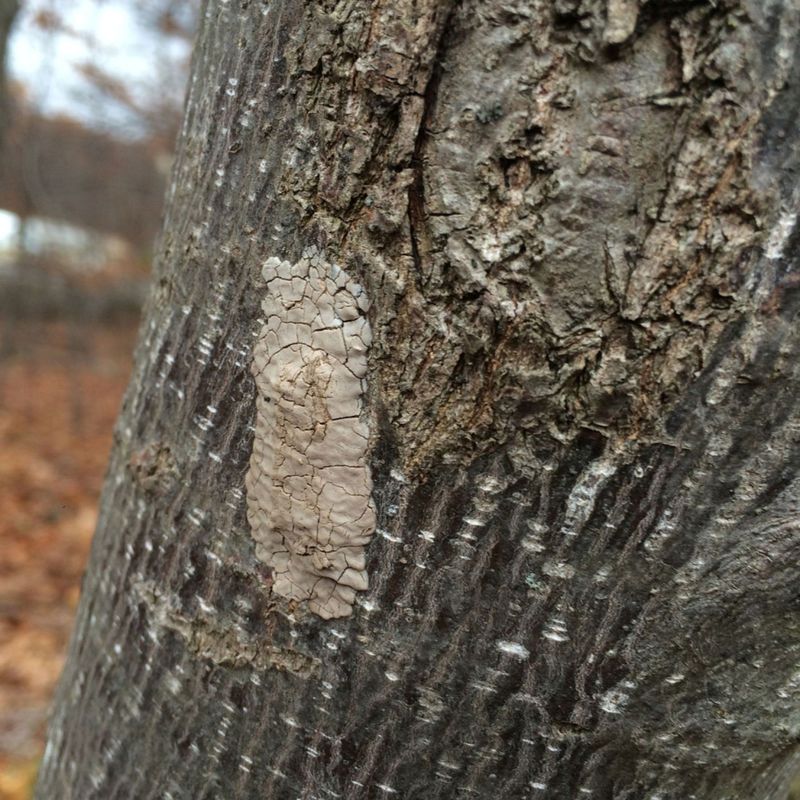
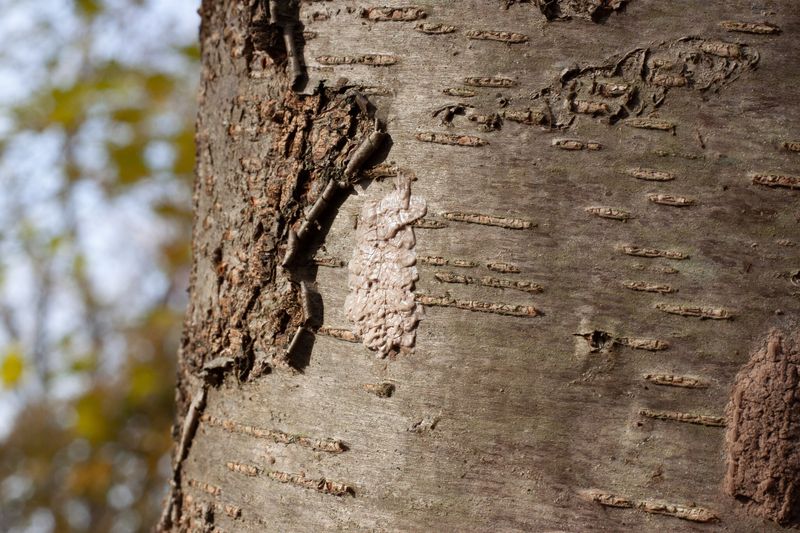
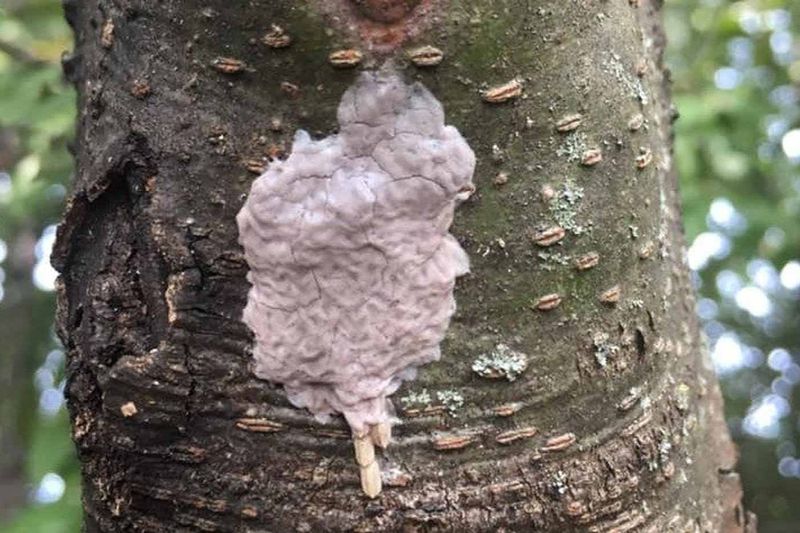
Fresh masses look shiny and putty-like, then dry into a dull gray crust that resembles a smear of dried mud.
That plain look is part of the trick. Most of us glance right past it on a tree trunk, a stone wall, or the underside of a trailer. I certainly did for a whole season before a neighbor pointed one out on my birdbath stand.
The eggs do not need to stay warm. They sit in a resting stage through fall and winter, waiting for spring warmth before hatching, usually from late April into June.
In other words, the cold is not an obstacle for them. It is simply part of the schedule.
Once you know what you are looking for, those smudges start popping up everywhere. And that awareness is your first real advantage.
2. A Hardened Waxy Shell Wraps Every Lanternfly Egg Cluster
Think of a lanternfly mom as a tiny mason. After laying her eggs in rows, she spreads a creamy white coating over them, a bit like spackle over a nail hole.
That coating dries and hardens within days. It turns from white to pinkish gray and finally to a cracked, mud-colored crust. Underneath, the eggs sit snug and sealed away from the outside world.
So what does the crust actually do? Researchers believe it helps the eggs hold onto moisture through dry winter winds, which matters a lot for something so small.
It also hides the eggs from hungry eyes and offers some shield against rain, sleet, and sudden temperature swings.
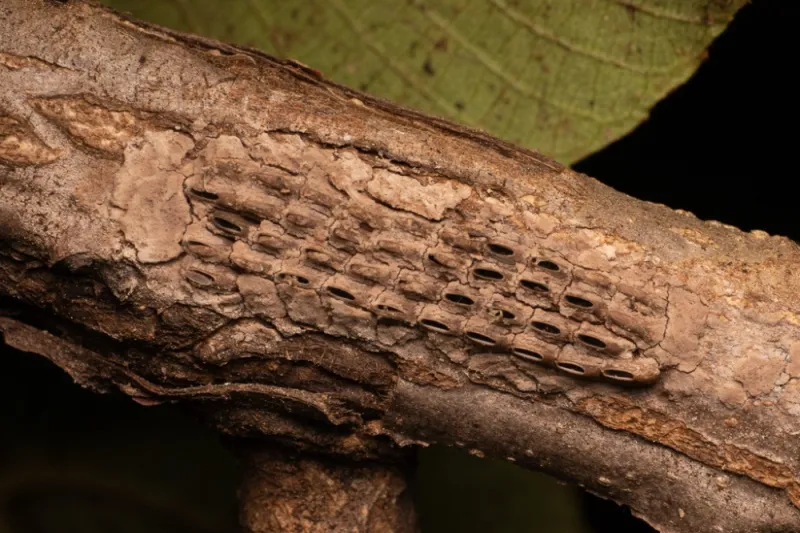
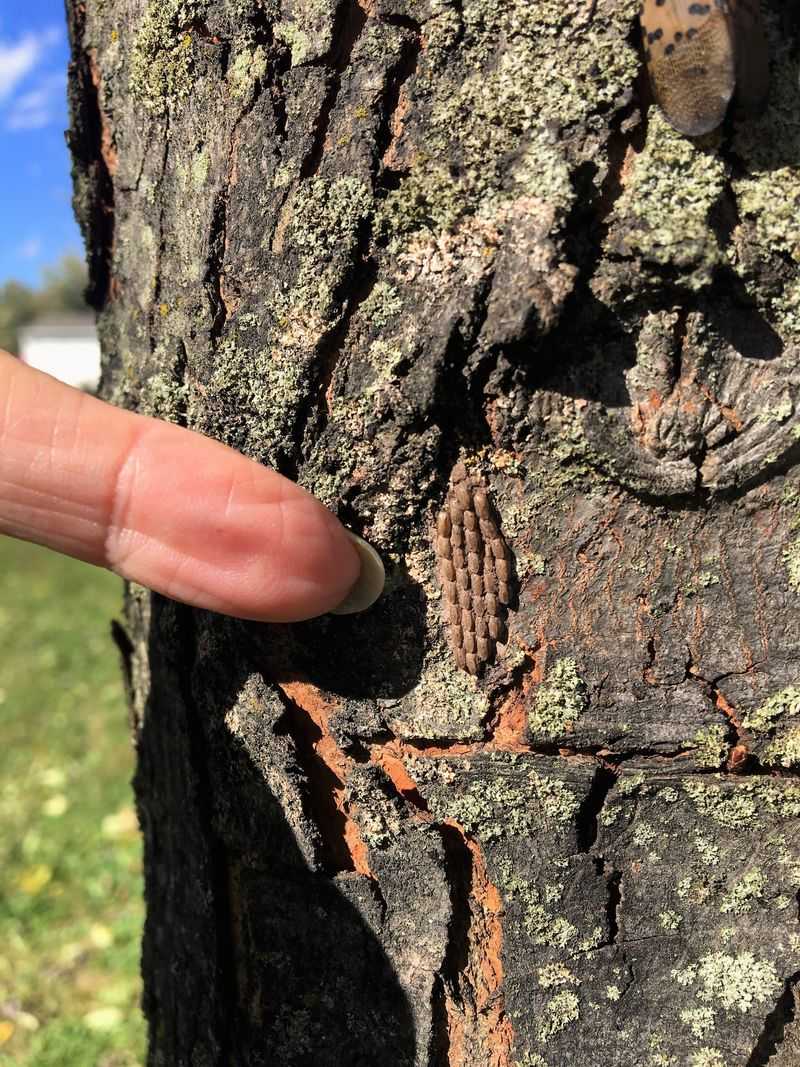
Here is a detail I love. As winter goes on, the covering often cracks and flakes, and you can sometimes see the eggs underneath looking like rows of tiny brown seeds.
Old masses from last year look like empty rows of little holes where nymphs pushed out.
Not every mass gets a full coat, either. Some are left bare, showing the seed-like rows from the start. Those count too, so scrape them just as seriously as the covered ones when you find them.
3. Lanternfly Eggs Can Chill Far Below Freezing Without Turning to Ice
Water freezes at 32 degrees Fahrenheit, right? Usually, yes. Yet the liquid inside a lanternfly egg plays by slightly different rules.
Scientists call it supercooling. The fluid inside each egg can drop well below the normal freezing point without forming ice crystals. That matters because ice crystals are what usually harm insect cells, poking and tearing them like tiny shards of glass.
Lab testing has found that lanternfly egg supercooling points fall somewhere around 0 to minus 18 degrees Fahrenheit.
That means the eggs stay liquid inside until temperatures get bitterly cold. Studies have also shown eggs can still hatch after being held at low temperatures for both short and longer stretches.
Many overwintering insects use natural sugars and similar compounds that act a bit like the antifreeze in your car.
Researchers are still learning exactly which ones lanternfly eggs rely on, so I would not believe anyone who claims the full recipe is solved.
For you and me, the takeaway is simple. A cold snap in the twenties or teens is not going to clean up your trees for you. Winter weather might trim egg numbers a little in harsh years, but it will rarely do the job alone.
4. Frost That Ends Adult Lanternflies Barely Touches Their Eggs
Late October into November, I notice adult lanternflies moving slowly, almost like they forgot their own names. That sluggish behavior is the cold catching up with them.
Adults are summer and fall creatures. Once hard freezes become regular, most adults decline quickly, and by winter you will rarely spot one. They have done their job by then, because the eggs are already laid and sealed.
A typical first hard freeze in Pennsylvania lands somewhere in the mid to upper twenties. Those numbers are tough on leaves, tender plants, and adult bugs.
For the eggs, though, that range sits far above the point where freezing becomes a problem.
So the timing works out neatly for the insect. The fragile stage leaves the stage before winter gets serious, and the hardy stage carries the population forward.
That gap also explains a common mix-up. People see the adults vanish and assume the freeze finished off the whole problem.
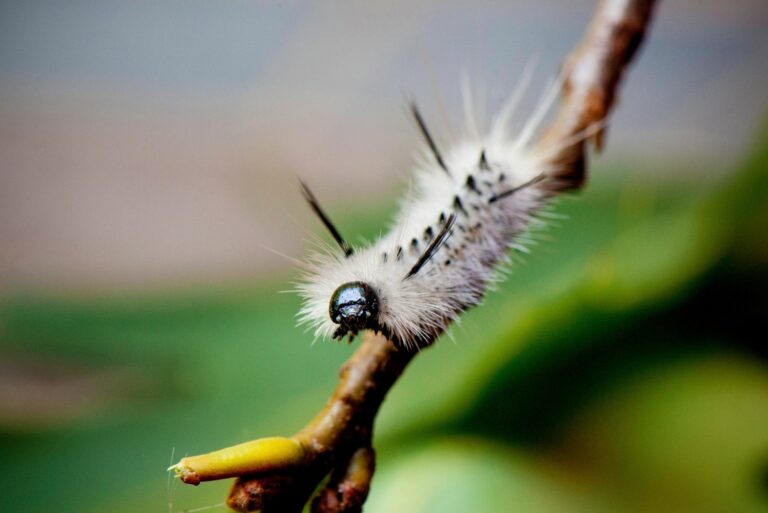
A few months later, swarms of tiny black-and-white nymphs show up, and everyone wonders where they came from.
They came from those quiet gray patches that shrugged off the frost while nobody was paying attention.
5. Cold East Asian Winters Shaped These Planthopper Eggs
Long before reaching the United States, spotted lanternflies were dealing with snowy winters in their native range in China. Seasonal cold there is nothing new.
The pest was first confirmed in Berks County, Pennsylvania, in 2014. It likely hitchhiked in on a shipment of stone, possibly as egg masses stuck to the material. That alone tells you how sturdy those masses are.
Parts of its home range have winters that feel a lot like ours, with frozen nights, chilly winds, and long stretches of cold weather.
Over a very long time, insects that handled those conditions passed on their toughness. Our eastern winters are basically familiar territory for them.
Here is a fun twist. Its favorite host, the tree of heaven, also comes from China and has spread widely across the eastern states. The two have been partners for a long time, and finding one often means the other is close by.
Some research suggests very cold northern regions may slow lanternfly growth or hatching, since eggs and nymphs need enough warmth to develop.
Even so, most of the populated areas where it has spread so far have proven plenty comfortable for this hardy traveler.
6. Sheltered Nooks on Trees and Patio Furniture Give Egg Masses Extra Protection
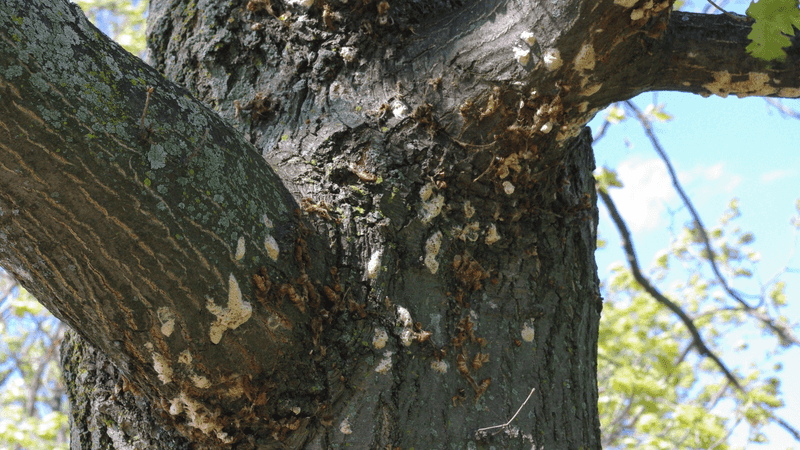
Lanternfly moms are not picky about real estate. I have found egg masses on tree bark, stone walls, fence boards, rusty lawn chairs, firewood, and even the bottom of a kayak.
Many masses land on the shaded or underside surfaces of branches and objects. Those spots stay out of direct wind, shed some rain and snow, and avoid harsh swings between sunny afternoons and icy nights.
A bit of shelter adds another layer of protection to an egg that is already tough. Height is another hiding strategy.
Plenty of masses sit high in tree canopies, far above where you can reach or even see. That is frustrating, but it is also honest to admit you will not find every one. Take a slow walk around your yard this winter. Check these spots first:
Trunks and branch undersides of tree of heaven, maple, black walnut, birch, and willow. Outdoor furniture, grills, play sets, and trailers. Stacked firewood, landscape stones, and stored garden pots.
Use a flashlight even in daytime. The low winter sun makes those gray patches blend into bark surprisingly well, and a beam of light helps the texture stand out.
7. Scraping Egg Masses With a Putty Knife Is Your Best Winter Move
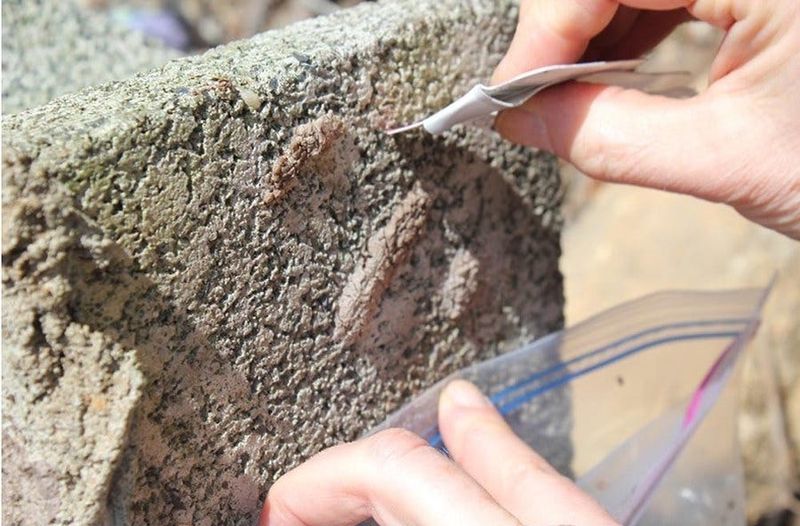
Grab your gloves. Scraping egg masses is one of the most satisfying chores I know, and it costs almost nothing.
Penn State Extension recommends removing masses from fall through spring, before the eggs hatch.
Every mass you remove can mean up to 50 fewer nymphs chewing on your plants next summer. Here is the simple method I use:
Hold a zip-top bag or small container under the mass. Use a plastic card, putty knife, or similar flat tool to scrape it off in a downward motion. Let the eggs fall straight into the bag.
Add hand sanitizer to the bag, seal it, and toss it in the trash. You can also smash the eggs thoroughly instead, since simply flicking them onto the ground may let some still hatch.
Be gentle with tree bark, especially on thin-barked young trees. You want to remove eggs, not peel the tree. On rough bark, a stiff brush can help work eggs out of cracks.
Got high branches? Some gardeners use a scraper attached to a pole. Skip ladders on icy days, though.
No egg mass is worth a slip on frozen ground, and spring brings other chances to manage the bugs.
8. Spring Lanternfly Nymph Season Starts With What You Remove This Winter
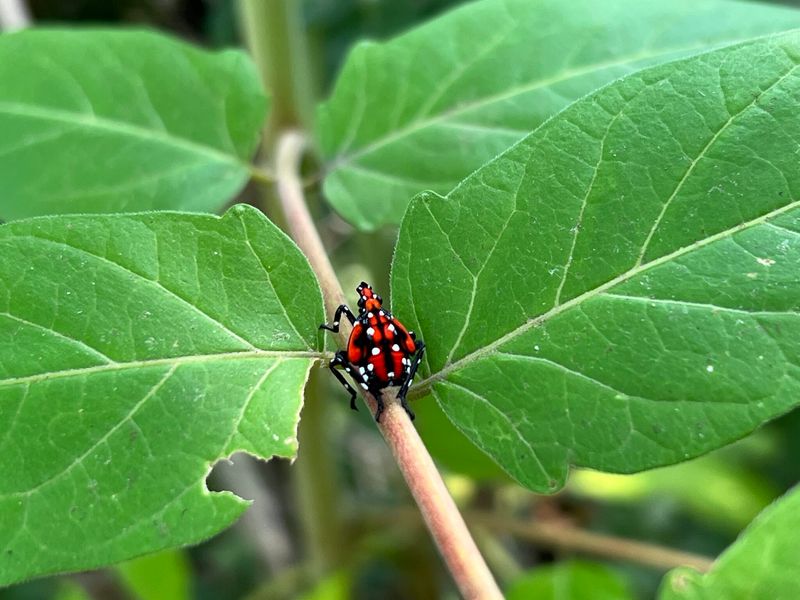
Come late April, the first black nymphs with bright white spots start popping out of any eggs you missed. They are tiny, quick, and hungry, and they head straight for tender new growth.
Winter work pays off right here. Fewer egg masses mean fewer nymphs crawling up your grapevines, maples, and roses. It will not erase the problem from your neighborhood, but it gives your own plants a lighter load.
Much of Pennsylvania sits inside a state quarantine zone for this pest. Before you travel, check your car, camper, firewood, and outdoor gear for egg masses so you do not carry them to a new area.
Businesses that move goods through quarantine counties may need a permit from the state Department of Agriculture. A few more smart habits help too:
Report sightings in new areas through the state reporting tools. Avoid moving firewood long distances. Consider removing tree of heaven on your property, ideally with guidance from your local extension office.
I truly believe small, steady efforts add up. One scraped mass feels minor, but a whole winter of them across a neighborhood makes summer a lot more pleasant for everyone, including your garden.